Archive for September, 2015

The Tommys 2015

Posted in American TV (General), American TV Shows, Behind-The-Scenes, British Shows on American TV, Reality TV, Reviews, TV Acting, TV Criticism, TV Culture with tags , , , , on September 27, 2015 by Tom Steward

It’s that time of year again when those we trust with the responsibility of deciding what makes good television publicly demonstrate they have no idea what makes good television. Yes, The Emmys. As with every year, the Academy of Television Arts and Sciences make two glaring errors. Firstly, they overlook the best TV of our time in favour of academy pets like Modern Family (Just a side note: Unlike most television critics, I rather like Modern Family. I just don’t happen to think it’s the only sitcom of the last six years worthy of celebration). Secondly, they create convoluted, counter-intuitive categories of awards that prevent the finest shows from being recognised because they don’t tick a bunch of weirdly shaped boxes. To rectify this, I’m starting my own annual television awards ceremony (yes, it’s going to be one of those articles!) called The Tommys with the sole purpose of demonstrating that you can still recognise the best TV around even when you have bullshit categories.

Best Shaving of Iconic Facial Hair in an FX Series, Zombie-Based Comic Book Adaptation, or Timely Political Commentary

Winner: Sam Elliott for Justified

tommys

Nominated: W. Earl Brown for American Crime/Andrew Lincoln for The Walking Dead/Kathy Bates for American Horror Story: Freakshow (disqualified for chin curtain)

Least Mentally Prepared Husband in a Housewives Franchise, Vanity Project or Marriage Experiment

Winner: Vincent ‘Garage Face’ Van Patten for The Real Housewives of Beverly Hills
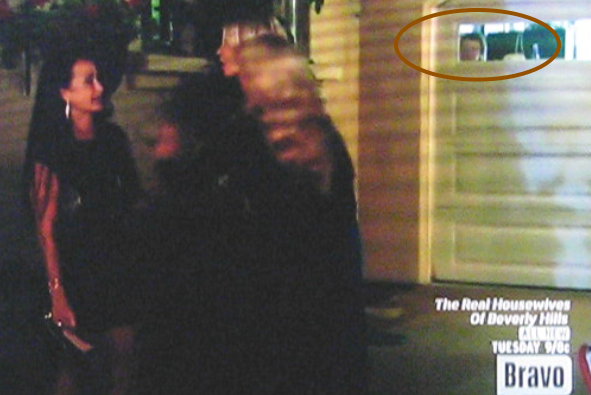
tommys 2

Nominated: Hank ‘The tranny’s hand walked into my penis’ Baskett for Kendra on Top/David ‘Golem’ Beador for The Real Housewives of Orange County/Mohammed ‘It’s against my religion to express genuine affection for my wife’ Jbali for 90-Day Fiance

Most Impatient Response to a Format Change in an Anthology Series, Prequel Spin-Off, or Homeland

Winner: True Detective (aka Noir is Supposed to be Urban, Idiots!)

Nominated: Fear The Walking Dead (aka Before They Were Zombies)/Homeland (aka Awayplace)/Better Call Saul (aka How The Lawyer got his Spotty Morality)

Most Overrated Drama, Sitcom or Tonally Confused Variation upon The Two Previous Sub-Categories featuring Martin Freeman, Kevin Spacey or Andy Samberg

Note: In this category, the award will be collected by an actor better at playing the role than the actor who actually did*

*Even if Kevin Spacey is in the audience doing his ‘I’m the first ever person to talk to a camera in a TV show’ schtick

Winner: Sherlock (award collected by Lucy Liu)

Nominated: House of Cards (award to be collected by the ghost of Ian Richardson)/Fargo (award to be collected by William H. Macy)/Brooklyn Nine Nine (award to be collected by whoever is near)

Biggest Load of Horseshit Onscreen Explanation of Something That is Clearly an Offscreen Issue in a Trumped-Up Soap Opera, Underrated Popular Literature Adaptation or Reality Show on a Bottom-Feeding Network

Winner: Scandal for the end-of-season held-at-gunpoint cliffhanger and season premiere cold open funeral of Harrison Wright during the domestic abuse court case of Columbus Short.

Nominated: Elementary for the complete absence of LGBT housekeeper Ms. Hudson in the third season while actress Candis Cayne became a visible activist for transgender rights/Marriage Boot Camp: Reality Stars for Hank Baskett’s ‘magic penis’ theory of how he could be caught red-handed in a transsexual three-way and yet not have participated

Worse Kept Secret in a Deathcount-Oriented Drama, Television Awards Show or Publicity-Loving Satire of Advertising

Winner: The Tommys 2015 for revealing multiple spoilers in TV shows not yet caught up on by most viewers by simply listing the nominees

Nominated: The Walking Dead for posting news of Beth’s death on social media the day that the episode aired/The Emmys 2015 for spoiling the series finale deaths of Nucky Thompson in Boardwalk Empire, Zeek Braverman in Parenthood, Jax Teller in Sons of Anarchy, Bill Compton in True Blood and Raylan Givens’ hat in Justified/Mad Men for having a series ending that was tiresomely ambiguous

Most Unconvincing Justification of a Blatant Freakshow in a Bafflingly Popular Horror Anthology Series, Footage-Shy Reality Show or Modern-Day Version of Public Hanging Entertainment

Winner: Botched for claiming to be a fly-on-the-wall documentary about plastic surgeons

Nominated: American Horror Story: Freakshow because if it’s about an actual freakshow, we can’t get upset at the title/America’s Got Talent for exploiting the lack of a substantive mental health care system in the US

Reality Contestant who Looks Most Like a Popeye Character

Winner: Josh Altman (Wimpy) for Million Dollar Listing: Los Angeles

tommys 3

Nominated: The Situation (Popeye) for Marriage Boot Camp: Reality Stars/Josh Altman (Alice The Goon) for Million Dollar Listing: Los Angeles

Doctor No

Posted in Americans watching British TV, British Shows on American TV, TV Criticism, TV History with tags , , , , , on September 20, 2015 by Tom Steward

Last night, new episodes of Doctor Who began airing in Britain and America. This is not a review of the season opener because I didn’t watch it. I didn’t watch it, because for the first time since the series re-launched in 2005, I won’t be watching Doctor Who. I don’t – like some fans – have an aversion to Peter Capaldi as The Doctor. In fact, I’ve said here before I think he’s probably the best actor to have played the role. This also isn’t the first time I’ve had serious issues with the direction that the showrunners have taken the series in, or some of the casting. And I’m not so naïve as to think that the ‘classic’ series – which I greatly prefer – wasn’t at times just as unwatchable as the new series is today. So why am I boycotting it now? Well, it’s for the same reasons that I don’t eat at McDonalds or (knowingly) use Nestle products. There are just too many reasons not to.

'What do you mean you're not watching?'

‘What do you mean you’re not watching?’

The main reason, of course, is Steven Moffat. Still showrunner and head writer after six years – with his creative control increasing annually – Moffat’s scripts and season arcs are incoherent, ramshackle rubbish and his dialogue is formed of soundbyte-friendly non-sentences. You can count the good ideas he’s had during his time on Doctor Who on one hand, and yet they do the job of keeping him afloat while he peddles plagiarism of everything from Source Code to That Mitchell and Webb Sound inbetween lightbulb moments. That’s before we get on to his politics. Moffat is incapable of writing strong women without sexualising them, sabotaging the progress made by breakthrough characters like transgender Timelady Missy with nymphomaniacal nonsense. His treatment of the material is invariably tasteless and perverted, encompassing romanticized suicides, desecration of dead Who actors like Nicholas Courtney, and treating time travel as some sort of incestuous gangbang! It was bad enough when this was in the name of change, now it’s billed as a return to the classic formula.

Much as I would like to, I can’t blame Moffat for all that’s wrong politically with Doctor Who. The series has had two women writers since 2005, a record easily beaten during the classic era which is often held up for being unfair to women and stretching back to the tenure of showrunner Russell T Davies, who supposedly opened the show up for a female audience. That said, Moffat did do a Lorne Michaels when it came to the issue of hiring women as writers, claiming that the entire gender did not have the appetite (nor presumably the talent) to take on the job much as the Saturday Night Live did when confronted with the absence of women of colour on the late-night comedy institution. Missy is not enough of a concessionary flip-flop, and certainly not when she’s this badly written. The Bechdel Test and various academic studies have singled out the sexism of Moffat’s era, though Davies set the idea of women talking adoringly about The Doctor in motion.

If I’m being honest, it’s actually the way that Moffat has tried to rectify the female companion’s Adam’s Rib relationship to The Doctor that has made Doctor Who so difficult for me to enjoy. Jenna-Louise Coleman’s Clara has a domestic and work sphere independent from The Doctor and his TARDIS, albeit one that still centres around her romantic interest in another man. The upshot of this is that one of the most shoddily conceived – and irritatingly portrayed – lead characters in the series’ history is at the heart of the concept in virtually every episode. There’s nothing innovative about The Doctor being The Companion’s sidekick, for that’s the status William Hartnell had when Doctor Who began, and it is a good bit of Bechdel-proofing, but for Clara to get that privilege – and, crucially, not Amy, the previous companion – is a kick in the teeth. For the past couple of seasons, Moffat has been working back from Clara’s original introduction as a mere plot device, and still can’t make her sufficiently human.

A Missied opportunity!

A Missied opportunity!

It’s no surprise that the creator of Sherlock and writer of The Adventures of Tintin re-boot can’t organize a piss-up in a brewery when it comes to Doctor Who. Steven Moffat has inherited perfect pop fiction formula time after time, and always drops the ball. So when he finally goes – and providing Jenna makes good on her recent promise – I’ll come back to the best concept on TV. Because we Whovians live to be disappointed.

Got Milch?: Part 2

Posted in American TV Shows, BiogTV, Local TV, TV Acting, TV channels, TV History with tags , , , , , , , on September 13, 2015 by Tom Steward

It’s the longest-awaited sequel since Indiana Jones and The Kingdom of The Crystal Skull and probably just as underwhelming. The promise of a second part that never comes is one that resonates with what I’m going to talk about here, David Milch’s follow-up to Deadwood at HBO John from Cincinnati, which along with Luck lasted one season and is now freely available to stream on Amazon Prime Instant Video as part of their HBO collection – designed, no doubt, to take the edge off the company’s flagrant employee abuse. This is the David Milch series that means the most to me.

2 minutes to Mexico!

2 minutes to Mexico!

There are plenty of TV shows that have put places on the map. But what about the shows that failed to make their locations famous? Breaking Bad made Alberquerque a hub of tourism and yet John from Cincinnati did not do the same for Imperial Beach, a coastal community south of San Diego bordering Mexico, in which the series is exclusively set. Perversely, tourism has come to Imperial Beach without the help of John from Cincinnati only a few years after the series aired. And, to rub sea-salt in the wound, Imperial Beach attracted visitors by projecting an image contrary to the one presented in John from Cincinnati. Imagine Hobbiton becoming overrun with people only after a brutalist tower block was erected in the centre of downton (which is what I’m presuming they call downtown in Middle Earth). I know this not because I’m a good journalist but a resident.

Of San Diego, that is. But I did live in Imperial Beach briefly a couple of years ago when I first arrived in the states. Though on an upswing even then, the community felt more like the faded surfer haunt gently harbouring drug addicts and derelict motels that is depicted in John from Cincinnati than it does today. Now it is a prime beach destination replete with upscale hotels and restaurants. Apart from the most inconspicuous memorabilia in a few local establishments, there’s no sense that a TV show was ever filmed here, and certainly not as recently. I’d like to attribute that to the thoroughly dysfunctional portrayal of Imperial Beach, but I don’t think it’s as simple as that. After all, Breaking Bad made Alberquerque famous not attractive. Despite the esteemed creator and network, John from Cincinnati was not liked or known enough to front a campaign for tourism.

It’s depressingly easy to see why the show was not embraced. It is aggressively cryptic, with titular John not a protagonist in the conventional sense but a conduit who precipitates the actions of other characters and speaks only in the words of those he encounters. John is not human, or at least not mortal in the way we understand it. Others have unsubstantiated mystical ability. The writing and acting is egregiously ornate and portentous, even for a David Milch drama. In particular, Rebecca DeMornay proves herself the missing link between the Lifetime school of TV movie acting and the televisual avant-garde. On the other hand, it seems like John from Cincinnati is punished for the strangeness we conversely admire in shows like Twin Peaks. Milch’s previous drama Deadwood was universally praised, and yet was similarly impenetrable, but because it was linguistically rather than conceptually challenging, it was somehow more acceptable.

Coming after Deadwood may have been John from Cincinnati’s greatest error. Milch’s fanbase scapegoated the show for taking Deadwood off the air after only three seasons and – as I’m sure Nic Pizzolatto and David Simon will testify – critics have only one use for shows that follow TV of wide acclaim. I don’t want to be a John from Cincinnati apologist; at times it is too pretentious for its own good, and it would be hypocritical of me to boycott Steven Moffat’s Doctor Who for its incoherence and not at least mention it here. Much of my interest in the show is strictly geographical, although that does help me understand its intentions better than someone who’s never experienced Imperial Beach would. It is, however, one of the few shows I can’t think that transcends classification. You’ll have a hard time relating this to any format or genre of television out there.

Dayton Callie prepares for Sons of Anarchy

Dayton Callie prepares for Sons of Anarchy

John from Cincinnati is undoubtedly hard work, but if it’s elision of norms is not reward enough for you, then maybe its peerless cast, all of whom are given monologues equalling the best of Milch’s writing, should be. Among them are character giants Ed O’Neill, Dayton Callie and Jim Beaver.

The Endless Summer

Posted in American TV (General), American TV Shows, hiatus, Reviews, TV channels, TV Criticism, TV Culture, TV History with tags , , , , , on September 6, 2015 by Tom Steward

I’m back after being away for the summer…just like TV! Or so I thought. Summer used to be a dumping ground for cancellation fodder, but something has changed. Many of the year’s most important programmes now air over the summer and momentous TV events are just as likely to play in the spring and summer as fall and winter. No doubt some of this is down to cable channels disrupting the old network seasonality, but it’s becoming increasingly apparent that TV critics can’t take summer off any more if they want to stay current. So what’s been happening?

Colin Farrell after reading the reviews of True Detective Season 2

Colin Farrell after reading the reviews of True Detective Season 2

True Detective Season Two

Another reason why TV critics can’t go away for summer is because they’d all miss doing their favourite thing – bashing the follow-up to a universally praised piece of television with no particular motivation other than convention. Season Two of HBO’s anthological police procedural was torn to pieces by most critics, with so-called fans and lovers of quality television just as vociferously negative. It really has nothing to do with the season itself, just a tired old game that critics like to play, one that immunised us against the self-evident pleasures of Treme simply because it followed The Wire and even made us question the quality of The Wire when it entered its second season. Worryingly, it suggests critics and viewers of the serial age have serious trouble evaluating television when it deviates from formula, and really aren’t ready for the anthology revolution happening in TV.

Jon Stewart leaves The Daily Show

After fifteen years as host of The Daily Show on Comedy Central, Jon Stewart could simply be remembered as the person that brought the art of fake news – cultivated in Britain by Armando Iannucci and Chris Morris – to the US. But he leaves behind him an even greater legacy. When TV news polarised into partisan platforms with MSNBC on the left and Fox News on the right, Stewart’s Daily Show was just about the only source of news that had any semblance of objectivity (as rocky a term as that is) left to give. He was trumped by his own protégés. First Stephen Colbert, who transformed himself into a living doll of satire, viscerally exposing the ugliness of the media conservative while manifesting the winning naivety that makes them attractive. Then John Oliver who – with the help of HBO’s unsegmented formats – brought satirically slanted news reporting into the realms of investigative journalism and political activism.

Cilla Black/Rowdy Roddy Piper (delete as nationally appropriate) died

It’s only accident that these deaths occurred in summer, but taken together they are tantamount to transatlantic television tragedy. The British light entertainment host and Canadian WWF star died within a week of each other, which means nothing until you put together that their stretches as reigning TV personalities from the 1980s to the early 2000s is virtually identical and that they generate the same fuzzy nostalgia (in warmth and confusion alike) from the generations that grew up watching them. For me, it was a sharp reminder of how separate American and British cultures can be. Nobody mentioned Cilla – a contemporary of America’s beloved Beatles – stateside. Roddy Piper remains unfamiliar to me…and to all 90s British kids who didn’t have Sky.

Netflix Summer

The charms of hyper-inflective prison comedy-drama Orange is the New Black continues to elude me, but it’s Netflix’s most valuable commodity and the June release of its third season was not an anomaly. The star-studded prequel series to cult comedy movie Wet Hot American Summer was made available in July as was season two of the critically acclaimed cartoon BoJack Horseman. Orange is the New Black was even streamed a few days early, just to remind Netflix subscribers that they can do shit like that. It’s pretty cocky behaviour, and somewhat backfired when fans who had booked time off work to binge-watch the season found themselves in a socially impossible situation. I don’t think this surge of summer activity at Netflix (nor the summer-theming of its releases) is at all a coincidence, more an attempt to dominate TV distribution in these months of the year. For all their talk of liberating viewers from the tyranny of scheduling, Netflix keeps subscribers under the yoke of its idiosyncratic calendar.

Fear The Walking Dead is set in LA...it's going to be a short show!

Fear The Walking Dead is set in LA…it’s going to be a short show!

Fear the Walking Dead Series Premiere

The unwanted spin-off of AMC’s The Walking Dead debuted in the last days of summer. As True Detective also switched from a rural southern locale to the L.A. metropolitan sprawl, I wouldn’t expect any glowing reviews forthcoming…