Archive for the American TV (General) Category

Party Like It’s 1990 Time

Posted in American TV (General), American TV Shows, Behind-The-Scenes, Reviews, TV channels, TV History, TV News with tags , , , , , , , , , on April 22, 2015 by Tom Steward

90s TV is back in vogue, appropriately enough. Twin Peaks is soon to be revived in such exacting detail that Showtime even sought to bring back David Lynch’s fights with the network. Cali has been fornicated enough by David Duchovny – and his series Californication has been cancelled – while Gillian Anderson appeared to be getting her life together but is going back to her abusive ex; thus The X-Files is returning to Fox, it now seems as a replacement for the network’s all-too-rare new-thing-that-people-like Empire. Even The CW’s version of The Flash recently featured Mark Hamill reprising his role as The Trickster from the original early 90s live-action TV adaptation, now father to the heir to his title, allowing the Star Wars actor to cathartically wail the words that every kid in a Darth Vader mask has been saying to him since 1980.

That the decade that time did not give us time to forget is coming back to TV doesn’t come as much of a surprise. The 90s was when the cup of quality American television first runneth over, never to be empty again. Contemporary Hollywood is increasingly dependent on rebooting classic pop iconography. In fact, Hamill was filming his scenes as The Trickster at virtually the same time he was reviving Luke Skywalker for Star Wars: The Force Awakens. But the choice of series has so far been disappointing. The 25-year gap in Twin Peaks was always part of the story, but in truth much of the second final season was completely unwatchable, with the Lynch-helmed finale the only saving grace (and he may not even be directing this time round). If the cast continue to protest Lynch’s absence, we may be looking at a spin-off about The Log Lady’s Log.

Everyone has signed back on for The X-Files but the series was to TV sci-fi what Judd Apatow is to movie comedy. The original series was a good few years too long, and that’s even before Billy Connolly came into the picture! Yes, TV needs more X-Files about as much as literature needs more books about killing heads of state written by Bill O’Reilly. Maybe it’s my comic apathy or that The CW’s demographic version of the flashing lifeclock from Logan’s Run has already gone off in the palm of my hand, but I found nothing to enjoy in The Flash to enjoy apart from Hamill’s scenery-chewing performance (forever to be known as ‘Hamillery’). So if there are any TV executives out there reading (either this blog or just in general) here are some 90s TV shows that are far more worthy candidates for revival:

Murder Three

'My blinds...LaPaglia!'

‘My blinds…LaPaglia!’

The first season of Steven Bochco’s Murder One was a compelling, narratively experimental, impeccably cast piece of TV drama. The second, which I will call Murder Two – not because the crimes prosecuted were lesser but because the quality was – proved altogether more formulaic, B-casted and conventional. Murder Three could right these wrongs. I foresee a pre-credits teaser in which respective season one and two leads Daniel Benzali and Anthony LaPaglia fight Sunshine Boys-like over the configuration of the furniture in the firm’s office, culminating in Benzali’s Teddy Hoffman throwing LaPaglia’s not-Teddy Hoffman out of the window, before lowering the blinds…and then peering through them ominously. We would revive the first season’s 23-episode serial arc, with a case that begins as Murder Three…and ends up as Murder One!

The Critic (Or It’s Not That Tough Being a Film Cricket)
Together at last!

Together at last!

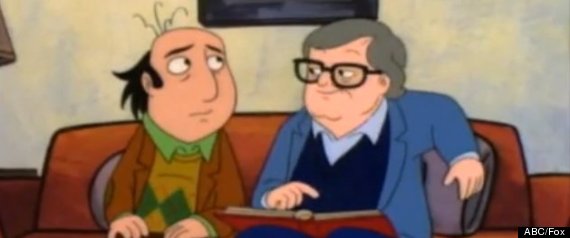
At the time we might have thought that the 90s were the summit of all that was ridiculous about Hollywood movies. But given how extra inflated and predictable blockbusters have become since, surely Al Jean and Mike Reiss’ animated comedy about a TV film critic would now have plenty of kindling for the movie parody fire. Cancelled after one season, there’s still plenty to do with the format and reviving the character of the Ebert-like Jay Sherman would be a greater tribute to the late film critic than any statue.
Murder She Wrote

History's greatest serial killer!

History’s greatest serial killer!

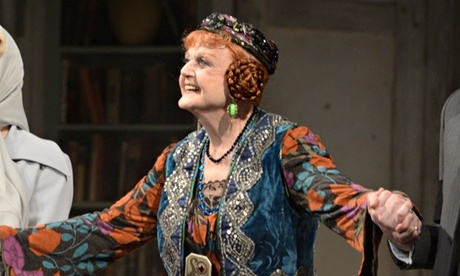
Still alive and acting…all I’m saying.

Cop Rock: Laboured Musical Premise Unit

A spin-off of the quickly-cancelled musical police drama about a special team of cops who investigate off-colour musical episodes in other TV series.

Paulie Loves Pussy

A buddy comedy featuring Paulie Walnuts and Pussy Bonpensero from The Sopranos based on this HBO commercial:

We’d figure out the timeline stuff later!

The Cosby Show

I drank from the wrong glass...

I drank from the wrong glass…

Worth pitching just to see the look on the executives’ faces. ‘Drink this, Mr. Greenblatt’.
It’s Not What You Know, It’s HBO

Posted in American TV (General), American TV Shows, TV channels, TV History, TV News with tags , , , , , , , , , on April 15, 2015 by Tom Steward

It’s one of the great cultural shames that people are denied access to works of art based on their income. For decades now, premium cable network HBO has been in the business of producing some of the finest television in the medium’s history and preventing large swathes of the American population from seeing them. Consumers (for that is what they are) need to be above a certain socio-economic line in order to pay HBO’s monthly subscription fee – historically between 6 and 15 dollars – along with the exorbitant cable company charges and, y’know, food and shelter, stuff like that. Of course, quality television in the US has always implicitly discriminated on socio-economic grounds by wielding cultural capital. Put very simply (and no doubt wrongly to some), cultural capital relates to the idea that what we judge as artistic or culturally worthy is determined by the social exposure that class, wealth and educational background permits, and so the elites have a collateral advantage when interpreting works of art and culture. When advertising executives in the 1980s discovered it was more profitable to target the high-spending TV viewer than the mass-audience, TV like Northern Exposure and Hill Street Blues went after educated professionals with a litany of fine art references and allusions. But whereas visiting libraries and museums would be enough to crack that code, there’s no getting around the bare economic fact that you either have the subscription money or you don’t, and if you don’t you have to actively steal culture.

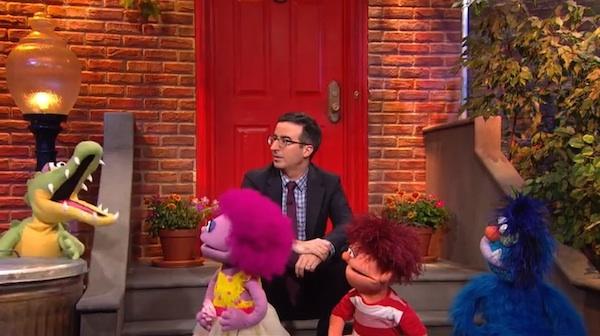
The most educational show since 'Sesame Street'

The most educational show since ‘Sesame Street’

There’s no shame in that. As HBO’s own John Oliver commented, ‘A good way to know which side of the income equality gap you’re on is if you’re currently paying for HBO or stealing it’. But HBO was making great television long before fluid internet theft of television was the desirable option, and I know from experience that HBO (for obvious reasons) are more militant than most TV networks at shutting down piracy of their programmes. This is bad but it’s what HBO has been doing forever, and in the back of our minds we secretly know that the quality of the TV they produce is proportional to the number of Americans it excludes from watching. What concerns me more these days is that those without HBO are being left out of the cultural conversation. News-with-a-side-of-comedy series Last Week Tonight with John Oliver is informing and engaging Americans on political issues and debates that mainstream media and government have left too intangible for the average person to unravel, whether that’s taxes, government espionage, or the system of electing judges. As such, it’s more like Sesame Street than The Daily Show. Yes, you can find out what John Oliver discovered on your own (he did!) but he makes politics accessible without compromising their labyrinthine complexity, which is rather rarely telling you what you need to know without what to think. You can pirate Last Week Tonight and even legally watch key highlights piecemeal on YouTube, but this is only the beginning.

While the LAPD will tell you they’ve been looking into accusations of murder against Robert Durst for years, it’s hard to see how The Jinx, HBO’s documentary mini-series about the real estate heir and his alleged past crimes hasn’t at least catalysed his arrest in March while the series was still airing. The series had audio of Durst seeming to confess – somewhat sensationally reserved for the season finale – and provided evidence of a handwriting match that many think was the trigger for the LAPD to make an arrest. TV investigative reporting like CNN’s The Hunt with John Walsh has always had these aims of impacting on criminal justice – and often they do – but what’s special about The Jinx (despite its inherently lurid qualities of true crime entertainment) is that it’s a documentary about a subject that has yielded the capture of a suspected killer without that being the stated aim of the programme. Durst’s confession tape was stumbled upon during the rigorous process of compiling footage and wasn’t the result of a super-cloak of crime-fighting conservatism the show had shrouded itself in. This is because HBO has to appeal but it doesn’t have to pander. The network or basic cable equivalents of The Jinx and Last Week Tonight are significantly diluted by gestures to mainstream entertainment orthodoxy – sycophantic celebrity interviews, monster-of-the-week journalism – but the former spends a series on what would be an hour on any other channel and the latter expands a 5-minute news segment into a quarter-hour dissection.

Mad Men, Crazy People And Invented Lies

Posted in American TV (General), American TV Shows, TV advertising, TV History with tags , , , , , , , , , on April 9, 2015 by Tom Steward

When I’m put in mind of advertising – which this week’s return of Mad Men for the final time has done – I think about two great gags in two terrible movies. The first is the direly offensive mental illness comedy Crazy People in which an advertising executive played by Dudley Moore is sent to an institution after writing honest campaigns for clients’ products. These include ‘Buy Volvos. They’re boxy but they’re good’, ‘Jaguar: For men who’d like hand jobs from women they hardly know’ and ‘United: Most of our passengers get there alive’. The second is Ricky Gervais’ tedious The Invention of Lying about a parallel reality where everyone tells the truth. So the TV spots for Coke have spokespeople saying ‘it’s basically brown sugar water’ and bus ads for Pepsi read ‘When there’s no Coke’. The use of real brands suggests this is as much a creative solution to product placement as a satire of it (and The Invention of Lying has plenty of unchallenged advertising throughout). On one level the joke is simple irony; ads tend to be dishonest so inverting this is subversively funny. But on another, the gag rests on the fact that these are legitimate alternatives to deceptive advertising. The twist in Crazy People is that the public prefer this style of advertising, and Dudley Moore is quickly hauled back from the institution. Depicting the products self-critically doesn’t make them off-putting in any way or at all harm the brands, and real advertising executives know this.

...except Dudley Moore

…except Dudley Moore

The delivery chain Domino’s Pizza based an entire campaign around apologizing for the poor quality of their product, even including negative comments from social media in their ads. Dated electronics store Radio Shack launched a series of ads called ‘The ‘80s want their store back’ in which various celebrities from the spandex decade, such as ALF, Hulk Hogan and Cliff from Cheers tear the antiquated shop floor apart. Where these campaigns differ from the ones in Crazy People and The Invention of Lying is that the former insist things are going to change, while the drawbacks of the products advertised in the latter are inherent, tolerable and even desirable. The notion that ad executives can pull off this complex interplay of tone and address is at the heart of Mad Men’s somewhat utopian vision of the advertising industry. Yes, only a handful of creatives who work at an agency containing the names ‘Sterling Cooper’ seem to get it, but from the beginning Matthew Weiner always insisted that the art of advertising was to turn disadvantage into a unique selling point. In the pilot, Don Draper tells the Lucky Strike owners that federal rulings on the dangers of smoking put them on a level playing field with their competitors since no-one can brand their cigarettes as safe anymore.

In honour of Mad Men and its comic forbearers, here are a few of my own campaign slogans telling the truth about a brand in a way that makes you admire their forthrightness:

Peroni: Disgusting with anything but pizza.

Taco Bell: We do to Mexican food what Robocop did to Officer Murphy.

Wells Fargo: With ATM charges like this, you know your money’s safe.

McDonald’s: There’s too many reasons to hate us, so save yourself the trouble.

Cox: The alternative is just as bad.

Little Caesar’s: Working around the craft of pizza-making since 1959.

Amazon: We’re going to send you a package anyway, so you might as well order it.

Disneyland: Once upon a time…when infant mortality was higher.

Carl’s Jr.: Women lose rights in every bite.

Uncle Ben’s: For when convenience beats out white guilt.

Nescafe: What’s the use of ethics if you’re not awake to have them?

Amtrak: Inconvenient and expensive but what else would we do with the tracks?

Stella Artois: For the continental wife-beater in you [this is only marginally more honest than the brand’s real slogan ‘Reassuringly expensive’]

Chik Filet: You have homophobes in your family whose chicken you eat!

Google: The thing you type because it’s the thing you type.

San Pellegrino: Brine never tasted so good.

Apple: You buy it, you break it.

Starbuck’s: Hatred for us distracts you from worse inequalities.

PayPal: We won’t tell you how we make money if you don’t.

Bud Light: It works better as a light than a beer.

Esurance: We stopped John Krasinski from making more shitty movies…you’re welcome!

Yahoo: You have an email with us to get an extra Twitter account.

Twitter: Keeping Yahoo in business since 2008

Beard To Death

Posted in American TV (General), American TV Shows, TV Acting, TV in a Word with tags , , , , , , , , , on April 1, 2015 by Tom Steward

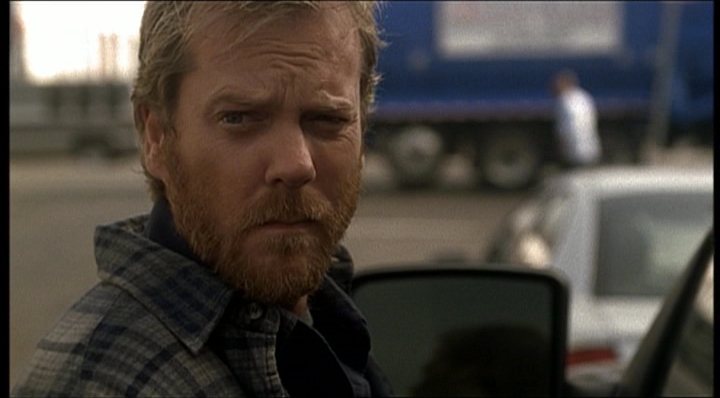
It’s been a season of hashtag-friendly character deaths on The Walking Dead; #Bobecue, #BethDeath, #TyreecesPieces and #NoahFuture. But no loss is more tragic than #RickShave. Rick Grimes’ beard is one of the longest-surviving characters on the show and – even more than Karl who went through puberty – we have watched him grow on TV. He was the only character keeping Rick sane. After losing his beard, Rick seems incapable of ending a sentence without threatening someone’s life. So in lieu of a blog about the season finale, which for an episode set in one street with no major character deaths can be summed up by Nelson Muntz’s review of Naked Lunch (‘I can think of at least two things wrong with that title’), here’s a rundown of the best bearded moments in TV, starting with Rick:

Rick shaves his beard – The Walking Dead – Season 5

As a bearded man myself, I know well the eerie feeling of shaving and not recognizing the man underneath. Here The Walking Dead takes this to proportions of body horror. Afforded the luxuries of running water and private bathrooms, Rick can now part with the beard that has faithfully accompanied him through the zombie apocalypse. Unfortunately, he’s been hiding his moral decay behind that cake-catcher and is no longer the same person beneath. Rather than removing a mask, he’s revealing one. Without looking like Charles Manson, Rick starts to get really insecure about expressing his murderous insanity and massively overcompensates with blood-soaked demonstrations in public and recreating scenes from Romeo & Juliet with passing zombies.

Jack is back with a beard – 24 – Seasons 2 and 6

Where's the shaving balm?!

Where’s the balm?!

When Jack cracks, he grows a beard. It’s our only visual clue that a man who tortures and fakes his death for a living has finally gone off the deep end. But it also acts as a protective seal – grouting if you will – for Jack’s madness. After Jack shaved his widow-grief beard at the beginning of Season 2, he immediately went about severing a paedophile’s head with a hacksaw. An hour after removing his Chinese-torture beard in Season 6, a nuclear bomb went off. Jack remaining clean-shaven after he faked his death was how we knew he wasn’t really serious about giving up work. Well, that and going into hiding mere miles from L.A.

It’s Harrison Ford in there – The Fugitive – Movie

Ok, it’s a movie but it’s based on a TV series but that should be justification enough for what remains one of the most incredible uses of facial hair in screen history. For a third of the movie, Harrison Ford and the star promise of action therein have been hiding behind what looks like mouldy Weetabix on the actor’s face. As convicted murderer Dr. Richard Kimble goes on the run, he stops off at a hospital to engage in a morning routine beloved of all medical practitioners; stealing water and breakfast from a dying old man. He adds milk to his Weetabix and it quickly dissolves, leaving Ford free to jump off viaducts and fight disabled people.

Strike beards – Late Show with David Letterman, Late Night with Conan O’Brien – 2007/8

Before...and way before!

Before…and way before!

During the writers’ strike of 2007-8, late-night chat show hosts David Letterman and Conan O’Brien came out in sympathy with their colleagues by growing ‘strike beards’ throughout the picket. Of course, this assumes that being on strike makes any difference to writers’ shaving routines, which is nonsense, and the sizeable increase in meta-comedy was already enough to demonstrate to viewers that there was a writers’ strike going on. While Conan mutated into a Seinfeld-era Bryan Cranston, Letterman slipped back through time posing first as a Civil War general and then Piltdown man along the way. Otherwise, it gave us a rare glimpse into what late-night television would look like following the apocalypse.

Hiatus beards – Everyone on a show where they have to be clean-shaven – Off-season

Bearded Hamm!

Bearded Hamm!

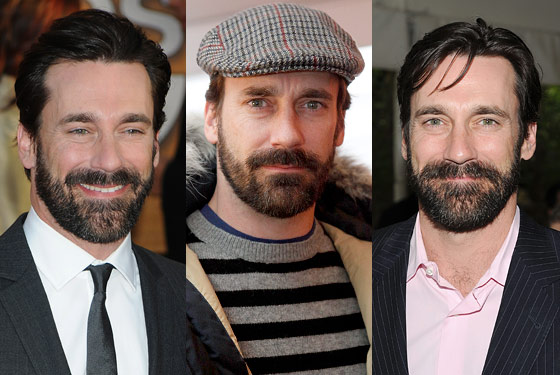
When you can’t scratch, that’s when you want to scratch. Well, apparently, if you’re an actor on a seasonal TV show, when your face is scratch-free all you’re thinking about is having something scratchy on your face. In those few months between filming seasons, TV actors choose to celebrate their temporary freedom from the yoke of shooting schedules by doing fuck-all with their faces. But it doesn’t make as much sense as it first seems. I’m sure the actors still go out during the day even though they’re not shooting, and wear clothes even though they don’t have to be in costume.

Justified And Ancient

Posted in American TV (General), American TV Shows, Reviews, TV Acting, TV History, Unsung Heroes with tags , , , , , , , , , on March 27, 2015 by Tom Steward

Currently my two favourite shows are both revivals of iconic literary characters and new twists on old TV genres. Justified features Deputy U.S. Marshal Raylan Givens from the Elmore Leonard novels Pronto and Riding the Rap as well as the short story ‘Fire in the Hole’ from which the FX series sprung. As Justified aired, Leonard wrote his final novel Raylan about the character. Elementary is based around scatological-saying sleuth Sherlock Holmes from Arthur Conan Doyle’s short stories and novellas, re-located and updated to present-day New York. Both are ostensibly police procedurals, a genre spanning the history of television, but they also resurrect some more archaic formats, such as the western and the mystery drama. These are shows that can appease snobs and slobs. Elementary goes under the radar while Justified will soon fall in the woods without sound. So why don’t people like them as much as I do?

I love those old black-and-white westerns!

I love those old black-and-white westerns!

I’m not saying that Justified and Elementary are in any way reviled, but neither are they exalted like the offerings of AMC, HBO and Showtime. Despite being on a network with a stellar reputation for original drama, Justified is continually overshadowed by series like Fargo and The Americans, both of which are unlikely to have existed without Justified blazing the trail. Elementary has the disadvantage of being on CBS rather than cable, but it is still far from being considered a giant of well-made, middle-of-the-road entertainment like The Good Wife. This is what they get for doing everything a complex, mature character-driven drama would without disturbing what makes good television. Surely that is more remarkable than trying to produce something worthy without regard to what works on TV (American Crime, I’m looking in your direction!) or even accomplishing great art on networks that are purpose-built to challenge mainstream television conventions.

Maybe they’re a victim of the times. Elementary comes in the wake of the BBC’s Sherlock, a contentless self-hyping publicity machine that has established itself as the worthier successor to the Sherlock Holmes name without any claims between opening and closing credits to that title. Justified began as an episodic procedural and grew into long-form storytelling, and may have looked to those who think good TV comes in serial boxes as unfashionable. Maybe they care too much about history. Justified is pulp fiction comedy in the noble tradition of The Rockford Files and Magnum P.I. and homage to the TV westerns (and disguised police westerns thereof) of the 1960s and 1970s, underlined by Timothy Olyphant borrowing Clint Eastwood’s legs for the project. Elementary doesn’t contemporize like Sherlock, or at least it doesn’t fetishize new technologies as a substitute for coherent storytelling, and at its best it’s Columbo in a brownstone.

I suppose what’s layers to some people is packaging to others. But what would it take to understand how holistic a television experience it is to watch Justified and Elementary? I’m watching TV now and in the past, a pleasurable formula alongside a gruelling psycho-drama, good television and the cherry-pickings of popular culture. I look to other TV shows that currently fascinate people like Scandal and Empire and the common denominators are melodrama and outrageous behaviour. Perhaps Justified and Elementary are too straight-faced and plausibly written to stand out in primetime. Maybe the success of Breaking Bad and Better Call Saul is not so much in the transformative character arcs (which both my faves provide in equal measure) but the Dickensian coincidences and lunacy of the protagonists. It’s a fine line between ambiguity and characters doing stupid things to create drama. Characters in these two shows are drawn not sketched.

'Look Holmes, the table mat that the script for Sherlock is written on!'

‘Look Holmes, the table mat that the script for Sherlock is written on!’

Because Justified and Elementary derive from a body of work outside of themselves, perhaps audiences assume they need prior knowledge of the characters and authors’ previous works in order to enjoy these series. Nothing could be further from the truth. Elementary eschews the fan-fiction qualities of Sherlock in favour of original content utilising the character dynamics of the literary cycle. You do not feel like you have to be a devoted reader of Conan Doyle nor worship the cult of Sherlock Holmes to appreciate Elementary. Yet it is an authentic introduction to the Holmes stories in a way that Sherlock refuses to be. Elmore Leonard is simply a point of departure for Justified and his characters and storylines have been reinterpreted, interwoven and extrapolated to the point where they are born anew (for copyright reasons just as much as artistic ones). Leonard is the midwife here not the overprotective mother.