Archive for the American TV (General) Category

Box Spin

Posted in American TV (General), American TV Shows, Reviews, TV Acting, TV channels, TV History with tags , , , , , , , , , on February 11, 2015 by Tom Steward

On Sunday and Monday, as part of a 2-night event (isn’t everything these days?) AMC debuted Better Call Saul, a spin-off from its corner-turning drama series Breaking Bad based around Walter White’s kitschily corrupt lawyer Saul Goodman. For reasons that can only lead to spoilers, Better Call Saul is a prequel. Despite the unabated popularity of Breaking Bad and the character, there’s still the risk that a spin-off would damage the reputation of the programme, especially one that promotes to protagonist a character who mainly functioned as much-needed comic relief in one of the bleakest shows on television. AMC needn’t have worried because, as with all good long-form television, Saul grew into a much more rounded character as Breaking Bad went on (lest we forget that Walt started out as a clown) and it’s this version of the character that Better Call Saul has inherited. But in TV the odds aren’t against them (or as against them) since there’s nothing to say a spin-off show won’t be as good as or even better than the original.
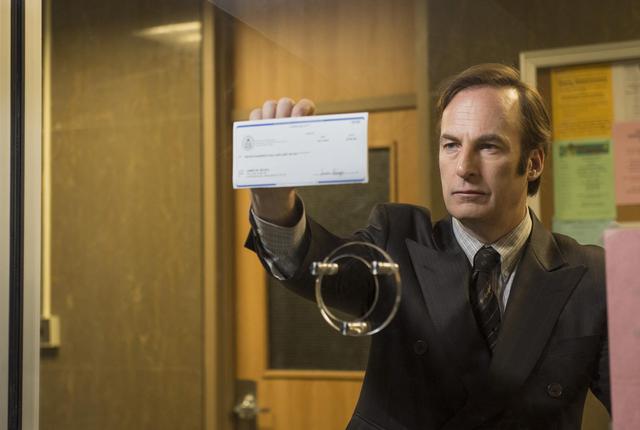
Check out Better Call Saul!

Check out Better Call Saul!

As Steve Coogan self-reflexively observes in The Trip to Italy there are only ever one or two movies anybody ever quotes when arguing that sequels can be better than the original. Of course, TV has its go-to canon of superior spin-offs (Frasier and anything produced by Norman Lear, who understood the value of maintaining a universe of characters decades before Marvel Studios cottoned on to the idea) but the medium has a pretty good hit rate when it comes to franchises. TV is so generically nebulous (modern quality TV even more so) that it barely matters when a spin-off is more or less comic than its predecessor. In today’s TV when series take so long to hit their stride, their spin-offs may even pick up a show when the quality’s still good and perhaps before they’ve had time to peak. This seems to be what’s happening with Better Call Saul which reaches heights in its first two episodes that it took Breaking Bad (despite its calculated seriality) three seasons to achieve.

But what we’ve seen of Better Call Saul isn’t free of the pitfalls of spin-offs either. Gratuitous cameos from former cast members are one of the biggest obstacles to spin-offs being able to fly solo, and this one has them in spades. The re-appearance of gnome-faced security man Mike in the unfamiliar role of a car park attendant is not at all the problem. We know that history will draw the two men together, so we expect to see him enter Saul’s life somehow. But running into loose-cannon drug dealer and Walt’s former distributor Tuco in a coincidence that would make Dickens blush (plus members of his gang who also appeared in Breaking Bad) really is a step too far. Although some of this is the problem of prequels. Prompted by the none-too-subtle nods of the writers, we’re constantly anticipating moments from Breaking Bad instead of enjoying what the new ones have to offer. Despite the pleasing evocation of middle-America at its most moribund in opening black-and-white images recalling Alexander Payne’s Nebraska (which star Bob Odenkirk also featured in), it may have been a mistake to start at the end.

Aside from these distractions, which may have been the result of the writers sensibly trying to break Bad fans in, we’re left with a series whose name may one day be called without company. It will never completely transcend Breaking Bad, especially with original creator Vince Gilligan at the helm here too, but I’m confident we’ll soon be able to consider them separately. It’s possible to foresee Better Call Saul doing for the portrayal of lawyers what Breaking Bad did for scientists. Like Walt, Saul is not just the grumpy maverick we’re used to when confronted with so-called ‘antiheros’; he’s a criminal with a deviant moral code. That said, while we always suspected that Walt was acting out of pure self-interest (which was confirmed by the finale), there’s the irony that the earlier incarnation of villain Saul comes across far more nobly and altruistically than ‘good-guy-turned-bad’ Walt ever did. We can still think about Walt without making Saul any less interesting.

One of these is not like the other.

One of these is not like the other.

If I’m jumping the gun here, it’s because TV history tells me there’s nothing to worry about. When a spin-off is terrible it’s usually because there’s nothing left in the tank. Breaking Bad’s by-the-numbers finale always felt like it was holding something back. It was. A sequel. A prequel. A new modern monster.
Bonus Ball

Posted in American TV (General), TV advertising, TV channels, TV Sports, Watching TV with tags , , , , , , , , , on February 6, 2015 by Tom Steward

I’m sure most of you are over The Super Bowl for another year (this really should be called ‘Watching TV after Americans’) but I’m far more interested in an aspect of the event that doesn’t change each year – although even for someone to whom ‘football’ means round balls and bad pies it was a pretty great game – which is the TV generated around it. The Super Bowl on TV seems never to start or end, making it the perfect metaphor for the medium. As it’s assumed that large portions of the nation are watching, which is no mean feat these days, The Super Bowl is a bat-signal for advertising. For the same reason, counter-programming decides to take one for the team, but those networks that try to take on The Super Bowl must do so in the most ruthless ways possible to even get noticed. This year, however, there were some added satirical bonuses.

I’m used to televised sporting events starting a few minutes later than advertised to sneak in a commercial break while everyone’s watching, but I was not prepared to be sitting on the couch at 3.30 still waiting for the game to begin. And for what? John Travolta’s Adele Dazi trying to break Bleedin’ Gums Murphy’s record for the longest rendition of ‘Star Spangled Banner’? The presentation of the NFL’s annual ‘didn’t rape or hit anyone’ award? Don’t we have a pre-show for this? The mechanics of modern television have manoeuvred themselves so that we are continually watching prelude. The Super Bowl goes one better and expects we will enjoy it. It’s moments like this which remind us that commercial television form is an integral part of the way that a game of American football is structured, rather than the British kind which is merely pricked around the edges by commercial interruption.

Commercials broadcast during The Super Bowl are notorious for being sexist, portentous and counter-intuitive. Half-time act Katy Perry clearly wanted to take some of the heat off the sexist commercials, but they were out in full force, not as well-disguised by nob gags as the advertisers clearly thought. Carl’s Jr. has even managed to turn gender discrimination into a branding mechanism for its Super Bowl ads. But this year they didn’t go unchallenged. Feminine health company Always ran a semantic deconstruction of the gender assumptions and discourses behind the phrase ‘Like a Girl’ while Saturday Night Live staged a fake Totino’s ad exposing the unbelievably narrow gender stereotypes and chauvinistic divisions of Super Bowl ads, particularly the archetypal representation of women as child-minded homemakers. Somewhere in the middle was Fiat’s ‘Viagra’ campaign which unironically presented pumped-up virility and machismo as a draw but also satirised male sexual prowess and the idealised feminine body.

Part of the fun of watching Super Bowl commercials is trying to figure out what product the pretentious pre-amble will eventually advertise (clue: anything combining ‘hard’ and ‘soft’ is deodorant). But sometimes the logic of ad writers is beyond even those who dissect media images for a living. A ghost-child commercial is the perfect vehicle for a leukaemia or cancer charity, but it does nothing to ameliorate the ghoulish undertones of an insurance company. Another insurance company, Esurance, seems intent on using circular logic and specious reasoning similar to the Johnny Cochran O.J. glove defence to convince consumers of its superiority to established rival Geico, but as long as that involves Walter White as a drugstore pharmacist I don’t much mind. If you tire of the commercials, you can switch over to The Puppy Bowl, Animal Planet’s re-imagining of The Super Bowl through the imagery of illegal competitive dog-fighting. For cute read irresponsible.

As with SNL, the most authentic example of Super Bowl television was the least genuine. Key & Peele have always satirized American sport and its coverage, but with their simulated Super Bowl pre-show staged as a real network broadcast, it was far more than a send-up. There was plenty to ridicule: the ill-fitting suits of the former-pro presenters, the passive-aggressive banter, the live-action footer trails of network sitcoms always starring ‘Alison Janney’, and of course the beyond-hyperreal graphics with overly phallic connotations. But the real-time flow and denouement in which the digital robot mascot achieves self-awareness and propels humanity into a state of oblivion identifies The Super Bowl and its live, ongoing broadcast with a dystopian terror effect that reminded me of another piece of faked factual horror television, the one-off BBC drama Ghostwatch. There is something inherently wrong and otherworldly about TV’s broadcast of The Super Bowl, the same something as television itself.

Home Movies

Posted in American TV (General), Reality TV, TV channels, TV Culture, TV History, TV News with tags , , , , , , , , , on January 7, 2015 by Tom Steward

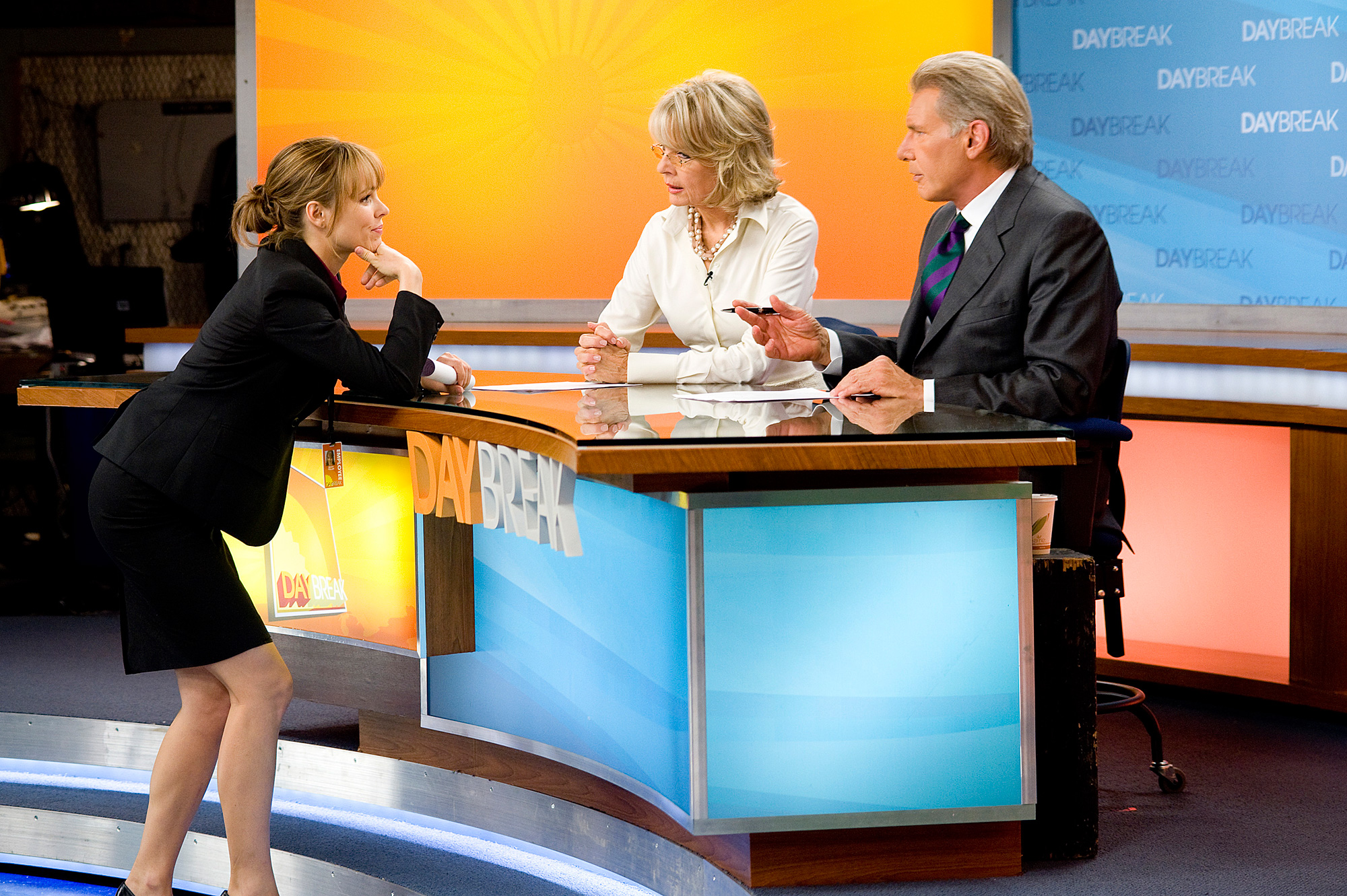
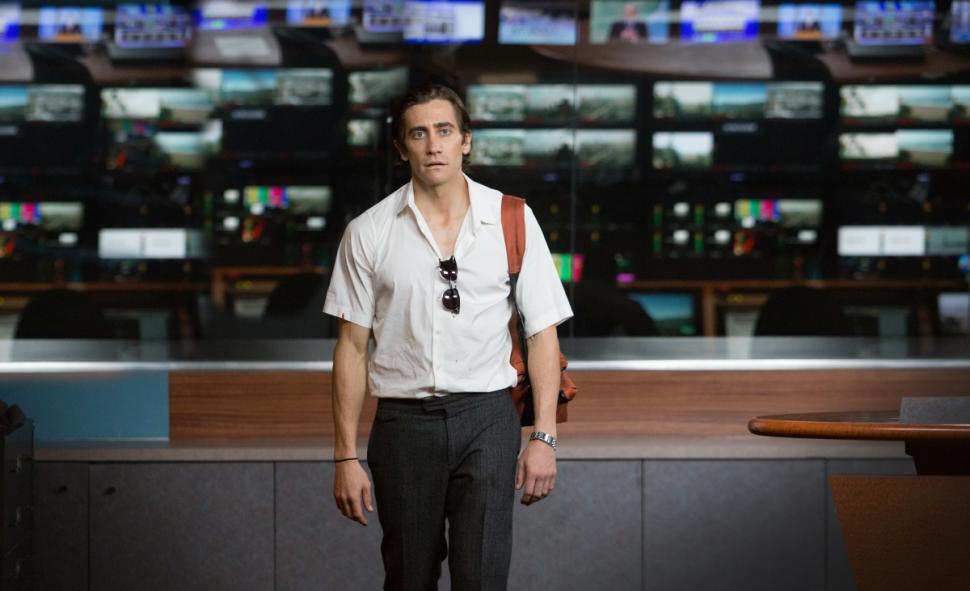
Though I’ve devoted the last decade of my life to television (in both work and play!), movies were my first love and they’re still at the heart of what I write and do. Consequently, I’m often asked what the best movies about television are. I’m always unsure what I’m supposed to evaluate; the quality of the movie or how well it deals with TV. The two very rarely go together. For instance, my first instinct is to say Morning Glory, a mature TV news satire that neither skirts around the rampant commercialism of American television nor uses it as a brush to tar the medium with. But the acting is regularly terrible, the (non-TV related) storyline lousy, and the ham-fisted direction really kills the comedy. But as a movie about television, I infinitely prefer it to the pious nostalgia of Good Night and Good Luck and TV writer Paddy Chayefsky’s glorified revenge pic Network, as superiorly artful as those two films are. So I was conflicted in my feelings about the TV news thriller Nightcrawler.

...not to be confused with the porn parody of the same name!

…not to be confused with the porn parody of the same name!

Both Jake Gyllenhaal and Rene Russo give remarkable (and remarkably unusual) performances. The script is utterly solid, something which cannot be underestimated in contemporary American cinema. The suspense elements are well-handled, and the photography mixes the best of cinematic vistas with the seedy beauty of urban photojournalism. I thoroughly enjoyed it, which is a rare experience for me in the cinema (seeing a new movie). I have no issue with the portrayal of American TV news, as it clearly is as base, gruesome and sociopathic as the movie suggests, and just as culturally defunct and laughably moribund. But it’s a narrow view of television that is loath to admit the frequency with which contemporary TV beats out cinema for complex drama and art and unfairly highlights its tabloid extremes. It also suggests that the capacity for TV to be live (not that it really ever is anymore!) is a crutch to its expression that makes TV necessarily artless and sensationalist. But as far as movies about TV go, these kinds of representations are old news.

Movies about TV almost always focus on the production of non-fiction (typically news), stress the live aspects of television broadcasting (regardless of how live TV is at any given historical moment), and never fails to mention any quality of the medium that might situate it as inferior to cinema, like its commercial interruptions or diminished screen size and image quality. Comment me if I’m wrong, but all movies about TV have at least ONE of these three typicalities. What’s also significant is how ahistorical this cinematic portrayal of TV is. You could understand it when TV was the new kid on the block and the film industry wanted to play up the disparity between fulfilment and experience in consumption of the two moving image media (although historians question whether we can ever see the two so separately). But it doesn’t really make sense when you consider that film and TV industries have for large swathes of their history been interrelated economically under dual or conglomerate ownership. What is the advantage of saying TV sucks then?

It’s not a riddle I’ve particularly solved, except that the mythmaking of movies depends so heavily on the distinction of the cinematic experience that it behoves the industry to promote the fairytale of exceptionalism in the face of overwhelming economic, technological and cultural evidence to the contrary. I’m pretty sure that hijacking the feeling of live TV in these movies derives from a kind of jealousy about the immediacy and presence that the medium can cultivate, as in Tootsie which go to extreme expository lengths to make a broadcast of the intra-diegetic soap opera live. With bigger, clearer home sets and smaller, digital ‘studio’ theatre screens as well as a parity of commercial content and product placement in both new movies and TV transmissions, cinema hasn’t a leg to stand on. It is, however, a strategy that boutique television networks also use to distinguish themselves from everyday TV flow, judging by the number of tiny, flickering sets we see on HBO and AMC shows in the service of dispensing an endless barrage of homogeneous crap.

Fishing for a story!

Fishing for a story!

It may be time for the movies to start acknowledging some of the realities of contemporary television. It wouldn’t be hard – just ask the many actors who now regularly moonlight between the two! TV is better than its news output and infinitely more interesting than its increasingly rare live transmissions.

The Rest Of The Year’s TV

Posted in American TV (General), American TV Shows, British Shows on American TV, Reality TV, Reviews, TV advertising, TV channels, TV Criticism, TV History, Unsung Heroes, Watching TV with tags , , , , , , , , , on December 31, 2014 by Tom Steward

There’s a formula for writing annual ‘Best Of’ TV lists. First it’s compulsory to observe how pointless a task it is making such a list for a vast and varied medium like television, then talk about how your criteria will be completely different, before naming the SAME EXACT shows as every other critic. Well, I don’t think it’s pointless, at least no more futile than doing it for books or films (where critics don’t seem to have the same anxieties about habitually omitting factual and lifestyle titles). I have no wish to create an opaque ratings system that will lead me back to shows which come pre-ordained as the best of TV. But I do want to ensure that the titles I choose won’t appear on anyone else’s list, something which gets harder and harder as critics begin to fawn over the nichest possible television. So don’t consider this the year’s best TV (see I’m doing it in spite of myself!) but rather good TV that has been overlooked simply because it doesn’t get listed.

Botched (E!)

...what if he dies first?

…what if he dies first?

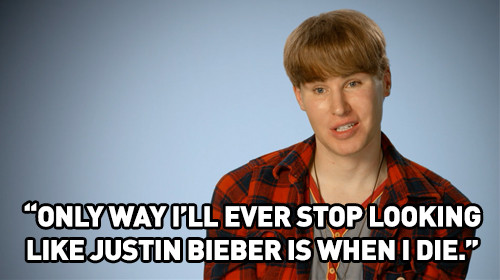
Real Husbands Dr. Paul Nassif (disguised as Moe Syslak from The Simpsons for ease of viewer identification) and Dr. Terry Dubrow (other two-quarters of Heather Dubrow, who must always be named twice) are L.A. plastic surgeons who specialize in fixing botched jobs. There’s some emotional hard luck stories but basically it’s the best excuse ever for social voyeurism and with patients like a Human Ken Doll and a 33-year old man with the face of an early-teen Justin Bieber it’s about as visually mesmerizing as reality TV gets. The show is also indispensable body horror, with its drop-in circus of malfunctioning and distorted anatomy. Even E’s glossification can’t mask the raw psychological distress.

90-Day Fiancé (TLC)

A show close to mine and G’s hearts, since I arrived in the US on a marriage visa. This observational documentary follows six couples during the 90-day window for visitors to the US to marry on the K-1 visa. It’s as compelling for its cartoon parodies of loving marriage as it is for reaffirming the borderless beauty of the institution. So extraordinary and bizarre is the experience for these culture-clash couples that the network barely needs to meddle in the melodrama, as it does for its other reality shows, giving it a more natural (if no less extreme) flow of real events than heavily devised TLC docu-soaps like Here Comes Honey Boo-Boo.

Muppets Most Wanted (Disney)

Variety at heart!

Variety at heart!

Probably more likely to be dismissed on grounds of not being a TV show, this was nonetheless the movie that in 2014 most thoroughly blurred distinctions between film and television. The Muppets are a creation of television, stars Ricky Gervais, Ty Burrell and Tina Fey are all television personalities, and the legacy of The Muppet Show is privileged at the expense of the movie franchise (the latter self-consciously in comic acknowledgements of the diegetic amnesia around popular movie characters and sequels). The movie is a joyous celebration of the achievements and talents of television past and present, reminding us of how far the medium has come. And it’s full of commercials!

LIVE With Kelly And Michael! (ABC)

A show that will doubtless elude recognition for its monotony and ubiquity, but this doesn’t change the fact that host Kelly Ripa is by several miles of open country the funniest, smartest, wittiest and most multi-dimensional presenter in daytime. Her work in morning television is more akin to what Conan, Colbert and Craig Ferguson have done with the late-night form than the platitudinous moron-making of virtually everybody else on TV at that time, and until about 11 in the evening. This is an everyday occurrence, which makes it all the more startling, but her essential impersonation of Laura Linney in the Halloween parody of PBS Masterpiece Theater speaks volumes.

The Late Late Show With Craig Ferguson (CBS)

Not like any other late night show!

Not like any other late night show!

Dare I say that Craig Ferguson’s departure from late-night talk shows will leave an even bigger hole than David Letterman? While Letterman innovated within the format, Ferguson created a new late-night form that was genuinely subversive, avant-garde and experimental, importing a brand of British vaudeville surrealism reminiscent of Reeves & Mortimer and The Mighty Boosh. Like those acts, Ferguson meshed light entertainment with serious art, carved out an absurd fantasy using television grammar, and delivered alternative culture disguised as broad comedy. It was a rejection of all that was bland and formulaic about one of American TV’s most intransigent genres, and a complete reinvention of its possibilities.

Crimewatch

Posted in American TV (General), American TV Shows, Behind-The-Scenes, Reality TV, TV channels, TV History, TV News with tags , , , , , , , , , on November 26, 2014 by Tom Steward

2014 will be remembered as the year American TV went on trial. I mean that quite literally. Three of the stars of Bravo reality franchise The Real Housewives have been given prison sentences for fraud in recent months, and earlier in the year another was arrested for an altercation on the show. In the last few weeks, American TV icon Bill Cosby has been accused of multiple historic instances of sexual assault by women, and his past and future TV shows have been pulled by Netflix, NBC and TV Land. TLC also made the decision to cancel their reality series Here Comes Honey Boo-Boo after star ‘Mama’ June Shannon reportedly started dating a registered sex offender. The reactions from the networks concerned have been variable.

Sopranos Remake Goes Ahead with Cast of Unknowns!

Sopranos Remake Goes Ahead with Cast of Unknowns!

Bravo appointed themselves unofficial court stenographers for the trials of Teresa and Joe Giudice on multiple bank, mortgage and bankruptcy fraud charges and Apollo Nida for bank, mail and wire fraud, following their court appearances on The Real Housewives of New Jersey and The Real Housewives of Atlanta and putting them on every conceivable sister show on the network before and after sentencing. It’s not exaggerating to say that the court cases have been the key interest for each of the series this year, or that Bravo has been unapologetically wallowing in their losses of freedom. The network has skirted around the issue of their guilt and culpability, wasting no opportunity to portray Nida and the Giudices as victims of circumstances, rather than knowing criminals

This is hardly surprising given how Bravo behaved when a criminal act took place on one of their shows. Porscha Williams was charged with assault after attacking Kenya Moore (or rather a tenuously linked appendage of hers) on the ‘Reunion’ episode of this season’s The Real Housewives of Atlanta. The end-of-season special brings the invariably estranged co-stars on to a studio stage and uses footage from the series (and typically social media baiting) to provoke conflict between the guests. The formula is such that violence of one kind or another is inevitable, and that the assault was less of a by-product of the show than a slightly cruder version of its desired effect. Bravo didn’t express the contrition appropriate to goading a person into criminality.

The different between the responses of Bravo and Cosby’s networks may be attributed to the gulf in the seriousness of the alleged crimes, but there could be more at stake. In 2012, it emerged that deceased TV personality Jimmy Savile, an entertainer equivalent in status to Cosby in British popular culture, had been one of the country’s worst ever paedophiles, a fact widely known during his lifetime but downplayed through his connections to the UK establishment. The revelations about Savile laid bare a culture of sexual abuse and assault in British showbusiness in the past few decades. Of course, I’m not suggesting that what Cosby is accused of doing is on the same scale as Savile’s serial child abuse, although both have a moral point-of-no-return.

I make the comparison because in their knee-jerk reaction to media-led allegations, Netflix’s decision to postpone Cosby’s special, NBC’s termination of a new Bill Cosby sitcom, and TV Land removing reruns of The Cosby Show from their schedules might be a tactic to draw a line under the controversy before it takes out any more of the entertainment legends their business depends on. There’s no reason to disbelieve the women who are coming forward to accuse Cosby, since they have all to lose and nothing to gain by smearing the comedian’s good name, but the networks have based their verdicts calls on unsubstantiated claims in lieu of a police investigation. If CNN’s reproach of Joan Tarshis is representative, it’s not about solidarity with Cosby’s alleged victims.

There Goes Honey Boo-Boo!

There Goes Honey Boo-Boo!

TLC cancelled Here Comes Honey Boo-Boo as June Shannon apparently resumed her relationship with Mark McDaniel, who was convicted of molesting June’s daughter Anna Cardwell. The network should be commended for sacrificing one of their most valuable properties in making a moral stance, but TLC’s rhetoric about their duty of care towards the Shannon children is disingenuous. A network statement said TLC was committed to ‘health and welfare of these remarkable children’ but they’ve never been conflicted about exploiting their socio-economic disadvantages for entertainment and, as E!’s TV review The Soup illustrated, the network haven’t made any interventions to prevent the children’s health problems. While Bravo is clearly the most exploitative network here, at least it doesn’t pretend to have anything but self-interest at heart.