Archive for the American TV (General) Category

Robin’s Best

Posted in American TV (General), American TV Shows, BiogTV, TV Acting, Unsung Heroes with tags , , , , , , , , , on August 20, 2014 by Tom Steward

Since the untimely death of comic and actor Robin Williams last week, I’ve been looking back at his performances on television. I’ve been continually surprised and impressed at how as a sitcom actor, guest star and chat show guest he was able to take command of the medium, especially as Williams’ talents were always thought best suited to the dynamic scope of cinema and unbridled spontaneity of the live stage. I was struck by how he accommodated his manic act and style to the contours of the small screen, used television to test his mettle as a character actor, and realised TV’s capacity for intimacy to bring his audience closer to Williams the man. The passing of James Garner, Lauren Bacall and Robin Williams in the past weeks is worsened by the knowledge that all were unusually good at doing television and have been lost to more than art form.

Mork Who?

Mork Who?

The significance of science-fiction sitcom Mork & Mindy to Williams’ career seems to have been regarded by most obituaries I’ve encountered as simply his stepping stone to popular exposure. This assumption drastically underestimates how important the role of Mork was to Williams’ development as an actor. In it, he learned to temper his aggressive bombardment of the audience with pathos thanks to the show’s romantic core and fable quality, a balance that would come to define his movie persona (and one that when tipped would sink him artistically). The sitcom wasn’t always the lightweight fantasy people perhaps remember, more Twilight Zone than Bewitched (if Williams’ catchphrase humming of the anthology’s theme tune wasn’t enough to sway you). There was hard science-fiction in there, unsettling biological imagery, and hard-hitting issues like mental illness and addiction. Seen now, Mork & Mindy prepared Williams for darker material he later turned his hand to.

Williams’ portrayal of Mork had an enduring impact on science-fiction television. Watching episodes of the series now, particularly when Mork is in his formal bow-tie and suspenders, I couldn’t help but think of Matt Smith’s incarnation of time-travelling extra-terrestrial The Doctor in Doctor Who. Common to both performances is the essential idea of a character who is not alien in appearance but in his social naivety, fashion missteps and absurd physicality. The success Williams achieved in depicting an otherworldly strangeness and difference without the aid of make-up, prosthetics or effects must have been a boon to anyone wanting to make science-fiction within a budget-dependent TV format. It took a concept as extreme as alien visitation to contain a freestyling comedian like Williams within a studio sitcom, but at its heart Mork & Mindy nailed that mix of the fantastical and the mundane that distinguishes all good and great science-fiction TV.

Williams was deep into his acting career before he started to take on purely dramatic parts, even though the ability to play emotion straight in his early movies was crucial to their appeal. However, years before his acclaimed deadpan turns in Good Will Hunting, Insomnia and One Hour Photo, Williams played a tourist whose wife is shot on the streets of Baltimore in an episode of complex cop show Homicide: Life on the Street. Williams’ demonstrated ability to completely disappear into a character without a trace of his conspicuous comic persona left really opened the industry’s eyes to his value as a serious actor. The gut-wrenching emotions experienced by his character were performed credibly, and without fuss, which undoubtedly marketed his ability to do strong emotion well. Thought something he and his directors did not always taken advantage of, it nonetheless signalled that he was a rounded actor of range.

Robin, Robin, Robin, Robiiiiiin!

Robin, Robin, Robin, Robiiiiiin!

I’m grateful to OWN for repeating full versions of interviews with Williams from the ‘80s and ‘90s on The Oprah Winfrey Show. Not only is it apparent that Williams’ could transcend limitations of television space and time, no matter how cardboard the set and videographic the production values, it is also notable that when disarmed with Oprah’s frank questions about his personal life (she was a different proposition as interviewer in those days!), he can exploit the potential for television to be a confessional medium to admit to a darker side to the always-joking persona he presented in public. Clearer than in any other medium, TV was privy to the qualities of Williams’ personality that would eventually consume him. One of William’s last TV appearances on Louis C.K.’s signature sitcom Louie cemented his legacy as a character actor, playing a fictional creation in a show full of comics playing themselves.
Bumping The Shark

Posted in American TV (General), American TV Shows, Reality TV, Reviews, TV channels, TV Culture, TV History, TV News, Watching TV with tags , , , , , , , , , on August 13, 2014 by Tom Steward

Last week was Shark Week, Discovery’s incredulously popular annual event consisting of 7 days of continuous shark-themed programming, sandwiched neatly inbetween the network’s other 358 days of continuous shark-themed programming. Now in its 27th year, the ripple effect of Shark Week across TV is staggering, with a shoal of cable networks attempting to take a bite out of Discovery’s ratings with concurrent themed programming alternatives created under the fin of Shark Week. While some satirise the inflated phenomenon of Shark Week, others are brazenly capitalising on its currency. Here’s some of the counter-attacks, and a few suggestions for next year:

Jaws Week:

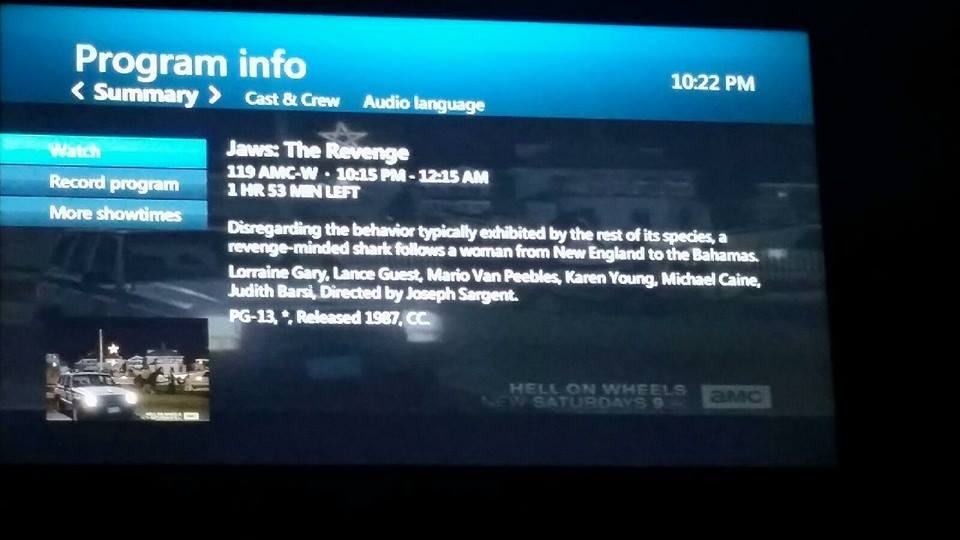
Steven Seagal movie marathon and quality TV gamut-running network AMC showed a Jaws movie every night, a prospect that got increasingly less attractive as the week went on. The appeal of the original movie passes me by, even though I think Spielberg is a great cinematic illusionist (in that he’s tricked people into thinking he’s a good director), but it and its no-frills sequel are both perfectly serviceable potboilers. Jaws 3-D would be a condescend-a-minute romp through the annals of hilariously dated visual gimmicks were it not now the desired look for all of Hollywood’s blockbusters. Jaws: The Revenge is a movie so contrived that even the info button on my cable box couldn’t help but have a pop at its hopeless storyline.

The ghost of Roger Ebert haunts my info button!

The ghost of Roger Ebert haunts my info button!

Snark Week:

Quantitative data-led camp reality and comedy network WEtv spent a week filleting its programming – I’ll stop the sea puns eventualgae – for the snarkiest (‘bitchiest’ in old and perfectly legal tender) cuts to assemble a ‘snark-a-thon’. Re-runs of Roseanne and Will and Grace were predictable but apparently the sunglass-deflected verbal garbage spewed by douchetective Horatio Kane in cold opens of CSI: Miami has been reclaimed as snark. Making use of its rolling reality repertory, the network launched (seemingly in a word document with an unstandardized font) David Tutera’s CELEBrations where the celebrity event planner plans events…for celebrities. Snark is obviously also reality-speak for ‘palindrome’. All this was accompanied by an onscreen ‘snark-o-meter’ because you know how reality TV fans love their maths.

Shart Week:

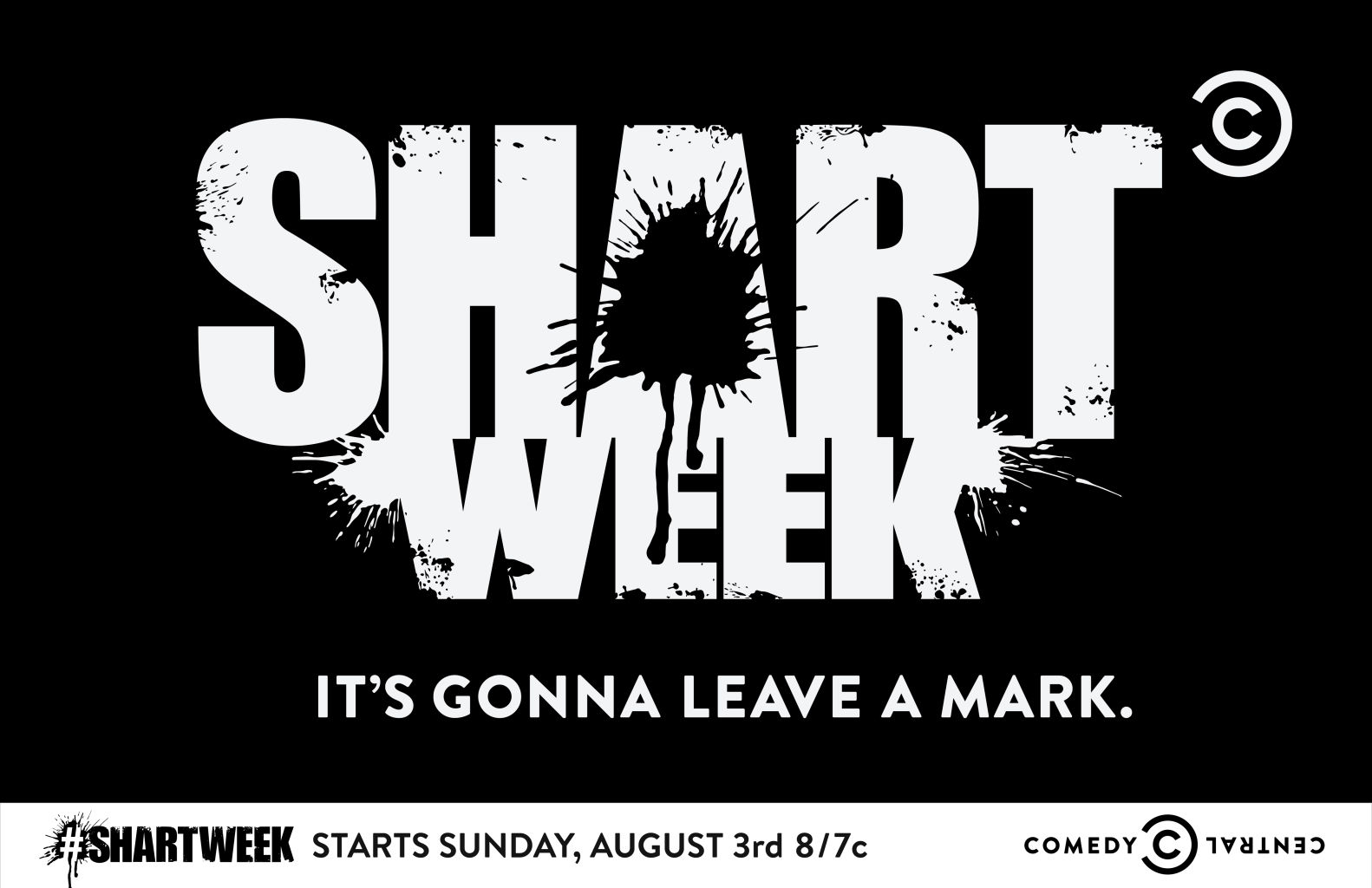
Comedy Central, a network dedicated to the lifetime incarceration of Jon Stewart, took a break from its correctional duties last week to show some shit, or at least more shit than usual. In one of the more anarchic responses to Shark Week, the network drained its sewer system (also known as Comedy Central before noon) to find the most scatological episodes of its many and clearly-not-that-varied programmes. Not only did they manage to find enough programming to last 7 days from noon to midnight, there were entire episodes on the subject, like South Park’s ‘Mr Hanky, the Christmas Poo’. A great way to dump on Discovery, I maintain that if this isn’t a sign there’s too many men on a network, nothing is.

Jumping the Shart

Jumping the Shart

Sharknado Week:

Probably the closest rival to Shark Week since it primarily airs fictional programming about sharks with no basis in science whatsoever; spelling-free telefantasy network Sy-Fy premiered Sharknado: The Second One, the sequel to its bottom-feeding 2013 original TV movie, and filled out the airwaves with movies of similar or worse quality about sharks and one other thing. It could also have been dubbed ‘Son of Shark Week’ as it’s hard to imagine this monstrosity (and that’s the closest you’ll get to a compliment from me) existing without 25 years of dumb stuff being said about sharks softening up the American public for these pixel-thin piss-takes. As spoof-proof television, it’ll give your sarcasm glands a much-needed rest after a day of Shark Week ‘documentaries’.

Shark Week Alternatives 2015:

TV Land should launch Jump-The-Shark Week where the network only shows re-runs of episodes broadcast after it became impossible to take a show seriously. This would include all the post-lottery win episodes of Roseanne and any Dallas after 1986 starring the ghost of Bobby Ewing. FX can do Stark Week where primetime consists of airings of the Iron Man movies – actually the FX execs can just let nature take its course on this one. The Food Network could run Chard Week featuring all the best appearances of the vegetable in the mystery box on Chopped, including the time someone drizzled it with a gummiworm-infused vinaigrette. The Biography Channel should host Narc Week in which all the interviews with blacked-out faces and altered voices of cops who’ve squealed on the Mafia are edited together and begin to resemble one endless Peter Frampton concert in the dark.

Garner, But Not Forgotten

Posted in American TV (General), American TV Shows, TV Acting, TV advertising, TV History, TV News, Unsung Heroes with tags , , , , , , , , , on August 6, 2014 by Tom Steward

Sometimes I think I shouldn’t stop writing this blog as it seems that whenever I do someone significant to TV dies. This time, though, ‘significant’ doesn’t cut it, and all superlatives are understatements. It’s difficult to quantify what James Garner – who died of natural causes this July at the age of 86 – meant to television. Not only was he around during TV’s formative years and helped the medium come of age, he had the rare distinction of playing two of the greatest characters to ever grace the small screen. Obituaries both written and forthcoming will doubtless talk about what an incredible movie star Garner was (and indeed he was) but I always thought there was a certain dailiness about his performances that made him perfect for television, and may help explain why he kept returning to TV while his film roles continually deflated the grandiosity of the cinema.

A TV Maverick.

A TV Maverick.

Garner’s first major television role was drifter gambler Bret Maverick in Warner Brothers’ western dramedy series Maverick, which he played throughout the late fifties. The show is a one-word argument against FCC chairman Newton Minnow’s notion of TV in that era as a ‘vast wasteland’. It was anti-formulaic, adult, challenging and irreverent, and Garner’s humour, bathos and moral ambiguity in the part had a lot to do with that. Essentially a thinking man’s riposte to the branding-iron western TV series (they didn’t have cookie-cutters on the frontier!) that overpopulated the networks at the time, Maverick was an early indication of the quality of television that could be achieved working within popular genres. While Bret Maverick certainly paved the way for television antiheroes like Tony Soprano and Walter White, Garner saw him more as a ‘reluctant hero’ and played it accordingly. It was that kind of nuance that made the difference.

In Garner’s 2011 autobiography The Garner Files – itself a classic in literary understatement – the actor’s usually low-key prose cannot downplay the importance of Maverick to the TV of its day:

‘In its own way, Maverick was “anti-establishment”. It gave voice to viewers’ dissatisfaction with the predictable, button-down TV of the ‘50s, with its black-and-white morality. Maverick explored gray areas by questioning the authority of the conventional Western hero. After Maverick, it was hard to watch those steely-eyed cowboys without laughing.’

It’s worth remembering that fifties American TV was highly praised for its character drama in anthology form like Philco Television Playhouse and Studio One, and so to offer this kind of psychological complexity in the form of a western series – more often regarded as the cultural antithesis of the anthology drama – was radical. It also showed that TV could do something worthwhile with the western formula.

That would be enough for most actors, but unbelievably Garner did it all over again as every-slob private eye Jim Rockford in Universal’s detective series The Rockford Files which ran throughout the late seventies. One of the most perfectly-made shows in television history, Garner’s lastingly lovable lead performance put it over the top, and into perpetual syndication. The actor’s iron rule over his Cherokee Productions also ensured that Universal never dragged the show back to the studio lot, and kept it as freewheeling as the Southern California locations we saw onscreen. The Rockford Files’ tone-perfect medley of comedy, drama and thriller was a template for quality US television to come, and all that was there in Garner’s performance. Never humourless nor too frivolous; a hero you could believe in because he didn’t believe in it himself. Unlike most sanctimonious American TV protagonists, Garner never pretended Rockford wasn’t out for himself.

Rockford of Ages.

Rockford of Ages.

Despite a string of memorable and game-changing performances in a host of movies, Garner always went back to TV in the end. Whether it was the Rockford Files TV movies (which, oddly, didn’t disgrace the original), a series of beloved Polaroid commercials with actress Mariette Hartley harking back to the repartee of romantic screwball comedies, or replacing the late John Ritter as the patriarch on sitcom 8 Simple Rules. Rather than trashing television as so many Hollywood movie stars have, he decided instead to make it better, either by seeking out the best material or improving drastically on the worst. After Garner was through with television, it didn’t look like there was a distinction between TV and the movies any more. It would be impossible to find two better performances in television than Bret Maverick and Jim Rockford, but James Garner always meant more than the sum of his parts.

Box Jumps

Posted in American TV (General), American TV Shows, Behind-The-Scenes, TV channels, TV History with tags , , , , , , , , , on June 24, 2014 by Tom Steward

With the possible exception of serial killing, the part of our culture most likely to produce copycats is television. Each idea that has any kind of success with or impact on viewers will be re-circulated more or less unmodified until the imitation has paled to the point it recalls the scene in Moulin Rouge where Nicole Kidman pretends to be Madonna pretending to be Marilyn Monroe. This is why there are currently five series airing on US television (that I can name!) about software developers and why so many recent TV dramas use flashback, even though it runs counter to the logic of television’s simultaneous time. A particularly alarming television trend doing the rounds at the moment is arbitrary jumps in time that leave huge gaps in series timelines. Rather than heralding a new style of TV storytelling, these flashforwards seem more like afterthoughts designed to resolve awkward continuity problems.

Fargo the year!

Fargo the year!

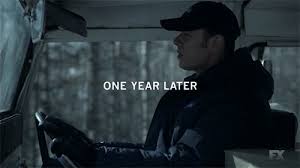
It was recently announced that the final season of HBO’s prohibition-era gangster drama Boardwalk Empire would take place in 1931, seven years after the end of the previous season, which had covered the late teens and early twenties in its first four seasons. The final few minutes of the latest season of docu-sitcom Parks and Recreation jumped three years ahead, omitting Leslie Knope’s pregnancy, the birth of her triplets, and the first years of her new job. FX’s thriller mini-series Fargo skipped a year in its last few episodes, this time allowing police Deputy Molly to get pregnant and criminal conspirators Lester and Lorne to start new lives. After nine episodes out of twelve, we’re still waiting for the belated revival of 24, Live Another Day, to jump a few hours to get us to the end of the day before the season ends, as promised by the show’s producers.

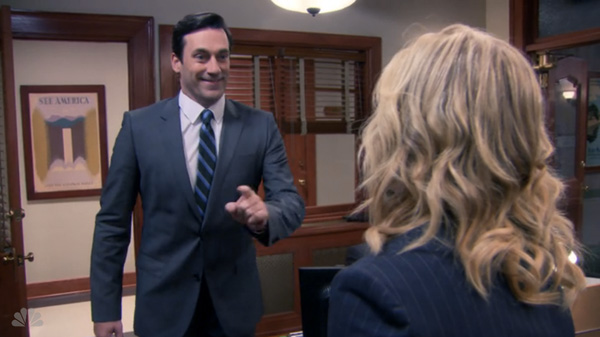
When TV shows did this in the past, it always smacked of desperation. It was no coincidence that Desperate Housewives jumped five years in its fifth season the same time as viewers were leaving the show in droves. Nor was a secret that One Tree Hill’s skip ahead four years halfway through its run was a thinly veiled attempt to bring characters’ ages into touch with the actors playing them. The time jump might be being deployed in a slightly smarter way these days, with Parks and Recreation’s implication that the nation has missed out on a three-year recurring guest role from Mad Men’s Jon Hamm, who is fired from Leslie’s office seconds after the ellipsis. But if you look at where the jumps are situated in the runs of these series, and think about why they should happen at that exact point, you’ll see they are no less crude.

As with flashbacks, part of the problem is that time jumps upset the way time works in television. It’s conventional that TV time runs concurrently with the time in which we live out our lives, and pleasurably so since much of the joy of watching TV is the way it syncs with what we’re doing. Time jumps invariably put a show ahead of the time of viewing, which makes it a kind of science-fiction, and would be fine if that’s what the programme-makers were going for. Aside from problems of realism and plausibility caused by the time jump, it also puts viewers at odds with programmes rather than it seguing with their daily and weekly lives. It’s also more of a placebo for story problems than a panacea. Things take time to work themselves out in television, and television should remain a record of that not a remedy for it.

Look what we missed!

Look what we missed!

A time jump might have relieved Parks and Recreation viewers of another pregnancy storyline but it also cheated them of character development. It’s very much a self-written corner since no-one asked the writers to put two pregnancies back-to-back. The loss of a full year in Fargo deprived the series of the suspenseful and tightly-knit storytelling that held the show together, resulting in a deeply unsatisfying denouement. We’ve yet to see how 24 will skip ahead to later hours of the day, but it’s bound to disrupt the real-time orthodoxy of the premise. The producers of Boardwalk Empire may feel they have more justification to move forward in time since it is a historical piece. My initial thoughts are that the 1930s is a very different animal historically, and that Boardwalk Empire can’t help but become a different programme. Can we jump forward to a time when TV doesn’t time jump?


Window on the World Cup

Posted in American TV (General), Touring TV, TV channels, TV Sports with tags , , , , , , , , , on June 19, 2014 by Tom Steward

This is the first time I’ve not been in Britain during a World Cup. The point would be moot were I virtually anywhere else in the world, be it Europe, Africa or even Latin America. But I’m in the United States, where the following for football/soccer (delete as inappropriate) is cult at best. The US team did well in their World Cup qualifiers and they’ve started the tournament with a big win over bogey team Ghana (if you’re not sure what I’m taking about at this point, it’s probably not worth going on…) so they’ll be some bandwagoning, but, unlike most nations, it will be driven more by patriotism than love of the game. But I’m starting to realise that television makes a World Cup.

ESPN replaces match coverage with cooking shows!

ESPN: football in the wrong place!

You might wonder what the difference is since a game’s content doesn’t change depending on where you watch it. It’s not some animated blockbuster that has local celebrities dubbing the characters’ voices. Except it sort of is. I don’t need commentary and coverage by my countrymen any more than I need an Englishman coaching the national team (because that always works out so well for us) but I need pundits who can talk about the game with some degree of sophistication. That’s not to say that British TV guarantees this. ITV’s nickname-driven football bloke-in always fell short yet the statistic-based monotone of Spanish language network Univision’s World Cup commentary hits the spot. So let’s call a spade a spade, or let’s just call ESPN shit!

In some ways, ESPN’s World Cup coverage feels very familiar. Commentator Ian Darke is English and previously worked for Sky Sports, and has that voice that only British football pundits and inflammatory talk radio DJs have the rights to. He’s backed up by a renowned ex-Premier League player, Liverpool’s Steve McManaman, whose years in the sport somehow haven’t resulted in the ability to read a match. Just like ITV, the coverage is heavily commercialised and avowedly lowest common denominator, with a line in metaphor that makes the poetry written by contestants on The Bachelorette seem avant-garde. But if this were all that was wrong, it wouldn’t be any more disappointing than being forced to watch football in the company of Adrian Chiles, Britain’s highest-paid pumpkin.

But it is much worse. The commentary is idiot-friendly to the point of baby-talk. During USA vs. Ghana, pundits referred to the US closing the game down as ‘parking the bus’ so many times, I actually thought the handbrake on the team coach was off. Conversely, the self-evident rules of the game are discussed with a depth and ambiguity that wouldn’t look out of place in The Wire. Behind this I’m sure there’s some nobly futile effort to broaden the appeal of football to US sports fans, but it insults our intelligences from ear to ear. The studio segments are so short they’re more like game shows where pundits have to come up with a repeatable three-syllable analogy before the clock runs out. Reports from the city have been replaced by pseudo-Steinbeckian monologues.

The other culture-shock (although does it count if it’s just one country holding out?) is that ESPN’s coverage of the World Cup doesn’t include all the tournament’s games and events. The opening ceremony featuring a kidnapped Jennifer Lopez was shunned in favour of the US Open and though I’m not one for race-baiting, it does tend to be the games featuring the whiter parts of the world that are covered. In cultures where football is taken seriously, TV channels broadcast a continuous World Cup flow but ESPN’s coverage is sandwiched in-between Nascar races and miscellaneous college sports tournaments. It’s jarring not to have every broadcaster on TV crowbarring the World Cup into every studio segment. Never have I longed more for a bloated pre-match show.

Univision: football coverage you can count by!

Univision: football coverage you can count by!

Hispanic TV networks have been my sanctuary. I may only understand a quarter of what’s said but the pundits’ innate football knowledge and enthusiasm is palpable. All possible scenarios within the match have their own catchphrases, bellowed in one continuous breath by the commentator. Seemingly every show on Univision, regardless of genre, cuts away to live coverage in Brazil like a transmission test card and it’s not uncommon to see news being presented in football strips. It’s not a home away from home; it’s an extended stay with a mad moustached uncle. I never thought there was anything worse than ITV Football, but there is and it’s ITV Football for beginners. I’m just grateful there’s enough Latinos in the US to give me an alternative.