Archive for the American TV (General) Category

Mexican Stand-Off

Posted in American TV (General), American TV Shows, Reality TV, TV advertising, TV channels, TV Criticism, Watching TV with tags , , , , , , , , , on May 11, 2014 by Tom Steward

This is a post about an episode of a TV show and an open letter responding to that episode. Please watch the episode and read the letter before reading the post, as my editorialising of the episode and the letter will not be sufficient exposure to form an opinion on them and it would be unfair to base a response to the episode on what this post and the letter have to say about it.

On Sunday night, CNN aired a new episode of the travel documentary series Anthony Bourdain: Parts Unknown about Mexico City. The following day, travel blogger W. Scott Koenig published an open letter to Anthony Bourdain about the episode on his website agringoinmexico.com. Though the letter is reverent towards Bourdain’s writing and journalism in general, Koenig strongly contested the portrayal of Mexico in Sunday’s episode of the chef-writer-presenter’s signature travel show, now in its third season. Koenig accused Bourdain of a disproportionate emphasis on the drug-related violence and killing that takes place in the country and overlooking the richness of the culture, history, art and gastronomy in the regions he visited on the show. Koenig also hinted strongly at potential interference from the network and the programme’s advertisers to scaremonger about visiting Mexico and lumped in the episode with inaccurate press reporting on Mexican drug violence, with comparative statistics to boot.

A Body-Blow in Mexico!

A Body-Blow in Mexico!

Koenig has already swathed Bourdain in the kind of praise that I would have given him, so I don’t feel the need to defend for the latter’s impeccable record in TV, journalism and prose in both non-fiction and fiction. I do, however, feel the need to intercede somewhere between apologist and critic on his behalf. Koenig is right to be disturbed, unsettled and disappointed with the Mexico City episode, but perhaps not for the reasons the blogger outlines. Firstly, I do have to point out a disparity in quality between the two works, lest you think I’m creating a false equivalency between an intricately constructed TV documentary and a hastily-written blog post. If you are going to offer a riposte to such an artfully made and powerfully written piece of television, blogger’s ellipsis and internet grammatology isn’t going to cut it. Right or wrong, this was proof-correction of artistic meditation.

My initial reaction to the Mexico City episode of Parts Unknown was that Bourdain was trying to dispel some of the comforting myths people tell themselves about countries in the grip of violence and under the yoke of organised crime. The perception that gangster rule – in this case the cartels – protects the innocent from harm because of their predominantly internal conflicts was fundamentally altered with the stories of Mexican journalists, protestors, artists and bystanders who had perished or lived in fear for their lives. Any sense that the cartels are a rogue criminal element in Mexico was immediately quashed by the episode connecting the dots between drug operations and Mexican business and government. These are important distinctions, and not to be taken or shown lightly. If I had this as a documentarian, I’d feel obliged to lead with it, even if it meant a few less restaurants onscreen.

While Koenig (or wife Ursula, whom he credits with the bald synopsis) is not wrong about a motif of ‘bodies’ in the episode, I think they may have misjudged where this darkness is coming from. Rather than a SPECTRE-like network-advertiser conspiracy to inadvertently profit from tourism, the emphasis on violence and killing was more likely motivated by Bourdain’s anger and outrage at what’s going on in his backyard. As we saw in last season’s episode of Parts Unknown in Detroit, Bourdain is at his most livid when faced with the ruin of places closest to his home and heart, in parts of the world where remedy is within reach. It is not contempt but fear for Mexico that seems to drive this episode, the unjust feeling that a place of such beauty and brilliance doesn’t have the system it deserves, but also that a good neighbour needs a good turn.

Bourdain in Baja.

Bourdain in Baja.

I don’t think the episode should have sacrificed this raw, seething depiction of social problems for local culture any more than The Wire should have gone to more Baltimore crab shacks (Koenig is loath to admit that there is a great deal of food and drink in the episode). I would take issue with Bourdain’s attitude to Mexico, however. In the Baja episode of No Reservations a couple of years ago, Bourdain wore his ignorance about Mexico on his sleeve and let the natives surprise him. Here, he seems very certain of how the country can solve its problems, and doesn’t mind telling the locals. Crucially, we don’t see what the Mexicans he meets think of his suggestions! I was taken aback by the episode, if only because Bourdain has made more upbeat programmes about worse-off places (Libya, for example). Unbalanced, maybe. Sensationalist, never. Violent? Yes, but not without motive.

Jumping Jacks & Sharks and Recreation

Posted in American TV (General), American TV Shows, TV Acting, TV channels, TV Culture, TV History, TV News, Watching TV with tags , , , , , , , , , on May 8, 2014 by Tom Steward

Recently I’ve been thinking about the phrase ‘jumping the shark’, which is TV-speak for when something happens in a TV series that precludes any subsequent developments from being taken seriously. The term derives from a scene in the fifth-season premiere of 1950s-set American nostalgia sitcom Happy Days in which Dad-aged TV surrogate of cool The Fonz jumps over a shark on water-skis. The phrase did not come into popular usage until the late 1990s – twenty years after the episode aired – when radio and web personality Jon Hein compiled a list of TV shows that declined badly in quality on his website jumptheshark.com. It’s been on my mind because the condition seemed to be peculiar to television series, especially the American ones that go on too long, and yet lately I’ve heard ‘jumping the shark’ used in connection to all walks of life. Also, there are some shows currently on the air that reminded me how easy it is to ‘jump the shark’. Can shark-jumping apply to anything but television and what does it mean for a TV show when that fin appears above the water?

Choppy Days!

Choppy Days!

First of all, it’s unfair to implicate Happy Days in this phraseology. People didn’t watch Happy Days for realism but rather nostalgia, kitsch and fun. The series always had room for flights of fancy, like the special science-fiction episode which introduced Robin Williams’ alien Mork to TV. If we were to go back and coin another phrase that better describes what we’re talking about, we might go instead with a reference to a show that genuinely lost its way. We could talk about TV shows that ‘found a dead man in the shower’, recalling the time that super-soap Dallas made an entire season worth of episodes a dream in order to bring star Patrick Duffy back from the dead as Bobby Ewing. The producers of Dallas forgot that just because melodrama isn’t always convincing, it can’t simply be nonsense. We might even say that a series has ‘won the Illinois lottery’ in lieu of the lottery win which made the working-class Conner family in the sitcom Roseanne into millionaires for the entirety of the final season, duly sabotaging the show’s uniquely stark and undiluted portrayal of blue-collar life.

A couple of weeks ago I heard Dancing with the Stars host Tom Bergeron use ‘jumping the shark’ in reference to social media when describing the show’s ‘shirt on/shirt off’ Twitter voting campaign for one of its male dancers but not, strangely, when discussing the tanking ABC series Agents of Shield. In his casually amazing stand-up special Obsessed shown on Comedy Central over Easter, comedian Jim Gaffigan accused Yum Yum Donuts of ‘jumping the shark’ on business names. Apparently, the phrase has been widespread in media, business and politics for years now. There’s not really much you can do once a phrase has infiltrated popular culture (or we’d have redacted ‘selfie’ from history by now), but we should remember its roots in TV. TV shows don’t ‘jump the shark’ intentionally but as a symptom of a worn-out format, a capitulation of principles or a desperate need to survive. So much of American TV is about keeping shows on the air at any price and prolonging their natural lifespan that ‘jumping the shark’ is inevitable, and much more so than in other forms of culture.

Sitcom of the Future?

Sitcom of the Future?

Season six of docu-sitcom Parks and Recreation recently had its finale and in its final few seconds arguably lost all credibility as a sitcom grounded in contemporary reality. From this point on, we’ll be watching a sitcom set in the projected near future, and nothing can undo that. This all happened for the sake of resolving story problems that the writers had themselves created and a few discontinuity gags. It’s pretty clear that a TV show doesn’t need a grandstanding spectacle to ‘jump the shark’; it can do it casually under viewers’ noses. This week marks the return of 24, which probably holds the water-speed record on shark-jumping throughout its previous eight seasons of amnesia, faked deaths, nukes and conspiracies. Yet audiences still bestow the show with the legitimacy that graced its first, and only truly believable, season. There are even websites that count the number of times a TV show has ‘jumped the shark’ during its run. Even though we may assume a show can’t come back from ‘jumping the shark’, clearly it can and we might just have to accept that it’s something that happens organically to TV shows.

Dog Shows and Cat Boxes

Posted in American TV (General), American TV Shows, Reality TV, TV Criticism, TV History, Watching TV with tags , , , , , , , , , on April 22, 2014 by Tom Steward

I begin with a broadcasting history anecdote but bear with me. In Britain in the late ‘80s, a debate was held on what constituted quality television ahead of a broadcasting White Paper proposing the introduction of television outside public service regulation in the form of a satellite service to the UK. Unsurprisingly given what would go on to happen with Downton Abbey, business won over art and the agreed-upon definition of British quality television was pseudo-literary period drama with an easily exportable ideal of British national identity based on our imperial past. But during the debate, a definition of quality television offered by scholar Geoff Mulgan was ‘usable stories’, an idea consonant with broadcasting that television should tell its viewers something that could help them personally or collectively in their society. This understanding of quality in television has always stuck with me and it’s come to mind recently as a way of defending several American TV programmes I’ve been watching that are otherwise badly made, poorly written and artlessly executed. But is that justification enough?

Dog Daytime TV

Dog Daytime TV

I’m a dog-owner and I used to be a cat-owner. Hence I’ve been watching a lot of Nat Geo Wild’s The Dog Whisperer and Animal Planet’s cartoon riposte My Cat from Hell. Both shows tackle the same premise but are – quite literally – very different animals. In each, pet-owners call in behavioural specialists or PWCs (Psychologists Without Credentials) for their animal, Cesar Millan for the dogs and (apparently on return from the 23rd Century) Jackson Galaxy for the cats. The pets in question are usually engaging in dysfunctional behaviour, although the sub-Scooby Doo twist is always that it’s the owners who are really screwed up. Cesar controls the dogs by making them more obedient, calm and submissive and Jackson makes the cats easier to live with by compelling owners to hand over the entirety of their house to their new feline landlords. Different strokes for different pets. Both programmes are shoddily constructed, replete with ham-fisted set-ups, and full of duplication, laboriously eeking out a handful of choice moments into an hour of blink-and-you’ll-never-miss-it television.

That said, there’s more here that’s relevant to my daily life than in all the shows I’ve ever feted as quality TV. And I’m not just speaking selfishly. I’m a better citizen because of these shows, and with the possible exception of The Wire there’s not many ‘quality’ programmes you can say that about. My dog (by marriage) A is by no means a handful but nor is he entirely obedient, and sometimes he has to be because he’s a big boy and a breed that ignorant people (and that’s large sections of the public) mistakenly think of as a vicious dog and so there’s less chance any harm will come to him if he’s never out of our control. Thanks to The Dog Whisperer, I know that I can subdue A in any situation by calming myself first and that dogs need to respect as well as love you before they obey. Thanks to My Cat from Hell, I know that if I get a cat, I should just hand them the house keys.

Marriage Boot Camp is a truly awful TV show by anyone’s reckoning. Everyone involved is a horrid caricature (self-made or portrayed) of their social type and their relationships ugly distortions of what marriage is really like. The format and its ‘exercises’ (we should say games) don’t help anyone, and the whole debacle is thickly lacquered in anesthetized self-help dross. G and I recently celebrated our first wedding anniversary and we’re both ecstatic about each other and the institution. So whereas once I would see Marriage Boot Camp as a simple lie perpetuated by a periodically lazy medium, I now see it as a cautionary fable of what happens when married couples become grotesque circus-mirrors of loving unions. It’s the same old shit but my relationship to it has changed. Perversely, the show may even help our marriage, not because of the guidance it offers but because I now have a high-definition image in my mind of what a bad marriage looks like and I refuse to ever let myself resemble one single pixel of it.

Balls and Chains!

Balls and Chains!

I never thought I was that concerned with the use-value of the TV shows I watched. Then I think how little British TV I now watch compared to when I lived in Britain. Sure, it’s harder to get British programmes here and much easier just to go with the flow (50 television academics just telepathically high-fived!) but frankly it’s very possible these days and the shows themselves are no less for me being here. It’s only because they don’t seem relevant to my life as it is now that I don’t watch them as regularly. Most of the British shows I’ve lost in translation are the ones I used to sync myself to the national calendar. You can tell that from the titles: The Great British Menu, The Great British Bake-Off, Coronation Street. What remains is everything I watch for content and style (Doctor Who, The Fall, Peep Show) not because they speak to me in my immediate surroundings. I don’t think I’ll ever completely confuse useful programming with good TV, but it’s tempting sometimes.


Special FX

Posted in American TV (General), American TV Shows, Reviews, TV Acting, TV channels, TV Culture, TV History, TV News, Unsung Heroes with tags , , , , , , , , , on April 15, 2014 by Tom Steward

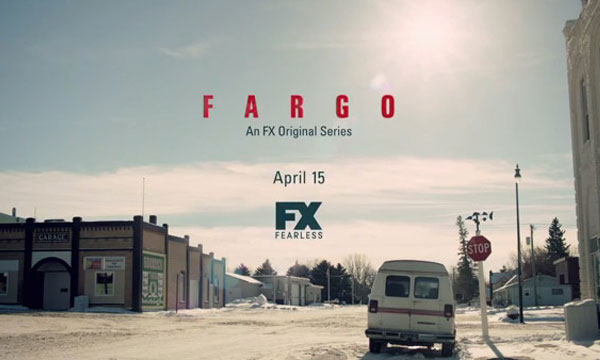
Tonight is the much-anticipated series premiere of FX’s Fargo, an adaptation-cum-remake of The Coen Brothers’ 1996 Minnesota-based thriller. In any other context, audiences and critics would balk at the very thought of a reboot (or ‘re-imagining’ as producers of shit remakes are want to say) of one of the sibling directors’ most perfect movies. But this is FX we’re talking about; a network which has consistently made the finest television in the US since it began producing original drama in the early 2000s. The virulent hype and promotion that preceded the launch of Fargo is unusual for the network, however. Over the past decade, FX series have been continually overshadowed by the original drama programming of subscription cable alternatives HBO and Showtime as well as basic cable competitors AMC. Consequently, many FX programmes have gone under the radar of critics and, crucially, viewers. But is this all about to change?

Not the 10th in the Fargo movie franchise!

Not the 10th in the Fargo movie franchise!

It was a fairly ignominious start for FX when it launched in 1994. Fox’s cable channel had limited availability nationally and mostly functioned as a dumping ground for re-runs of retro TV broken up with some informal and interactive live formats that were already dated by the mid-1990s. The late ‘90s re-brand brought newer re-runs and more movies but no significant advances in original programming. The network’s targeting of a young male demographic was as short-sighted as any of those millennial media moves to mainstream machismo (pardon the bitter alliteration, or biteration, oh just ignore me…). Fox’s decision in the early 2000s to make FX the destination of its edgiest and most innovative drama was the network’s salvation. Chief among them was The Shield, a series that punctured the heroic lore of cop shows with its pulsatingly visceral depiction of a venal, corrupt and amoral police force mired in blood.

The Shield was the cop show equivalent of The Sopranos – and just as televisually breakthrough – but comparisons with the HBO gangster series did the programme no favours. Both series ran concurrently and ended at the same time, with The Sopranos taking all the plaudits from its less self-consciously artful (but no less magnificent) counterpart. The Shield couldn’t get even catch a break in the cop show stakes. Almost as soon as the first season ended, HBO premiered The Wire, a police drama that depicted urban crime with such breath-taking detail and complexity it beat The Shield (and any other cop show in the business) for realism hands-down every time. The Shield was certainly more melodramatic and stylised than The Wire but it’s an unfair comparison that severely under-estimates how much the former did to cultivate the art of anti-hero television (and it had a better final season so…nah!).

The Sopranos of Cop Shows

The Sopranos of Cop Shows

FX continued throughout the noughties making original drama that took Fox’s ‘90s legacy of groundbreaking genre series into the 21st Century. Like NYPD Blue and The X-Files before it, shows like cosmetic surgery dramedy Nip/Tuck and anti-courtroom drama Damages pushed boundaries on representations of sex, violence and obscenity while overturning TV genre conventions. But it seemed there was always something around in cable television to steal the spotlight. Nip/Tuck was invariably seen as the bastard son of HBO’s mortician family drama Six Feet Under. Damages, created by Sopranos alumni the Kessler brothers, had the misfortune of going up against a show created by another former Soprano; Matthew Weiner’s Mad Men. In a sense, FX’s accomplishments are greater than those of HBO and AMC. The network works against content restrictions that subscription cable doesn’t have and the violent maturity which characterises AMC’s most celebrated programmes wouldn’t be possible without FX’s trailblazing.

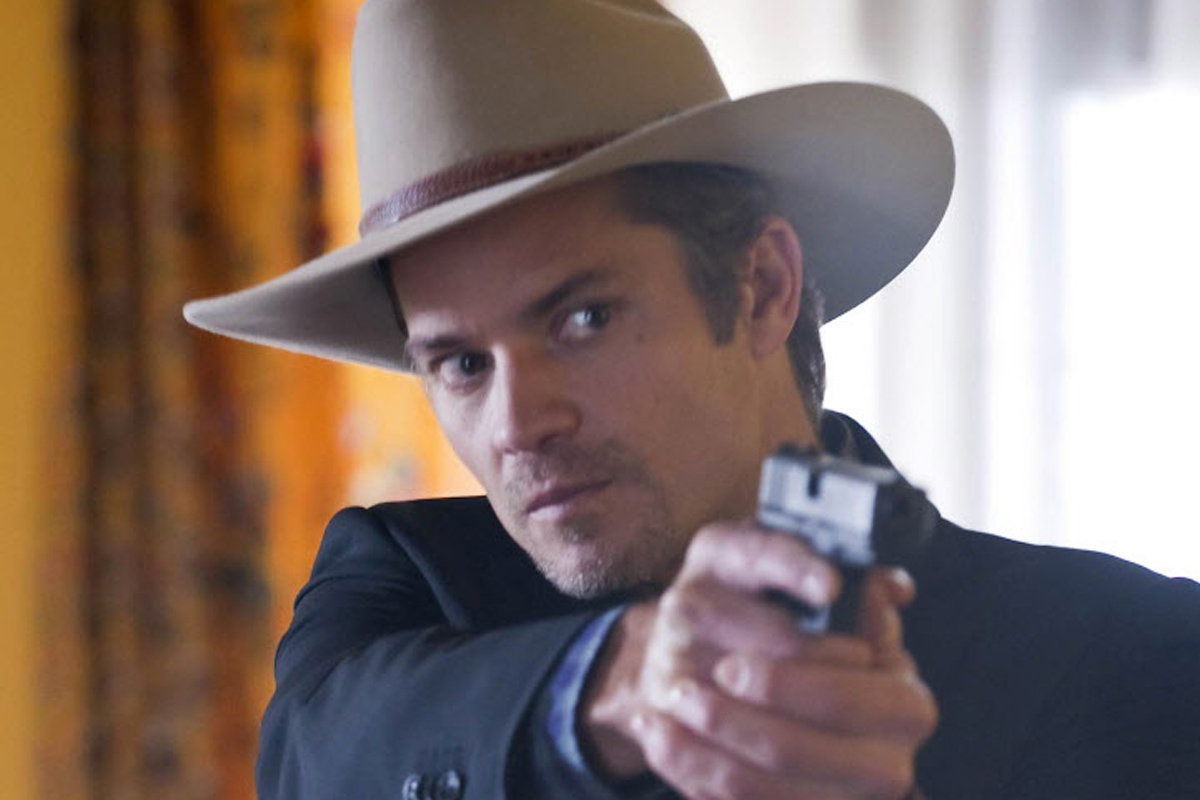
I’ve only mentioned drama so far but FX’s record on comedy is also exemplary. From the poignant, beautiful nothingness of Louis C.K.’s signature sitcom Louie to W. Kumau Bell’s much-needed fuck-you to Fox’s right-wing politics Totally Biased, FX’s comedy has been as risky and powerful as its drama. FX has only been a major player in TV comedy for a few years but it’s significant as the network has been instrumental in straddling the gap between comedy and drama in recent American quality television. FX’s crowning glory, though, came in 2010 with Justified, an adaptation-cum-continuation of Elmore Leonard’s short story ‘Fire in the Hole’. A masterpiece from the first scene to its most recent season finale, this federal-western (or ‘festern’-ignore again!) bridged the chasm between the old episodic action series and a new type of arcy, complex and character-driven TV storytelling, What’s more it’s flawlessly cast, acted, directed and written.

The hype is Justified!

The hype is Justified!

So now you get an idea of why people aren’t up in arms about FX re-making Fargo. The network’s drama and comedy output is in a class of its own and its finest hour (or several finest hours) was an adaptation of an American classic. However, this acclaimed and high-profile source material – not to mention the calibre of star involved in the series – is just what the network needs to bring in a wider viewership, and perhaps it will rub off on some of the network’s other undiscovered gems, like the currently airing 80s-retro spy drama The Americans. Louie is just about to return after a two-year hiatus during which the popularity of its star, writer, director (and editor) grew exponentially as a result of greater national exposure. This should be enough to keep comedy fans with FX as its new comedy migrates to recently-launched sister channel FXX.

Letter Box

Posted in American TV (General), American TV Shows, TV channels, TV History, TV News, Watching TV with tags , , , , , , , , , on April 8, 2014 by Tom Steward

After 21 years as host of CBS’ Late Show and another 11 on NBC’s Late Night, David Letterman announced his retirement from late-night television last week. Letterman made the announcement on last Thursday’s Late Show in a characteristically loose and ambling stream-of-consciousness monologue full of pathos, bathos, self-deprecating humour and sardonic wit. It was a welcome contrast from Jay Leno’s mawkish farewell and crocodile tears on the eve of his (second!) departure from The Tonight Show in February. Even in goodbyes, the gulf in class between the two late-night hosts is palpable. Because while Leno’s conservatism (both political and comedic) kept late-night talk shows rooted in the past, Letterman opened up the genre, overturning conventions from within and dispensing with formality in favour of funny.

Don’t believe me? Ok, let’s consider how many people in television have ripped off Letterman since he started compared to Leno. And Bill O’Reilly doesn’t count, he just happens to be a disgusting Republican who’s bad at his job. When you see an entertainment show in which the crew, the audience and members of the public feature as prominently as the talent, Letterman did that. Plagiarism of Letterman was so rife, it even prompted an episode of talk show docu-satire The Larry Sanders Show in which host Larry tries to imitate Letterman’s ensemble of backstage performers against the stern warnings of traditionalist producer Artie’s about the ‘talent moat’. Conversely, Leno was all about heritage and keeping the talk show anonymous, bland and without formal innovation.

Letterman made the tone of late-night talk television casual, its humour offbeat and its attitude embracing of the alternative. His interactions with sidekick and band leader Paul Schaffer were parodies-cum-deconstructions of talk show traditions and his shows meandered in ways that seemed to defy their Draconian time restrictions. Leno’s Tonight Show looked like a corporate junket or infomercial in comparison. Sarcasm, irony and the surreal were Letterman’s calling cards not the flash-in-the-pan satire that Leno used to peddle to appear relevant. Letterman’s skits, like the infamous Top Ten List and Oprah Log, jabbed at the heart of American popular culture rather than superficially brushing it with cosy lampooning, and he incorporated cult and sideways figures (Bill Murray, Harvey Pekar) into the canon of celebrity guests.

Liberace returns from grave as Letterman's last guest!

Liberace returns from grave as Letterman’s last guest!

Leno’s safe, nostalgic version of late-night talk beat out Letterman in ratings for most of the 90s until the CBS host gradually eeked out a lead in the 2000s, consolidating his primacy during Conan O’Brien’s ill-fated tenure on The Tonight Show prior to Leno’s return. However America thought of him in the ‘90s, European TV saw Letterman’s style as the future of light entertainment. Kings of British primetime talk television entertainment throughout the 1990s and 2000s Jonathan Ross and Chris Evans imitated Letterman’s informal, self-referential and participatory approach to television to the letter. MTV Europe’s Most Wanted, an influential music talk show from the early 1990s presented by Ray Cokes, was undoubtedly guided by Letterman’s improvisatory technique and onscreen use of the crew and viewers.

It’s unsurprising that the template for a new generation of late-night TV hosts should come from Letterman not Leno. Leno’s successor Jimmy Fallon is defined by a Letterman-like breakdown of late-night talk show form rather than the previous era’s intransigence. Current CBS Late Late Show host – and legal heir to the Late Show host seat – Craig Ferguson takes Letterman’s leisurely variety of hosting to a new level with his near-formless set-wandering. From Letterman, comedy elite late-night hosts Conan O’Brien and Stephen Colbert take their spiky personas and dry interviewing style. Although, Letterman isn’t done yet. In the closest thing to a real-life episode of Columbo, Letterman’s 2012 interview with David Cameron exposed the British Prime Minister as the vapid, disinterested moron he is.

By contract and tradition, Letterman was supposed to inherit The Tonight Show following Johnny Carson’s exit from the host seat in 1992. Letterman was beaten out by Jay Leno who ruthlessly made himself NBC’s preferred choice in the course of brutal negotiations. Leno would deny another Late Night host the right of ascension after forcing out Conan O’Brien from a brief Tonight Show tenure in 2010. Currently, Letterman’s CBS late-night follow-up Craig Ferguson stands in the position Letterman did 23 years ago, with a contract specifying that he should take over his network forerunner but facing the possibility of being bought out and replaced by a ringer. For the sake of innovation, creativity and comedy, I hope that TV talk show history doesn’t repeat itself.