Archive for the American TV (General) Category

The Pig Country

Posted in American TV (General), American TV Shows, Behind-The-Scenes, TV Culture, TV History, TV News with tags , , , , on October 4, 2015 by Tom Steward

British and American TV are so rarely united, making it doubly surprising that there have been two stories in as many weeks relating to genitalia in the television cultures of both countries. Honestly, pigs might fly and the Old West will rise again before we see another coincidence like this.
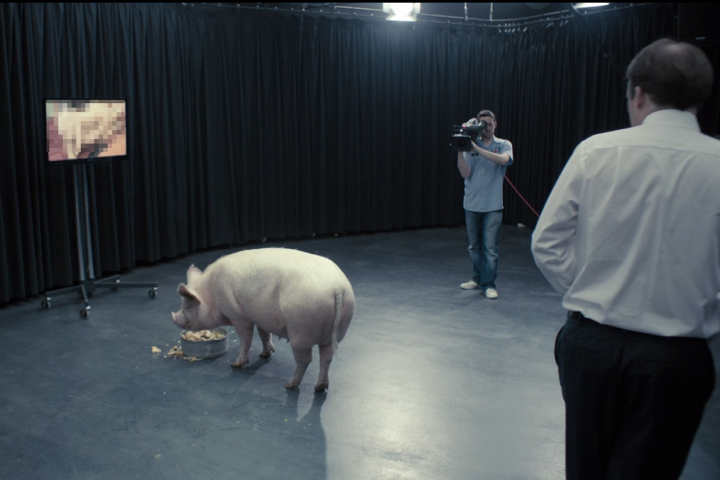
Footage from The Conservative Party Conference

Footage from The Conservative Party Conference

On September 20th 20(and)15, British national newspaper The Daily Mail published extracts from an unauthorised biography of current Prime Minister David Cameron co-authored by passed-over former Deputy Conservative Party Chairman Michael Ashcroft. In them contained a story that as a student at Oxford University, Cameron had put ‘a private part of his anatomy’ into a dead pig’s mouth as part of an initiation ceremony for The Piers Gaveston Society (some paraphrasing of Groucho Marx’s famous ‘club’ quote is surely necessary here!). Remarkable as this allegation was for a sitting head-of-state – outside of Italy – it was not the first time such an idea had been nationally circulated. In 2011, British TV Renaissance man Charlie Brooker launched his modern-day answer to The Twilight Zone, a technology-fearing anthology made of speculative fiction called Black Mirror, the first instalment of which concerned a modern-day British Prime Minister blackmailed into having sex with a pig live on television to meet the ransom demands of a royal kidnapper. Like David Bowie after liquid water was discovered on Mars, Brooker was hounded by the press and social media following this story, asking him whether his television play was inspired by real rumours of which he had foreknowledge.

Brooker says he didn’t, which I for one believe wholeheartedly, namely because you don’t have to know the actual circumstances of such an act to imagine that it would be exactly the kind of thing a person of that background would do. I’m not convinced that the story – hashtagged ‘Piggate’ thus throwing agricultural livestock message boards into a state of disarray – is anything more than a revenge blow from an embittered ex-colleague but we know what absurd extremes the hazing rituals of fratboys at elite universities – on both sides of the Atlantic – can go to, and Cameron’s posh pillaging of the social contract as a university student has been well-documented. Even the most rudimentary scandalmonger could put a scenario like that together from Cameron’s backstory. Brooker, too, was trading off the fact that we as a nation could easily believe our Prime Minister was and has been capable of such things. My mentor in all things televisual Helen Wheatley observed that the morning after the Black Mirror episode ‘The National Anthem’ was first broadcast, it genuinely felt as if Cameron had fucked a pig the day before. It’s that vague aura of authenticity that both Brooker and Lord Ashcroft mined.

In the last couple of days, it has been reported that extras on the set of HBO’s reboot of the 1970s cult sci-fi western Westworld have been compelled to sign a consent form specifying numerous and elaborate acts of sexual contact and nudity, including the touching of each other’s genitals. Some extras apparently complained to their union SAG-AFTRA, who are currently investigating the matter. Those who know HBO (in the Biblical as well as the binge sense) won’t be surprised that one of its shows should contain such graphic content, but the concerned parties have different views about how bound (this is not a metaphor) supporting artists are to such demands contractually. I as a TV blogger (and potential future SAG-AFTRA member) am obviously fascinated by this story, but a lot of viewers I’m sure simply don’t want to know how the organic sausage is made. Great art and human exploitation have always gone hand-in-hand, and, to many, I’m sure this revelation makes Westworld seem like a far more interesting prospect than previously. Also, this seems the thin end of the wedge, providing everyone knows their rights and has the ability to pull out of the project at willy. Penis.

'While you're down there...'

‘While you’re down there…’

If there’s a theme here, it’s indecent exposure. Private parts have been unlawfully displayed in public. Whether it’s bestiality libel or union disputes, these kinds of stories are not for public consumption unless in fictional form. HBO needs to push boundaries on sexual representation to be challenging, while the inhuman behaviour of the Cameron-led Conservative government needs to be challenged for what it is, not what it represents satirically in some bizarre Animal Farm-like parallel reality. Piggate didn’t lend any credence to Black Mirror, rather the reverse. And sex acts and nudity on HBO is simply not a news item!

The Tommys 2015

Posted in American TV (General), American TV Shows, Behind-The-Scenes, British Shows on American TV, Reality TV, Reviews, TV Acting, TV Criticism, TV Culture with tags , , , , on September 27, 2015 by Tom Steward

It’s that time of year again when those we trust with the responsibility of deciding what makes good television publicly demonstrate they have no idea what makes good television. Yes, The Emmys. As with every year, the Academy of Television Arts and Sciences make two glaring errors. Firstly, they overlook the best TV of our time in favour of academy pets like Modern Family (Just a side note: Unlike most television critics, I rather like Modern Family. I just don’t happen to think it’s the only sitcom of the last six years worthy of celebration). Secondly, they create convoluted, counter-intuitive categories of awards that prevent the finest shows from being recognised because they don’t tick a bunch of weirdly shaped boxes. To rectify this, I’m starting my own annual television awards ceremony (yes, it’s going to be one of those articles!) called The Tommys with the sole purpose of demonstrating that you can still recognise the best TV around even when you have bullshit categories.

Best Shaving of Iconic Facial Hair in an FX Series, Zombie-Based Comic Book Adaptation, or Timely Political Commentary

Winner: Sam Elliott for Justified

tommys

Nominated: W. Earl Brown for American Crime/Andrew Lincoln for The Walking Dead/Kathy Bates for American Horror Story: Freakshow (disqualified for chin curtain)

Least Mentally Prepared Husband in a Housewives Franchise, Vanity Project or Marriage Experiment

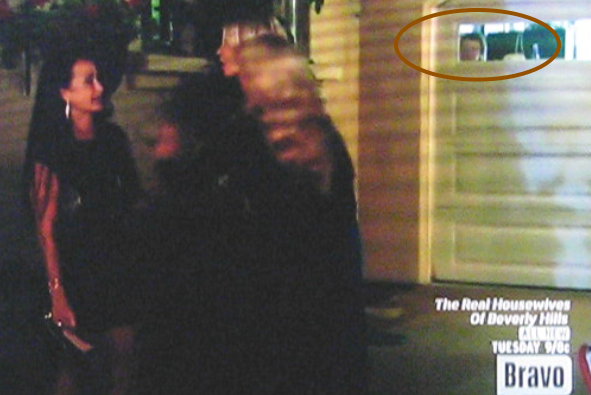
Winner: Vincent ‘Garage Face’ Van Patten for The Real Housewives of Beverly Hills

tommys 2

Nominated: Hank ‘The tranny’s hand walked into my penis’ Baskett for Kendra on Top/David ‘Golem’ Beador for The Real Housewives of Orange County/Mohammed ‘It’s against my religion to express genuine affection for my wife’ Jbali for 90-Day Fiance

Most Impatient Response to a Format Change in an Anthology Series, Prequel Spin-Off, or Homeland

Winner: True Detective (aka Noir is Supposed to be Urban, Idiots!)

Nominated: Fear The Walking Dead (aka Before They Were Zombies)/Homeland (aka Awayplace)/Better Call Saul (aka How The Lawyer got his Spotty Morality)

Most Overrated Drama, Sitcom or Tonally Confused Variation upon The Two Previous Sub-Categories featuring Martin Freeman, Kevin Spacey or Andy Samberg

Note: In this category, the award will be collected by an actor better at playing the role than the actor who actually did*

*Even if Kevin Spacey is in the audience doing his ‘I’m the first ever person to talk to a camera in a TV show’ schtick

Winner: Sherlock (award collected by Lucy Liu)

Nominated: House of Cards (award to be collected by the ghost of Ian Richardson)/Fargo (award to be collected by William H. Macy)/Brooklyn Nine Nine (award to be collected by whoever is near)

Biggest Load of Horseshit Onscreen Explanation of Something That is Clearly an Offscreen Issue in a Trumped-Up Soap Opera, Underrated Popular Literature Adaptation or Reality Show on a Bottom-Feeding Network

Winner: Scandal for the end-of-season held-at-gunpoint cliffhanger and season premiere cold open funeral of Harrison Wright during the domestic abuse court case of Columbus Short.

Nominated: Elementary for the complete absence of LGBT housekeeper Ms. Hudson in the third season while actress Candis Cayne became a visible activist for transgender rights/Marriage Boot Camp: Reality Stars for Hank Baskett’s ‘magic penis’ theory of how he could be caught red-handed in a transsexual three-way and yet not have participated

Worse Kept Secret in a Deathcount-Oriented Drama, Television Awards Show or Publicity-Loving Satire of Advertising

Winner: The Tommys 2015 for revealing multiple spoilers in TV shows not yet caught up on by most viewers by simply listing the nominees

Nominated: The Walking Dead for posting news of Beth’s death on social media the day that the episode aired/The Emmys 2015 for spoiling the series finale deaths of Nucky Thompson in Boardwalk Empire, Zeek Braverman in Parenthood, Jax Teller in Sons of Anarchy, Bill Compton in True Blood and Raylan Givens’ hat in Justified/Mad Men for having a series ending that was tiresomely ambiguous

Most Unconvincing Justification of a Blatant Freakshow in a Bafflingly Popular Horror Anthology Series, Footage-Shy Reality Show or Modern-Day Version of Public Hanging Entertainment

Winner: Botched for claiming to be a fly-on-the-wall documentary about plastic surgeons

Nominated: American Horror Story: Freakshow because if it’s about an actual freakshow, we can’t get upset at the title/America’s Got Talent for exploiting the lack of a substantive mental health care system in the US

Reality Contestant who Looks Most Like a Popeye Character

Winner: Josh Altman (Wimpy) for Million Dollar Listing: Los Angeles

tommys 3

Nominated: The Situation (Popeye) for Marriage Boot Camp: Reality Stars/Josh Altman (Alice The Goon) for Million Dollar Listing: Los Angeles

The Endless Summer

Posted in American TV (General), American TV Shows, hiatus, Reviews, TV channels, TV Criticism, TV Culture, TV History with tags , , , , , on September 6, 2015 by Tom Steward

I’m back after being away for the summer…just like TV! Or so I thought. Summer used to be a dumping ground for cancellation fodder, but something has changed. Many of the year’s most important programmes now air over the summer and momentous TV events are just as likely to play in the spring and summer as fall and winter. No doubt some of this is down to cable channels disrupting the old network seasonality, but it’s becoming increasingly apparent that TV critics can’t take summer off any more if they want to stay current. So what’s been happening?

Colin Farrell after reading the reviews of True Detective Season 2

Colin Farrell after reading the reviews of True Detective Season 2

True Detective Season Two

Another reason why TV critics can’t go away for summer is because they’d all miss doing their favourite thing – bashing the follow-up to a universally praised piece of television with no particular motivation other than convention. Season Two of HBO’s anthological police procedural was torn to pieces by most critics, with so-called fans and lovers of quality television just as vociferously negative. It really has nothing to do with the season itself, just a tired old game that critics like to play, one that immunised us against the self-evident pleasures of Treme simply because it followed The Wire and even made us question the quality of The Wire when it entered its second season. Worryingly, it suggests critics and viewers of the serial age have serious trouble evaluating television when it deviates from formula, and really aren’t ready for the anthology revolution happening in TV.

Jon Stewart leaves The Daily Show

After fifteen years as host of The Daily Show on Comedy Central, Jon Stewart could simply be remembered as the person that brought the art of fake news – cultivated in Britain by Armando Iannucci and Chris Morris – to the US. But he leaves behind him an even greater legacy. When TV news polarised into partisan platforms with MSNBC on the left and Fox News on the right, Stewart’s Daily Show was just about the only source of news that had any semblance of objectivity (as rocky a term as that is) left to give. He was trumped by his own protégés. First Stephen Colbert, who transformed himself into a living doll of satire, viscerally exposing the ugliness of the media conservative while manifesting the winning naivety that makes them attractive. Then John Oliver who – with the help of HBO’s unsegmented formats – brought satirically slanted news reporting into the realms of investigative journalism and political activism.

Cilla Black/Rowdy Roddy Piper (delete as nationally appropriate) died

It’s only accident that these deaths occurred in summer, but taken together they are tantamount to transatlantic television tragedy. The British light entertainment host and Canadian WWF star died within a week of each other, which means nothing until you put together that their stretches as reigning TV personalities from the 1980s to the early 2000s is virtually identical and that they generate the same fuzzy nostalgia (in warmth and confusion alike) from the generations that grew up watching them. For me, it was a sharp reminder of how separate American and British cultures can be. Nobody mentioned Cilla – a contemporary of America’s beloved Beatles – stateside. Roddy Piper remains unfamiliar to me…and to all 90s British kids who didn’t have Sky.

Netflix Summer

The charms of hyper-inflective prison comedy-drama Orange is the New Black continues to elude me, but it’s Netflix’s most valuable commodity and the June release of its third season was not an anomaly. The star-studded prequel series to cult comedy movie Wet Hot American Summer was made available in July as was season two of the critically acclaimed cartoon BoJack Horseman. Orange is the New Black was even streamed a few days early, just to remind Netflix subscribers that they can do shit like that. It’s pretty cocky behaviour, and somewhat backfired when fans who had booked time off work to binge-watch the season found themselves in a socially impossible situation. I don’t think this surge of summer activity at Netflix (nor the summer-theming of its releases) is at all a coincidence, more an attempt to dominate TV distribution in these months of the year. For all their talk of liberating viewers from the tyranny of scheduling, Netflix keeps subscribers under the yoke of its idiosyncratic calendar.

Fear The Walking Dead is set in LA...it's going to be a short show!

Fear The Walking Dead is set in LA…it’s going to be a short show!

Fear the Walking Dead Series Premiere

The unwanted spin-off of AMC’s The Walking Dead debuted in the last days of summer. As True Detective also switched from a rural southern locale to the L.A. metropolitan sprawl, I wouldn’t expect any glowing reviews forthcoming…

Controvers-TV

Posted in American TV (General), American TV Shows, Reviews, TV History with tags , , , , on June 19, 2015 by Tom Steward

One of the historic functions of American sitcoms has been to deal with taboo issues in the society of the time. This purpose has been all but forgotten as network television becomes increasingly more conservative, both on the production and audience side. Although, it’s not as if cable TV is stepping into the breach. Cable channels tend to use their license to push boundaries on representation for infantile laughs rather than a progressive cause. I suspect that increased conglomerate ownership of TV stations has something to do with this too. If you’re appealing to the same judges, you’re bound to get the same verdict. I bring this up because I just happened to come across episodes of two 1980s sitcoms based around controversial topics on TV recently, although the rate of re-run on some channels does rather push the odds in favour of that happening. I was first struck by how committed each sitcom was to serious treatment of the issue in question, as opposed to today when it would need to be discussed by proxy. Then what stayed with me was the contrast between the ways the sitcoms handled delicate subjects, though neither seemed to proceed with much delicacy.

Yes, this really happened...

Yes, this really happened…

The first was a two-part episode of Different Strokes called ‘The Bicycle Man’. It’s a notorious episode of an already pretty notorious sitcom. You may think there’s nothing creepier than a grown man with an ageing disorder being made to play a child but there is, and it’s a grown man with an ageing disorder being made to play a child being pursued by a paedophile. It’s a classic case of wanting to have your cake and eat it, appropriately enough as that’s what the child molester uses to try and get into Arnold’s pants. The sitcom is earnest about educating the audience (especially children) on the dangers of paedophilia, and the final scene, which seems to go on forever, is basically a PSA. But the producers are also clearly reluctant to disturb the conventions of the studio sitcom, and so we still have a laughter track and one-liners about paedophilia. Some of this works in regards to the molester himself, who uses comedy to cosy up to children, but most of the time it feels like the episode is pulling in different directions. That said, the pathological profiling of the paedophile is the most sophisticated I’ve seen in television.

The second was an episode of The Golden Girls called ’72 Hours’ in which Rose is informed she may have contracted HIV from a blood transfusion and has a three-day wait to find out. Unlike Different Strokes which doubled its length and set aside screen time to outline the issue, Rose’s predicament is a subplot of a normal episode rather than an issue-based special. This underlines the fact that the sitcom dealt with taboo topics like racism, sexism and homophobia all the time but was also indicative of how the writers wanted the audience to calm down about HIV rather than obsessing over it. This was 1990, so it’s not exactly typical at this point to portray HIV as an everyday part of contemporary society that affects straight as well as gay people, yet that’s exactly the jumping-off point of this episode. Not that the writers are in any way idealistic about how people of an older generation respond to the threat of HIV. Rose is understandably scared and turns to scapegoating promiscuous gay men while Sophia starts labelling her cups and using different bathrooms. No-one is condemned for acting irrationally here but no-one is let off the hook either.

HIV and The Golden Girls

HIV and The Golden Girls

It’s a shame these episodes stand out in today’s TV. Look at Modern Family. We have a gay couple at the heart of the show yet the Christian ownership of ABC by Disney means that we’ve never had a storyline which draws attention to their struggles in society. We only got a kiss between them after gay marriage became culturally acceptable, five seasons in. You might argue that the permanent presence of previously marginalised characters in a sitcom is a bigger step forward than a devoted storyline to issues in their community, but, again, take Modern Family. Have any of the clichés or misconceptions about gay men disappeared by having Mitch and Cam as protagonists? When it comes to taboo issues in sitcoms, I think concept and execution are polarising. Many sitcoms like The Middle address agonising social problems because of what they are and not what they talk about.

Info a Treat

Posted in American TV (General), American TV Shows, TV channels, TV Criticism, Watching TV with tags , , , , on June 17, 2015 by Tom Steward

TBS’ late-night talk show Conan features a segment called ‘What am I Watching?’ in which titular host O’Brien flips through the cable channels with the aid of the info button on his remote. Pressing the button reveals skewed descriptions of each show encountered, such as ‘Entertainment Tonight: Two lifelike cyborgs are programmed to think everything Hollywood does is fantastic’ and ‘Diners, Drive-ins and Dives: Guy Fieri plays an out-of-work party clown who is addicted to lard’. There are two diametrically opposed laughs here. One is the absurd – yet entirely truthful – inversions of the straight-faced synopses that info buttons on cable remotes give us about TV shows. The other (which sadly nowadays may be as socio-economically discriminatory as those jokes in The Sopranos about Kierkegaard) is about people who have cable recognizing how close these summaries come to the real thing.

All you need to know...

All you need to know…

The descriptions contained on info buttons are not as openly critical as the fake ones on Conan but they do often make you wonder who the authors are and what their criteria is. Whatever possessed the person that wrote the digital synopsis for Jaws: The Revenge to question the scientific plausibility of the storyline when they wrote ‘Disregarding the behaviour typically exhibited by the rest of its species, a revenge-minded shark follows a woman from New England to the Bahamas’? What is to be gained from listing the events that take place in the 1920s surrealist avant-garde short Un Chien Andalou – including a woman’s eye being cut and ants spilling from a wound in someone’s hand – as if it were an episode of Columbo? And these are the ones that actually get the descriptions right.

The buttons struggle noticeably with anything resembling emotional complexity. They can’t seem to get around the fact that Jackie Peyton from Nurse Jackie isn’t a good person and doesn’t find redemption each week. TCM’s button writer needs an education in film noir – one incidentally that the network will provide in association with Ball University – if it thinks that anyone in The Glass Key is in any way moral or decent. As misleading as they can be, info buttons are impossible to do without. With shows on cable now mired in the mud of endless re-runs and encores (which are re-runs that run on from the first run, like a bad sequel), it’s essential to have something to distinguish individual episodes, and sometimes the description on the info button is the only way to be sure.

This new technology has created a completely different experience of watching television, one that we’re perhaps less willing to recognize because it doesn’t involve a computer screen. It’s just on our TV rather than our phones and devices but that in itself is significant. We have much less need for TV listings or paper guides, which means that journalistic commentaries on TV shows has been supplanted by anonymous synopses. While before, viewers would read a critics’ review to get a sense of whether they wanted to watch a programme or not, now they have to go off the plot, and be less informed about the success of the project than its aims. Maybe it’s clearer now why the description of Jaws: The Revenge was so unfavourable. Button writers don’t rate TV, but nor should they have blood on their hands.

Info buttons only skim the surface of how cable remotes alter our perception of television. Every time I try to erase an episode of Conan, the remote asks me ‘Are you sure you want to erase Conan?’ as if the host himself will be vanquished from history once I press ‘Ok’. Whenever I do, I genuinely believe that Conan O’Brien has disappeared into the ether. All right, that’s not true. But making me think twice about whether I want to keep a show or not has made me re-evaluate what in TV is worthy of a second or third viewing.

I’ve made lots of assumptions here about the people who write the descriptions on info buttons – as well as assuming that this is a dedicated profession and not an intern’s copy-and-paste job – so anyone who knows anything about how these show summaries get written, please get in touch with me and I’ll write another post about it, with whatever level of anonymity you wish. Poverty and convenience may one day render cable obsolete, so I want to learn what I can about this phase of TV history while I can. I also want to know who wrote that Jaws blurb!