Archive for the American TV (General) Category

Remote Viewing

Posted in American TV (General), American TV Shows, TV Dreams with tags , , , , on June 12, 2015 by Tom Steward

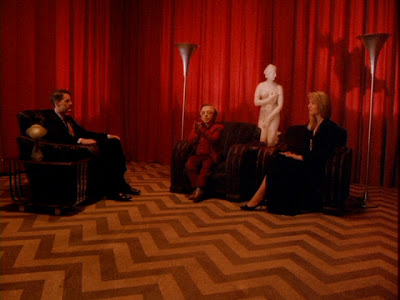
Quite often, my dreams take the form of anticipating event television. If the finale of Mad Men had played out according to my subconscious, the series would have ended with an elderly Don Draper boarding a Concorde in a Madison Avenue version of the last scene from Kubrick’s 2001: A Space Odyssey. I had a vision of the new season of Twin Peaks picking up from the season two cliffhanger, with Agent Dale Cooper suddenly exorcising Bob and then explaining to Sheriff Harry Truman how he deliberately trapped the serial killing spirit inside him to draw him out into the open and destroy him forever. If Showtime were hesitant about giving David Lynch a generous budget for making the season, I doubt they’d be willing to fork out for circa-1991 digital avatars of Kyle MacLachlan and Michael Ontkean. This is where dreams become necessary. Sometimes they’re simply an improvement on what we eventually got in reality. My dream projection of the Season 8 premiere of Doctor Who was something akin to Peter Greenaway’s film of The Tempest, with Peter Capaldi Toyah Wilcoxing it in full new romantic regalia. At least it was portentousness done well and not by Steven Moffat.
Have you ever had a dream with a midget?

Have you ever had a dream with a midget?

Stranger still is when dreams you have had appear on television. Louie recently aired an episode in which the comedian is pursued in his dreams by a naked man with invisible eyes who charges at him from the darkness. I’m sure everyone will recognise the dream-like pacing and movement that Louis C.K. managed to cultivate in these sequences, and it’s about the best simulation of a dream state I’ve seen since Jonathan Miller’s Whistle and I’ll Come to You. But Louie and I have the same Freddy Krueger as I’m frequently stalked by the same figure in exactly the same way night after night. It once became so vivid that I started screaming uncontrollably in bed. But the experience of seeing the inner-workings of my subconscious laid out onscreen was actually rather therapeutic. I laughed the laugh of recognition that usually accompanies my viewing of Louie but with greater hysteria and mania, as if repelling a demon. Louis C.K. and I are so evenly matched in looks, outlook and social reaction that I shouldn’t really be surprised that we dream the same dreams. We want the same thing…lots of bad food to eat quickly! It’s better than a support group.

Sometimes I think there is method to my madness. My dreams honed in on the one aspect of Twin Peaks that could not be done in a revival 25 years later, while acknowledging that whatever I dreamt was almost certain to be less weird than what will air in 2016. The finale of Justified consumed my thoughts perhaps more than any other show has or will, and yet it never intruded into my dreams. Perhaps it’s because there was no anxiety or insecurity about how fulfilling it was going to be, whereas I couldn’t say the same for Mad Men and Doctor Who. I don’t want you to think that there’s a TV set in my head (but wouldn’t that be lovely?) and that my dreams are broken down into life and TV shows. Often the two merge. The other night I was in a car with Manny from Modern Family at the wheel, trying to stop an irresponsible relative (no-one specific) from letting him drive us to our death. Now a lot of the kids on my street look exactly like Manny so I don’t know which part of my memory my subconscious was laundering at that particular moment.

There's a horse loose aboot this hoose!

There’s a horse loose aboot this hoose!

I’m aware of the futility and irony of dreaming about shows that are already dreamy or fantastic. Neither Twin Peaks nor Doctor Who adhere to any real-world logic (though the latter is supposed to nod to it from time to time) and Mad Men was always going to end on a note of ambiguity rather than come to any definite conclusion. I’ve yet to see that endless passive flow of dreaming captured in a TV show, which is odd since endless passive flow is exactly what TV is. Even Louie’s dream is a temporary psychological condition caused by guilt at abandoning a divorcee in need, rather than an ongoing haunting. The Sopranos came close with an episode-length dream sequence which drifted in and out of real-life and popular fiction, but the pat Freudianness of everything we saw made it somehow unappealing to watch. It’s as easy as going to sleep.
Sense of Schumer

Posted in American TV (General), American TV Shows, Reality TV, TV Acting, TV advertising, TV channels with tags , , , , , , , , , on May 27, 2015 by Tom Steward

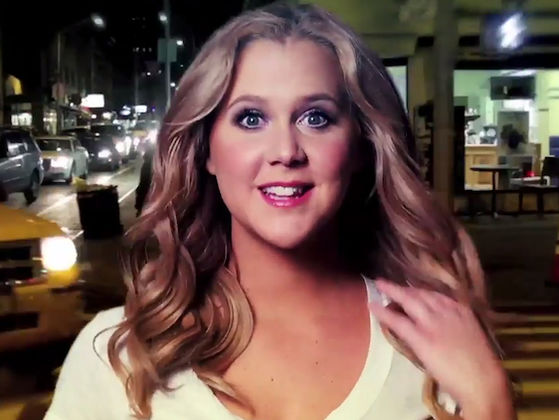
If you have to get sick of seeing someone’s face on TV, make it Amy Schumer’s. Why? Well, firstly because being sick of seeing Schumer’s face seems to be part of her schtick. Every sketch on her Comedy Central show Inside Amy Schumer is preceded and followed by a close-up of Schumer’s face quick-scanning the streets of New York before the camera CSI zooms into her eye. Her face is the lifeblood of every sketch, and even the (mandatory) Twelve Angry Men parody episode in which she did not feature begins with her face dominating the screen. It’s also because Amy Schumer’s face is interesting to watch. Eschewing the hyperreal expressionism of her peers (not that there’s anything wrong with that – Key & Peele are as cartoonish as they come), Schumer’s face is a flickering deadpan, oscillating between irony and approval of the characters she plays and those she interviews.

Facial Schumer!

Facial Schumer!

Which is good news because Amy Schumer is everywhere. In fact, it would be perfectly possible to watch nothing but Amy Schumer on TV these days. There’s her weekly Comedy Central show which seemingly plays throughout the night (uncensored) on the network, her guest appearances on every late-night talk show around, her work on The Bachelorette (which ABC executives want to expand into a regular thing), and trailer-length promos for her upcoming movie vehicle Trainwreck in the ad breaks. We’ve seen this kind of momentary ubiquity before, of course, but rarely with a performer of such substance. That may be because Schumer is able to do provocative and powerful material while making it sound like a bunch of harmless Seinfeldisms. She even makes light of the issue-based thrust of her comedy, passing off most sketches as a PSA-gone-wrong, while underlining just how culturally urgent her intervention into modern life is.

Last night, Schumer confronted the alleged crimes of Bill Cosby. The heavily corroborated sexual assault allegations against the veteran comic seem fair game for comedians now and indeed it may be easier for a white female comic to talk about this topic than, say, the black male one who broke the story. It was the level of discussion that was remarkable. Refusing to debate the existence of the crimes (for, as she points out, there is no debate to speak of, despite all legal disclaimers), the court-based sketch was instead a more sophisticated exploration of how nostalgia and cultural comfort food (both real and symbolic, since this was the man who advertised Jell-O pudding pops) interfere with our sense of justice and gender equality. This is really what we struggle to reconcile, not crime and perpetrator. But this isn’t the first time Schumer has put her finger on the problem.

She coolly and pleasantly took on perceptions of women ageing with Tina Fey and Patricia Arquette celebrating Julia Louis-Dreyfus’ ‘last fuckable day’ as decided by the media. She did an almost Sesame Street-esque scatological number on pop culture’s fetish for women’s sticky-out asses with a hip-hop music video set to the rhyme ‘milk, milk, lemonade, round the corner fudge is made’. Schumer was there to pinpoint the pathetic paradoxes of middle-class women pole dancing while condescending to women who work as strippers as well as female employees being obliged to be ‘cool with’ whatever their male counterparts want to do while being paid half the salary. Bravely she slayed a sacred cow of American comedy, the borderline-rapist late-night talk show host, and perversely she’s seemed to increase her appearances on these kinds of programmes as a result. She’s so popular that even her targets want to be seen with her.

Amy Schumer's parody of late-night...oh wait, that's just her on Letterman!

Amy Schumer’s parody of late-night…oh wait, that’s just her on Letterman!

It would be too easy to say that Amy Schumer’s success is down to the sugar-coating she puts on her social criticism, but it’s hard to deny that her self-aware baby-face mannerisms (see, the face again!) makes what she does much more palatable. But it’s not the cutesy-girl disguise that comedians like Sarah Silverman have used to deflect attention from their obscenity and controversy. It’s more direct than that, like having a conversation with someone who seems perfectly nice and you realise hours late they completely destroyed you. That’s what translates into mainstream entertainment so well. On The Bachelorette, she exposed the egregious insecurities of a male contestant without ever saying a cross word to him. She’s also not afraid of plumbing the lowest depths of entertainment, like dirty jokes and toilet humour, to get what she wants. The time of overkill will come, so enjoy her just killing it.

Peak Viewing Time

Posted in American TV (General), American TV Shows, TV Criticism, TV Culture, TV Dreams, TV History, Unsung Heroes with tags , , , , , , , , , on May 13, 2015 by Tom Steward

There are TV shows we talk about too much. But Twin Peaks isn’t one of them. I’d say the endless chatter about David Lynch and Mark Frost’s early 90s ABC drama by those besotted of the show (whom I suspect have cherry-pie-picked episodes and not endured the interminably drawn-out final quarter) was better spent on less-discussed yet equally worthy TV from this era…if it weren’t for how crucial Twin Peaks is in the history of television. Unusually for a show that ran for only two years and thirty episodes, no-one has ever shut up about it. The supreme production values and self-conscious artistry have ensured that there is never a reason not to re-air and re-box set the programme. Even compared to other 90s TV shows, which generally stand up well visually (especially compared to the previous decade), the colour, focus and cinematography are configured in such a way that HD could not possibly improve upon it. There’s been more talk recently because it’s the 25th anniversary of the series (although there always seems to be an excuse for a retrospective!) and plans are afoot for a revival of Twin Peaks on Showtime. However, if the public statements of Lynch and most of the cast are anything to go by, the revival might have as much to do with Twin Peaks as 10 Things I hate about you does with The Taming of the Shrew.

A title colour only used in 90s television!

A title colour only used in 90s television!

Twin Peaks set in motion models of television storytelling that have been influential ever since it was on the air. Small-town quirk and paranormal procedural would dominate American TV throughout the 90s, through the ‘twin peaks’ of Northern Exposure and The X-Files. The legacy endures to this day with series like Parks and Recreation, Wayward Pines, Fringe and Grimm. The long-form murder mystery has been a staple of quality television internationally in recent years, with Denmark’s Forbrydelsen, Britain’s Broadchurch and America’s True Detective. Indeed, if HBO opened the floodgates of American quality television with The Sopranos, then Twin Peaks’ dream states and cine-literacy were an important precedent for the show. More broadly, Twin Peaks cemented many ideas that we now take for granted. It showed us that fantasy and realism can live alongside one another in TV without contradiction and that every character in an ensemble (no matter how ridiculous) deserved an inner life and a separate storyline to boot. Twin Peaks remains the benchmark for what constitutes good television. When Louis C.K. tried to generate an art movie feel for his sitcom Louie, he went to none other than David Lynch as guest star (and director in spirit) for a 3-part season finale. In 2010, mystery drama Psych aired an episode called ‘Dual Spires’ featuring cast members and storylines from Twin Peaks, acknowledging the longevity of the show’s mythology as TV to aspire to.

If we dwell too much on the originality of Twin Peaks (as a recent Radio 4 documentary did), we are in danger of forgetting how much the show took from television. References abound to classic American series from Dragnet to The Fugitive (complimenting the mid-century Hollywood intertextuality). As the meta-show Invitation to Love indicates, the characters and storylines in Twin Peaks could have easily come out of a daytime soap. But Twin Peaks was also acknowledging how soaps had graduated to primetime in the previous decade, with shows like Dallas and Knots Landing. In fact, the season one cliffhanger bears an uncanny resemblance to the ‘Who Shot J.R.?’ storyline in Dallas that captivated TV audiences exactly a decade before. For all that is made of David Lynch’s ‘cinematic’ influence on the show, Twin Peaks was co-created by Mark Frost, whose formative experience had been writing for television, notably on Steve Bochco and Michael Kozoll’s soap copera Hill Street Blues. Twin Peaks is as remarkable for its adept handling of serial narrative arcs and gradual character development as for its experimental audio-visual style, and there is a clear lineage from Frost’s work on the continuing ensemble drama Hill Street Blues to his teleplays for Twin Peaks. But Lynch and his signature composer Angelo Badalamenti clearly understood the importance of sound to television, creating a soundscape that both compliments perfectly and stands terrifyingly alone from the image.

...or sooner!

…or sooner!

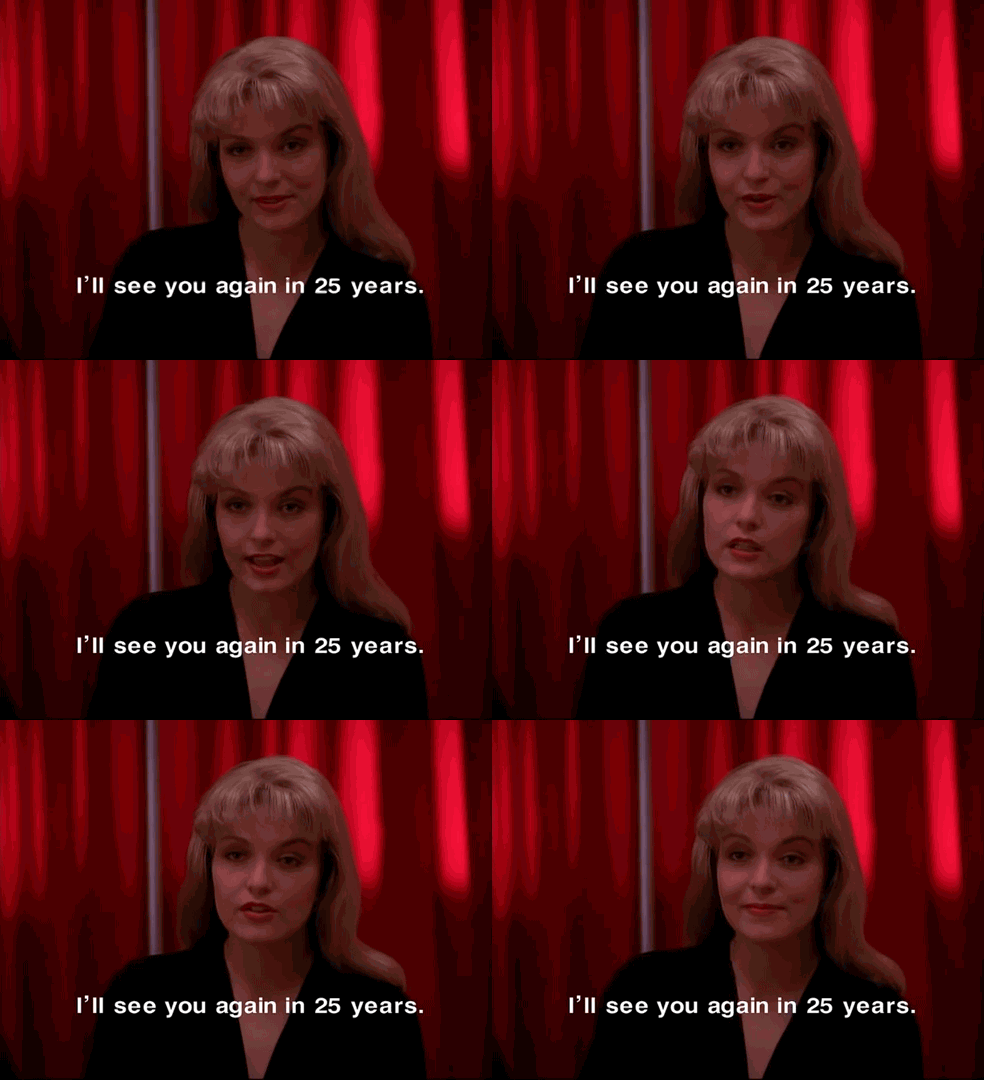
For better or worse, Twin Peaks stands for something bigger than it is. It is the nucleus of a fine art television and a prism through which to see the medium. Laura Palmer said she’d see us in 25 years. She was 25 years over.

Bruce All Nineties

Posted in American TV (General), American TV Shows, TV advertising, TV History with tags , , , , , , , , , on May 5, 2015 by Tom Steward

One of the perils of writing a topical post – unbeknownst to me, who would report the crucifixion a day after the resurrection – is that the story continues after publication. Since posting on the 90s TV revival and the media’s response to Bruce Jenner’s 20/20 interview, both storylines have advanced significantly. So rather than set another plate spinning, I’m going to bring you updates on these unfolding stories…you know, like those journalists you probably read about in history books used to do!

I was second-guessing myself while hailing a revival of 90s TV, having only a handful of examples and holding the suspicion it might have been a coincidence that three 90s shows were the latest in line for an inevitable nostalgia reboot. But at the virtually the same time I published the post, it was announced that Full House, an early 90s sitcom my ignorance of which is why G shall never ratify my TV Doctorate credentials, will return on new-bottle-for-old-wine internet channel Netflix. Digging deeper, I discovered that another 90s sitcom, Coach, starring an actor who looks like a young man in ageing make-up Craig T Nelson, is about to be revived. As G reminded me (after her weekly routine of pretending to have read the blog rather than just the title!), one of our new favourite sitcoms Fresh off the Boat is set in the early 90s, with a gangsta rap soundtrack and guest stars from Twin Peaks to (re)boot. I guess it’s about a fashion for the decade as much as simply retrospection.

This is what Craig T Nelson looks like before make-up!

This is what Craig T Nelson looks like before make-up!

It’s hard for me to engage with this 90s-retro fad as nostalgia. Syndication ensures that when it comes to TV, the past is always present. Besides, 90s shows are technologically and stylistically consistent enough with current production practices not to jar today’s audience too aggressively, and could easily be mistaken for something that was made when Twitter was in its infancy. More personally, it’s because I went into a pop culture coma in the late 90s and any TV still on at that time remains my Spreewald pickles (an oblique reference I use if only to force you to watch Goodbye Lenin!). It feels more to me like these shows are coming off an extended hiatus. Or maybe the people involved are simply lucky enough to have remained in the zeitgeist. Craig T. Nelson is coming off Parenthood and the Full House cast have recently been on screens in Dannon Oiko commercials. As for Fresh off the Boat, well, even nostalgia has to move with the times. In the 90s, nostalgia was That 70s Show.

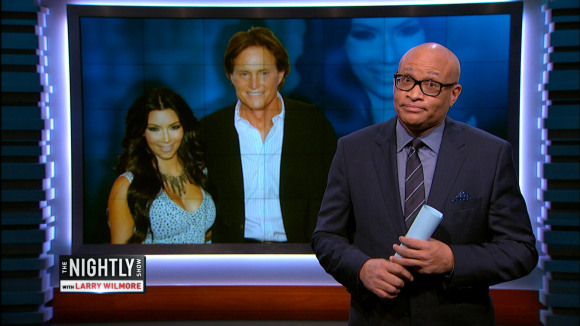
I previously reported a rare instance of news satire’s coverage of current events being considered inferior to that of TV news. The (not so) current event was Bruce Jenner’s gender realignment, discussed in an interview with Diane Sawyer on 20/20. The Nightly Show with Larry Wilmore and Conan were culpable for insensitive and – crucially – unfunny jokes that reeked of transphobia. Now seemingly unable to mock Jenner’s gender and sexual orientations without further controversy, news satire is honing in on the one thing we can all ridicule her for without fear of reproach; being a Republican. As if some kind of plea of extenuating circumstances for their prior bullying of Jenner, both Conan and The Nightly Show did what all bad TV news does when it misses the mark and changed the story. The humour was directed at Jenner revealing he was a Republican, though interestingly omitting the part where the retired Olympian said he’d talk to the conservative wing (or torso) of his party about their mistreatment of transgender people and issues. Again, not funny.

Bruce Jenner scours room for Ted Cruz before coming out as Republican!

Bruce Jenner scours room for Ted Cruz before coming out as Republican!

There is some irony in Jenner identifying as a woman and a Republican simultaneously, but not enough for even the meekest gag and it’s no surprise given his wealth, age, and Cold Warrior status in American sports history. For O’Brien, the information was a neat way to deflect an apology for jibes which made Jenner’s gender instability seem grotesque. For Wilmore, couching his transphobic remarks in the familiar rhetoric of news satire’s anti-Republican diatribe (as wonderful a thing as that is) was the best way for a left-leaning comedy institution to disguise its bigotry. I’m not suggesting that Jenner is now untouchable. He is, after all, part of a dynasty that live to be ridiculed. But I still believe that the responsible parties cannot simply brush what they have said under the carpet, lest all the people they demeaned retreat back into the closet.

Hidden Jenner

Posted in American TV (General), American TV Shows, TV channels, TV News with tags , , , , , , , , , on April 29, 2015 by Tom Steward

There was an unexpected role reversal in the world of TV news this past week. News satire – an institution that regularly attacks the bigotry and ignorance of network and cable news coverage – was itself accused of bigotry and ignorance in regards to transphobia, while a primetime network news special about transgender issues (albeit in the form of an interview with Bruce Jenner, hence why TV is interested in the first place) was widely praised for its sensitive handling of the topic. On Monday, The Nightly Show with Larry Wilmore – Comedy Central’s bland replacement for The Colbert Report – aired a segment ridiculing Jenner’s identification as a woman and chosen sexual orientation as abnormal, which were made to seem even more grotesque by comparing her to Pinnochio. This was responding to Friday evening’s 20/20 special on ABC, in which the former Olympian and Kardashian was interviewed by Diane Sawyer about being a man trapped in a woman’s body her entire life and her decision to transition to a woman, which she has been doing piecemeal for years.

Methinks Larry doth protest too much!

Methinks Larry doth protest too much!

At the heart of the controversy surrounding The Nightly Show was Wilmore’s apparent confusion about Jenner’s desire to become a woman yet having male genitalia and preferring women sexually. Now, if this seems to be representative of the billions of people around the globe who have spent their lives knowing they are a different gender than the one assigned to them and have, for reasons too numerous to mention, yet to make their (complete) transition, it’s because that’s exactly what it is. It’s hard to see where the confusion, or indeed the comedy, lies in pointing out these tragedies. If anything, this information helps us make sense of Jenner’s personal (mostly surgical) life choices in recent years, and there is, of course, the little known fact that what Bruce Jenner wants to be or do in her life is none of anyone’s fucking business. Even more appalling was Wilmore’s hetero-bullying tone, which seemed to suggest that this particular combination of gender and sexuality was above and beyond an average straight guy’s understanding of the world.

But 20/20 didn’t miss the opportunity to turn the tables on news satire either. Clips from Saturday Night Live and Conan making jokes at the expense of Jenner’s gender instability were featured in the programme. She was fair game when she was altering her appearance for reasons of vanity, but the punchlines were directed at gender. Conan O’Brien’s monologue jibe seemed to be urging Jenner to hurry up and pick a gender, as if that were somehow easy or necessary for us to recognise her as human. In defence of news satire – which I believe to be essential not only as a critical commentary on the news but also a superior alternative to it – these are atypical moments that in no way represent the genre’s treatment of such issues. It’s hard to imagine The Nightly Show’s tone of reporting on its forerunner The Daily Show which draws Arsenio-style primal screams at the mere mention of Elizabeth Warren. The Conan monologue gag seems unusually cruel, especially for a late-night talk show with a notably liberal following.

Hindsight is 20/20!

Hindsight is 20/20!

It is, however, possible to imagine Wilmore’s segment on The Colbert Report, with the thinly veiled prejudice cloaked in the self-negating irony of Colbert’s fake conservative newsman persona. But there’s no evidence here that we’re supposed to think of what Wilmore is saying as anything other than genuine (and if you ever suspected that Wilmore is capable of comedy that is less than obvious, remind yourself he is the creator of Black-ish!). If the problematic representation of transgender issues in news satire has been reported correctly, we should also note that the success of TV news coverage in dealing with the same issues has been greatly exaggerated. Perhaps the overwhelmingly positive reaction to the Bruce Jenner 20/20 special was motivated by relief that it wasn’t the most hideously offensive piece of journalism ever aired. But interviewer Diane Sawyer adopted the persona of a sceptical and disgusted parent, asking questions only the most hateful (and thus least important) person would. It’s insulting enough, even without the patronising implication that this is what the public would ask. We also have to take into account TV news’ much worse track record when it comes to reporting on the transgender community: Piers Morgan’s media war with Janet Mock, Katie Couric’s inappropriate intimacy interviewing Laverne Cox. Nobody’s getting it right but news satire is wrong less often than the news.