Archive for the American TV Shows Category

Away Sky

Posted in American TV (General), American TV Shows, TV channels, TV Criticism, TV History, Watching TV with tags , , , , , , , , , on October 22, 2014 by Tom Steward

It’s no shock that here in the States TV shows go on far too long or that they change drastically over time. Most series signpost their anti-ageing facelifts to viewers with the help of subtitles, which act as disclaimers for authenticity and longevity, as in the later years of Saved by the Bell or on the opposite end of the scale (it thinks!) American Horror Story. Others more confident of their status as season-long anthology plays such as True Detective and Fargo will re-cast completely each year to demonstrate that it is the concept not the characters that are the stars. Despite this amnesty on self-adaptation, some shows still seem wary of admitting to viewers that they have renewed themselves in the process of maintenance.
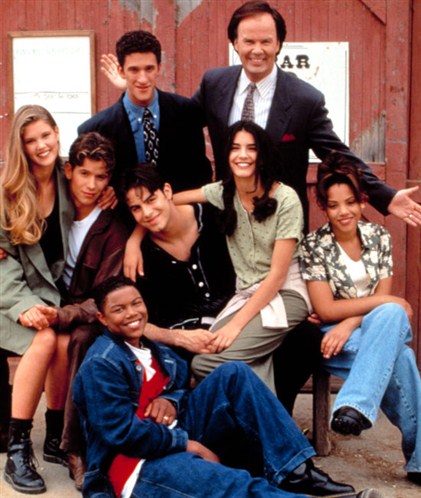
Remember them? No, neither do I!

Remember them? No, neither do I!

Chief among them is Homeland. Showtime’s CIA thriller has killed off the character around which the show revolved, re-located to another country, and butchered its beautiful title sequence, which was always as good as (and increasingly better than) anything that followed. Yet it still goes under the name Homeland and goes around acting as if nothing has happened. Frankly, it’s a bit of a cheat. Having revealed itself as a concept that barely had enough material for a mini-series, perhaps it would have wiser to position the post-Brody Homeland as a spin-off or linked franchise entry. With the emigration of the series, it could be Homeland: Kabul or as Damien Lewis re-appears shrunken in all but hair as Brody’s baby son, Homeland: The Next Generation.

I’m not serious about these title tweaks, but the point is that TV has ways and means to suggest that a show has changed dramatically without any detriment to the brand or canon. It’s a win-win situation. The viewer base for the series will return in loyalty to their show and if hideous it can be written or quietly killed off in complete deniability of any resemblance to the original. There is precedent for this in the Columbo spouse-off featuring the elusive Columbo Indoors. Mrs. Columbo starring captain-turned-convict Kate Mulgrew was intended to be a mystery following the amateur sleuthing of Columbo’s wife. It was so unpopular and implausible that producers decided Kate Columbo just happened to be married to another detective with the surname.

In the last four years, Key & Peele has been one of the smartest and most culturally relevant comedy programmes on American TV, and surely a historical high point in TV sketch comedy. This season they have forgone what for many viewers was the highlight of the show, their semi-improvised skits in front of a studio audience introducing the main sketches. There are also noticeably fewer sketches per show, and a shift in the framing of the series towards the cerebral with a sombre western motif in the re-recorded theme tune and filmed introductions. With the amount of time they’ve been on the air, and my suspicion that the changes were forced by a busy production schedule, I don’t begrudge it. But I don’t approve.

The ‘live’ segments of Key & Peele may have been too much of a nod backwards to traditional vaudeville for those obsessed with innovation, but they were the show’s unique selling point. They were bouncy, energetic, and personable, with many of the loosely improvised moments standing shoulder-to-shoulder with the pre-written material in terms of quality. The pre-recorded banter this has been replaced with just seems flat and inert by comparison (with the exception of the discussion about ventriloquist dummy ‘Willy Talk?’). Equally, I feel that what set the sketches apart from the Saturday Night Live School was how tightly-scripted and effectively concluded they were. With sketches stretched to a commercial beat and post-punchline by close-of-play, they’re dragging like Lorne Michaels’ feet about hiring black women.
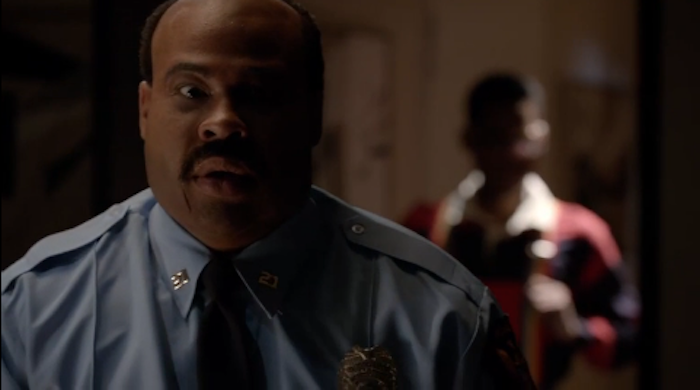
Did they write that?

Did they write that?

I am, of course, a hypocrite. An aspect of AMC’s The Walking Dead I greatly enjoy is how the concept of the series can periodically change in the space of a few episodes. At the beginning of last year, it was a show about farming. This time round it’s about shooting cannibals with sub-machine guns. Yes, the idea of movement is ingrained in the title, and change has been a part of the formula from the beginning, but it’s still got away with en-masse recasting and retooling without any acknowledgement to the viewer. I suppose the difference is that between growing and living. The Walking Dead evolved into something greater than it was while Homeland and Key & Peele maimed their greatness to carry on.

The Second Sets

Posted in American TV (General), American TV Shows, Reality TV, TV advertising, TV Criticism with tags , , , , , , , , , on October 15, 2014 by Tom Steward

When it comes to certain aspects of American popular culture, I feel I’m in a Twilight Zone of opinion. The stark commercialism, gross sentimentality and tasteless sensationalism that many Americans take for granted remain horribly apparent to me. And so it is with the casual objectification and sexual mapping of women’s bodies in American media. Watching David Fincher’s Gone Girl at the weekend, it occurred to me than even in a movie about how women suffer under men female bodies are still routinely exploited. What alarms me just as much as its ubiquity is how little it is commented on. There are many similarly horrific depictions of women in the British media (The Sun’s ‘Page 3’ for example). But whereas in Britain I felt the right people said it was wrong and the wrong people said it was right, when it happens here I’m not even sure if anyone cares!

Who's the commodity?

Who’s the commodity?

On television there are a number of ad campaigns that are content merely to have semi-nude women comporting in erotic poses and engaging pseudo-sexually with the objects around them. They are pornography in the raw, images of pure titillation designed to elicit perverted gazing and deployed without a hint of irony or subversion. Some of these are for businesses like Hooters where female objectification is ingrained in the brand, and would be somewhat expected, but others such as fast-food chain Carl’s Jr and electronics outlet Radio Shack have taken it upon themselves to invent this associative imagery. I’ve seen clips from these commercials appear in articles and videos attacking the media’s treatment of women – and I don’t discount those as notable protests – but what I don’t see is a recognition in everyday discourse of how problematic these campaigns are but rather a blind eye to or complicit acceptance of them.

I’d like to believe that the pornographic impulses of advertising account for the way that women appears in these commercials but looking at the programming around them, television must shoulder some of the responsibility. On the ABC ballroom reality competition Dancing with The Stars, group numbers featuring the female dancers invariably call upon the imagery of the strip club and the peep show, turning each of their bodies into platforms of sexual consumption for the cameras rather than a medium of artistic expression. Two recent TV awards shows even thematically incorporated the treatment of women’s bodies as sexualised objects. The Emmys had actress Sofia Vergara exhibit her body on a revolving pedestal for the sake of a half-baked pun about ‘giving viewers something compelling to watch’. The MTV Video Music Awards united female performers Nicki Minaj, Ariana Grande and Iggy Azalea by having them each ‘twerk’ during their respective performances.

The turn in American media towards over-sexualisation is not lost on everyone in television. On their eponymous Comedy Central show, sketch comics Key & Peele recently featured a razor-sharp piece of pop satire in which a Minaj-like artist is confronted by young female fans on a cable music television show who are confused as to how her feminist polemic equates to her lyrics, which all revolve around women demeaning themselves sexually for men. The artist is then revealed to be a man in a wig (which, of course, he already is!) who is embarking on a dastardly scheme to convince women that overt sexualisation is the same thing as empowerment. The skit reveals a sad truth about how the attractive façade of feminine authority and independence attached to the most successful women in the media offers not sexual freedom but further bondage, and might as well be from a man.

Key & Peele have a real knack for unearthing the contradictions in mainstream American culture, so we shouldn’t necessarily be surprised that they pick up on these gender problems. Vergara and The Academy got roundly panned, as did Seth MacFarlane two years ago for a song about female star nudity when presenting The Oscars. It fascinates me that criticism is reserved for the higher end of television – like awards shows celebrating the best in the popular arts – and directed at instances that have some level of play and self-knowledge about them, while the same when done in the name of entertainment and spectacle, like the VMAs, does not warrant reproach. Of course, a knowing objectification of women is not much better than an oblivious one, but by dwelling on the more self-conscious examples, we threaten to leave the habitual exploitation of female bodies unchecked and trickling down into the mainstream.

Thinking Outside The Box

Posted in American TV (General), American TV Shows, Behind-The-Scenes, British Shows on American TV, TV advertising, TV channels, TV Criticism, TV History, Watching TV with tags , , , , , , , , , on October 8, 2014 by Tom Steward

Historically TV has been the whipping boy for crimes against the art of cinema. Whether it’s the butchery of panning and scanning, intrusion of advertising or hatchet job of editing, televised movies are often the husks of their theatrical counterparts. At least in America, it doesn’t appear the situation is much improving. Internet channel Netflix regularly shows movies in the wrong aspect ratio and decisions such as movie network Epix airing a colour version of the recent black-and-white Oscar contender Nebraska suggest continuing blindness to the intentions of filmmakers. However, it is just as common for television to victimise itself.

The lucrative business of syndication whereby the rights to re-air TV series are sold off has seen many classic shows chopped up to fit new timeslots and networks. Syndicated versions of sublime sitcoms like The Golden Girls and The Dick Van Dyke Show have their punchlines cut to ribbons in order to squeeze in a commercial and are rushed off the air like a mentally challenged America’s Got Talent contestant to shave seconds. The market value of these shows is as back-to-back episodes so they appear on the air as homogeneous broadcast flow rather than the individual masterpieces they are.

You have to laugh at the jokes you can't see!

You have to laugh at the jokes you can’t see!

Most recently, a retrospective of The Simpsons on Fox sister channel FXX was blighted by the majority of episodes being stretched from their original 4:3 broadcast ratio to the 16: 9 representative of most current HD television sets. This effectively cropped about a quarter of the sight gags in any given frame and grossly distorted and disrupted the animators’ carefully composed tableaus. As The Simpsons makes such a compelling case for treating TV as an art form, it is particularly disappointing to see it treated so artlessly. Worse is that those who complained were treated like spoilsports rather than aficionados.

Syndication has become as harmful to the integrity of TV shows as broadcast has to movies. Censored versions of explicit cable dramas such as The Walking Dead and The Sopranos play on networks still governed by draconian Broadcast Standards and Practices departments. The very concept of these shows hinges on being able to demonstrate violence onscreen, and their essence is inseparable from the freedom of obscenity granted by the original broadcast context. As with all the movies that existed in two irreconcilable versions thanks to television, we will soon have TV shows that are better known in their bastardised forms.

I saw the cinematic spectre of this issue recently when going to the movies to watch Michael Winterbottom’s The Trip to Italy. A six-part BBC Two sitcom in the UK, in the US it has been edited and exhibited as a two-hour feature film, where star Steve Coogan is known (in some circles) as a movie actor not a TV comedian. It’s a sharp reminder that what TV and cinema are depends on where you are in the world. But I found it interesting that no-one complained about damage that the transfer to cinema had done to the TV series.

You could argue that there are untold benefits to making a movie out of this TV series that there would not be in the reverse case. Cinema provides a more spectacular realisation of Winterbottom’s scenic photography and editing down to feature length curbs some of the self-indulgence of the star-and-navel-gazing original. But it simply does not work as a movie, not even as the conceptual art movie it purports to be nor the ones it claims to follow. The structure and pacing are that of the British sextet sitcom, and perverting that results in the look of a failed experiment.

Hancock and Sid (UK); Crosby and Hope (US)

Hancock and Sid (UK); Crosby and Hope (US)

The aesthetic arguments are really only a veneer for the economic ones. Coogan is known best, if at all, to film audiences and so the cinema is the most profitable place for one of his vehicles. Winterbottom tends to direct movies and logically his name will generate the most interest in connection with a cinematic release. The reasons for putting a medium-appropriate version of The Trip to Italy into theatres are not that different from the motivations for squashing movies into the TV schedules. It’s only an outmoded belief in the artistic superiority of cinema that makes it seem so.

TV has done terrible things to great movies. But it doesn’t discriminate between artworks in TV and in other media. As TV climbs to cultural respectability, its programmers seem determined undo that reputation. However, cinema is just as guilty in what it does with prestige TV. Bigger is not better.

Cry Me A Rivers!

Posted in American TV (General), American TV Shows, Behind-The-Scenes, Reality TV, TV channels, TV History, TV News, Unsung Heroes with tags , , , , , , , , , on September 24, 2014 by Tom Steward

Look, I never said this was a news blog (except in applications for paid blogging positions!). Besides, I have to leave a period of time between a celebrity’s death and blogging about it so it doesn’t look like I’ve been knocking off television legends to give me something to write about. Three weeks ago, at age 81 comedian Joan Rivers died, as she lived…in surgery (don’t you dare tell me Joan wouldn’t appreciate a joke like that!). She will undoubtedly be remembered as a stand-up who, unlike many of her generation, was as relevant the day she died as when she first started out. Let’s not forget that Rivers was the comedian who said the unsayable about the widows of 9/11. But she had a real gift for television, and was particularly adept at using everyday formats – talk shows, entertainment news, red carpets – to sneak in provocative and edgy comedy.

Here's Joany!

Here’s Joany!

Rivers got her big break on Johnny Carson’s The Tonight Show in 1965, where she would continue to appear as guest and guest host until the mid-1980s when a rift between her and Carson caused her to be blacklisted from the talk show until this year. Her caustic manner and matter-of-fact handling of other personalities on this and her Fox talk show vehicle The Late Show Starring Joan Rivers was a refreshing departure from both the sycophantic hosting and demure women associated with the genre. It paved the way for her later television career spent trashing celebrities both to their faces and in absentia on the E! shows Live from the Red Carpet and Fashion Police. It also showed that Rivers could insert her brash, no-holds-barred comedy into regular television without ever disrupting it. She didn’t revolutionise late-night talk shows but made them far less deferential and more assertively direct.

Joan Rivers never seemed to be snobbish about what kind of television she was prepared to do. In later years, she would frequently appear on home shopping network QVC to hock her line of costume jewellery. In 1996, she became a reporter on E!’s Live from the Red Carpet, a job more usually reserved for young, up-and-coming, vacuum-brained celebrity enthusiasts. This was as much because she knew television was a business as it was to do something interesting and shocking with bland, formulaic TV. Playing herself on Louis C.K.’s artful sitcom Louie, Rivers castigates the stand-up for leaving a gig in a casino because of its corporate and commercial diktats, addressing her reputation as a ‘sell-out’. Her red carpet interviews are proof enough that Rivers could transform the most banal role into comic art. Acerbic, fast and wounding, she made it entertaining and intelligent with savage mockery replacing awed reverence.

Rivers has been on TV screens weekly since 2010 in E!’s panel show Fashion Police. The highlight of each episode, for both viewers and co-hosts it seemed, was the comedian’s throwaway similes about celebrity dress sense, which would frequently incorporate a ruthless and tasteless commentary on pop culture. No death appeared to be too soon to joke about, no disaster or ailment a taboo, no imperfection beyond satire. Year upon year, the show demonstrated perfectly how Rivers could condense her act into TV’s rigid dimensions without becoming any less sick and twisted. Her 2011 appearance on a Season 2 episode of Louie was a long overdue recognition of Rivers’ standing in comedy, as she becomes Svengali to the disillusioned comic. But she is represented according to a tension between commerce and art that has always been part of her persona, and one that she has managed to resolve without fuss.

The goon squad are coming to town!

The goon squad are coming to town!

Like most celebrities who want to survive in contemporary TV, Rivers allowed her life to be scrutinised onscreen in a reality series. Her relationship with daughter Melissa was the subject of Joan and Melissa: Joan Knows Best and her family dynamic was addressed in Celebrity Wife Swap where she swapped her daughter for Bristol Palin (for reasons best known to the producers). Perhaps her most unremarkable television work, if only for the foot-binding conventions of reality shows that do not permit idiosyncrasy, they are still testament to Rivers’ canny understanding of where to be in TV at the right time. With all the low-end TV she’s been involved in; some might be inclined to write off much of Joan Rivers’ time on the box. But she definitely found her niche in each genre she tackled, and never sacrificed what made her comedy special for the sake of being on television.

Watching Century With Americans

Posted in American TV (General), American TV Shows, BiogTV, Reality TV, Reviews, Touring TV, TV Criticism, TV Culture, TV History, Watching TV with tags , , , , , , , , , on September 10, 2014 by Tom Steward

You know when anniversary shows try to make out that the second part is different from the first, even though it’s just another set of clips with a new (but equally banal) gimmick? Well, now you get the point of this introduction. It’s somewhat fitting, however, as what I’m most proud of about this blog is that it is different from one week to the next, even if my obsessions do tend to re-surface like a pardoned 24 terrorist. It’s a freedom writing about American TV that you can’t have making it. Here’s some more re-runs before normal service resumes:

For the second of our hundred television posts celebration that's...erm...crazy like a fox?

For the second of our hundred television posts celebration that’s…erm…crazy like a fox?

‘Given that this is how I spend most of my days anyway, it seemed perverse to be treating a TV marathon as the novelty it was supposed to be for the majority of the population. But I’m also not going to miss a golden opportunity to sit in my pants morning, noon and night continuously watching TV on one of the rare occasions it’s been deemed socially permissible’

‘It’s the inverse relationship between the interest taken and the research done that makes American TV’s obsession with the British so bemusing to me’

‘The Food Network could run Chard Week featuring all the best appearances of the vegetable in the mystery box on Chopped, including the time someone drizzled it with a gummiworm-infused vinaigrette’

‘If there’s a lesson here, it’s that people want reunions more than they ever want to see them happen’

‘It seems bizarre that in a country where the mere mention of healthcare can cause the government to shut down, science is such a popular commodity. Yet again and again American TV shows flashing their scientific credentials like phosphorus in a Bunsen burner are more likely to succeed’

‘It occurred to me recently that TV talks to us as if we’re all amnesiacs’

‘Film critics can no more admit to the abysmal hit rate of current movie releases than TV critics can acknowledge that most of the time on-air television resembles an endless sewage pipe’

‘One of the places I was surprised to find TV on the air was in the air’

‘The show is so ingrained in the city that it’s entirely possible to take a Breaking Bad tour of Albuquerque without even knowing’

‘Unlike other game shows, The Bachelor(ette) likes to invite its losing contestants back to occupy more senior roles in the programme, like Juan Pablo who was sent home in a previous season and is now The Bachelor. It’s like losing Final Jeopardy and then next day replacing Alex Trebek’

‘Ok, let’s consider how many people in television have ripped off Letterman since he started compared to Leno. And Bill O’Reilly doesn’t count, he just happens to be a disgusting Republican who’s bad at his job’

‘It occurred to me recently that TV talks to us as if we’re all amnesiacs’

‘I often feel guilty about recommending shows that don’t warm up until a few seasons in. In essence you’re asking someone to commit all their free time to something that won’t pay off for months. It’s like getting someone to invest their life-savings in a niche restaurant that you know won’t make any money for the first few years’

‘American TV seems to be in a permanent state of finale. The average season has more false endings than a Hobbit trilogy’

‘Aside from being the perfect audience since it’s guaranteed they haven’t heard his music, Vanilla Ice Goes Amish is the feeblest juxtaposition of topics since Ted Nugent tried to fight Obamacare with Dr. Seuss’

‘After all, there can’t be many clips out there of Orson Welles winding Dean Martin’s head 360 degrees with a handle’

‘I often wonder how long reality shows would last if there were no repetitions or duplications. Chopped would probably end before it began!’

‘Hours of broadcast prior to the official start time of the Oscars are taken up with reporters transmitting live from the red carpet-lined entrance as stars rotate their bodies more slowly than a Virgin Trains toilet door and answer existential questions like “who are you wearing?”’

‘Can we jump forward to a time when TV doesn’t time jump?’

‘With the possible exception of serial killing, the part of our culture most likely to produce copycats is television’

‘It occurred to me recently that TV talks to us as if we’re all amnesiacs’

Vanilla Ice takes an Amish selfie...or as they call it a 'self-portrait'.

Vanilla Ice takes an Amish selfie…or as they call it a ‘self-portrait’.

‘At least we now have an idea of what Return of the Jedi would have been like had David Lynch directed it’