Archive for the American TV Shows Category

Box Jumps

Posted in American TV (General), American TV Shows, Behind-The-Scenes, TV channels, TV History with tags , , , , , , , , , on June 24, 2014 by Tom Steward

With the possible exception of serial killing, the part of our culture most likely to produce copycats is television. Each idea that has any kind of success with or impact on viewers will be re-circulated more or less unmodified until the imitation has paled to the point it recalls the scene in Moulin Rouge where Nicole Kidman pretends to be Madonna pretending to be Marilyn Monroe. This is why there are currently five series airing on US television (that I can name!) about software developers and why so many recent TV dramas use flashback, even though it runs counter to the logic of television’s simultaneous time. A particularly alarming television trend doing the rounds at the moment is arbitrary jumps in time that leave huge gaps in series timelines. Rather than heralding a new style of TV storytelling, these flashforwards seem more like afterthoughts designed to resolve awkward continuity problems.
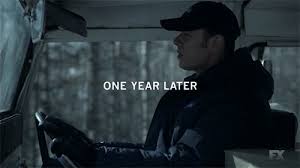
Fargo the year!

Fargo the year!

It was recently announced that the final season of HBO’s prohibition-era gangster drama Boardwalk Empire would take place in 1931, seven years after the end of the previous season, which had covered the late teens and early twenties in its first four seasons. The final few minutes of the latest season of docu-sitcom Parks and Recreation jumped three years ahead, omitting Leslie Knope’s pregnancy, the birth of her triplets, and the first years of her new job. FX’s thriller mini-series Fargo skipped a year in its last few episodes, this time allowing police Deputy Molly to get pregnant and criminal conspirators Lester and Lorne to start new lives. After nine episodes out of twelve, we’re still waiting for the belated revival of 24, Live Another Day, to jump a few hours to get us to the end of the day before the season ends, as promised by the show’s producers.

When TV shows did this in the past, it always smacked of desperation. It was no coincidence that Desperate Housewives jumped five years in its fifth season the same time as viewers were leaving the show in droves. Nor was a secret that One Tree Hill’s skip ahead four years halfway through its run was a thinly veiled attempt to bring characters’ ages into touch with the actors playing them. The time jump might be being deployed in a slightly smarter way these days, with Parks and Recreation’s implication that the nation has missed out on a three-year recurring guest role from Mad Men’s Jon Hamm, who is fired from Leslie’s office seconds after the ellipsis. But if you look at where the jumps are situated in the runs of these series, and think about why they should happen at that exact point, you’ll see they are no less crude.

As with flashbacks, part of the problem is that time jumps upset the way time works in television. It’s conventional that TV time runs concurrently with the time in which we live out our lives, and pleasurably so since much of the joy of watching TV is the way it syncs with what we’re doing. Time jumps invariably put a show ahead of the time of viewing, which makes it a kind of science-fiction, and would be fine if that’s what the programme-makers were going for. Aside from problems of realism and plausibility caused by the time jump, it also puts viewers at odds with programmes rather than it seguing with their daily and weekly lives. It’s also more of a placebo for story problems than a panacea. Things take time to work themselves out in television, and television should remain a record of that not a remedy for it.
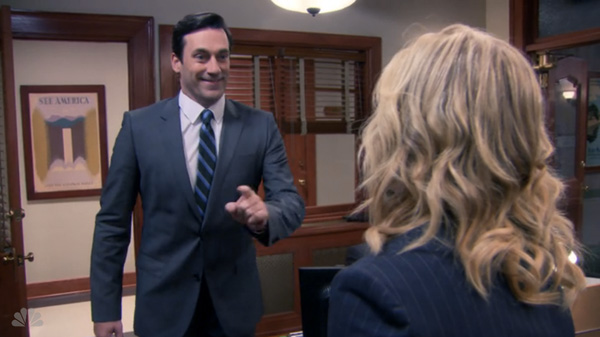
Look what we missed!

Look what we missed!

A time jump might have relieved Parks and Recreation viewers of another pregnancy storyline but it also cheated them of character development. It’s very much a self-written corner since no-one asked the writers to put two pregnancies back-to-back. The loss of a full year in Fargo deprived the series of the suspenseful and tightly-knit storytelling that held the show together, resulting in a deeply unsatisfying denouement. We’ve yet to see how 24 will skip ahead to later hours of the day, but it’s bound to disrupt the real-time orthodoxy of the premise. The producers of Boardwalk Empire may feel they have more justification to move forward in time since it is a historical piece. My initial thoughts are that the 1930s is a very different animal historically, and that Boardwalk Empire can’t help but become a different programme. Can we jump forward to a time when TV doesn’t time jump?
 

Memory Box

Posted in American TV (General), American TV Shows, Reality TV, TV Criticism, Watching TV with tags , , , , , , , , , on June 12, 2014 by Tom Steward

It occurred to me recently that TV talks to us as if we’re all amnesiacs. Shows are incessantly reminding us of what happened minutes before, when we’re not being previewed we’re being recapped, and flashback has become the bane of television storytelling. Reality shows are the worst culprits, since their heavy-handed narration and editing permits them to insert extraneous references to past events at will. But dramas and comedies can be just as bad. Think about how many devices there are built into the fabric of fictional TV series to remind us about what just happened; ‘Previously On’ segments, duplicated action, flashbacks. Such repetition is almost certain to annoy viewers and make them feel patronised, so why does TV always think it’s addressing Guy Pearce?

Torture and racism, probably.

Torture and racism, probably.

When it comes to reality shows, it’s safe to speculate that there’s an element of killing time here. Visual call-backs are a good way of conserving footage through re-use and along with voiceover re-caps they can easily pad out a show to its allotted time. I often wonder how long reality shows would last if there were no repetitions or duplications. Chopped would probably end before it began! But there are also less cynical motives at play. It’s long been assumed by producers that people watch TV in fits and bursts and they don’t necessarily watch a programme from start to finish. It’s something we critics with our programme-based reviews still don’t really get. But it’s the impulse behind filling viewers in every few minutes.

Much as we would like to think for the sake of art that TV has fulfilled its potential as a serial medium, it’s still pretty much a halfway house between closed and ongoing storytelling. There must still be part-time and sporadic viewers out there or we’d have switched over to continuous storytelling a long time ago, given that it’s a feature common to all the great TV out there. We wouldn’t need to have these concessions to people who’ve missed a few episodes or were out of the room if we were all faithful and attentive viewers. As far as flashback is concerned, somewhere along the line it got mistaken for complex storytelling – even though the truth is the opposite – and the rest is history.

TV memory aids are where good television and quality television clash. It’s good practice to make TV that responds to the fragmented way a lot of us watch it. But all the shows we associate with quality television are about breaking away from that kind of audience spoon-feeding for something that challenges viewers, even their memories. And it goes to show that the type of television we’re always wanting more of and more like in television (The Wire, The Sopranos) is difficult to produce in most contexts. People are paying specifically for HBO so they’re going to watch everything and stick with a series for value alone. You couldn’t do a HBO show in a place with audiences that are constantly drifting in and out.

Of course, there are limits. It often feels like we’re being cheated of new content. Last week The Bachelorette ran a highlights package of its first three weeks in place of a new episode. It will do this again in a special prior to the finale, and then during the Judd Apatow-comedy length finale itself. Most reality show finales are season re-caps. There is a point beyond which you’re pandering to people who have missed some crucial moments and simply taking the piss out of the remaining audience. In this way, such shows are their own worst enemies, offering no reward to long-term viewing except seeing it all over again multiple times. You can’t count on TV viewers wanting nostalgia like an instant coffee powder.

Late-night talk show Conan has a regular bit called ‘Memba This?’ in which sidekick Andy Richter repeatedly asks the question in front of a slideshow of recent viral news images. As with many Conan skits, they’ve distilled how TV works in a matter of minutes. What TV pretends is a ‘trip down memory lane’ is actually a re-cap of things they haven’t had time to forget. Set up as a ‘new comedy bit’, regurgitation is posing as creativity. And when Conan keeps getting heinous news images, it reminds us that these memory aids are actually TV’s way of manipulating the past, not just repeating it. Damn, I’m twenty words short. It occurred to me recently that TV talks to us as if we’re all amnesiacs.

Channelling History

Posted in American TV (General), American TV Shows, Reality TV, TV channels, TV History, Watching TV with tags , , , , , , , , , on June 5, 2014 by Tom Steward

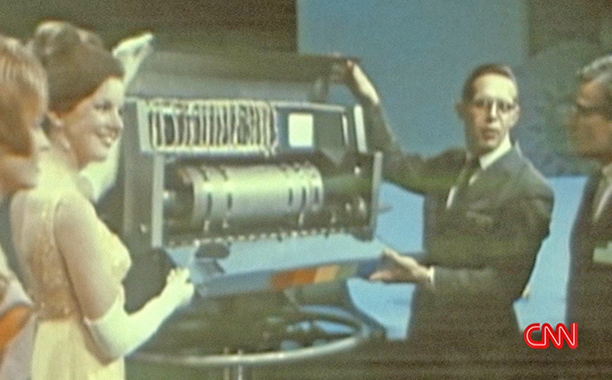
Doing television history on TV is a daunting task. It’s hard enough trying to convey how television connects with social and political events of the past, not to mention avoiding ending up saying TV is a ‘window on the world’ (hall-of-mirrors more like) or making it a medium of communication rather than art. And how do you talk about the history of broadcasting without it becoming a dry recital of telecommunications regulation of the kind John Oliver parodies or a series of backslapping celebrity anecdotes? This is before having to package all this into an inevitably narrow television format that’s supposed to have a broad appeal. So I’m not at all surprised that CNN’s The Sixties: Television Comes of Age was a failure but I am surprised that AMC’s Mad Men, a piece of historical fiction with only a passing interest in sixties television, managed to do so much with the idea.

The Sixties: Television Comes a Cropper.

The Sixties: Television Comes a Cropper.

Recently, Jon Stewart has been using rather a lot of his daily timeslot to attack CNN with the kind of scrutiny and vigour the network never exhibits in its news coverage. He’s been forsaking more gratifying targets, such as Fox News, because CNN’s bloated, ignorant and downright incompetent news reporting is such an insult to journalism and yet still poses as a legitimate news outlet, rather than just an extended campaign ad like Fox or MSNBC. The decline in CNN’s journalistic practices seems to be inversely proportionate to the rise of their original documentary films and series. A mixed bag, to be sure, but with some real highlights, like Anthony Bourdain’s myth-busting travelogue Parts Unknown and archaeological verite Our Nixon. Consequently, I was enthused about the network doing a documentary series on America in the sixties and encouraged that the first episode would be about television. So what’s my problem?

Well, first of all, Tom Hanks. Clearly a selling point for the series if the roadside spinning-sign branding of his producer credit is anything to go by, Hanks has also enlisted himself as a talking head for the show. The actor’s irrelevance to his own industry continues into the documentary, with his inarticulate babbling at the camera about his (unprocessed) memories of watching TV as a child which even a Den-of-Geek editor would call fanboyish. I’m not exactly smitten with the talking heads format anyway. From talking to people who’ve done them, it seems that their words aren’t chosen on their own merits but as a grammatical bridge in the programme’s narration. This pretty much does for anyone who might have a critical stance, but the majority of guests worked in sixties television or now work in the industry and are unlikely to offer much in the way of perspective.

But if this were the only problem with the series, you’ll be inclined to forgive since the researchers and editors have done such a masterful and artful job of finding and fitting together footage from sixties’ television shows. After all, there can’t be many clips out there of Orson Welles winding Dean Martin’s head 360 degrees with a handle. I know it’s not the way things are done now but it’s a great shame that the footage wasn’t left to speak for itself, as it really tells its own story and a better one than the narration. The fundamental problem here is that it doesn’t say anything about what it would have been like to watch television in the sixties, or any other time for that matter. We know what people watched, when they watched it, and some of what it was trying to say. But did audiences get it?

Mad Men: Better Than a Documentary

Mad Men: Better Than a Documentary

This is where Mad Men steps in. In the recent mid-season finale, the characters are all trying to catch as much as they can of the ongoing TV coverage of the Moon Landings. Ad executive Peggy has to follow this with a client pitch the morning after men walked on the moon. Struggling for a segue, she – and writer Weiner – manage to distil the essence of the dial and bandwidth-restricted TV viewing of the time as ‘everyone doing the same thing at the same time’. If that weren’t profoundly elegant enough, Peggy goes on to talk about how this rare moment of unity (and possibly television itself) masks the social disharmony of late sixties America. This isn’t even for our benefit, but for that of fast-food executives looking to cash in on a conservative backlash. Any documentary about American TV history is going to have to beat that.

Tremendous

Posted in American TV (General), American TV Shows, TV Criticism with tags , , , , , , , , on May 29, 2014 by Tom Steward

It’s not often that I pay attention to what critics say about TV. It’s hard to keep faith in an institution that lauds white woman’s burden Orange is the New Black and by-the-numbers re-make House of Cards as the leading television of our time. On the rare occasions I do listen to TV critics, I always regret it bitterly. It was underwhelming reviews that prevented me from watching David Simon and Eric Overmeyer’s superb series about music and recovery in a post-Katrina New Orleans Treme until now. Of course, I should have found out for myself, but with the unanimous adoration of Simon’s The Wire I thought I could trust critics to evaluate his work for me. But I forgot that – much like the interplay of public institutions in The Wire – TV criticism is a game, and the rules demand that anything which follows a universally acknowledged masterpiece must be panned, regardless of whether it’s actually any good. If it was simply their loss, I wouldn’t care at all. But critics still have the cultural power to determine what we should watch, perhaps more now that there is more to choose from. And, believe me, it’s our loss.

Just another day in New Orleans.

Just another day in New Orleans.

Read the reviews of Treme and they’ll tell you time and again that it’s full of unsympathetic characters and slow and meandering storylines without a lick of the complexity or profundity of The Wire. First of all, I thought we all agreed having ambiguous characters on TV was a good thing. We spent the last five years fawning over teacher-turned-druglord Walter White on Breaking Bad and the previous eight over family man mob kingpin Tony Soprano. The characters in Treme might acts like dicks, self-destruct and show themselves up, but they’re not sociopaths or venal criminals. The writers aren’t even using Katrina as an excuse for their bad behaviour. Like their city, they’re doing as much harm to themselves as has been done to them. We’re supposed to have sympathy for the people of New Orleans because of the atrocities they suffered, not because they’re flawless human beings. Besides if you can’t see their redeeming characteristics, you haven’t watched enough. Treme is musical television and the storylines naturally go slower because they’re continually (and gloriously!) interrupted by song breaks. Plus, I don’t think the story proceeds much slower than The Wire with its depiction of the drudgery of police work.

Treme is driven by character not story and hence take its sweet time observing and developing characters without being carried away by the momentum of plot. It’s just as regional as the Baltimore-set The Wire and that was never an obstacle to significant drama. As the series is always saying, New Orleans is much more important to America than America thinks. It’s overflowing with local history and culture – not least centuries of jazz and blues that pour from the lips of every musical number – which tempers the idea that Treme is a knee-jerk reaction to contemporary events. I can only imagine that people are put-off by their ignorance of New Orleans and maybe even jazz in general. I am woefully ignorant about New Orleans, and if I ever thought I wasn’t Treme showed me otherwise, but the series is happy to induct us philistines. Scenes featuring tourists and armchair critics of New Orleans offer an outsider’s eye while rectifying some of the lazy, abusive myths about the city’s cultural redundancy. I know a little more about jazz, but Treme is way more critical of jazz snobs than those who use the genre to have a funky good time.

See that John Goodman, that's me that is.

See that John Goodman, that’s me that is.

Treme frequently airs the view that New Orleans lacks moral fibre, and from the looks of the local diet perhaps actual fibre too. Television too has shouldered the brunt of these kinds of self-righteous attacks, often being portrayed as bad for your health and your humanity. With Treme bringing these two villains together, I wonder if viewers think that, unlike other quality TV, the series might be bad for them. It’s certainly been bad for me. As well as carrying the guilt of watching the series through Amazon, a corporate hotbed of employee abuse, I’ve been craving breakfasts covered in mountains of sugar, lunches that elevate sandwiches to art forms, and dinners dunked in batter. And I’ve wanted to drink like I’ve never wanted to drink. ‘Blown Deadline’, the company that produces Treme, is presumably a reference to Simon’s days as a journalist and writer, but it pretty much sums up what’s happened to me since I started watching the series. All the projects I’m involved with are either overdue or delayed, thanks to days spent bingeing on a season at a time. But I’m a better person, because Treme reminds me what life, and good drama, is like.


Reality TV

Posted in American TV (General), American TV Shows, Reality TV, TV Criticism, Watching TV with tags , , , , , on May 22, 2014 by Tom Steward

‘This is a true story. The events depicted took place in Minnesota in 2006. At the request of the survivors, the names have been changed. Out of respect for the dead, the rest has been told exactly as it occurred.’

These words appear onscreen before the opening credits of every episode of Fargo (so far) in front of the master shot one sentence at a time, with a gradual fade on the first one which leaves the word ‘true’ alone on the screen for a second. They follow a network warning which also tells viewers how real the show is going to be, but here it is not the veracity of the events depicted in question but the adult nature of its content. First-time viewers will most likely accept these words on face value as they are delivered without a trace of irony in the solemn legalese one expects from such prefixes. Those coming to Fargo from the 1996 Coen Brothers movie on which it is based will probably be in on the joke, if only for the sake of not being fooled twice. They will remember that the movie opened with almost the same words, the only difference being the date which was originally ‘1987’. Most of them will have subsequently discovered that this was in fact a lie…in fact. I doubt the producers of Fargo are counting on people falling for the same trick but choosing to begin each show with a hoax is more than mere homage.

The truth, the whole truth and nothing like the truth.

The truth, the whole truth and nothing like the truth.

The series would have to have been made anticipating viewers instantly finding out about the movie’s hoax from any number of debunking websites and presuming the same of the TV version, or at least assuming fiction until there is evidence to the contrary. As the programme rewards knowledge of the original film by segueing their storylines into a coherent fictional world, we can deduce that if one is bogus, the other is too. The original prefix was clearly designed to convince audiences of its legitimacy, with formal white text on a serious black screen set aside from the dramatic body of the movie. The adaptation more or less tells us the prefix is phoney, reduced to its basic meaning (‘true’) to show us how flimsy and insubstantial it is without the window-dressing of dates and places. Despite all these mitigations, I still can’t help but feel that the producers are clinging to the hope that somebody somewhere will be duped if only because of the longstanding reputation of television as a truth-telling medium. They may be counting on viewers making distinctions between the way TV witnesses events of the world and how movies provide escape from it to get them to buy into the illusion against their better judgement. This could be why we get the prefix week-upon-week rather than at the beginning of the season. Indeed, I hope it has been included in attempt to pull off a hoax against the odds of a multi-platform age of information plenitude.

White Lies.

White Lies.

After all, TV still cares about distinguishing truth from fiction, or at least it pretends to. After carrying us along with a montage-based fiction for an hour, many reality programmes remind us with a straight face that ‘portions of the programme have been edited’, though as we have not seen a reaction taking place in the same shot as the preceding action for the entirety of the episode, we can guess as much. Simply from the self-evident fabrications of what we see, we are as aware that a reality programme is fiction offered as fact as we are that Fargo isn’t and never was a ‘true story’. But reality TV producers aren’t putting up the disclaimers because they think we’re suspicious about the truth of what we see. They’re doing it so as not to be accused of cheating. The disclaimer usually comes with the condition that it applies to parts of the episode ‘not affecting the outcome of the competition’. It’s not being lied to that is the problem, but what we’re being lied to about. In the hierarchy of reality television, making an artificially conceived competition reasonably fair to contestants is more important than representing people fairly. There isn’t anyone specific being lied about it in the Fargo prefix, but by claiming that the events actually happened in a certain place and time, there is a distinct odour of misrepresentation, at least regionally. Maybe Fargo’s built-in self-denials derive more from fear of offence than disillusion with the masquerade.