‘Why are we sitting here watching commercials?’ asks C, G housemate, and it’s a fair old point. In the UK it’s pretty obvious when adverts are about to come up, and programmers gently ease viewers in to the transition. On UStelevision, commercials abruptly cut into programmes, taking out lines and ends of scenes like a poltergeist script editor. Commercials even interrupt themselves, making it impossible to concentrate on the most fleeting of promotional programming, and the commercials don’t stop when the programme proper begins either. Fictions feature promotional considerations where brand products are used somewhere in the narrative, often very wittily, as in 30 Rock which continually satirizes NBC’s prostitution by consumer goods conglomerates.
Non-fiction does a lot of straight-to-camera advertising, as shows suddenly stop mid-item and become an infomercial for weight-loss pills, again making it impossible to separate programme and commercial. US TV commercials are more like web pop-ups or computer viruses, something that intrudes on and pervades your media experience when you least want it to. Consequently, whole media industries and online communities have emerged to allow viewers to speed through commercials (video on demand, cheat sites for skipping commercials on TiVos).
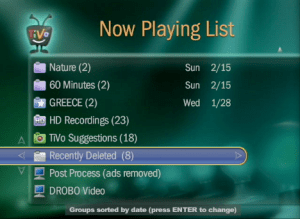
Websites teach you how to skip ads on TiVo
Though eminently frustrating, commercials have historically been a huge part of the development of American television and shouldn’t be lambasted outright. In the 1950s US TV producers and writers had to fit content around roughly three interludes per hour for sponsor messages and it was this that helped TV develop as a unique art form different from theatre or cinema. For instance, the dramatic arc of TV anthology plays had to accommodate breaks in the flow and therefore TV drama became characterized by sharp cliffhanger rises in suspense or action every 10 or so minutes. They are also an unignorable part of the ritual of watching TV. I remember an episode of teen girl comedy Blossom where father Ted goes to pee saying ‘and now a word from our sponsors’. This excerpt shows us in the pithiest (or pissiest) way possible that commercials are ways of TV serving people’s biological needs for food, drink and bodily functions. And we love them as much as we do our own gluttonies, addictions and excretions. I have a couple of favourites at the moment. The first is a cycle of commercials for Chantix, a give-up smoking pharmaceutical.
It used to be the case that US drug commercials would deliver the small-print about side-effects and defects in an indecipherably fast voiceover in the last second or so of the commercial, which has been brilliantly parodied (like virtually all TV absurdities) by The Simpsons’ distressingly accurate mock-ups of network advertising. It felt like a corporate conspiracy to cover-up the serious health risks associated with particular products and this is probably why such information is now given in a more leisurely manner, taking up the majority of the commercial and repeated almost verbatim at the end. Unfortunately, this only makes the drugs sound more life-threatening as an exhaustive list of possible ailments like kidney failure, heart attacks, respiratory problems, skin blemishes (and my personal favourite ‘unusual dreams’) is rolled out over soft piano on-hold music, a sickeningly inappropriate and seemingly endless concoction of words and sounds which suggests the pain will never end after taking Chantix. Plus the commercials are usually predicated on an irresolvable tautology that sounds like a Zen saying designed to separate mind from body such as: ‘Do you want to give up smoking without giving up smoking?’. Yes, Chantix is apparently not just a wonder-drug but a porthole into an alternative universe of Marxist dialectic or, if that’s too posh a reference for you, the Bizarro World. The second is a set of commercials for Poise, a pad designed to counter bladder control problems in women featuring Whoopi Goldberg.
Commercials are so often about hiding embarrassing problems or anxieties with advertisers and companies preying on insecurities to sell products vaunted as paper-over-the-crack solutions (no pun intended). But this commercial tries to comfort people who suffer from these ailments, reassuring them that it’s completely normal (1 in 3 women have had it at some time) and, importantly, that it can be funny, with Whoopi’s pleasingly infantile ‘spritzer’ noises. There’s something cathartic about the ‘fart is funny’ silliness of this commercial that I imagine would be a tremendous release for those suffering from this ailment. Its bluntness also says something about the aggressive cajoling of US TV commercials and how it can be used in a more positive way.

 Watching TV with Americans
Just a quickie (that’s what she said)
Posted in American TV Shows with tags blogging, columbo, creed thoughts, pandora's box, ryan the temp, the emperor's new clothes, the internet, the office, the office: an american workplace, user comments on March 18, 2011 by Tom StewardSorry to tear you away from your viewing (Columbo, I assume) but I just wanted to do a quick one about my favourite depiction of blogging on American TV. TV has always had trouble knowing how best to incorporate the internet into its programmes, often simply resorting to compiling clips from YouTube and putting them into a chart countdown format. And this makes the clip I’ve chosen doubly impressive. The Office: An American Workplace is a remake of the seminal British sitcom The Office that has surpassed the original in many ways, particularly in its development of the supporting cast of characters, two of whom are central to this clip.
So Ryan the put-open (and later Machiavellian) office temp fools the unassumingly sinister paper salesman Creed into thinking he’s writing a blog when in fact he’s merely harmlessly firing away heinous observations into a word document. This vignette brilliantly captures the way that many people get so overawed by the wonder of new technology and so willingly buy in to the myth of absolute convenience that they fool themselves into believing that anything can be done for a minimum of effort. The fake blog is a bit like The Emperor’s New Clothes; Creed knows nothing about blogging except that it’s the fashion and although he’s never seen it with his own eyes he believes his blog’s out here. And this is in an age where every commercial debut of a new device feels exactly like the unveiling of a naked royal. The characterisation of the internet as a place where the dark recesses of the human psyche gain full expression is a familiar one to anybody who’s ever scrawled down a set of user comments on a blog or news page. But the disturbing suggestion that Creed’s thoughts are too extreme ‘even for the internet’ is one that brings out perfectly the latent terror of the character while tantalising us with an unseen Pandora’s Box of hateful prose.
But what I really love about this clip is that it reminds me of me. Like Creed, I’m writing this blog whilst being completely in the dark about how it really works. I too feel like I’m pouring out copy into a word document and hoping that internet fairies like Ryan will be scrupulous enough to ensure it makes it out on to the web. I’m always surprised other people read it.
Share this:
1 Comment »