Archive for the Behind-The-Scenes Category

Split Images

Posted in American TV (General), American TV Shows, Behind-The-Scenes, BiogTV, TV channels, TV Culture, TV History, Unsung Heroes with tags , , , , , , , , , , , , , , , , , , , on August 27, 2013 by Tom Steward

One of the only saving graces of a great artist dying, though oblivious to them, is the opportunity it grants us to talk about their work. Doing so always carries feelings of guilt-especially if the artist was still working at the time of their death-as we recognise this is what we should have done all along and curse ourselves for exploiting their demise to fill our quotas. I’m taking advantage of an obituary-led spike in the commentary on one of the foremost writers of our time to talk about where he and American television have crossed paths. Morbidly timely it may be, but hopefully it sheds as much light on the medium as it does the departed, and covers parts of his career that will remain untouched by most tributes.

Elmore Leonard 1925-2013

This time last week novelist, short story author and screenwriter Elmore Leonard died at the age of 87 after suffering a stroke earlier this month. The post-mortem of his oeuvre will undoubtedly focus on his contribution to literature and the movies, and rightly so given his prolific output of books, stories and scripts, as well as the ongoing cycle of adaptation, imitation and homage to his writing in the cinema. But Leonard meant a lot to American TV. Television’s engagement with Leonard was sporadic to say the least, nonetheless it bookended his career. Leonard’s last completed book was Raylan, a novel-length revival of a character from some of his earlier novels and stories, Marshal Raylan Givens. Not only was Leonard inspired to write a book based around the character following his screen incarnation by Timothy Olyphant in the TV series Justified, but the loose collection of cases that make up Raylan and its meandering style of storytelling seem heavily influenced by TV’s episodic nature and large story canvasses. The first screen adaptation of Leonard’s writing was on the small screen rather than the big one. In 1956, the CBS anthology series Schlitz Playhouse of Stars featured an adaptation of Leonard’s western story ‘Moment of Vengeance’, a year before Hollywood cinema would do the same with ‘3.10 to Yuma’. TV introduced Leonard to the screen and it concluded his career.

Raylan: Art imitates Art!

Despite this early entry in the history of American TV, it would be a long time before Leonard would feature again. In 1980, during the heyday of the American TV movie, Leonard returned to the medium to attempt the daunting and foolish task of penning a television sequel to Stanley Kramer’s High Noon. Inevitably lacking the Hollywood star and filmmaking quality of the original and as clunky as any unnecessary sequel, the dispiritingly titled High Noon II: The Return of Will Kane notably improves on its predecessor in several respects. Leonard’s screenplay uses the quotidian, eye-witness qualities of television to carve out a politically, economically and socially realistic vision of the western frontier rather than using the ‘old west’ as an allegory for 1950s blacklist America as High Noon did. Leonard’s versions of the films’ characters are far cooler and more credible with complicated personal moralities that put the Manichean originals to shame. The script also demonstrates Leonard’s effortless skill at integrating his characters into an ongoing story world and coherent universe of his characters. The casting of David Carradine cast as a sympathetic, laid-back outlaw and the movie’s progressive representations of African-Americans gunslingers and frontier racism suggests that Quentin Tarantino, who adapted Leonard’s novel Rum Punch into Jackie Brown (still his most mature movie), may not have restricted his fandom of Elmore Leonard to the literary and cinematic efforts.

High Noon 2: Even Higher, Even Nooner!

The western TV movie would be the form that Leonard’s involvement with television would take throughout the 1980s and 1990s, with numerous adaptations of his work and contributions of original screenplays. However, TV didn’t get serious about adapting Leonard’s work until the turn of the millennium when it attempted to ride a wave of successful versions of his books in independent American cinema throughout the 1990s. The TV adaptations would be beset by many of the same problems of translation that faced earlier screen adaptations of Leonard’s work and took until the last decade of the century to be resolved. In TV, such problems were compounded by Leonard adaptations having to fight for their right to remain onscreen. Despite bringing Leonard’s Get Shorty to the big screen with great success, Barry Sonnenfeld could not do the same for a TV series based on Maximum Bob-one of his most celebrated novels-cancelled in 1998 after a truncated debut season of seven episodes. Even Leonard characters that had already entered the popular consciousness were trampled by TV. In 2003 a series was developed around FBI Agent Karen Sisco, a character who had been portrayed by singer-actress Jennifer Lopez in the movie Out of Sight, a hit star vehicle for her and George Clooney based on the Leonard novel of the same name. This time it didn’t even make it past the pilot stage.

Was Elmore Leonard justified in his decision to stay with TV?

Television was in danger of incurring the same animosity Leonard held for the movies’ mistreatment of his work. Clearly, any continuation of the relationship between Leonard and television would have to be justified. And so it was. In 2010, producer Graham Yost created Justified, a procedural about Marshal Raylan Givens returning to police his hometown in Kentucky, which took as its jumping-off point Leonard’s short story ‘Fire in the Hole’. Though following its own course after Leonard’s point of closure, Justified continues to weave characters from Leonard’s canon into the episodes-including the extended Crowe and Crowder families who genealogically permeate his writing-and structures the central dynamic of the show around the tensions between Givens and Boyd Crowder in the original story. In his last years, Leonard was vocal about his admiration for the series’ sincerity as an adaptation of his work and was particularly taken with its faithfulness to his dialogue style. Justified also embraces the no-bullshit ethos of Leonard’s storytelling, stripped down yet flamboyantly funny, giving audiences what they want and need according to taste. Leonard is credited as producer, a title vague enough to mean anything from muse to head writer. Given that Leonard’s comments about the show seem to be from the outside looking in, it’s probably more like the former. There’s certainly no greater screen testament to the power of what Elmore Leonard does than Justified.

The End of TV?

Posted in American TV (General), American TV Shows, Behind-The-Scenes, Internet TV, Reviews, TV channels, TV Culture, TV History with tags , , , , , , , , , , , , , , , , , , , on August 13, 2013 by Tom Steward

I’ve just finished watching The Fall, BBC2’s new police drama miniseries. Or have I? The open-ended nature of the last episode watched had me rushing to IMDB to see if Netflix had failed to purchase the series’ remaining instalments. This being a fairly common occurrence with an online content provider which faces rights restrictions preventing them from making the latest episodes of TV series available to users. My online search concluded this was in fact the final episode and that this ending was considered ‘controversial’. The word used to describe an adverse response to something offensive or provocative having been done or said but now simply means that a lot of people with Twitter accounts don’t much like it. While searching, I found vigorous defences of the ending by creator Allan Cubitt on grounds of authenticity, arguing that the ambiguous ending gestured plausibly towards the ongoing difficulty of police work and the lengthy timeframes of major investigations. This made sense. The series regularly disturbed and played with the conventions of its genre. It puts The Fall in league with TV crime series like The Wire and The Shield which were equally determined to show policing as a messy, unresolved business.

‘This is DSI Gibson. Do we have an ending in custody?’

Case closed. But wait a minute. I’ve just read that the BBC has commissioned another series of The Fall to be broadcast in Autumn 2014. I’m assuming this will continue the story of the first series and not be a totally different crime drama under the banner of The Fall nor merely a new case for DSI Gibson. There is certainly precedent for these latter options in British crime miniseries. BBC1 multi-arm legal strip Criminal Justice created a completely new set of characters and storylines for its second run and there’s a tradition of detective dramas like Prime Suspect and Cracker holding on to their lead detective whilst continually updating the cases they investigate. It is, however, unheard of to not wrap up the previous case before moving on to the new one and if the next season of The Fall were to do this the show would be genuinely breaking new ground. So if it is to be a continuation, then the ending of the (first) series should be thought of as more of an end-of-season cliffhanger, a suspense-mongering technique designed to keep viewers hooked until its return-an echo of serial TV melodramas like Dallas-and only realistic by default.

Who Shot J.R.? Much difference?

I’m put in mind of another couple of TV finales which blur the boundaries between cliffhanger and open ending. The first of these is the final episode of Twin Peaks, which lies at the close of its second season on the air. The series ends on a note of uncertainty about the fate of its protagonist, Agent Cooper. Given that the show’s co-creator was avant-garde filmmaker David Lynch and that the programme was challenging and innovative in its storytelling, critics and audiences alike were quick to assume that the ending was a deliberate subversion of closure and resolution and an artistic statement on the nature of TV endings. This belies the fact that the ending was written in full expectation of a third season which an abrupt cancellation, following a drop-off in ratings and acclaim, put pay to. This suggests the season ending was meant to work as a cliffhanger in the manner of the previous season, which left the lives of most of the main characters dangling in the balance. This is not to say that the cliffhanger wouldn’t have been met with something surprising and original, as with the last one, but it still reeks of conventional storytelling.

Was the ending of Twin Peaks really breakthrough?

The second of these is the ending of The Sopranos, following six seasons and eight years on the air. A suspension of narrative closure in the form of a literal blackout, it too bore the label ‘controversial’ although ‘uniformly hated’ would be closer to the truth. I initially thought the ending a technical error on the digital station E4 where The Sopranos was first broadcast in the UK, having become accustomed to its legacy of transmission problems which routinely turned my screen ratios into accordions. Alas, the mistake was on the behalf of creator David Chase who had sacrificed all that was good about the show (music, character arcs, engrossing storytelling) for an arch and pretentious modernist gesture, which put art before content. Or so I first thought. The cynic in me now thinks that the ending was merely an arty smokescreen for the kind of cop-out ending that refuses to make any big decisions about the characters in order that the franchise may live on. Think David Chase is above this? Lest we forget Chase presided over the mid-90s spin-off TV movie series of The Rockford Files. It is only James Gandolfini’s death that renders a revival an impossibility.

Live of O’Brien

Posted in American TV (General), American TV Shows, Behind-The-Scenes, TV channels, TV Culture with tags , , , , , , , , , , , , , , , , , , , on July 31, 2013 by Tom Steward

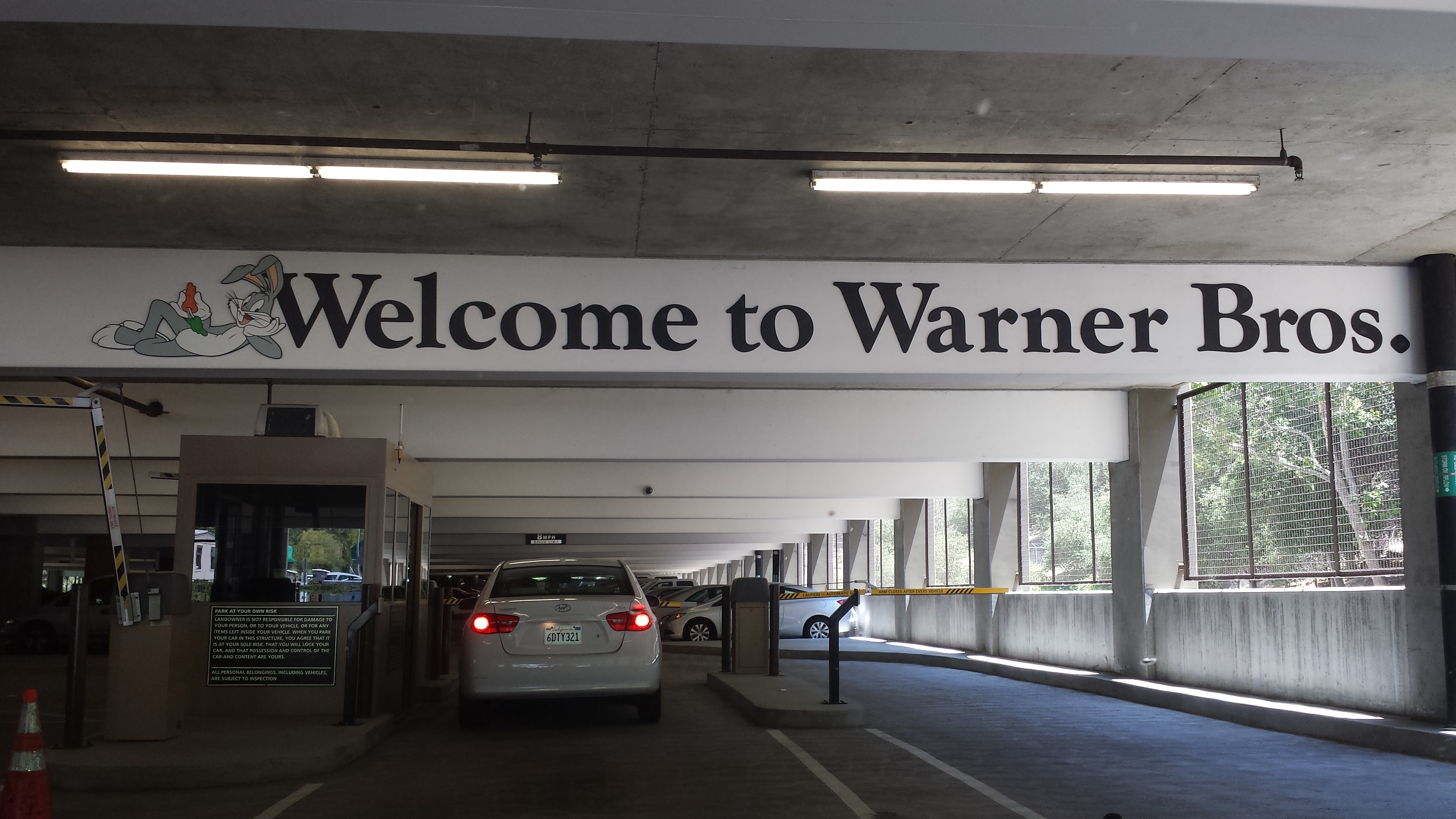
Yesterday afternoon G and I went to Warner Brothers Studios in Burbank to be in the audience for the recording of Conan, the eponymous late night TBS talk show of Conan O’Brien. It’s an experience that goes far beyond the reaches of the hour that the recording takes place. Show time is 4.30pm yet the audience have to check in at the studio parking lot by 2.30pm at the latest and as early in the day as possible to get the best seats. Once checked in, you’re free to leave the parking lot as long as you return by 3.00pm. Not knowing this, and having checked in at the recommended time of 1.30-2pm, G and I had no time to do anything but aimlessly wander the vicinity of Warner Boulevard where the nearest attraction is Forest Lawn Cemetery, an area that is quite literally dead. Lest this start to sound like a yelp reviewer with a severe case of white people problems, I want to stress I completely understand keeping audience members half in the dark about check-in arrangements to ensure they arrive early and G found it entirely preferable to the Star Wars-premiere conditions of Conan’s New York show.

20130729_124424

When we returned from the land of the dead (actually we found a café with big salads so it was more Seinfeld than Six Feet Under), we were taken through a metal detector into a waiting area lined with black metal benches which had the atmosphere of a prison mixer. Actually the prison analogy remained apt as we were branded with a ‘WB’, which I believe stands for ‘Warner Bitches’, and processed through a street crossing deep with standing sewage water in a tribute to the epilogue of The Shawshank Redemption. The show even had a narc in the waiting area. One of the writers was strolling up and down the benches in search of people to turn the camera on in the ‘Craigslist Ads’ segment of the programme in which fake ads are juxtaposed with shots of the audience members who would likely post them. Lifers like me can tell the difference between a TV writer and TV viewer, although in layman’s terms this is also known as cleanliness. And he had a cup.

20130730_160828

At 3 the audience were lined up in groups and taken slowly in multiple stages through the Warner Brothers lots in scenes reminiscent of Day of The Triffids. While it was undoubtedly exciting to be where many of Hollywood’s finest movies (Angels with Dirty Faces, The Big Sleep) had been filmed, I have to say that all the Looney Tunes cartoons I’ve seen have been terribly misleading about what goes on here. Not once did I see Daffy Duck’s head being erased by an irate Chuck Jones! We arrived at a heavily air conditioned studio set, which TV expert G told me was for the lights and not as I suspected to prevent Conan’s skin from setting alight, and were seated with my urine-inflated bladder acting as an internal cushion. G and I were amazed at how small the set seemed and kept expecting a puppet version of the show to follow. The cameras magnify the set out of all proportion and it has an utterly different geography from the one we create in our heads when watching. G was especially thrown by how the guests’ walk from the stage curtain to the couch was literally a couple of steps.

20130730_160847

There followed multiple warm-up acts, starting with a fireman who demonstrated that the post-911 hero status of firefighters has significantly outlived that of cops (probably the lack of racial murders in the fire service). An MC discovered an audience full of drunks, meth manufacturers and slutty teens before Jimmy Vivino and The Basic Cable Band-who unlike most late-night house bands seldom feature in the programme-entertained with a lively, dad-at-wedding dancing funk and rock n roll double bill. There is an ‘Applause’ sign but it’s not the exploitative imposition that it is stereotyped as, its presence moving the show along and not forcing any reaction that isn’t already there. Not being a fan of bad sitcoms, teenage skaters and post-punk poachers the line-up didn’t do much for me. But the original segments were a TV bloggers’ dream. An irreverent ‘info’ button for programmes on a cable remote (Seinfeld: ‘You’ve seen this one’) and a clip from a new TV pilot starring alleged trumpet pumper La Bamba as a CIA assassin with limited knowledge of assembling weaponry.

20130730_160856

I realised that my knowledge of late-night talk shows tapings comes entirely from The Larry Sanders Show though having been there for real I can see why the prospect of a sitcom set there was so attractive. The musically-accompanied interludes between segments which are synced with ad breaks feature curious-looking interactions between guests, crew and talent not to mention the near-farcical stage invasions, all of which possesses intrinsic comic appeal. During the last of these interludes, G turns to me and asks ‘Is it nearly over?’ and I realise that as she’s always asleep by this point of the show and had never watched this far. After a bonus feature, a self-reflexive ‘end of the show song’ from the musically-gifted Conan, we were soon shuffled out into the lot, as I resisted the urge to crash through the parking barriers in homage to the final few minutes of Blazing Saddles.