Archive for the Behind-The-Scenes Category

On Your Marks…Set…HBO!

Posted in American TV (General), Behind-The-Scenes, Internet TV, TV channels, TV Culture, TV History with tags , , , , , on February 22, 2016 by Tom Steward

I hate to use the word adulting – primarily because it’s not a word – but it now seems that every major TV network in America has at least one program that is mature and sophisticated in content, execution or both (except NBC, who are labouring under the delusion that a Ryan Seacrest police procedural is somehow acceptable). It may be true that the best (non-pornographic) adult programming these days comes from basic cable networks like FX (Fargo, The Americans) and AMC (Better Call Saul, The Walking Dead) but that doesn’t mean they got there first. Subscription network – and Adam Sandler movie buyer – HBO has been adulting since the late nineties, when arty prison drama Oz and revolutionary crime drama The Sopranos heralded a wave of complex, experimental and provocative television that has yet to subside. This was politically and artistically reinforced by Six Feet Under and The Wire in the naughties, but overall the network that is an alternative to itself has re-defined just about every genre of TV you can think of, from post-feminist rom-com to news satire. But is it possible that HBO is finally entering a period of arrested development, and might that actually be a good thing?

hbo.png

Well, people would have liked it a lot more!

HBO now looks to re-define quality television for children, mostly by making parents pay – or wait – for it. Last year the network struck a deal with PBS to co-produce the  iconic educational television show Sesame Street so that the show would air first on the subscription-based provider and then on free-to-air TV months later. It’s perhaps the only time I can think of (maybe you can do better) that HBO has exploited an established commodity rather than making an improved version of it and it’s one of the few signature series the network has that doesn’t rely on obscenity to make audiences spend to see it. HBO has now added the football-themed Dwayne ‘The Rock’ Johnson vehicle Ballers to its roster of original series, which seems to be playing to the Fast and Furious-watching, sports-loving element of its demographic. Even a critic’s darling like Game of Thrones which is certainly distinguished by heavy and explicit levels of sex, violence and offensive language resembles the kind of mediaevalesque fantasy stories beloved by the nerdy young and is perhaps the first time that a HBO series with a continuous narrative arc has seemed more like a children’s matinee serial than a novel.

It’s rare that a HBO series goes over its audience’s head – though we all remember the debacle of John from Cincinnati – but last year the high-profile misfire of True Detective Season Two suggested that viewers weren’t always going to lap up the most extreme, idiosyncratic television that the network could produce. Vinyl is just beginning but it’s hard to see where this Scorsese creation detailing the record industry of the seventies will go in exploring the organized criminal elements of historical American leisure that Boardwalk Empire didn’t. The network has cancelled Looking and put a time limit on Girls, which will curb its claim to have the most socially incisive, funniest and best-written comedy-dramas on TV. If it is to continue its unwritten policy of having a maximum of six seasons of every show, then we know that Game of Thrones can’t last much longer, though the saga’s literary predecessor suggests otherwise. So what is the future of HBO? Will the network start to polarise its appeal by producing television that is either infantile or avant-garde, with nothing inbetween? Perhaps the open access of HBO GO and HBO NOW is doing something irrevocable to the adult remit of the network.
hbo 2

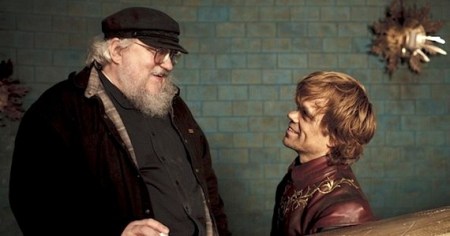
‘Finish the series, George, I have indie movies to make!’

I’m sure many have written these ‘death of HBO’ articles before, and I’m sure they were as premature then as this is now. But I’m worried about the point of HBO changing, not the quality. Game of Thrones is wonderfully compelling and I admired True Detective a great deal, but at its best HBO always gave us innovative, game-changing television that never seemed too slight or too weighty. That balance may be in jeopardy as HBO diversifies into a Netflix-style online video service, or perhaps FX and AMC have found the mean when it comes to quality television, without needing to resort to pornographic shock tactics or take too much cash out of viewers’ pockets. Last Week Tonight and Silicon Valley suggest that a change in direction is not necessarily a bad thing, and that HBO is still finding the best people and concepts in television. But for how long?
Crimetime

Posted in American TV (General), American TV Shows, Behind-The-Scenes, Reality TV, Reviews, TV News, Uncategorized with tags , , , , , , , on January 29, 2016 by Tom Steward

Ever since Homer Simpson purred the words ‘Wow, Infotainment’, true crime has been the beating heart – or lack thereof – of American television. In the last year or so, a high-end alternative to the video-looking, cheaply put together true crime documentaries echoing the trite, uncomplicated and sensational timbre of news has emerged. This sub-genre of true crime TV looks more like the production value-laden, multi-layered serial dramas we’ve seen with exponential regularity in the past two decades and plays without loss on boutique networks and video-on-demand services. The prime suspects are HBO’s The Jinx: The Life and Deaths of Robert Durst and Netflix’s Making a Murderer. Though both series seem to herald a new trend in televised crime, in many ways they are polar opposites. As G remarked, the former is about how privilege and money can get around the justice system no matter what a defendant may or may not have done while the latter is about how poverty and low status count against you legally regardless of your guilt. But their differences go further, speaking to a gulf in the quality and character of the dramatic television produced by these two non-traditional television services. While both appear to have changed the face of television documentary overnight, the nature of the filmmaking involved means that they have been in the works for several years and play off and into TV crime dramas perhaps more than other documentaries in the field.

crimetime

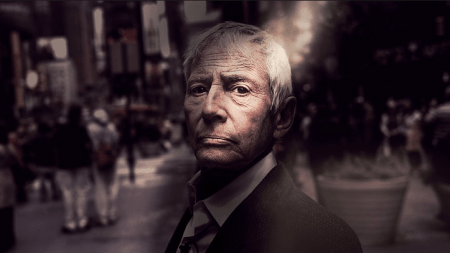
This guy is the Durst!

At ten hour-long episodes, Making a Murderer lasts about long as a typical high-quality TV drama season and offers the same compelling serial narrative we look for in them. Each episode is prefixed with a rich, stylish and lengthy credits sequence equal to and clearly modelled on those that have announced standalone masterpieces in series on such elite platforms as HBO and Showtime. As many of my partners in crime television – including Squeezegut Alley and Dolly Clackett have already observed – this documentary following the trial of exonerated rapist Steven Avery and his nephew for murder in Wisconsin, plays out like a real-life Murder One. Further to the interplay between drama and documentary in crime television, however, Murder One was in no small part indebted to the televised trial of O.J. Simpson, which had concluded a few months before airing and proved that a single trial could hold the attention of audiences for months on end. To complete the circuit, FX are soon to air the first season of their factually-based drama anthology series American Crime Story based around the trial of O.J. Simpson. Critics of Making a Murderer have pointed to the filmmakers’ omission of key pieces of trial evidence and one-sided view of Steven Avery as an innocent patsy. I’m all for directors declaring their biases rather than pretending they don’t exist but it would have been a far better documentary if the emphasis had been on the reasonable doubt about the Averys’ guilt and the distinct whiff of police misconduct surrounding the case rather than conspiracies and frame-ups.

crimetime 2

Avery complicated case!

Though The Jinx shares many visual and narrative similarities with Making a Murderer – not least their elaborate curtain-raisers – in almost all ways HBO’s documentary miniseries is superior to its Netflix counterpart. This six-part account of how business heir Robert Durst became a prime suspect in multiple murder investigations yet remained a free man had greater sophistication in its handling of the subject. The documentary factored in the impact that media coverage of Durst has had on the various cases, including his own attraction to the spotlight which allowed filmmakers direct access to him. They refuse to be drawn on the question of Durst’s guilt until a smoking gun presented itself, at which point the filmmakers are forced into the position of interrogators. The Jinx has also accomplished more for social justice than Making a Murderer, as Durst was arrested for murder following the broadcast of the series while the post-show discussion of the Steven Avery case has yielded an ill-advised petition to The White House which they are powerless to act upon and rancour against the filmmakers for cherry-picking evidence – which is bad documentary practice anyway but given the stakes is a criminal act all of its own. The Jinx might be the reason Durst is under arrest but it may also be the reason he beats jail. Any decent defence lawyer could argue that the documentary has already branded Durst a murder and therefore he cannot get a fair trial. The prosecution would need a jury without HBO subscriptions.


Sound and Television

Posted in American TV Shows, Americans watching British TV, Behind-The-Scenes, TV Acting, TV channels, TV History, TV News, Unsung Heroes with tags , , , , , on January 12, 2016 by Tom Steward

David Bowie was – among other divinities – a consummate self-promoter and it’s for this reason alone I feel justified in exploiting a niche in the market of Bowie obituaries; his appearances on television. Looking back at what Bowie has done on and for TV, it’s all too clear that his genius – like Elvis before and Madonna after him – was in breaking down barriers of genre and generation. His TV – see one thrive:


Top of the Pops (1972)

Though in retrospect Bowie only ever flirted with LGBT imagery and shed his public bisexuality as quickly as he did all his other personas – including the one at the root of his sexual ambiguity, Ziggy Stardust – his performance of ‘Starman’ on British chart countdown Top of the Pops in 1972 was a watershed in the visibility of gender and sexual fluidity in the mainstream culture of Britain. Bowie’s androgynous dress and appearance was one thing, his suggestive embrace of guitarist and collaborator Mick Ronson entirely another. Viewers may have been reading between the lines, since Bowie had recently come out as gay (or possibly bisexual) in rock magazine Melody Maker. That this risqué – and risky – display had such an impact is due as much to the three-channel limit of TV viewing in the UK in the early seventies which meant it was seen by most of the country’s television audience as it is to the content of the performance. But that doesn’t diminish the power it had on those who were awakened and liberated by Bowie’s gesture, including future British pop legends Boy George and Ian McCulloch, nor does it make this surreptitious statement of social change less significant.


David Bowie and Bing Crosby (1977)

Despite being constantly innovative and revolutionary in his music, Bowie was never one to shun tradition, as evidenced by his affection and appreciation for the cabaret singers and crooners who were the pop sensations of their eras. Bowie seemed to have a particular fondness for American pop music, and became a fully-fledged part of it in the seventies and eighties when – inexplicably – he stood shoulder-to-shoulder with the  most legitimate funk and soul artists in the USA. If you take all that into consideration, the awkward chemistry and textbook-illustration culture clash of David Bowie singing with Bing Crosby on his Christmas show in 1977 disappears into thin air. If the lacklustre banter about the irrelevance of a  generation gap in musical tastes doesn’t convince you of their parity – and it won’t – then the complimentary idiosyncrasies in their duet medley of ‘Little Drummer Boy’ and ‘Peace on Earth’ makes a compelling case for their historically inextricable legacies as pop stars.


The Snowman (1982)

As a recent orchestral performance of the British animated feature based on Raymond Briggs’ beloved children’s book I witnessed reminded me, the live-action introduction featuring David Bowie as an adult version of the main character remembering his childhood experiences is more often omitted from showings than it is included. It’s not really surprising as the appearance of a clean-cut, bleach-blond Bowie is the only aspect of this timeless film that dates it as a product of the early eighties. But this appearance unlocks a history of extraneous and bizarre movie cameos that is as much part of Bowie’s place in pop culture as his music. The Snowman is aired every Christmas Eve on British TV station Channel 4 and I suspect that in future years the melancholy of this beautiful film about loss and transience will have as much to do with Bowie as it does the Boy.


Extras (2006)

Speaking of extraneous and bizarre cameos…Though celebrity appearances like Bowie’s would eventually spell the end of Ricky Gervais’s credibility as comic actor and writer, his industry-set sitcom Extras created a self-contained world in which celebrity sightings were eminently plausible. The irony of Bowie’s appearance in the second episode of the sitcom’s final season is that a music star of his ilk is the last celebrity sitcom actor Andy Milman is likely to run into. It’s not much of a leap to suggest that this might be a sly reference to Bowie turning up in projects he didn’t need to be in. It’s one of the few occasions that Gervais had the humility to credit someone else with his success. Gervais’s self-effacing ode ‘Little Fat Man’ is styled so perfectly for Bowie, it acknowledges the extent to which Gervais’s physical and vocal mannerisms which have won him international adoration – especially as David Brent – are informed by the late performer.


Baking The Waves

Posted in American TV (General), American TV Shows, Americans watching British TV, Behind-The-Scenes, British Shows on American TV, Touring TV, TV History with tags , , , , , , , on December 14, 2015 by Tom Steward

It’s not an unreasonable assumption that Americans prefer to know about Britain’s heritage than the way it is today. So it will come as no surprise to anyone on either side of the Atlantic that a Great British Bake-Off spin-off (which can be contracted to The Great British Bake-Off) called The Great Holiday Baking Show is airing on ABC primetime over the Christmas season. The Great British Bake-Off is a cooking competition celebrating British culinary traditions against a landscape idealizing Britain as the green and pleasant land of yore replete with signifiers of our imperial past, like the bunting-lined parties we used to host for wartime victories and royal events. Though if you’re labouring under the misapprehension that cultural fascination has triumphed over commercial interest, it’s worth remembering that in the UK this year the finale of The Great British Bake-Off was the most-watched program of the year, that past seasons of the show currently occupy peak Sunday airtime on PBS, and that a US version of the format called The American Baking Competition debuted in 2013 but was cancelled within a year following poor ratings. It’s both too lucrative and too particular to attempt anything other than a spin-off.

Bake Britain

Bake Britain

Americanizing the brand has proved difficult. PBS had to re-name the US airings The Great British Baking Show not because of cultural misunderstandings – as surely ‘Bake-Off’ is a term friendlier to the American spirit of competition than ours of miserable make-do – but America’s corporate hegemony. Girth-romanticising pastry company Pilsbury hold the trademark to the name ‘Bake-Off’ since it is the name of their patented annual cooking contest. The American Baking Competition continued the tradition of American reboots of British reality shows exporting celebrity judges, but it backed the wrong horse. Perhaps they were expecting some latent movie star glamour to suddenly burst forth from baker Paul Hollywood when he was brought into geographical proximity with his namesake – or more likely they wanted another British villain – but there was less gel than the sour scouse keeps in his hair when they brought him into the show. Though far sweeter and lacking the negativity that reality TV bottom-feeds off, The Great Holiday Baking Show has made a far better choice in calling upon veteran food writer and TV presenter Mary Berry to handle the judging, especially since any successful translation of the format requires as much exploitation of British icons as possible.

As is usually the case in television, the biggest factor affecting the success of The Great Holiday Baking Show is time. The Great British Bake-Off is shown over ten weeks and, while it is clear from the preponderance of sunlight and the frequently-used excuse of it being a ‘hot day’ that it is filmed in Summer, the baking is not linked to any particular season of the year. As the title states, The Great Holiday Baking Show is very clearly themed around the American Thanksgiving and Christmas holidays to reflect the period of the calendar year in which most baking is done and/or consumed in the US. The producers have evidently latched on to the seasonality of baking as justification for a short-run December-long series which also conveniently prevents them from having to commit to a full season in programming terms. Conversely, the configuration of cake-eating with sunny countryside settings in the British original has almost made it seem like an exclusively Summer activity in the UK, not a happy by-product of taking refuge from the cold of Autumn and Winter as it is in the US. Finding what is culturally equivalent about an imported show is often the key.

Baking in the Free World!

Baking in the Free World!

The subject matter and presentation of The Great British Bake-Off is twee and backwards but it gestures to the diversity of post-colonial Britain. Though by no means proportional, there is a range of ethnic, racial, sexual and regional representation in the contestant base. To wit, the 2015 winner was Nadiya Jamir Hussein, a British-Bengali women identifying as a Muslim. I’m glad to see that The Great Holiday Baking Show has followed in these footsteps, though in both cases it’s difficult to tell whether this is selection strategy or merely that it’s an inclusive enough application process for minorities to make it through. What makes the difference is the ability to use the original format and continue to have Mary Berry on board, although why they would make her a judge for an American spin-off only to patronise her like a cigar store Indian in a parallel universe is beyond me.


Coen Artists

Posted in American TV (General), American TV Shows, Behind-The-Scenes, TV Acting, TV advertising, TV channels, TV Criticism, TV News with tags , , , , , , , on November 30, 2015 by Tom Steward

As someone who once publicly stated that hiring Steven Moffat as showrunner of Doctor Who was a good move by the BBC, I’m not used to my predictions about television coming to anything. So I was even more surprised to be vindicated about two separate predictions I’ve made on this blog in recent weeks. However, the ways in which they both came to fruition was enough was enough to make me think I should be more careful in what I wish for. As with the posts where these predictions were first made, this one comes with a lot of spoilers:

No guts, no glory

No guts, no glory

After weeks of waiting, on Sunday’s episode of The Walking Dead we finally found out what had happened to Glenn. Which was nothing. Despite it looking as if his guts were being eaten by a herd of walkers the last time we saw him, it was in fact Nicholas whose insides were being devoured, giving Glenn time and space to hide under a dumpster until the coast was clear. Like all those who appreciate Steven Yeun’s performance in the show, I’m relieved that he’s still around and believed he would be. But, unlike many, I’m not convinced this was the masterstroke of storytelling it’s currently being spun as, largely by people involved in the series. In fact, I think it’s cheap. Teasing the death of a beloved character for a month exploited the goodwill of fans towards the show for the sake of publicity and added nothing dramatically to it.

Post-show discussion program Talking Dead (boy, Chris Hardwick must really think I have it in for him!) did its usual whitewashing of the drama’s shortcomings, re-imagining Glenn’s death hoax as some kind of statement about the mindset of characters in the world and aligning the audience with it. Frankly, it smelled worse than Daryl surely does. I know the entire remit of Talking Dead is to make every artistic decision taken in The Walking Dead seem purely creative and exponentially meaningful – and feel the collective silence if like Kevin Smith you dare to critique some of the choices made – but this isn’t an artistic decision. At least it’s no more artistic than publicity stunts like ‘Who Shot J.R.?’ or whatever they do on Scandal each week to keep people coming back to that steaming pile of crap. It amounts to fixing something you purposefully broke just for the inevitable attention.

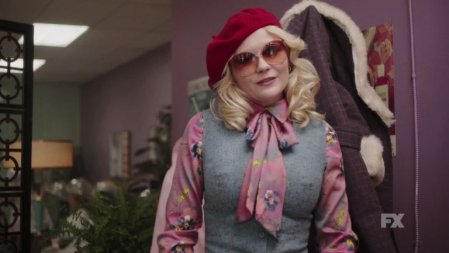
Last week’s episode of Fargo could’ve been dubbed a musical tribute to The Coen Brothers. While the FX series is always prone to the borrowing of visual imagery from its cinematic forbearer, more recently it has been honoring its muses through the aural. In the first season, there was an effort to connect Fargo to the timeline of the original movie, but in the second what seems more important is a – specifically musical – link to the Coen universe. Versions of ‘Man of Constant Sorrow’ and ‘O Death’ from O Brother Where Art Thou and ‘I Just Dropped In (To See What Condition My Condition Was In)’ from The Big Lebowski litter the soundtrack. At points, characters paraphrase or precis lines from Coen Brothers movies, as if quotations belong to the lexicon. It’s about half as satisfying as it sounds, and yet another distraction in a show full of them.

I was writing about Fargo in reference to playing with our understanding of what is TV and what is cinema. I seem to have given the series far too much credit since it is evidently more interested in propagating the cult of the auteur, something not even The Coen Brothers are that concerned about doing with their movies. It recalls the worst excesses of Quentin Tarantino, when the director decides to reference his own movies rather than other people’s. Or how Steven Moffat (because there’s only a few people I can ever write about) would remind audiences that all his garbage comes from the same bin. It’s a more style-conscious season, as anthology demands change, and I suppose intertextuality has got more on-the-nose as a result. But there’s a sense that the story doesn’t really stretch to ten episodes this time, and this – like shootouts – may be a way of prevaricating.

A style-conscious season of 'Fargo'.

A style-conscious season of ‘Fargo’.

I saw it coming and now I feel responsible. Whether it’s the survival of Glenn or the cinematic engagement of Fargo, it happened more or less as I expected it to. But perhaps that’s the problem. I think I saw through what these programs were doing, rather than seeing them.