Archive for the British Shows on American TV Category

Watching Americans with TV

Posted in American TV (General), American TV Shows, British Shows on American TV, Reality TV, TV channels, TV History, Watching TV with tags , , , , , , , , , on April 1, 2014 by Tom Steward

Last Christmas when I was back in the UK I became obsessed with Channel 4’s Gogglebox, a reality show where we watch people watching television. An unbeatable premise executed to perfection, it was just the right mix of sociology, sitcom, soap opera and vox pop. Upon returning to the US, I learnt Gogglebox was to be re-made in America as The People’s Couch by socialite reality cable network Bravo. Bravo has never cared about representing the American public before so it seemed a curious choice of import. Saying that, Channel 4 is not exactly a public service channel anymore either.

When Gogglebox starting airing last year, the idea of watching TV viewers on TV was already familiar to British audiences. The Royle Family, one of the most popular British sitcoms of the last 20 years, largely consisted of a family sitting in their living room with the TV on. Football fans have been watching pundits watch Premier League games on Sky Sports Soccer Saturday for decades now. The notion of TV re-capping TV wasn’t news either. One of our biggest comedies of recent years TV Burp was a retrospective of the week’s TV with irreverent commentary from offbeat entertainer Harry Hill.
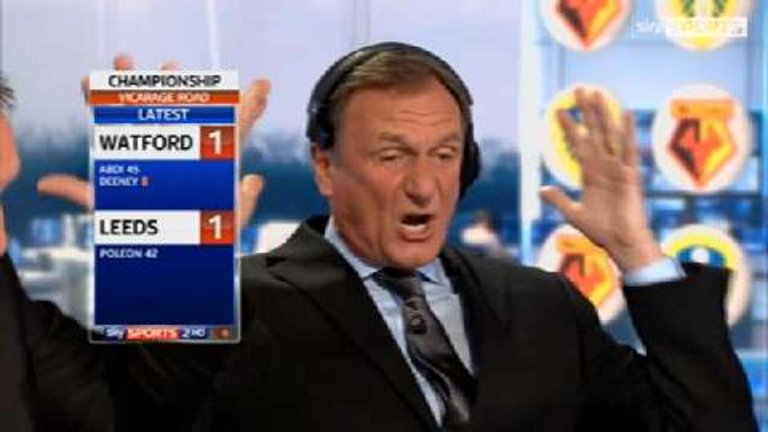
Sky Sports Soccer Saturday: Watching pundits watch football.

Sky Sports Soccer Saturday: Watching pundits watch football.

Gogglebox wasn’t the first attempt at this idea on British television, just the first version of it that people wanted to watch and channels would want to commission. In the early 2000s, the live late-night Channel 4 panel show Flipside TV had celebrity guests providing running commentary on TV programmes airing at the same time. Its graveyard slot meant there was no danger of losing viewers to other channels, but Gogglebox eased the format into primetime by having it recount the previous week’s TV. Flipside TV also didn’t have two of Gogglebox’s prime draws; the public and TV clips.

The concept is not exactly unheard of in American TV either. The couch-potato sitcoms of the ‘80s and ‘90s such as Roseanne and The Simpsons added a layer of realism to the depiction of American family life by showing characters in front of the TV, although the shows they watched were largely invented or embellished. E!’s The Soup trawls through clips of the week’s TV with mocking commentary from comedian Joel McHale, in a format very similar to TV Burp. But it’s invariably a specific kind of bad and bizarre reality TV that’s always seen ironically and functions as material.

Who are we watching?

Who are we watching?

The format of The People’s Couch is virtually the same as Gogglebox. We watch reactions to and conversations about TV programmes of the past week from different sets of viewers (families, couples, friends) who re-appear each week. Participants all watch the same programmes; although we suspect some of them have been prompted to. Each segment centres on a specific show, which tends to be popular, new or somehow different. We flip between viewers depending on who has the most interesting or entertainment reaction, and we get substantial extracts from TV shows so we know specifically what they are reacting to.

There are, however, minor changes that make all the difference. Gogglebox tries to be as representative as possible of the diversity of British society in terms of class, race, age, ethnicity, sexuality and region. This is a legacy of Channel 4’s social concern and inclusivity as a broadcaster which it used to have in spades and still rears its head occasionally. The People’s Couch tries to be as representative as possible of the diversity of Bravo viewers, which means sassy women and gay men of more than one ethnicity. This is the difference between broadcasting and narrowcasting in a nutshell.
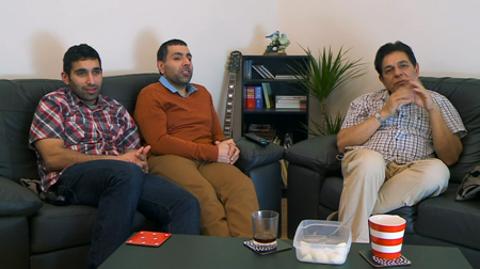
Before there were people's couches there was Gogglebox!

Before there were people’s couches there was Gogglebox!

Gogglebox shows viewers from all over the UK while The People’s Couch doesn’t stray far from the Hollywood axis preferred by TV producers for geographical convenience. It’s remarkable to see middle-class families on a network that typically won’t bother with people worth less than a million but there’s a socio-economic cut-off point in The People’s Couch that there isn’t in Gogglebox. This is probably more about the relative affordability of digital TV in Britain compared to exorbitant US cable costs, which prevents many lower-income homes from getting extensive TV service and disenfranchises them from participation in the national TV conversation.

The biggest mistake made by The People Couch was chopping Gogglebox’s running time of an hour in half and losing the original’s voiceover. Our attachment to and affection for the viewers we see every week is what makes Gogglebox so compelling and moving. Without a voiceover giving us backgrounds and biographies of the people featured and the time to get to know them, their relationships and routines, The People’s Couch only manages superficial glimpses of its real-life stars. It makes them seem shallower than their UK equivalents, which is regrettable because they’re not (necessarily), just represented without depth or empathy.

TV in Short

Posted in American TV (General), American TV Shows, Behind-The-Scenes, British Shows on American TV, Reviews, TV channels, TV Criticism, TV Culture, TV History, Watching TV with tags , , , , , , , , , on January 29, 2014 by Tom Steward

The significance and impact of American TV shows are usually measured by longevity since it takes an inordinate amount of public will, critical favour and cultural reputation to dodge cancellation year after year. But every so often a programme with a relatively short life on the air ends up being hugely influential in TV, art and culture. Premature cancellation often becomes part of the show’s cult – see Josh Whedon’s Firefly – or masks a rapid decline in quality that makes another season seem deeply undesirable. Either way, these programmes tend not to be cancelled before their time but are just way ahead of their time. It’s hard to see how many of these shows could go on but harder to imagine what future denizens of popular culture would have done without them as inspiration. Here are some TV shows with small runs that ended up being a big deal:

Freaks and Geeks (NBC, 1999-2000)

The future of American popular culture

A Wonder Years for the remaining 99.99999% of the American population that didn’t draw a life lesson from every single incident of their education, this stripped-back yet heart-warming look at high school from the perspectives of its most marginalised students lasted only one season on the air. But the show has sent ripples through American popular culture ever since. Producer Judd Apatow and stars Seth Rogen, James (Di optional) Franco and Jason Segal have completely sewn up US movie and TV comedy in the 15 years since the show aired and they now rank as some of the biggest names in Hollywood. Moreover, Freaks and Geeks incorporation of the socially outcast and physically different into mainstream teen television made a cultural phenomenon like Glee possible and the show’s unglamorous depiction of young Americans is the essence of Apatow and Lena Dunham’s hit HBO series Girls.

Twin Peaks (ABC, 1990-1991)

Like Laura Palmer Twin Peaks dies young.

Widely credited as the show that brought American TV into touch with fine art, David Lynch and Mark Frost’s sci-fi procedural super-soap also heralded a revolution in television storytelling. Melodramas such as Dallas and Dynasty had already shown that ongoing stories and cliffhanger endings weren’t an anathema to primetime popularity but Twin Peaks demonstrated that a single storyline could captivate audiences over a year of television. The question of ‘Who killed Laura Palmer?’ would have normally been answered in as little as 60 minutes of television but took over a year and half to be settled. Now detective programs all over the world from Denmark’s Forbrydelsen to Britain’s Broadchurch wear the season-long mystery as a badge of quality. In fact, it was only when Twin Peaks tied up the Laura Palmer case and pursued half-baked replacement storylines that the program was cancelled following its second season.

Cop Rock (ABC, 1990)

Cops Rock!

By 1990, producer Steven Bochco was already established as someone who mixed television genres but this medley of musical and police procedural was a step too far for most people when it aired. How times have changed. One of the biggest TV hits of recent years has been Glee, a high school dramedy liberally peppered with musical numbers and – as witnessed by Buffy the Vampire Slayer and How I Met Your Mother – it’s long been considered de rigueur for TV shows to have a musical episode. Of course, it’s one thing to have a show whose premise falls naturally into song and another to try to crowbar music into a decidedly spoken-word genre. It’s also worth remembering that what viewers enjoy about one-off musical episodes is their novelty and Cop Rock was relentlessly musical. It’s maybe why the show never lasted beyond 11 episodes.

Doctor Who: The Movie (Fox, 1996)

Before Dr. Phil there was…

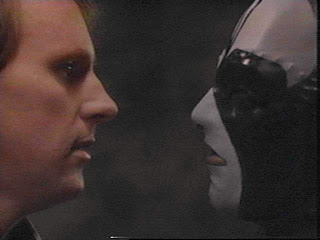
The long-running cult UK science-fiction series had been off the air for 7 years when Fox decided to revive it as a show that could live in America and alongside stylish adult science-fiction like The X-Files. The feature-length pilot tried to keep one foot in both camps, playing as a continuation of the series rather than an American re-make while changing some of the key aspects of the programme’s mythology. Consequently, the revival alienated both the fan base and new audiences and the pilot was never picked up. The people behind the re-launched UK version of the program were obviously not as turned off as viewers at the time. New Doctor Who has taken on many of the US re-vamps, including its romantic predilections, focus on special effects and elaborate set design, and these have helped make it the international hit it is today.


The Twelve Days of Doctor Who: Days 7-12

Posted in Americans watching British TV, British Shows on American TV, TV Acting, TV History, TV in a Word, Watching TV with tags , , , , , , , , , , , , , , on November 26, 2013 by Tom Steward

‘We’ve been watching Doctor Who for weeks. We must be out of the 80s by now’. I don’t have the heart to tell G that we’ve been watching Doctor Who for six days and that we still have one story from the 1980s to go. Doctor Who used to be notorious for filling time with extended re-caps from the previous episode so I feel justified in doing the same for this two-part blog on my experience watching stories from each Doctor in turn with my American wife in preparation for the 50th anniversary special last Saturday. So far we’ve had cavemen with underwear, cyber-mayans, poachers from space, monsters playing Space Invaders and Dig-Dug, and a TV maths teacher. Like good time-travellers and bad time-travel writers, this time round we’re starting at the end with an episode from 1989 as Doctor Who was on the verge of cancellation and about to go stateside.

‘The Curse of Fenric’ (G’s title: ‘Mr. Bean Goes to War’):

Just a minute…isn’t that Nicholas Parsons?

‘This is much better than the shit we’ve just been watching’, says G as British national treasure Nicholas Parsons is devoured by vampires of the sea. ‘Yeah, it got good again and then they cancelled it’ I offer in the way of no explanation. ‘So many deep quotes in this…“You must take the baby. Now you are the mother of the baby. Now you must drop the baby in the water.” Incidentally, none of these quotes actually appear in the story.

‘Doctor Who: The Movie’ (G’s title: ‘Star Wars UK’)

If you look closely you can see a shark jumping over them.

As the credits roll, G sings in her best John Williams: ‘Kind of like Star Wars/But not really the same’. The TARDIS lands in San Francisco’s Chinatown. ‘People didn’t really think that was China, did they?’. ‘I don’t know. They’re your people’. I’m enjoying passing the buck on Doctor Who’s shortcomings for the first time. ‘This doesn’t feel like Doctor Who at all. It’s more like Adventures in Babysitting’. Then the shark-jumping kiss. ‘I don’t like this. I don’t this at all’. I wanted to kiss her.

‘The Unquiet Dead’/‘Father’s Day’ (G’s titles: ‘The Walking Welsh’/‘Your Parents’ Wedding’):

Walkers in Wales!

‘Why are they so sexual tensiony?’ G asks after witnessing a few seconds of the Doctor and Rose together. ‘That’s what the kiss led to’ I say. ‘It doesn’t work’ G says confidently. Apparently even nine days of Doctor Who is enough to make you realise that the Doctor and his companion being a couple is a bad idea. ‘I don’t like this Doctor. He’s too Jean-Claude van Damme’. I’m sure that’s what renowned stage and screen actor Christopher Eccleston was going for. But you know what? He is a bit Steven Seagal in the part.

‘An Adventure in Space and Time’ (G’s title ‘Poor Father Christmas’):

The decline of William Hartnell…my fault, apparently.

Ok so this is not strictly Doctor Who but it’s a ninety-minute drama about the show and that should test any non-fan’s patience. At first there’s too many real and fictional worlds colliding for G to keep up. G: ‘How old is William Hartnell now?’. Me: ‘That’s not him. That’s an actor playing him’. G: ‘This is all made up, right?’. Me: ‘No it all happened, just like this’. When she sees David Bradley as Hartnell crying into his mantelpiece, it all gets too much. ‘I can’t watch old people being upset’. Then it becomes my fault. ‘How can he not be your favourite?’ (he’s my second). ‘He’s my favourite’ G asserts. ‘He’s the only one with real mystery’.

‘The Christmas Invasion’ (G’s title: ‘The Fall of Scary Santa Face’):

‘Stop being hussys…both of you!’

‘So they went leather jacket man, quirky and then another quirky? Where’s the variety?’. I wonder how G will react tomorrow with an episode in which quirky and quirky quirk off. ‘She’s such a hussy’ G offers ambiguously. ‘Who? Rose or her mother?’ I ask. ‘Same thing’.

‘Day of the Doctor’ (G’s title: ‘Return of the TV’):

Will Ferrell interrupts Doctor Who simulcast!

Well, it all paid off. G laughs knowingly at every in-joke (especially the one about the ‘big round things’ on the wall of the TARDIS)  and loves every minute of this nostalgic wallow in the series’ past. And then Tom Baker returns to Doctor Who 32 years after leaving the show. ‘Is that Will Ferrell?’ G asks. Maybe we’re not quite there yet.

Well, there you have it. 50 years of Doctor Who in twelve days. The first ten years just flew by, a decade dragged its feet, another took a holiday and after a few wrong turns we ended up where we started. Home.

Home.

The Twelve Days of Doctor Who: Days 1-6

Posted in Americans watching British TV, British Shows on American TV, Reviews, TV Acting, TV History, Watching TV with tags , , , , , , , , , on November 19, 2013 by Tom Steward

G and I are spending the twelve days before the 50th anniversary of Doctor Who watching stories from each Doctor in turn. I know what you’re thinking but it was actually her idea. I was being unusually gracious about the amount of time Gossip Girl and Revenge were on our TV and G smelt a rat. ‘Just you wait’, I said. ‘Why?’ said G. ‘Oh you want to watch old Doctor Who. Why don’t we do the twelve days of Doctor Who?’. I was thinking eleven – one for each Doctor – but I wasn’t going to protest. When Day 1 came I said to G ‘Are you ready for “An Unearthly Child”?. She said yes while rolling her eyes. ‘Why did you roll your eyes?’ I asked. ‘Oh you saw that?’ she replied. It was going to be a long twelve days. If this all sounds a bit familiar, it’s probably because the premise is unnervingly similar to the blog Adventures with the Wife in Space in which Neil Perryman recounts watching every classic Doctor Who story with wife Sue. I don’t wish to step on the toes of this superb blog – of which I was an avid reader – but instead offer a complimentary transatlantic version.


‘An Unearthly Child’ (G’s title: ‘Curiosity killed the Science Teacher’):

Welcome to The Price is Right!

G was taken aback at how much the original supporting cast of William Russell, Barbara Wright and Carole Ann Ford looked like contemporary TV actors. And then how much the inside of the TARDIS looked like a game show set. ‘Welcome to The Price is Right!’ she would bellow whenever the doors eased open. I’ve never seen anyone – including myself – as engrossed in the cave people story as G was, and the spell was only broken when she saw that the cavemen had underwear on.


‘Tomb of the Cybermen’ (G’s title: ‘Martin Short’s Dad in Space’):

The Mayans are coming!

Are you ready for ‘Tomb of the Cybermen’?, I shouted across the house. ‘Yes’ G shouted back. ‘Wait, I don’t know what that means’. G thinks that even the set travels back in time. ‘Wow, this looks even older that the last one. Are you sure that was before this?’. As the Doctor and his companions arrive at the tomb, G thinks she’s figured out who’s in there. ‘It’s the Mayans. Look at the pictures on the wall’. The Doctor’s witty undercutting of Krieg’s plans for world domination makes G happy: ‘After all, he’s still British’.


‘Spearhead from Space’ (G’s title: ‘Freaky Babies Take London’):

So what’s the threat?

‘He’s cool. I like his style’. G knows Jon Pertwee is my favourite Doctor but she seems genuinely charmed by him. The accents of the yokels are harder for her to get her head around. ‘I have no idea what he just said’ G admits as the poacher mumbles west country gibberish into his rabbit sack. The Autons don’t have much effect on her. ‘So what’s the threat?’ she asks whenever they’re on screen.


‘The Robots of Death’ (G’s title: ‘What’s Their Problem?):

I need my video console!

‘What do you think of Tom Baker?, I asked G, expecting the usual glowing praise. ‘There’s something I really don’t like about him. I don’t know why.’ Ok, that’s a new one. ‘The monsters are great, though. Are they playing Space Invaders?’.


‘The Caves of Androzani’ (G’s title: ‘Revenge of S & M Face’):

The Phantom of the Opera is here!

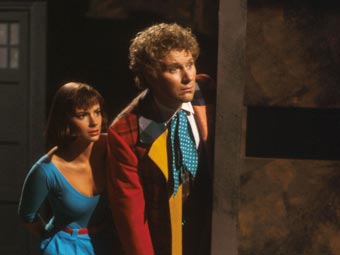
This takes us two days to get through. ‘It’s too 80s. I can tell when it’s made. With Matt Smith and the older Doctors, you can’t tell when they’re supposed to be from. It’s more magical that way’. If G thinks Peter Davison is too 80s, wait till she sees Colin Baker! We get our first glimpse of Peri. ‘Is that supposed to be an American?’, G asks. ‘The Phantom of the Opera is here’ she sings as the comparison becomes too vivid to deny. ‘Why is S & M face playing Dig-Dug? (I checked and the game came out that very year). G also sees her first regeneration: ‘It’s weird how they just sneak that in at the end of the episode’.


‘Vengeance on Varos’ (G’s title: ‘Willy Wonka and the Torture Factory’):

‘She needs a bra and I need a mirror’

‘He looks like a TV math teacher. I keep expecting him to sing “What is 4/Multiplied by 2?” and then pull an 8 out of his jacket’. Sil the slug-like tycoon appears on screen. ‘He’s freaking me out. He looks like a turd.’ The thought-provoking stuff gets through. ‘I wonder if we’ll go back to a society like that’ G asks seconds before observing ‘They need to get Peri a better bra’. ‘The tendrils! They’re poisoned…’, the Doctor explains. ‘…like the ones I just hit with my back’ G adds.


The Twelve Days of Doctor Who continues next week – or in Doctor Who cliffhangerese ‘Doctor! Noooooooooooo!!!!!!…’.

No Sets Please, We’re British

Posted in American TV (General), American TV Shows, Behind-The-Scenes, British Shows on American TV, TV Acting, TV advertising with tags , , , , , , , , , , , , , , , , , on November 5, 2013 by Tom Steward

There are endless reasons why I’m happy to be with G but I’ve always been especially grateful that she’s not an Anglophile or fangirl of British pop culture. I find G’s nonplussed reaction to most things British, including accents and the sights of London, oddly comforting.  I suppose it’s just reassuring to know that it’s me she interested in not my country of origin. I say this because you Americans are obsessed with us Brits. Actually, it’s truer to say you’re obsessed with what you think we are. American television is fanning the fires of this fascination like a Pudding Lane bake-off…and you can’t get more British than that!

There’s not a show I’ve seen on American TV that doesn’t either have in it a British performer or someone pretending to be British, often both given the lax standards of background research for writing British characters. It doesn’t even have to be a show. Various American companies have British spokespeople and mascots in their TV advertising. Why am I not flattered? Because the fascination somehow never extends to actually finding out what the diverse and varied life and culture of Britain is like. Instead it’s an incredibly narrow, dated and ignorant version of our national culture (royalty, the swinging sixties, Victorian cockneys) that is continually reproduced across American television.

A Cockney lizard is the Geico mascot…for some season!

I’m sure all non-Americans (even ethnic-Americans) and American minorities have much the same beef and I’m not saying the British have any special claim to reductive racial stereotyping on TV. It’s the inverse relationship between the interest taken and the research done that makes American TV’s obsession with the British so bemusing to me. Why go to the trouble of inorganically adding a British person to the cast of an American-set show or concept and then not do the requisite due diligence to give them a chance of convincing at what they’re supposed to be?

A cynical answer would be that Americans know so little about Britain that TV viewers wouldn’t know the difference. But why then are Brits so prominently placed in American television as leads or major supporting characters, presenters and stars, and commercial representatives? Why are we not marginalised like so many other nationalities that American TV knows next to nothing about?

‘You make one more crack about pocket-rocket and I’ll paddle you!’

There are doubtless innumerable political and historical reasons for this (the need to keep us arcane and aristocratic seems pretty closely related to an age-old American view of the British as colonisers from the old world) but in the superficial now I think it has a lot to do with Britain being a major producer and exporter of TV to an extent not seen before. The US, traditionally a powerhouse of global TV distribution, has to find methods of coping with this new threat and slotting British actors and characters into TV shows (often for no good story reason) seems as good a way of joining the competition as any.

There’s also something about always having to laugh at or undermine British people appearing on TV that means however high up in the pecking order they are, their one-dimensionality will always be more important than their function. Think about how many American shows sacrifice character development for a couple of cheap shots at cross-cultural misidentification or excuses for vicarious swearing (the British obscenity ‘wanker’ frequently passes Broadcasting Standards unnoticed). On Dancing with the Stars, Len Goodman has been hired to impart his technical opinion on dancing, drum up the crowd and occasionally play the pantomime villain. Increasingly, however, he’s been there to provide British slang for the other presenters to mock.

The British wing of the CIA.

There’s a quieter British invasion going on (we don’t like to make a fuss) in TV casting. Most of your favourite American TV shows will boast British cast members, many or all passing as natives. I’ve never quite got over Mancunian Egg from This Life as an Atlantan sheriff’s deputy in The Walking Dead or Homeland’s marine double-agent Brody being as British as the head of the CIA. Often producers are calling on past prejudices about British actors to inject a note of taste but it’s also about an Anglicisation of the American acting workforce taking root over recent years.

All the way from Ian Fleming to yours truly, Brits have recognised that keeping your accent quiet is how to be taken seriously in America. British actors playing Americans may have blended in to TV without a trace but those who chose to wear Britishness on their sleeves will remain the rodeo clowns of television.