Archive for the Reality TV Category

Mexican Stand-Off

Posted in American TV (General), American TV Shows, Reality TV, TV advertising, TV channels, TV Criticism, Watching TV with tags , , , , , , , , , on May 11, 2014 by Tom Steward

This is a post about an episode of a TV show and an open letter responding to that episode. Please watch the episode and read the letter before reading the post, as my editorialising of the episode and the letter will not be sufficient exposure to form an opinion on them and it would be unfair to base a response to the episode on what this post and the letter have to say about it.

On Sunday night, CNN aired a new episode of the travel documentary series Anthony Bourdain: Parts Unknown about Mexico City. The following day, travel blogger W. Scott Koenig published an open letter to Anthony Bourdain about the episode on his website agringoinmexico.com. Though the letter is reverent towards Bourdain’s writing and journalism in general, Koenig strongly contested the portrayal of Mexico in Sunday’s episode of the chef-writer-presenter’s signature travel show, now in its third season. Koenig accused Bourdain of a disproportionate emphasis on the drug-related violence and killing that takes place in the country and overlooking the richness of the culture, history, art and gastronomy in the regions he visited on the show. Koenig also hinted strongly at potential interference from the network and the programme’s advertisers to scaremonger about visiting Mexico and lumped in the episode with inaccurate press reporting on Mexican drug violence, with comparative statistics to boot.

A Body-Blow in Mexico!

A Body-Blow in Mexico!

Koenig has already swathed Bourdain in the kind of praise that I would have given him, so I don’t feel the need to defend for the latter’s impeccable record in TV, journalism and prose in both non-fiction and fiction. I do, however, feel the need to intercede somewhere between apologist and critic on his behalf. Koenig is right to be disturbed, unsettled and disappointed with the Mexico City episode, but perhaps not for the reasons the blogger outlines. Firstly, I do have to point out a disparity in quality between the two works, lest you think I’m creating a false equivalency between an intricately constructed TV documentary and a hastily-written blog post. If you are going to offer a riposte to such an artfully made and powerfully written piece of television, blogger’s ellipsis and internet grammatology isn’t going to cut it. Right or wrong, this was proof-correction of artistic meditation.

My initial reaction to the Mexico City episode of Parts Unknown was that Bourdain was trying to dispel some of the comforting myths people tell themselves about countries in the grip of violence and under the yoke of organised crime. The perception that gangster rule – in this case the cartels – protects the innocent from harm because of their predominantly internal conflicts was fundamentally altered with the stories of Mexican journalists, protestors, artists and bystanders who had perished or lived in fear for their lives. Any sense that the cartels are a rogue criminal element in Mexico was immediately quashed by the episode connecting the dots between drug operations and Mexican business and government. These are important distinctions, and not to be taken or shown lightly. If I had this as a documentarian, I’d feel obliged to lead with it, even if it meant a few less restaurants onscreen.

While Koenig (or wife Ursula, whom he credits with the bald synopsis) is not wrong about a motif of ‘bodies’ in the episode, I think they may have misjudged where this darkness is coming from. Rather than a SPECTRE-like network-advertiser conspiracy to inadvertently profit from tourism, the emphasis on violence and killing was more likely motivated by Bourdain’s anger and outrage at what’s going on in his backyard. As we saw in last season’s episode of Parts Unknown in Detroit, Bourdain is at his most livid when faced with the ruin of places closest to his home and heart, in parts of the world where remedy is within reach. It is not contempt but fear for Mexico that seems to drive this episode, the unjust feeling that a place of such beauty and brilliance doesn’t have the system it deserves, but also that a good neighbour needs a good turn.

Bourdain in Baja.

Bourdain in Baja.

I don’t think the episode should have sacrificed this raw, seething depiction of social problems for local culture any more than The Wire should have gone to more Baltimore crab shacks (Koenig is loath to admit that there is a great deal of food and drink in the episode). I would take issue with Bourdain’s attitude to Mexico, however. In the Baja episode of No Reservations a couple of years ago, Bourdain wore his ignorance about Mexico on his sleeve and let the natives surprise him. Here, he seems very certain of how the country can solve its problems, and doesn’t mind telling the locals. Crucially, we don’t see what the Mexicans he meets think of his suggestions! I was taken aback by the episode, if only because Bourdain has made more upbeat programmes about worse-off places (Libya, for example). Unbalanced, maybe. Sensationalist, never. Violent? Yes, but not without motive.

Dog Shows and Cat Boxes

Posted in American TV (General), American TV Shows, Reality TV, TV Criticism, TV History, Watching TV with tags , , , , , , , , , on April 22, 2014 by Tom Steward

I begin with a broadcasting history anecdote but bear with me. In Britain in the late ‘80s, a debate was held on what constituted quality television ahead of a broadcasting White Paper proposing the introduction of television outside public service regulation in the form of a satellite service to the UK. Unsurprisingly given what would go on to happen with Downton Abbey, business won over art and the agreed-upon definition of British quality television was pseudo-literary period drama with an easily exportable ideal of British national identity based on our imperial past. But during the debate, a definition of quality television offered by scholar Geoff Mulgan was ‘usable stories’, an idea consonant with broadcasting that television should tell its viewers something that could help them personally or collectively in their society. This understanding of quality in television has always stuck with me and it’s come to mind recently as a way of defending several American TV programmes I’ve been watching that are otherwise badly made, poorly written and artlessly executed. But is that justification enough?

Dog Daytime TV

Dog Daytime TV

I’m a dog-owner and I used to be a cat-owner. Hence I’ve been watching a lot of Nat Geo Wild’s The Dog Whisperer and Animal Planet’s cartoon riposte My Cat from Hell. Both shows tackle the same premise but are – quite literally – very different animals. In each, pet-owners call in behavioural specialists or PWCs (Psychologists Without Credentials) for their animal, Cesar Millan for the dogs and (apparently on return from the 23rd Century) Jackson Galaxy for the cats. The pets in question are usually engaging in dysfunctional behaviour, although the sub-Scooby Doo twist is always that it’s the owners who are really screwed up. Cesar controls the dogs by making them more obedient, calm and submissive and Jackson makes the cats easier to live with by compelling owners to hand over the entirety of their house to their new feline landlords. Different strokes for different pets. Both programmes are shoddily constructed, replete with ham-fisted set-ups, and full of duplication, laboriously eeking out a handful of choice moments into an hour of blink-and-you’ll-never-miss-it television.

That said, there’s more here that’s relevant to my daily life than in all the shows I’ve ever feted as quality TV. And I’m not just speaking selfishly. I’m a better citizen because of these shows, and with the possible exception of The Wire there’s not many ‘quality’ programmes you can say that about. My dog (by marriage) A is by no means a handful but nor is he entirely obedient, and sometimes he has to be because he’s a big boy and a breed that ignorant people (and that’s large sections of the public) mistakenly think of as a vicious dog and so there’s less chance any harm will come to him if he’s never out of our control. Thanks to The Dog Whisperer, I know that I can subdue A in any situation by calming myself first and that dogs need to respect as well as love you before they obey. Thanks to My Cat from Hell, I know that if I get a cat, I should just hand them the house keys.

Marriage Boot Camp is a truly awful TV show by anyone’s reckoning. Everyone involved is a horrid caricature (self-made or portrayed) of their social type and their relationships ugly distortions of what marriage is really like. The format and its ‘exercises’ (we should say games) don’t help anyone, and the whole debacle is thickly lacquered in anesthetized self-help dross. G and I recently celebrated our first wedding anniversary and we’re both ecstatic about each other and the institution. So whereas once I would see Marriage Boot Camp as a simple lie perpetuated by a periodically lazy medium, I now see it as a cautionary fable of what happens when married couples become grotesque circus-mirrors of loving unions. It’s the same old shit but my relationship to it has changed. Perversely, the show may even help our marriage, not because of the guidance it offers but because I now have a high-definition image in my mind of what a bad marriage looks like and I refuse to ever let myself resemble one single pixel of it.

Balls and Chains!

Balls and Chains!

I never thought I was that concerned with the use-value of the TV shows I watched. Then I think how little British TV I now watch compared to when I lived in Britain. Sure, it’s harder to get British programmes here and much easier just to go with the flow (50 television academics just telepathically high-fived!) but frankly it’s very possible these days and the shows themselves are no less for me being here. It’s only because they don’t seem relevant to my life as it is now that I don’t watch them as regularly. Most of the British shows I’ve lost in translation are the ones I used to sync myself to the national calendar. You can tell that from the titles: The Great British Menu, The Great British Bake-Off, Coronation Street. What remains is everything I watch for content and style (Doctor Who, The Fall, Peep Show) not because they speak to me in my immediate surroundings. I don’t think I’ll ever completely confuse useful programming with good TV, but it’s tempting sometimes.


Watching Americans with TV

Posted in American TV (General), American TV Shows, British Shows on American TV, Reality TV, TV channels, TV History, Watching TV with tags , , , , , , , , , on April 1, 2014 by Tom Steward

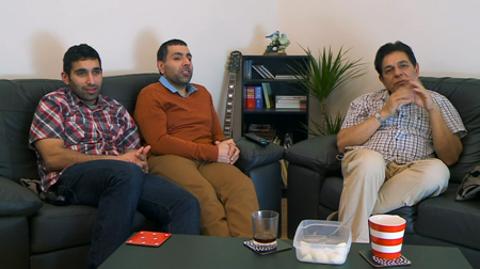
Last Christmas when I was back in the UK I became obsessed with Channel 4’s Gogglebox, a reality show where we watch people watching television. An unbeatable premise executed to perfection, it was just the right mix of sociology, sitcom, soap opera and vox pop. Upon returning to the US, I learnt Gogglebox was to be re-made in America as The People’s Couch by socialite reality cable network Bravo. Bravo has never cared about representing the American public before so it seemed a curious choice of import. Saying that, Channel 4 is not exactly a public service channel anymore either.

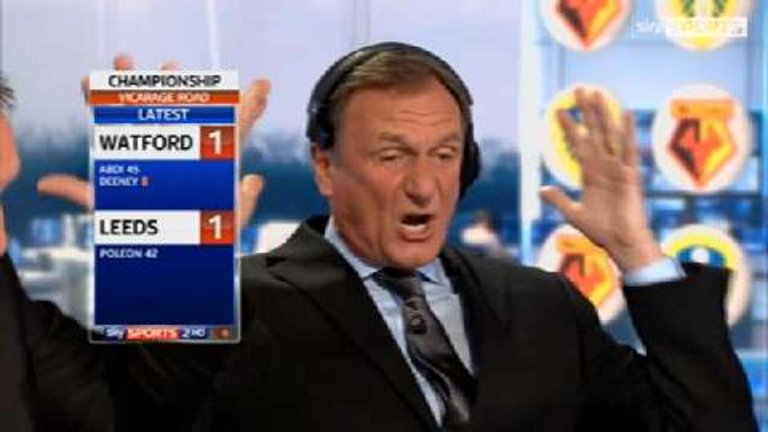
When Gogglebox starting airing last year, the idea of watching TV viewers on TV was already familiar to British audiences. The Royle Family, one of the most popular British sitcoms of the last 20 years, largely consisted of a family sitting in their living room with the TV on. Football fans have been watching pundits watch Premier League games on Sky Sports Soccer Saturday for decades now. The notion of TV re-capping TV wasn’t news either. One of our biggest comedies of recent years TV Burp was a retrospective of the week’s TV with irreverent commentary from offbeat entertainer Harry Hill.

Sky Sports Soccer Saturday: Watching pundits watch football.

Sky Sports Soccer Saturday: Watching pundits watch football.

Gogglebox wasn’t the first attempt at this idea on British television, just the first version of it that people wanted to watch and channels would want to commission. In the early 2000s, the live late-night Channel 4 panel show Flipside TV had celebrity guests providing running commentary on TV programmes airing at the same time. Its graveyard slot meant there was no danger of losing viewers to other channels, but Gogglebox eased the format into primetime by having it recount the previous week’s TV. Flipside TV also didn’t have two of Gogglebox’s prime draws; the public and TV clips.

The concept is not exactly unheard of in American TV either. The couch-potato sitcoms of the ‘80s and ‘90s such as Roseanne and The Simpsons added a layer of realism to the depiction of American family life by showing characters in front of the TV, although the shows they watched were largely invented or embellished. E!’s The Soup trawls through clips of the week’s TV with mocking commentary from comedian Joel McHale, in a format very similar to TV Burp. But it’s invariably a specific kind of bad and bizarre reality TV that’s always seen ironically and functions as material.

Who are we watching?

Who are we watching?

The format of The People’s Couch is virtually the same as Gogglebox. We watch reactions to and conversations about TV programmes of the past week from different sets of viewers (families, couples, friends) who re-appear each week. Participants all watch the same programmes; although we suspect some of them have been prompted to. Each segment centres on a specific show, which tends to be popular, new or somehow different. We flip between viewers depending on who has the most interesting or entertainment reaction, and we get substantial extracts from TV shows so we know specifically what they are reacting to.

There are, however, minor changes that make all the difference. Gogglebox tries to be as representative as possible of the diversity of British society in terms of class, race, age, ethnicity, sexuality and region. This is a legacy of Channel 4’s social concern and inclusivity as a broadcaster which it used to have in spades and still rears its head occasionally. The People’s Couch tries to be as representative as possible of the diversity of Bravo viewers, which means sassy women and gay men of more than one ethnicity. This is the difference between broadcasting and narrowcasting in a nutshell.

Before there were people's couches there was Gogglebox!

Before there were people’s couches there was Gogglebox!

Gogglebox shows viewers from all over the UK while The People’s Couch doesn’t stray far from the Hollywood axis preferred by TV producers for geographical convenience. It’s remarkable to see middle-class families on a network that typically won’t bother with people worth less than a million but there’s a socio-economic cut-off point in The People’s Couch that there isn’t in Gogglebox. This is probably more about the relative affordability of digital TV in Britain compared to exorbitant US cable costs, which prevents many lower-income homes from getting extensive TV service and disenfranchises them from participation in the national TV conversation.

The biggest mistake made by The People Couch was chopping Gogglebox’s running time of an hour in half and losing the original’s voiceover. Our attachment to and affection for the viewers we see every week is what makes Gogglebox so compelling and moving. Without a voiceover giving us backgrounds and biographies of the people featured and the time to get to know them, their relationships and routines, The People’s Couch only manages superficial glimpses of its real-life stars. It makes them seem shallower than their UK equivalents, which is regrettable because they’re not (necessarily), just represented without depth or empathy.

Live Day-to-Day

Posted in American TV (General), American TV Shows, Reality TV, Reviews, TV channels, TV Culture, TV History, Watching TV with tags , , , , , , , , , on March 25, 2014 by Tom Steward

It’s been a long time since American television was purely live but it’s still an everyday part of broadcasting. Amidst the cycle of breakfast shows, daytime chat shows, primetime entertainment and 24-hour rolling news and shopping, there doesn’t seem to be an hour of the day that there isn’t some kind of live TV on the air. We know from experience that live broadcasting can be one of the most powerful, significant and thrilling forms of TV. Live television has been agent and witness to cataclysmic political changes. It made and then ruined Nixon, and then made and ruined him again. We saw the Republicans’ chances of electoral success in 2012 vanish in real time at the GOP conference as Clint Eastwood decided to go off-script and do X-rated versions of his Bob Newhart and Jimmy Stewart impressions. There are other world and universe-changing events witnessed on live TV I should mention – like 9/11 and the Moon landings – but…dude was talking to a chair! There’s no greater potential for surprise, shock and error in television than in a live broadcast, and that unpredictability carries a nervous energy that is utterly exhilarating. And we get it uncensored and first-hand.

I’m reminding myself of what live TV is capable of because, if the past week is anything to go by, American TV has forgotten. Last Monday morning, news anchors on the local Los Angeles TV station KTLA breakfast show reacted to a mid-size earthquake that happened live-on-air by panicking, shouting ‘Earthquake!’ and diving under a desk until it had subsided. Now, I’m not going to pretend that I would have done anything different in this situation, even if I had been trained to keep going. But is there any point continuing to broadcast live if all we’re going to get is dead air, an empty studio and the terrified ramblings of presenters so shaken up by the event they can offer no meaningful information about it? Anchors on the other affected TV stations may have stayed calmer, but they didn’t do much better reporting the earthquake. Deprived of information, hindsight and proportion, presenters on Fox 5 and CBS 2 were left with the remnants of a child’s vocabulary. It was ‘big’. It was ‘large’. Some over-achiever even called it ‘strong’. They might have learned something about the conditions that Fox News anchors work under every day, but we learnt nothing.

If you wanted to watch the television equivalent of muscle-wastage, then you needn’t have looked further than what CNN put on in relation to the search for missing Malaysian Airlines flight MH370 last week. Either the ‘Breaking News’ button was being used as a coaster for an unwanted drink for the past week, or the network genuinely thought the FBI acquisition of a flight simulator recording from the pilot’s home was some kind of crucial development in the story. Cue hours and hours of wild speculation about the significance of the simulator’s data, even after repeated protestation from the featured experts that conjectures about the pilot’s role in the hi-jacking could be argued any which way. It took former Boeing engineer Bill Nye the Science Guy, who is used to breaking things down for people with the minds of children, to tell us that the only thing we all could do was to guess. At one point, a pilot sat in a flight simulator and took viewers step-by-step through a scenario that he had entirely invented in his head. Not even the ‘Screen of Souls’ had an answer to free them from their suspended animations in a video monitor bank.

CNN imprisons aviation experts in screen bank until flight is found.

CNN imprisons aviation experts in screen bank until flight is found.

Maybe the problem is that news reporting has too big a burden of information for continuous live coverage to carry. If so, then putting on a 2-hour entertainment programme that’s been on TV for years live should be a doddle, right? Well, not if it’s Dancing with the Stars. ABC’s primetime dance competition returned for a new season last Monday night with a re-booted format. But it was the basics of live television that the show tripped up on. The studio audience couldn’t be subdued for long enough to hear the judges’ notes on the dances. New co-host Erin Andrews comes from live stadium sportscasting and you would expect her to be adept handling live TV in the presence of spectators, but she kept overrunning, miscuing and recoiling from the audience’s spontaneous reactions. When live TV runs up against the clock and threatens to fall apart, we get a certain thrill as viewers. But it’s a fine line that if overstepped results in sheer incomprehensibility. It’s one of the qualities that makes TV so much more special than other forms of entertainment; yet live broadcasting in America is languishing. Abused, misused, and squandered, live TV barely deserves the name anymore.

Remote Possibilities

Posted in American TV (General), Internet TV, Reality TV, Reviews, TV advertising, TV channels, Watching TV with tags , , , , , , , , , on March 4, 2014 by Tom Steward

After months of watching TV on instant video applications like Netflix and HuluPlus, G and I have subscribed to cable. This meant shouldering an extra financial burden to meet the inflated monthly service costs but in both our eyes it was worth it. When we watch television, we want to watch television not find a programme to watch. We’re far more interested in watching television just because we can than seeing something specific. Internet TV was supposed to free viewers from the unwanted content of on-air broadcast (advertising, interstitials, filler programming) but to G and I TV only makes sense when they put the crap back in. I, for one, had no idea that the fake commercials in Portlandia appear in the middle of ad breaks where they serve a greater satirical purpose than popping up mid-episode. Also, the choice afforded to viewers by instant video had become a burden on us. So much so that we’d rather leave it to the bigoted, money-grubbing idiots who programme the TV schedules to decide what we watch.

Local advertising during IFC’s Portlandia.

The change isn’t as drastic as you might imagine. The notion of bingeing and marathons has now become so ingrained in the way TV schedules are created that you often find networks showing the same programme back-to-back throughout the day. As such, cable TV sometimes resembles a protracted version of what you might do on Netflix if given the chance. Perhaps the biggest difference is the licence cable TV gives you to stumble upon some of the strangest programmes you’ll encounter outside of a parallel reality. These are not programmes you would ever seek out or patiently endure buffering for, but when they are handed to you as samples that come free just for touching a button repeatedly you don’t feel you’re losing anything to give them a try. But don’t think these programmes are abnormal. They are indicative of precisely what television does when it’s not a one-in-a-million show like True Detective or Justified. It’s the act of filling time with a formula that works entirely on its own terms. That’s why we have…

Rev Run’s Renovation (DIY Network, Saturdays)

Rev Run’s Renovation: Not exactly Cribs!

A programme seemingly pitched on the basis of alliteration and anagram possibilities, Rev Run’s Renovation follows Run DMC rapper Rev Run as he renovates his New Jersey home. I know what you’re thinking. It’s a stylised reality show about the ridiculous and extravagant re-modelling that rappers do on their property a la MTV’s Cribs. Think again. It’s a completely matter-of-fact home improvement programme where the ins and outs of house renovation are laid out for viewers with an eye to budget and practicality. What does Rev Run have to do with renovation? Beats me.

Vanilla Ice Goes Amish (DIY Network, Saturdays)

Spot the Amish guy in this photograph.

Aside from being the perfect audience since it’s guaranteed they haven’t heard his music, Vanilla Ice Goes Amish is the feeblest juxtaposition of topics since Ted Nugent tried to fight Obamacare with Dr. Seuss. It’s not even that much of a mismatch. Vanilla Ice doesn’t programme code for Apple, he’s a rapper from the last century. He’s anachronistic enough now to have more in common with the Amish than differences from them. And it seems the Amish people aren’t as dated as we think. It should be called Vanilla Ice Does Nothing Different.

Wahlburgers (A & E, Wednesdays)

A 12-inch Wahlburger!

You know those businesses founded on a pun (‘Hair We Are Barbers’, ‘The Codfather Fish & Chips’ etc.) that won’t be there the next time you pass by? Well, this is a reality show about one of those businesses and the television equivalent of it. Wahlburgers is a chain of burger restaurants run by Chef Paul Wahlberg and his celebrity brothers Mark and Donnie. Wahlburgers is a show about Wahlburgers. The show and the restaurant are called Wahlburgers because they are Wahlbergs who make burgers. Expect nothing more complicated than this and you’ll be fine.

Unknown (Can’t Remember, Saturdays I think)

It’s not often I make an appeal to readers but as with many shows you encounter while channel hopping I only have a very sketchy memory of its name and where and when it aired and I’ve not been able to find it again nor any mention of it in the public domain. So please send me a comment or tweet (@wtvamericans) if you know what show I mean. It’s a tone-perfect, late-night digital cartoon parody of a morning news show which featured a location report from Legoland depicting it as an independent nation.