Archive for the Reviews Category

The Tommys 2015

Posted in American TV (General), American TV Shows, Behind-The-Scenes, British Shows on American TV, Reality TV, Reviews, TV Acting, TV Criticism, TV Culture with tags , , , , on September 27, 2015 by Tom Steward

It’s that time of year again when those we trust with the responsibility of deciding what makes good television publicly demonstrate they have no idea what makes good television. Yes, The Emmys. As with every year, the Academy of Television Arts and Sciences make two glaring errors. Firstly, they overlook the best TV of our time in favour of academy pets like Modern Family (Just a side note: Unlike most television critics, I rather like Modern Family. I just don’t happen to think it’s the only sitcom of the last six years worthy of celebration). Secondly, they create convoluted, counter-intuitive categories of awards that prevent the finest shows from being recognised because they don’t tick a bunch of weirdly shaped boxes. To rectify this, I’m starting my own annual television awards ceremony (yes, it’s going to be one of those articles!) called The Tommys with the sole purpose of demonstrating that you can still recognise the best TV around even when you have bullshit categories.

Best Shaving of Iconic Facial Hair in an FX Series, Zombie-Based Comic Book Adaptation, or Timely Political Commentary

Winner: Sam Elliott for Justified

tommys

Nominated: W. Earl Brown for American Crime/Andrew Lincoln for The Walking Dead/Kathy Bates for American Horror Story: Freakshow (disqualified for chin curtain)

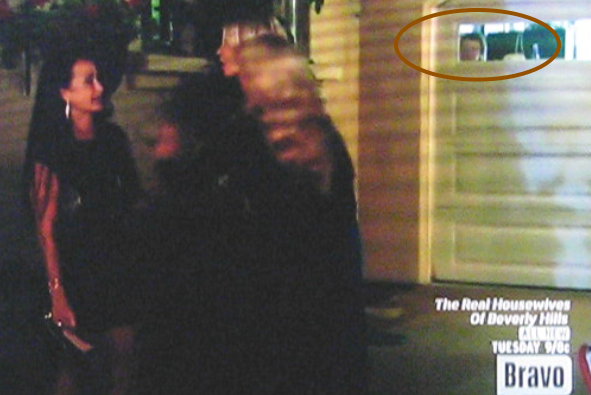
Least Mentally Prepared Husband in a Housewives Franchise, Vanity Project or Marriage Experiment

Winner: Vincent ‘Garage Face’ Van Patten for The Real Housewives of Beverly Hills
tommys 2

Nominated: Hank ‘The tranny’s hand walked into my penis’ Baskett for Kendra on Top/David ‘Golem’ Beador for The Real Housewives of Orange County/Mohammed ‘It’s against my religion to express genuine affection for my wife’ Jbali for 90-Day Fiance

Most Impatient Response to a Format Change in an Anthology Series, Prequel Spin-Off, or Homeland

Winner: True Detective (aka Noir is Supposed to be Urban, Idiots!)

Nominated: Fear The Walking Dead (aka Before They Were Zombies)/Homeland (aka Awayplace)/Better Call Saul (aka How The Lawyer got his Spotty Morality)

Most Overrated Drama, Sitcom or Tonally Confused Variation upon The Two Previous Sub-Categories featuring Martin Freeman, Kevin Spacey or Andy Samberg

Note: In this category, the award will be collected by an actor better at playing the role than the actor who actually did*

*Even if Kevin Spacey is in the audience doing his ‘I’m the first ever person to talk to a camera in a TV show’ schtick

Winner: Sherlock (award collected by Lucy Liu)

Nominated: House of Cards (award to be collected by the ghost of Ian Richardson)/Fargo (award to be collected by William H. Macy)/Brooklyn Nine Nine (award to be collected by whoever is near)

Biggest Load of Horseshit Onscreen Explanation of Something That is Clearly an Offscreen Issue in a Trumped-Up Soap Opera, Underrated Popular Literature Adaptation or Reality Show on a Bottom-Feeding Network

Winner: Scandal for the end-of-season held-at-gunpoint cliffhanger and season premiere cold open funeral of Harrison Wright during the domestic abuse court case of Columbus Short.

Nominated: Elementary for the complete absence of LGBT housekeeper Ms. Hudson in the third season while actress Candis Cayne became a visible activist for transgender rights/Marriage Boot Camp: Reality Stars for Hank Baskett’s ‘magic penis’ theory of how he could be caught red-handed in a transsexual three-way and yet not have participated

Worse Kept Secret in a Deathcount-Oriented Drama, Television Awards Show or Publicity-Loving Satire of Advertising

Winner: The Tommys 2015 for revealing multiple spoilers in TV shows not yet caught up on by most viewers by simply listing the nominees

http://www.youtube.com/watch?v=quJDKF9aURo

Nominated: The Walking Dead for posting news of Beth’s death on social media the day that the episode aired/The Emmys 2015 for spoiling the series finale deaths of Nucky Thompson in Boardwalk Empire, Zeek Braverman in Parenthood, Jax Teller in Sons of Anarchy, Bill Compton in True Blood and Raylan Givens’ hat in Justified/Mad Men for having a series ending that was tiresomely ambiguous

Most Unconvincing Justification of a Blatant Freakshow in a Bafflingly Popular Horror Anthology Series, Footage-Shy Reality Show or Modern-Day Version of Public Hanging Entertainment

Winner: Botched for claiming to be a fly-on-the-wall documentary about plastic surgeons

Nominated: American Horror Story: Freakshow because if it’s about an actual freakshow, we can’t get upset at the title/America’s Got Talent for exploiting the lack of a substantive mental health care system in the US

Reality Contestant who Looks Most Like a Popeye Character

Winner: Josh Altman (Wimpy) for Million Dollar Listing: Los Angeles

tommys 3

Nominated: The Situation (Popeye) for Marriage Boot Camp: Reality Stars/Josh Altman (Alice The Goon) for Million Dollar Listing: Los Angeles

The Endless Summer

Posted in American TV (General), American TV Shows, hiatus, Reviews, TV channels, TV Criticism, TV Culture, TV History with tags , , , , , on September 6, 2015 by Tom Steward

I’m back after being away for the summer…just like TV! Or so I thought. Summer used to be a dumping ground for cancellation fodder, but something has changed. Many of the year’s most important programmes now air over the summer and momentous TV events are just as likely to play in the spring and summer as fall and winter. No doubt some of this is down to cable channels disrupting the old network seasonality, but it’s becoming increasingly apparent that TV critics can’t take summer off any more if they want to stay current. So what’s been happening?

Colin Farrell after reading the reviews of True Detective Season 2

Colin Farrell after reading the reviews of True Detective Season 2

True Detective Season Two

Another reason why TV critics can’t go away for summer is because they’d all miss doing their favourite thing – bashing the follow-up to a universally praised piece of television with no particular motivation other than convention. Season Two of HBO’s anthological police procedural was torn to pieces by most critics, with so-called fans and lovers of quality television just as vociferously negative. It really has nothing to do with the season itself, just a tired old game that critics like to play, one that immunised us against the self-evident pleasures of Treme simply because it followed The Wire and even made us question the quality of The Wire when it entered its second season. Worryingly, it suggests critics and viewers of the serial age have serious trouble evaluating television when it deviates from formula, and really aren’t ready for the anthology revolution happening in TV.

Jon Stewart leaves The Daily Show

After fifteen years as host of The Daily Show on Comedy Central, Jon Stewart could simply be remembered as the person that brought the art of fake news – cultivated in Britain by Armando Iannucci and Chris Morris – to the US. But he leaves behind him an even greater legacy. When TV news polarised into partisan platforms with MSNBC on the left and Fox News on the right, Stewart’s Daily Show was just about the only source of news that had any semblance of objectivity (as rocky a term as that is) left to give. He was trumped by his own protégés. First Stephen Colbert, who transformed himself into a living doll of satire, viscerally exposing the ugliness of the media conservative while manifesting the winning naivety that makes them attractive. Then John Oliver who – with the help of HBO’s unsegmented formats – brought satirically slanted news reporting into the realms of investigative journalism and political activism.

Cilla Black/Rowdy Roddy Piper (delete as nationally appropriate) died

It’s only accident that these deaths occurred in summer, but taken together they are tantamount to transatlantic television tragedy. The British light entertainment host and Canadian WWF star died within a week of each other, which means nothing until you put together that their stretches as reigning TV personalities from the 1980s to the early 2000s is virtually identical and that they generate the same fuzzy nostalgia (in warmth and confusion alike) from the generations that grew up watching them. For me, it was a sharp reminder of how separate American and British cultures can be. Nobody mentioned Cilla – a contemporary of America’s beloved Beatles – stateside. Roddy Piper remains unfamiliar to me…and to all 90s British kids who didn’t have Sky.

Netflix Summer

The charms of hyper-inflective prison comedy-drama Orange is the New Black continues to elude me, but it’s Netflix’s most valuable commodity and the June release of its third season was not an anomaly. The star-studded prequel series to cult comedy movie Wet Hot American Summer was made available in July as was season two of the critically acclaimed cartoon BoJack Horseman. Orange is the New Black was even streamed a few days early, just to remind Netflix subscribers that they can do shit like that. It’s pretty cocky behaviour, and somewhat backfired when fans who had booked time off work to binge-watch the season found themselves in a socially impossible situation. I don’t think this surge of summer activity at Netflix (nor the summer-theming of its releases) is at all a coincidence, more an attempt to dominate TV distribution in these months of the year. For all their talk of liberating viewers from the tyranny of scheduling, Netflix keeps subscribers under the yoke of its idiosyncratic calendar.

Fear The Walking Dead is set in LA...it's going to be a short show!

Fear The Walking Dead is set in LA…it’s going to be a short show!

Fear the Walking Dead Series Premiere

The unwanted spin-off of AMC’s The Walking Dead debuted in the last days of summer. As True Detective also switched from a rural southern locale to the L.A. metropolitan sprawl, I wouldn’t expect any glowing reviews forthcoming…

Controvers-TV

Posted in American TV (General), American TV Shows, Reviews, TV History with tags , , , , on June 19, 2015 by Tom Steward

One of the historic functions of American sitcoms has been to deal with taboo issues in the society of the time. This purpose has been all but forgotten as network television becomes increasingly more conservative, both on the production and audience side. Although, it’s not as if cable TV is stepping into the breach. Cable channels tend to use their license to push boundaries on representation for infantile laughs rather than a progressive cause. I suspect that increased conglomerate ownership of TV stations has something to do with this too. If you’re appealing to the same judges, you’re bound to get the same verdict. I bring this up because I just happened to come across episodes of two 1980s sitcoms based around controversial topics on TV recently, although the rate of re-run on some channels does rather push the odds in favour of that happening. I was first struck by how committed each sitcom was to serious treatment of the issue in question, as opposed to today when it would need to be discussed by proxy. Then what stayed with me was the contrast between the ways the sitcoms handled delicate subjects, though neither seemed to proceed with much delicacy.

Yes, this really happened...

Yes, this really happened…

The first was a two-part episode of Different Strokes called ‘The Bicycle Man’. It’s a notorious episode of an already pretty notorious sitcom. You may think there’s nothing creepier than a grown man with an ageing disorder being made to play a child but there is, and it’s a grown man with an ageing disorder being made to play a child being pursued by a paedophile. It’s a classic case of wanting to have your cake and eat it, appropriately enough as that’s what the child molester uses to try and get into Arnold’s pants. The sitcom is earnest about educating the audience (especially children) on the dangers of paedophilia, and the final scene, which seems to go on forever, is basically a PSA. But the producers are also clearly reluctant to disturb the conventions of the studio sitcom, and so we still have a laughter track and one-liners about paedophilia. Some of this works in regards to the molester himself, who uses comedy to cosy up to children, but most of the time it feels like the episode is pulling in different directions. That said, the pathological profiling of the paedophile is the most sophisticated I’ve seen in television.

The second was an episode of The Golden Girls called ’72 Hours’ in which Rose is informed she may have contracted HIV from a blood transfusion and has a three-day wait to find out. Unlike Different Strokes which doubled its length and set aside screen time to outline the issue, Rose’s predicament is a subplot of a normal episode rather than an issue-based special. This underlines the fact that the sitcom dealt with taboo topics like racism, sexism and homophobia all the time but was also indicative of how the writers wanted the audience to calm down about HIV rather than obsessing over it. This was 1990, so it’s not exactly typical at this point to portray HIV as an everyday part of contemporary society that affects straight as well as gay people, yet that’s exactly the jumping-off point of this episode. Not that the writers are in any way idealistic about how people of an older generation respond to the threat of HIV. Rose is understandably scared and turns to scapegoating promiscuous gay men while Sophia starts labelling her cups and using different bathrooms. No-one is condemned for acting irrationally here but no-one is let off the hook either.

HIV and The Golden Girls

HIV and The Golden Girls

It’s a shame these episodes stand out in today’s TV. Look at Modern Family. We have a gay couple at the heart of the show yet the Christian ownership of ABC by Disney means that we’ve never had a storyline which draws attention to their struggles in society. We only got a kiss between them after gay marriage became culturally acceptable, five seasons in. You might argue that the permanent presence of previously marginalised characters in a sitcom is a bigger step forward than a devoted storyline to issues in their community, but, again, take Modern Family. Have any of the clichés or misconceptions about gay men disappeared by having Mitch and Cam as protagonists? When it comes to taboo issues in sitcoms, I think concept and execution are polarising. Many sitcoms like The Middle address agonising social problems because of what they are and not what they talk about.

Party Like It’s 1990 Time

Posted in American TV (General), American TV Shows, Behind-The-Scenes, Reviews, TV channels, TV History, TV News with tags , , , , , , , , , on April 22, 2015 by Tom Steward

90s TV is back in vogue, appropriately enough. Twin Peaks is soon to be revived in such exacting detail that Showtime even sought to bring back David Lynch’s fights with the network. Cali has been fornicated enough by David Duchovny – and his series Californication has been cancelled – while Gillian Anderson appeared to be getting her life together but is going back to her abusive ex; thus The X-Files is returning to Fox, it now seems as a replacement for the network’s all-too-rare new-thing-that-people-like Empire. Even The CW’s version of The Flash recently featured Mark Hamill reprising his role as The Trickster from the original early 90s live-action TV adaptation, now father to the heir to his title, allowing the Star Wars actor to cathartically wail the words that every kid in a Darth Vader mask has been saying to him since 1980.

That the decade that time did not give us time to forget is coming back to TV doesn’t come as much of a surprise. The 90s was when the cup of quality American television first runneth over, never to be empty again. Contemporary Hollywood is increasingly dependent on rebooting classic pop iconography. In fact, Hamill was filming his scenes as The Trickster at virtually the same time he was reviving Luke Skywalker for Star Wars: The Force Awakens. But the choice of series has so far been disappointing. The 25-year gap in Twin Peaks was always part of the story, but in truth much of the second final season was completely unwatchable, with the Lynch-helmed finale the only saving grace (and he may not even be directing this time round). If the cast continue to protest Lynch’s absence, we may be looking at a spin-off about The Log Lady’s Log.

Everyone has signed back on for The X-Files but the series was to TV sci-fi what Judd Apatow is to movie comedy. The original series was a good few years too long, and that’s even before Billy Connolly came into the picture! Yes, TV needs more X-Files about as much as literature needs more books about killing heads of state written by Bill O’Reilly. Maybe it’s my comic apathy or that The CW’s demographic version of the flashing lifeclock from Logan’s Run has already gone off in the palm of my hand, but I found nothing to enjoy in The Flash to enjoy apart from Hamill’s scenery-chewing performance (forever to be known as ‘Hamillery’). So if there are any TV executives out there reading (either this blog or just in general) here are some 90s TV shows that are far more worthy candidates for revival:

Murder Three

'My blinds...LaPaglia!'

‘My blinds…LaPaglia!’

The first season of Steven Bochco’s Murder One was a compelling, narratively experimental, impeccably cast piece of TV drama. The second, which I will call Murder Two – not because the crimes prosecuted were lesser but because the quality was – proved altogether more formulaic, B-casted and conventional. Murder Three could right these wrongs. I foresee a pre-credits teaser in which respective season one and two leads Daniel Benzali and Anthony LaPaglia fight Sunshine Boys-like over the configuration of the furniture in the firm’s office, culminating in Benzali’s Teddy Hoffman throwing LaPaglia’s not-Teddy Hoffman out of the window, before lowering the blinds…and then peering through them ominously. We would revive the first season’s 23-episode serial arc, with a case that begins as Murder Three…and ends up as Murder One!

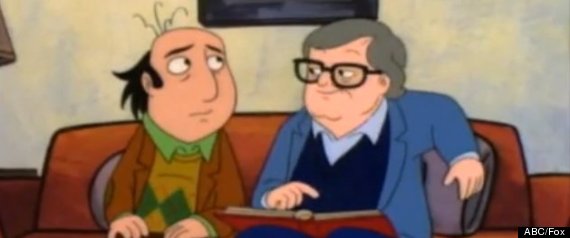
The Critic (Or It’s Not That Tough Being a Film Cricket)

Together at last!

Together at last!

At the time we might have thought that the 90s were the summit of all that was ridiculous about Hollywood movies. But given how extra inflated and predictable blockbusters have become since, surely Al Jean and Mike Reiss’ animated comedy about a TV film critic would now have plenty of kindling for the movie parody fire. Cancelled after one season, there’s still plenty to do with the format and reviving the character of the Ebert-like Jay Sherman would be a greater tribute to the late film critic than any statue.

Murder She Wrote

History's greatest serial killer!

History’s greatest serial killer!

Still alive and acting…all I’m saying.

Cop Rock: Laboured Musical Premise Unit

A spin-off of the quickly-cancelled musical police drama about a special team of cops who investigate off-colour musical episodes in other TV series.

Paulie Loves Pussy

A buddy comedy featuring Paulie Walnuts and Pussy Bonpensero from The Sopranos based on this HBO commercial:

We’d figure out the timeline stuff later!

The Cosby Show

I drank from the wrong glass...

I drank from the wrong glass…

Worth pitching just to see the look on the executives’ faces. ‘Drink this, Mr. Greenblatt’.

Justified And Ancient

Posted in American TV (General), American TV Shows, Reviews, TV Acting, TV History, Unsung Heroes with tags , , , , , , , , , on March 27, 2015 by Tom Steward

Currently my two favourite shows are both revivals of iconic literary characters and new twists on old TV genres. Justified features Deputy U.S. Marshal Raylan Givens from the Elmore Leonard novels Pronto and Riding the Rap as well as the short story ‘Fire in the Hole’ from which the FX series sprung. As Justified aired, Leonard wrote his final novel Raylan about the character. Elementary is based around scatological-saying sleuth Sherlock Holmes from Arthur Conan Doyle’s short stories and novellas, re-located and updated to present-day New York. Both are ostensibly police procedurals, a genre spanning the history of television, but they also resurrect some more archaic formats, such as the western and the mystery drama. These are shows that can appease snobs and slobs. Elementary goes under the radar while Justified will soon fall in the woods without sound. So why don’t people like them as much as I do?

I love those old black-and-white westerns!

I love those old black-and-white westerns!

I’m not saying that Justified and Elementary are in any way reviled, but neither are they exalted like the offerings of AMC, HBO and Showtime. Despite being on a network with a stellar reputation for original drama, Justified is continually overshadowed by series like Fargo and The Americans, both of which are unlikely to have existed without Justified blazing the trail. Elementary has the disadvantage of being on CBS rather than cable, but it is still far from being considered a giant of well-made, middle-of-the-road entertainment like The Good Wife. This is what they get for doing everything a complex, mature character-driven drama would without disturbing what makes good television. Surely that is more remarkable than trying to produce something worthy without regard to what works on TV (American Crime, I’m looking in your direction!) or even accomplishing great art on networks that are purpose-built to challenge mainstream television conventions.

Maybe they’re a victim of the times. Elementary comes in the wake of the BBC’s Sherlock, a contentless self-hyping publicity machine that has established itself as the worthier successor to the Sherlock Holmes name without any claims between opening and closing credits to that title. Justified began as an episodic procedural and grew into long-form storytelling, and may have looked to those who think good TV comes in serial boxes as unfashionable. Maybe they care too much about history. Justified is pulp fiction comedy in the noble tradition of The Rockford Files and Magnum P.I. and homage to the TV westerns (and disguised police westerns thereof) of the 1960s and 1970s, underlined by Timothy Olyphant borrowing Clint Eastwood’s legs for the project. Elementary doesn’t contemporize like Sherlock, or at least it doesn’t fetishize new technologies as a substitute for coherent storytelling, and at its best it’s Columbo in a brownstone.

I suppose what’s layers to some people is packaging to others. But what would it take to understand how holistic a television experience it is to watch Justified and Elementary? I’m watching TV now and in the past, a pleasurable formula alongside a gruelling psycho-drama, good television and the cherry-pickings of popular culture. I look to other TV shows that currently fascinate people like Scandal and Empire and the common denominators are melodrama and outrageous behaviour. Perhaps Justified and Elementary are too straight-faced and plausibly written to stand out in primetime. Maybe the success of Breaking Bad and Better Call Saul is not so much in the transformative character arcs (which both my faves provide in equal measure) but the Dickensian coincidences and lunacy of the protagonists. It’s a fine line between ambiguity and characters doing stupid things to create drama. Characters in these two shows are drawn not sketched.

'Look Holmes, the table mat that the script for Sherlock is written on!'

‘Look Holmes, the table mat that the script for Sherlock is written on!’

Because Justified and Elementary derive from a body of work outside of themselves, perhaps audiences assume they need prior knowledge of the characters and authors’ previous works in order to enjoy these series. Nothing could be further from the truth. Elementary eschews the fan-fiction qualities of Sherlock in favour of original content utilising the character dynamics of the literary cycle. You do not feel like you have to be a devoted reader of Conan Doyle nor worship the cult of Sherlock Holmes to appreciate Elementary. Yet it is an authentic introduction to the Holmes stories in a way that Sherlock refuses to be. Elmore Leonard is simply a point of departure for Justified and his characters and storylines have been reinterpreted, interwoven and extrapolated to the point where they are born anew (for copyright reasons just as much as artistic ones). Leonard is the midwife here not the overprotective mother.