Archive for the TV Acting Category

March 2020

Posted in American TV (General), American TV Shows, Americans watching British TV, Behind-The-Scenes, BiogTV, British Shows on American TV, hiatus, Internet TV, Reality TV, Reviews, Touring TV, TV Acting, TV advertising, TV channels, TV Criticism, TV Culture, TV Dreams, TV History, Uncategorized, Watching TV on April 2, 2020 by Tom Steward

New Blog 9.1

I’m escaping quarantine by watching lovers separated by walls, animals in cages, people trapped on a cruise liner, and the after-effects of a deadly global virus.

Maybe U-Verse should re-consider using the word “cowering” when talking about the characters in Day of The Dead given the current state of things.

McMillions raises the question of how weather ever makes the news.

The quarantine edition of Last Week Tonight with John Oliver was effectively a crossover episode with Black Mirror.

Avenue 5 confirms that Armando Iannucci only makes accidentally prophetic television.

If I’ve learned anything new about Trump from his televised Coronavirus press conferences, it’s that he says “contagion” like Kevin James’ Doug in The King of Queens.

Curb Your Enthusiasm may be the handiest guide to social distancing in the whole of media.

With an ABC sitcom, Disney cartoon and Bravo reality show on the way, this is Indian-Americans’ TV year. Let’s hope networks don’t pull it away from them as fast as they did with Mexicans and South-East Asians.

Homeland is trying to break 24’s record of Presidential turnover before it ends.

Netflix doesn’t need to add a button to remind you that you’re alone.

My Samsung TV is recommending movies for me to watch while I’m working at home. Either it knows I’m a critic or thinks we’re a nation of liars.

Inside No. 9 just El Camino’d Psychoville. If you don’t get those references now, you will after months of quarantine.

New Blog 9.2

Isn’t now a good time to reboot those CNN election coverage holograms? I don’t think I can take another home news report on an iphone.

We’re all now basically the BBC News interviewee whose children burst into the office during broadcast.

Whomever was responsible for closed captioning of Top Chef Allstars LA did well to add a question mark to Padma Lakshmi’s opening assertion that Los Angeles was “one of the best food cities in the world?”

Vanderpump Rules needs to omit the skits and cartoons. Anyone watching already knows the show is cheap, nasty and artless and doesn’t mind a bit.

Breaking News: The Walking Dead reboots as Lifestyles of the Rich and Famous.

With its stolen memoir and culinary school plots, the finale of Fresh Off The Boat was an apology letter to its estranged subject.

If you want to know what TV is going to look like for the next few months, check out a 90-Day Fiance Tell-All.

There’s been a staggering number of new series about people facing global crises in the past few months. It seems that Coronavirus was in our art before it found its way into our lungs.

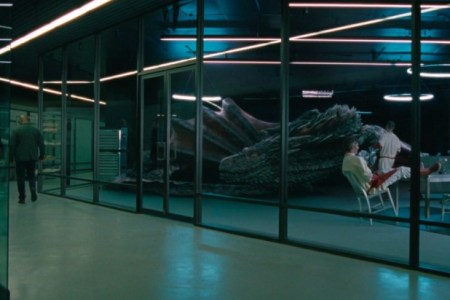
HBO missed a golden opportunity to re-launch its 1970s science-fiction remake as Westworld in The City.

There’s never a good time to do an entire episode about penicillin, but if there was Outlander nailed it.

Korean animators must be working 24/7 to get those Disney Channel and Nick Jr. Coronavirus PSAS out.

One wonders if Game of Thrones could have salvaged its reputation by crossing over into the Westworld universe before it ended.
New Blog 9.3

Picard is like a version of Star Trek where your parents and schoolteachers make out in front of you.

G literally prayed for a Netflix show like Tiger King to come along. Be careful what you wish for.

Jeff Goldblum’s commercials for Apartments.com are bringing out the lighter side of illegal data mining.

I’m starting to think I should have paid more attention to those episodes of The Sopranos where Uncle Junior was under House Arrest.

TV networks are giving away more content for free than a theatre major with an iphone.

I’m sure the female guests on Talking Dead feel safer now that they don’t have to share a room with Chris Hardwick.

The Real Housewives of New Jersey filled a time capsule entirely with items that future archeologists would need to know their 2019 activities in order to understand.

I generally prefer that documentary directors be fly-on-the-wall observers but I wouldn’t have been averse to Eric Goode or Rebecca Chaiklin opening the cages at any point during the filming of Tiger King.

The person who accidentally broadcast a MyPillow.com infomercial during a televised White House Coronavirus briefing must be in serious trouble.

Love is Blind is proof of what dating shows can achieve when they don’t have to remind viewers of the concept every twenty seconds.

Better Call Saul is The Sopranos of legal dramas.

Mickey Mouse’s guide to the Internet is no Mickey Mouse operation.


January and February 2020

Posted in American TV (General), American TV Shows, Americans watching British TV, Behind-The-Scenes, BiogTV, British Shows on American TV, Internet TV, Reality TV, Reviews, TV Acting, TV advertising, TV channels, TV History, TV News, TV Sports, Uncategorized, Unsung Heroes, Watching TV on March 2, 2020 by Tom Steward

New Blog 8.1

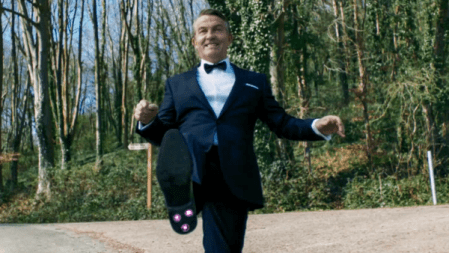
I seriously doubt there’s anything in No Time to Die that can compete with Graham’s laser shoe from Spyfall.

Seen through the prism of a constantly buffering HBO Go app, the final season of Silicon Valley was an unintentionally interactive viewing experience for me.

qubo specializes in cartoons from yesteryear that look like they’re being watched from another room.

Have the rights to Ted Bundy recently gone into the public domain?

The Magic Motor Inn episode of Fresh Off the Boat proves that G’s back-door spinoff-dar is military grade.

Netflix’s Cheer is not to be confused with the first screen outing of Ted Danson’s Sam Malone.

Time jump finales in HBO Original Series are now contractually binding.

The advertising for the BBC’s Seven Worlds, One Planet makes it seems like Earth is a TV show leaving a streaming service in 2020.

I don’t know if I’m more amazed that a musical act on The Bachelor once dated a contestant or that a contestant had prior knowledge of a musical act on The Bachelor.

American quality television is having its own papal war.

HBO’s McMillions recalls Ben Affleck’s comment on Argo that “even the feeblest execution” of such a compelling real-life story would still make for great entertainment.

G was expecting Shrill to be like a live-action Nature Cat, demonstrating that as parents of a toddler we are no longer able to distinguish between adult and children’s television.

New Blog 8.2

The MSNBC reporter’s racist outburst in reporting of the death of Kobe Bryant and the subsequent resurrection of Mr. Peanut in his honor suggests that TV’s priorities on grief may need re-evaluating.

The best media satire I see on network television is in Geico and Progressive Commercials.

Larry David may be Bernie Sanders’ best impersonator but, judging by this season of Curb Your Enthusiasm, he could also be Trump’s most effective speechwriter.

Avenue 5 is a worthy addition to the British science-fiction sub-genre of Shoddy Space.

When Adam Driver hosts Saturday Night Live, it feels like improvised jazz rather than a hit-and-miss sketch show.

Killer Inside: The Mind of Aaron Hernandez made me wonder why there isn’t a rolling news channel devoted to this story.

I urge you to watch reality shows with closed captioning as they put inverted commas around words that don’t exist and they come thick and “fastly.”

The Oscars 2020 really made the case for the continuing importance of commercial cinema with an opening musical number recreating an iconic moment of public television.

U-Verse On-Demand needs to accept that I am not going to rent A Simple Favor.

Season Three is the new Season Two. We need to be talking about Junior Slumps.

Last Week Tonight with John Oliver is the best argument for only reporting the news when it’s not happening.

If parents are confused as to which version of The Adventures of Paddington Bear is the newest one, just remember it’s not the Canadian one with a bloated expositional theme tune that even The Simpsons couldn’t credibly parody.

New Blog 8.3

Unexpected bonus of AMC’s uncensored airing of The Godfather films Part 1 – 8am boobs.

Unexpected bonus of AMC’s uncensored airing of The Godfather films Part 2 – The Godfather Part II now gives two fucks.

Unexpected bonus of AMC’s uncensored airing of The Godfather films Part 3 – Doesn’t apply to The Godfather Part III so you have an excuse to skip it.

What is anyone on Married at First Sight talking about? They all sound like malfunctioning self-help robots.

The world television premiere of El Camino was somewhat undermined by the fact that millions of viewers had already seen the movie on television.

Haven’t we done enough damage to Pizza Hut crusts without making them their own appetizer?

Bad News Breaking – Breaking Bad Now The Sequel To Better Call Saul.

In terms of romanticizing of the Taliban, the final season of Homeland picks up where Rambo III and The Living Daylights left off.

The commercial for the “Battle for the 2020 White House” commemorative chess set is the best piece of television to play parody chicken with.

I bet the voice actors on Superwings: Mission Teams increasingly regret having ticked the Accents and Dialects box on their online submission for the casting call.

Made my national television commercial debut and now worried about being typecast as “Man in Bermuda shorts and Hawaiian shirt that doesn’t fit him ignoring Phil Mickelson.”

Apparently, Saturday Night Live having a host and musical guest I’m equally excited to see only happens every four years.


The Last Post of The Year

Posted in American TV (General), American TV Shows, Behind-The-Scenes, British Shows on American TV, Reality TV, Reviews, TV Acting, TV advertising, TV History on December 11, 2019 by Tom Steward

New Blog 7.1.jpg

UPDATE: Kurt Sutter’s departure from Mayans M.C. resulted from abusive behavior not white guilt. Potato, patata.

Counting down to the new season of 90 Day Fiance by watching new seasons of 90 Day Fiance.

Half of the movies I’ve seen at the theater this year are based on television shows. The other half I wish were television shows.

El Camino is a feature-length post-credits scene.

Molly of Denali is made by someone who really misses esoteric nineties dramedies.

My first thought upon re-watching The Running Man was that no TV network would ever give away this much content for free.

Netflix have made a holiday special starring The Captain of The Polar Express, Satan, and The Burglar from Home Alone.

The Crown should be re-named Queen Who.

Nonny in Bubble Guppies is either a really good stab at portraying an autistic child or a terrible take on a nerd.

The Mandalorian is an exercise in the art of the end-credit.

Scorsese says Marvel movies are “not cinema” in an interview promoting his latest video-on-demand content.

In the age-old tradition of Star Wars selling old wine in new bottles, The Mandalorian is Have Gun, Will Travel in Space.

New Blog 7.2

Disney + should stick one of those “outdated cultural depictions” warnings on The Phantom Menace.

Standing in the lobby of the Netflix-owned Egyptian Theater in Hollywood performing a live immersive theatre rendition of scenes from The Witcher to the audience for the cinema premiere of the show wondering what television is anymore.

You know you’ve assimilated when your reaction to a TV commercial for a Mac n’ Cheeseburger is: “I suppose it was inevitable.”

In the dark sequel to the Peloton Holiday ad for Aviation Gin, the protagonist plays an in-world Paul from Verizon.

With their Godfather and James Bond marathons, cable television has correctly identified the two major themes of Thanksgiving as immigration and colonialism.

I want to buy a crate of Romulan ale for whomever thought of using Star Trek V: The Final Frontier to extinguish IFC’s 24-hour Godfather Thanksgiving marathon.

With the accusations of racism in the seating of Franklin in A Charlie Brown Thanksgiving, viewers are finally seeing the darker side of this holiday special about a clinically depressed pre-teen boy.

I’m convinced that the “Cut for Time” sketches on Saturday Night Live are removed from the broadcast to ensure that the show’s best writing get a wider audience on the internet.

As Inside The Actors Studio moves to Ovation, Bravo severs its last links to a culture beyond Andy Cohen.

With the return of Dirty John as a true crime anthology series, will we see Eric Bana as a moldering John Meehan hosting the episodes a la Tales from The Crypt?

Those complaining about Rudolph’s acquiescence to his abusers in Rudolph The Red Nosed Reindeer should remember that this was a cartoon made the year The Civil Rights Bill was signed into law.

New Blog 7.3

Not content with being Reality’s answer to The Sopranos, The Real Housewives of New Jersey is now aping the story structure of the first Godfather movie.

The Irishman does nothing to challenge my long-standing belief that Martin Scorsese should no longer direct anything but documentaries.

That a half-century old period drama such as The Crown remains one of the best documents of contemporary Britain is an indictment of how little we’ve progressed as a nation in the intervening years.

There’s been a noticeable dip in the amount of subtitled dialogue in Fresh Off The Boat, which I’m desperate to believe executes a long-form story arc about assimilation not a network note.

If everyone can get excited about a four-minute sequel to E.T., then why do we need another feature-length Ghostbusters?

I’m now at a point in my life when I turn off Scorsese crime movies and put on British heritage dramas instead of the other way around.

Now that Poldark has ended, spare a thought for the actor playing the local banker who has lost his annual gig telling Ross he can’t give him any more gold.

It seems the latest trend in event television is live broadcasts of musical remakes that ruin childhoods.

John Mulaney having both an adult and family-friendly comedy show featuring kids on Netflix is going to be a stern test of the platform’s algorithm.

The most recent season of The Walking Dead strikes me as the TV equivalent of a deep-franchise horror sequel whose connective tissue to the original movie dangles by a thread.

Merry Festivus and Happy Who’s Here.

Peak Hours (Part 7)

Posted in American TV (General), American TV Shows, TV Acting, TV Criticism, TV History, Watching TV with tags , , , , , , , , , on November 10, 2017 by Tom Steward

tp 11

In a week where the absurdity of Washington has reached its zenith (for the week) I’m reminded of a political satire that pre-dated the era of Reagan, Bush Jr., and Trump and yet eerily prophesized the swathes of talked-up men-children that came to occupy the highest office in the land. Hal Ashby’s Being There tells the story of Chance, an elderly gardener with learning difficulties whose employer dies, leaving him to go out on his own and obliviously rise through the ranks of Washington until he reaches the Vice Presidency. What does this have to with Twin Peaks: The Return?

One of the biggest surprises of The Return was that when the “good” Dale returned from the lodge (or Judy, or whatever it is now) he came back in the body of Dougie Jones, who when cosmically switched out with a somnambulist version of Cooper (I think), begins to strongly recall Chance’s characterization and story arc in Being There. Dougie is reminiscent of Chance in his childlike reaction to and pleasure in the world and the way that his speech vacantly mirrors what he hears from others. But it’s what happens to Dougie that makes this cinematic allusion absolutely unmistakeable.

Just as Chance is assumed to be a political savant after he offers basic horticultural tips to high-level diplomats, Dougie is viewed as a maverick genius by his boss Bushnell Mullins (Don Murray) when he doodles over some claims in the course of his job as an insurance agent. The people who Chance and Dougie talk to read whatever they want into the most simplistic of utterances and reward them for bringing hidden truths about the world into light. The press exalt Chance for providing a solution to the economic crisis while Dougie is cited for exposing a fraudulent application.

tp 12

There’s nothing unusual about Twin Peaks delving into cinematic history. The original series had a fetish for film noir that resulted in characters taking their names from genre classics like Double Indemnity, Laura and Sunset Boulevard. In fact, it’s Dougie identifying the name of his FBI boss Gordon Cole (David Lynch) from a broadcast of Sunset Boulevard on TV (Lynch putting himself in esteemed company with director Cecil B. DeMille, who played a character with that name originally) that triggers the discovery of his secret identity. Referencing the work of a director from the American New Wave is a departure.

Perhaps Lynch is saying that American cinema of the 60s and 70s is to today’s generation of media artists what Hollywood of the 40s and 50s was to his. It’s impossible to watch David Simon and George Pelecanos’s The Deuce without thinking of Scorsese’s Mean Streets or Ashby’s own The Last Detail. Stranger Things is a riff on the Spielberg-Lucas canon while Ashby’s dark comedy exemplified by Harold & Maude hovers over dramedies like Girls and Transparent. Being There is never far away from TV satires of the dumbing down of the Washington political scene like Veep and Alpha House.

It remains curious because Lynch has typically avoided adaptation and remake in his canon (there are exceptions like Dune) but is nonetheless revealing about the shift to social satire from Twin Peaks to The Return. The less intelligent Dougie becomes, the more he begins to succeed at building his fortune, career and family. He climbs the corporate ladder and wins over the criminal element in Las Vegas by exhibiting a distinct lack of consciousness in his actions. He reveals the American success story for what it is; a blind stab in the dark whose outcome depends entirely on external factors.

tp 13

In a revival full of detours, none was perhaps more circuitous than having Kyle MacLachlan play the iconic Dale Cooper as an infantilised simpleton for the vast majority of the series. I’m sure it was a far greater challenge to the actor than even reprising a decades-old role as indeed it was for Peter Sellers to play Chance and break with his repertoire of larger-than-life comic characters. Ashby was taking a familiar face and channelling them through a new dimension of performance, which is very similar to what Lynch is doing here with MacLachlan by reimagining Dale through Dougie Jones.

We weren’t expecting Dougie Jones, especially not as a surrogate for Agent Cooper. But Lynch made the best of the situation, invoking another fine auteur director whose work still casts a long shadow over subversive media in the mainstream. It’s an association that helped The Return bear its satirical claws.

tp 14


Peak Hours (Part 6)

Posted in American TV (General), American TV Shows, TV Acting, TV Criticism, TV Culture, TV History with tags , , , , , , , , , on October 30, 2017 by Tom Steward

peaks 8

Strictly speaking, Twin Peaks was not teen television. But while the majority of nineties quality TV for adults focused on the lives of thirtysomethings (like the show … um … thirtysomething), Lynch and Frost’s series had teenagers at its core and made an effort to address issues facing young people in America. Iconographically, the teenagers of Twin Peaks harked back to the fifties but were mired in drugs and violence in such a way that they spoke to contemporary anxieties. The Return shows some of these teenagers as adults but the relaunched series did not ignore the youth of today.

The difference in approach from the original’s depiction of American youth is crystallised by Michael Cera’s cameo as Wally Brando, the son of Deputy Andy Brennan and receptionist Lucy. A mere foetus in Twin Peaks, in The Return a young adult Wally is living out a Marlon Brando fetish, parodying with grotesque comedy the anachronistic depiction of nineties teenagers in the first incarnation of the show. If ever there was a sign that The Return would observe its young in context, it was the sight of Cera dressed as The Wild One mumbling about honor codes inherited from The Godfather.

For the first time in the series, we see young people suffering from the socio-economic deprivation of small-town life. Steven (Caleb Landry Jones) is first shown losing out on a white-collar job (after interviewing with cougar-loving former jock Mike, no less), spiralling downwards in a coke-fuelled nightmare before a suicidal stand-off in a neighbouring trailer park. The drugs were always there in Twin Peaks but whereas previously they helped peel away a veneer of wholesome family values in the town, here there seems to be no alternative lifestyle, either real or imagined, for the young. It’s a wholly systemized decline.

peaks 9

A tangent from Part 1 of The Return seems to suggest something of the dehumanisation young people suffer in the Amazonized workplace. Watching a glass box and changing out the cameras in a bare loft at the behest of an unknown billionaire benefactor, Sam (Ben Rosenfield) has the kind of remote and menial service job performed by most young people in the contemporary economy of casual corporate labour. As soon as he deviates from the banal protocols with heavy doses of coffee and sex, Sam is eaten alive by a demon passing through a wormhole just vacated by Agent Cooper.

Not that all the young adults in The Return are victims, but it’s pretty certain they will become so. Some occupy a vacuum of morality that seems ingrained in their generation, or is at least a mutation of previous ones. Take Richard Horne (Eamon Farren), Audrey’s son and Ben’s grandson, who thinks nothing of abusing women in bars, fleeing the scene after mowing down a child in the road and victimising his grandmother and disabled uncle. Richard is Ben and Audrey’s ambiguity multiplied to the point of sociopathy. His cruel demise is less of a comeuppance than a tragic cycle.

The interplay of generations in The Return is what makes its portrayal of youth so multi-faceted. While condescending to Becky (Amanda Seyfried) for dating Steven, Shelly (Madchen Amick, who was frozen in time since the last one) gleefully dates weapons-grade psychopath Red, after having been with bad-boy (turned Sheriff’s Deputy) Bobby in the original series. Wally Brando is as much the product of Lynch’s self-parody (or Frost’s parody of Lynch?) as he is of his kooky parents, who channel the simplicity of an earlier era in American life. Richard seems to be all that the Hornes have hidden about themselves.

peaks 10

There’s admiration for the younger generation too. At least Lynch digs their music. Most of the young people we see are the fun-loving, hard-drinking clientele of The Roadhouse, who have turned this backwater dive into the nexus of American alternative music, as long as it is somewhat retro in style. Most of the young people we meet simply flesh out the climactic musical numbers set in the bar, and never blossom into fully-fledged characters. But there’s an uncharacteristic warmth (at least where younger characters are concerned) to the way they’re presented, which betrays a discordant note of optimism towards youth.

The young people in The Return are not the mid-century archetypes that we saw in Twin Peaks. They’re informed by them insomuch as their parents and predecessors have shaped who they are. But The Return’s generation are more recognizably contemporary, though the teenagers of Twin Peaks were hardly shrinking violets.