Archive for the TV Acting Category

Network Failure

Posted in American TV (General), American TV Shows, Behind-The-Scenes, Reviews, TV Acting, TV channels with tags , , , , , on November 9, 2015 by Tom Steward

If there’s one problem that ABC have – apart from being a Big Three network in an era of digital multiplatforming – it’s authenticity. For two years in a row, debuting primetime offerings from the network have been pulled up for artificially rendering their source material. The complaints are as much from authors as critics. Second-generation Chinese-American restauranteur, writer and cultural activist Eddie Huang laid in to the ABC sitcom Fresh off the Boat based on his memoir of the same name for reverting to ethnic and racial stereotype in its depiction of a Chinese immigrant family settling in 1990s Orlando. Though credited as a producer and a narrator for the pilot season, Eddie has continually spoken against the homogenising and caricaturing of his life and people by the show’s writers and producers, as well as the network itself. Having read his memoir, it’s certainly no exaggeration that the events of Eddie’s life have been sanitised, his political views marginalized, and his experience of growing up in America made secondary to the demands of a family sitcom.

Eddie Huang, then and never!

Eddie Huang, then and never!

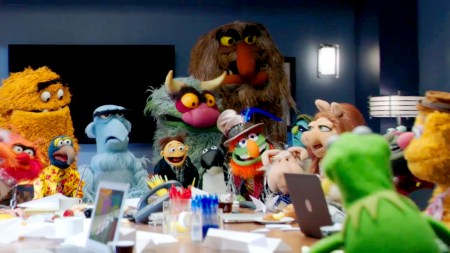
Flash-forward one year and critics are saying the same about The Muppets, ABC’s TV revival of the vaudevillian puppet characters owned by parent company Disney. While the two Disney movies that rebooted the Muppet franchise were highly regarded returns to the original talent show premise, the sitcom that followed revisited the characters in a behind-the-scenes mockumentary format replete with self-consciously adult humour. It’s no Meet the Feebles but nor it is the family-oriented and friendly fare we’re used to. Retrofitting Muppets like Miss Piggy, Kermit, Gonzo and Fozzy Bear into a Larry Sanders-style sitcom has meant the libidinal and laconic sides of these characters – which were traditionally alluded-to, offscreen things – have come to the fore, and long-time Muppet aficionados have questioned the connection between the current and original incarnations. Again, it’s hard to disagree. The Muppets were always meant to appeal to adults, but not solely, and usually as a by-product of their pan-familial ambitions. The idea that Jim Henson’s ensemble are able to compliment twisted modern comedy is cross-breeding even he would balk it.

Inauthentic? Yes. But worthless? Absolutely not. The sitcom variation on Fresh off the Boat may be far too cosy to do justice to the raw and acerbic memoir it was inspired by, but it is has never shied from addressing questions of race and assimilation. Last week’s episode filtered its discussion of Chinese media self-representation through the ghost of Long Duk Dong from Sixteen Candles, seen here as the gold standard of racist Asian stereotype in American popular culture. Occasionally, too, a fiercer take on caucasian culture and community reminiscent of Eddie’s own bleeds through, as when Grandma Huang casually remarks on the subject of family relations, that white people ‘are the cruellest race’. Though the format is familiar, the content is often challenging and we don’t forget about the problem of difference. There’s universality to the representation of the latter-day immigrant experience that even G, a Mexican-American, recognizes. To his credit, Eddie is gracious enough to admit that this universality is not altogether a bad thing, just that it lacks the reality he knows.

Though some of ABC’s The Muppets is like watching your parents make out (or worse!), I’ve enjoyed a lot of the writing that uncovers the parts of Muppet culture that previously remained – mostly for reasons of censorship – latent. Whether it’s the band’s unspoken pot habit finally exhaling it’s now-legal name or the romantic truth behind the sado-masochistic relationship between Beaker and Dr. Bunsen Burner, you might also say that in more progressive, accepting times, it’s the obvious way for the characters to go. Speaking of diversity, it’s been a pleasure to see Pepe the Prawn, a Latin Muppet, get some much-deserved screen time, including some of the show’s best dialogue. Having had an episode order trimmed severely and their showrunner leave after a single season, it seems as though the network is not happy, or at least buckling under the heavy criticism, much of it from parents and conservatives concerned about the sitcom contaminating the moral fibre of the Muppet brand. I’d disagree with them anyway, but objectively the transgressive stuff is still done tastefully.
The Writer's Room!

The Writer’s Room!

I’m not completely sold on either of these shows. Fresh off the Boat made father Louis Huang a virtual replica of Phil Dunphy instead of a progressively contradictory character while The Muppets has some of the worst qualities of the navel-gazing industry mockumentary tradition. But they make their own reality.

Tarantino on TV II

Posted in American TV (General), American TV Shows, Behind-The-Scenes, TV Acting, TV channels, TV Culture, TV News with tags , , , , , on October 18, 2015 by Tom Steward

Once again – and just as unintentionally – Quentin Tarantino has re-opened the debate about TV and film. Speaking on the release of The Hateful Eight in dual versions, one complimenting a 70mm Panavision format, the other more conducive to multiplexes and subsequent TV airings, the director observed:

‘The 70 is the 70. You’ve paid the money. You’ve bought your ticket. So you’re there. I’ve got you. But I actually changed the cutting slightly for a couple of the multiplex scenes because it’s not that. Now it’s on Showtime Extreme. You’re watching it on TV and you just kind of want to watch a movie on your couch. Or you’re at Hot Dog on a Stick and you just want to catch a movie.’

A 70mm shotgun!

A 70mm shotgun!

Tarantino has always been a lone voice in the debate, distinguished by an unerring respect for television as an artistic medium and his belief that there is still a tangible distinction between TV and cinema. There are few commentators on either side that can keep hold of both these ideas. Some of Tarantino’s finest work as a director was in television – in ER and CSI, no less – and it’s clear from his movies that TV falls under his muse. But he’s a filmdamentalist and his staunch refusal to acquiesce to the digital industry standard is also an outright denial that TV and cinema have conflated. Tarantino’s vivid descriptions of two experientially different media are more compelling than most critics’ vague sense that TV is becoming more like cinema.

The auteur reserves his derision for the cultural no man’s land of mall-adjunct multiplexes where, as Jackie Brown’s Max Cherry once observed, you see ‘something that starts soon and looks good’. It’s here that film is simply an afterthought of conspicuous consumption, not a thing of grand beauty and spectacle or part of a boutique outlet delivering sophisticated cable programming. There’s an all-or-nothing-at-all fatalism about Tarantino’s views on cinema, a regression to the mid-century belief in a divergence between TV and movies based solely on the size of the screen. It’s a welcome counterpoint to the ubiquity of convergence rhetoric, but perhaps in the end just as misguided and myth-driven as its opposing view.

Another coincidence is that Tarantino’s remarks were reported in the same week that FX began airing the new season of Fargo, a series that asks questions about the relationship between TV and cinema. The series is a spin-off from the 1996 movie directed by Tarantino’s indie contemporaries The Coen Brothers, but once again this season is elusive about its status in regards to the cinematic source material. Actors in the series are frequently costumed and posed to look like characters from the movie, even though they’re playing completely new roles. This season is set during the Carter administration and has the crumpled golden look of late seventies movies, yet the split screen techniques speak more to TV title sequences of the era, not to mention a much more recent breakthrough in televisual narration, Fox’s own 24.

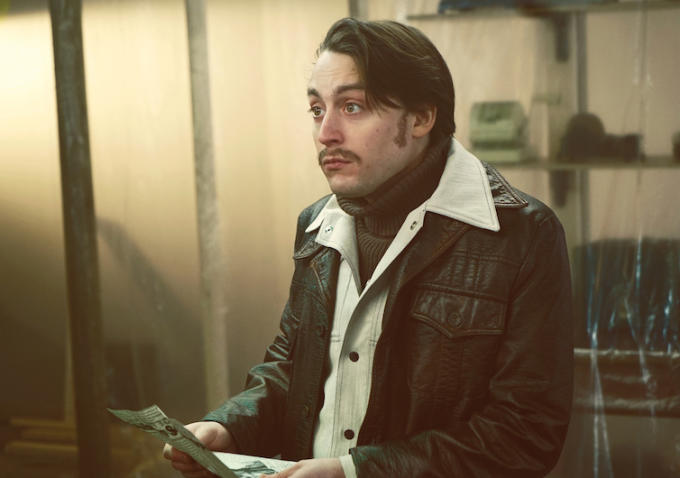
The previous season of Fargo – an anthology of season-long stories, which doesn’t make eliciting its cinematic and televisual qualities any easier – seemed at first a remake of the movie’s storyline with similarly Manichean characters and labyrinthine plotting yet by its end, it felt more like a sequel, having been found in and extrapolated from the timeline of the original. With Kieran Culkin’s uncanny resemblance to a young Steve Buscemi and in the very first episode a visual homage to the late Harve Presnell, whose implacable moustache loomed large over the movie, I suspect we might have just as ambiguous a play with the cinematic mythology this time around. The stars don’t help. Ted Danson has long been identified with television. Meanwhile there’s a Culkin in the cast and plenty of actors who are split exactly evenly across the two media. It’s almost as if Fargo wants to create a new hybrid creature that is neither and both.

Another funny-looking guy.

Another funny-looking guy.

Fargo’s messy intertwining of TV and film consciousnesses works at cross-purposes to what Quentin Tarantino is saying about the continued separation of the two. When we watch Fargo, we’re unsure about how much of what we’re watching belongs to which media. As Tarantino suggests, seeing a movie at a multiplex as a food court folly could lead to the same confusion, while watching it projected wide on film stock would absolutely not. The couch brings together movies and TV, often in the same flowing package, but does it always clarify which is which?

The Tommys 2015

Posted in American TV (General), American TV Shows, Behind-The-Scenes, British Shows on American TV, Reality TV, Reviews, TV Acting, TV Criticism, TV Culture with tags , , , , on September 27, 2015 by Tom Steward

It’s that time of year again when those we trust with the responsibility of deciding what makes good television publicly demonstrate they have no idea what makes good television. Yes, The Emmys. As with every year, the Academy of Television Arts and Sciences make two glaring errors. Firstly, they overlook the best TV of our time in favour of academy pets like Modern Family (Just a side note: Unlike most television critics, I rather like Modern Family. I just don’t happen to think it’s the only sitcom of the last six years worthy of celebration). Secondly, they create convoluted, counter-intuitive categories of awards that prevent the finest shows from being recognised because they don’t tick a bunch of weirdly shaped boxes. To rectify this, I’m starting my own annual television awards ceremony (yes, it’s going to be one of those articles!) called The Tommys with the sole purpose of demonstrating that you can still recognise the best TV around even when you have bullshit categories.

Best Shaving of Iconic Facial Hair in an FX Series, Zombie-Based Comic Book Adaptation, or Timely Political Commentary

Winner: Sam Elliott for Justified

tommys

Nominated: W. Earl Brown for American Crime/Andrew Lincoln for The Walking Dead/Kathy Bates for American Horror Story: Freakshow (disqualified for chin curtain)

Least Mentally Prepared Husband in a Housewives Franchise, Vanity Project or Marriage Experiment

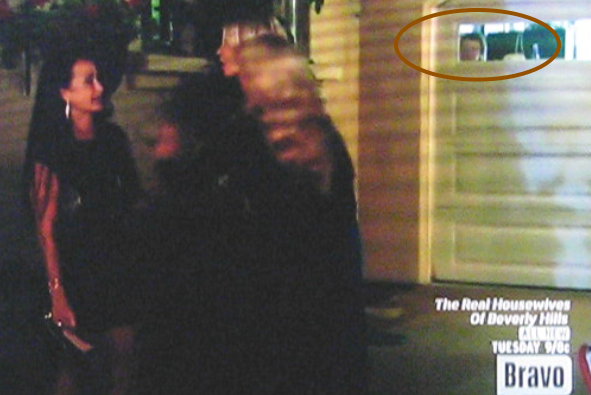
Winner: Vincent ‘Garage Face’ Van Patten for The Real Housewives of Beverly Hills

tommys 2

Nominated: Hank ‘The tranny’s hand walked into my penis’ Baskett for Kendra on Top/David ‘Golem’ Beador for The Real Housewives of Orange County/Mohammed ‘It’s against my religion to express genuine affection for my wife’ Jbali for 90-Day Fiance

Most Impatient Response to a Format Change in an Anthology Series, Prequel Spin-Off, or Homeland

Winner: True Detective (aka Noir is Supposed to be Urban, Idiots!)

Nominated: Fear The Walking Dead (aka Before They Were Zombies)/Homeland (aka Awayplace)/Better Call Saul (aka How The Lawyer got his Spotty Morality)

Most Overrated Drama, Sitcom or Tonally Confused Variation upon The Two Previous Sub-Categories featuring Martin Freeman, Kevin Spacey or Andy Samberg

Note: In this category, the award will be collected by an actor better at playing the role than the actor who actually did*

*Even if Kevin Spacey is in the audience doing his ‘I’m the first ever person to talk to a camera in a TV show’ schtick

Winner: Sherlock (award collected by Lucy Liu)

Nominated: House of Cards (award to be collected by the ghost of Ian Richardson)/Fargo (award to be collected by William H. Macy)/Brooklyn Nine Nine (award to be collected by whoever is near)

Biggest Load of Horseshit Onscreen Explanation of Something That is Clearly an Offscreen Issue in a Trumped-Up Soap Opera, Underrated Popular Literature Adaptation or Reality Show on a Bottom-Feeding Network

Winner: Scandal for the end-of-season held-at-gunpoint cliffhanger and season premiere cold open funeral of Harrison Wright during the domestic abuse court case of Columbus Short.

Nominated: Elementary for the complete absence of LGBT housekeeper Ms. Hudson in the third season while actress Candis Cayne became a visible activist for transgender rights/Marriage Boot Camp: Reality Stars for Hank Baskett’s ‘magic penis’ theory of how he could be caught red-handed in a transsexual three-way and yet not have participated

Worse Kept Secret in a Deathcount-Oriented Drama, Television Awards Show or Publicity-Loving Satire of Advertising

Winner: The Tommys 2015 for revealing multiple spoilers in TV shows not yet caught up on by most viewers by simply listing the nominees

http://www.youtube.com/watch?v=quJDKF9aURo

Nominated: The Walking Dead for posting news of Beth’s death on social media the day that the episode aired/The Emmys 2015 for spoiling the series finale deaths of Nucky Thompson in Boardwalk Empire, Zeek Braverman in Parenthood, Jax Teller in Sons of Anarchy, Bill Compton in True Blood and Raylan Givens’ hat in Justified/Mad Men for having a series ending that was tiresomely ambiguous

Most Unconvincing Justification of a Blatant Freakshow in a Bafflingly Popular Horror Anthology Series, Footage-Shy Reality Show or Modern-Day Version of Public Hanging Entertainment

Winner: Botched for claiming to be a fly-on-the-wall documentary about plastic surgeons

Nominated: American Horror Story: Freakshow because if it’s about an actual freakshow, we can’t get upset at the title/America’s Got Talent for exploiting the lack of a substantive mental health care system in the US

Reality Contestant who Looks Most Like a Popeye Character

Winner: Josh Altman (Wimpy) for Million Dollar Listing: Los Angeles

tommys 3

Nominated: The Situation (Popeye) for Marriage Boot Camp: Reality Stars/Josh Altman (Alice The Goon) for Million Dollar Listing: Los Angeles

Got Milch?: Part 2

Posted in American TV Shows, BiogTV, Local TV, TV Acting, TV channels, TV History with tags , , , , , , , on September 13, 2015 by Tom Steward

It’s the longest-awaited sequel since Indiana Jones and The Kingdom of The Crystal Skull and probably just as underwhelming. The promise of a second part that never comes is one that resonates with what I’m going to talk about here, David Milch’s follow-up to Deadwood at HBO John from Cincinnati, which along with Luck lasted one season and is now freely available to stream on Amazon Prime Instant Video as part of their HBO collection – designed, no doubt, to take the edge off the company’s flagrant employee abuse. This is the David Milch series that means the most to me.

2 minutes to Mexico!

2 minutes to Mexico!

There are plenty of TV shows that have put places on the map. But what about the shows that failed to make their locations famous? Breaking Bad made Alberquerque a hub of tourism and yet John from Cincinnati did not do the same for Imperial Beach, a coastal community south of San Diego bordering Mexico, in which the series is exclusively set. Perversely, tourism has come to Imperial Beach without the help of John from Cincinnati only a few years after the series aired. And, to rub sea-salt in the wound, Imperial Beach attracted visitors by projecting an image contrary to the one presented in John from Cincinnati. Imagine Hobbiton becoming overrun with people only after a brutalist tower block was erected in the centre of downton (which is what I’m presuming they call downtown in Middle Earth). I know this not because I’m a good journalist but a resident.

Of San Diego, that is. But I did live in Imperial Beach briefly a couple of years ago when I first arrived in the states. Though on an upswing even then, the community felt more like the faded surfer haunt gently harbouring drug addicts and derelict motels that is depicted in John from Cincinnati than it does today. Now it is a prime beach destination replete with upscale hotels and restaurants. Apart from the most inconspicuous memorabilia in a few local establishments, there’s no sense that a TV show was ever filmed here, and certainly not as recently. I’d like to attribute that to the thoroughly dysfunctional portrayal of Imperial Beach, but I don’t think it’s as simple as that. After all, Breaking Bad made Alberquerque famous not attractive. Despite the esteemed creator and network, John from Cincinnati was not liked or known enough to front a campaign for tourism.

It’s depressingly easy to see why the show was not embraced. It is aggressively cryptic, with titular John not a protagonist in the conventional sense but a conduit who precipitates the actions of other characters and speaks only in the words of those he encounters. John is not human, or at least not mortal in the way we understand it. Others have unsubstantiated mystical ability. The writing and acting is egregiously ornate and portentous, even for a David Milch drama. In particular, Rebecca DeMornay proves herself the missing link between the Lifetime school of TV movie acting and the televisual avant-garde. On the other hand, it seems like John from Cincinnati is punished for the strangeness we conversely admire in shows like Twin Peaks. Milch’s previous drama Deadwood was universally praised, and yet was similarly impenetrable, but because it was linguistically rather than conceptually challenging, it was somehow more acceptable.

Coming after Deadwood may have been John from Cincinnati’s greatest error. Milch’s fanbase scapegoated the show for taking Deadwood off the air after only three seasons and – as I’m sure Nic Pizzolatto and David Simon will testify – critics have only one use for shows that follow TV of wide acclaim. I don’t want to be a John from Cincinnati apologist; at times it is too pretentious for its own good, and it would be hypocritical of me to boycott Steven Moffat’s Doctor Who for its incoherence and not at least mention it here. Much of my interest in the show is strictly geographical, although that does help me understand its intentions better than someone who’s never experienced Imperial Beach would. It is, however, one of the few shows I can’t think that transcends classification. You’ll have a hard time relating this to any format or genre of television out there.

Dayton Callie prepares for Sons of Anarchy

Dayton Callie prepares for Sons of Anarchy

John from Cincinnati is undoubtedly hard work, but if it’s elision of norms is not reward enough for you, then maybe its peerless cast, all of whom are given monologues equalling the best of Milch’s writing, should be. Among them are character giants Ed O’Neill, Dayton Callie and Jim Beaver.

Deadliest Watch

Posted in American TV Shows, Behind-The-Scenes, Reality TV, TV Acting, TV channels, TV History with tags , , , , on June 26, 2015 by Tom Steward

Next time you’re wondering why broadcast television still matters, consider A Deadly Adoption. This perfectly pitched pastiche of Lifetime original movies would entertain if accessed from any platform, but aired on Lifetime during the Saturday evening timeslot reserved for premieres of genuine original movies it pushes the limits of hoax or even cultural terrorism. As a Brit with an interest in the history of television, A Deadly Adoption reminded me of Ghostwatch, a pre-recorded BBC TV horror drama from the early 90s styled as a live factual special of the kind that were popular on the BBC around those years.

Nothing funny about this.

Nothing funny about this.

Ghostwatch and A Deadly Adoption exploited their network and timeslot to convince audiences of their veracity, the former as a piece of primetime public service television and the latter as a legitimate original movie ‘inspired by a true story’. Both programmes used, at cross-purposes, a mixture of familiar faces from the genre they were approximating and those that you wouldn’t expect to see. In both cases, the anomalies were supposed to tip off the audience as to the subterfuge. But while widely-known comic actors Will Ferrell and Kristen Wiig nudge the viewers in the direction of parody, the same couldn’t be said for the jobbing BBC character actors that Ghostwatch’s producers naively assumed would lead a Saturday evening audience to conclude it was a drama. Ghostwatch recruited actual BBC presenters of the moment to play themselves while A Deadly Adoption called upon veterans of the casts of Lifetime movies. Again, this had mixed results. The agency of presenters affiliated with a broadcaster reputable for its trustworthiness contributed to viewers becoming disturbed, confused and angry while watching. Having Erik Palladino play the cop he always plays asking the questions he always asks increased the plausibility but was also a satirical detail.

Perhaps the most striking similarity between the two programmes lies in the execution of the deception. Neither seems to let the mask drop, and yet they seem to be pointing you to the inauthenticity all the time. Crucially there is no over-acting, at least none outside the conventions of infotainment or TV movies. In Ghostwatch, direct address to the camera is a two-way street. It’s part of the fraud and also tells viewers to their faces that what they’re doing is tantamount to a hoax. It even has the audacity (and foresight) to pre-emptively chide parents for letting their children stay up to watch. Like any skilled comic actor (I’m put in mind of Jerry Lewis in The King of Comedy here too), Wiig and Ferrell’s faces can simultaneously pay lip service to the earnest drama around them while sporting an inner smirk that lets the audience know they’re in on the joke. While they (wonderfully) break character in the final scene, the leads in A Deadly Adoption are generally content to merely stand near the entrenched clichés and overwrought conventions of the Lifetime movie canon and gesture to them discreetly. The comic agenda, like Ghostwatch’s dramatic one, is effaced.

Another lesson that A Deadly Adoption learnt from Ghostwatch is that the most effective spoof is the one that runs like the real thing. Ghostwatch should have been by rights shot on film but the choice was to make it as if it were at every stage a piece of factual television broadcast live from a studio. That meant both the audience and the ‘actors’ were reacting as they would to the very thing it was not. I think this is also why Police Squad! is such an exquisite send-up of Dragnet, largely because it wasn’t much different in production values. Apparently, some BBC executives didn’t get what the Ghostwatch directors were trying to do and rejected some of the shots as cheap and amateur. A Deadly Adoption is going for the clunky symbolism and magazine-plate portraiture of the Lifetime in-house style, not trying to improve on it. To expect A Deadly Adoption to live up to the cinematic comedy of Ferrell, Wiig and director Adam McKay’s previous work is to miss the point. It’s a clever move, and one that demonstrates confidence in the art, that the movie was poised to allow audiences to occasionally forget it was parody.

He ain't 'fraid of no disgruntled viewers.

He ain’t ‘fraid of no disgruntled viewers.

Ferrell and Wiig’s IFC mock-miniseries The Spoils of Babylon played a similar game, invoking a phony industry backstory through trailers and faking-of documentaries, and playing on a network that revives obscure cult media. However, I stick with my Ghostwatch comparison. The aim is never truer when you become your target.