Archive for the TV Acting Category

Sense of Schumer

Posted in American TV (General), American TV Shows, Reality TV, TV Acting, TV advertising, TV channels with tags , , , , , , , , , on May 27, 2015 by Tom Steward

If you have to get sick of seeing someone’s face on TV, make it Amy Schumer’s. Why? Well, firstly because being sick of seeing Schumer’s face seems to be part of her schtick. Every sketch on her Comedy Central show Inside Amy Schumer is preceded and followed by a close-up of Schumer’s face quick-scanning the streets of New York before the camera CSI zooms into her eye. Her face is the lifeblood of every sketch, and even the (mandatory) Twelve Angry Men parody episode in which she did not feature begins with her face dominating the screen. It’s also because Amy Schumer’s face is interesting to watch. Eschewing the hyperreal expressionism of her peers (not that there’s anything wrong with that – Key & Peele are as cartoonish as they come), Schumer’s face is a flickering deadpan, oscillating between irony and approval of the characters she plays and those she interviews.
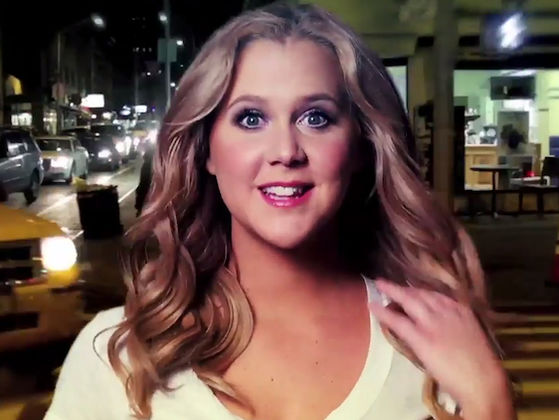
Facial Schumer!

Facial Schumer!

Which is good news because Amy Schumer is everywhere. In fact, it would be perfectly possible to watch nothing but Amy Schumer on TV these days. There’s her weekly Comedy Central show which seemingly plays throughout the night (uncensored) on the network, her guest appearances on every late-night talk show around, her work on The Bachelorette (which ABC executives want to expand into a regular thing), and trailer-length promos for her upcoming movie vehicle Trainwreck in the ad breaks. We’ve seen this kind of momentary ubiquity before, of course, but rarely with a performer of such substance. That may be because Schumer is able to do provocative and powerful material while making it sound like a bunch of harmless Seinfeldisms. She even makes light of the issue-based thrust of her comedy, passing off most sketches as a PSA-gone-wrong, while underlining just how culturally urgent her intervention into modern life is.

Last night, Schumer confronted the alleged crimes of Bill Cosby. The heavily corroborated sexual assault allegations against the veteran comic seem fair game for comedians now and indeed it may be easier for a white female comic to talk about this topic than, say, the black male one who broke the story. It was the level of discussion that was remarkable. Refusing to debate the existence of the crimes (for, as she points out, there is no debate to speak of, despite all legal disclaimers), the court-based sketch was instead a more sophisticated exploration of how nostalgia and cultural comfort food (both real and symbolic, since this was the man who advertised Jell-O pudding pops) interfere with our sense of justice and gender equality. This is really what we struggle to reconcile, not crime and perpetrator. But this isn’t the first time Schumer has put her finger on the problem.

She coolly and pleasantly took on perceptions of women ageing with Tina Fey and Patricia Arquette celebrating Julia Louis-Dreyfus’ ‘last fuckable day’ as decided by the media. She did an almost Sesame Street-esque scatological number on pop culture’s fetish for women’s sticky-out asses with a hip-hop music video set to the rhyme ‘milk, milk, lemonade, round the corner fudge is made’. Schumer was there to pinpoint the pathetic paradoxes of middle-class women pole dancing while condescending to women who work as strippers as well as female employees being obliged to be ‘cool with’ whatever their male counterparts want to do while being paid half the salary. Bravely she slayed a sacred cow of American comedy, the borderline-rapist late-night talk show host, and perversely she’s seemed to increase her appearances on these kinds of programmes as a result. She’s so popular that even her targets want to be seen with her.

Amy Schumer's parody of late-night...oh wait, that's just her on Letterman!

Amy Schumer’s parody of late-night…oh wait, that’s just her on Letterman!

It would be too easy to say that Amy Schumer’s success is down to the sugar-coating she puts on her social criticism, but it’s hard to deny that her self-aware baby-face mannerisms (see, the face again!) makes what she does much more palatable. But it’s not the cutesy-girl disguise that comedians like Sarah Silverman have used to deflect attention from their obscenity and controversy. It’s more direct than that, like having a conversation with someone who seems perfectly nice and you realise hours late they completely destroyed you. That’s what translates into mainstream entertainment so well. On The Bachelorette, she exposed the egregious insecurities of a male contestant without ever saying a cross word to him. She’s also not afraid of plumbing the lowest depths of entertainment, like dirty jokes and toilet humour, to get what she wants. The time of overkill will come, so enjoy her just killing it.
Beard To Death

Posted in American TV (General), American TV Shows, TV Acting, TV in a Word with tags , , , , , , , , , on April 1, 2015 by Tom Steward

It’s been a season of hashtag-friendly character deaths on The Walking Dead; #Bobecue, #BethDeath, #TyreecesPieces and #NoahFuture. But no loss is more tragic than #RickShave. Rick Grimes’ beard is one of the longest-surviving characters on the show and – even more than Karl who went through puberty – we have watched him grow on TV. He was the only character keeping Rick sane. After losing his beard, Rick seems incapable of ending a sentence without threatening someone’s life. So in lieu of a blog about the season finale, which for an episode set in one street with no major character deaths can be summed up by Nelson Muntz’s review of Naked Lunch (‘I can think of at least two things wrong with that title’), here’s a rundown of the best bearded moments in TV, starting with Rick:

Rick shaves his beard – The Walking Dead – Season 5

As a bearded man myself, I know well the eerie feeling of shaving and not recognizing the man underneath. Here The Walking Dead takes this to proportions of body horror. Afforded the luxuries of running water and private bathrooms, Rick can now part with the beard that has faithfully accompanied him through the zombie apocalypse. Unfortunately, he’s been hiding his moral decay behind that cake-catcher and is no longer the same person beneath. Rather than removing a mask, he’s revealing one. Without looking like Charles Manson, Rick starts to get really insecure about expressing his murderous insanity and massively overcompensates with blood-soaked demonstrations in public and recreating scenes from Romeo & Juliet with passing zombies.

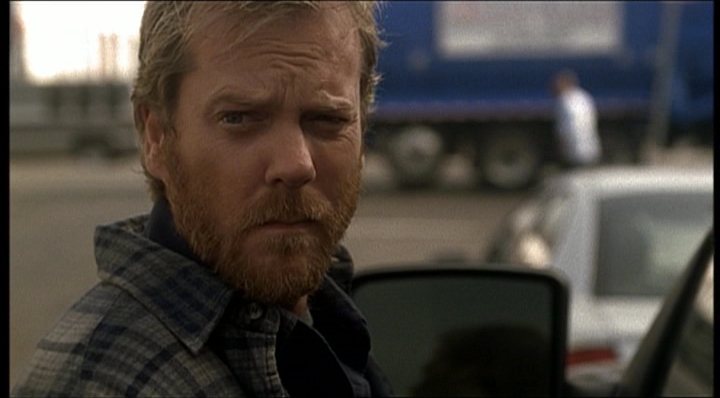
Jack is back with a beard – 24 – Seasons 2 and 6

Where's the shaving balm?!

Where’s the balm?!

When Jack cracks, he grows a beard. It’s our only visual clue that a man who tortures and fakes his death for a living has finally gone off the deep end. But it also acts as a protective seal – grouting if you will – for Jack’s madness. After Jack shaved his widow-grief beard at the beginning of Season 2, he immediately went about severing a paedophile’s head with a hacksaw. An hour after removing his Chinese-torture beard in Season 6, a nuclear bomb went off. Jack remaining clean-shaven after he faked his death was how we knew he wasn’t really serious about giving up work. Well, that and going into hiding mere miles from L.A.

It’s Harrison Ford in there – The Fugitive – Movie

Ok, it’s a movie but it’s based on a TV series but that should be justification enough for what remains one of the most incredible uses of facial hair in screen history. For a third of the movie, Harrison Ford and the star promise of action therein have been hiding behind what looks like mouldy Weetabix on the actor’s face. As convicted murderer Dr. Richard Kimble goes on the run, he stops off at a hospital to engage in a morning routine beloved of all medical practitioners; stealing water and breakfast from a dying old man. He adds milk to his Weetabix and it quickly dissolves, leaving Ford free to jump off viaducts and fight disabled people.

Strike beards – Late Show with David Letterman, Late Night with Conan O’Brien – 2007/8

Before...and way before!

Before…and way before!

During the writers’ strike of 2007-8, late-night chat show hosts David Letterman and Conan O’Brien came out in sympathy with their colleagues by growing ‘strike beards’ throughout the picket. Of course, this assumes that being on strike makes any difference to writers’ shaving routines, which is nonsense, and the sizeable increase in meta-comedy was already enough to demonstrate to viewers that there was a writers’ strike going on. While Conan mutated into a Seinfeld-era Bryan Cranston, Letterman slipped back through time posing first as a Civil War general and then Piltdown man along the way. Otherwise, it gave us a rare glimpse into what late-night television would look like following the apocalypse.

Hiatus beards – Everyone on a show where they have to be clean-shaven – Off-season

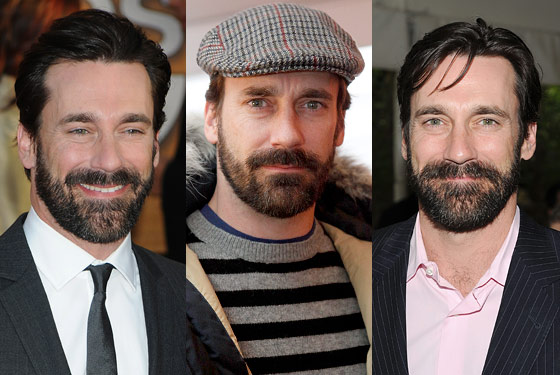
Bearded Hamm!

Bearded Hamm!

When you can’t scratch, that’s when you want to scratch. Well, apparently, if you’re an actor on a seasonal TV show, when your face is scratch-free all you’re thinking about is having something scratchy on your face. In those few months between filming seasons, TV actors choose to celebrate their temporary freedom from the yoke of shooting schedules by doing fuck-all with their faces. But it doesn’t make as much sense as it first seems. I’m sure the actors still go out during the day even though they’re not shooting, and wear clothes even though they don’t have to be in costume.

Justified And Ancient

Posted in American TV (General), American TV Shows, Reviews, TV Acting, TV History, Unsung Heroes with tags , , , , , , , , , on March 27, 2015 by Tom Steward

Currently my two favourite shows are both revivals of iconic literary characters and new twists on old TV genres. Justified features Deputy U.S. Marshal Raylan Givens from the Elmore Leonard novels Pronto and Riding the Rap as well as the short story ‘Fire in the Hole’ from which the FX series sprung. As Justified aired, Leonard wrote his final novel Raylan about the character. Elementary is based around scatological-saying sleuth Sherlock Holmes from Arthur Conan Doyle’s short stories and novellas, re-located and updated to present-day New York. Both are ostensibly police procedurals, a genre spanning the history of television, but they also resurrect some more archaic formats, such as the western and the mystery drama. These are shows that can appease snobs and slobs. Elementary goes under the radar while Justified will soon fall in the woods without sound. So why don’t people like them as much as I do?

I love those old black-and-white westerns!

I love those old black-and-white westerns!

I’m not saying that Justified and Elementary are in any way reviled, but neither are they exalted like the offerings of AMC, HBO and Showtime. Despite being on a network with a stellar reputation for original drama, Justified is continually overshadowed by series like Fargo and The Americans, both of which are unlikely to have existed without Justified blazing the trail. Elementary has the disadvantage of being on CBS rather than cable, but it is still far from being considered a giant of well-made, middle-of-the-road entertainment like The Good Wife. This is what they get for doing everything a complex, mature character-driven drama would without disturbing what makes good television. Surely that is more remarkable than trying to produce something worthy without regard to what works on TV (American Crime, I’m looking in your direction!) or even accomplishing great art on networks that are purpose-built to challenge mainstream television conventions.

Maybe they’re a victim of the times. Elementary comes in the wake of the BBC’s Sherlock, a contentless self-hyping publicity machine that has established itself as the worthier successor to the Sherlock Holmes name without any claims between opening and closing credits to that title. Justified began as an episodic procedural and grew into long-form storytelling, and may have looked to those who think good TV comes in serial boxes as unfashionable. Maybe they care too much about history. Justified is pulp fiction comedy in the noble tradition of The Rockford Files and Magnum P.I. and homage to the TV westerns (and disguised police westerns thereof) of the 1960s and 1970s, underlined by Timothy Olyphant borrowing Clint Eastwood’s legs for the project. Elementary doesn’t contemporize like Sherlock, or at least it doesn’t fetishize new technologies as a substitute for coherent storytelling, and at its best it’s Columbo in a brownstone.

I suppose what’s layers to some people is packaging to others. But what would it take to understand how holistic a television experience it is to watch Justified and Elementary? I’m watching TV now and in the past, a pleasurable formula alongside a gruelling psycho-drama, good television and the cherry-pickings of popular culture. I look to other TV shows that currently fascinate people like Scandal and Empire and the common denominators are melodrama and outrageous behaviour. Perhaps Justified and Elementary are too straight-faced and plausibly written to stand out in primetime. Maybe the success of Breaking Bad and Better Call Saul is not so much in the transformative character arcs (which both my faves provide in equal measure) but the Dickensian coincidences and lunacy of the protagonists. It’s a fine line between ambiguity and characters doing stupid things to create drama. Characters in these two shows are drawn not sketched.

'Look Holmes, the table mat that the script for Sherlock is written on!'

‘Look Holmes, the table mat that the script for Sherlock is written on!’

Because Justified and Elementary derive from a body of work outside of themselves, perhaps audiences assume they need prior knowledge of the characters and authors’ previous works in order to enjoy these series. Nothing could be further from the truth. Elementary eschews the fan-fiction qualities of Sherlock in favour of original content utilising the character dynamics of the literary cycle. You do not feel like you have to be a devoted reader of Conan Doyle nor worship the cult of Sherlock Holmes to appreciate Elementary. Yet it is an authentic introduction to the Holmes stories in a way that Sherlock refuses to be. Elmore Leonard is simply a point of departure for Justified and his characters and storylines have been reinterpreted, interwoven and extrapolated to the point where they are born anew (for copyright reasons just as much as artistic ones). Leonard is the midwife here not the overprotective mother.

Box Spin

Posted in American TV (General), American TV Shows, Reviews, TV Acting, TV channels, TV History with tags , , , , , , , , , on February 11, 2015 by Tom Steward

On Sunday and Monday, as part of a 2-night event (isn’t everything these days?) AMC debuted Better Call Saul, a spin-off from its corner-turning drama series Breaking Bad based around Walter White’s kitschily corrupt lawyer Saul Goodman. For reasons that can only lead to spoilers, Better Call Saul is a prequel. Despite the unabated popularity of Breaking Bad and the character, there’s still the risk that a spin-off would damage the reputation of the programme, especially one that promotes to protagonist a character who mainly functioned as much-needed comic relief in one of the bleakest shows on television. AMC needn’t have worried because, as with all good long-form television, Saul grew into a much more rounded character as Breaking Bad went on (lest we forget that Walt started out as a clown) and it’s this version of the character that Better Call Saul has inherited. But in TV the odds aren’t against them (or as against them) since there’s nothing to say a spin-off show won’t be as good as or even better than the original.

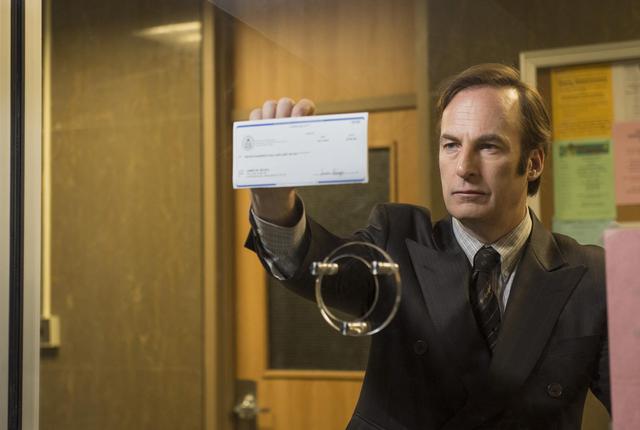
Check out Better Call Saul!

Check out Better Call Saul!

As Steve Coogan self-reflexively observes in The Trip to Italy there are only ever one or two movies anybody ever quotes when arguing that sequels can be better than the original. Of course, TV has its go-to canon of superior spin-offs (Frasier and anything produced by Norman Lear, who understood the value of maintaining a universe of characters decades before Marvel Studios cottoned on to the idea) but the medium has a pretty good hit rate when it comes to franchises. TV is so generically nebulous (modern quality TV even more so) that it barely matters when a spin-off is more or less comic than its predecessor. In today’s TV when series take so long to hit their stride, their spin-offs may even pick up a show when the quality’s still good and perhaps before they’ve had time to peak. This seems to be what’s happening with Better Call Saul which reaches heights in its first two episodes that it took Breaking Bad (despite its calculated seriality) three seasons to achieve.

But what we’ve seen of Better Call Saul isn’t free of the pitfalls of spin-offs either. Gratuitous cameos from former cast members are one of the biggest obstacles to spin-offs being able to fly solo, and this one has them in spades. The re-appearance of gnome-faced security man Mike in the unfamiliar role of a car park attendant is not at all the problem. We know that history will draw the two men together, so we expect to see him enter Saul’s life somehow. But running into loose-cannon drug dealer and Walt’s former distributor Tuco in a coincidence that would make Dickens blush (plus members of his gang who also appeared in Breaking Bad) really is a step too far. Although some of this is the problem of prequels. Prompted by the none-too-subtle nods of the writers, we’re constantly anticipating moments from Breaking Bad instead of enjoying what the new ones have to offer. Despite the pleasing evocation of middle-America at its most moribund in opening black-and-white images recalling Alexander Payne’s Nebraska (which star Bob Odenkirk also featured in), it may have been a mistake to start at the end.

Aside from these distractions, which may have been the result of the writers sensibly trying to break Bad fans in, we’re left with a series whose name may one day be called without company. It will never completely transcend Breaking Bad, especially with original creator Vince Gilligan at the helm here too, but I’m confident we’ll soon be able to consider them separately. It’s possible to foresee Better Call Saul doing for the portrayal of lawyers what Breaking Bad did for scientists. Like Walt, Saul is not just the grumpy maverick we’re used to when confronted with so-called ‘antiheros’; he’s a criminal with a deviant moral code. That said, while we always suspected that Walt was acting out of pure self-interest (which was confirmed by the finale), there’s the irony that the earlier incarnation of villain Saul comes across far more nobly and altruistically than ‘good-guy-turned-bad’ Walt ever did. We can still think about Walt without making Saul any less interesting.

One of these is not like the other.

One of these is not like the other.

If I’m jumping the gun here, it’s because TV history tells me there’s nothing to worry about. When a spin-off is terrible it’s usually because there’s nothing left in the tank. Breaking Bad’s by-the-numbers finale always felt like it was holding something back. It was. A sequel. A prequel. A new modern monster.

Watching TV With Britons Part 2: Same Same Same

Posted in Americans watching British TV, TV Acting, TV channels, TV Criticism, TV History, Watching TV with tags , , , , , , , , , on December 27, 2014 by Tom Steward

The second part of my exile’s guide to British television looks at the unwelcome familiarity of the programmes I watched during my recent visit to the UK, as any vain hope of something changing for the better while I was away is quickly crushed under my muddy, slushy Wellington boot:

The Royal Variety Performance (ITV):

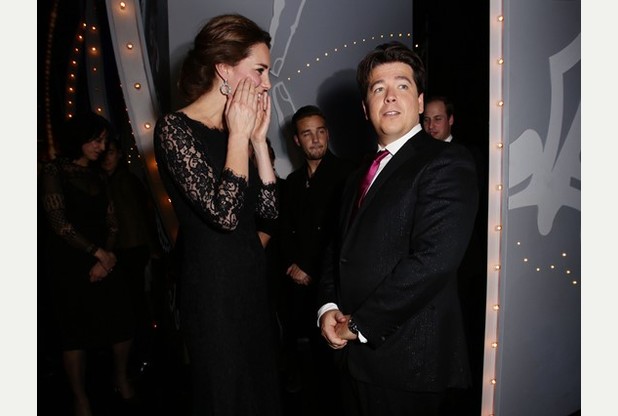
Who is the least talented person in this picture?

Who is the least talented person in this picture?

As both variety (our version of vaudeville) and royalty are anachronisms in British popular culture, this annual broadcast of theatrical entertainment staged in front of members of the monarchy seems to exist for nostalgia alone. Tellingly, there’s no variety on offer but merely alternating stand-ups and singers. The addition of William and Kate – presumably as a reward for breeding – meant that the event was no longer attended by a couple famous for their dislike of showbusiness but they still couldn’t help appearing like a benign Statler & Waldorf. It’s hard to believe that host – and redefinition of the term ‘comedian’ – Michael Mcintyre remains popular in Britain but given the programme’s commitment to the regression of our culture, artist and medium have never been better matched.

The Railway: First Great Western (Channel 5):

Public transport documentaries have been the saving grace of British reality television in the past few years, but the UK’s TV network-in-the-attic Channel 5 has, by focusing on this year’s closure of the Dawlish rail line due to storms and flooding, turned it into weather porn – one of the less commendable reality genres to emerge on British TV after the advent of climate change! Still, it was interesting to see that Home Secretary Theresa May is as inept at forming sentences as she is at politics.

Black Mirror: White Christmas (Channel 4)

A Christmas Hamm!

A Christmas Hamm!

British TV critic and screenwriter Charlie Brooker exists in a categorical limbo between Clive James and Rod Serling, alternating parodic weekly TV review shows with anthology sci-fi horror. This festive (in genre alone!) edition of techno-fear playhouse Black Mirror was, in keeping with the British Christmas special, more conventional than we expect from the series. The formulaic storytelling was partly a satisfying return to the Christmas TV horror plays of old but also revived some rather retrograde attitudes to gender and race that I’m sure we’d all have rather left in the TV of the 70s. A surprise Christmas gift came in the form of an outstanding star turn by Jon Hamm, leading the effort to turn British migrant labour in American TV into a hostage exchange (P.S. You keep James Nesbitt, we’ll have Steve Buscemi!), which, as Mad Men comes to a close, more than proved – at least to doubting Thomases like me – that he could credibly be something other than Don Draper.

It Was Alright in the 70s (Channel 4)

Several people told me I should watch this programme, which runs clips of contemporaneously controversial British TV from the 1970s alongside commentary from the people involved as well as aghast modern-day viewers. The clips themselves have the requisite shock and entertainment value, but I was uneasy with the tone and project of this documentary. It seemed to suggest that the bigotry and exploitation that appeared in 1970s television was somehow a thing of the past and that all the problems of representation had subsequently been resolved, whereas I saw plenty of examples, if perhaps more latent than pointed, of prejudice and cruelty in the TV I watched while in the UK. It’s also a very selective history of 1970s television in the UK which continually declines to mention how experimental, challenging and innovative a great deal of TV was in that era, perhaps more than now, and certainly with more frequency. When this is acknowledged, it’s usually passed off as the inconsequential ramblings of a cultural historian in the editing, and only ever associated with content that would be hard to defend on a representational level, such as The Goodies’ (literally!) savage attack on apartheid involving racial slurs and minstrelry. But perhaps the most disappointing aspect of the programme is its lack of originality. It’s a cursory spin on a clip-based nostalgia format that’s been around since the turn of the millennium, and almost matches the exploitative tendencies of the TV it lambasts by offering recent revelations about the sex crimes of 70s British celebrities as a unique selling point.

Autopsy: The Last Days of Elvis Presley (Channel 5)

briton 6

Dr Richard Shepherd, Graduate of The University of Stating The Bleeding Obvious!

Like asking which bullet killed a person shot 24 times. Worth seeing for the Elvis curl on the lips of the actor portraying Presley whilst dying on the toilet.