Archive for the TV Acting Category

Special FX

Posted in American TV (General), American TV Shows, Reviews, TV Acting, TV channels, TV Culture, TV History, TV News, Unsung Heroes with tags , , , , , , , , , on April 15, 2014 by Tom Steward

Tonight is the much-anticipated series premiere of FX’s Fargo, an adaptation-cum-remake of The Coen Brothers’ 1996 Minnesota-based thriller. In any other context, audiences and critics would balk at the very thought of a reboot (or ‘re-imagining’ as producers of shit remakes are want to say) of one of the sibling directors’ most perfect movies. But this is FX we’re talking about; a network which has consistently made the finest television in the US since it began producing original drama in the early 2000s. The virulent hype and promotion that preceded the launch of Fargo is unusual for the network, however. Over the past decade, FX series have been continually overshadowed by the original drama programming of subscription cable alternatives HBO and Showtime as well as basic cable competitors AMC. Consequently, many FX programmes have gone under the radar of critics and, crucially, viewers. But is this all about to change?
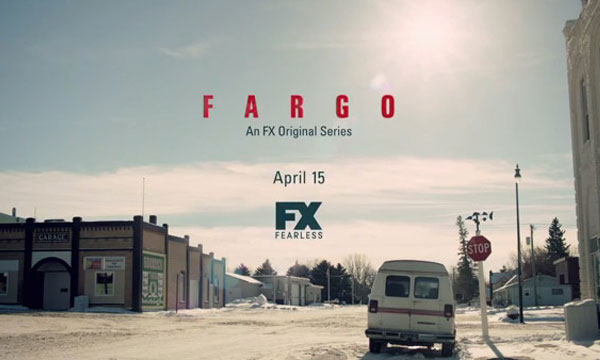
Not the 10th in the Fargo movie franchise!

Not the 10th in the Fargo movie franchise!

It was a fairly ignominious start for FX when it launched in 1994. Fox’s cable channel had limited availability nationally and mostly functioned as a dumping ground for re-runs of retro TV broken up with some informal and interactive live formats that were already dated by the mid-1990s. The late ‘90s re-brand brought newer re-runs and more movies but no significant advances in original programming. The network’s targeting of a young male demographic was as short-sighted as any of those millennial media moves to mainstream machismo (pardon the bitter alliteration, or biteration, oh just ignore me…). Fox’s decision in the early 2000s to make FX the destination of its edgiest and most innovative drama was the network’s salvation. Chief among them was The Shield, a series that punctured the heroic lore of cop shows with its pulsatingly visceral depiction of a venal, corrupt and amoral police force mired in blood.

The Shield was the cop show equivalent of The Sopranos – and just as televisually breakthrough – but comparisons with the HBO gangster series did the programme no favours. Both series ran concurrently and ended at the same time, with The Sopranos taking all the plaudits from its less self-consciously artful (but no less magnificent) counterpart. The Shield couldn’t get even catch a break in the cop show stakes. Almost as soon as the first season ended, HBO premiered The Wire, a police drama that depicted urban crime with such breath-taking detail and complexity it beat The Shield (and any other cop show in the business) for realism hands-down every time. The Shield was certainly more melodramatic and stylised than The Wire but it’s an unfair comparison that severely under-estimates how much the former did to cultivate the art of anti-hero television (and it had a better final season so…nah!).

The Sopranos of Cop Shows

The Sopranos of Cop Shows

FX continued throughout the noughties making original drama that took Fox’s ‘90s legacy of groundbreaking genre series into the 21st Century. Like NYPD Blue and The X-Files before it, shows like cosmetic surgery dramedy Nip/Tuck and anti-courtroom drama Damages pushed boundaries on representations of sex, violence and obscenity while overturning TV genre conventions. But it seemed there was always something around in cable television to steal the spotlight. Nip/Tuck was invariably seen as the bastard son of HBO’s mortician family drama Six Feet Under. Damages, created by Sopranos alumni the Kessler brothers, had the misfortune of going up against a show created by another former Soprano; Matthew Weiner’s Mad Men. In a sense, FX’s accomplishments are greater than those of HBO and AMC. The network works against content restrictions that subscription cable doesn’t have and the violent maturity which characterises AMC’s most celebrated programmes wouldn’t be possible without FX’s trailblazing.

I’ve only mentioned drama so far but FX’s record on comedy is also exemplary. From the poignant, beautiful nothingness of Louis C.K.’s signature sitcom Louie to W. Kumau Bell’s much-needed fuck-you to Fox’s right-wing politics Totally Biased, FX’s comedy has been as risky and powerful as its drama. FX has only been a major player in TV comedy for a few years but it’s significant as the network has been instrumental in straddling the gap between comedy and drama in recent American quality television. FX’s crowning glory, though, came in 2010 with Justified, an adaptation-cum-continuation of Elmore Leonard’s short story ‘Fire in the Hole’. A masterpiece from the first scene to its most recent season finale, this federal-western (or ‘festern’-ignore again!) bridged the chasm between the old episodic action series and a new type of arcy, complex and character-driven TV storytelling, What’s more it’s flawlessly cast, acted, directed and written.
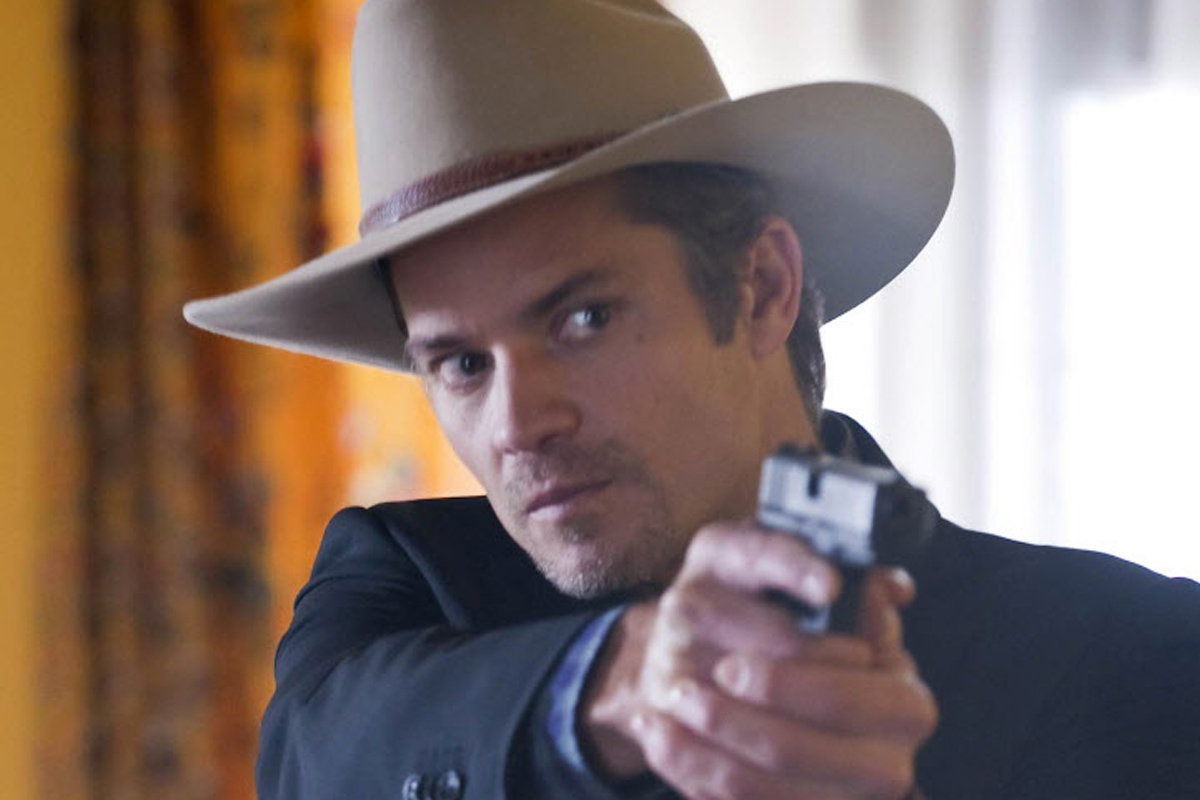
The hype is Justified!

The hype is Justified!

So now you get an idea of why people aren’t up in arms about FX re-making Fargo. The network’s drama and comedy output is in a class of its own and its finest hour (or several finest hours) was an adaptation of an American classic. However, this acclaimed and high-profile source material – not to mention the calibre of star involved in the series – is just what the network needs to bring in a wider viewership, and perhaps it will rub off on some of the network’s other undiscovered gems, like the currently airing 80s-retro spy drama The Americans. Louie is just about to return after a two-year hiatus during which the popularity of its star, writer, director (and editor) grew exponentially as a result of greater national exposure. This should be enough to keep comedy fans with FX as its new comedy migrates to recently-launched sister channel FXX.

Reunited…and it feels so dud!

Posted in American TV (General), American TV Shows, Internet TV, TV Acting, TV Culture, TV History, Watching TV with tags , , , , , , , , on March 18, 2014 by Tom Steward

Last week, comedy legend Bill Cosby confirmed publicly that there would be no reunion for his hit 80s family sitcom The Cosby Show. This was a relief since the franchise had already been stretched thinner than Tyler Perry on Slimfast with a deluge of spin-offs and sequels and yet still remains dear to audience’s hearts. But where is the demand for TV reunion shows coming from? There’s never been more old TV available to viewers. A large chunk of cable is devoted to re-running classic programmes and internet TV services archive a range of older series for instant access. This reminiscence fuels the public’s nostalgia and brings archaic programmes back into cultural circulation, which in turn makes them ripe for reunion rumours. Classic shows have become so popular on some channels and services that they are now a part of their brand identity and company executives try to capitalise on this by creating new episodes under their banner. There’s also never been more ways to make and watch television. TV can now be made solely for internet distribution, or pass freely between broadcast TV and online video. This gives programme-makers a wider range of options for content and delivery, which makes reunions more attractive since it doesn’t necessarily mean going back into full-scale production any more. It also makes the reunion less official and thereby received more generously, with fans enjoying it as an indulgent treat rather than criticising it for not standing up to the rest of the canon.

Bill Cosby issues a threat to any comedians considering a TV reunion.

Bill Cosby issues a threat to any comedians considering a TV reunion.

But is a TV reunion ever a good idea? Some programmes are so completely synonymous with a moment in time that to attempt to revive them in any other era is absurd and the effect like an out-of-body experience. Often, so much time has elapsed between finale and reunion that cast and crew cannot – whether due to age, health or simply lost touch – re-capture that which viewers loved so much. Whether or not fans and former viewers are willing to buy into a reunion can come down to the motivations behind it. If a reunion is a genuine attempt to create new fiction based around familiar characters and situations because of interest in continuing the story, then audiences tend to give it a (finite) chance. If the motivations are purely monetary and a cynical attempt to exploit a commodity by prolonging it unnaturally, then how can its devotees feel anything but used? Larry David’s semi-autobiographical sitcom Curb your Enthusiasm faced the problem of reunions head-on. In the show, the cast and crew of celebrated sitcom Seinfeld reject the prospect of 10-year anniversary show on the basis of how pathetic and desperate it would make them all look. Larry selfishly convinces them to do it so he can cast his ex-wife and win her back, and we see parts of the reunion episode in the season finale. David gave Seinfeld fans what they wanted without desecrating their favourite show while demonstrating he was well-aware of the dangers of reuniting.

Just don’t ask about the finale…

Seinfeld staged another reunion this year with a trademark dinerlogue between protagonists Jerry Seinfeld and George Costanza shown on internet TV service Crackle as a video short for Seinfeld’s Comedians in Cars Getting Coffee and on Fox at the Superbowl half-time. Again, the makers of Seinfeld made a big deal of reuniting but had deniability if it didn’t take, a sage move judging by the decidedly mixed reaction. Internet TV reunions have had fairly ambivalent receptions in general, not least Netflix’s revival of cult sitcom Arrested Development. Coming seven years after the series finale, this was a reunion sought after by fans following the show’s abrupt cancellation after only three seasons. Virtually all the cast returned and the fifteen-part series played on longstanding themes, storylines and characterisations with a new ‘story-maze’ concept complimenting Netflix’s instant delivery of all episodes. The innovative storytelling was necessary, but the rest felt too much like fan-fiction, a grotesque re-imagining of the original deviating from and souring its memory in unpleasant ways. It brought critical derision on the stars, creator Mitchell Hurwitz and Netflix executives, the latter appearing to be cashing in more than creating. If there’s a lesson here, it’s that people want reunions more than they ever want to see them happen. That’s why commercials are a happy medium for reuniting TV shows. The Danone Full House cast reunion and Radio Shack tribute to 80s TV shows bring programmes back and then move on to the next – hopefully new – show.

Oscar The Couch

Posted in American TV (General), American TV Shows, Internet TV, TV Acting, TV Criticism, Watching TV with tags , , , , , , , , , on March 11, 2014 by Tom Steward

Last Sunday was the first time I’ve watched the Academy Awards ceremony on TV live and continuously from start to finish. In Britain, the time difference means that if you want to watch the Oscars you have to stay up all night, which sounds fun but in reality resembles an inventive form of torture designed to give the re-opening of Gitmo some Hollywood pizzazz. In recent years, the ceremony hasn’t even been broadcast live on any of the UK’s free-to-air channels but rather on subscription-only cable movie channels as if it were an experimental art film where people open envelopes for five hours.

This year’s Oscars were so chocked full of embarrassing gaffes and faux pas that I was able to see the value of watching the ceremony as it went out. Not that the cringing diminishes upon repeat viewing after the fact, far from it in the case of John Travolta, whose creation of an entirely new name for singer Idina Menzel was prefixed with ‘one and only…’. But there’s something uniquely thrilling about seeing these disasters as they unfold in front of the world in the knowledge that they cannot be taken back or censored (even though anything truly provocative would be edited out with delayed transmission).

But this year TV wasn’t just the relay of the Oscars, it was part of it. Host Ellen DeGeneres is a creature born of television, with her celebrity coming entirely from talk shows and sitcoms, and Best Actor winner Matthew McConaughey (not a typo, time travellers from the 1990s!) was awarded as much for his part in the celebrated HBO cop series True Detective than his underwhelming (in every sense of the word) performance in The Dallas Buyer’s Club. TV’s assured standing in America both culturally and artistically seems to be getting harder and harder for the Academy of Motion Pictures to ignore each year.

‘I’d like to thank television’

2014 also marked the year that the Oscars took note of the long-standing links between TV and the internet. Of course the web has been reporting news from the Oscars as it happens for decades now, but the Academy’s publicists are finally coming to realise that this is happening in tandem with the live TV coverage and not necessarily in a vacuum from it. This was the first year that Oscars’ coverage was offered as a live internet stream on the ABC website, a long overdue acknowledgement of how TV can be watched without a TV. DeGeneres’ Twitter-breaking celebrity selfie perfectly complimented the live-tweeting of the TV broadcast.

Even with the slightly more sociable option of live-pausing – for those that have a cable service – the five to six hours of television that the Oscars eats into can still be a slog if you’re going all the way to the Governor’s Ball. Television is medium of repetition to be sure, but even it cannot contain the mechanical monotony of the ceremony and the grinding formula of its acceptance speeches. The land of series marathons and genre channels is still not able to cope with the conformity that the Oscars produce. TV’s unending transmission is about the only way a bloated ceremony like the Oscars could be brought to the world but they’re still pushing at the limits of what even the most entrenched TV viewer can handle.

Oscars Admits Internet Exists!

TV gets its money’s worth either side of the ceremony as well. Hours of broadcast prior to the official start time of the Oscars are taken up with reporters transmitting live from the red carpet-lined entrance as stars rotate their bodies more slowly than a Virgin Trains toilet door and answer existential questions like ‘who are you wearing?’. Following the ceremony, various incarnations of Ryan Seacrest try to get the clearly traumatised Oscar guests to talk about what they witnessed before they repress it forever. Then there are the Oscar-themed talk shows and post-show analysis programmes. It’s past midnight before anyone in TV admits there is a world outside the Dolby Theatre. It’s surprising that politicians aren’t block-booking venues for press conferences on embarrassing indiscretions all day on Oscar Sunday.

Despite these torments, I’d watch the whole thing through again next year. It certainly beats trying to piece together fragments of information about what happened from rolling news stations the next day, which tends to take the same amount of time as the live coverage anyway. And now that TV is playing a far bigger role in the Oscars than ever before, it’s the obvious place to start.

The Twelve Days of Doctor Who: Days 7-12

Posted in Americans watching British TV, British Shows on American TV, TV Acting, TV History, TV in a Word, Watching TV with tags , , , , , , , , , , , , , , on November 26, 2013 by Tom Steward

‘We’ve been watching Doctor Who for weeks. We must be out of the 80s by now’. I don’t have the heart to tell G that we’ve been watching Doctor Who for six days and that we still have one story from the 1980s to go. Doctor Who used to be notorious for filling time with extended re-caps from the previous episode so I feel justified in doing the same for this two-part blog on my experience watching stories from each Doctor in turn with my American wife in preparation for the 50th anniversary special last Saturday. So far we’ve had cavemen with underwear, cyber-mayans, poachers from space, monsters playing Space Invaders and Dig-Dug, and a TV maths teacher. Like good time-travellers and bad time-travel writers, this time round we’re starting at the end with an episode from 1989 as Doctor Who was on the verge of cancellation and about to go stateside.

‘The Curse of Fenric’ (G’s title: ‘Mr. Bean Goes to War’):

Just a minute…isn’t that Nicholas Parsons?

‘This is much better than the shit we’ve just been watching’, says G as British national treasure Nicholas Parsons is devoured by vampires of the sea. ‘Yeah, it got good again and then they cancelled it’ I offer in the way of no explanation. ‘So many deep quotes in this…“You must take the baby. Now you are the mother of the baby. Now you must drop the baby in the water.” Incidentally, none of these quotes actually appear in the story.

‘Doctor Who: The Movie’ (G’s title: ‘Star Wars UK’)

If you look closely you can see a shark jumping over them.

As the credits roll, G sings in her best John Williams: ‘Kind of like Star Wars/But not really the same’. The TARDIS lands in San Francisco’s Chinatown. ‘People didn’t really think that was China, did they?’. ‘I don’t know. They’re your people’. I’m enjoying passing the buck on Doctor Who’s shortcomings for the first time. ‘This doesn’t feel like Doctor Who at all. It’s more like Adventures in Babysitting’. Then the shark-jumping kiss. ‘I don’t like this. I don’t this at all’. I wanted to kiss her.

‘The Unquiet Dead’/‘Father’s Day’ (G’s titles: ‘The Walking Welsh’/‘Your Parents’ Wedding’):

Walkers in Wales!

‘Why are they so sexual tensiony?’ G asks after witnessing a few seconds of the Doctor and Rose together. ‘That’s what the kiss led to’ I say. ‘It doesn’t work’ G says confidently. Apparently even nine days of Doctor Who is enough to make you realise that the Doctor and his companion being a couple is a bad idea. ‘I don’t like this Doctor. He’s too Jean-Claude van Damme’. I’m sure that’s what renowned stage and screen actor Christopher Eccleston was going for. But you know what? He is a bit Steven Seagal in the part.

‘An Adventure in Space and Time’ (G’s title ‘Poor Father Christmas’):

The decline of William Hartnell…my fault, apparently.

Ok so this is not strictly Doctor Who but it’s a ninety-minute drama about the show and that should test any non-fan’s patience. At first there’s too many real and fictional worlds colliding for G to keep up. G: ‘How old is William Hartnell now?’. Me: ‘That’s not him. That’s an actor playing him’. G: ‘This is all made up, right?’. Me: ‘No it all happened, just like this’. When she sees David Bradley as Hartnell crying into his mantelpiece, it all gets too much. ‘I can’t watch old people being upset’. Then it becomes my fault. ‘How can he not be your favourite?’ (he’s my second). ‘He’s my favourite’ G asserts. ‘He’s the only one with real mystery’.

‘The Christmas Invasion’ (G’s title: ‘The Fall of Scary Santa Face’):

‘Stop being hussys…both of you!’

‘So they went leather jacket man, quirky and then another quirky? Where’s the variety?’. I wonder how G will react tomorrow with an episode in which quirky and quirky quirk off. ‘She’s such a hussy’ G offers ambiguously. ‘Who? Rose or her mother?’ I ask. ‘Same thing’.

‘Day of the Doctor’ (G’s title: ‘Return of the TV’):

Will Ferrell interrupts Doctor Who simulcast!

Well, it all paid off. G laughs knowingly at every in-joke (especially the one about the ‘big round things’ on the wall of the TARDIS)  and loves every minute of this nostalgic wallow in the series’ past. And then Tom Baker returns to Doctor Who 32 years after leaving the show. ‘Is that Will Ferrell?’ G asks. Maybe we’re not quite there yet.

Well, there you have it. 50 years of Doctor Who in twelve days. The first ten years just flew by, a decade dragged its feet, another took a holiday and after a few wrong turns we ended up where we started. Home.

Home.

The Twelve Days of Doctor Who: Days 1-6

Posted in Americans watching British TV, British Shows on American TV, Reviews, TV Acting, TV History, Watching TV with tags , , , , , , , , , on November 19, 2013 by Tom Steward

G and I are spending the twelve days before the 50th anniversary of Doctor Who watching stories from each Doctor in turn. I know what you’re thinking but it was actually her idea. I was being unusually gracious about the amount of time Gossip Girl and Revenge were on our TV and G smelt a rat. ‘Just you wait’, I said. ‘Why?’ said G. ‘Oh you want to watch old Doctor Who. Why don’t we do the twelve days of Doctor Who?’. I was thinking eleven – one for each Doctor – but I wasn’t going to protest. When Day 1 came I said to G ‘Are you ready for “An Unearthly Child”?. She said yes while rolling her eyes. ‘Why did you roll your eyes?’ I asked. ‘Oh you saw that?’ she replied. It was going to be a long twelve days. If this all sounds a bit familiar, it’s probably because the premise is unnervingly similar to the blog Adventures with the Wife in Space in which Neil Perryman recounts watching every classic Doctor Who story with wife Sue. I don’t wish to step on the toes of this superb blog – of which I was an avid reader – but instead offer a complimentary transatlantic version.


‘An Unearthly Child’ (G’s title: ‘Curiosity killed the Science Teacher’):

Welcome to The Price is Right!

G was taken aback at how much the original supporting cast of William Russell, Barbara Wright and Carole Ann Ford looked like contemporary TV actors. And then how much the inside of the TARDIS looked like a game show set. ‘Welcome to The Price is Right!’ she would bellow whenever the doors eased open. I’ve never seen anyone – including myself – as engrossed in the cave people story as G was, and the spell was only broken when she saw that the cavemen had underwear on.


‘Tomb of the Cybermen’ (G’s title: ‘Martin Short’s Dad in Space’):

The Mayans are coming!

Are you ready for ‘Tomb of the Cybermen’?, I shouted across the house. ‘Yes’ G shouted back. ‘Wait, I don’t know what that means’. G thinks that even the set travels back in time. ‘Wow, this looks even older that the last one. Are you sure that was before this?’. As the Doctor and his companions arrive at the tomb, G thinks she’s figured out who’s in there. ‘It’s the Mayans. Look at the pictures on the wall’. The Doctor’s witty undercutting of Krieg’s plans for world domination makes G happy: ‘After all, he’s still British’.


‘Spearhead from Space’ (G’s title: ‘Freaky Babies Take London’):

So what’s the threat?

‘He’s cool. I like his style’. G knows Jon Pertwee is my favourite Doctor but she seems genuinely charmed by him. The accents of the yokels are harder for her to get her head around. ‘I have no idea what he just said’ G admits as the poacher mumbles west country gibberish into his rabbit sack. The Autons don’t have much effect on her. ‘So what’s the threat?’ she asks whenever they’re on screen.


‘The Robots of Death’ (G’s title: ‘What’s Their Problem?):

I need my video console!

‘What do you think of Tom Baker?, I asked G, expecting the usual glowing praise. ‘There’s something I really don’t like about him. I don’t know why.’ Ok, that’s a new one. ‘The monsters are great, though. Are they playing Space Invaders?’.


‘The Caves of Androzani’ (G’s title: ‘Revenge of S & M Face’):

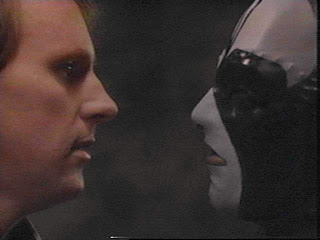
The Phantom of the Opera is here!

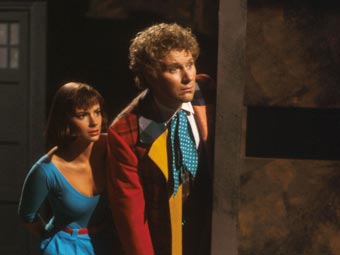
This takes us two days to get through. ‘It’s too 80s. I can tell when it’s made. With Matt Smith and the older Doctors, you can’t tell when they’re supposed to be from. It’s more magical that way’. If G thinks Peter Davison is too 80s, wait till she sees Colin Baker! We get our first glimpse of Peri. ‘Is that supposed to be an American?’, G asks. ‘The Phantom of the Opera is here’ she sings as the comparison becomes too vivid to deny. ‘Why is S & M face playing Dig-Dug? (I checked and the game came out that very year). G also sees her first regeneration: ‘It’s weird how they just sneak that in at the end of the episode’.


‘Vengeance on Varos’ (G’s title: ‘Willy Wonka and the Torture Factory’):

‘She needs a bra and I need a mirror’

‘He looks like a TV math teacher. I keep expecting him to sing “What is 4/Multiplied by 2?” and then pull an 8 out of his jacket’. Sil the slug-like tycoon appears on screen. ‘He’s freaking me out. He looks like a turd.’ The thought-provoking stuff gets through. ‘I wonder if we’ll go back to a society like that’ G asks seconds before observing ‘They need to get Peri a better bra’. ‘The tendrils! They’re poisoned…’, the Doctor explains. ‘…like the ones I just hit with my back’ G adds.


The Twelve Days of Doctor Who continues next week – or in Doctor Who cliffhangerese ‘Doctor! Noooooooooooo!!!!!!…’.