Archive for the TV advertising Category

Coen Artists

Posted in American TV (General), American TV Shows, Behind-The-Scenes, TV Acting, TV advertising, TV channels, TV Criticism, TV News with tags , , , , , , , on November 30, 2015 by Tom Steward

As someone who once publicly stated that hiring Steven Moffat as showrunner of Doctor Who was a good move by the BBC, I’m not used to my predictions about television coming to anything. So I was even more surprised to be vindicated about two separate predictions I’ve made on this blog in recent weeks. However, the ways in which they both came to fruition was enough was enough to make me think I should be more careful in what I wish for. As with the posts where these predictions were first made, this one comes with a lot of spoilers:

No guts, no glory

No guts, no glory

After weeks of waiting, on Sunday’s episode of The Walking Dead we finally found out what had happened to Glenn. Which was nothing. Despite it looking as if his guts were being eaten by a herd of walkers the last time we saw him, it was in fact Nicholas whose insides were being devoured, giving Glenn time and space to hide under a dumpster until the coast was clear. Like all those who appreciate Steven Yeun’s performance in the show, I’m relieved that he’s still around and believed he would be. But, unlike many, I’m not convinced this was the masterstroke of storytelling it’s currently being spun as, largely by people involved in the series. In fact, I think it’s cheap. Teasing the death of a beloved character for a month exploited the goodwill of fans towards the show for the sake of publicity and added nothing dramatically to it.

Post-show discussion program Talking Dead (boy, Chris Hardwick must really think I have it in for him!) did its usual whitewashing of the drama’s shortcomings, re-imagining Glenn’s death hoax as some kind of statement about the mindset of characters in the world and aligning the audience with it. Frankly, it smelled worse than Daryl surely does. I know the entire remit of Talking Dead is to make every artistic decision taken in The Walking Dead seem purely creative and exponentially meaningful – and feel the collective silence if like Kevin Smith you dare to critique some of the choices made – but this isn’t an artistic decision. At least it’s no more artistic than publicity stunts like ‘Who Shot J.R.?’ or whatever they do on Scandal each week to keep people coming back to that steaming pile of crap. It amounts to fixing something you purposefully broke just for the inevitable attention.

Last week’s episode of Fargo could’ve been dubbed a musical tribute to The Coen Brothers. While the FX series is always prone to the borrowing of visual imagery from its cinematic forbearer, more recently it has been honoring its muses through the aural. In the first season, there was an effort to connect Fargo to the timeline of the original movie, but in the second what seems more important is a – specifically musical – link to the Coen universe. Versions of ‘Man of Constant Sorrow’ and ‘O Death’ from O Brother Where Art Thou and ‘I Just Dropped In (To See What Condition My Condition Was In)’ from The Big Lebowski litter the soundtrack. At points, characters paraphrase or precis lines from Coen Brothers movies, as if quotations belong to the lexicon. It’s about half as satisfying as it sounds, and yet another distraction in a show full of them.

I was writing about Fargo in reference to playing with our understanding of what is TV and what is cinema. I seem to have given the series far too much credit since it is evidently more interested in propagating the cult of the auteur, something not even The Coen Brothers are that concerned about doing with their movies. It recalls the worst excesses of Quentin Tarantino, when the director decides to reference his own movies rather than other people’s. Or how Steven Moffat (because there’s only a few people I can ever write about) would remind audiences that all his garbage comes from the same bin. It’s a more style-conscious season, as anthology demands change, and I suppose intertextuality has got more on-the-nose as a result. But there’s a sense that the story doesn’t really stretch to ten episodes this time, and this – like shootouts – may be a way of prevaricating.
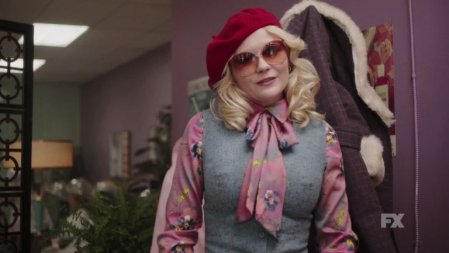
A style-conscious season of 'Fargo'.

A style-conscious season of ‘Fargo’.

I saw it coming and now I feel responsible. Whether it’s the survival of Glenn or the cinematic engagement of Fargo, it happened more or less as I expected it to. But perhaps that’s the problem. I think I saw through what these programs were doing, rather than seeing them.


The Ch-Ching Crowd

Posted in American TV (General), American TV Shows, TV Acting, TV advertising, TV Culture, TV News with tags , , , , on November 16, 2015 by Tom Steward

Last week, Joel Hodgson launched a Kickstarter campaign to revive Mystery Science Theater 3000 with a characteristically sarcastic video in which he is heckled by Tom Servo and Crow T. Robot over his appeal for money to make a show famous for its low budget. Crowdfunding compliments a cult program like this, but it’s becoming a reality for all kinds of television. As the way we watch TV changes, so does the way that it’s financed. In fact, I’m currently involved as an actor in a TV project that needs a crowdfunding campaign before it can get off the ground.

It's a mystery...why they need money!

It’s a mystery…why they need money!

I’m talking about The Cast Members, a sitcom in the great American tradition of the comic ensemble about the employees of a cinema/theatre (delete depending on whether you’re saying it rightly or wrongly), created by Aaron David Roberts. Even though the concept is so good you can’t believe it hasn’t been done before, the scripts are as tight as those trousers David Bowie wore in Labyrinth, and it features some of the best onscreen and stage talent in San Diego – and in L.A., for that matter – without the backing of a production company or network (in whatever broadcast or digital form they exist now), it’s the audience that has to pay upfront to make the program they want to see. A crowdfunding campaign will start next year and my work for the project so far has been to shoot a promotional video that takes the form of a condensed pilot.

Crowdfunding is common enough when it comes to reviving a show that’s been cancelled by a network, as the Kickstarter campaign that brought Veronica Mars back to our screens as a feature film illustrates. It’s a relatively new concept for launching TV shows, however. Nat Geo’s global pub crawl Chug is considered the first Kickstarter-funded series and that starting airing in 2014. In most crowdfunding campaigns, success is determined as much by the incentives for donating as the product. These ‘perks’ – as they are known – range from bonus material (a callback to the DVD extra and Easter Eggs that made us pay twice to watch TV the first time round) to branded merchandise only available to donors, and usually only by donating a specific amount. It’s easy to see how this form of financing would work in the current TV climate, which is driven largely by multi-platform intertextuality and consumption.

Many of the series funded by Kickstarter campaigns are intended to stream on the web rather than ever make it to air, although the distinction between the two is closing as some of the most highly-regarded TV of our time now begins online and stays there. Chug eventually found a major cable network, despite the fact that it was their collective ambivalence that compelled producers to go the crowdfunding route in the first place, and can’t be seen as representative. The Veronica Mars feature film was streamed on Amazon Instant Video but I doubt whether the decision to add the film to their stores posed much of a quandary for the online shopping giant given that it was a known quantity and that production had already been paid for. I’m sure it’s not normal to exceed funding goals in the way the campaigns for Veronica Mars and Chug did either.

There’s usually some kind of trailer for the project requiring funding to launch the campaign. The Kickstarter for Veronica Mars assembled actors from the series and had them perform their launch video in the style of the teen noir. You might also say that the three seasons of the show were the trailers for the feature remake. For The Cast Members, Aaron decided on a mini-episode, which made the most sense since the actors had already been cast and storylines devised for the first season. It also meant that the Kickstarter could act as a shop window for the series and its stellar cast, as well as a fiscal means to an end. Mounting a pre-pilot also suggests that the ‘starter’ bit of the campaign website’s name is misleading, as projects need to be in an advanced stage, both conceptually and in finances, to even launch a campaign at all.

By all accounts, the Kickstarter to revive Mystery Science Theater 3000 is doing well, as did the one for Veronica Mars, while Chug demonstrated that it’s possible to get a brand new show on the air using crowdfunding. It’s still a high-risk, high-reward strategy that may bankrupt you before launch.

The Balking Dead

Posted in American TV (General), American TV Shows, Behind-The-Scenes, TV advertising, TV channels, TV Sports with tags , , , , , on October 26, 2015 by Tom Steward

I didn’t blog yesterday as usual because I was at my first (American) football (not soccer/football) game, which coincidentally took up the whole day due to stoppages for television. I’m glad though because now I get to talk about something that happened on TV last night. WARNING: DO NOT READ THIS BLOG POST IF YOU ARE NOT UP TO DATE WITH THE WALKING DEAD OR ARE PLANNING ON BINGEING THE SERIES IN THE FUTURE (UNLESS YOU TEND TO FORGET TV DRAMA CHARACTERS AS IF THEY WERE CONTESTANTS ON THE BACHELOR).

As spoiler-free a picture as I could find...

As spoiler-free a picture as I could find…

On Sunday’s The Walking Dead, everyone’s favorite post-apocalyptic pizza delivery boy – with the possible exception of Fry from Futurama – Glen Rhee apparently died. I say ‘apparently’ because while visually we seem to have seen his demise (and intestines), the storytelling, which continues intertextually in post-show discussion program Talking Dead, left Glen’s fate ambiguous, despite the unlikelihood of his escape from a throng of hungry, handsy walkers. In a series where every character is already to some degree dead, the writers and directors are obliged to be specific about what character is in which state of death. Moreover, the emotion surrounding certain leading characters, including Glen who has been there from the start, means there is an unwritten rule that they be killed visibly and memorably, so as to not play with or minimise those feelings.

Last night, when it came to ‘killing’ Glen, The Walking Dead did neither. Add this to the absence of the character death rituals on Talking Dead of having the actor appear as a guest and a slow-motion replay of their death on the mock-mournful ‘In Memoriam’ section of the show, and it appears that either the producers are playing a dangerous game with Walking Dead fans or floating the possibility that we didn’t see what we think we did. A note read out on Talking Dead by producer Scott M. Gimple hedged their bets even further, saying that ‘a version…or part’ of Glen would return to ‘complete the story’. Lost creator Damon Lindelof was a guest on the show – which is perhaps another clue that in a show where everyone is already dead anything is possible (OH YEAH DON’T READ THIS IF YOU HAVEN’T SEEN LOST) – and found it hard to believe that The Walking Dead would pull a Dallas and have Glen return from the dead against all conceivable odds.

Not that it will surprise anyone who suffered through all six seasons of Lost but Lindelof may be overstating the case here. The Walking Dead is rather fond of melodramatic cliffhangers, as the final ‘how do we get out of this’ moment of Season Four nicely illustrates. The show is not above waiting off on spoiling the death of a character if it helps heighten the drama. In Season Five, we didn’t know Bob had been bitten for nearly a whole episode until he finally revealed it to the cannibals who had just eaten his leg for dinner. The quality seal of the Mad Men network (which is also a guarantee of having to watch crappy action and horror movies back-to-back) sometimes makes us forget that what we’re watching here is popular genre television – quite literally a televised comic strip – in which such matinee-style twists and turns are not only possible, but rather their stock-in-trade.

Don't take it out on me, it's this guy's fault!

Don’t take it out on me, it’s this guy’s fault!

No-one doubts the class of Arthur Conan Doyle’s Sherlock Holmes stories yet the author had the Great Detective return from the dead in implausible circumstances. More to the point, I can see about three or four different ways Glen could have escaped from the pile of walkers he was crowd-surfing on. A couple of those have already been tried and tested in the series, so while the Talking Dead panel saw the callbacks to Glen’s earlier episodes as signs of his impending death, they may also spell the solution to his survival. All of this rhetoric might be my way of deflecting deep-seated sadness about seeing Glen depart The Walking Dead, and of course I’d rather all this conspiracy theorising be true rather than false (as anyone who purports a conspiracy theory does). But don’t underestimate the extra-textual games that TV producers in the digital age are willing to play to maintain interest in their program. One day we might be talking about the ‘Glen hoax’ in the same way we talk about affinity-based publicity stunts like ‘new Coke’. On a story level, if Glen does survive the unsurvivable, it’s a sure sign he’ll be the last man walking.

Sense of Schumer

Posted in American TV (General), American TV Shows, Reality TV, TV Acting, TV advertising, TV channels with tags , , , , , , , , , on May 27, 2015 by Tom Steward

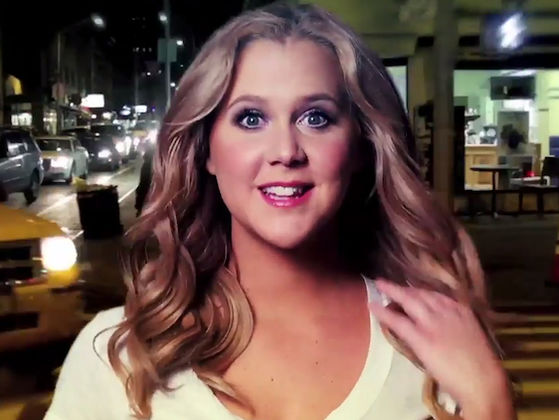
If you have to get sick of seeing someone’s face on TV, make it Amy Schumer’s. Why? Well, firstly because being sick of seeing Schumer’s face seems to be part of her schtick. Every sketch on her Comedy Central show Inside Amy Schumer is preceded and followed by a close-up of Schumer’s face quick-scanning the streets of New York before the camera CSI zooms into her eye. Her face is the lifeblood of every sketch, and even the (mandatory) Twelve Angry Men parody episode in which she did not feature begins with her face dominating the screen. It’s also because Amy Schumer’s face is interesting to watch. Eschewing the hyperreal expressionism of her peers (not that there’s anything wrong with that – Key & Peele are as cartoonish as they come), Schumer’s face is a flickering deadpan, oscillating between irony and approval of the characters she plays and those she interviews.

Facial Schumer!

Facial Schumer!

Which is good news because Amy Schumer is everywhere. In fact, it would be perfectly possible to watch nothing but Amy Schumer on TV these days. There’s her weekly Comedy Central show which seemingly plays throughout the night (uncensored) on the network, her guest appearances on every late-night talk show around, her work on The Bachelorette (which ABC executives want to expand into a regular thing), and trailer-length promos for her upcoming movie vehicle Trainwreck in the ad breaks. We’ve seen this kind of momentary ubiquity before, of course, but rarely with a performer of such substance. That may be because Schumer is able to do provocative and powerful material while making it sound like a bunch of harmless Seinfeldisms. She even makes light of the issue-based thrust of her comedy, passing off most sketches as a PSA-gone-wrong, while underlining just how culturally urgent her intervention into modern life is.

http://www.youtube.com/watch?v=1sq4gVZ4cBc

Last night, Schumer confronted the alleged crimes of Bill Cosby. The heavily corroborated sexual assault allegations against the veteran comic seem fair game for comedians now and indeed it may be easier for a white female comic to talk about this topic than, say, the black male one who broke the story. It was the level of discussion that was remarkable. Refusing to debate the existence of the crimes (for, as she points out, there is no debate to speak of, despite all legal disclaimers), the court-based sketch was instead a more sophisticated exploration of how nostalgia and cultural comfort food (both real and symbolic, since this was the man who advertised Jell-O pudding pops) interfere with our sense of justice and gender equality. This is really what we struggle to reconcile, not crime and perpetrator. But this isn’t the first time Schumer has put her finger on the problem.

She coolly and pleasantly took on perceptions of women ageing with Tina Fey and Patricia Arquette celebrating Julia Louis-Dreyfus’ ‘last fuckable day’ as decided by the media. She did an almost Sesame Street-esque scatological number on pop culture’s fetish for women’s sticky-out asses with a hip-hop music video set to the rhyme ‘milk, milk, lemonade, round the corner fudge is made’. Schumer was there to pinpoint the pathetic paradoxes of middle-class women pole dancing while condescending to women who work as strippers as well as female employees being obliged to be ‘cool with’ whatever their male counterparts want to do while being paid half the salary. Bravely she slayed a sacred cow of American comedy, the borderline-rapist late-night talk show host, and perversely she’s seemed to increase her appearances on these kinds of programmes as a result. She’s so popular that even her targets want to be seen with her.

Amy Schumer's parody of late-night...oh wait, that's just her on Letterman!

Amy Schumer’s parody of late-night…oh wait, that’s just her on Letterman!

It would be too easy to say that Amy Schumer’s success is down to the sugar-coating she puts on her social criticism, but it’s hard to deny that her self-aware baby-face mannerisms (see, the face again!) makes what she does much more palatable. But it’s not the cutesy-girl disguise that comedians like Sarah Silverman have used to deflect attention from their obscenity and controversy. It’s more direct than that, like having a conversation with someone who seems perfectly nice and you realise hours late they completely destroyed you. That’s what translates into mainstream entertainment so well. On The Bachelorette, she exposed the egregious insecurities of a male contestant without ever saying a cross word to him. She’s also not afraid of plumbing the lowest depths of entertainment, like dirty jokes and toilet humour, to get what she wants. The time of overkill will come, so enjoy her just killing it.

Bruce All Nineties

Posted in American TV (General), American TV Shows, TV advertising, TV History with tags , , , , , , , , , on May 5, 2015 by Tom Steward

One of the perils of writing a topical post – unbeknownst to me, who would report the crucifixion a day after the resurrection – is that the story continues after publication. Since posting on the 90s TV revival and the media’s response to Bruce Jenner’s 20/20 interview, both storylines have advanced significantly. So rather than set another plate spinning, I’m going to bring you updates on these unfolding stories…you know, like those journalists you probably read about in history books used to do!

I was second-guessing myself while hailing a revival of 90s TV, having only a handful of examples and holding the suspicion it might have been a coincidence that three 90s shows were the latest in line for an inevitable nostalgia reboot. But at the virtually the same time I published the post, it was announced that Full House, an early 90s sitcom my ignorance of which is why G shall never ratify my TV Doctorate credentials, will return on new-bottle-for-old-wine internet channel Netflix. Digging deeper, I discovered that another 90s sitcom, Coach, starring an actor who looks like a young man in ageing make-up Craig T Nelson, is about to be revived. As G reminded me (after her weekly routine of pretending to have read the blog rather than just the title!), one of our new favourite sitcoms Fresh off the Boat is set in the early 90s, with a gangsta rap soundtrack and guest stars from Twin Peaks to (re)boot. I guess it’s about a fashion for the decade as much as simply retrospection.

This is what Craig T Nelson looks like before make-up!

This is what Craig T Nelson looks like before make-up!

It’s hard for me to engage with this 90s-retro fad as nostalgia. Syndication ensures that when it comes to TV, the past is always present. Besides, 90s shows are technologically and stylistically consistent enough with current production practices not to jar today’s audience too aggressively, and could easily be mistaken for something that was made when Twitter was in its infancy. More personally, it’s because I went into a pop culture coma in the late 90s and any TV still on at that time remains my Spreewald pickles (an oblique reference I use if only to force you to watch Goodbye Lenin!). It feels more to me like these shows are coming off an extended hiatus. Or maybe the people involved are simply lucky enough to have remained in the zeitgeist. Craig T. Nelson is coming off Parenthood and the Full House cast have recently been on screens in Dannon Oiko commercials. As for Fresh off the Boat, well, even nostalgia has to move with the times. In the 90s, nostalgia was That 70s Show.

I previously reported a rare instance of news satire’s coverage of current events being considered inferior to that of TV news. The (not so) current event was Bruce Jenner’s gender realignment, discussed in an interview with Diane Sawyer on 20/20. The Nightly Show with Larry Wilmore and Conan were culpable for insensitive and – crucially – unfunny jokes that reeked of transphobia. Now seemingly unable to mock Jenner’s gender and sexual orientations without further controversy, news satire is honing in on the one thing we can all ridicule her for without fear of reproach; being a Republican. As if some kind of plea of extenuating circumstances for their prior bullying of Jenner, both Conan and The Nightly Show did what all bad TV news does when it misses the mark and changed the story. The humour was directed at Jenner revealing he was a Republican, though interestingly omitting the part where the retired Olympian said he’d talk to the conservative wing (or torso) of his party about their mistreatment of transgender people and issues. Again, not funny.

Bruce Jenner scours room for Ted Cruz before coming out as Republican!

Bruce Jenner scours room for Ted Cruz before coming out as Republican!

There is some irony in Jenner identifying as a woman and a Republican simultaneously, but not enough for even the meekest gag and it’s no surprise given his wealth, age, and Cold Warrior status in American sports history. For O’Brien, the information was a neat way to deflect an apology for jibes which made Jenner’s gender instability seem grotesque. For Wilmore, couching his transphobic remarks in the familiar rhetoric of news satire’s anti-Republican diatribe (as wonderful a thing as that is) was the best way for a left-leaning comedy institution to disguise its bigotry. I’m not suggesting that Jenner is now untouchable. He is, after all, part of a dynasty that live to be ridiculed. But I still believe that the responsible parties cannot simply brush what they have said under the carpet, lest all the people they demeaned retreat back into the closet.