Archive for the TV advertising Category

The Rest Of The Year’s TV

Posted in American TV (General), American TV Shows, British Shows on American TV, Reality TV, Reviews, TV advertising, TV channels, TV Criticism, TV History, Unsung Heroes, Watching TV with tags , , , , , , , , , on December 31, 2014 by Tom Steward

There’s a formula for writing annual ‘Best Of’ TV lists. First it’s compulsory to observe how pointless a task it is making such a list for a vast and varied medium like television, then talk about how your criteria will be completely different, before naming the SAME EXACT shows as every other critic. Well, I don’t think it’s pointless, at least no more futile than doing it for books or films (where critics don’t seem to have the same anxieties about habitually omitting factual and lifestyle titles). I have no wish to create an opaque ratings system that will lead me back to shows which come pre-ordained as the best of TV. But I do want to ensure that the titles I choose won’t appear on anyone else’s list, something which gets harder and harder as critics begin to fawn over the nichest possible television. So don’t consider this the year’s best TV (see I’m doing it in spite of myself!) but rather good TV that has been overlooked simply because it doesn’t get listed.

Botched (E!)
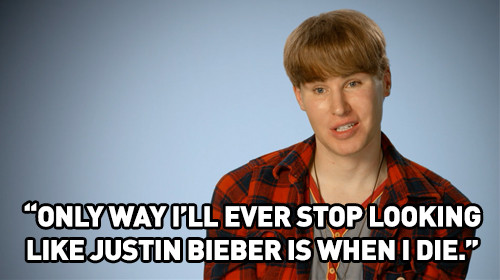
...what if he dies first?

…what if he dies first?

Real Husbands Dr. Paul Nassif (disguised as Moe Syslak from The Simpsons for ease of viewer identification) and Dr. Terry Dubrow (other two-quarters of Heather Dubrow, who must always be named twice) are L.A. plastic surgeons who specialize in fixing botched jobs. There’s some emotional hard luck stories but basically it’s the best excuse ever for social voyeurism and with patients like a Human Ken Doll and a 33-year old man with the face of an early-teen Justin Bieber it’s about as visually mesmerizing as reality TV gets. The show is also indispensable body horror, with its drop-in circus of malfunctioning and distorted anatomy. Even E’s glossification can’t mask the raw psychological distress.

90-Day Fiancé (TLC)

A show close to mine and G’s hearts, since I arrived in the US on a marriage visa. This observational documentary follows six couples during the 90-day window for visitors to the US to marry on the K-1 visa. It’s as compelling for its cartoon parodies of loving marriage as it is for reaffirming the borderless beauty of the institution. So extraordinary and bizarre is the experience for these culture-clash couples that the network barely needs to meddle in the melodrama, as it does for its other reality shows, giving it a more natural (if no less extreme) flow of real events than heavily devised TLC docu-soaps like Here Comes Honey Boo-Boo.

Muppets Most Wanted (Disney)

Variety at heart!

Variety at heart!

Probably more likely to be dismissed on grounds of not being a TV show, this was nonetheless the movie that in 2014 most thoroughly blurred distinctions between film and television. The Muppets are a creation of television, stars Ricky Gervais, Ty Burrell and Tina Fey are all television personalities, and the legacy of The Muppet Show is privileged at the expense of the movie franchise (the latter self-consciously in comic acknowledgements of the diegetic amnesia around popular movie characters and sequels). The movie is a joyous celebration of the achievements and talents of television past and present, reminding us of how far the medium has come. And it’s full of commercials!

LIVE With Kelly And Michael! (ABC)

A show that will doubtless elude recognition for its monotony and ubiquity, but this doesn’t change the fact that host Kelly Ripa is by several miles of open country the funniest, smartest, wittiest and most multi-dimensional presenter in daytime. Her work in morning television is more akin to what Conan, Colbert and Craig Ferguson have done with the late-night form than the platitudinous moron-making of virtually everybody else on TV at that time, and until about 11 in the evening. This is an everyday occurrence, which makes it all the more startling, but her essential impersonation of Laura Linney in the Halloween parody of PBS Masterpiece Theater speaks volumes.

The Late Late Show With Craig Ferguson (CBS)

Not like any other late night show!

Not like any other late night show!

Dare I say that Craig Ferguson’s departure from late-night talk shows will leave an even bigger hole than David Letterman? While Letterman innovated within the format, Ferguson created a new late-night form that was genuinely subversive, avant-garde and experimental, importing a brand of British vaudeville surrealism reminiscent of Reeves & Mortimer and The Mighty Boosh. Like those acts, Ferguson meshed light entertainment with serious art, carved out an absurd fantasy using television grammar, and delivered alternative culture disguised as broad comedy. It was a rejection of all that was bland and formulaic about one of American TV’s most intransigent genres, and a complete reinvention of its possibilities.

Attack The Box

Posted in American TV (General), American TV Shows, TV advertising, TV channels, TV News with tags , , , , , , , , , on November 5, 2014 by Tom Steward

This week is the midterm elections, which means that currently TV is awash with attack ads where political candidates exploit their opponent’s capacity to look sinister as a slow-moving black-and-white still. But attack ads aren’t restricted to the world of politics. AMC is running a campaign targeted at DirecTV in which subscribers are encouraged to petition their satellite provider to renew their partnership with the cable network. DirecTV have countered with a Walking Dead-themed rebuttal aimed at AMC’s ‘scare tactics’. On AMC’s post-show discussion programme Talking Dead, Walking Dead showrunner Scott M. Gimple and host Chris Hardwicke couldn’t help but think of Carol’s bid for leadership of the group in the zombie drama without reference to the libellous voiceovers and gravelly sneer of election advertising. As it seems entirely appropriate to think about TV shows in terms of attack ads (and perhaps better since, you know, no-one real’s being unduly slandered!) I’ve come up with some voiceovers for campaign spots attacking characters from TV shows:

Breaking Bad

Skyler White: Bad for Albuquerque

Skyler White: Bad for Albuquerque

‘Skyler White says she had nothing to do with her husband’s crimes, so where’s the money for her son’s education coming from? And if she’s so sympathetic, why do men with fake names on the internet hate her so much? @Misogynist63 on Twitter said ‘I hate Skyler White so much’ and Guy Withwomenissues on Facebook called her ‘unthankful scum’…because Skyler White made him too angry to use the correct antonym for ‘grateful’. The IRS refused to prosecute Skyler White because as an accountant she was too clueless to understand she was breaking the law. Her performance review said that she waited until the firm nearly went under before she put on a low-cut top to save her boss from jail. Skyler White: Bad for Albuquerque.’

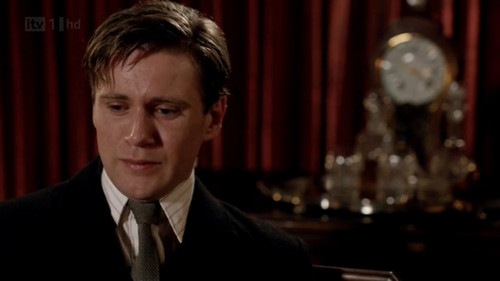
Downton Abbey

Branson's Fickle!

Branson’s Fickle!

‘Tom Branson wants you to think he’s part of an aristocratic family, but not only was he once a socialist and a terrorist, he was really really bad at being both. Tom Branson claims he’s changed but all it took was a schoolteacher with too much lipstick to bring his pro-Russian outbursts back to the Downton dinner table. At a Town Hall debate, Tom Branson said ‘I don’t know what I am anymore’…and hasn’t stopped saying it for over two years now. Tom Branson voted against Lord Grantham’s terrible financial decisions 90% of the time. And what’s keeping Tom Branson from emigrating to America, the land of freedom? We think we know. Branson’s fickle. Paid for by The Committee for The Preservation of Cora’s Entail.’

Homeland

Carrie Matheson: Cries at the drop of a hat

Carrie Matheson: Cries at the drop of a hat

‘Carrie Matheson denies all knowledge of putting a pro-American regime in Iran. Why would a secret agent do that? What is she trying to hide? Carrie Matheson sometimes sleeps with terrorists for fun…and not just work. And why does her baby look exactly like a shrunken doll of America’s enemy #1 (and honoured marine and US senator) Nicholas Brody? According to her family, Carrie Matheson prefers living in Islamabad to being in America. Just like someone who might not like America that much would. And why was she seen desecrating a heroes’ memorial with a magic marker? Doctors expressed concern that Carrie Matheson couldn’t do her job because of her mental illness…a love of atonal jazz. Carrie Matheson: Cries at the drop of a hat.’

Mad Men

Don Draper: You don't have to be mad to vote for him...but it helps!

Don Draper: You don’t have to be mad to vote for him…but it helps!

‘Don Draper won’t make his war record public. That’s because it reveals things he doesn’t want you to know. Like his compassionate support of war widows and embodiment of the American dream. He’s just pretending to be privileged and uncaring to get your vote. Don Draper has worked at three different(ly named) firms in the last five years, and is so incompetent he now works under his former secretary. Don Draper would rather drink and take drugs at home than in a workplace where it is company policy. He’s flip-flopped on the issue of smoking and airline preference, and campaigned for Nixon who he’s yet to find out is a criminal. Don Draper: You don’t have to be mad to vote for him…but it helps!’

The O’Reilly Factor

Bill O'Reilly: Bullshit O Really

Bill O’Reilly: Bullshit O Really

Bill O’Reilly talks about things as if they really happened. But did you know that everything he says is bullshit? The first thing he said on his show today was bullshit. The second thing was described as ‘bullshit’. Even the third thing he said was bullshit, according to a poll. He’s voted with people who are wrong about everything 100% of the time. Bill O’Reilly: Bullshit O Really.

There’s no law against smearing a smearer…

The Second Sets

Posted in American TV (General), American TV Shows, Reality TV, TV advertising, TV Criticism with tags , , , , , , , , , on October 15, 2014 by Tom Steward

When it comes to certain aspects of American popular culture, I feel I’m in a Twilight Zone of opinion. The stark commercialism, gross sentimentality and tasteless sensationalism that many Americans take for granted remain horribly apparent to me. And so it is with the casual objectification and sexual mapping of women’s bodies in American media. Watching David Fincher’s Gone Girl at the weekend, it occurred to me than even in a movie about how women suffer under men female bodies are still routinely exploited. What alarms me just as much as its ubiquity is how little it is commented on. There are many similarly horrific depictions of women in the British media (The Sun’s ‘Page 3’ for example). But whereas in Britain I felt the right people said it was wrong and the wrong people said it was right, when it happens here I’m not even sure if anyone cares!

Who's the commodity?

Who’s the commodity?

On television there are a number of ad campaigns that are content merely to have semi-nude women comporting in erotic poses and engaging pseudo-sexually with the objects around them. They are pornography in the raw, images of pure titillation designed to elicit perverted gazing and deployed without a hint of irony or subversion. Some of these are for businesses like Hooters where female objectification is ingrained in the brand, and would be somewhat expected, but others such as fast-food chain Carl’s Jr and electronics outlet Radio Shack have taken it upon themselves to invent this associative imagery. I’ve seen clips from these commercials appear in articles and videos attacking the media’s treatment of women – and I don’t discount those as notable protests – but what I don’t see is a recognition in everyday discourse of how problematic these campaigns are but rather a blind eye to or complicit acceptance of them.

I’d like to believe that the pornographic impulses of advertising account for the way that women appears in these commercials but looking at the programming around them, television must shoulder some of the responsibility. On the ABC ballroom reality competition Dancing with The Stars, group numbers featuring the female dancers invariably call upon the imagery of the strip club and the peep show, turning each of their bodies into platforms of sexual consumption for the cameras rather than a medium of artistic expression. Two recent TV awards shows even thematically incorporated the treatment of women’s bodies as sexualised objects. The Emmys had actress Sofia Vergara exhibit her body on a revolving pedestal for the sake of a half-baked pun about ‘giving viewers something compelling to watch’. The MTV Video Music Awards united female performers Nicki Minaj, Ariana Grande and Iggy Azalea by having them each ‘twerk’ during their respective performances.

The turn in American media towards over-sexualisation is not lost on everyone in television. On their eponymous Comedy Central show, sketch comics Key & Peele recently featured a razor-sharp piece of pop satire in which a Minaj-like artist is confronted by young female fans on a cable music television show who are confused as to how her feminist polemic equates to her lyrics, which all revolve around women demeaning themselves sexually for men. The artist is then revealed to be a man in a wig (which, of course, he already is!) who is embarking on a dastardly scheme to convince women that overt sexualisation is the same thing as empowerment. The skit reveals a sad truth about how the attractive façade of feminine authority and independence attached to the most successful women in the media offers not sexual freedom but further bondage, and might as well be from a man.

Key & Peele have a real knack for unearthing the contradictions in mainstream American culture, so we shouldn’t necessarily be surprised that they pick up on these gender problems. Vergara and The Academy got roundly panned, as did Seth MacFarlane two years ago for a song about female star nudity when presenting The Oscars. It fascinates me that criticism is reserved for the higher end of television – like awards shows celebrating the best in the popular arts – and directed at instances that have some level of play and self-knowledge about them, while the same when done in the name of entertainment and spectacle, like the VMAs, does not warrant reproach. Of course, a knowing objectification of women is not much better than an oblivious one, but by dwelling on the more self-conscious examples, we threaten to leave the habitual exploitation of female bodies unchecked and trickling down into the mainstream.

Thinking Outside The Box

Posted in American TV (General), American TV Shows, Behind-The-Scenes, British Shows on American TV, TV advertising, TV channels, TV Criticism, TV History, Watching TV with tags , , , , , , , , , on October 8, 2014 by Tom Steward

Historically TV has been the whipping boy for crimes against the art of cinema. Whether it’s the butchery of panning and scanning, intrusion of advertising or hatchet job of editing, televised movies are often the husks of their theatrical counterparts. At least in America, it doesn’t appear the situation is much improving. Internet channel Netflix regularly shows movies in the wrong aspect ratio and decisions such as movie network Epix airing a colour version of the recent black-and-white Oscar contender Nebraska suggest continuing blindness to the intentions of filmmakers. However, it is just as common for television to victimise itself.

The lucrative business of syndication whereby the rights to re-air TV series are sold off has seen many classic shows chopped up to fit new timeslots and networks. Syndicated versions of sublime sitcoms like The Golden Girls and The Dick Van Dyke Show have their punchlines cut to ribbons in order to squeeze in a commercial and are rushed off the air like a mentally challenged America’s Got Talent contestant to shave seconds. The market value of these shows is as back-to-back episodes so they appear on the air as homogeneous broadcast flow rather than the individual masterpieces they are.

You have to laugh at the jokes you can't see!

You have to laugh at the jokes you can’t see!

Most recently, a retrospective of The Simpsons on Fox sister channel FXX was blighted by the majority of episodes being stretched from their original 4:3 broadcast ratio to the 16: 9 representative of most current HD television sets. This effectively cropped about a quarter of the sight gags in any given frame and grossly distorted and disrupted the animators’ carefully composed tableaus. As The Simpsons makes such a compelling case for treating TV as an art form, it is particularly disappointing to see it treated so artlessly. Worse is that those who complained were treated like spoilsports rather than aficionados.

Syndication has become as harmful to the integrity of TV shows as broadcast has to movies. Censored versions of explicit cable dramas such as The Walking Dead and The Sopranos play on networks still governed by draconian Broadcast Standards and Practices departments. The very concept of these shows hinges on being able to demonstrate violence onscreen, and their essence is inseparable from the freedom of obscenity granted by the original broadcast context. As with all the movies that existed in two irreconcilable versions thanks to television, we will soon have TV shows that are better known in their bastardised forms.

I saw the cinematic spectre of this issue recently when going to the movies to watch Michael Winterbottom’s The Trip to Italy. A six-part BBC Two sitcom in the UK, in the US it has been edited and exhibited as a two-hour feature film, where star Steve Coogan is known (in some circles) as a movie actor not a TV comedian. It’s a sharp reminder that what TV and cinema are depends on where you are in the world. But I found it interesting that no-one complained about damage that the transfer to cinema had done to the TV series.

You could argue that there are untold benefits to making a movie out of this TV series that there would not be in the reverse case. Cinema provides a more spectacular realisation of Winterbottom’s scenic photography and editing down to feature length curbs some of the self-indulgence of the star-and-navel-gazing original. But it simply does not work as a movie, not even as the conceptual art movie it purports to be nor the ones it claims to follow. The structure and pacing are that of the British sextet sitcom, and perverting that results in the look of a failed experiment.

Hancock and Sid (UK); Crosby and Hope (US)

Hancock and Sid (UK); Crosby and Hope (US)

The aesthetic arguments are really only a veneer for the economic ones. Coogan is known best, if at all, to film audiences and so the cinema is the most profitable place for one of his vehicles. Winterbottom tends to direct movies and logically his name will generate the most interest in connection with a cinematic release. The reasons for putting a medium-appropriate version of The Trip to Italy into theatres are not that different from the motivations for squashing movies into the TV schedules. It’s only an outmoded belief in the artistic superiority of cinema that makes it seem so.

TV has done terrible things to great movies. But it doesn’t discriminate between artworks in TV and in other media. As TV climbs to cultural respectability, its programmers seem determined undo that reputation. However, cinema is just as guilty in what it does with prestige TV. Bigger is not better.

One Pundred Hosts (Without Typos Or Cheap Puns)!!!!

Posted in American TV (General), American TV Shows, Americans watching British TV, Behind-The-Scenes, BiogTV, British Shows on American TV, Reality TV, Reviews, TV Acting, TV advertising, TV channels, TV Culture, TV History, TV Sports, Watching TV with tags , , , , , , , , , on September 3, 2014 by Tom Steward

We’re into syndication! With 100 blogs under my belt, I can now sell the rights to the A.V. Club who will publish the same three posts over and over again – with every third sentence removed – for the next twenty years. In the true spirit of American TV, I’ve decided against celebrating this milestone with a piece of considered, original writing (why break with tradition now?) and instead hastily assembled and artlessly compiled a list of extracts representing the best (or at least most comprehensible out-of-context) of the blog…and split it into two parts. Thanks for watching and enjoy!

A specially-created TV series just for this milestone!

A specially-created TV series just for this milestone!

‘Years previously I used to run on the spot along to chase sequences in cartoons like a dwarf soothsayer doing a dance prophesising the age of TV interactivity’

‘My friend openly admitted to finding the slapdick (my term) comedy of the three hosts hilarious, commenting that “we don’t have people like Clarkson on American TV”. “Fox News” I thought, but didn’t say’

‘So shifting viewing an hour or two to make way for a pizza is not exactly the end of television’

‘Yes, Chantix is apparently not just a wonder-drug but a porthole into an alternative universe of Marxist dialectic or, if that’s too posh a reference for you, the Bizarro World’

‘All my morning shows on the day of the Royal Wedding were attended or discussed by the hosts with a bizarre royalty-envy that ill fits a country founded on telling the King of England to fuck off’

‘After weeks of sounding like a malfunctioning motivational speaker robot, Celebrity Apprentice contestant and consecutive mental-of-the-week Gary Busey was appointed project manager on a task’

‘For G, it was as if Britons had collectively decided to substitute a working TV set in the corner of the room for a 19th Century ventriloquist dummy with its mouth sprung to repeatedly gawp the word “Mummy”’

‘When war “came to Downton Abbey” it went by so fast that it seemed to have actually been fought in the grounds of the building, like a game of Risk gone awry’

‘Now I’m starting to think that I was in some sort of hallucinogenic fever state the night before because I could’ve sworn I saw Hollywood actor-director Clint Eastwood hold a conversation with a chair while an audience of magenta elephants cheered him on’

‘TV Land is where sitcoms and their stars go to die’

'Memba them?

‘Memba them?

‘After prolonged exposure to American TV news, however, I now long for a token alternative viewpoint and the masquerade of even-handed commentary’

‘Watching a Halloween-themed sitcom episode used to be like watching film footage of Hitler’s speeches; unimpressive and kind of shambolic and yet those in the crowd seem to be going wild for it’

‘Like anything in life which I have no direct experience of, I looked to American TV for advice on how best to handle the situation’

‘All I found on The Travel Channel were programmes about the excessive intake of high-calorie foods which make Americans less able to move. When I turned over to The Learning Channel I saw wall-to-wall programming about people without formal educations’

‘I’m sure Harry Enfield will be relieved to know that after decades of writing and performing some of the best character comedy and social satire in Britain he is finally known in America…as a talking gnome with goggles’

‘But a 3 hour serialised pilot? It’s like the feeling you get ordering a starter of garlic bread with tomato and cheese in a pizza restaurant. It’s enjoyable and you wanted a starter but it’s also what you’re getting for the main course’

‘I mean, what exactly is gained showing Goodfellas at 2 in the afternoon?’

‘It seems that if reality TV was more like reality, with all its loose ends and uneven surfaces, fans of the genre wouldn’t necessarily want to watch it’

‘Early in his career, artist Roy Lichtenstein produced a series of paintings based on advertisements. In one of the great cultural ironies of our times, advertising started appropriating Lichtenstein’s paintings. Something similar is going on with Mad Men

‘To those who know football from the European or Latin American leagues, watching a US soccer team play feels like the moment in Futurama where Fry finds that in the 30th Century baseball has become ‘Blernsball’, a barely recognisable Twilight Zone twist on the sport where spectators try to catch players instead of balls and giant spiders roam free through the diamond’

http://www.youtube.com/watch?v=iq1d07gYl8o

‘It’s a perfectly normal road to marriage…if you’re James Bond’