Archive for the TV channels Category

Selling TV to Americans

Posted in American TV (General), American TV Shows, Internet TV, Reviews, TV channels, TV Culture, TV History with tags , , , , , , , , , , , , , , , , , , , on August 7, 2013 by Tom Steward

My unofficial job title for the last couple of months has been PR Officer for American TV. Recently I’ve been introducing G to a number of my favourite US TV shows using the vast-if routinely inaccessible-archive of programming on Netflix and HuluPlus as well as my DVD collection, which lies within a handful of colossal CD carry cases in an object-fetishist’s version of efficient storage. Some programmes sold themselves. It didn’t take long for G to figure out that Northern Exposure was an engaging, endearing and intelligently written piece of television and not the geriatric-baiting fodder she suspected. Despite its nausea-inducing camerawork, the viscerality, complexity and wit of The Shield also won G over instantly. But there was always a fly in the ointment, and in every application. G took issue with the titles of both shows, Northern Exposure for its meandering moose and The Shield for its kid-friendly jingle. I tried to explain that these were some of the most iconic and beloved aspects of these shows but it fell on deaf ears and blind eyes. Much as I love them, I can see why G thinks these gimmick-driven, one-dimensional titles might be doing a disservice to the shows.

‘Stupid moose’-G

But sometimes G’s sales resistance is difficult to break down. Her response to the Pilot of Breaking Bad was ‘That’s it?’. I wanted to argue with her but it did seem slight in comparison to later episodes and I didn’t think my observation that it was a ‘postmodern version of MacGyver would make it seem any more profound. Twin Peaks was apparently ‘all dialogue’, which is a new one for Lynch critiques, and only became visually stimulating when the donuts came out.  In these instances, I did what every good salesperson should and tried to associate the product with something the customer knows and likes. ‘It’s like Northern Exposure…but with murders’ I said of Twin Peaks. ‘It’s Malcolm in the Middle on meth’, I said of Breaking Bad. ‘You watch Malcolm in the Middle? What are you, 10?’ G responded. I guess my cold reading skills aren’t as good as I thought. Or maybe the prospect of Bryan Cranston in underpants isn’t as alluring to the rest of the world as it is to me.

Just me, then…

On other occasions I became a victim of my own salesmanship. I’ve managed to hook G on a hoard of arresting novelty shows that I’m fast losing interest in. This means I’m watching their tiresomely protracted runs again as exactly the point when I’ve given up on them. 24 and Damages are the chief culprits here, both of them wildly overlong elaborations on an initially brilliant premise. I didn’t think I could lose much more respect for 24 than had already gone but sitting through those final few seasons again with their automated scenarios and tedious twistiness I think it went subterranean. Worse, as the gruesome compulsion to clear all the episodes in as little time as possible accelerated, the show became like wallpaper in our house, an ever-present wall-adornment barely noticeable to our jaded eyes. G is still at the point in Damages where the promise of finding out what will happen in the ongoing story arc is yet to be beaten down by the knowledge of what does happen. But I can see this fading fast. G’s already worked out that they’re only keeping a serial story strand so as not to lose Ted Danson from the series.

A reason for sticking with Damages.

Although G came to Mad Men much later than me, thus allowing me to cherry-pick the most tolerable episodes from the dreary first few seasons, we’ve both turned sour on the series at about the same time. Actually, G got there first before I was willing to admit that the party was over. Midway through the most recent season, the sixth overall, I remember her asking ‘Where’s the advertising gone?’, which should have been enough of an alarm bell given that it’s the equivalent to Cheers forgetting to feature beer. For me, though, it was the sexual reunion of one of the series’ estranged couples that signalled the end of quality. Breaking a rule of good television established in Northern Exposure, it haphazardly thrust (in every sense of the word!) two characters together whose entire function was to carry the suggestion of romantic involvement without ever reaching that point. G turned to me the other day and said ‘I miss British TV’. I think it might be time to start offering a new product line.


If you like these blog posts why not follow my new twitter account @tvinaword where I create new words to describe TV shows. Send your own and if I like them I’ll retweet them!
Live of O’Brien

Posted in American TV (General), American TV Shows, Behind-The-Scenes, TV channels, TV Culture with tags , , , , , , , , , , , , , , , , , , , on July 31, 2013 by Tom Steward

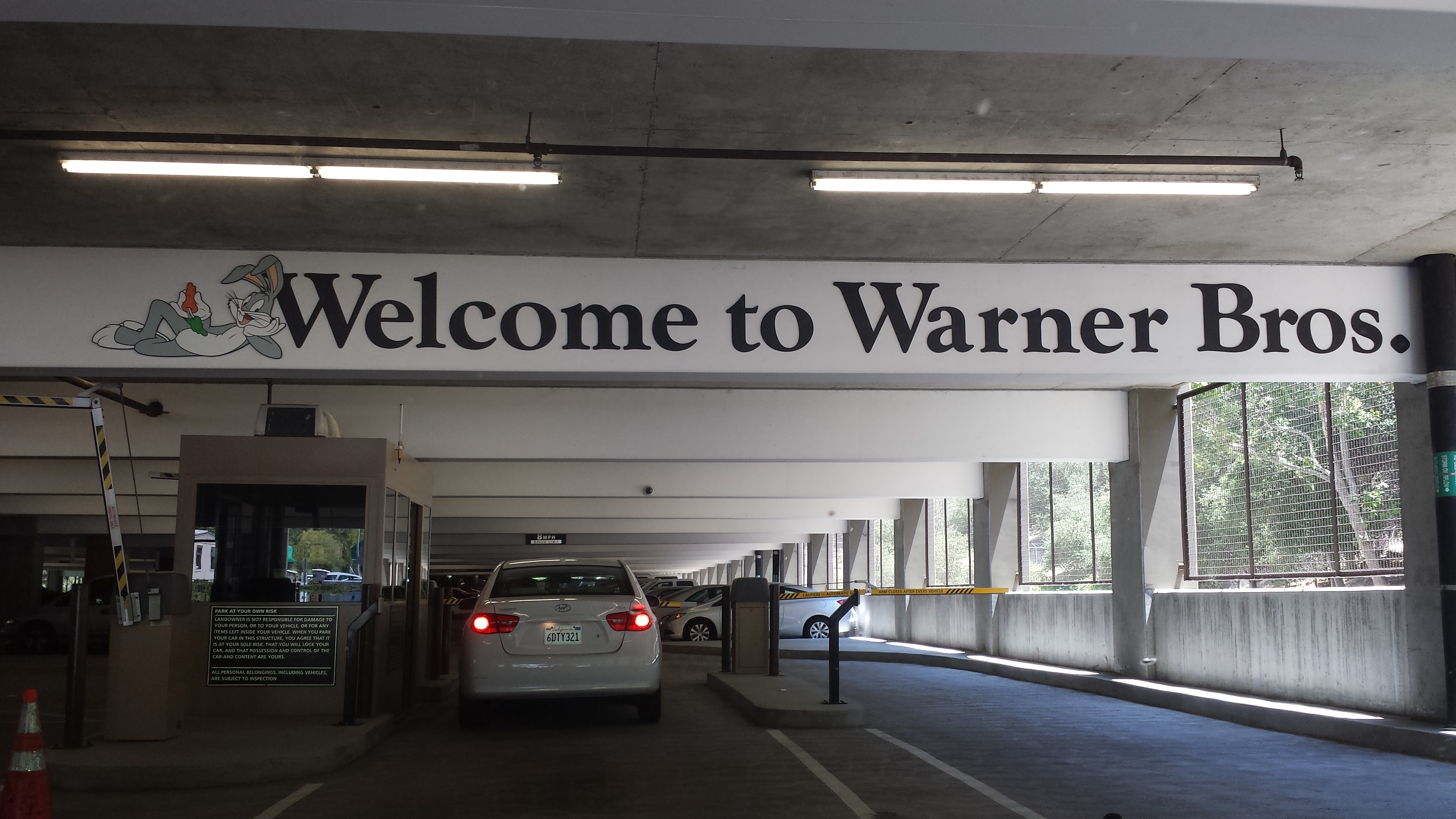
Yesterday afternoon G and I went to Warner Brothers Studios in Burbank to be in the audience for the recording of Conan, the eponymous late night TBS talk show of Conan O’Brien. It’s an experience that goes far beyond the reaches of the hour that the recording takes place. Show time is 4.30pm yet the audience have to check in at the studio parking lot by 2.30pm at the latest and as early in the day as possible to get the best seats. Once checked in, you’re free to leave the parking lot as long as you return by 3.00pm. Not knowing this, and having checked in at the recommended time of 1.30-2pm, G and I had no time to do anything but aimlessly wander the vicinity of Warner Boulevard where the nearest attraction is Forest Lawn Cemetery, an area that is quite literally dead. Lest this start to sound like a yelp reviewer with a severe case of white people problems, I want to stress I completely understand keeping audience members half in the dark about check-in arrangements to ensure they arrive early and G found it entirely preferable to the Star Wars-premiere conditions of Conan’s New York show.

20130729_124424

When we returned from the land of the dead (actually we found a café with big salads so it was more Seinfeld than Six Feet Under), we were taken through a metal detector into a waiting area lined with black metal benches which had the atmosphere of a prison mixer. Actually the prison analogy remained apt as we were branded with a ‘WB’, which I believe stands for ‘Warner Bitches’, and processed through a street crossing deep with standing sewage water in a tribute to the epilogue of The Shawshank Redemption. The show even had a narc in the waiting area. One of the writers was strolling up and down the benches in search of people to turn the camera on in the ‘Craigslist Ads’ segment of the programme in which fake ads are juxtaposed with shots of the audience members who would likely post them. Lifers like me can tell the difference between a TV writer and TV viewer, although in layman’s terms this is also known as cleanliness. And he had a cup.

20130730_160828

At 3 the audience were lined up in groups and taken slowly in multiple stages through the Warner Brothers lots in scenes reminiscent of Day of The Triffids. While it was undoubtedly exciting to be where many of Hollywood’s finest movies (Angels with Dirty Faces, The Big Sleep) had been filmed, I have to say that all the Looney Tunes cartoons I’ve seen have been terribly misleading about what goes on here. Not once did I see Daffy Duck’s head being erased by an irate Chuck Jones! We arrived at a heavily air conditioned studio set, which TV expert G told me was for the lights and not as I suspected to prevent Conan’s skin from setting alight, and were seated with my urine-inflated bladder acting as an internal cushion. G and I were amazed at how small the set seemed and kept expecting a puppet version of the show to follow. The cameras magnify the set out of all proportion and it has an utterly different geography from the one we create in our heads when watching. G was especially thrown by how the guests’ walk from the stage curtain to the couch was literally a couple of steps.

20130730_160847

There followed multiple warm-up acts, starting with a fireman who demonstrated that the post-911 hero status of firefighters has significantly outlived that of cops (probably the lack of racial murders in the fire service). An MC discovered an audience full of drunks, meth manufacturers and slutty teens before Jimmy Vivino and The Basic Cable Band-who unlike most late-night house bands seldom feature in the programme-entertained with a lively, dad-at-wedding dancing funk and rock n roll double bill. There is an ‘Applause’ sign but it’s not the exploitative imposition that it is stereotyped as, its presence moving the show along and not forcing any reaction that isn’t already there. Not being a fan of bad sitcoms, teenage skaters and post-punk poachers the line-up didn’t do much for me. But the original segments were a TV bloggers’ dream. An irreverent ‘info’ button for programmes on a cable remote (Seinfeld: ‘You’ve seen this one’) and a clip from a new TV pilot starring alleged trumpet pumper La Bamba as a CIA assassin with limited knowledge of assembling weaponry.

20130730_160856

I realised that my knowledge of late-night talk shows tapings comes entirely from The Larry Sanders Show though having been there for real I can see why the prospect of a sitcom set there was so attractive. The musically-accompanied interludes between segments which are synced with ad breaks feature curious-looking interactions between guests, crew and talent not to mention the near-farcical stage invasions, all of which possesses intrinsic comic appeal. During the last of these interludes, G turns to me and asks ‘Is it nearly over?’ and I realise that as she’s always asleep by this point of the show and had never watched this far. After a bonus feature, a self-reflexive ‘end of the show song’ from the musically-gifted Conan, we were soon shuffled out into the lot, as I resisted the urge to crash through the parking barriers in homage to the final few minutes of Blazing Saddles.


TV Time

Posted in American TV (General), American TV Shows, TV channels, TV Culture with tags , , , , , , , , , , , , , , , , , on July 23, 2013 by Tom Steward

I’ve been (hardly) working my way through Breaking Bad, one of the more remarkable American TV shows of our time, and one of the most striking features of the series is its timeframe. Eschewing the TV rule of thumb that the time onscreen runs parallel with the duration of the initial broadcast, all 5 seasons of AMC’s family crime dramedy take place over the course of a couple of years (there’s a few episodes left but all indications are we’ll go no further ahead than that) effectively making the series a period piece by the time it finishes in 2013. This jeopardises Breaking Bad’s plausibility. The tectonic shifts in character and flurry of cataclysmic events which transform a high school chemistry teacher into an international druglord would be far more credible if spread over a vast number of years. Inside an 18-month window, it puts the series in the realms of bizarre melodrama. We also can’t take what happens to the characters as development as no-one has the luxury of time for any significant growth to occur. Instead, we’re witnessing how the cast of characters react to crises and trauma and watching them expose the existing depths of their personalities.

From Walter White to Heisenberg…in a year?

The time we watch TV is regulated and ongoing so it’s natural for most shows to try and match this for the sake of minimum disruption. Look how seasons of The Office begin with a re-cap of what happened to the characters during the Summer, when the show was off-air, simply to remind audiences that the onscreen and offscreen time syncs up and that the hiatus experienced by viewers was simultaneously endured by the characters. It’s especially important to make sure TV shows can capitalise on seasonally themed episodes (Christmas, Halloween) by juxtaposing them with the time they occur in the real world. Deviating from this scheduling ritual is a source of much innovation and originality in US TV. Unconventional uses of time can be the difference between cliché-ridded formula fare and mould-breaking masterpiece. People were happy to forget what a laboured potboiler 24 was because of its real-time season-as-a-day format and that the non-linear point-of-view narrated Boomtown was just another cancellation fodder cop show. It can even just be temporary relief from a format that is grindingly rigid in how it treats time. Brain-sparing cause-and-effect procedural CSI frequently throws in a flashback or reverse episodes to break the monotony.

Cliche + Time = 24

In a show like Breaking Bad, quirky time management isn’t the first blow of brilliance hitting you over the head but more like a gentle pat on the shoulder reassuring you of quality. If timing is the most noticeable characteristic of a programme, then chances are it will be a fast-fading novelty. 24 lasted 10 years on air but no-one in TV seems especially interested in using its format again. Boomtown was cancelled after 2 seasons once all possibilities of fragmented viewpoint-driven storytelling had been exhausted. On the other hand, it’s possible to watch the entirety of Twin Peaks and Deadwood without acknowledging how each episode crafts its multiple storylines into one day’s worth of time and lose nothing of their artistic brilliance. Indeed it seems perfectly in tune with Twin Peaks’ satire of soap opera and tendency towards the supernaturally fantastic that such an overwhelming wealth of events occur in a ludicrously short space of time. More than that, equating a single episode with 1 day has subsequently become TV’s way of making it seem like it’s running alongside everyday life. Unlike the patchy coverage we get from calendar-linked shows, here we never miss a minute of the action.

30 Days in the Life of Twin Peaks

It would be wrong to assume that US TV shows deal with time in a way that is abstract or avant-garde. Even the most altered state of TV time is highly structured and controlled. The dream world of Twin Peaks may have ruptured the show’s real world chronology but it was only ever there in the first place to plug a gap in the middle of the screenplay of the pilot. The spread of TV might be amorphous and ever-expanding but individual programmes and their runs are tightly timetabled and time within them needs to follow suit. It’s no coincidence that the innovations of time in TV storytelling have complimented the scheduling of the programme. US TV dramas are an hour fitted into a run of 21-25 hence a thriller set over 24 hours with each episode an hour. So is Breaking Bad doing something genuinely outlandish? Time will tell.


The Place to TV

Posted in American TV (General), American TV Shows, Reviews, TV channels, TV Culture, TV History, TV News with tags , , , , , , , , , , , , , , , , , , , , , on July 17, 2013 by Tom Steward

In an interview with the BBC some years ago, Sopranos creator David Chase, speaking of his first writing gig on The Rockford Files, remarked that what set the private eye series apart from most TV at the time was that it was recognisably set in Southern California and not some ersatz non-place. This innate sense of place trickled down into Chase’s later TV work. One look at Jersey Shore and The Real Housewives of New Jersey and it’s obvious that the landscapes and body shapes that feature in The Sopranos could only be from the Garden State. It’s also something that distinguished Rockford creator Roy Huggins’ TV shows. His previous creation The Fugitive (one of the other only TV programmes Chase admits to enjoying) was always specific in its geography, be it small town or vast metropolis, no mean feat for a series which had to change location every week.

Jim Rockford, a resident of Malibu

Place is increasingly becoming the backbone of American TV. The unique appeal of shows like AMC’s Breaking Bad is inseparable from their choice of setting. The meth-drenched desert hazes and border town hinterlands of Albuquerque provide not just a backdrop to the action but the pathetic fallacy of the characters’ moral decay and corruption. Other programmes like Portlandia build their very concepts around a place rather than a set of characters or situations. It may be that the IFC sketch show starring Fred Armisen and Carrie Brownstein relates to something bigger than just the Oregon city-like the hipsterfication of everyday life-but such observations are always squarely aimed at Portland’s grunge-throwback ways. The Wire (and the lesser known but not lesser in any other way Homicide: Life on the Streets) may speak to people as a microcosm of American social problems but in the end it’s a programme about a place, Baltimore, Maryland, and impossible to truly appreciate without a working knowledge of that city’s local political scene. So is this a new development in American TV and, if so, what changed?

The dream of the 90s is alive in Portland!

It’s tempting to put the recent emphasis on place in American TV down to historical shifts in the way that programmes are produced. For much of its existence, TV was filmed predominantly in studios making it difficult to manufacture an authentic impression of place. When location shooting was added into the mix, the ability to suggest events were taking place in a distinct locale improved drastically, even when programmes were still studio-bound. Cop drama NYPD Blue seemed firmly planted in the many and varied neighbourhoods of the Big Apple despite being the majority of it being filmed on the Fox backlot in L.A. simply because of the documentary-styled location footage of the ongoing life on New York streets that pre-empted each scene. Now that the technology of production has advanced sufficiently to shed the studio, putting place at the centre of a TV show should be everywhere by now, right?

NYPD Blue or LAPD Blue?

Possibly not. Location shooting is used more readily to invite a sense of reality without necessarily specifying the geography. It was used in Hill Street Blues to project a (radical) urban grittiness but stopped short of saying what city events took place in (we can assume Chicago but are never told for sure), even going as far to create a fake district of this unknown metropolis. The ability to film on location doesn’t always mean you can film anywhere you like. Think about how many American TV shows are needlessly set in the vicinity of L.A. Often this isn’t an artistic choice but a local one. It’s plainly easier and more economical to find somewhere to shoot near the production base, in this case Hollywood, and use that to justify the setting. It’s the only way to understand why a show like 24 about federal counter-terrorism agents is set in the City of Angels and not Washington or some more suitable hub of government activity.

24 in L.A…for some reason

It’s clearly still a choice at the discretion of programme makers whether or not to push place and yet it’s happening more and more. I’m not sure what the explanation is. Perhaps it’s a product of multichannel television narrowcasting to niche audiences, allowing programmes about specific parts of the US to become popular regardless of broad national appeal. Maybe basing a show around a place is another way to create a programme’s distinctive brand in an ever-more competitive market. Most commentators agree with Chase that a sense of place is a sign of television quality. It’s certainly more important than it used to be.

TV Old

Posted in American TV (General), American TV Shows, Reviews, TV channels, TV History with tags , , , , , , , , , , , , , , , , , , , on June 5, 2013 by Tom Steward

The pleasures of American TV are not confined to seeing new episodes of great shows as they air. They are also to be found in the re-discovery of some of the best TV from years gone by. This is aided considerably by a host of cable channels that do nothing but re-circulate old TV. Given that such stations are generally found in the undiscovered country of niche cable, these shows don’t exactly float to the surface. Their scheduling is hardly conducive to life as a functioning member of society either. With a little sifting, there’s gold in them there hills:

The Fugitive (MeTV Mondays 12.00am)

Though you might be more familiar with the 1993 movie re-make with Harrison Ford (which unusually for a Hollywood revival of a classic TV show doesn’t disgrace its predecessor), this long-running series from the mid-1960s is a classic in its own right. Falsely accused of his wife’s murder, Dr. Richard Kimble (played by a perpetually constipated-looking David Janssen) escapes from custody and drifts from town to town doing a variety of blue-collar jobs until his identity is discovered by the locals-who somehow don’t spot him by his iconic tweed jacket and jet-black hair-at which point he moves on. Kimble is occasionally pursued, when he can be bothered, by Lieutenant Gerard (the coathanger-jawed Barry Morse) and his wife’s murderer, a one-armed man played by a fat Worzel Gummidge. Each episode is an impeccably crafted chamber drama and the weekly guest stars are amongst the best character actors of their era. It’s also a scathing indictment of American society. Those in the justice system are invariably the villains of the piece and Kimble wanders an America full of corrupt institutions where the scum of society has risen to the top. It would be the highlight of anyone’s career, if it weren’t the creation of Roy Huggins, the man behind Maverick and The Rockford Files.

The Golden Girls (TVLand, whenever you turn on the channel)

It’s easy to be put off by the dated production values, air of tackiness and cloying music of this 80s sitcom but it would be a shame to let cosmetics get in the way of a show that otherwise is pure joy. Four senior ladies, sour divorcee Dorothy (Bea Arthur), her old school insult comic mother Sophia (Estelle Getty), southern belle-in-waiting Blanche (Rue McClanahan) and naïve farm girl Rose (Betty White), share a house in Miami looking for love and late-life fulfilment. It’s sharply written with an underlying sarcastic wit that counteracts the mandatory sentimentality beautifully. The show was utterly fearless about confronting issues facing people in later life, like dementia and disability, as well as those that matter specifically to women-one memorable episode has Dorothy facing down a male doctor who misdiagnosed her based on her age and gender in a restaurant. In this sense it harks back to the socially responsible American sitcoms of the 1970s but it has a streak of misanthropic humour we more readily associate with sitcoms today. It’s impossible to underestimate how important the central performances are to the success of the show. I’m particularly enamoured of Getty’s pinpointed quick-fire delivery and White’s knowingly played bravado turns of bumpkin innocence.

Star Trek (MeTV, Saturdays 9.00pm)

After countless sequels and movie versions, it’s good to get back to the ground floor of this franchise and see exactly why people think it so worthy of resurrection. Enduring iconography aside, I was struck by how captivating the storylines of each episode were, and the perfect pace at which the mysteries unravelled while still leaving space for that surreal and colourfully psychedelic camp that people treasure about the show. One episode I caught, ‘The Corbomite Manoeuvre’, is structured like a poker game and ends with Captain Kirk having cocktails with a grown-man baby alien played by Ron Howard’s brother. It’s also quite remarkable how the character flaws of the main cast are highlighted as much as, if not more than, their heroic qualities. I always had it in my head that Kirk’s chronic womanising was a fan fiction add-on that got recouped as canon after nudie-freak JJ Abrams got his pervy little hands on the franchise. But here Kirk is cruelly lascivious without apology or remittance. If like me you grew up with the relatively co-operative crew of The Next Generation, you’d be shocked at the amount these guys argue with each other. Dr. Bones in particular is more insulting to his fellow crew members than a drill sergeant with piles.