Archive for the TV Criticism Category

Info a Treat

Posted in American TV (General), American TV Shows, TV channels, TV Criticism, Watching TV with tags , , , , on June 17, 2015 by Tom Steward

TBS’ late-night talk show Conan features a segment called ‘What am I Watching?’ in which titular host O’Brien flips through the cable channels with the aid of the info button on his remote. Pressing the button reveals skewed descriptions of each show encountered, such as ‘Entertainment Tonight: Two lifelike cyborgs are programmed to think everything Hollywood does is fantastic’ and ‘Diners, Drive-ins and Dives: Guy Fieri plays an out-of-work party clown who is addicted to lard’. There are two diametrically opposed laughs here. One is the absurd – yet entirely truthful – inversions of the straight-faced synopses that info buttons on cable remotes give us about TV shows. The other (which sadly nowadays may be as socio-economically discriminatory as those jokes in The Sopranos about Kierkegaard) is about people who have cable recognizing how close these summaries come to the real thing.

All you need to know...

All you need to know…

The descriptions contained on info buttons are not as openly critical as the fake ones on Conan but they do often make you wonder who the authors are and what their criteria is. Whatever possessed the person that wrote the digital synopsis for Jaws: The Revenge to question the scientific plausibility of the storyline when they wrote ‘Disregarding the behaviour typically exhibited by the rest of its species, a revenge-minded shark follows a woman from New England to the Bahamas’? What is to be gained from listing the events that take place in the 1920s surrealist avant-garde short Un Chien Andalou – including a woman’s eye being cut and ants spilling from a wound in someone’s hand – as if it were an episode of Columbo? And these are the ones that actually get the descriptions right.

The buttons struggle noticeably with anything resembling emotional complexity. They can’t seem to get around the fact that Jackie Peyton from Nurse Jackie isn’t a good person and doesn’t find redemption each week. TCM’s button writer needs an education in film noir – one incidentally that the network will provide in association with Ball University – if it thinks that anyone in The Glass Key is in any way moral or decent. As misleading as they can be, info buttons are impossible to do without. With shows on cable now mired in the mud of endless re-runs and encores (which are re-runs that run on from the first run, like a bad sequel), it’s essential to have something to distinguish individual episodes, and sometimes the description on the info button is the only way to be sure.

This new technology has created a completely different experience of watching television, one that we’re perhaps less willing to recognize because it doesn’t involve a computer screen. It’s just on our TV rather than our phones and devices but that in itself is significant. We have much less need for TV listings or paper guides, which means that journalistic commentaries on TV shows has been supplanted by anonymous synopses. While before, viewers would read a critics’ review to get a sense of whether they wanted to watch a programme or not, now they have to go off the plot, and be less informed about the success of the project than its aims. Maybe it’s clearer now why the description of Jaws: The Revenge was so unfavourable. Button writers don’t rate TV, but nor should they have blood on their hands.

Info buttons only skim the surface of how cable remotes alter our perception of television. Every time I try to erase an episode of Conan, the remote asks me ‘Are you sure you want to erase Conan?’ as if the host himself will be vanquished from history once I press ‘Ok’. Whenever I do, I genuinely believe that Conan O’Brien has disappeared into the ether. All right, that’s not true. But making me think twice about whether I want to keep a show or not has made me re-evaluate what in TV is worthy of a second or third viewing.

I’ve made lots of assumptions here about the people who write the descriptions on info buttons – as well as assuming that this is a dedicated profession and not an intern’s copy-and-paste job – so anyone who knows anything about how these show summaries get written, please get in touch with me and I’ll write another post about it, with whatever level of anonymity you wish. Poverty and convenience may one day render cable obsolete, so I want to learn what I can about this phase of TV history while I can. I also want to know who wrote that Jaws blurb!

Peak Viewing Time

Posted in American TV (General), American TV Shows, TV Criticism, TV Culture, TV Dreams, TV History, Unsung Heroes with tags , , , , , , , , , on May 13, 2015 by Tom Steward

There are TV shows we talk about too much. But Twin Peaks isn’t one of them. I’d say the endless chatter about David Lynch and Mark Frost’s early 90s ABC drama by those besotted of the show (whom I suspect have cherry-pie-picked episodes and not endured the interminably drawn-out final quarter) was better spent on less-discussed yet equally worthy TV from this era…if it weren’t for how crucial Twin Peaks is in the history of television. Unusually for a show that ran for only two years and thirty episodes, no-one has ever shut up about it. The supreme production values and self-conscious artistry have ensured that there is never a reason not to re-air and re-box set the programme. Even compared to other 90s TV shows, which generally stand up well visually (especially compared to the previous decade), the colour, focus and cinematography are configured in such a way that HD could not possibly improve upon it. There’s been more talk recently because it’s the 25th anniversary of the series (although there always seems to be an excuse for a retrospective!) and plans are afoot for a revival of Twin Peaks on Showtime. However, if the public statements of Lynch and most of the cast are anything to go by, the revival might have as much to do with Twin Peaks as 10 Things I hate about you does with The Taming of the Shrew.

A title colour only used in 90s television!

A title colour only used in 90s television!

Twin Peaks set in motion models of television storytelling that have been influential ever since it was on the air. Small-town quirk and paranormal procedural would dominate American TV throughout the 90s, through the ‘twin peaks’ of Northern Exposure and The X-Files. The legacy endures to this day with series like Parks and Recreation, Wayward Pines, Fringe and Grimm. The long-form murder mystery has been a staple of quality television internationally in recent years, with Denmark’s Forbrydelsen, Britain’s Broadchurch and America’s True Detective. Indeed, if HBO opened the floodgates of American quality television with The Sopranos, then Twin Peaks’ dream states and cine-literacy were an important precedent for the show. More broadly, Twin Peaks cemented many ideas that we now take for granted. It showed us that fantasy and realism can live alongside one another in TV without contradiction and that every character in an ensemble (no matter how ridiculous) deserved an inner life and a separate storyline to boot. Twin Peaks remains the benchmark for what constitutes good television. When Louis C.K. tried to generate an art movie feel for his sitcom Louie, he went to none other than David Lynch as guest star (and director in spirit) for a 3-part season finale. In 2010, mystery drama Psych aired an episode called ‘Dual Spires’ featuring cast members and storylines from Twin Peaks, acknowledging the longevity of the show’s mythology as TV to aspire to.

If we dwell too much on the originality of Twin Peaks (as a recent Radio 4 documentary did), we are in danger of forgetting how much the show took from television. References abound to classic American series from Dragnet to The Fugitive (complimenting the mid-century Hollywood intertextuality). As the meta-show Invitation to Love indicates, the characters and storylines in Twin Peaks could have easily come out of a daytime soap. But Twin Peaks was also acknowledging how soaps had graduated to primetime in the previous decade, with shows like Dallas and Knots Landing. In fact, the season one cliffhanger bears an uncanny resemblance to the ‘Who Shot J.R.?’ storyline in Dallas that captivated TV audiences exactly a decade before. For all that is made of David Lynch’s ‘cinematic’ influence on the show, Twin Peaks was co-created by Mark Frost, whose formative experience had been writing for television, notably on Steve Bochco and Michael Kozoll’s soap copera Hill Street Blues. Twin Peaks is as remarkable for its adept handling of serial narrative arcs and gradual character development as for its experimental audio-visual style, and there is a clear lineage from Frost’s work on the continuing ensemble drama Hill Street Blues to his teleplays for Twin Peaks. But Lynch and his signature composer Angelo Badalamenti clearly understood the importance of sound to television, creating a soundscape that both compliments perfectly and stands terrifyingly alone from the image.

...or sooner!

…or sooner!

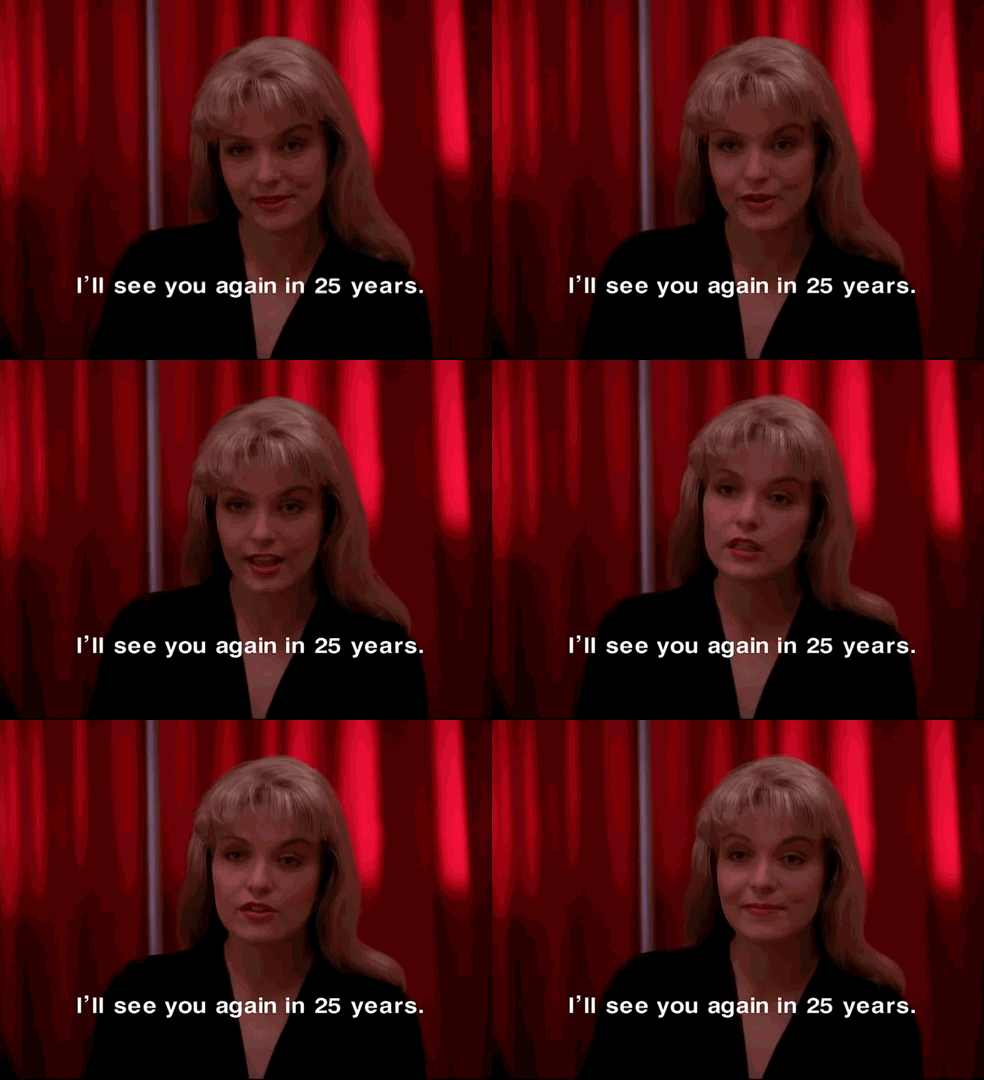
For better or worse, Twin Peaks stands for something bigger than it is. It is the nucleus of a fine art television and a prism through which to see the medium. Laura Palmer said she’d see us in 25 years. She was 25 years over.

The Rest Of The Year’s TV

Posted in American TV (General), American TV Shows, British Shows on American TV, Reality TV, Reviews, TV advertising, TV channels, TV Criticism, TV History, Unsung Heroes, Watching TV with tags , , , , , , , , , on December 31, 2014 by Tom Steward

There’s a formula for writing annual ‘Best Of’ TV lists. First it’s compulsory to observe how pointless a task it is making such a list for a vast and varied medium like television, then talk about how your criteria will be completely different, before naming the SAME EXACT shows as every other critic. Well, I don’t think it’s pointless, at least no more futile than doing it for books or films (where critics don’t seem to have the same anxieties about habitually omitting factual and lifestyle titles). I have no wish to create an opaque ratings system that will lead me back to shows which come pre-ordained as the best of TV. But I do want to ensure that the titles I choose won’t appear on anyone else’s list, something which gets harder and harder as critics begin to fawn over the nichest possible television. So don’t consider this the year’s best TV (see I’m doing it in spite of myself!) but rather good TV that has been overlooked simply because it doesn’t get listed.

Botched (E!)

...what if he dies first?

…what if he dies first?

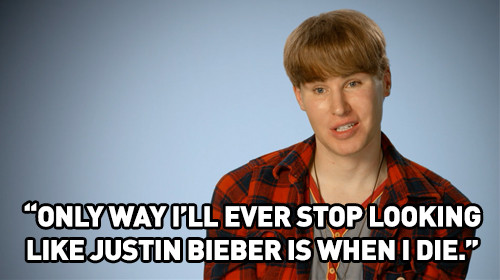
Real Husbands Dr. Paul Nassif (disguised as Moe Syslak from The Simpsons for ease of viewer identification) and Dr. Terry Dubrow (other two-quarters of Heather Dubrow, who must always be named twice) are L.A. plastic surgeons who specialize in fixing botched jobs. There’s some emotional hard luck stories but basically it’s the best excuse ever for social voyeurism and with patients like a Human Ken Doll and a 33-year old man with the face of an early-teen Justin Bieber it’s about as visually mesmerizing as reality TV gets. The show is also indispensable body horror, with its drop-in circus of malfunctioning and distorted anatomy. Even E’s glossification can’t mask the raw psychological distress.

90-Day Fiancé (TLC)

A show close to mine and G’s hearts, since I arrived in the US on a marriage visa. This observational documentary follows six couples during the 90-day window for visitors to the US to marry on the K-1 visa. It’s as compelling for its cartoon parodies of loving marriage as it is for reaffirming the borderless beauty of the institution. So extraordinary and bizarre is the experience for these culture-clash couples that the network barely needs to meddle in the melodrama, as it does for its other reality shows, giving it a more natural (if no less extreme) flow of real events than heavily devised TLC docu-soaps like Here Comes Honey Boo-Boo.

Muppets Most Wanted (Disney)

Variety at heart!

Variety at heart!

Probably more likely to be dismissed on grounds of not being a TV show, this was nonetheless the movie that in 2014 most thoroughly blurred distinctions between film and television. The Muppets are a creation of television, stars Ricky Gervais, Ty Burrell and Tina Fey are all television personalities, and the legacy of The Muppet Show is privileged at the expense of the movie franchise (the latter self-consciously in comic acknowledgements of the diegetic amnesia around popular movie characters and sequels). The movie is a joyous celebration of the achievements and talents of television past and present, reminding us of how far the medium has come. And it’s full of commercials!

LIVE With Kelly And Michael! (ABC)

A show that will doubtless elude recognition for its monotony and ubiquity, but this doesn’t change the fact that host Kelly Ripa is by several miles of open country the funniest, smartest, wittiest and most multi-dimensional presenter in daytime. Her work in morning television is more akin to what Conan, Colbert and Craig Ferguson have done with the late-night form than the platitudinous moron-making of virtually everybody else on TV at that time, and until about 11 in the evening. This is an everyday occurrence, which makes it all the more startling, but her essential impersonation of Laura Linney in the Halloween parody of PBS Masterpiece Theater speaks volumes.

The Late Late Show With Craig Ferguson (CBS)

Not like any other late night show!

Not like any other late night show!

Dare I say that Craig Ferguson’s departure from late-night talk shows will leave an even bigger hole than David Letterman? While Letterman innovated within the format, Ferguson created a new late-night form that was genuinely subversive, avant-garde and experimental, importing a brand of British vaudeville surrealism reminiscent of Reeves & Mortimer and The Mighty Boosh. Like those acts, Ferguson meshed light entertainment with serious art, carved out an absurd fantasy using television grammar, and delivered alternative culture disguised as broad comedy. It was a rejection of all that was bland and formulaic about one of American TV’s most intransigent genres, and a complete reinvention of its possibilities.

Watching TV With Britons Part 2: Same Same Same

Posted in Americans watching British TV, TV Acting, TV channels, TV Criticism, TV History, Watching TV with tags , , , , , , , , , on December 27, 2014 by Tom Steward

The second part of my exile’s guide to British television looks at the unwelcome familiarity of the programmes I watched during my recent visit to the UK, as any vain hope of something changing for the better while I was away is quickly crushed under my muddy, slushy Wellington boot:

The Royal Variety Performance (ITV):

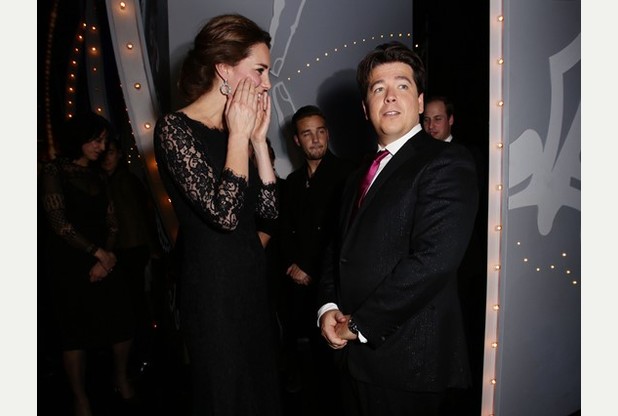
Who is the least talented person in this picture?

Who is the least talented person in this picture?

As both variety (our version of vaudeville) and royalty are anachronisms in British popular culture, this annual broadcast of theatrical entertainment staged in front of members of the monarchy seems to exist for nostalgia alone. Tellingly, there’s no variety on offer but merely alternating stand-ups and singers. The addition of William and Kate – presumably as a reward for breeding – meant that the event was no longer attended by a couple famous for their dislike of showbusiness but they still couldn’t help appearing like a benign Statler & Waldorf. It’s hard to believe that host – and redefinition of the term ‘comedian’ – Michael Mcintyre remains popular in Britain but given the programme’s commitment to the regression of our culture, artist and medium have never been better matched.

The Railway: First Great Western (Channel 5):

Public transport documentaries have been the saving grace of British reality television in the past few years, but the UK’s TV network-in-the-attic Channel 5 has, by focusing on this year’s closure of the Dawlish rail line due to storms and flooding, turned it into weather porn – one of the less commendable reality genres to emerge on British TV after the advent of climate change! Still, it was interesting to see that Home Secretary Theresa May is as inept at forming sentences as she is at politics.

Black Mirror: White Christmas (Channel 4)

A Christmas Hamm!

A Christmas Hamm!

British TV critic and screenwriter Charlie Brooker exists in a categorical limbo between Clive James and Rod Serling, alternating parodic weekly TV review shows with anthology sci-fi horror. This festive (in genre alone!) edition of techno-fear playhouse Black Mirror was, in keeping with the British Christmas special, more conventional than we expect from the series. The formulaic storytelling was partly a satisfying return to the Christmas TV horror plays of old but also revived some rather retrograde attitudes to gender and race that I’m sure we’d all have rather left in the TV of the 70s. A surprise Christmas gift came in the form of an outstanding star turn by Jon Hamm, leading the effort to turn British migrant labour in American TV into a hostage exchange (P.S. You keep James Nesbitt, we’ll have Steve Buscemi!), which, as Mad Men comes to a close, more than proved – at least to doubting Thomases like me – that he could credibly be something other than Don Draper.

It Was Alright in the 70s (Channel 4)

Several people told me I should watch this programme, which runs clips of contemporaneously controversial British TV from the 1970s alongside commentary from the people involved as well as aghast modern-day viewers. The clips themselves have the requisite shock and entertainment value, but I was uneasy with the tone and project of this documentary. It seemed to suggest that the bigotry and exploitation that appeared in 1970s television was somehow a thing of the past and that all the problems of representation had subsequently been resolved, whereas I saw plenty of examples, if perhaps more latent than pointed, of prejudice and cruelty in the TV I watched while in the UK. It’s also a very selective history of 1970s television in the UK which continually declines to mention how experimental, challenging and innovative a great deal of TV was in that era, perhaps more than now, and certainly with more frequency. When this is acknowledged, it’s usually passed off as the inconsequential ramblings of a cultural historian in the editing, and only ever associated with content that would be hard to defend on a representational level, such as The Goodies’ (literally!) savage attack on apartheid involving racial slurs and minstrelry. But perhaps the most disappointing aspect of the programme is its lack of originality. It’s a cursory spin on a clip-based nostalgia format that’s been around since the turn of the millennium, and almost matches the exploitative tendencies of the TV it lambasts by offering recent revelations about the sex crimes of 70s British celebrities as a unique selling point.

Autopsy: The Last Days of Elvis Presley (Channel 5)

briton 6

Dr Richard Shepherd, Graduate of The University of Stating The Bleeding Obvious!

Like asking which bullet killed a person shot 24 times. Worth seeing for the Elvis curl on the lips of the actor portraying Presley whilst dying on the toilet.

Away Sky

Posted in American TV (General), American TV Shows, TV channels, TV Criticism, TV History, Watching TV with tags , , , , , , , , , on October 22, 2014 by Tom Steward

It’s no shock that here in the States TV shows go on far too long or that they change drastically over time. Most series signpost their anti-ageing facelifts to viewers with the help of subtitles, which act as disclaimers for authenticity and longevity, as in the later years of Saved by the Bell or on the opposite end of the scale (it thinks!) American Horror Story. Others more confident of their status as season-long anthology plays such as True Detective and Fargo will re-cast completely each year to demonstrate that it is the concept not the characters that are the stars. Despite this amnesty on self-adaptation, some shows still seem wary of admitting to viewers that they have renewed themselves in the process of maintenance.

Remember them? No, neither do I!

Remember them? No, neither do I!

Chief among them is Homeland. Showtime’s CIA thriller has killed off the character around which the show revolved, re-located to another country, and butchered its beautiful title sequence, which was always as good as (and increasingly better than) anything that followed. Yet it still goes under the name Homeland and goes around acting as if nothing has happened. Frankly, it’s a bit of a cheat. Having revealed itself as a concept that barely had enough material for a mini-series, perhaps it would have wiser to position the post-Brody Homeland as a spin-off or linked franchise entry. With the emigration of the series, it could be Homeland: Kabul or as Damien Lewis re-appears shrunken in all but hair as Brody’s baby son, Homeland: The Next Generation.

I’m not serious about these title tweaks, but the point is that TV has ways and means to suggest that a show has changed dramatically without any detriment to the brand or canon. It’s a win-win situation. The viewer base for the series will return in loyalty to their show and if hideous it can be written or quietly killed off in complete deniability of any resemblance to the original. There is precedent for this in the Columbo spouse-off featuring the elusive Columbo Indoors. Mrs. Columbo starring captain-turned-convict Kate Mulgrew was intended to be a mystery following the amateur sleuthing of Columbo’s wife. It was so unpopular and implausible that producers decided Kate Columbo just happened to be married to another detective with the surname.

In the last four years, Key & Peele has been one of the smartest and most culturally relevant comedy programmes on American TV, and surely a historical high point in TV sketch comedy. This season they have forgone what for many viewers was the highlight of the show, their semi-improvised skits in front of a studio audience introducing the main sketches. There are also noticeably fewer sketches per show, and a shift in the framing of the series towards the cerebral with a sombre western motif in the re-recorded theme tune and filmed introductions. With the amount of time they’ve been on the air, and my suspicion that the changes were forced by a busy production schedule, I don’t begrudge it. But I don’t approve.

The ‘live’ segments of Key & Peele may have been too much of a nod backwards to traditional vaudeville for those obsessed with innovation, but they were the show’s unique selling point. They were bouncy, energetic, and personable, with many of the loosely improvised moments standing shoulder-to-shoulder with the pre-written material in terms of quality. The pre-recorded banter this has been replaced with just seems flat and inert by comparison (with the exception of the discussion about ventriloquist dummy ‘Willy Talk?’). Equally, I feel that what set the sketches apart from the Saturday Night Live School was how tightly-scripted and effectively concluded they were. With sketches stretched to a commercial beat and post-punchline by close-of-play, they’re dragging like Lorne Michaels’ feet about hiring black women.

Did they write that?

Did they write that?

I am, of course, a hypocrite. An aspect of AMC’s The Walking Dead I greatly enjoy is how the concept of the series can periodically change in the space of a few episodes. At the beginning of last year, it was a show about farming. This time round it’s about shooting cannibals with sub-machine guns. Yes, the idea of movement is ingrained in the title, and change has been a part of the formula from the beginning, but it’s still got away with en-masse recasting and retooling without any acknowledgement to the viewer. I suppose the difference is that between growing and living. The Walking Dead evolved into something greater than it was while Homeland and Key & Peele maimed their greatness to carry on.