Archive for the TV Culture Category

Frame Vs. Frame

Posted in American TV (General), American TV Shows, TV Criticism, TV Culture, TV History, TV in a Word, Watching TV with tags , , , , , , , , , , on January 22, 2014 by Tom Steward

Lately I’ve been reading a lot of articles arguing about whether TV or cinema is better. They don’t start off like this. Usually they begin as a debate about which medium is in better shape but they quickly descend into partisan defences of one or the other. Those in the film corner like to base their arguments on what cinema can do rather than what it’s currently doing. Los Angeles Times film critic Kenneth Turan’s absurd defence of cinema’s dominance over TV (not that it needs it, of course!) argues that cinema is better than TV because the big screen can do anything the small screen can, even if it tends not to, and that when it does the same thing as TV, cinema is always better because you’re out of the house. There’s no impassioned defence of contemporary film just a retreat into the past to blind readers with movie nostalgia. Guardian Film’s Tom Shone can’t find a director more contemporary than Ang Lee to substantiate his case for cinema (though many more recent names come even to my mind).

The Golden Age of Television…or whatever happens to be on!

Critics defending the box in the corner have the opposite problem. They are so preoccupied with what today’s television says about the quality of the medium there’s no acknowledgement of how TV’s history might also be useful in arguing the point. While critics like Turan can throw off allusions to Gance and Cocteau, TV’s advocates rarely reminisce further than Weiner or Gilligan (the Breaking Bad creator not the TV cast away). This may be because TV critics are not asked to be historians in the same way film critics are but why is that? Well it’s down to the profound disrespect we have for old television and the widely held belief that TV is ephemeral. TV critics don’t seem to understand that if they argue TV is great because it’s better than it used to be, they leave themselves open to these rebuttals from cinema’s proud history. Throw in a Serling and a Huggins occasionally and maybe you’ll convince a cineaste that TV is good because it’s always been capable of being good not by accident of circumstances. And you’re at a severe disadvantage against someone with a photographic memory when you’re an amnesiac.

It’s all part of a critical bigotry that resorts to casting aspersions on a field of culture you happen not to cover (but probably would if commissioned to) rather than taking a cold, hard look at the industry that you do. Film critics can no more admit to the abysmal hit rate of current movie releases than TV critics can acknowledge that most of the time on-air television resembles an endless sewage pipe. But the behaviour of TV critics irritates me more, because in a way they’re maligning television far more than any film critic has done – with the possible exception of Mark Kermode, who writes about TV like an unreasonable drunk. TV has been, for the most part, wildly excellent for a good thirty years now and was always pebble-dashed with artful gems throughout its long, ignominious history on the air regardless of the creative problems of the era. Yet TV critics keep trying to carve out this idea of an ever-beginning ‘new golden age of television’ that is just about now. This assertion that good TV is periodic is insulting enough as it strongly suggests that it’s uncharacteristic of the medium but the refusal to see the best of TV as connected by the medium rather than just a point in history is absolutely baffling to me.
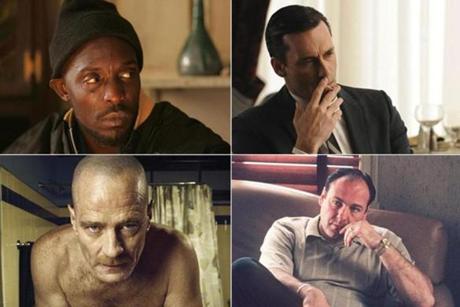
It’s a new golden age and has been since 1999!

Mark Lawson’s recent Guardian film and TV blog suggesting that the golden age of television may already be over turns a matter of quality into one of timeline. Instead of seeing a historic tapestry of TV that lets us see the magnitude of what has been accomplished, we’re disputing the dates of hermetically sealed and arbitrarily compiled golden ages. The ‘golden age’ thesis is also a very weak argument if you’re trying to build a case for the quality of television. I wouldn’t let the continuous stream of terrible new releases I encounter at the movies on a regular basis lure me into thinking that cinema wasn’t one of the great gifts humanity has given to culture and art. Equally, I wouldn’t think any more of television than I already did if I found out it managed to put together a few good shows back-to-back. I would think twice if I knew it kept happening.

Zappy Holidays

Posted in American TV (General), American TV Shows, Internet TV, Reviews, TV Culture, TV Dreams, TV History, Watching TV with tags , , , , , , , , on December 4, 2013 by Tom Steward

Like the most innocuous word in the English language, the phrase ‘holiday TV special’ means something very different in Britain and America. Christmas specials on UK television are typically bloated extrapolations or unwanted revivals of popular programmes while in the US they tend to be family-friendly entertainment specially made for the occasion. In Britain, the runs of TV series are normally over by Christmas meaning that each show is unnaturally forced back into the schedules. However, in the US Christmas falls slap-bang in the middle of the network season, allowing for a festively-themed episode preceding the mid-season break that incorporates the holiday rather than the other way round. American holiday specials tend to go straight for spectacle and showmanship, something we’ve tried unsuccessfully to imitate with musical versions of our soap operas and star performances where you text the Bee Gees for no apparent reason. I’m sure we Brits used to do this better in the days when vaudeville ruled our airwaves but US TV remains far less hesitant and bashful about pure, uncomplicated show. With the help of my wife G, who has been willingly indoctrinated by American holiday TV fare since childhood, I’ve been watching some classic specials.


Rudolph the Red-Nosed Reindeer (1964)


The oppressed in 1960s American society.


What begins as a music video for the beloved Christmas song soon transforms into a scathing indictment of racism, homophobia and sexism. Appropriately for a TV movie made in the year the Civil Rights Bill was signed, Rudolph’s ostracision is an issue of skin colour. There’s also Hermey, a gay elf (acknowledged by seldom-used codeword ‘Dentist’) whose good hair, handsome looks and ambitions for a white-collar career make him a social misfit in the North Pole. It’s one of the few occasions in mainstream entertainment you’ll see a gay man as our closest link to normality. Such prejudices are shown to be a symptom of the stagriarchal society in which women are kept out of decision-making processes. The bare bones of the song are fleshed out with references to every children’s story and American myth you can think of: The Abominable Snowman, The Gold Rush, Narnia. There’s also a scene with disabled toys that could keep Pixar in court with the Rankin-Bass estate for the rest of existence. Add in transcendent stop-motion animation and wonderfully offbeat characters (like the prospector looking for silver and gold in the North Pole) and you have a deserved classic.


A Charlie Brown Thanksgiving (1973)


Stomach pump, please.


Having some of the best jazz piano riffs ever, ever, ever (courtesy of the Vince Guaraldi Trio) would be enough to destine this cartoon for greatness. But it’s so much more. A Thanksgiving variation on Charles M. Schultz’s Peanuts comic strip, the special has that perfect blend of wit and slapstick that distinguishes the very best cartoons. The combination of intelligent adult humour and childish situations sets an enduring template for some of the finest animation of the last thirty years: The Simpsons, Rugrats, King of the Hill. Schultz’s genius premise of a child with the malaise of a middle-aged man and friends who act like dinner party guests in a Woody Allen movie has one of its most memorable outings here, as Charlie tries to avoid social awkwardness by hosting an en-masse Thanksgiving dinner. Helped immeasurably by the wistful score, there’s a deep-seated melancholy here, which gives the special an unusually dark adult tone for family entertainment, making it the heir of troubling holiday movies like It’s a Wonderful Life and appropriate for Conan O’Brien’s deleted suicide scene parody. The painful deadpan on Charlie’s face was my own expression after a Thanksgiving buffet dinner.


The Star Wars Holiday Special (1978)


A long time ago in a galaxy far far gone…


A classic of you’ll-think-you-dreamt-it television, this Thanksgiving spectacular featuring characters and actors from the original Star Wars movie was never re-broadcast and recordings were suppressed for decades by creator George Lucas in his ongoing quest to change history. Thanks to fans’ recordings of the original broadcast that can now be shared via the internet, we’re able to see the special in all its eminently bizarre glory. It’s the only time you’ll ever see an elderly wookie orgasming watching a helmet porno of Diahann Carroll, Golden Girl Bea Arthur tossing drunks out of the cantina, and a space drag queen TV chef cooking bantha meat while spinning her bosom. There’s a nice idea in here somewhere about using TV to bring the domestic verisimilitude of everyday life to the Star Wars universe but it gets drowned out by the tonal confusion and unintentional avant-garde of the execution. It also features some of the oddest dramatic choices in the history of TV (probably culture) such as dialogue-free, grunt-based scenes of Chewbacca’s family at home. At least we now have an idea of what Return of the Jedi would have been like had David Lynch directed it.

Watching TV with Americans will return in January…Merry Christmas and a Happy New Year to all!

Serial Killers

Posted in American TV (General), American TV Shows, Behind-The-Scenes, Internet TV, Reviews, TV advertising, TV channels, TV Culture, TV History, TV News, Watching TV with tags , , , , , , , , , , , , , , , , , , , on October 29, 2013 by Tom Steward

It’s tempting to think that we live in an age of serial television, since virtually every programme we see features some kind of story development designed to keep viewers coming back week after week. Nowhere is this more evident than US TV drama. Critics have been telling us for years now that what distinguishes dramatic American TV from its British equivalents and cinematic competitors is the ability to tell stories over time. Yet very few US TV drama series have sustainable premises and even fewer have enough story arcs to outlast a shelf life of one season on the air.

This struck me while watching the early episodes of Season Three of Showtime’s Homeland, patiently waiting for the show to justify its continued existence. The series had the requisite twists and turns for a season of thrills and jolts and spent its second treading water by flipping the premise like a trick coin so that viewers basically watched the first season again in reverse. The third season has already drowned in its own uncertainty over the future trajectory of the show. I’m not at all averse to long-running programmes changing what they are, as long as they change into something!

Damian Lewis tries to hide from disgruntled Homeland viewers…

Homeland is a glorified mini-series but so are many of the contemporary dramas we treasure as serial television. Damages and 24 never deserved to get beyond a single season. The plausibility and novelty of both series is dependent on the events in the fictional world of the show never being repeated. Even TV dramas celebrated for their narrative complexity such as The Sopranos and The Wire barely made it past their first seasons. Both shows came to a story impasse at the end of their pilot runs and had to work hard at finding new characters and concerns to explore.

Let’s get some historical perspective here. The trend towards serial storytelling in US TV drama over the last thirty years didn’t arise from a need to tell stories more complexly and truthfully. As soap operas went primetime in the late ‘70s with Dallas and Dynasty, network executives and advertisers alike recognised that cliffhangers and continuing stories could be a valuable commodity in finding and keeping viewers. I’m not saying this didn’t lead to more complex television storytelling (and often the viewers who liked this most were those targeted by sponsors) but serial television had to be sellable to stay prevalent.

Serial storytelling in US primetime!

Serial storytelling is a neat way to illustrate television’s differences from books and movies (at least those that aren’t series). But the truth is for much of its history, dramatic storytelling in US TV was delivered in self-contained episodic form along a more generous, less competitive principle of not alienating viewers who might miss a week occasionally. The legacy of episodic storytelling is still discernible in American TV today. The successful CSI and Law & Order franchises paid only lip service to serial form and the best show currently on the air, FX’s Justified, is based principally around episode-specific stories.

Most contemporary US TV dramas are better described as walking a tightrope between episodic and serial storytelling. In order to attract casual viewers and get syndicated, TV series must have a loose enough storyline to be broken up and watched out of sequence without too much loss. But as the options for TV viewing multiply exponentially and the landscape of dramatic entertainment become ever more fragmented, stories that run across episodes and seasons remain a tried and trusted technique for encouraging repeated viewing and customer loyalty. A step too far each way takes you into daytime or days gone by.

Justified, the last outpost of episodic TV!

AMC currently holds a reputation for producing television that showcases the best of American serial drama, something alluded to in their last two slogans ‘story matters here’ and ‘something more’. But let’s look at the facts. The recently-completed Breaking Bad is a fallacy of serial storytelling, compacting six years of television into two years of onscreen time. Mad Men produces an occasional episodic masterpiece but watching the series continuously quickly gets tiresome, making it preferable to cherry-pick instalments from digitised series archives. The Walking Dead escaped Stephen King mini-series status by the skin of its teeth (pun very much intended!).

A television drama that is genuinely serialised runs counter to so many of the qualities of US TV we hold dear, like individually crafted episodes and storyline resolution. There’s also a lot of lame ducks out there with nowhere to go and no story to advance dodging cancellation each year. 

TV Blinded Me With Science

Posted in American TV (General), American TV Shows, Behind-The-Scenes, Reviews, TV advertising, TV channels, TV Culture, TV History, TV in a Word with tags , , , , , , , , , , , , , , , , , , , on October 2, 2013 by Tom Steward

As if you needed me to tell you, the finale of Breaking Bad was aired on Sunday night. The build-up to this television event was swathed in publicity and hype and the show has been swaddled in blanket praise for some time now. Cyberspace is awash with bloggers and reviewers telling you what they thought about the finale, and I don’t really have anything to add, except to say that if the best shows have the most unremarkable endings then Breaking Bad is in contention for greatness. It seems everyone-including the show’s creator-is at a loss to explain why Breaking Bad has been so successful, especially as later seasons attempted to alienate viewers with their unremitting darkness. Another recent television event might help us understand.

Ricky Tomlinson in Controversial Last-Minute Casting Change For ‘Breaking Bad’ Finale.

Last week, eponymous host of 90s’ educational children’s TV show Bill Nye The Science Guy (for British readers think a hipster nerd Johnny Ball) survived the first elimination of ABC’s ballroom competition Dancing with the Stars despite a performance roundly panned by the judges, although if they’d changed the style of dance to ‘David Byrne’ it would have been tens all around. Nye was rescued by the popular vote after his Nutty Professor-themed dance to 80s cult movie soundtrack classic ‘Weird Science’ went viral. Despite an injury-enforced exit from the show this week, Nye’s routines remain this season’s hottest properties. The common denominator in these two unlikely successes is science. Is it pure coincidence or serendipitous discovery and are American TV viewers blinded by science?

Bill Nye channelling David Byrne.

It seems bizarre that in a country where the mere mention of healthcare can cause the government to shut down, science is such a popular commodity. Yet again and again American TV shows flashing their scientific credentials like phosphorus in a Bunsen burner are more likely to succeed. For years, House, a medical show about diagnostic research, beat out the competition from doctoperas like Grey’s Anatomy. Regardless of genre, shows slanted towards the scientific are bound to come out on top. CSI, the most popular cop show on TV, is about forensic scientists and recently there’s been a string of TV hits based around specialists consulting on criminal investigations such as Lie to Me and Perception, the latter beginning each week with a neuroscience lecture.

Perception, a class in TV!

It’s true that the conversations you’ll see about Breaking Bad in the press and social media probably won’t mention the show’s scientific content, except perhaps as a joke (‘kids now want to take up chemistry’ etc.) but it can’t simply be ignored either. Chemistry, physics and biology feature most typically as a way for the characters to get out of a corner, so Walt’s knowledge of the dissolving qualities of various acids helps him dispose of a body and a home-made car battery prevents Walt and Jesse dying in the desert. In this sense, science figures in much the same way it did in MacGyver, where the protagonist’s knowledge of physical sciences was a resource for removing jeopardy when only everyday items were at hand.

Breaking MacGyver.

But science in Breaking Bad is not simply a MacGuffin (or ‘Macgyvfin’) but the trigger for the entire programme. In the Pilot episode, Walt reminds us that his cooking of an unusually high-purity meth product, his route into the international drug trade, is just ‘basic chemistry’. It’s his culture’s treatment of scientists that puts him in the dilemma where meth-cooking is a viable option in the first place. While the more business-savvy of his former research colleagues soar to unlimited wealth, the true scientific genius is forced to take a severely underpaid and unfulfilling high school chemistry teaching job which can’t make up the numbers once he needs costly medical treatments. In turn, each character’s fate becomes tied to how much they know about science.

The Science of Good Television

Following a week in which the talk about American TV was centred on two scientists, Walter White and Bill Nye, I don’t think it’s too much of a stretch to suggest that there’s some sort of cultural fascination with science at play here. I’m not naïve enough to think that the viewing public is interested in using TV to get a scientific education but they’re certainly fond of watching scientists and having the paraphernalia of science on their screens. Maybe Americans are dying to have educated experts telling them what’s going on, something conspicuously lacking in TV news and reality, or maybe there’s something attractive and compelling about TV scientists that makes people want to follow and support them, regardless of their failures and flaws.


Double Act

Posted in American TV (General), American TV Shows, Behind-The-Scenes, Reviews, TV Acting, TV Culture, TV History with tags , , , , , , , , , , , , , , , , , , , on September 24, 2013 by Tom Steward

One of the toughest tasks in acting is creating a unique and memorable character that becomes completely synonymous with the actor. One of the toughest tasks in TV acting is to do it twice. Cinema and theatre actors are asked to do this every time they appear, unless reprising a role in which case they won’t play the part more than a few times. But due to the lengthy and ongoing nature of most TV fiction, small screen actors tend to play one part continuously over a number of years, embedding themselves in the public’s consciousness as a single character. Many TV actors struggle to transcend these defining roles, either failing to convince when playing conflicting parts or returning to screens as thinly disguised versions of their most remembered character.

Alan Alda: Forever Hawkeye

Alan Alda will always be Hawkeye Pierce-the Korean War medic he played during the 11 years MASH was on the air-and much more so than Donald Sutherland who originated the character. While Sutherland would continue to add iconic screen characters to his name (John Klute, Fellini’s Casanova, The Man on the Bench in JFK), Alda would stay a hawk in eagle’s clothing. This is partly the problem of Alda being cast in roles which functioned as tributes to his MASH character, like his stint as Dr. Gabriel Lawrence in ER. But the shadow cast by MASH was too enduring for him to escape even when subsequent performances were superior, such as his turn as presidential candidate Arnold Vinick in The West Wing featuring a semi-improvised debate filmed under live conditions.

Dennis Franz and his costume for the last 20 years.

Dennis Franz is quintessentially Andy Sipowicz to most TV viewers after 12 years playing the character throughout the entire run of NYPD Blue but could also conceivably be remembered as Norman Buntz for his 4 years in the role in Hill Street Blues and eponymous spin-off Beverly Hills Buntz. It would seem Franz achieved the impossible and created two wholly separate characters that he is instantly identifiable with if it weren’t for the fact that Sipowicz and Buntz were 2 sides of the same maverick antihero cop coin. Actor Daniel Benzali was first introduced in a major role to TV viewers in NYPD Blue as mob lawyer James Sinclair and then a year later played criminal defence attorney Teddy Hoffman in Murder One, the same character but with different moralities.

Benzali in his best acting role yet…a pop singer!

I’m put in mind of these peculiarities of TV acting because I’m currently watching FX’s modern-day western detective series Justified which features not one but two performances where the actors have bucked this trend and created new characters distinct from those they were previously renowned for. It’s now impossible to think of these two actors without having both of their characters in mind and yet they never become confused. This feat is even more remarkable as said actors have achieved recognition as a second character while playing roles which on paper look identical to the ones they previously inhabited and in like shows. It’s a rare ability that’s enough to put an actor in a television elite but almost unheard of from two different actors in the same TV programme.

Two great actors, four great characters!

The actors in question are Timothy Olyphant, who previously portrayed the reluctant sheriff Seth Bullock in Deadwood and currently plays anachronistic U.S. Marshal Raylan Givens in Justified, and Walton Goggins, formerly shit-kicking scumbag corrupt cop Shane Vendrell in The Shield and now Justified’s resident anti-villain Boyd Crowder. Olyphant plays Bullock and Givens as self-styled western lawmen poseurs (helped considerably by his gunslinger profile and Eastwood-like gait) but the former is humourless and ascetic whereas the latter is all about freewheeling comedy and casual vices. Both are altruists fighting hedonistic urges but while Raylan seeks justification or soft substitutes for his pleasures of the flesh (whether manoeuvring felons into quick draws or indulging an ice cream fetish), Seth punishes himself for all transgressions to the point where he is psychotically repressed.

Boyd Crowder isn’t just Shane Vendrell in drag.

It would have been tremendously easy for Goggins to play Crowder as a twin of Vendrell, the amoral and emotionally child-like southern states cop-turned-criminal. Both men are at root ugly, bigoted criminals who are nonetheless veneered with Dixie charm and flirt with respectable social institutions, be it the law or the church. There are shades of Shane in the race terrorist Boyd we first encounter in the Justified pilot but he soon emerges as a man locked in a paralysing performance of deadpan ambivalence and courtesy reconciling his inner contradictions of benign religious servitude and venal gangsterism. If the job of acting is to transform oneself repeatedly then TV could be seen as a hindrance to the profession. On the other hand, we become attached to one character they create far more than in any other medium. Two of American TV’s finest actors are demonstrating that we can have both.