Archive for the TV History Category

Home Movies

Posted in American TV (General), Reality TV, TV channels, TV Culture, TV History, TV News with tags , , , , , , , , , on January 7, 2015 by Tom Steward

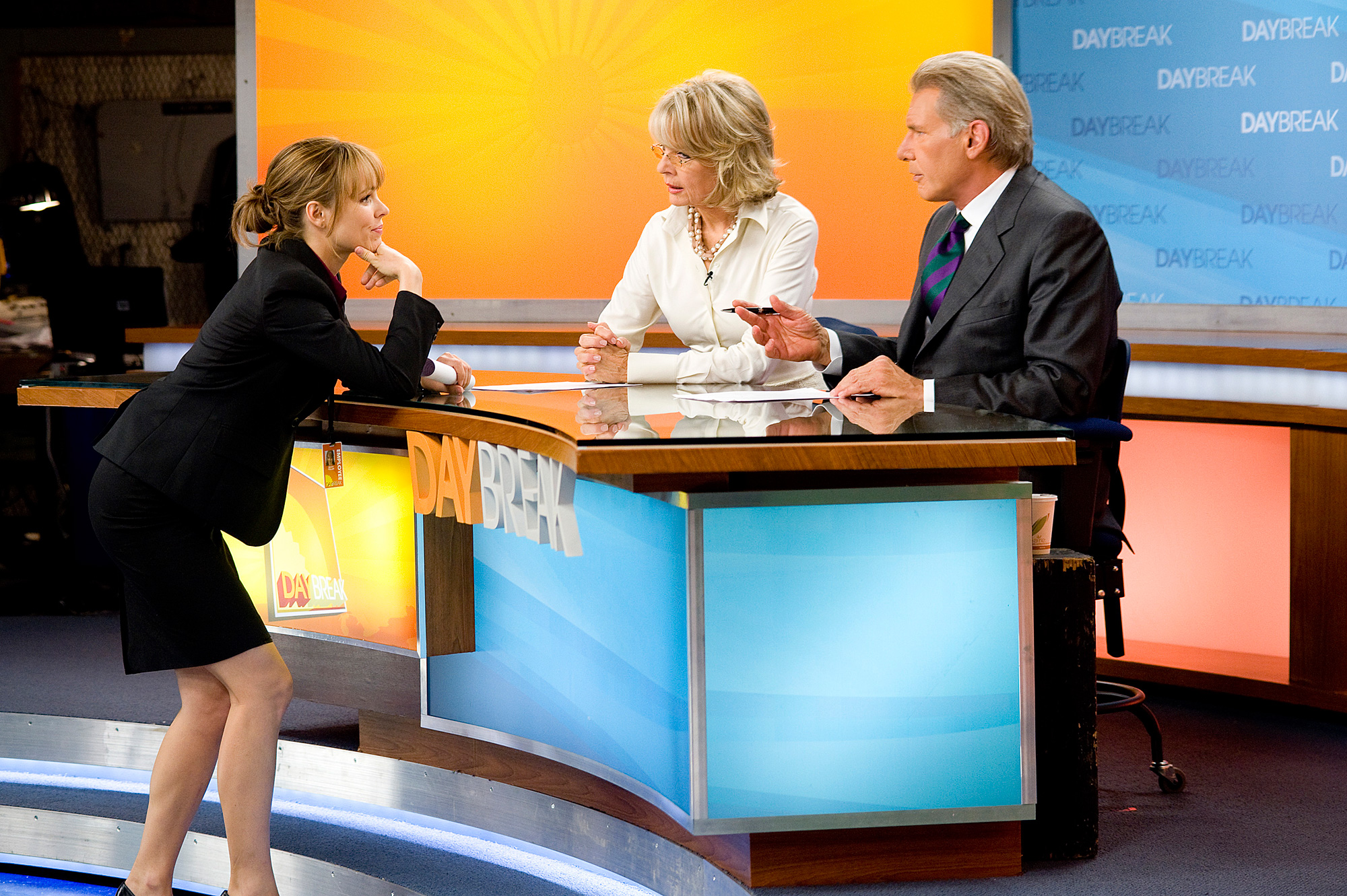
Though I’ve devoted the last decade of my life to television (in both work and play!), movies were my first love and they’re still at the heart of what I write and do. Consequently, I’m often asked what the best movies about television are. I’m always unsure what I’m supposed to evaluate; the quality of the movie or how well it deals with TV. The two very rarely go together. For instance, my first instinct is to say Morning Glory, a mature TV news satire that neither skirts around the rampant commercialism of American television nor uses it as a brush to tar the medium with. But the acting is regularly terrible, the (non-TV related) storyline lousy, and the ham-fisted direction really kills the comedy. But as a movie about television, I infinitely prefer it to the pious nostalgia of Good Night and Good Luck and TV writer Paddy Chayefsky’s glorified revenge pic Network, as superiorly artful as those two films are. So I was conflicted in my feelings about the TV news thriller Nightcrawler.
...not to be confused with the porn parody of the same name!

…not to be confused with the porn parody of the same name!

Both Jake Gyllenhaal and Rene Russo give remarkable (and remarkably unusual) performances. The script is utterly solid, something which cannot be underestimated in contemporary American cinema. The suspense elements are well-handled, and the photography mixes the best of cinematic vistas with the seedy beauty of urban photojournalism. I thoroughly enjoyed it, which is a rare experience for me in the cinema (seeing a new movie). I have no issue with the portrayal of American TV news, as it clearly is as base, gruesome and sociopathic as the movie suggests, and just as culturally defunct and laughably moribund. But it’s a narrow view of television that is loath to admit the frequency with which contemporary TV beats out cinema for complex drama and art and unfairly highlights its tabloid extremes. It also suggests that the capacity for TV to be live (not that it really ever is anymore!) is a crutch to its expression that makes TV necessarily artless and sensationalist. But as far as movies about TV go, these kinds of representations are old news.

Movies about TV almost always focus on the production of non-fiction (typically news), stress the live aspects of television broadcasting (regardless of how live TV is at any given historical moment), and never fails to mention any quality of the medium that might situate it as inferior to cinema, like its commercial interruptions or diminished screen size and image quality. Comment me if I’m wrong, but all movies about TV have at least ONE of these three typicalities. What’s also significant is how ahistorical this cinematic portrayal of TV is. You could understand it when TV was the new kid on the block and the film industry wanted to play up the disparity between fulfilment and experience in consumption of the two moving image media (although historians question whether we can ever see the two so separately). But it doesn’t really make sense when you consider that film and TV industries have for large swathes of their history been interrelated economically under dual or conglomerate ownership. What is the advantage of saying TV sucks then?

It’s not a riddle I’ve particularly solved, except that the mythmaking of movies depends so heavily on the distinction of the cinematic experience that it behoves the industry to promote the fairytale of exceptionalism in the face of overwhelming economic, technological and cultural evidence to the contrary. I’m pretty sure that hijacking the feeling of live TV in these movies derives from a kind of jealousy about the immediacy and presence that the medium can cultivate, as in Tootsie which go to extreme expository lengths to make a broadcast of the intra-diegetic soap opera live. With bigger, clearer home sets and smaller, digital ‘studio’ theatre screens as well as a parity of commercial content and product placement in both new movies and TV transmissions, cinema hasn’t a leg to stand on. It is, however, a strategy that boutique television networks also use to distinguish themselves from everyday TV flow, judging by the number of tiny, flickering sets we see on HBO and AMC shows in the service of dispensing an endless barrage of homogeneous crap.
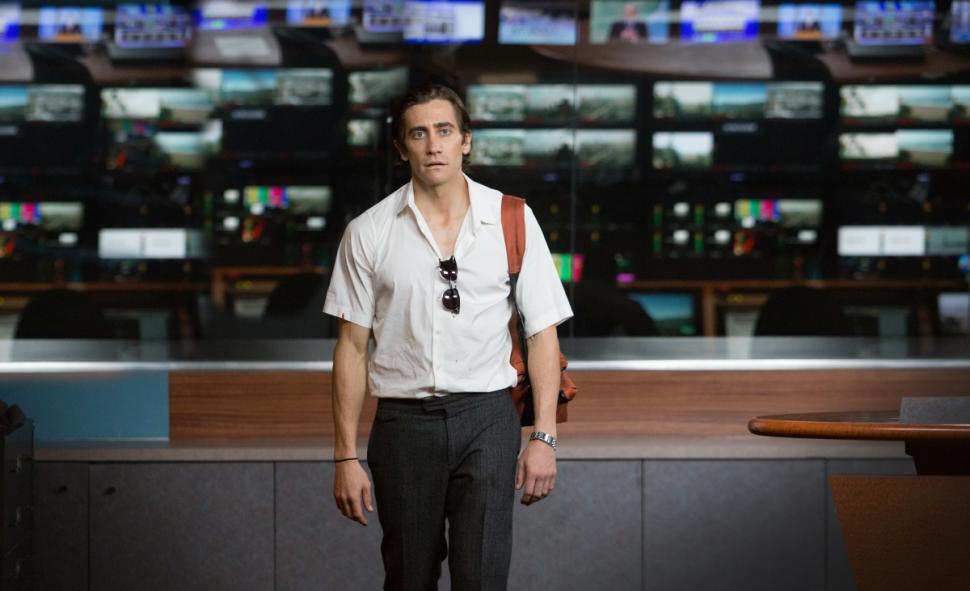
Fishing for a story!

Fishing for a story!

It may be time for the movies to start acknowledging some of the realities of contemporary television. It wouldn’t be hard – just ask the many actors who now regularly moonlight between the two! TV is better than its news output and infinitely more interesting than its increasingly rare live transmissions.
The Rest Of The Year’s TV

Posted in American TV (General), American TV Shows, British Shows on American TV, Reality TV, Reviews, TV advertising, TV channels, TV Criticism, TV History, Unsung Heroes, Watching TV with tags , , , , , , , , , on December 31, 2014 by Tom Steward

There’s a formula for writing annual ‘Best Of’ TV lists. First it’s compulsory to observe how pointless a task it is making such a list for a vast and varied medium like television, then talk about how your criteria will be completely different, before naming the SAME EXACT shows as every other critic. Well, I don’t think it’s pointless, at least no more futile than doing it for books or films (where critics don’t seem to have the same anxieties about habitually omitting factual and lifestyle titles). I have no wish to create an opaque ratings system that will lead me back to shows which come pre-ordained as the best of TV. But I do want to ensure that the titles I choose won’t appear on anyone else’s list, something which gets harder and harder as critics begin to fawn over the nichest possible television. So don’t consider this the year’s best TV (see I’m doing it in spite of myself!) but rather good TV that has been overlooked simply because it doesn’t get listed.

Botched (E!)

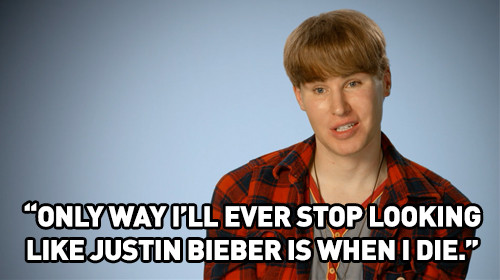
...what if he dies first?

…what if he dies first?

Real Husbands Dr. Paul Nassif (disguised as Moe Syslak from The Simpsons for ease of viewer identification) and Dr. Terry Dubrow (other two-quarters of Heather Dubrow, who must always be named twice) are L.A. plastic surgeons who specialize in fixing botched jobs. There’s some emotional hard luck stories but basically it’s the best excuse ever for social voyeurism and with patients like a Human Ken Doll and a 33-year old man with the face of an early-teen Justin Bieber it’s about as visually mesmerizing as reality TV gets. The show is also indispensable body horror, with its drop-in circus of malfunctioning and distorted anatomy. Even E’s glossification can’t mask the raw psychological distress.

90-Day Fiancé (TLC)

A show close to mine and G’s hearts, since I arrived in the US on a marriage visa. This observational documentary follows six couples during the 90-day window for visitors to the US to marry on the K-1 visa. It’s as compelling for its cartoon parodies of loving marriage as it is for reaffirming the borderless beauty of the institution. So extraordinary and bizarre is the experience for these culture-clash couples that the network barely needs to meddle in the melodrama, as it does for its other reality shows, giving it a more natural (if no less extreme) flow of real events than heavily devised TLC docu-soaps like Here Comes Honey Boo-Boo.

Muppets Most Wanted (Disney)

Variety at heart!

Variety at heart!

Probably more likely to be dismissed on grounds of not being a TV show, this was nonetheless the movie that in 2014 most thoroughly blurred distinctions between film and television. The Muppets are a creation of television, stars Ricky Gervais, Ty Burrell and Tina Fey are all television personalities, and the legacy of The Muppet Show is privileged at the expense of the movie franchise (the latter self-consciously in comic acknowledgements of the diegetic amnesia around popular movie characters and sequels). The movie is a joyous celebration of the achievements and talents of television past and present, reminding us of how far the medium has come. And it’s full of commercials!

LIVE With Kelly And Michael! (ABC)

A show that will doubtless elude recognition for its monotony and ubiquity, but this doesn’t change the fact that host Kelly Ripa is by several miles of open country the funniest, smartest, wittiest and most multi-dimensional presenter in daytime. Her work in morning television is more akin to what Conan, Colbert and Craig Ferguson have done with the late-night form than the platitudinous moron-making of virtually everybody else on TV at that time, and until about 11 in the evening. This is an everyday occurrence, which makes it all the more startling, but her essential impersonation of Laura Linney in the Halloween parody of PBS Masterpiece Theater speaks volumes.

The Late Late Show With Craig Ferguson (CBS)

Not like any other late night show!

Not like any other late night show!

Dare I say that Craig Ferguson’s departure from late-night talk shows will leave an even bigger hole than David Letterman? While Letterman innovated within the format, Ferguson created a new late-night form that was genuinely subversive, avant-garde and experimental, importing a brand of British vaudeville surrealism reminiscent of Reeves & Mortimer and The Mighty Boosh. Like those acts, Ferguson meshed light entertainment with serious art, carved out an absurd fantasy using television grammar, and delivered alternative culture disguised as broad comedy. It was a rejection of all that was bland and formulaic about one of American TV’s most intransigent genres, and a complete reinvention of its possibilities.

Watching TV With Britons Part 2: Same Same Same

Posted in Americans watching British TV, TV Acting, TV channels, TV Criticism, TV History, Watching TV with tags , , , , , , , , , on December 27, 2014 by Tom Steward

The second part of my exile’s guide to British television looks at the unwelcome familiarity of the programmes I watched during my recent visit to the UK, as any vain hope of something changing for the better while I was away is quickly crushed under my muddy, slushy Wellington boot:

The Royal Variety Performance (ITV):

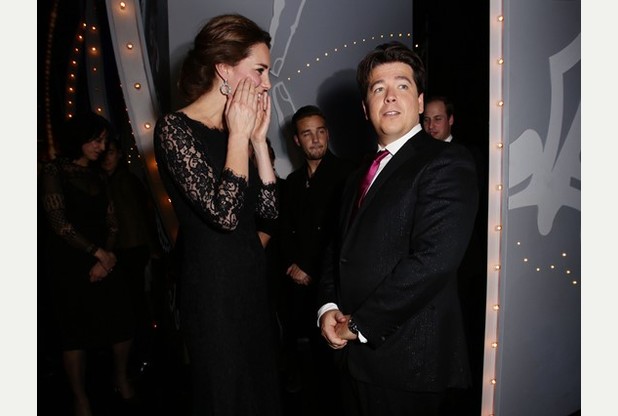
Who is the least talented person in this picture?

Who is the least talented person in this picture?

As both variety (our version of vaudeville) and royalty are anachronisms in British popular culture, this annual broadcast of theatrical entertainment staged in front of members of the monarchy seems to exist for nostalgia alone. Tellingly, there’s no variety on offer but merely alternating stand-ups and singers. The addition of William and Kate – presumably as a reward for breeding – meant that the event was no longer attended by a couple famous for their dislike of showbusiness but they still couldn’t help appearing like a benign Statler & Waldorf. It’s hard to believe that host – and redefinition of the term ‘comedian’ – Michael Mcintyre remains popular in Britain but given the programme’s commitment to the regression of our culture, artist and medium have never been better matched.

The Railway: First Great Western (Channel 5):

Public transport documentaries have been the saving grace of British reality television in the past few years, but the UK’s TV network-in-the-attic Channel 5 has, by focusing on this year’s closure of the Dawlish rail line due to storms and flooding, turned it into weather porn – one of the less commendable reality genres to emerge on British TV after the advent of climate change! Still, it was interesting to see that Home Secretary Theresa May is as inept at forming sentences as she is at politics.

Black Mirror: White Christmas (Channel 4)

A Christmas Hamm!

A Christmas Hamm!

British TV critic and screenwriter Charlie Brooker exists in a categorical limbo between Clive James and Rod Serling, alternating parodic weekly TV review shows with anthology sci-fi horror. This festive (in genre alone!) edition of techno-fear playhouse Black Mirror was, in keeping with the British Christmas special, more conventional than we expect from the series. The formulaic storytelling was partly a satisfying return to the Christmas TV horror plays of old but also revived some rather retrograde attitudes to gender and race that I’m sure we’d all have rather left in the TV of the 70s. A surprise Christmas gift came in the form of an outstanding star turn by Jon Hamm, leading the effort to turn British migrant labour in American TV into a hostage exchange (P.S. You keep James Nesbitt, we’ll have Steve Buscemi!), which, as Mad Men comes to a close, more than proved – at least to doubting Thomases like me – that he could credibly be something other than Don Draper.

It Was Alright in the 70s (Channel 4)

Several people told me I should watch this programme, which runs clips of contemporaneously controversial British TV from the 1970s alongside commentary from the people involved as well as aghast modern-day viewers. The clips themselves have the requisite shock and entertainment value, but I was uneasy with the tone and project of this documentary. It seemed to suggest that the bigotry and exploitation that appeared in 1970s television was somehow a thing of the past and that all the problems of representation had subsequently been resolved, whereas I saw plenty of examples, if perhaps more latent than pointed, of prejudice and cruelty in the TV I watched while in the UK. It’s also a very selective history of 1970s television in the UK which continually declines to mention how experimental, challenging and innovative a great deal of TV was in that era, perhaps more than now, and certainly with more frequency. When this is acknowledged, it’s usually passed off as the inconsequential ramblings of a cultural historian in the editing, and only ever associated with content that would be hard to defend on a representational level, such as The Goodies’ (literally!) savage attack on apartheid involving racial slurs and minstrelry. But perhaps the most disappointing aspect of the programme is its lack of originality. It’s a cursory spin on a clip-based nostalgia format that’s been around since the turn of the millennium, and almost matches the exploitative tendencies of the TV it lambasts by offering recent revelations about the sex crimes of 70s British celebrities as a unique selling point.

Autopsy: The Last Days of Elvis Presley (Channel 5)

briton 6

Dr Richard Shepherd, Graduate of The University of Stating The Bleeding Obvious!

Like asking which bullet killed a person shot 24 times. Worth seeing for the Elvis curl on the lips of the actor portraying Presley whilst dying on the toilet.

Crimewatch

Posted in American TV (General), American TV Shows, Behind-The-Scenes, Reality TV, TV channels, TV History, TV News with tags , , , , , , , , , on November 26, 2014 by Tom Steward

2014 will be remembered as the year American TV went on trial. I mean that quite literally. Three of the stars of Bravo reality franchise The Real Housewives have been given prison sentences for fraud in recent months, and earlier in the year another was arrested for an altercation on the show. In the last few weeks, American TV icon Bill Cosby has been accused of multiple historic instances of sexual assault by women, and his past and future TV shows have been pulled by Netflix, NBC and TV Land. TLC also made the decision to cancel their reality series Here Comes Honey Boo-Boo after star ‘Mama’ June Shannon reportedly started dating a registered sex offender. The reactions from the networks concerned have been variable.

Sopranos Remake Goes Ahead with Cast of Unknowns!

Sopranos Remake Goes Ahead with Cast of Unknowns!

Bravo appointed themselves unofficial court stenographers for the trials of Teresa and Joe Giudice on multiple bank, mortgage and bankruptcy fraud charges and Apollo Nida for bank, mail and wire fraud, following their court appearances on The Real Housewives of New Jersey and The Real Housewives of Atlanta and putting them on every conceivable sister show on the network before and after sentencing. It’s not exaggerating to say that the court cases have been the key interest for each of the series this year, or that Bravo has been unapologetically wallowing in their losses of freedom. The network has skirted around the issue of their guilt and culpability, wasting no opportunity to portray Nida and the Giudices as victims of circumstances, rather than knowing criminals

This is hardly surprising given how Bravo behaved when a criminal act took place on one of their shows. Porscha Williams was charged with assault after attacking Kenya Moore (or rather a tenuously linked appendage of hers) on the ‘Reunion’ episode of this season’s The Real Housewives of Atlanta. The end-of-season special brings the invariably estranged co-stars on to a studio stage and uses footage from the series (and typically social media baiting) to provoke conflict between the guests. The formula is such that violence of one kind or another is inevitable, and that the assault was less of a by-product of the show than a slightly cruder version of its desired effect. Bravo didn’t express the contrition appropriate to goading a person into criminality.

The different between the responses of Bravo and Cosby’s networks may be attributed to the gulf in the seriousness of the alleged crimes, but there could be more at stake. In 2012, it emerged that deceased TV personality Jimmy Savile, an entertainer equivalent in status to Cosby in British popular culture, had been one of the country’s worst ever paedophiles, a fact widely known during his lifetime but downplayed through his connections to the UK establishment. The revelations about Savile laid bare a culture of sexual abuse and assault in British showbusiness in the past few decades. Of course, I’m not suggesting that what Cosby is accused of doing is on the same scale as Savile’s serial child abuse, although both have a moral point-of-no-return.

I make the comparison because in their knee-jerk reaction to media-led allegations, Netflix’s decision to postpone Cosby’s special, NBC’s termination of a new Bill Cosby sitcom, and TV Land removing reruns of The Cosby Show from their schedules might be a tactic to draw a line under the controversy before it takes out any more of the entertainment legends their business depends on. There’s no reason to disbelieve the women who are coming forward to accuse Cosby, since they have all to lose and nothing to gain by smearing the comedian’s good name, but the networks have based their verdicts calls on unsubstantiated claims in lieu of a police investigation. If CNN’s reproach of Joan Tarshis is representative, it’s not about solidarity with Cosby’s alleged victims.

There Goes Honey Boo-Boo!

There Goes Honey Boo-Boo!

TLC cancelled Here Comes Honey Boo-Boo as June Shannon apparently resumed her relationship with Mark McDaniel, who was convicted of molesting June’s daughter Anna Cardwell. The network should be commended for sacrificing one of their most valuable properties in making a moral stance, but TLC’s rhetoric about their duty of care towards the Shannon children is disingenuous. A network statement said TLC was committed to ‘health and welfare of these remarkable children’ but they’ve never been conflicted about exploiting their socio-economic disadvantages for entertainment and, as E!’s TV review The Soup illustrated, the network haven’t made any interventions to prevent the children’s health problems. While Bravo is clearly the most exploitative network here, at least it doesn’t pretend to have anything but self-interest at heart.

King Of The Chill

Posted in American TV (General), American TV Shows, Reviews, TV channels, TV History, Unsung Heroes with tags , , , , , , , , , on October 29, 2014 by Tom Steward

‘Horror has not fared particularly well on TV, if you except something like the 6 o’clock news, where footage of black GIs with their legs blown of, villages and kids on fire, bodies in trenches, and whole swathes of jungle being coated with good old Agent Orange.’

That was writer Stephen King in 1981, talking about putting horror on television (thanks to my mentor and go-to for gothic television Helen Wheatley for the quote!). Despite King’s reservations, his horror stories have found a natural home in TV as series, miniseries, and made-for-TV movies in the last four decades. Ironically, it is precisely because television is so ‘full of real horrors’ that King’s work fits so well there. Perhaps it’s not vivid images of war on the news anymore, but there are still certainly plenty of reports of murderous violence, human cruelty and sexual abuse on an array of primetime infotainment programmes. King is particularly valid in this context since he is perhaps the writer most famous for bringing horror into touch with the contemporary world.

Anyone lose their childhood down here?

Anyone lose their childhood down here?

King has been adapted for the cinema significantly, but none of those movies quite captures the lingering terror of his writing as the miniseries versions. Something about having to stop and resume watching episodes of It and Salem’s Lot offers a prolonged, almost masochistic quality of fear unavailable in all but the books themselves, which, as Joey Tribiani has shown, are best stored in the freezer when not being read. Television has such affective qualities as a medium – many of which are connected to horror – that merely the act of televising can induce dread. What Pennywise the Clown can do to you in the cinema is no match for the monkeyshines he gets up to in and around your living rooms each and every night.

Genre aside, TV adaptations of King’s books give us pause to consider which visual medium is best suited to accommodate the novel. For best-selling authors like King, the natural route is feature films, not necessary because they are the best platform for his work but due to their popularity and potential (at one time!) for box-office success. But the bulkier novels suffer inside the constraints of a two to three-hour movie, and the best film adaptations of King’s writing have generally been those extrapolated from his short stories. TV series that want to appear classy and cultured often compare themselves to novels with episodes the equivalent of chapters. But when applied to King’s shlockier fare, we can see it’s about what fits not what elevates.

The symbiotic relationship between Stephen King and television was on my mind as I watched the Lifetime movie Big Driver based on his novella. The network that once bore the slogan ‘television for women’ doesn’t necessarily seem like the place for Stephen King adaptations but the subject matter complimented Lifetime’s penchant for celebrities, scandals and sex crimes in its programming perfectly. The target audience, which still more or less holds today, ensured that none of the rape scenes ever approached the voyeurism or perverse pleasure they achieve in many horror movies. Though fiction, it was fluent with the showbusiness biography strand of original movies on Lifetime. In fact, it’s quite striking how King’s work seems malleable to a wide range of TV genres and formats.

The Biggest driver of a Lifetime!

The Biggest driver of a Lifetime!

King’s novel Under the Dome has been adapted and expanded into a primetime CBS TV series, which blended into the current fashion for fantasy and science-fiction television in the network schedules. A decade ago, King developed a re-make of Lars Von Trier’s surreal medical drama Riget called Kingdom Hospital which heralded a trend for American versions of European (mainly Scandinavian) TV series that has yet to see an end. King’s short stories were regularly fodder for half-hour dramas in the revived series of The Twilight Zone and The Outer Limits during the fantasy anthology renaissance in the ‘80s and ‘90s. His contribution to the modern gothic even came full circle as King penned an original screenplay for Fox’s paranormal detective series The X-Files in 1998. The tribute is fitting as we can see the influence of Stephen King miniseries in contemporary TV horror such as the self-contained first season of The Walking Dead or the season-long anthology dramas that comprise American Horror Story. It might not be an affinity King is particularly proud to boast – although now would be the time to jump on the pioneer bandwagon – but it’s one that, like the repressed, will always return to haunt him.