Archive for the TV History Category

TV in Short

Posted in American TV (General), American TV Shows, Behind-The-Scenes, British Shows on American TV, Reviews, TV channels, TV Criticism, TV Culture, TV History, Watching TV with tags , , , , , , , , , on January 29, 2014 by Tom Steward

The significance and impact of American TV shows are usually measured by longevity since it takes an inordinate amount of public will, critical favour and cultural reputation to dodge cancellation year after year. But every so often a programme with a relatively short life on the air ends up being hugely influential in TV, art and culture. Premature cancellation often becomes part of the show’s cult – see Josh Whedon’s Firefly – or masks a rapid decline in quality that makes another season seem deeply undesirable. Either way, these programmes tend not to be cancelled before their time but are just way ahead of their time. It’s hard to see how many of these shows could go on but harder to imagine what future denizens of popular culture would have done without them as inspiration. Here are some TV shows with small runs that ended up being a big deal:

Freaks and Geeks (NBC, 1999-2000)

The future of American popular culture

A Wonder Years for the remaining 99.99999% of the American population that didn’t draw a life lesson from every single incident of their education, this stripped-back yet heart-warming look at high school from the perspectives of its most marginalised students lasted only one season on the air. But the show has sent ripples through American popular culture ever since. Producer Judd Apatow and stars Seth Rogen, James (Di optional) Franco and Jason Segal have completely sewn up US movie and TV comedy in the 15 years since the show aired and they now rank as some of the biggest names in Hollywood. Moreover, Freaks and Geeks incorporation of the socially outcast and physically different into mainstream teen television made a cultural phenomenon like Glee possible and the show’s unglamorous depiction of young Americans is the essence of Apatow and Lena Dunham’s hit HBO series Girls.

Twin Peaks (ABC, 1990-1991)

Like Laura Palmer Twin Peaks dies young.

Widely credited as the show that brought American TV into touch with fine art, David Lynch and Mark Frost’s sci-fi procedural super-soap also heralded a revolution in television storytelling. Melodramas such as Dallas and Dynasty had already shown that ongoing stories and cliffhanger endings weren’t an anathema to primetime popularity but Twin Peaks demonstrated that a single storyline could captivate audiences over a year of television. The question of ‘Who killed Laura Palmer?’ would have normally been answered in as little as 60 minutes of television but took over a year and half to be settled. Now detective programs all over the world from Denmark’s Forbrydelsen to Britain’s Broadchurch wear the season-long mystery as a badge of quality. In fact, it was only when Twin Peaks tied up the Laura Palmer case and pursued half-baked replacement storylines that the program was cancelled following its second season.

Cop Rock (ABC, 1990)

Cops Rock!

By 1990, producer Steven Bochco was already established as someone who mixed television genres but this medley of musical and police procedural was a step too far for most people when it aired. How times have changed. One of the biggest TV hits of recent years has been Glee, a high school dramedy liberally peppered with musical numbers and – as witnessed by Buffy the Vampire Slayer and How I Met Your Mother – it’s long been considered de rigueur for TV shows to have a musical episode. Of course, it’s one thing to have a show whose premise falls naturally into song and another to try to crowbar music into a decidedly spoken-word genre. It’s also worth remembering that what viewers enjoy about one-off musical episodes is their novelty and Cop Rock was relentlessly musical. It’s maybe why the show never lasted beyond 11 episodes.

Doctor Who: The Movie (Fox, 1996)

Before Dr. Phil there was…

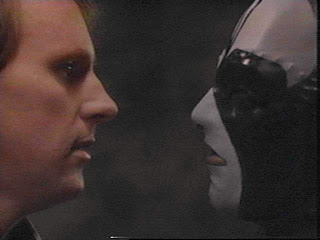
The long-running cult UK science-fiction series had been off the air for 7 years when Fox decided to revive it as a show that could live in America and alongside stylish adult science-fiction like The X-Files. The feature-length pilot tried to keep one foot in both camps, playing as a continuation of the series rather than an American re-make while changing some of the key aspects of the programme’s mythology. Consequently, the revival alienated both the fan base and new audiences and the pilot was never picked up. The people behind the re-launched UK version of the program were obviously not as turned off as viewers at the time. New Doctor Who has taken on many of the US re-vamps, including its romantic predilections, focus on special effects and elaborate set design, and these have helped make it the international hit it is today.



Frame Vs. Frame

Posted in American TV (General), American TV Shows, TV Criticism, TV Culture, TV History, TV in a Word, Watching TV with tags , , , , , , , , , , on January 22, 2014 by Tom Steward

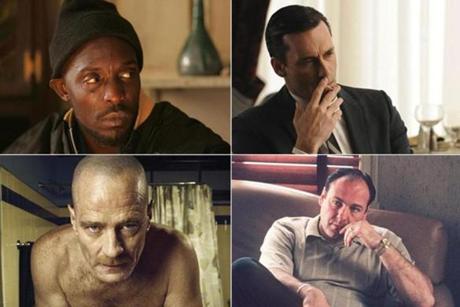
Lately I’ve been reading a lot of articles arguing about whether TV or cinema is better. They don’t start off like this. Usually they begin as a debate about which medium is in better shape but they quickly descend into partisan defences of one or the other. Those in the film corner like to base their arguments on what cinema can do rather than what it’s currently doing. Los Angeles Times film critic Kenneth Turan’s absurd defence of cinema’s dominance over TV (not that it needs it, of course!) argues that cinema is better than TV because the big screen can do anything the small screen can, even if it tends not to, and that when it does the same thing as TV, cinema is always better because you’re out of the house. There’s no impassioned defence of contemporary film just a retreat into the past to blind readers with movie nostalgia. Guardian Film’s Tom Shone can’t find a director more contemporary than Ang Lee to substantiate his case for cinema (though many more recent names come even to my mind).

The Golden Age of Television…or whatever happens to be on!

Critics defending the box in the corner have the opposite problem. They are so preoccupied with what today’s television says about the quality of the medium there’s no acknowledgement of how TV’s history might also be useful in arguing the point. While critics like Turan can throw off allusions to Gance and Cocteau, TV’s advocates rarely reminisce further than Weiner or Gilligan (the Breaking Bad creator not the TV cast away). This may be because TV critics are not asked to be historians in the same way film critics are but why is that? Well it’s down to the profound disrespect we have for old television and the widely held belief that TV is ephemeral. TV critics don’t seem to understand that if they argue TV is great because it’s better than it used to be, they leave themselves open to these rebuttals from cinema’s proud history. Throw in a Serling and a Huggins occasionally and maybe you’ll convince a cineaste that TV is good because it’s always been capable of being good not by accident of circumstances. And you’re at a severe disadvantage against someone with a photographic memory when you’re an amnesiac.

It’s all part of a critical bigotry that resorts to casting aspersions on a field of culture you happen not to cover (but probably would if commissioned to) rather than taking a cold, hard look at the industry that you do. Film critics can no more admit to the abysmal hit rate of current movie releases than TV critics can acknowledge that most of the time on-air television resembles an endless sewage pipe. But the behaviour of TV critics irritates me more, because in a way they’re maligning television far more than any film critic has done – with the possible exception of Mark Kermode, who writes about TV like an unreasonable drunk. TV has been, for the most part, wildly excellent for a good thirty years now and was always pebble-dashed with artful gems throughout its long, ignominious history on the air regardless of the creative problems of the era. Yet TV critics keep trying to carve out this idea of an ever-beginning ‘new golden age of television’ that is just about now. This assertion that good TV is periodic is insulting enough as it strongly suggests that it’s uncharacteristic of the medium but the refusal to see the best of TV as connected by the medium rather than just a point in history is absolutely baffling to me.

It’s a new golden age and has been since 1999!

Mark Lawson’s recent Guardian film and TV blog suggesting that the golden age of television may already be over turns a matter of quality into one of timeline. Instead of seeing a historic tapestry of TV that lets us see the magnitude of what has been accomplished, we’re disputing the dates of hermetically sealed and arbitrarily compiled golden ages. The ‘golden age’ thesis is also a very weak argument if you’re trying to build a case for the quality of television. I wouldn’t let the continuous stream of terrible new releases I encounter at the movies on a regular basis lure me into thinking that cinema wasn’t one of the great gifts humanity has given to culture and art. Equally, I wouldn’t think any more of television than I already did if I found out it managed to put together a few good shows back-to-back. I would think twice if I knew it kept happening.

Zappy Holidays

Posted in American TV (General), American TV Shows, Internet TV, Reviews, TV Culture, TV Dreams, TV History, Watching TV with tags , , , , , , , , on December 4, 2013 by Tom Steward

Like the most innocuous word in the English language, the phrase ‘holiday TV special’ means something very different in Britain and America. Christmas specials on UK television are typically bloated extrapolations or unwanted revivals of popular programmes while in the US they tend to be family-friendly entertainment specially made for the occasion. In Britain, the runs of TV series are normally over by Christmas meaning that each show is unnaturally forced back into the schedules. However, in the US Christmas falls slap-bang in the middle of the network season, allowing for a festively-themed episode preceding the mid-season break that incorporates the holiday rather than the other way round. American holiday specials tend to go straight for spectacle and showmanship, something we’ve tried unsuccessfully to imitate with musical versions of our soap operas and star performances where you text the Bee Gees for no apparent reason. I’m sure we Brits used to do this better in the days when vaudeville ruled our airwaves but US TV remains far less hesitant and bashful about pure, uncomplicated show. With the help of my wife G, who has been willingly indoctrinated by American holiday TV fare since childhood, I’ve been watching some classic specials.


Rudolph the Red-Nosed Reindeer (1964)


The oppressed in 1960s American society.


What begins as a music video for the beloved Christmas song soon transforms into a scathing indictment of racism, homophobia and sexism. Appropriately for a TV movie made in the year the Civil Rights Bill was signed, Rudolph’s ostracision is an issue of skin colour. There’s also Hermey, a gay elf (acknowledged by seldom-used codeword ‘Dentist’) whose good hair, handsome looks and ambitions for a white-collar career make him a social misfit in the North Pole. It’s one of the few occasions in mainstream entertainment you’ll see a gay man as our closest link to normality. Such prejudices are shown to be a symptom of the stagriarchal society in which women are kept out of decision-making processes. The bare bones of the song are fleshed out with references to every children’s story and American myth you can think of: The Abominable Snowman, The Gold Rush, Narnia. There’s also a scene with disabled toys that could keep Pixar in court with the Rankin-Bass estate for the rest of existence. Add in transcendent stop-motion animation and wonderfully offbeat characters (like the prospector looking for silver and gold in the North Pole) and you have a deserved classic.


A Charlie Brown Thanksgiving (1973)


Stomach pump, please.


Having some of the best jazz piano riffs ever, ever, ever (courtesy of the Vince Guaraldi Trio) would be enough to destine this cartoon for greatness. But it’s so much more. A Thanksgiving variation on Charles M. Schultz’s Peanuts comic strip, the special has that perfect blend of wit and slapstick that distinguishes the very best cartoons. The combination of intelligent adult humour and childish situations sets an enduring template for some of the finest animation of the last thirty years: The Simpsons, Rugrats, King of the Hill. Schultz’s genius premise of a child with the malaise of a middle-aged man and friends who act like dinner party guests in a Woody Allen movie has one of its most memorable outings here, as Charlie tries to avoid social awkwardness by hosting an en-masse Thanksgiving dinner. Helped immeasurably by the wistful score, there’s a deep-seated melancholy here, which gives the special an unusually dark adult tone for family entertainment, making it the heir of troubling holiday movies like It’s a Wonderful Life and appropriate for Conan O’Brien’s deleted suicide scene parody. The painful deadpan on Charlie’s face was my own expression after a Thanksgiving buffet dinner.


The Star Wars Holiday Special (1978)


A long time ago in a galaxy far far gone…


A classic of you’ll-think-you-dreamt-it television, this Thanksgiving spectacular featuring characters and actors from the original Star Wars movie was never re-broadcast and recordings were suppressed for decades by creator George Lucas in his ongoing quest to change history. Thanks to fans’ recordings of the original broadcast that can now be shared via the internet, we’re able to see the special in all its eminently bizarre glory. It’s the only time you’ll ever see an elderly wookie orgasming watching a helmet porno of Diahann Carroll, Golden Girl Bea Arthur tossing drunks out of the cantina, and a space drag queen TV chef cooking bantha meat while spinning her bosom. There’s a nice idea in here somewhere about using TV to bring the domestic verisimilitude of everyday life to the Star Wars universe but it gets drowned out by the tonal confusion and unintentional avant-garde of the execution. It also features some of the oddest dramatic choices in the history of TV (probably culture) such as dialogue-free, grunt-based scenes of Chewbacca’s family at home. At least we now have an idea of what Return of the Jedi would have been like had David Lynch directed it.

Watching TV with Americans will return in January…Merry Christmas and a Happy New Year to all!

The Twelve Days of Doctor Who: Days 7-12

Posted in Americans watching British TV, British Shows on American TV, TV Acting, TV History, TV in a Word, Watching TV with tags , , , , , , , , , , , , , , on November 26, 2013 by Tom Steward

‘We’ve been watching Doctor Who for weeks. We must be out of the 80s by now’. I don’t have the heart to tell G that we’ve been watching Doctor Who for six days and that we still have one story from the 1980s to go. Doctor Who used to be notorious for filling time with extended re-caps from the previous episode so I feel justified in doing the same for this two-part blog on my experience watching stories from each Doctor in turn with my American wife in preparation for the 50th anniversary special last Saturday. So far we’ve had cavemen with underwear, cyber-mayans, poachers from space, monsters playing Space Invaders and Dig-Dug, and a TV maths teacher. Like good time-travellers and bad time-travel writers, this time round we’re starting at the end with an episode from 1989 as Doctor Who was on the verge of cancellation and about to go stateside.

‘The Curse of Fenric’ (G’s title: ‘Mr. Bean Goes to War’):

Just a minute…isn’t that Nicholas Parsons?

‘This is much better than the shit we’ve just been watching’, says G as British national treasure Nicholas Parsons is devoured by vampires of the sea. ‘Yeah, it got good again and then they cancelled it’ I offer in the way of no explanation. ‘So many deep quotes in this…“You must take the baby. Now you are the mother of the baby. Now you must drop the baby in the water.” Incidentally, none of these quotes actually appear in the story.

‘Doctor Who: The Movie’ (G’s title: ‘Star Wars UK’)

If you look closely you can see a shark jumping over them.

As the credits roll, G sings in her best John Williams: ‘Kind of like Star Wars/But not really the same’. The TARDIS lands in San Francisco’s Chinatown. ‘People didn’t really think that was China, did they?’. ‘I don’t know. They’re your people’. I’m enjoying passing the buck on Doctor Who’s shortcomings for the first time. ‘This doesn’t feel like Doctor Who at all. It’s more like Adventures in Babysitting’. Then the shark-jumping kiss. ‘I don’t like this. I don’t this at all’. I wanted to kiss her.

‘The Unquiet Dead’/‘Father’s Day’ (G’s titles: ‘The Walking Welsh’/‘Your Parents’ Wedding’):

Walkers in Wales!

‘Why are they so sexual tensiony?’ G asks after witnessing a few seconds of the Doctor and Rose together. ‘That’s what the kiss led to’ I say. ‘It doesn’t work’ G says confidently. Apparently even nine days of Doctor Who is enough to make you realise that the Doctor and his companion being a couple is a bad idea. ‘I don’t like this Doctor. He’s too Jean-Claude van Damme’. I’m sure that’s what renowned stage and screen actor Christopher Eccleston was going for. But you know what? He is a bit Steven Seagal in the part.

‘An Adventure in Space and Time’ (G’s title ‘Poor Father Christmas’):

The decline of William Hartnell…my fault, apparently.

Ok so this is not strictly Doctor Who but it’s a ninety-minute drama about the show and that should test any non-fan’s patience. At first there’s too many real and fictional worlds colliding for G to keep up. G: ‘How old is William Hartnell now?’. Me: ‘That’s not him. That’s an actor playing him’. G: ‘This is all made up, right?’. Me: ‘No it all happened, just like this’. When she sees David Bradley as Hartnell crying into his mantelpiece, it all gets too much. ‘I can’t watch old people being upset’. Then it becomes my fault. ‘How can he not be your favourite?’ (he’s my second). ‘He’s my favourite’ G asserts. ‘He’s the only one with real mystery’.

‘The Christmas Invasion’ (G’s title: ‘The Fall of Scary Santa Face’):

‘Stop being hussys…both of you!’

‘So they went leather jacket man, quirky and then another quirky? Where’s the variety?’. I wonder how G will react tomorrow with an episode in which quirky and quirky quirk off. ‘She’s such a hussy’ G offers ambiguously. ‘Who? Rose or her mother?’ I ask. ‘Same thing’.

‘Day of the Doctor’ (G’s title: ‘Return of the TV’):

Will Ferrell interrupts Doctor Who simulcast!

Well, it all paid off. G laughs knowingly at every in-joke (especially the one about the ‘big round things’ on the wall of the TARDIS)  and loves every minute of this nostalgic wallow in the series’ past. And then Tom Baker returns to Doctor Who 32 years after leaving the show. ‘Is that Will Ferrell?’ G asks. Maybe we’re not quite there yet.

Well, there you have it. 50 years of Doctor Who in twelve days. The first ten years just flew by, a decade dragged its feet, another took a holiday and after a few wrong turns we ended up where we started. Home.

Home.

The Twelve Days of Doctor Who: Days 1-6

Posted in Americans watching British TV, British Shows on American TV, Reviews, TV Acting, TV History, Watching TV with tags , , , , , , , , , on November 19, 2013 by Tom Steward

G and I are spending the twelve days before the 50th anniversary of Doctor Who watching stories from each Doctor in turn. I know what you’re thinking but it was actually her idea. I was being unusually gracious about the amount of time Gossip Girl and Revenge were on our TV and G smelt a rat. ‘Just you wait’, I said. ‘Why?’ said G. ‘Oh you want to watch old Doctor Who. Why don’t we do the twelve days of Doctor Who?’. I was thinking eleven – one for each Doctor – but I wasn’t going to protest. When Day 1 came I said to G ‘Are you ready for “An Unearthly Child”?. She said yes while rolling her eyes. ‘Why did you roll your eyes?’ I asked. ‘Oh you saw that?’ she replied. It was going to be a long twelve days. If this all sounds a bit familiar, it’s probably because the premise is unnervingly similar to the blog Adventures with the Wife in Space in which Neil Perryman recounts watching every classic Doctor Who story with wife Sue. I don’t wish to step on the toes of this superb blog – of which I was an avid reader – but instead offer a complimentary transatlantic version.


‘An Unearthly Child’ (G’s title: ‘Curiosity killed the Science Teacher’):

Welcome to The Price is Right!

G was taken aback at how much the original supporting cast of William Russell, Barbara Wright and Carole Ann Ford looked like contemporary TV actors. And then how much the inside of the TARDIS looked like a game show set. ‘Welcome to The Price is Right!’ she would bellow whenever the doors eased open. I’ve never seen anyone – including myself – as engrossed in the cave people story as G was, and the spell was only broken when she saw that the cavemen had underwear on.


‘Tomb of the Cybermen’ (G’s title: ‘Martin Short’s Dad in Space’):

The Mayans are coming!

Are you ready for ‘Tomb of the Cybermen’?, I shouted across the house. ‘Yes’ G shouted back. ‘Wait, I don’t know what that means’. G thinks that even the set travels back in time. ‘Wow, this looks even older that the last one. Are you sure that was before this?’. As the Doctor and his companions arrive at the tomb, G thinks she’s figured out who’s in there. ‘It’s the Mayans. Look at the pictures on the wall’. The Doctor’s witty undercutting of Krieg’s plans for world domination makes G happy: ‘After all, he’s still British’.


‘Spearhead from Space’ (G’s title: ‘Freaky Babies Take London’):

So what’s the threat?

‘He’s cool. I like his style’. G knows Jon Pertwee is my favourite Doctor but she seems genuinely charmed by him. The accents of the yokels are harder for her to get her head around. ‘I have no idea what he just said’ G admits as the poacher mumbles west country gibberish into his rabbit sack. The Autons don’t have much effect on her. ‘So what’s the threat?’ she asks whenever they’re on screen.


‘The Robots of Death’ (G’s title: ‘What’s Their Problem?):

I need my video console!

‘What do you think of Tom Baker?, I asked G, expecting the usual glowing praise. ‘There’s something I really don’t like about him. I don’t know why.’ Ok, that’s a new one. ‘The monsters are great, though. Are they playing Space Invaders?’.


‘The Caves of Androzani’ (G’s title: ‘Revenge of S & M Face’):

The Phantom of the Opera is here!

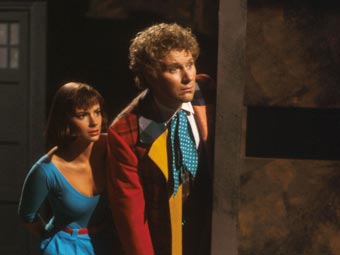
This takes us two days to get through. ‘It’s too 80s. I can tell when it’s made. With Matt Smith and the older Doctors, you can’t tell when they’re supposed to be from. It’s more magical that way’. If G thinks Peter Davison is too 80s, wait till she sees Colin Baker! We get our first glimpse of Peri. ‘Is that supposed to be an American?’, G asks. ‘The Phantom of the Opera is here’ she sings as the comparison becomes too vivid to deny. ‘Why is S & M face playing Dig-Dug? (I checked and the game came out that very year). G also sees her first regeneration: ‘It’s weird how they just sneak that in at the end of the episode’.


‘Vengeance on Varos’ (G’s title: ‘Willy Wonka and the Torture Factory’):

‘She needs a bra and I need a mirror’

‘He looks like a TV math teacher. I keep expecting him to sing “What is 4/Multiplied by 2?” and then pull an 8 out of his jacket’. Sil the slug-like tycoon appears on screen. ‘He’s freaking me out. He looks like a turd.’ The thought-provoking stuff gets through. ‘I wonder if we’ll go back to a society like that’ G asks seconds before observing ‘They need to get Peri a better bra’. ‘The tendrils! They’re poisoned…’, the Doctor explains. ‘…like the ones I just hit with my back’ G adds.


The Twelve Days of Doctor Who continues next week – or in Doctor Who cliffhangerese ‘Doctor! Noooooooooooo!!!!!!…’.