Archive for the TV News Category

Cry Me A Rivers!

Posted in American TV (General), American TV Shows, Behind-The-Scenes, Reality TV, TV channels, TV History, TV News, Unsung Heroes with tags , , , , , , , , , on September 24, 2014 by Tom Steward

Look, I never said this was a news blog (except in applications for paid blogging positions!). Besides, I have to leave a period of time between a celebrity’s death and blogging about it so it doesn’t look like I’ve been knocking off television legends to give me something to write about. Three weeks ago, at age 81 comedian Joan Rivers died, as she lived…in surgery (don’t you dare tell me Joan wouldn’t appreciate a joke like that!). She will undoubtedly be remembered as a stand-up who, unlike many of her generation, was as relevant the day she died as when she first started out. Let’s not forget that Rivers was the comedian who said the unsayable about the widows of 9/11. But she had a real gift for television, and was particularly adept at using everyday formats – talk shows, entertainment news, red carpets – to sneak in provocative and edgy comedy.

Here's Joany!

Here’s Joany!

Rivers got her big break on Johnny Carson’s The Tonight Show in 1965, where she would continue to appear as guest and guest host until the mid-1980s when a rift between her and Carson caused her to be blacklisted from the talk show until this year. Her caustic manner and matter-of-fact handling of other personalities on this and her Fox talk show vehicle The Late Show Starring Joan Rivers was a refreshing departure from both the sycophantic hosting and demure women associated with the genre. It paved the way for her later television career spent trashing celebrities both to their faces and in absentia on the E! shows Live from the Red Carpet and Fashion Police. It also showed that Rivers could insert her brash, no-holds-barred comedy into regular television without ever disrupting it. She didn’t revolutionise late-night talk shows but made them far less deferential and more assertively direct.

Joan Rivers never seemed to be snobbish about what kind of television she was prepared to do. In later years, she would frequently appear on home shopping network QVC to hock her line of costume jewellery. In 1996, she became a reporter on E!’s Live from the Red Carpet, a job more usually reserved for young, up-and-coming, vacuum-brained celebrity enthusiasts. This was as much because she knew television was a business as it was to do something interesting and shocking with bland, formulaic TV. Playing herself on Louis C.K.’s artful sitcom Louie, Rivers castigates the stand-up for leaving a gig in a casino because of its corporate and commercial diktats, addressing her reputation as a ‘sell-out’. Her red carpet interviews are proof enough that Rivers could transform the most banal role into comic art. Acerbic, fast and wounding, she made it entertaining and intelligent with savage mockery replacing awed reverence.

Rivers has been on TV screens weekly since 2010 in E!’s panel show Fashion Police. The highlight of each episode, for both viewers and co-hosts it seemed, was the comedian’s throwaway similes about celebrity dress sense, which would frequently incorporate a ruthless and tasteless commentary on pop culture. No death appeared to be too soon to joke about, no disaster or ailment a taboo, no imperfection beyond satire. Year upon year, the show demonstrated perfectly how Rivers could condense her act into TV’s rigid dimensions without becoming any less sick and twisted. Her 2011 appearance on a Season 2 episode of Louie was a long overdue recognition of Rivers’ standing in comedy, as she becomes Svengali to the disillusioned comic. But she is represented according to a tension between commerce and art that has always been part of her persona, and one that she has managed to resolve without fuss.

The goon squad are coming to town!

The goon squad are coming to town!

Like most celebrities who want to survive in contemporary TV, Rivers allowed her life to be scrutinised onscreen in a reality series. Her relationship with daughter Melissa was the subject of Joan and Melissa: Joan Knows Best and her family dynamic was addressed in Celebrity Wife Swap where she swapped her daughter for Bristol Palin (for reasons best known to the producers). Perhaps her most unremarkable television work, if only for the foot-binding conventions of reality shows that do not permit idiosyncrasy, they are still testament to Rivers’ canny understanding of where to be in TV at the right time. With all the low-end TV she’s been involved in; some might be inclined to write off much of Joan Rivers’ time on the box. But she definitely found her niche in each genre she tackled, and never sacrificed what made her comedy special for the sake of being on television.
Bumping The Shark

Posted in American TV (General), American TV Shows, Reality TV, Reviews, TV channels, TV Culture, TV History, TV News, Watching TV with tags , , , , , , , , , on August 13, 2014 by Tom Steward

Last week was Shark Week, Discovery’s incredulously popular annual event consisting of 7 days of continuous shark-themed programming, sandwiched neatly inbetween the network’s other 358 days of continuous shark-themed programming. Now in its 27th year, the ripple effect of Shark Week across TV is staggering, with a shoal of cable networks attempting to take a bite out of Discovery’s ratings with concurrent themed programming alternatives created under the fin of Shark Week. While some satirise the inflated phenomenon of Shark Week, others are brazenly capitalising on its currency. Here’s some of the counter-attacks, and a few suggestions for next year:

Jaws Week:

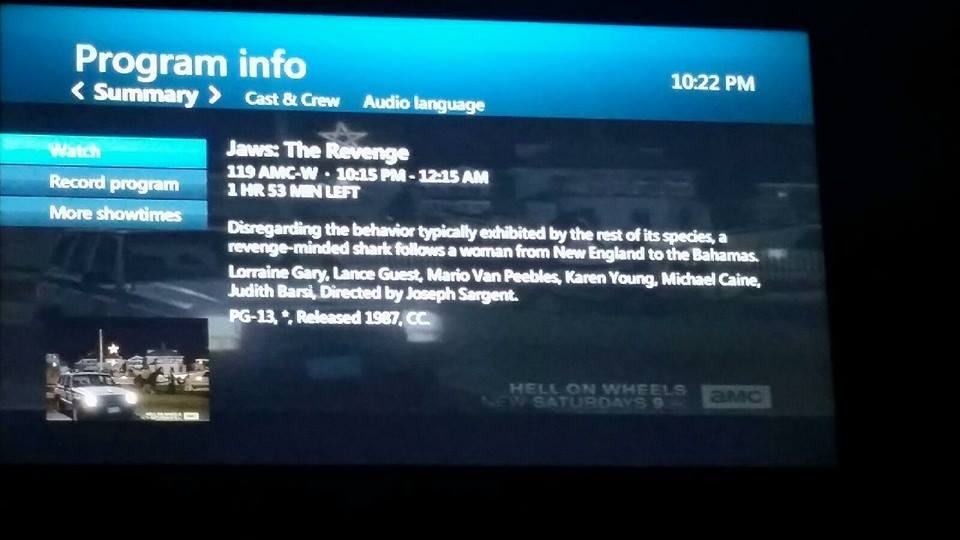
Steven Seagal movie marathon and quality TV gamut-running network AMC showed a Jaws movie every night, a prospect that got increasingly less attractive as the week went on. The appeal of the original movie passes me by, even though I think Spielberg is a great cinematic illusionist (in that he’s tricked people into thinking he’s a good director), but it and its no-frills sequel are both perfectly serviceable potboilers. Jaws 3-D would be a condescend-a-minute romp through the annals of hilariously dated visual gimmicks were it not now the desired look for all of Hollywood’s blockbusters. Jaws: The Revenge is a movie so contrived that even the info button on my cable box couldn’t help but have a pop at its hopeless storyline.

The ghost of Roger Ebert haunts my info button!

The ghost of Roger Ebert haunts my info button!

Snark Week:

Quantitative data-led camp reality and comedy network WEtv spent a week filleting its programming – I’ll stop the sea puns eventualgae – for the snarkiest (‘bitchiest’ in old and perfectly legal tender) cuts to assemble a ‘snark-a-thon’. Re-runs of Roseanne and Will and Grace were predictable but apparently the sunglass-deflected verbal garbage spewed by douchetective Horatio Kane in cold opens of CSI: Miami has been reclaimed as snark. Making use of its rolling reality repertory, the network launched (seemingly in a word document with an unstandardized font) David Tutera’s CELEBrations where the celebrity event planner plans events…for celebrities. Snark is obviously also reality-speak for ‘palindrome’. All this was accompanied by an onscreen ‘snark-o-meter’ because you know how reality TV fans love their maths.

Shart Week:

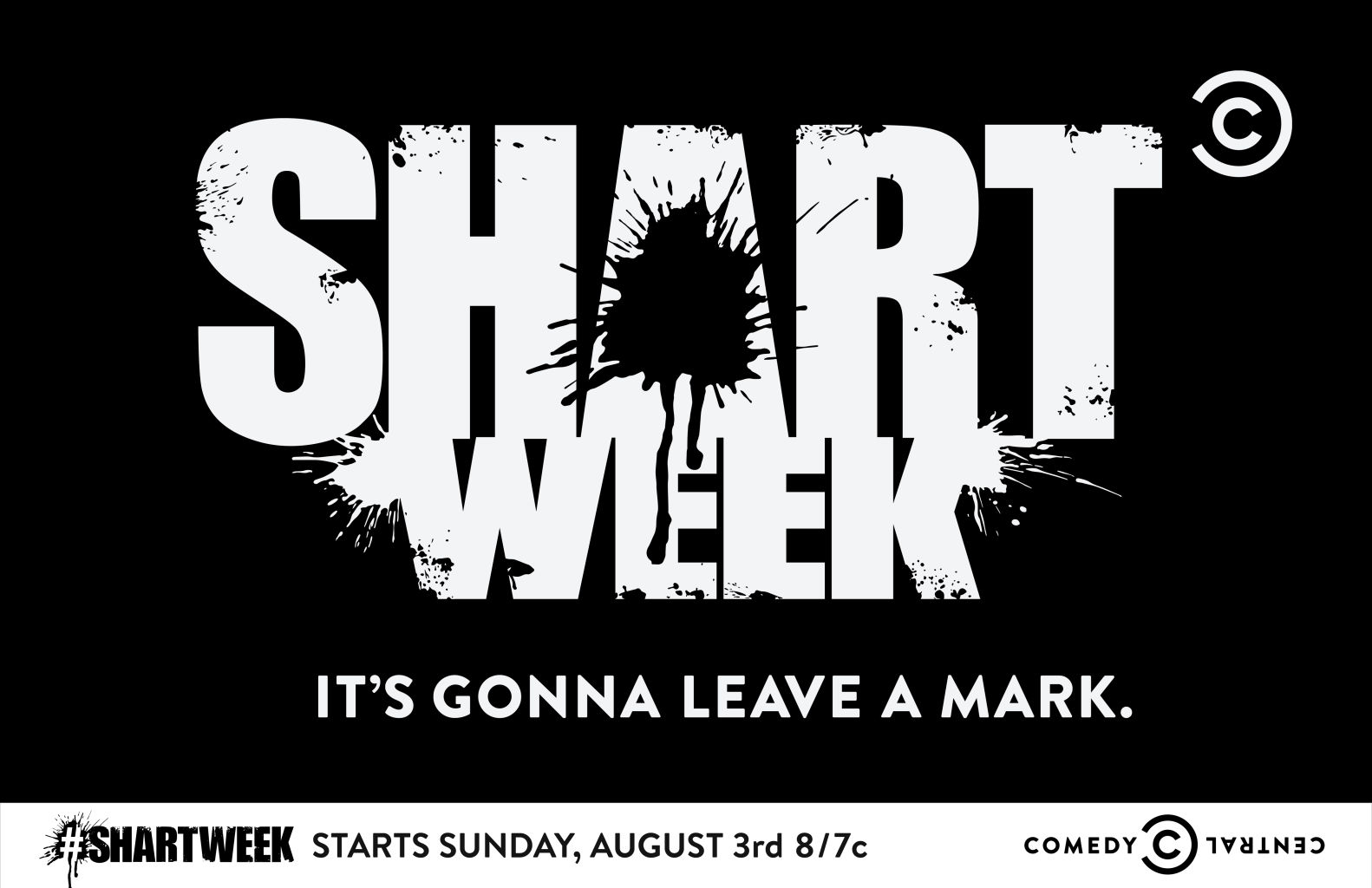
Comedy Central, a network dedicated to the lifetime incarceration of Jon Stewart, took a break from its correctional duties last week to show some shit, or at least more shit than usual. In one of the more anarchic responses to Shark Week, the network drained its sewer system (also known as Comedy Central before noon) to find the most scatological episodes of its many and clearly-not-that-varied programmes. Not only did they manage to find enough programming to last 7 days from noon to midnight, there were entire episodes on the subject, like South Park’s ‘Mr Hanky, the Christmas Poo’. A great way to dump on Discovery, I maintain that if this isn’t a sign there’s too many men on a network, nothing is.

Jumping the Shart

Jumping the Shart

Sharknado Week:

Probably the closest rival to Shark Week since it primarily airs fictional programming about sharks with no basis in science whatsoever; spelling-free telefantasy network Sy-Fy premiered Sharknado: The Second One, the sequel to its bottom-feeding 2013 original TV movie, and filled out the airwaves with movies of similar or worse quality about sharks and one other thing. It could also have been dubbed ‘Son of Shark Week’ as it’s hard to imagine this monstrosity (and that’s the closest you’ll get to a compliment from me) existing without 25 years of dumb stuff being said about sharks softening up the American public for these pixel-thin piss-takes. As spoof-proof television, it’ll give your sarcasm glands a much-needed rest after a day of Shark Week ‘documentaries’.

Shark Week Alternatives 2015:

TV Land should launch Jump-The-Shark Week where the network only shows re-runs of episodes broadcast after it became impossible to take a show seriously. This would include all the post-lottery win episodes of Roseanne and any Dallas after 1986 starring the ghost of Bobby Ewing. FX can do Stark Week where primetime consists of airings of the Iron Man movies – actually the FX execs can just let nature take its course on this one. The Food Network could run Chard Week featuring all the best appearances of the vegetable in the mystery box on Chopped, including the time someone drizzled it with a gummiworm-infused vinaigrette. The Biography Channel should host Narc Week in which all the interviews with blacked-out faces and altered voices of cops who’ve squealed on the Mafia are edited together and begin to resemble one endless Peter Frampton concert in the dark.

Garner, But Not Forgotten

Posted in American TV (General), American TV Shows, TV Acting, TV advertising, TV History, TV News, Unsung Heroes with tags , , , , , , , , , on August 6, 2014 by Tom Steward

Sometimes I think I shouldn’t stop writing this blog as it seems that whenever I do someone significant to TV dies. This time, though, ‘significant’ doesn’t cut it, and all superlatives are understatements. It’s difficult to quantify what James Garner – who died of natural causes this July at the age of 86 – meant to television. Not only was he around during TV’s formative years and helped the medium come of age, he had the rare distinction of playing two of the greatest characters to ever grace the small screen. Obituaries both written and forthcoming will doubtless talk about what an incredible movie star Garner was (and indeed he was) but I always thought there was a certain dailiness about his performances that made him perfect for television, and may help explain why he kept returning to TV while his film roles continually deflated the grandiosity of the cinema.

A TV Maverick.

A TV Maverick.

Garner’s first major television role was drifter gambler Bret Maverick in Warner Brothers’ western dramedy series Maverick, which he played throughout the late fifties. The show is a one-word argument against FCC chairman Newton Minnow’s notion of TV in that era as a ‘vast wasteland’. It was anti-formulaic, adult, challenging and irreverent, and Garner’s humour, bathos and moral ambiguity in the part had a lot to do with that. Essentially a thinking man’s riposte to the branding-iron western TV series (they didn’t have cookie-cutters on the frontier!) that overpopulated the networks at the time, Maverick was an early indication of the quality of television that could be achieved working within popular genres. While Bret Maverick certainly paved the way for television antiheroes like Tony Soprano and Walter White, Garner saw him more as a ‘reluctant hero’ and played it accordingly. It was that kind of nuance that made the difference.

In Garner’s 2011 autobiography The Garner Files – itself a classic in literary understatement – the actor’s usually low-key prose cannot downplay the importance of Maverick to the TV of its day:

‘In its own way, Maverick was “anti-establishment”. It gave voice to viewers’ dissatisfaction with the predictable, button-down TV of the ‘50s, with its black-and-white morality. Maverick explored gray areas by questioning the authority of the conventional Western hero. After Maverick, it was hard to watch those steely-eyed cowboys without laughing.’

It’s worth remembering that fifties American TV was highly praised for its character drama in anthology form like Philco Television Playhouse and Studio One, and so to offer this kind of psychological complexity in the form of a western series – more often regarded as the cultural antithesis of the anthology drama – was radical. It also showed that TV could do something worthwhile with the western formula.

That would be enough for most actors, but unbelievably Garner did it all over again as every-slob private eye Jim Rockford in Universal’s detective series The Rockford Files which ran throughout the late seventies. One of the most perfectly-made shows in television history, Garner’s lastingly lovable lead performance put it over the top, and into perpetual syndication. The actor’s iron rule over his Cherokee Productions also ensured that Universal never dragged the show back to the studio lot, and kept it as freewheeling as the Southern California locations we saw onscreen. The Rockford Files’ tone-perfect medley of comedy, drama and thriller was a template for quality US television to come, and all that was there in Garner’s performance. Never humourless nor too frivolous; a hero you could believe in because he didn’t believe in it himself. Unlike most sanctimonious American TV protagonists, Garner never pretended Rockford wasn’t out for himself.

Rockford of Ages.

Rockford of Ages.

Despite a string of memorable and game-changing performances in a host of movies, Garner always went back to TV in the end. Whether it was the Rockford Files TV movies (which, oddly, didn’t disgrace the original), a series of beloved Polaroid commercials with actress Mariette Hartley harking back to the repartee of romantic screwball comedies, or replacing the late John Ritter as the patriarch on sitcom 8 Simple Rules. Rather than trashing television as so many Hollywood movie stars have, he decided instead to make it better, either by seeking out the best material or improving drastically on the worst. After Garner was through with television, it didn’t look like there was a distinction between TV and the movies any more. It would be impossible to find two better performances in television than Bret Maverick and Jim Rockford, but James Garner always meant more than the sum of his parts.

Live Another UK

Posted in American TV (General), American TV Shows, Behind-The-Scenes, Reality TV, Reviews, Touring TV, TV channels, TV Criticism, TV History, TV News with tags , , , , , , , , , on May 15, 2014 by Tom Steward

Perennial bad penny of television 24 returned to our screens last week, four years after the show’s cancellation, which everyone – other than flagging network Fox it seems – felt was already long overdue. Along with being cut in half (12 must not be a sellable number these days), one of the more remarkable changes to the series, sub-titled Live Another Day, is its re-location to London. In the later years of the series proper, 24 left America’s centre of terrorist activity L.A. to tour the East Coast with seasons seven and eight set in Washington and New York respectively. The show only ever ventured from U.S. shores when its many presidents would harangue middle-eastern statesmen by phone to reveal their country’s official secrets in order to avert a nuclear attack they know nothing about. African-set spin-off TV movie 24: Redemption is the exception here, but everyone concerned would I’m sure like to write that abomination out of the show’s history along with ER’s excursion into the dark continent of television. Besides, 24 was always characterised more by rampant xenophobia than cosmopolitanism. So why on earth would the producers of 24 want to re-launch the series in The Big Smoke?

24 solves mystery of London's traffic problem.

24 solves mystery of London’s traffic problem.

Well, the official explanation is that setting Live Another Day in London pays tribute to the UK TV audiences and critics who championed 24 in its early years when the US was still ambivalent. The first and second seasons of 24 were essential cult viewing when they aired on the free-to-air channel BBC Two in the early 2000s, gaining a large and devoted viewership, incessant national media attention and even a digital BBC sister show in a mould recently revived by AMC’s Talking Dead. The Guardian’s TV critic Charlie Brooker even had to be asked by his editors to stop writing about the show in his weekly column. 24 was lost to the nation as a watercooler show once premium satellite channel Sky One bought the exclusive rights to air the series from season three onwards, but Britain doubtless helped to ensure renewal in the years before the show was a signature Fox mainstay, and became too big to cancel. If this is the case, then speaking for the entirety of the UK – which as an ex-pat I do daily – we’re flattered. But will Britain end up resenting 24 in a manner previously reserved for Dick Van Dyke?

Three episodes in, it’s too early to tell but the signs are encouraging. Live Another Day has so far conspicuously avoided the axis of bobbies, minis and red phone-boxes that still dominates the representation of Britain in American popular culture. Sometimes, it even looks like it was conceived by someone who knows London, or has at least obsessively Google-street-viewed it. The season premiere opened with an East-London street market scene that authentically captured the area’s large Asian population, a fact of our diversity that Americans often miss. Whether or not the Prime Minister would have been a caricature of the privileged classes anyway I’m not sure, but that’s what we currently have, and Stephen Fry’s neckless bumbler is a suitably Cameronesque figure. Apart from some tourist traps like assuming that someone could pursue a Tube train through Central London by driving, the show is pretty faithful to the city’s geography and infrastructure and, at the time of writing, we’ve seen way more of London’s liminal council estates and industrial wastelands than its tourist hardware. We don’t see natives often, but when we do they have the sarcasm and cynicism towards America’s intelligence melodrama that I expect from my fellow Britons.

Jack's in a pickle again!

Jack’s in a pickle again!

Sadly, the cinematographers have CSI’d the show’s colour palette, making London more grey than it actually is, which I didn’t think possible. As revelations about the origin of the attacks unfold, I’m beginning to worry that we’re about to be portrayed as a country that harbours and sympathises with middle-eastern terrorism, rather than one that benignly questions the motives of US foreign wars from time-to-time. Given 24’s scapegoating of anyone East of Alaska, I’m not sure those Asian and Eastern-European Londoners are going to stay innocent bystanders for long. Of course, this London layover is symptomatic of a broader reverse-colonization of American television by UK popular culture, with a quota of British acting in every new show. It comes at a time when Bravo is launching the reality show Ladies of London looking at the city’s transatlantic socialites. As self-appointed visual archive of the rich and famous, Bravo is hardly likely to offer us a London in accordance with social realities. Preview material of a barrow boy speaking entirely in cockney rhyming-slang more or less confirms this. So at a time when American TV is obsessing over Britain without ever attempting to understand it, should we be grateful for Jack?

Jumping Jacks & Sharks and Recreation

Posted in American TV (General), American TV Shows, TV Acting, TV channels, TV Culture, TV History, TV News, Watching TV with tags , , , , , , , , , on May 8, 2014 by Tom Steward

Recently I’ve been thinking about the phrase ‘jumping the shark’, which is TV-speak for when something happens in a TV series that precludes any subsequent developments from being taken seriously. The term derives from a scene in the fifth-season premiere of 1950s-set American nostalgia sitcom Happy Days in which Dad-aged TV surrogate of cool The Fonz jumps over a shark on water-skis. The phrase did not come into popular usage until the late 1990s – twenty years after the episode aired – when radio and web personality Jon Hein compiled a list of TV shows that declined badly in quality on his website jumptheshark.com. It’s been on my mind because the condition seemed to be peculiar to television series, especially the American ones that go on too long, and yet lately I’ve heard ‘jumping the shark’ used in connection to all walks of life. Also, there are some shows currently on the air that reminded me how easy it is to ‘jump the shark’. Can shark-jumping apply to anything but television and what does it mean for a TV show when that fin appears above the water?

Choppy Days!

Choppy Days!

First of all, it’s unfair to implicate Happy Days in this phraseology. People didn’t watch Happy Days for realism but rather nostalgia, kitsch and fun. The series always had room for flights of fancy, like the special science-fiction episode which introduced Robin Williams’ alien Mork to TV. If we were to go back and coin another phrase that better describes what we’re talking about, we might go instead with a reference to a show that genuinely lost its way. We could talk about TV shows that ‘found a dead man in the shower’, recalling the time that super-soap Dallas made an entire season worth of episodes a dream in order to bring star Patrick Duffy back from the dead as Bobby Ewing. The producers of Dallas forgot that just because melodrama isn’t always convincing, it can’t simply be nonsense. We might even say that a series has ‘won the Illinois lottery’ in lieu of the lottery win which made the working-class Conner family in the sitcom Roseanne into millionaires for the entirety of the final season, duly sabotaging the show’s uniquely stark and undiluted portrayal of blue-collar life.

A couple of weeks ago I heard Dancing with the Stars host Tom Bergeron use ‘jumping the shark’ in reference to social media when describing the show’s ‘shirt on/shirt off’ Twitter voting campaign for one of its male dancers but not, strangely, when discussing the tanking ABC series Agents of Shield. In his casually amazing stand-up special Obsessed shown on Comedy Central over Easter, comedian Jim Gaffigan accused Yum Yum Donuts of ‘jumping the shark’ on business names. Apparently, the phrase has been widespread in media, business and politics for years now. There’s not really much you can do once a phrase has infiltrated popular culture (or we’d have redacted ‘selfie’ from history by now), but we should remember its roots in TV. TV shows don’t ‘jump the shark’ intentionally but as a symptom of a worn-out format, a capitulation of principles or a desperate need to survive. So much of American TV is about keeping shows on the air at any price and prolonging their natural lifespan that ‘jumping the shark’ is inevitable, and much more so than in other forms of culture.

Sitcom of the Future?

Sitcom of the Future?

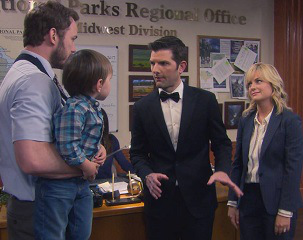
Season six of docu-sitcom Parks and Recreation recently had its finale and in its final few seconds arguably lost all credibility as a sitcom grounded in contemporary reality. From this point on, we’ll be watching a sitcom set in the projected near future, and nothing can undo that. This all happened for the sake of resolving story problems that the writers had themselves created and a few discontinuity gags. It’s pretty clear that a TV show doesn’t need a grandstanding spectacle to ‘jump the shark’; it can do it casually under viewers’ noses. This week marks the return of 24, which probably holds the water-speed record on shark-jumping throughout its previous eight seasons of amnesia, faked deaths, nukes and conspiracies. Yet audiences still bestow the show with the legitimacy that graced its first, and only truly believable, season. There are even websites that count the number of times a TV show has ‘jumped the shark’ during its run. Even though we may assume a show can’t come back from ‘jumping the shark’, clearly it can and we might just have to accept that it’s something that happens organically to TV shows.