Archive for the Unsung Heroes Category

Jumping The Arc

Posted in American TV (General), American TV Shows, Behind-The-Scenes, Reviews, TV Culture, TV History, Unsung Heroes with tags , , , , , , , , , , , , , , , , , , , , on September 10, 2013 by Tom Steward

I’m not one to ignore the advice of Public Enemy but I believe the hype. American television is as good as it’s ever been. Full of rich and varied programmes that are as emotionally compelling as they are artfully composed, flush with writers, directors and producers who recognise and understand the craft of good television (many of them the same) and boasting a success rate that easily surpasses American cinema. It’s only because I feel this way that I’m willing to tolerate the abominations of storytelling that even the finest shows on the air serve up on a weekly basis. The people behind American TV have a right to be complacent, and with complacency comes bad habits. A plague of lazy short-cuts and downright sloppiness has spread exponentially through US TV writing and several worrying tendencies have emerged. Here’s a run-down of some of the worst inclinations and their hosts:

Flashbacks/Flashforwards:

I’ve seen the future…and it is confusing!

As far as I’m concerned, if you need to use a flashback or a flashforward at any point in your screenplay you’ve not written the scenes in the present well enough. There are exceptions-like biographies-but the TV shows I’m talking about don’t fall into any of those categories. Great new series like Breaking Bad and The Walking Dead regularly go back and forth on their timelines, and increasingly wield these digressions as banners for the programme. Going back in time serves to fill in story gaps, underlining how badly communicated previous episodes were and alerting viewers to missed opportunities. Looking ahead creates an enigma then made comprehensible by the subsequent action, betraying a (usually undue) lack of faith in the material of the episodes to sustain interest in their own rights. Moreover, these displacements in time interrupt the forward momentum that these shows thrive upon to compel further viewing.

Cast Montages:

There’s only one way this can end…with a montage.

Ever wondered what all the characters in a show are doing at a given time? Me neither. Yet still the most common device for bringing a programme’s ensemble cast together within a single scene is a montage sketching each character’s activities at a time of day (typically morning or night). While this technique usually reveals something essential and often surprising about one or two of the characters, others are left to make up the numbers as they can’t all be doing something profound at exactly the same moment. Most shows manage to keep this tendency to a single scene at the beginning or end of an episode but series like Sons of Anarchy now feature multiple cast montages scattered randomly throughout each instalment, the only means of keeping track of the show’s surplus of sub-plots. There must be subtler, more sustainable ways of getting everybody in one place.

Song Overlays:

Coldplay: ruining American TV since 2002.

Nothing dates faster than music. Despite this truism, American TV shows continue to overlay scenes with contemporary songs that will likely only be considered respectable in the moment they’re first transmitted. Remember when The Shield ended its first season with a musical montage using Coldplay’s ‘Spider Webs’. That was in 2002 when the band still had cache and fed into the alternative style the show was cultivating. Now that Coldplay embody corporate bland, the sequence looks and sounds like middlebrow advertising. Series continue to make the same mistakes by selecting the latest hipster warbles rather than looking for the transcendent instrumentals that will preserve them throughout history. The choices tend to reflect the producers’ record collection rather than being linked to character or place. The Walking Dead would like us to believe that a teenage girl from a remote Atlanta farm has committed Tom Waits B-sides to memory.

Showrunners Writing:

‘Mr Darabont…step away from the script!’

While I’m grateful for all they do to put a programme on the air and keep it in good shape, I wish showrunners would keep their hands off the teleplay. They seem to have a knack for writing the weakest and most mechanical episodes and the ones most concerned with the image of the show not the art of television. Without the might of Shawshank Redemption director Frank Darabont behind it, The Walking Dead may never have reached TV screens but the couple of episodes he wrote that headed up the series seemed incapable of articulating how the show would progress as a long-form narrative (rather than a 2-hour zombie movie) which is essential to establish in the pilot stages of a series. As soon as the writing responsibilities passed to serial TV veterans Glen Mazzara and Charles H. Eglee, the ongoing vision for the programme became evident.

Split Images

Posted in American TV (General), American TV Shows, Behind-The-Scenes, BiogTV, TV channels, TV Culture, TV History, Unsung Heroes with tags , , , , , , , , , , , , , , , , , , , on August 27, 2013 by Tom Steward

One of the only saving graces of a great artist dying, though oblivious to them, is the opportunity it grants us to talk about their work. Doing so always carries feelings of guilt-especially if the artist was still working at the time of their death-as we recognise this is what we should have done all along and curse ourselves for exploiting their demise to fill our quotas. I’m taking advantage of an obituary-led spike in the commentary on one of the foremost writers of our time to talk about where he and American television have crossed paths. Morbidly timely it may be, but hopefully it sheds as much light on the medium as it does the departed, and covers parts of his career that will remain untouched by most tributes.

Elmore Leonard 1925-2013

This time last week novelist, short story author and screenwriter Elmore Leonard died at the age of 87 after suffering a stroke earlier this month. The post-mortem of his oeuvre will undoubtedly focus on his contribution to literature and the movies, and rightly so given his prolific output of books, stories and scripts, as well as the ongoing cycle of adaptation, imitation and homage to his writing in the cinema. But Leonard meant a lot to American TV. Television’s engagement with Leonard was sporadic to say the least, nonetheless it bookended his career. Leonard’s last completed book was Raylan, a novel-length revival of a character from some of his earlier novels and stories, Marshal Raylan Givens. Not only was Leonard inspired to write a book based around the character following his screen incarnation by Timothy Olyphant in the TV series Justified, but the loose collection of cases that make up Raylan and its meandering style of storytelling seem heavily influenced by TV’s episodic nature and large story canvasses. The first screen adaptation of Leonard’s writing was on the small screen rather than the big one. In 1956, the CBS anthology series Schlitz Playhouse of Stars featured an adaptation of Leonard’s western story ‘Moment of Vengeance’, a year before Hollywood cinema would do the same with ‘3.10 to Yuma’. TV introduced Leonard to the screen and it concluded his career.

Raylan: Art imitates Art!

Despite this early entry in the history of American TV, it would be a long time before Leonard would feature again. In 1980, during the heyday of the American TV movie, Leonard returned to the medium to attempt the daunting and foolish task of penning a television sequel to Stanley Kramer’s High Noon. Inevitably lacking the Hollywood star and filmmaking quality of the original and as clunky as any unnecessary sequel, the dispiritingly titled High Noon II: The Return of Will Kane notably improves on its predecessor in several respects. Leonard’s screenplay uses the quotidian, eye-witness qualities of television to carve out a politically, economically and socially realistic vision of the western frontier rather than using the ‘old west’ as an allegory for 1950s blacklist America as High Noon did. Leonard’s versions of the films’ characters are far cooler and more credible with complicated personal moralities that put the Manichean originals to shame. The script also demonstrates Leonard’s effortless skill at integrating his characters into an ongoing story world and coherent universe of his characters. The casting of David Carradine cast as a sympathetic, laid-back outlaw and the movie’s progressive representations of African-Americans gunslingers and frontier racism suggests that Quentin Tarantino, who adapted Leonard’s novel Rum Punch into Jackie Brown (still his most mature movie), may not have restricted his fandom of Elmore Leonard to the literary and cinematic efforts.

High Noon 2: Even Higher, Even Nooner!

The western TV movie would be the form that Leonard’s involvement with television would take throughout the 1980s and 1990s, with numerous adaptations of his work and contributions of original screenplays. However, TV didn’t get serious about adapting Leonard’s work until the turn of the millennium when it attempted to ride a wave of successful versions of his books in independent American cinema throughout the 1990s. The TV adaptations would be beset by many of the same problems of translation that faced earlier screen adaptations of Leonard’s work and took until the last decade of the century to be resolved. In TV, such problems were compounded by Leonard adaptations having to fight for their right to remain onscreen. Despite bringing Leonard’s Get Shorty to the big screen with great success, Barry Sonnenfeld could not do the same for a TV series based on Maximum Bob-one of his most celebrated novels-cancelled in 1998 after a truncated debut season of seven episodes. Even Leonard characters that had already entered the popular consciousness were trampled by TV. In 2003 a series was developed around FBI Agent Karen Sisco, a character who had been portrayed by singer-actress Jennifer Lopez in the movie Out of Sight, a hit star vehicle for her and George Clooney based on the Leonard novel of the same name. This time it didn’t even make it past the pilot stage.

Was Elmore Leonard justified in his decision to stay with TV?

Television was in danger of incurring the same animosity Leonard held for the movies’ mistreatment of his work. Clearly, any continuation of the relationship between Leonard and television would have to be justified. And so it was. In 2010, producer Graham Yost created Justified, a procedural about Marshal Raylan Givens returning to police his hometown in Kentucky, which took as its jumping-off point Leonard’s short story ‘Fire in the Hole’. Though following its own course after Leonard’s point of closure, Justified continues to weave characters from Leonard’s canon into the episodes-including the extended Crowe and Crowder families who genealogically permeate his writing-and structures the central dynamic of the show around the tensions between Givens and Boyd Crowder in the original story. In his last years, Leonard was vocal about his admiration for the series’ sincerity as an adaptation of his work and was particularly taken with its faithfulness to his dialogue style. Justified also embraces the no-bullshit ethos of Leonard’s storytelling, stripped down yet flamboyantly funny, giving audiences what they want and need according to taste. Leonard is credited as producer, a title vague enough to mean anything from muse to head writer. Given that Leonard’s comments about the show seem to be from the outside looking in, it’s probably more like the former. There’s certainly no greater screen testament to the power of what Elmore Leonard does than Justified.

Conan The Destroyed

Posted in American TV (General), American TV Shows, TV History, Unsung Heroes with tags , , , , , , , , , , , , , , , , , , , on April 5, 2013 by Tom Steward


After weeks of speculation, as much of it on-air as off, NBC finally announced this week that Jimmy Fallon would take over hosting duties on The Tonight Show from Jay Leno. The network press release clearly stated that Leno had presented The Tonight Show uninterrupted for 21 years. But when interviewed Leno said ‘this time it feels right’ as if he had been replaced before and somehow managed to take back the host seat. Of course, if you’re not party to the Stalinistic effort to re-write late-night television history, you’d know there was a spindly-legged ginger elephant in the room.

The George Lazenby of late-night talk shows.

In late 2009 Fallon’s predecessor on Late Night with… Conan O’Brien took over from Leno as host of The Tonight Show having been promised the position years earlier by NBC while The Jay Leno Show began airing in primetime. In early 2010, the network attempted to move O’Brien from the current timeslot of 11.35pm to after midnight so that Leno could return to the original The Tonight Show spot with his new talk show following low ratings for both programmes. O’Brien naturally refused and left the network, leaving Leno free to return to his old job for four more years.

So who presents The Tonight Show?

Fallon taking over The Tonight Show only a few years after Leno resumed hosting is the latest in a series of slaps in the face for O’Brien, who after an aborted late-night talk show on Fox ended up with a signature 11pm vehicle on basic cable network TBS in late 2010. Prone to making light of his unexpected obscurity-his house musicians on Conan are self-effacingly named ‘The Basic Cable Band’-the melancholy sometimes seeps through. While comically feigning ignorance during an interview with Kelsey Grammer following a discussion of not getting recognition for doing cable television, O’Brien starts seeming genuinely forlorn.

O’Brien may have been written out of the Tonight Show story but he remains legendary in the history of another great American TV institution, The Simpsons. As writer and producer for the series between 1991 and 1993, O’Brien scripted some of the most undisputedly superb episodes the show has seen in its 24 years on the air (and, let’s face it, will ever see). In particular, ‘Marge vs. the Monorail’ in which Springfield invests in an ill-advised public transport system was a satirical highpoint with probably the best-written celebrity cameo (a tediously anecdotal Leonard Nimoy) and unbeatable dialogue and song-writing.

Other canon-worthy Simpsons classics penned by O’Brien include ‘Homer Goes To College’ and ‘New Kid on the Block’ which pioneered a sophisticated, self-reflexive humour for the show without losing the emotional resonance synonymous with the series from the outset. In fact, Bart’s unrequited crush on teenage babysitter Laura (Sara Gilbert) is positively heart-breaking. He created several characters, such as Ruth Powers (Louise to Marge’s Thelma) and the college nerds, who would return in future episodes. He might even be able to sue the creators of The Big Bang Theory for plagiarism. Perhaps that’s why TBS wanted him at the network.

‘You’re a lot less funny in live-action’

Despite a criminal lack of exposure for a comedian of his calibre, TBS’ Conan is more excellent TV from O’Brien. His sketches remain thoroughly witty and laugh-out-loud funny, as recent spoof discussion segment ‘PopeTalk’, which evaluated the chances of various contenders for the papacy in the manner of a talk radio sports phone-in show, attested. Many recurring bits, such as ‘Celebrity Survey’ in which projected celebrity Q&A responses are collated, seem like they’ll be around for decades to come. After only a couple of years on the air, we’ve seen some memorable interviews, not least a weird-off with Harrison Ford.

Conan: You ever think with all your flying, what you would do if the plane starts to go down?/Ford: Shit and die.

I don’t want to disparage Fallon as much as I want to praise O’Brien. Fallon’s skits and impersonations are first class, as his performance of Neil Young singing the Fresh Prince of Bel-Air theme tune amply demonstrated. In The Roots, Fallon has at his disposal not only the coolest house band in late-night television but also one of the finest hip-hop/soul outfits of modern times. Fallon’s emphasis on music and sketch comedy undoubtedly gives the late-night talk show a new dimension. But while O’Brien is a skilled, engaging interviewer, Fallon seems more like a teenager who has won a competition.

Class act that he is, O’Brien broke his silence on Fallon’s appointment yesterday only to endorse him and wish him well. He’d have been within his rights to lambast Fallon for taking his job. And call Leno a massive dick…but then there’s never a bad time and place for that.

Tarantino on TV

Posted in American TV (General), American TV Shows, Reviews, TV Culture, TV History, Unsung Heroes with tags , , , , , , , , , , , , , , , , , , , on December 9, 2012 by Tom Steward

Like a racist American businessman announcing self-deportation after Obama’s re-election or an old-school British entertainer forewarning a one-man emigration movement in wake of a 1990s Labour landslide, Quentin Tarantino has threatened to quit cinema. In a roundtable interview with The Hollywood Reporter, the director discussed his desire to retire because of the industry conversion to digital cameras and projection. But what debased metaphor could possibly capture the dire straits that the film industry now finds itself in? ‘I mean, it’s television in public’, said QT, as if there was nothing less dignified. To add insult to injury, Tarantino may have to lower himself to actually working in television. ‘If I’m gonna do television in public, I’d rather just write one of my big scripts as a miniseries for HBO’, he said, declaring his intention to slum it with such mediocre fare as The Wire, The Sopranos and Six Feet Under.

I quit says QT!

I’ll admit I expected more than bald TV-bashing from Tarantino, a director who has never been embarrassed to borrow influences from TV-see his adaptation of the Alfred Hitchcock Presents episode ‘Man from the South’ for the portmanteau film Four Rooms or his use of a refrain from the Ironside theme tune as a leitmotif in Kill Bill. Besides, he always seemed entirely comfortable with the prospect of directing for television. Let’s not forget that Tarantino directed a formative episode of lauded medical series ER called ‘Motherhood’ which not only saw his signature style and imagery seamlessly interweave with the fabric of 90s TV drama but also pioneered many of the show’s representational strategies, not least its handling of gore and casual violence. Tarantino also managed to direct an episode of CSI in which you actually cared about the characters and somehow managed to artfully deploy the series’ egregious audio-visual excesses.

A QT word in your ear!

Using TV to flagellate cinema runs contrary to what I think of as Tarantino’s egalitarian approach to popular culture. The usual snobbery you find from film directors about the aesthetically inferior nature and lack of artistic worth of television always seemed alien to QT, who appeared to recognise that it was at the heart of the popular, commercial Western imagery he was so fond of reappropriating, like a modern-day Lichtenstein. This makes his belligerent reluctance to making ‘a miniseries for HBO’ harder to swallow, especially as an announcement such as this deserves to be accompanied with enthusiasm and pride. Tarantino even admitted that this change of medium could solve a number of problems with producing his work as cinema. Speaking of the extended running and production time of HBO’s series, he said ‘I don’t have the time pressure I’m usually under, and I get to actually use all the script’.

Tarantino hangovers some nurses!

I’m sympathetic to Tarantino’s rage against the digital takeover of cinema and, as someone who finds that the signal beamed on to his television works far better than the digital projector at his local picturehouse, empathise with his feeling that television provides a better platform for a director than a medium that is now ‘film’ in name only. But he should take comfort in knowing that veteran film directors can use TV networks like HBO to reach artistic heights that their later-period movies continually fail to achieve. Mike Nichols hasn’t been able to make an above-average romantic comedy in decades and yet his HBO miniseries Angels in America was a transcendent delight. Scorsese hasn’t done a gangster movie in the last 20 years that could compete with Boardwalk Empire. Even an indie-hack like Gus van Sant looks like Ken Loach when surrounded by the hard-hitting political drama of Starz’s Boss.

CSI’s in Grave Danger of giving a damn!

Not to sound too much like a tele-fundamentalist but quite frankly Tarantino’s work has gotten too big for cinema. Since the two-part Kill Bill franchise, QT’s films have tended towards the epic and become distinguishable by their languor. This has protracted his cinematic vision and also compacted it at times, as in cases of cut-downs such as Death Proof. Like his beloved generational family martial arts TV sagas that spawned Kill Bill, television’s massive and never-ending texts and perma-fashion for serial storytelling can accommodate Tarantino’s expansive scale and indulgent timekeeping without a hint of bloat. A smaller screen it might be but it’s also a lot more elastic than the 3-hour radius of the silver one. At a purely PR level, Tarantino’s announcement might not have invoked the desired shock and dismay. For a director not exactly at his creative peak, the prospect of a TV afterlife looks positively heavenly.


Johnson & Johnson

Posted in American TV (General), American TV Shows, Unsung Heroes with tags , , , , , , , , , , , , , , , , , , , on June 17, 2011 by Tom Steward

This is the first in a series of posts I’ll be writing sporadically which try to raise the profile of some of American TV’s most unfairly neglected artistic talent. We begin this week with actor-director Clark Johnson.

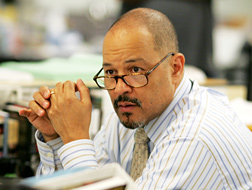
Clark Johnson as Gus in 'The Wire'

'People can't be evacuated...well they can. But that's not what you mean'

The unsung heroes of American television are the directors. While journalists, scholars and fans (not to mention the artists themselves) rhapsodise about US TV writers and producers like Steven Bochco and Joss Whedon, they are perfectly content to ignore, marginalise or deride the directors who carve out the visual and dramatic life of programmes. Direction seems only to be valued when it is either combined with writing and production to construct the myth of the omnipotent TV auteur or when it is attached to a big marquee name in the media, most likely from the cinema (e.g. Quentin Tarantino’s episodes of ER and CSI). Some in the academic community, like Tise Vahimagi and John Caldwell, have tried to bring the work of TV directors to light but even then directors of Pilots get all the credit while directors of random episodes are seen as artless journeymen anonymously re-hashing someone else’s vision.

ER, 'Motherhood'

'ER' directed by Quentin Tarantino

Another production ritual in American TV that slips by most commentators and audiences is actors going behind the camera. Look at the later episodes of virtually any of your favourite US shows and you’ll invariably see its stars and supporting actors taking up the directorial reins for a week or two. As US TV shows have a very limited shelf life thanks to the spectre of cancellation which hangs over even the most popular and acclaimed series, a direction job can give actors more options and opportunities for work in the industry, especially for the less well-known ensemble players.

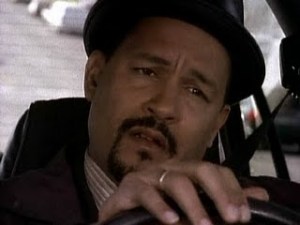
The subject of this blog is an actor from a renowned ‘90s cop drama, who went behind the camera only to create the enduring stylistic template and dramatic conventions for two of the most significant, innovative and exceptional police programmes of the last twenty years, perhaps ever. And what’s more, he went back on screen at the end of both of them to claim his deserved dues. Clark Johnson rose to public prominence playing the cool yet intemperate, honourable yet eminently fallible Baltimore police detective Meldrick Lewis in Paul Attanasio’s Homicide: Life on the Street based on David Simon’s book. Johnson’s performance helped to forge a distinct identity for the programme as a cop show that didn’t feel the need to romanticise or kowtow to the powers of its protagonists, particularly when bringing out Lewis’ reckless and impetuous side when crashing a police car into an ambulance in an early episode.

'Homicide: Life on the Street'

Clark Johnson as Detective Meldrick Lewis in 'Homicide: Life on the Street'

With a handful of behind-the-camera credits on Homicide, Johnson began to build up a portfolio of directing jobs on US TV in many of the most acclaimed dramas of the time e.g. NYPD Blue, The West Wing. Johnson seemed able to adjust to the distinct visual and dramatic styles of these shows effortlessly while successfully steering some conceptually tricky episodes and giving viewers some of these series’ most memorable moments, like Alison Janney’s hilarious and sexy mime to Ronny Jordan’s spoken word acid jazz piece ‘The Jackal’ in The West Wing.

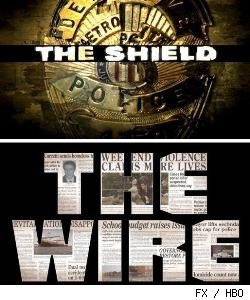
In 2002, Johnson pulled off a remarkable and practically unparalleled feat as he directed the Pilot and initial episodes of two crime dramas that would blow the lid off the American police procedural, but for very different reasons. In Shawn Ryan’s L.A. police corruption drama The Shield Johnson invented the kinetic and jolting camera style that made the programme so arresting and exhilarating and helped craft the visceral energy and sly humour that made Michael Chiklis’ Detective Vic Mackey America’s most feared and entertaining bent copper. Conversely, in Baltimore-set drugs investigation drama The Wire, Johnson set in motion a near-invisible and highly methodical visual approach that avoided aggrandising or distorting the show’s complex portrayal of American institutions while laying the foundations for some of the most compelling, attractive and finely-tuned character performances ever seen on TV. These directorial styles were poles apart and demonstrated Johnson’s brilliance at finding the aesthetic most suited to the concept and ambitions of a programme.

'The Shield' and 'The Wire'

Johnson's two triumphs

As these series drew to a close, Johnson not only presided over the direction of the finales but also returned to the screen in befitting tributes to his instrumental role in their success. In Season Five of The Wire, he plays Gus, the City Editor for The Baltimore Sun, a highly meta-textual role in which he is bestowed the honour of voicing the ethos of the series to represent society in all its collective complexity. In the finale of The Shield he plays the federal agent who takes Mackey’s wife and kids away from his Beelzebub-like hold, inadvertently becoming the hero of the piece. On the credits Johnson is listed as ‘Handsome Marshall’. He’s earned that adjective.