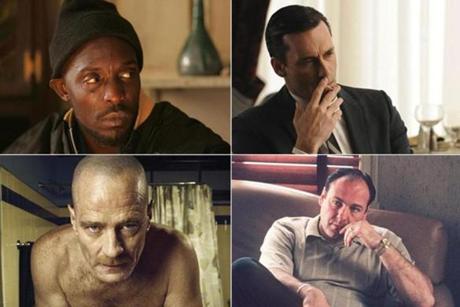
Archive for the Watching TV Category

Viewer Discretion Televised

Posted in American TV (General), American TV Shows, Internet TV, Reality TV, TV advertising, Watching TV with tags , , , , , , , , , on February 5, 2014 by Tom Steward

There can be little doubt that the internet has become the established medium for pornography or that TV with its subscription-based, restricted-run porn provision wouldn’t rival its online competitor which boasts free use and plentiful content. But as we’ve seen with TV’s co-opting of Twitter as an advertising platform, television is not above appropriating an online success story to secure its place in the ever-growing media marketplace, and there’s no success as runaway as internet porn. Because of the moral, political and religious imperatives of broadcasting regulations, putting pornography on television has always been problematic. It might slip through the net as the accidental by-product of experimental art or adult drama or a moment of bravado in a piece of titillating entertainment, but would rarely go unchecked or unchallenged. The more serious pursuit of pornography can be found in the pay TV channels available on the much less regulated satellite, cable and digital services as well as some of the content on graveyard networks at an appropriately late time of day, although this is porn in a modified form suitable for TV that’s much lighter on the graphic side that the equivalent in other media. In short, pornography is always fighting a losing battle with TV. Of course this doesn’t preclude TV from taking lessons in how the porn industry puts bare bums in seats.

This is about as pornographic as it gets on Showtime Preview!

Why am I talking so much about porn? It’s because I’ve started to notice how much American TV takes from pornography. For all the reasons listed above, most TV is not explicitly pornographic but neither is it free from the influence of porn in how it advertises, entertains and lures its audience. I have an internet TV hub and recently noticed there was an application called ‘Showtime Preview’ which ran free season premieres from the subscription network. I wanted to watch the first episode of Season 3 of the industry sitcom Episodes. Since this was a promotional device designed to draw me in to starting a series and getting a network subscription to keep watching, I was surprised when the episode was edited to remove all violence, sex, nudity and swearing, which you might say are Showtime’s unique selling points. But I was taken aback when a sex scene with blurred images of nudity and intercourse bore a caption at the bottom of the screen saying ‘Want to see what you’re missing?’ followed by a subscription link. The very point was to withhold all the explicit content of Showtime’s programmes that couldn’t be aired on network or basic cable TV and then wield it as capital for subscribing. This is exactly how the porn industry incites users to upgrade from softcore teasers to hardcore features.

It’s not TV it’s HB-ho!

The more I thought about, the less right I had to be surprised. Hadn’t HBO – the city on the hill of quality TV – pulled exactly the same trick when wooing subscribers? The difference between HBO and other TV wasn’t just quality and sophistication of programming but explicit representations of sex, violence, nudity and swearing. Often there isn’t even the cultural cache to justify such excess. For every self-legitimating spectacle of obscenity like the artful, challenging The Sopranos there’s pure exploitation like sex industry documentary G-String Divas. HBO is hardly ashamed. The title sequence to prison drama Oz packed as much blood, gore, sex acts and intimate body parts as it could into a minute and a half montage. There’s even an in-joke in Oz making it clear the network are aware of their pornographic reputation, as inmates start receiving HBO and cheer in unison as G-String Divas airs.

ABC launches new Bachelor sex cam.

Networks like HBO and Showtime operate in a very similar way to subscription porn channels so we shouldn’t be too surprised when their marketing techniques overlap. But what about network TV, which claims to disavow any resemblance to pornography with its excessive and self-righteous censorship of content? The Bachelor: Sean and Catherine’s Wedding in which two former contestants were married live on air did all it could within broadcasting regulations to make viewers at home visualise the couple’s wedding night in graphic detail. A live camera feed reminiscent of a sex webcam was set on the bed in Sean and Catherine’s honeymoon suite throughout the ceremony. The pre-recorded wedding build-up centred on the wedding night, including Sean shopping for titillating lingerie and Catherine posing for a wedding gift of boudoir photographs. The strong feeling was that if ABC could have kept the cameras rolling into the night, they definitely would.

TV in Short

Posted in American TV (General), American TV Shows, Behind-The-Scenes, British Shows on American TV, Reviews, TV channels, TV Criticism, TV Culture, TV History, Watching TV with tags , , , , , , , , , on January 29, 2014 by Tom Steward

The significance and impact of American TV shows are usually measured by longevity since it takes an inordinate amount of public will, critical favour and cultural reputation to dodge cancellation year after year. But every so often a programme with a relatively short life on the air ends up being hugely influential in TV, art and culture. Premature cancellation often becomes part of the show’s cult – see Josh Whedon’s Firefly – or masks a rapid decline in quality that makes another season seem deeply undesirable. Either way, these programmes tend not to be cancelled before their time but are just way ahead of their time. It’s hard to see how many of these shows could go on but harder to imagine what future denizens of popular culture would have done without them as inspiration. Here are some TV shows with small runs that ended up being a big deal:

Freaks and Geeks (NBC, 1999-2000)

The future of American popular culture

A Wonder Years for the remaining 99.99999% of the American population that didn’t draw a life lesson from every single incident of their education, this stripped-back yet heart-warming look at high school from the perspectives of its most marginalised students lasted only one season on the air. But the show has sent ripples through American popular culture ever since. Producer Judd Apatow and stars Seth Rogen, James (Di optional) Franco and Jason Segal have completely sewn up US movie and TV comedy in the 15 years since the show aired and they now rank as some of the biggest names in Hollywood. Moreover, Freaks and Geeks incorporation of the socially outcast and physically different into mainstream teen television made a cultural phenomenon like Glee possible and the show’s unglamorous depiction of young Americans is the essence of Apatow and Lena Dunham’s hit HBO series Girls.

Twin Peaks (ABC, 1990-1991)

Like Laura Palmer Twin Peaks dies young.

Widely credited as the show that brought American TV into touch with fine art, David Lynch and Mark Frost’s sci-fi procedural super-soap also heralded a revolution in television storytelling. Melodramas such as Dallas and Dynasty had already shown that ongoing stories and cliffhanger endings weren’t an anathema to primetime popularity but Twin Peaks demonstrated that a single storyline could captivate audiences over a year of television. The question of ‘Who killed Laura Palmer?’ would have normally been answered in as little as 60 minutes of television but took over a year and half to be settled. Now detective programs all over the world from Denmark’s Forbrydelsen to Britain’s Broadchurch wear the season-long mystery as a badge of quality. In fact, it was only when Twin Peaks tied up the Laura Palmer case and pursued half-baked replacement storylines that the program was cancelled following its second season.

Cop Rock (ABC, 1990)

Cops Rock!

By 1990, producer Steven Bochco was already established as someone who mixed television genres but this medley of musical and police procedural was a step too far for most people when it aired. How times have changed. One of the biggest TV hits of recent years has been Glee, a high school dramedy liberally peppered with musical numbers and – as witnessed by Buffy the Vampire Slayer and How I Met Your Mother – it’s long been considered de rigueur for TV shows to have a musical episode. Of course, it’s one thing to have a show whose premise falls naturally into song and another to try to crowbar music into a decidedly spoken-word genre. It’s also worth remembering that what viewers enjoy about one-off musical episodes is their novelty and Cop Rock was relentlessly musical. It’s maybe why the show never lasted beyond 11 episodes.

Doctor Who: The Movie (Fox, 1996)

Before Dr. Phil there was…

The long-running cult UK science-fiction series had been off the air for 7 years when Fox decided to revive it as a show that could live in America and alongside stylish adult science-fiction like The X-Files. The feature-length pilot tried to keep one foot in both camps, playing as a continuation of the series rather than an American re-make while changing some of the key aspects of the programme’s mythology. Consequently, the revival alienated both the fan base and new audiences and the pilot was never picked up. The people behind the re-launched UK version of the program were obviously not as turned off as viewers at the time. New Doctor Who has taken on many of the US re-vamps, including its romantic predilections, focus on special effects and elaborate set design, and these have helped make it the international hit it is today.


Frame Vs. Frame

Posted in American TV (General), American TV Shows, TV Criticism, TV Culture, TV History, TV in a Word, Watching TV with tags , , , , , , , , , , on January 22, 2014 by Tom Steward

Lately I’ve been reading a lot of articles arguing about whether TV or cinema is better. They don’t start off like this. Usually they begin as a debate about which medium is in better shape but they quickly descend into partisan defences of one or the other. Those in the film corner like to base their arguments on what cinema can do rather than what it’s currently doing. Los Angeles Times film critic Kenneth Turan’s absurd defence of cinema’s dominance over TV (not that it needs it, of course!) argues that cinema is better than TV because the big screen can do anything the small screen can, even if it tends not to, and that when it does the same thing as TV, cinema is always better because you’re out of the house. There’s no impassioned defence of contemporary film just a retreat into the past to blind readers with movie nostalgia. Guardian Film’s Tom Shone can’t find a director more contemporary than Ang Lee to substantiate his case for cinema (though many more recent names come even to my mind).

The Golden Age of Television…or whatever happens to be on!

Critics defending the box in the corner have the opposite problem. They are so preoccupied with what today’s television says about the quality of the medium there’s no acknowledgement of how TV’s history might also be useful in arguing the point. While critics like Turan can throw off allusions to Gance and Cocteau, TV’s advocates rarely reminisce further than Weiner or Gilligan (the Breaking Bad creator not the TV cast away). This may be because TV critics are not asked to be historians in the same way film critics are but why is that? Well it’s down to the profound disrespect we have for old television and the widely held belief that TV is ephemeral. TV critics don’t seem to understand that if they argue TV is great because it’s better than it used to be, they leave themselves open to these rebuttals from cinema’s proud history. Throw in a Serling and a Huggins occasionally and maybe you’ll convince a cineaste that TV is good because it’s always been capable of being good not by accident of circumstances. And you’re at a severe disadvantage against someone with a photographic memory when you’re an amnesiac.

It’s all part of a critical bigotry that resorts to casting aspersions on a field of culture you happen not to cover (but probably would if commissioned to) rather than taking a cold, hard look at the industry that you do. Film critics can no more admit to the abysmal hit rate of current movie releases than TV critics can acknowledge that most of the time on-air television resembles an endless sewage pipe. But the behaviour of TV critics irritates me more, because in a way they’re maligning television far more than any film critic has done – with the possible exception of Mark Kermode, who writes about TV like an unreasonable drunk. TV has been, for the most part, wildly excellent for a good thirty years now and was always pebble-dashed with artful gems throughout its long, ignominious history on the air regardless of the creative problems of the era. Yet TV critics keep trying to carve out this idea of an ever-beginning ‘new golden age of television’ that is just about now. This assertion that good TV is periodic is insulting enough as it strongly suggests that it’s uncharacteristic of the medium but the refusal to see the best of TV as connected by the medium rather than just a point in history is absolutely baffling to me.

It’s a new golden age and has been since 1999!

Mark Lawson’s recent Guardian film and TV blog suggesting that the golden age of television may already be over turns a matter of quality into one of timeline. Instead of seeing a historic tapestry of TV that lets us see the magnitude of what has been accomplished, we’re disputing the dates of hermetically sealed and arbitrarily compiled golden ages. The ‘golden age’ thesis is also a very weak argument if you’re trying to build a case for the quality of television. I wouldn’t let the continuous stream of terrible new releases I encounter at the movies on a regular basis lure me into thinking that cinema wasn’t one of the great gifts humanity has given to culture and art. Equally, I wouldn’t think any more of television than I already did if I found out it managed to put together a few good shows back-to-back. I would think twice if I knew it kept happening.

Opening the Box

Posted in American TV (General), American TV Shows, Reviews, TV advertising, TV channels, Watching TV with tags , , , , , , , , , on January 15, 2014 by Tom Steward

In the last few weeks I’ve watched more game shows than at any time in my life. Some of this is pure accident. I’ve been going to the gym at 9 the morning just as the mounted screens capture the moment that network TV is taken over by previously respected comedians taunting hysterical kleptomaniacs dressed as food. Now that I’m working out regularly I can sit through The Biggest Loser without feeling I should be doing so from inside an exercise wheel. It’s also partly about the age of television that we live in. The contestification of reality TV means that if you want to watch a cooking programme you have to endure some laborious competition while foraging for crumbs of culinary information under the table. Plus The Bachelor is back, which is the slowest game of Guess Who? ever played. Here’s some of the winners, losers and returning contestants:


Let’s Make a Deal/The Price is Right (CBS, mornings)

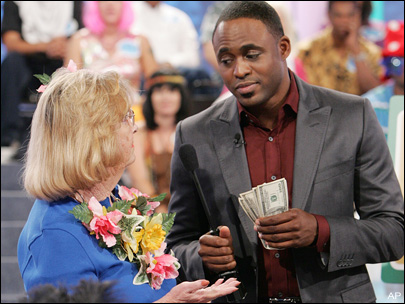
Wayne Brady withholds money from old white lady-you make up the caption!

Essentially the same programme from two parallel dimensions where the only difference is who people liked more on Whose Line is it Anyway?, these two shows feature audiences whose enthusiasm wouldn’t look out of place at the Nuremberg rally attempting to turn their capitalist pre-conditioning into prizes. In the former, incest love-child of Uncle Ben and Aunt Jemima Wayne Brady sells the public toxic assets while looking offscreen for his credibility. The latter has the master of weight-to-spectacle ratio Drew Carey rewarding conspicuous consumption. Brady’s fancily dressed studio audience appear to have been plucked from a Twilight Zone episode where it’s Halloween every day and Carey’s contestants are so elated by being selected you’d think the alternative was The Running Man.

The Winner is: Free enterprise.

The Loser is: Market regulation.

Returning Contestant?: Until the gym shows something other than Bones.


The Taste (ABC, Thursdays)

‘Ok is it an animal that flies or grazes?’

It’s quicker to replace the word ‘voice’ with ‘taste’ and apply everything you know about NBC’s The Voice than to describe this primetime cooking competition. Plagiarism aside, The Taste is closer to the spirit of the blind judging concept than its sensually conjoined twin, which has ironically produced more conventional-looking winners than the image-obsessed American Idol. The judges continue to taste blind even after selecting their teams, which often results in publicly humiliating their protégés. It also reveals the astoundingly poor palettes of those in the food industry, as they bemoan the lack of protein in desserts and consistently lose at ‘guess the animal’. The lack of prejudice in the selection process is offset by the judges’ freely expressing their sexism and dietary bigotry.

The Winner is: Whoever gets the leftovers.

The Loser is: Any vegetarian.

Returning Contestant?: For as long as Anthony Bourdain is there.


The Biggest Loser (NBC, Tuesdays)

‘Why do I have to have my shirt off again?’

One mustn’t scoff at an American game show where the prize is better health instead of more stuff. But don’t be naïve enough to think this is public service television. Underneath the noble purpose is a ‘watch fatty jiggle’ voyeurism which forces contestants to turn their bodies into freakshow curiosities before losing weight. The show is padded with needless challenges and needlessly complicated rules tenuously linked to some sort of obesity fable that only makes weight loss harder and more arbitrary. And if the thing you need to lose weight isn’t made by a sponsor, forget it. The ongoing weight loss is undoubtedly a serial hook here, and the perverse satisfaction of seeing a body waste away is what keeps you coming back.

The Winner is: Subway.

The Loser is: Whoever Subway’s competitors are.

Returning Contestant?: Either that or my TV’s screen ratio keeps changing.


The Bachelor (ABC, Mondays)

‘I need that in the form of a question’

If the holiday you won on a game show turned out to be to a leper colony or the games room you risked everything for was just Ker-Plunk in a box, you probably wouldn’t go back as a contestant. However, despite former ‘winners’ chalking up an abysmal tally of estrangements, broken engagements and divorces, people keep wanting to be and wanting to be on The Bachelor(ette). Even having been a contestant seems to be life-threatening these days. Unlike other game shows, The Bachelor(ette) likes to invite its losing contestants back to occupy more senior roles in the programme, like Juan Pablo who was sent home in a previous season and is now the bachelor. It’s like losing Final Jeopardy and then next day replacing Alex Trebek.

The Winner is: Rose-growers.

The Loser is: Divorce statistics.

Returning Contestant?: I’ve watched so much I’ll be the next bachelor.

Orange is the New Flashback

Posted in American TV (General), American TV Shows, Internet TV, Reviews, TV channels, Watching TV with tags , , , , , , , on January 7, 2014 by Tom Steward

In retrospect Lost ruined American television storytelling. Despite the unbeatable meat locker premise of plane crash survivors trapped on a desert island, the series was an exercise in turning story back to front. Each episode was padded with extensive flashbacks detailing the lives and backgrounds of each character which would routinely distract the series from its primary location and central conceit. In periodic flashback, the writers had discovered a structural ploy that could get them out of having to do character development and exposition in the screenplay. US TV writers have been using these throwbacks ever since the success and acclaim of Lost made it acceptable to do so and they are now synonymous with quality. Today you’d be hard pushed to find an American TV drama (and non-studio comedy, for that matter) that doesn’t have flashback hard-wired into its format. Lurching into the past occurs so regularly in the course of coveted TV series such as Breaking Bad and The Walking Dead that it begins to look like a sophisticated way to tell stories.

Lost in the past?

Flashback-in-the-pan storytelling has reached new extremes in the Netflix original series Orange is the New Black. Like Lost, the series has a genre setting-the prison-which can create a self-enclosed world for the drama to play out in. And Jenji Kohan’s series seems equally determined to throw away this potential with lengthy origin stories for each prisoner propping up the episodes. But Orange is the New Black puts the cart before the horse like never before. We’re barely allowed to glimpse inside the walls of the prison before we’re in the televisual time tunnel witnessing protagonist Piper’s road to incarceration. To add insult to injury the life events we’re seeing are not so idiosyncratic as to be completely unimaginable by the (presumably free-thinking) audience. I can figure out in my head what Piper coming on to the idea to make and sell artisanal bath products with her sister looks and sounds like as a dramatic scene. All I need is the knowledge of it. Most subsequent episodes begin with prisoner origin stories instead of the prison.

You’ll see more of the prison here than in the pilot!

This is undoubtedly the culmination of nearly a decade of bumping backstory upfront but it’s also a by-product of Netflix viewing practices. With Netflix series, all of a season’s episodes are released to subscribers at once. Producers and writers have to assume that there are significant numbers of viewers who will consume the episodes in one go. With this in mind, it might be deemed more important to give the audience something to go on to rather than something to go on. With a week (or more) separating each episode of a network-aired series, single instalments must deliver a gain or development of substance to keep viewers going in the meantime. Not so much for Netflix which puts no delays in front of ongoing viewing and hence never has to get anywhere by the ends of episodes. Orange is the New Black can then afford to indulge in flashback as the prison story may be told piecemeal without incurring the same frustration it would in a series where viewers have to wait for new episodes.

Cards on the table. I’m prejudiced against TV using flashbacks to tell stories. It’s so normalised in American TV now that most viewers probably don’t notice, or don’t find it that disagreeable. But I don’t like it because I think it’s a cheat. To put something back in that’s been forgotten about or not properly realised at a later date is fine, as long as it’s a heartfelt apology. To do it with the pretence of complex storytelling, as if it is somehow a better alternative to writing a screenplay properly in the first place, is just dishonest. Used sparingly and as a last resort for conveying information, I think flashback can be massively effective. The governor of all prison dramas Oz had flashbacks to the crimes of all the inmates as they were introduced, but in uninterruptive 10-second blips with startling power and minimum story drag. The Sopranos saved flashbacks for life events that had just been recovered in memory or for moments too painful for characters (or viewers) to endure at the time.

Oz: a prison drama…in prison.

Now that flashbacks are inextricably bound up in what we think of as good television and are favoured in the ascendant Netflix model of TV viewing, American television storytelling is only going to get worse. My only hope is the linear becomes fashionable again when TV flashbacks finally become passé.