Losing Elmo

Posted in Uncategorized on January 25, 2015 by Tom Steward

I’m away in Thailand (which you’ll be hearing about next week) so I’m not watching TV with Americans but I’m excited to introduce guest blogger Samantha Hope Goldstein with a post about parenting through television. 

When my husband and I were first dating, such was our compatibility that we never watched TV except together. He introduced me to Red Dwarf; I lured him to Buffy the Vampire Slayer. If we couldn’t agree on a show, it was jettisoned altogether (Grey’s Anatomy, we hardly knew ye) but mostly we remained in felicitous accord. As DVR early-adopters (anyone remember ReplayTV?) our viewing relationship became even more harmonious, and eventually led to marriage. And then came the baby. She arrived suddenly, pre-toddlered for our parenting pleasure. As a proselytizing reader, I swore she would not know television until the age of three. Three minutes later, I realized this plan was moronic. The TV was called upon to perform the exalted task of babysitting when I needed to do something extravagant like make a sandwich or find socks that matched.

Falling in love means watching TV shows you never knew existed.

Falling in love means watching TV shows you never knew existed.

As she grew, television was an invaluable tool in my lazy parenting kit. But eventually, I saw disturbing trends in her viewing habits. The child was inevitably savvy about programming the TiVo, and the cartoons of her formative years morphed into live-action Disney shows with laugh tracks where the parent-child dynamics could only be described as “snarky.” Once, I happened upon her glued to Cougartown, which she described when questioned as “one of my shows.” The time had come to explore the significance of television in our daughter’s life. After all, she seemed to care about it as much as we did. I once suggested tap dance lessons and she replied: “Well, I don’t really want to do anything that keeps me from watching TV and eating.” Were we responsible parents if we didn’t check her consumption? And was it my imagination that she was distinctly unpleasant after a somnolent afternoon in front of the screen? We’re still answering these questions. In the mean time, we set out to make her the kind of TV watcher we’d be proud to call our own.

Watch the Dynamic Duo of Awkward blow up stuff--it's educational.

Watch the Dynamic Duo of Awkward blow up stuff–it’s educational.

At first, there was a pretense of educational fare, starting with Brain Games and Mythbusters. These shows are fortified with science and other wholesome ingredients, with trace elements of innuendo and product placement, and I could tolerate them, which was key. I could not say the same of David’s personal mission to make her a Dr. Who fan. Next step: reality shows. Since some were unsavory even to us (“Mommy, what’s sexting?”) and I apparently do not share my demographic’s love of cooking and home shows, we were limited. We’ve been watching Survivor since the first season, so we started there. She enjoys the challenges, but puts herself to bed before Tribal Council, as she can’t bear “all that talking.” I’m a shameless fan of Dancing with the Stars, and she likes seeing the contestants suffer, if not the actual dancing.

Speaking of suffering, she is very curious about our supernatural shows. I am often quizzed about the finer distinctions between vampires and zombies (“Now, can vampires also suck the blood out of ripped flesh?”) but we won’t negotiate on True Blood and The Walking Dead—vampires in general are difficult to wrap your mind around before puberty, since all that bloodlust starts to morph into actual lust, and I’m not sure I could explain that even if I wanted to (cross-reference with “Reasons She Hasn’t Seen Scandal.”) Little by little, we’ve found a few crossover adult shows we can share. There’s Glee, though I fear it’s giving her a pretty warped expectation of high school.

A wholesome learning and growing experience for the whole family.

A wholesome learning and growing experience for the whole family.

But we’re not prudish, nor are we trying to shield her from grown up realities. Case in point: a recent show all three of us agree on—Drunk History. This show is a juicy mélange of elements: a bit of arcane history no one knows about, a totally blotto narrator to explain it, and an ensemble of well-known actors to reenact it, lip-synching to the incoherent narration. It’s hilarious, but you might also learn who Claudette Colvin is. But the reason our kid likes it is a reason I can get behind. She can’t look away from the adults sipping those glasses of brown liquid. It’s crazy enough that they can’t speak properly, but when they start pitching out of their chairs or vomiting in nearby receptacles, she’s thrilled. “Feast your eyes,” I say portentously, “Behold the glamour of binge-drinking.”

Am I a genius or what? Irrefutable evidence that things that adults like aren’t alluring, but rather disgusting, and to be avoided at all costs. Maybe I’ve got this parenting thing totally figured out. Stay tuned.

Tom Steward is away. 

The Music Box

Posted in American TV Shows, Behind-The-Scenes, TV advertising, TV channels, TV Dreams, TV History with tags , , , , , , , , , on January 15, 2015 by Tom Steward

Getting the music right is one of the biggest challenges in television. Sound itself is already incredibly important to the medium, having – unlike cinema – been built in to the experience of watching television from the get-go and, thanks to a broadcasting pre-history in radio, figuring just as if not more strongly than the image. What’s more, over the years we’ve relied more and more on theme music to arouse and sustain our interest in series, especially as they advance in years. With the title sequence becoming a developed art form in itself in the past decade or so, theme music becomes ever more important to what we make of individual shows. Attributing more creative license and worth to titling does, however, increase the capacity for error, and while the shows themselves can grow out of their teething troubles, misfiring opening credits will more than likely be there forever, as they are rarely overhauled, even in the most loathed cases. In this sense, HBO have produced both the best and worst TV music of all time.

God only knows why they picked that song!

God only knows why they picked that song!

There’s no question that HBO revolutionised title sequences in original programming like The Sopranos and Six Feet Under and helped to cultivate the evocative, expressive and complex opening credits we have today on other networks, such as the ones introducing AMC’s Mad Men and Showtime’s Homeland. But by inflating the status of the form, the network has also permitted some of the more indulgent and self-congratulatory examples of theme music, namely the excessively long and needlessly rocky fret-wanking that begins Boardwalk Empire. Normalising the elaborate title sequence has actually harmed the use of music in many shows. The Mormon marriage drama Big Love begins with a dreamlike title sequence employing the fantastic celestial imagery characteristic of the Church of Latter-Day Saints set to ‘God Only Knows’ by The Beach Boys. Both song and sequence are wonderful, but the images, and the polygamous culture behind it, corrupt the sincerity of what is perhaps the most elegantly direct statement of love in the history of pop music, retro-fitting it with unbecoming connotations not implied by the song.

Though I have yet to encounter anyone who has a problem with it, the theme music to Veep really annoys me. For such a sophisticated satire to perform such a perfunctory send-up of the sounds of televised US politics – like one of those Casio-keyboard comics of the last decade – is unacceptable to me, particularly given the Altmanesque sound editing in the rest of the episode. So brilliant is the sitcom in every other aspect that it shouldn’t matter, but that’s the curse of bad music in a good TV show. It’s unlikely to change or go away any time soon. You’re going to have to accept it as a penalty for every viewing. While shows can supplement their titles, it is unusual for them to be abandoned altogether regardless of their success, partly because of the greater and greater expense associated with devising them and also because it is the spearhead of the show’s branding and can no more easily be changed than its entire marketing campaign. It’s clear why pilots tend not to bother!

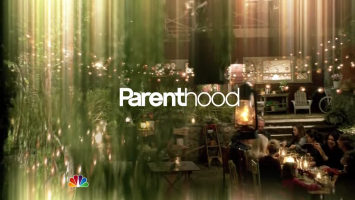
A lot of what music you hear depends on where and how you watch a TV show. If you saw medical drama House outside the States, you wouldn’t have had the pleasure of hearing Massive Attack’s ambient masterpiece ‘Teardrop’ over the opening credits but rather the tail-end music of each episode transferred to the top. It’s an international rights issue, not an aesthetic choice, but the power and beauty of that title sequence lies largely unsung without it. If you were watching an internet version of NBC’s Parenthood you wouldn’t always get the irreplaceable, class-setting theme song of Bob Dylan’s ‘Forever Young’ but a preview of the hipster warbling that haunts the annals of the incidental soundtrack. Without this introduction, it seems a show deficient in history or culture beyond a few ephemeral local musicians on the present scene. What is even sadder than the deprivation is that you are unaware of the loss until educated otherwise. It’s an audio version of how TV – by its own machinery – prevents viewers from witnessing the true text.

May you stay forever Dylan!

May you stay forever Dylan!

The more that title sequences become indispensable to the shows they herald, the more that theme music is going to matter. Unlike the ever-evolving series that follow on, theme music needs to be pinned down immediately or worn as a stain until the show ends. Or we tire of listening.

Home Movies

Posted in American TV (General), Reality TV, TV channels, TV Culture, TV History, TV News with tags , , , , , , , , , on January 7, 2015 by Tom Steward

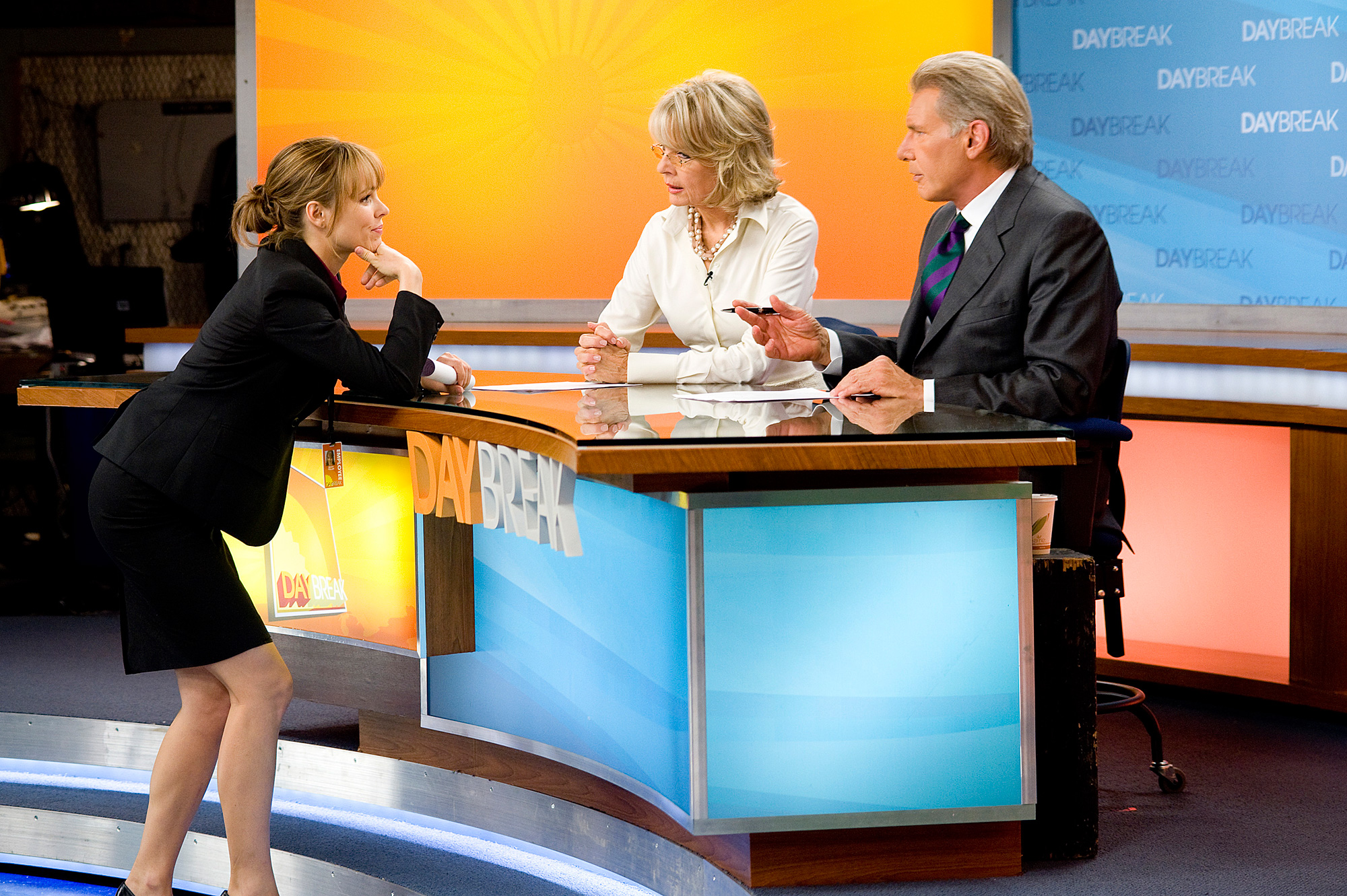
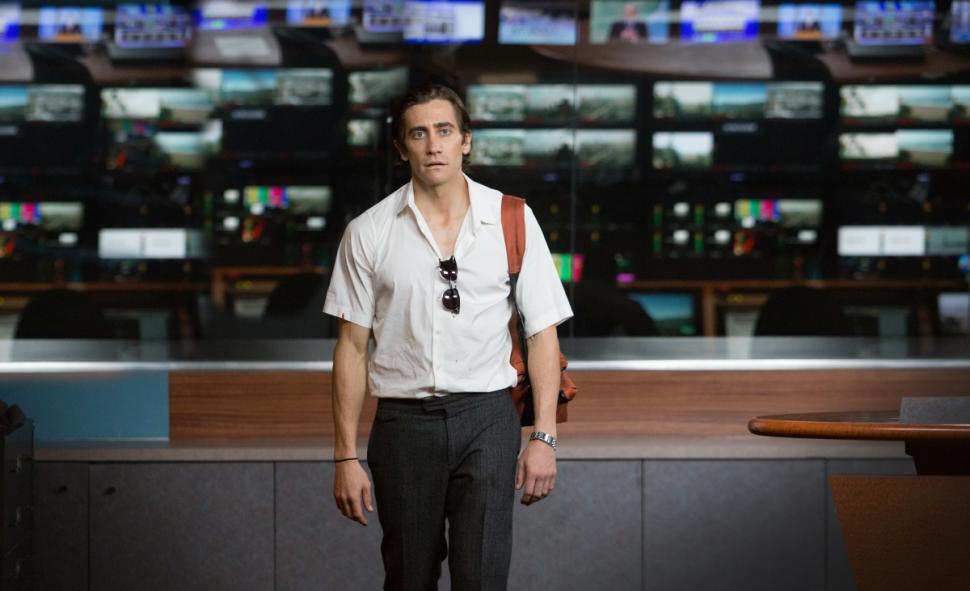
Though I’ve devoted the last decade of my life to television (in both work and play!), movies were my first love and they’re still at the heart of what I write and do. Consequently, I’m often asked what the best movies about television are. I’m always unsure what I’m supposed to evaluate; the quality of the movie or how well it deals with TV. The two very rarely go together. For instance, my first instinct is to say Morning Glory, a mature TV news satire that neither skirts around the rampant commercialism of American television nor uses it as a brush to tar the medium with. But the acting is regularly terrible, the (non-TV related) storyline lousy, and the ham-fisted direction really kills the comedy. But as a movie about television, I infinitely prefer it to the pious nostalgia of Good Night and Good Luck and TV writer Paddy Chayefsky’s glorified revenge pic Network, as superiorly artful as those two films are. So I was conflicted in my feelings about the TV news thriller Nightcrawler.

...not to be confused with the porn parody of the same name!

…not to be confused with the porn parody of the same name!

Both Jake Gyllenhaal and Rene Russo give remarkable (and remarkably unusual) performances. The script is utterly solid, something which cannot be underestimated in contemporary American cinema. The suspense elements are well-handled, and the photography mixes the best of cinematic vistas with the seedy beauty of urban photojournalism. I thoroughly enjoyed it, which is a rare experience for me in the cinema (seeing a new movie). I have no issue with the portrayal of American TV news, as it clearly is as base, gruesome and sociopathic as the movie suggests, and just as culturally defunct and laughably moribund. But it’s a narrow view of television that is loath to admit the frequency with which contemporary TV beats out cinema for complex drama and art and unfairly highlights its tabloid extremes. It also suggests that the capacity for TV to be live (not that it really ever is anymore!) is a crutch to its expression that makes TV necessarily artless and sensationalist. But as far as movies about TV go, these kinds of representations are old news.

Movies about TV almost always focus on the production of non-fiction (typically news), stress the live aspects of television broadcasting (regardless of how live TV is at any given historical moment), and never fails to mention any quality of the medium that might situate it as inferior to cinema, like its commercial interruptions or diminished screen size and image quality. Comment me if I’m wrong, but all movies about TV have at least ONE of these three typicalities. What’s also significant is how ahistorical this cinematic portrayal of TV is. You could understand it when TV was the new kid on the block and the film industry wanted to play up the disparity between fulfilment and experience in consumption of the two moving image media (although historians question whether we can ever see the two so separately). But it doesn’t really make sense when you consider that film and TV industries have for large swathes of their history been interrelated economically under dual or conglomerate ownership. What is the advantage of saying TV sucks then?

It’s not a riddle I’ve particularly solved, except that the mythmaking of movies depends so heavily on the distinction of the cinematic experience that it behoves the industry to promote the fairytale of exceptionalism in the face of overwhelming economic, technological and cultural evidence to the contrary. I’m pretty sure that hijacking the feeling of live TV in these movies derives from a kind of jealousy about the immediacy and presence that the medium can cultivate, as in Tootsie which go to extreme expository lengths to make a broadcast of the intra-diegetic soap opera live. With bigger, clearer home sets and smaller, digital ‘studio’ theatre screens as well as a parity of commercial content and product placement in both new movies and TV transmissions, cinema hasn’t a leg to stand on. It is, however, a strategy that boutique television networks also use to distinguish themselves from everyday TV flow, judging by the number of tiny, flickering sets we see on HBO and AMC shows in the service of dispensing an endless barrage of homogeneous crap.

Fishing for a story!

Fishing for a story!

It may be time for the movies to start acknowledging some of the realities of contemporary television. It wouldn’t be hard – just ask the many actors who now regularly moonlight between the two! TV is better than its news output and infinitely more interesting than its increasingly rare live transmissions.

The Rest Of The Year’s TV

Posted in American TV (General), American TV Shows, British Shows on American TV, Reality TV, Reviews, TV advertising, TV channels, TV Criticism, TV History, Unsung Heroes, Watching TV with tags , , , , , , , , , on December 31, 2014 by Tom Steward

There’s a formula for writing annual ‘Best Of’ TV lists. First it’s compulsory to observe how pointless a task it is making such a list for a vast and varied medium like television, then talk about how your criteria will be completely different, before naming the SAME EXACT shows as every other critic. Well, I don’t think it’s pointless, at least no more futile than doing it for books or films (where critics don’t seem to have the same anxieties about habitually omitting factual and lifestyle titles). I have no wish to create an opaque ratings system that will lead me back to shows which come pre-ordained as the best of TV. But I do want to ensure that the titles I choose won’t appear on anyone else’s list, something which gets harder and harder as critics begin to fawn over the nichest possible television. So don’t consider this the year’s best TV (see I’m doing it in spite of myself!) but rather good TV that has been overlooked simply because it doesn’t get listed.

Botched (E!)

...what if he dies first?

…what if he dies first?

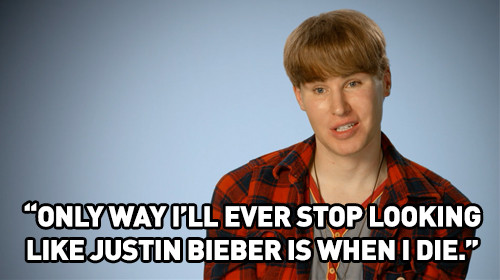
Real Husbands Dr. Paul Nassif (disguised as Moe Syslak from The Simpsons for ease of viewer identification) and Dr. Terry Dubrow (other two-quarters of Heather Dubrow, who must always be named twice) are L.A. plastic surgeons who specialize in fixing botched jobs. There’s some emotional hard luck stories but basically it’s the best excuse ever for social voyeurism and with patients like a Human Ken Doll and a 33-year old man with the face of an early-teen Justin Bieber it’s about as visually mesmerizing as reality TV gets. The show is also indispensable body horror, with its drop-in circus of malfunctioning and distorted anatomy. Even E’s glossification can’t mask the raw psychological distress.

90-Day Fiancé (TLC)

A show close to mine and G’s hearts, since I arrived in the US on a marriage visa. This observational documentary follows six couples during the 90-day window for visitors to the US to marry on the K-1 visa. It’s as compelling for its cartoon parodies of loving marriage as it is for reaffirming the borderless beauty of the institution. So extraordinary and bizarre is the experience for these culture-clash couples that the network barely needs to meddle in the melodrama, as it does for its other reality shows, giving it a more natural (if no less extreme) flow of real events than heavily devised TLC docu-soaps like Here Comes Honey Boo-Boo.

Muppets Most Wanted (Disney)

Variety at heart!

Variety at heart!

Probably more likely to be dismissed on grounds of not being a TV show, this was nonetheless the movie that in 2014 most thoroughly blurred distinctions between film and television. The Muppets are a creation of television, stars Ricky Gervais, Ty Burrell and Tina Fey are all television personalities, and the legacy of The Muppet Show is privileged at the expense of the movie franchise (the latter self-consciously in comic acknowledgements of the diegetic amnesia around popular movie characters and sequels). The movie is a joyous celebration of the achievements and talents of television past and present, reminding us of how far the medium has come. And it’s full of commercials!

LIVE With Kelly And Michael! (ABC)

A show that will doubtless elude recognition for its monotony and ubiquity, but this doesn’t change the fact that host Kelly Ripa is by several miles of open country the funniest, smartest, wittiest and most multi-dimensional presenter in daytime. Her work in morning television is more akin to what Conan, Colbert and Craig Ferguson have done with the late-night form than the platitudinous moron-making of virtually everybody else on TV at that time, and until about 11 in the evening. This is an everyday occurrence, which makes it all the more startling, but her essential impersonation of Laura Linney in the Halloween parody of PBS Masterpiece Theater speaks volumes.

The Late Late Show With Craig Ferguson (CBS)

Not like any other late night show!

Not like any other late night show!

Dare I say that Craig Ferguson’s departure from late-night talk shows will leave an even bigger hole than David Letterman? While Letterman innovated within the format, Ferguson created a new late-night form that was genuinely subversive, avant-garde and experimental, importing a brand of British vaudeville surrealism reminiscent of Reeves & Mortimer and The Mighty Boosh. Like those acts, Ferguson meshed light entertainment with serious art, carved out an absurd fantasy using television grammar, and delivered alternative culture disguised as broad comedy. It was a rejection of all that was bland and formulaic about one of American TV’s most intransigent genres, and a complete reinvention of its possibilities.

Watching TV With Britons Part 2: Same Same Same

Posted in Americans watching British TV, TV Acting, TV channels, TV Criticism, TV History, Watching TV with tags , , , , , , , , , on December 27, 2014 by Tom Steward

The second part of my exile’s guide to British television looks at the unwelcome familiarity of the programmes I watched during my recent visit to the UK, as any vain hope of something changing for the better while I was away is quickly crushed under my muddy, slushy Wellington boot:

The Royal Variety Performance (ITV):

Who is the least talented person in this picture?

Who is the least talented person in this picture?

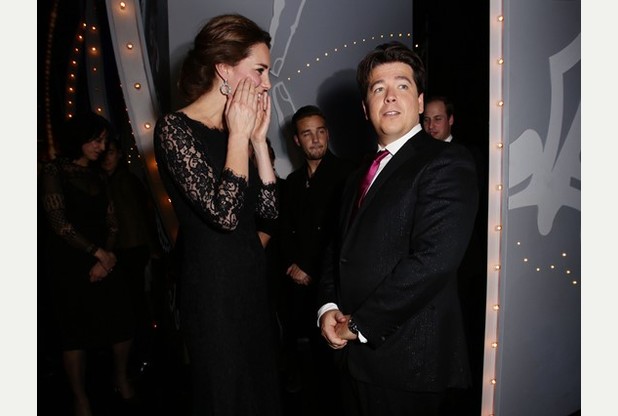
As both variety (our version of vaudeville) and royalty are anachronisms in British popular culture, this annual broadcast of theatrical entertainment staged in front of members of the monarchy seems to exist for nostalgia alone. Tellingly, there’s no variety on offer but merely alternating stand-ups and singers. The addition of William and Kate – presumably as a reward for breeding – meant that the event was no longer attended by a couple famous for their dislike of showbusiness but they still couldn’t help appearing like a benign Statler & Waldorf. It’s hard to believe that host – and redefinition of the term ‘comedian’ – Michael Mcintyre remains popular in Britain but given the programme’s commitment to the regression of our culture, artist and medium have never been better matched.

The Railway: First Great Western (Channel 5):

Public transport documentaries have been the saving grace of British reality television in the past few years, but the UK’s TV network-in-the-attic Channel 5 has, by focusing on this year’s closure of the Dawlish rail line due to storms and flooding, turned it into weather porn – one of the less commendable reality genres to emerge on British TV after the advent of climate change! Still, it was interesting to see that Home Secretary Theresa May is as inept at forming sentences as she is at politics.

Black Mirror: White Christmas (Channel 4)

A Christmas Hamm!

A Christmas Hamm!

British TV critic and screenwriter Charlie Brooker exists in a categorical limbo between Clive James and Rod Serling, alternating parodic weekly TV review shows with anthology sci-fi horror. This festive (in genre alone!) edition of techno-fear playhouse Black Mirror was, in keeping with the British Christmas special, more conventional than we expect from the series. The formulaic storytelling was partly a satisfying return to the Christmas TV horror plays of old but also revived some rather retrograde attitudes to gender and race that I’m sure we’d all have rather left in the TV of the 70s. A surprise Christmas gift came in the form of an outstanding star turn by Jon Hamm, leading the effort to turn British migrant labour in American TV into a hostage exchange (P.S. You keep James Nesbitt, we’ll have Steve Buscemi!), which, as Mad Men comes to a close, more than proved – at least to doubting Thomases like me – that he could credibly be something other than Don Draper.

It Was Alright in the 70s (Channel 4)

Several people told me I should watch this programme, which runs clips of contemporaneously controversial British TV from the 1970s alongside commentary from the people involved as well as aghast modern-day viewers. The clips themselves have the requisite shock and entertainment value, but I was uneasy with the tone and project of this documentary. It seemed to suggest that the bigotry and exploitation that appeared in 1970s television was somehow a thing of the past and that all the problems of representation had subsequently been resolved, whereas I saw plenty of examples, if perhaps more latent than pointed, of prejudice and cruelty in the TV I watched while in the UK. It’s also a very selective history of 1970s television in the UK which continually declines to mention how experimental, challenging and innovative a great deal of TV was in that era, perhaps more than now, and certainly with more frequency. When this is acknowledged, it’s usually passed off as the inconsequential ramblings of a cultural historian in the editing, and only ever associated with content that would be hard to defend on a representational level, such as The Goodies’ (literally!) savage attack on apartheid involving racial slurs and minstrelry. But perhaps the most disappointing aspect of the programme is its lack of originality. It’s a cursory spin on a clip-based nostalgia format that’s been around since the turn of the millennium, and almost matches the exploitative tendencies of the TV it lambasts by offering recent revelations about the sex crimes of 70s British celebrities as a unique selling point.

Autopsy: The Last Days of Elvis Presley (Channel 5)

briton 6

Dr Richard Shepherd, Graduate of The University of Stating The Bleeding Obvious!

Like asking which bullet killed a person shot 24 times. Worth seeing for the Elvis curl on the lips of the actor portraying Presley whilst dying on the toilet.