Archive for amc

Braking Bad

Posted in American TV (General), American TV Shows, Touring TV, TV Culture, Watching TV with tags , , , , , , , , , on February 25, 2014 by Tom Steward


We’ve got some haz-mat suits in the van’


Last week I was in Albuquerque, New Mexico, where the celebrated AMC crime drama Breaking Bad was set and shot. During my time there I went on a tour of the show’s locations. This consisted of an informal convoy of cars parading the city which, with its walkie-talkies, cyclical movement and talk of ‘herding’ and ‘getting separated’, reminded me of another AMC series, The Walking Dead. The show is so ingrained in the city that it’s entirely possible to take a Breaking Bad tour of Albuquerque without even knowing. It turned out I had been to several of the locations earlier in the week, including The Grove Restaurant, one of the recurring set-pieces in Season 5, which just happened to be opposite my hotel. In that instance, I was there not as a fan but as an aficionado of oversized baked goods.
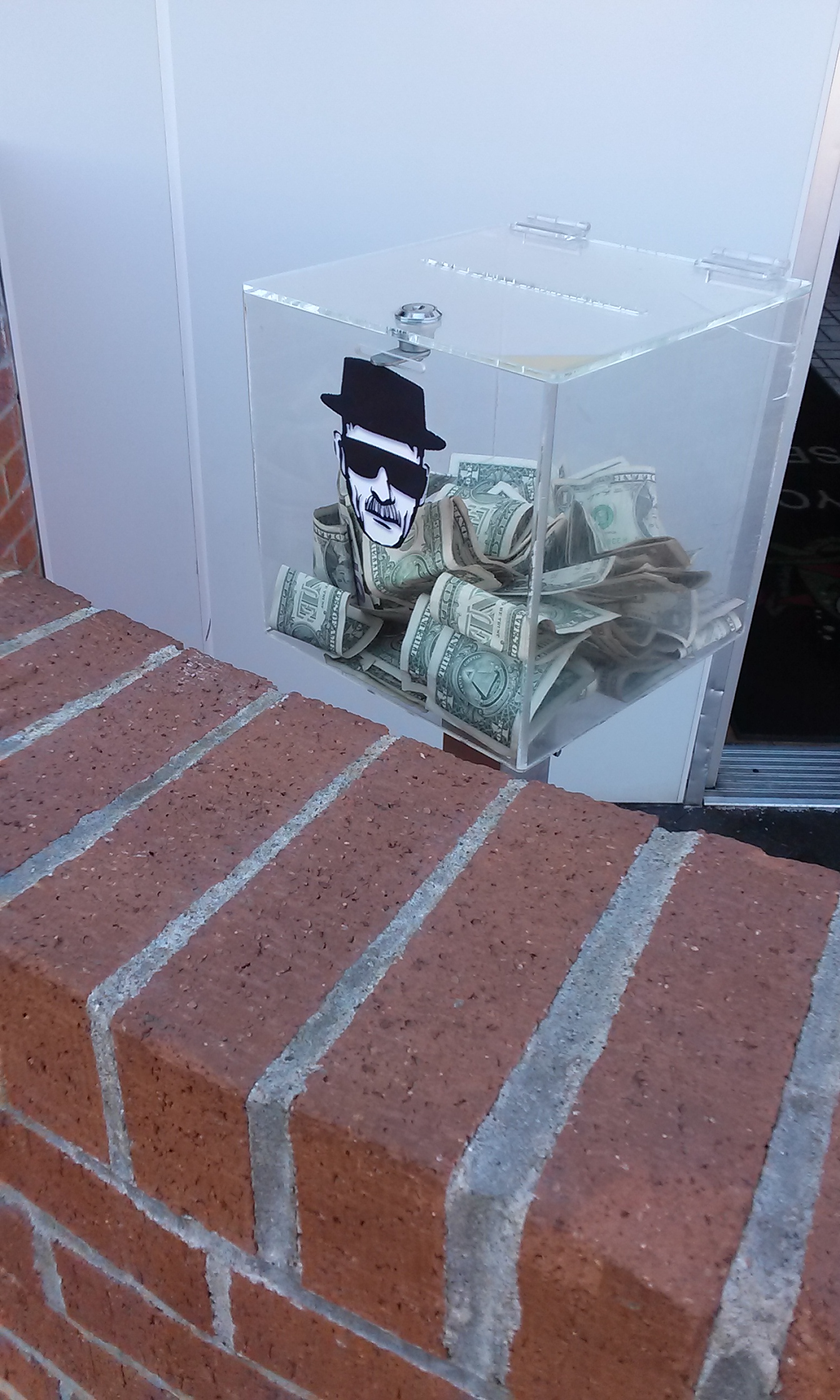
Making Mad Money!

Making Mad Money!

Everyone on the tour was struck by how close the locations were to each other. Film and TV locations are usually discontinuous – even if they are supposed to be within the same area – and tend to be arbitrarily stitched together to form an entirely new map that suits the logic of the programme or movie. Except for a few jarring instances, Breaking Bad seems to choose its locations according to the geography of Albuquerque. That doesn’t mean, however, that the show’s directors weren’t adept at transforming locations to fit the tone and meaning of the story. In Breaking Bad, The Grove is a soulless, empty corporate coffee shop whereas the real spot is a bustling, cheery local produce market and café. The Whites’ family home always reeked of lower-middle class suburban compromise but in life it is a desirable piece of real estate in a pretty, upscale neighbourhood.

What soap are they using at the car wash?

What soap are they using at the car wash?

It was clear from the array of visitors to the Breaking Bad locations that the show has created a demand for tourism in Albuquerque. It was less clear how interested the natives of Albuquerque are in making a fully-fledged tourist industry out of it. We were chased off a couple of properties, both politely and impolitely, and in other places which were working businesses you got the impression that they didn’t mind having you look around but nor did they particularly care you were there. A few plaques and souvenirs from the show were scattered here and there, like the gloriously kitsch sign for the fictional Los Pollos Hermanos restaurant in the branch of Twister’s which subbed for it, but nothing extravagant or mercenary. I applaud their effort to maintain identities and existences independent from their appearances in Breaking Bad and I liked being in them more because of that.

love 125

The sign is there, the restaurant is not.

As we saw with mixed local reactions to Alexander Payne’s Nebraska, it’s not how much a place is onscreen that matters, it’s how that place is represented. Breaking Bad certainly gestures to what makes Albuquerque a place of beauty – its inspiring urban murals, its mountain-lined vista landscapes – but it’s somewhat undermined by being identified as a run-down, crime-ridden city where an opera of meth and death can credibly play out. This may be at the root of the locals’ ambivalence. It’s no coincidence that the most adverse reaction we got from a local was from the owner of The Crossroads Motel, depicted as a hangout of meth addicts, dealers and hookers in the show where it is nicknamed ‘The Crystal Palace’. The most business-sensible of the proprietors use Breaking Bad as a hook. At Twister’s, I arrived thinking about Breaking Bad and left dreaming about their breakfast burrito.
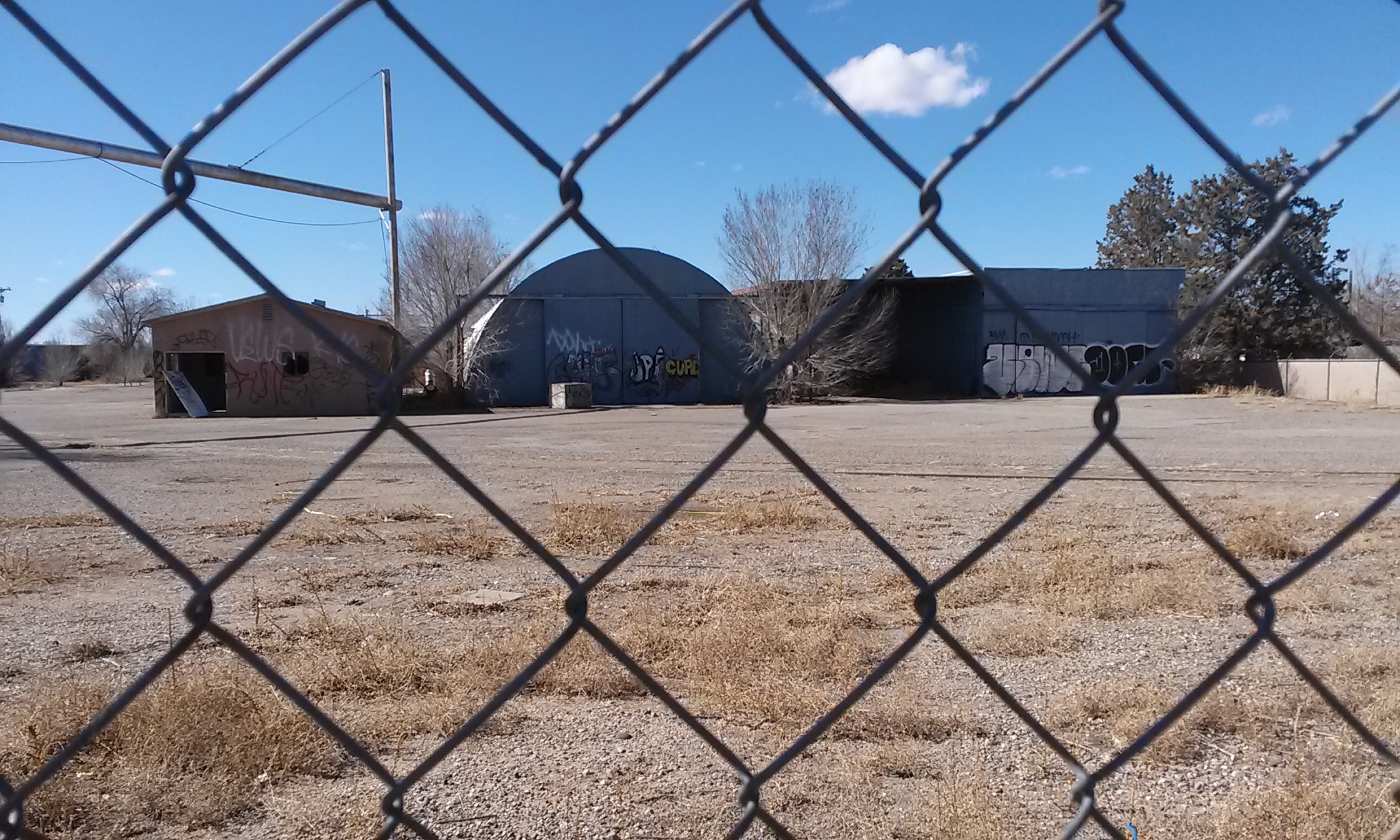
The Nazi compound.

The Nazi compound.

Albuquerque is a far-cry from Hobbiton or Highclere Castle though in some ways Breaking Bad is more rooted in the reality of the city than either The Hobbit or Downton Abbey is in their tourist-trap theme parks. At the disused rail-lined storage facility that housed the Nazi compound in which the denouement of Breaking Bad takes place, there are the remnants of a public-made shrine to Walter White. But however much you wish to imagine it a place of fiction and imagination, it remains a place of foreboding and sinister feeling irrespective of its meaning in the show. Being there you fear real Nazis, or worse. Turning around – and crucially away from the show for a second – you’re faced with a scene of Albuquerque in all its natural southwestern glory. That’s the difference. It’s Breaking Bad, for sure, but something else, and something just as effective, maybe more.

Serial Killers

Posted in American TV (General), American TV Shows, Behind-The-Scenes, Internet TV, Reviews, TV advertising, TV channels, TV Culture, TV History, TV News, Watching TV with tags , , , , , , , , , , , , , , , , , , , on October 29, 2013 by Tom Steward

It’s tempting to think that we live in an age of serial television, since virtually every programme we see features some kind of story development designed to keep viewers coming back week after week. Nowhere is this more evident than US TV drama. Critics have been telling us for years now that what distinguishes dramatic American TV from its British equivalents and cinematic competitors is the ability to tell stories over time. Yet very few US TV drama series have sustainable premises and even fewer have enough story arcs to outlast a shelf life of one season on the air.

This struck me while watching the early episodes of Season Three of Showtime’s Homeland, patiently waiting for the show to justify its continued existence. The series had the requisite twists and turns for a season of thrills and jolts and spent its second treading water by flipping the premise like a trick coin so that viewers basically watched the first season again in reverse. The third season has already drowned in its own uncertainty over the future trajectory of the show. I’m not at all averse to long-running programmes changing what they are, as long as they change into something!

Damian Lewis tries to hide from disgruntled Homeland viewers…

Homeland is a glorified mini-series but so are many of the contemporary dramas we treasure as serial television. Damages and 24 never deserved to get beyond a single season. The plausibility and novelty of both series is dependent on the events in the fictional world of the show never being repeated. Even TV dramas celebrated for their narrative complexity such as The Sopranos and The Wire barely made it past their first seasons. Both shows came to a story impasse at the end of their pilot runs and had to work hard at finding new characters and concerns to explore.

Let’s get some historical perspective here. The trend towards serial storytelling in US TV drama over the last thirty years didn’t arise from a need to tell stories more complexly and truthfully. As soap operas went primetime in the late ‘70s with Dallas and Dynasty, network executives and advertisers alike recognised that cliffhangers and continuing stories could be a valuable commodity in finding and keeping viewers. I’m not saying this didn’t lead to more complex television storytelling (and often the viewers who liked this most were those targeted by sponsors) but serial television had to be sellable to stay prevalent.

Serial storytelling in US primetime!

Serial storytelling is a neat way to illustrate television’s differences from books and movies (at least those that aren’t series). But the truth is for much of its history, dramatic storytelling in US TV was delivered in self-contained episodic form along a more generous, less competitive principle of not alienating viewers who might miss a week occasionally. The legacy of episodic storytelling is still discernible in American TV today. The successful CSI and Law & Order franchises paid only lip service to serial form and the best show currently on the air, FX’s Justified, is based principally around episode-specific stories.

Most contemporary US TV dramas are better described as walking a tightrope between episodic and serial storytelling. In order to attract casual viewers and get syndicated, TV series must have a loose enough storyline to be broken up and watched out of sequence without too much loss. But as the options for TV viewing multiply exponentially and the landscape of dramatic entertainment become ever more fragmented, stories that run across episodes and seasons remain a tried and trusted technique for encouraging repeated viewing and customer loyalty. A step too far each way takes you into daytime or days gone by.

Justified, the last outpost of episodic TV!

AMC currently holds a reputation for producing television that showcases the best of American serial drama, something alluded to in their last two slogans ‘story matters here’ and ‘something more’. But let’s look at the facts. The recently-completed Breaking Bad is a fallacy of serial storytelling, compacting six years of television into two years of onscreen time. Mad Men produces an occasional episodic masterpiece but watching the series continuously quickly gets tiresome, making it preferable to cherry-pick instalments from digitised series archives. The Walking Dead escaped Stephen King mini-series status by the skin of its teeth (pun very much intended!).

A television drama that is genuinely serialised runs counter to so many of the qualities of US TV we hold dear, like individually crafted episodes and storyline resolution. There’s also a lot of lame ducks out there with nowhere to go and no story to advance dodging cancellation each year. 

TV Blinded Me With Science

Posted in American TV (General), American TV Shows, Behind-The-Scenes, Reviews, TV advertising, TV channels, TV Culture, TV History, TV in a Word with tags , , , , , , , , , , , , , , , , , , , on October 2, 2013 by Tom Steward

As if you needed me to tell you, the finale of Breaking Bad was aired on Sunday night. The build-up to this television event was swathed in publicity and hype and the show has been swaddled in blanket praise for some time now. Cyberspace is awash with bloggers and reviewers telling you what they thought about the finale, and I don’t really have anything to add, except to say that if the best shows have the most unremarkable endings then Breaking Bad is in contention for greatness. It seems everyone-including the show’s creator-is at a loss to explain why Breaking Bad has been so successful, especially as later seasons attempted to alienate viewers with their unremitting darkness. Another recent television event might help us understand.

Ricky Tomlinson in Controversial Last-Minute Casting Change For ‘Breaking Bad’ Finale.

Last week, eponymous host of 90s’ educational children’s TV show Bill Nye The Science Guy (for British readers think a hipster nerd Johnny Ball) survived the first elimination of ABC’s ballroom competition Dancing with the Stars despite a performance roundly panned by the judges, although if they’d changed the style of dance to ‘David Byrne’ it would have been tens all around. Nye was rescued by the popular vote after his Nutty Professor-themed dance to 80s cult movie soundtrack classic ‘Weird Science’ went viral. Despite an injury-enforced exit from the show this week, Nye’s routines remain this season’s hottest properties. The common denominator in these two unlikely successes is science. Is it pure coincidence or serendipitous discovery and are American TV viewers blinded by science?

Bill Nye channelling David Byrne.

It seems bizarre that in a country where the mere mention of healthcare can cause the government to shut down, science is such a popular commodity. Yet again and again American TV shows flashing their scientific credentials like phosphorus in a Bunsen burner are more likely to succeed. For years, House, a medical show about diagnostic research, beat out the competition from doctoperas like Grey’s Anatomy. Regardless of genre, shows slanted towards the scientific are bound to come out on top. CSI, the most popular cop show on TV, is about forensic scientists and recently there’s been a string of TV hits based around specialists consulting on criminal investigations such as Lie to Me and Perception, the latter beginning each week with a neuroscience lecture.

Perception, a class in TV!

It’s true that the conversations you’ll see about Breaking Bad in the press and social media probably won’t mention the show’s scientific content, except perhaps as a joke (‘kids now want to take up chemistry’ etc.) but it can’t simply be ignored either. Chemistry, physics and biology feature most typically as a way for the characters to get out of a corner, so Walt’s knowledge of the dissolving qualities of various acids helps him dispose of a body and a home-made car battery prevents Walt and Jesse dying in the desert. In this sense, science figures in much the same way it did in MacGyver, where the protagonist’s knowledge of physical sciences was a resource for removing jeopardy when only everyday items were at hand.

Breaking MacGyver.

But science in Breaking Bad is not simply a MacGuffin (or ‘Macgyvfin’) but the trigger for the entire programme. In the Pilot episode, Walt reminds us that his cooking of an unusually high-purity meth product, his route into the international drug trade, is just ‘basic chemistry’. It’s his culture’s treatment of scientists that puts him in the dilemma where meth-cooking is a viable option in the first place. While the more business-savvy of his former research colleagues soar to unlimited wealth, the true scientific genius is forced to take a severely underpaid and unfulfilling high school chemistry teaching job which can’t make up the numbers once he needs costly medical treatments. In turn, each character’s fate becomes tied to how much they know about science.

The Science of Good Television

Following a week in which the talk about American TV was centred on two scientists, Walter White and Bill Nye, I don’t think it’s too much of a stretch to suggest that there’s some sort of cultural fascination with science at play here. I’m not naïve enough to think that the viewing public is interested in using TV to get a scientific education but they’re certainly fond of watching scientists and having the paraphernalia of science on their screens. Maybe Americans are dying to have educated experts telling them what’s going on, something conspicuously lacking in TV news and reality, or maybe there’s something attractive and compelling about TV scientists that makes people want to follow and support them, regardless of their failures and flaws.


Jumping The Arc

Posted in American TV (General), American TV Shows, Behind-The-Scenes, Reviews, TV Culture, TV History, Unsung Heroes with tags , , , , , , , , , , , , , , , , , , , , on September 10, 2013 by Tom Steward

I’m not one to ignore the advice of Public Enemy but I believe the hype. American television is as good as it’s ever been. Full of rich and varied programmes that are as emotionally compelling as they are artfully composed, flush with writers, directors and producers who recognise and understand the craft of good television (many of them the same) and boasting a success rate that easily surpasses American cinema. It’s only because I feel this way that I’m willing to tolerate the abominations of storytelling that even the finest shows on the air serve up on a weekly basis. The people behind American TV have a right to be complacent, and with complacency comes bad habits. A plague of lazy short-cuts and downright sloppiness has spread exponentially through US TV writing and several worrying tendencies have emerged. Here’s a run-down of some of the worst inclinations and their hosts:

Flashbacks/Flashforwards:

I’ve seen the future…and it is confusing!

As far as I’m concerned, if you need to use a flashback or a flashforward at any point in your screenplay you’ve not written the scenes in the present well enough. There are exceptions-like biographies-but the TV shows I’m talking about don’t fall into any of those categories. Great new series like Breaking Bad and The Walking Dead regularly go back and forth on their timelines, and increasingly wield these digressions as banners for the programme. Going back in time serves to fill in story gaps, underlining how badly communicated previous episodes were and alerting viewers to missed opportunities. Looking ahead creates an enigma then made comprehensible by the subsequent action, betraying a (usually undue) lack of faith in the material of the episodes to sustain interest in their own rights. Moreover, these displacements in time interrupt the forward momentum that these shows thrive upon to compel further viewing.

Cast Montages:

There’s only one way this can end…with a montage.

Ever wondered what all the characters in a show are doing at a given time? Me neither. Yet still the most common device for bringing a programme’s ensemble cast together within a single scene is a montage sketching each character’s activities at a time of day (typically morning or night). While this technique usually reveals something essential and often surprising about one or two of the characters, others are left to make up the numbers as they can’t all be doing something profound at exactly the same moment. Most shows manage to keep this tendency to a single scene at the beginning or end of an episode but series like Sons of Anarchy now feature multiple cast montages scattered randomly throughout each instalment, the only means of keeping track of the show’s surplus of sub-plots. There must be subtler, more sustainable ways of getting everybody in one place.

Song Overlays:

Coldplay: ruining American TV since 2002.

Nothing dates faster than music. Despite this truism, American TV shows continue to overlay scenes with contemporary songs that will likely only be considered respectable in the moment they’re first transmitted. Remember when The Shield ended its first season with a musical montage using Coldplay’s ‘Spider Webs’. That was in 2002 when the band still had cache and fed into the alternative style the show was cultivating. Now that Coldplay embody corporate bland, the sequence looks and sounds like middlebrow advertising. Series continue to make the same mistakes by selecting the latest hipster warbles rather than looking for the transcendent instrumentals that will preserve them throughout history. The choices tend to reflect the producers’ record collection rather than being linked to character or place. The Walking Dead would like us to believe that a teenage girl from a remote Atlanta farm has committed Tom Waits B-sides to memory.

Showrunners Writing:

‘Mr Darabont…step away from the script!’

While I’m grateful for all they do to put a programme on the air and keep it in good shape, I wish showrunners would keep their hands off the teleplay. They seem to have a knack for writing the weakest and most mechanical episodes and the ones most concerned with the image of the show not the art of television. Without the might of Shawshank Redemption director Frank Darabont behind it, The Walking Dead may never have reached TV screens but the couple of episodes he wrote that headed up the series seemed incapable of articulating how the show would progress as a long-form narrative (rather than a 2-hour zombie movie) which is essential to establish in the pilot stages of a series. As soon as the writing responsibilities passed to serial TV veterans Glen Mazzara and Charles H. Eglee, the ongoing vision for the programme became evident.

TV Time

Posted in American TV (General), American TV Shows, TV channels, TV Culture with tags , , , , , , , , , , , , , , , , , on July 23, 2013 by Tom Steward

I’ve been (hardly) working my way through Breaking Bad, one of the more remarkable American TV shows of our time, and one of the most striking features of the series is its timeframe. Eschewing the TV rule of thumb that the time onscreen runs parallel with the duration of the initial broadcast, all 5 seasons of AMC’s family crime dramedy take place over the course of a couple of years (there’s a few episodes left but all indications are we’ll go no further ahead than that) effectively making the series a period piece by the time it finishes in 2013. This jeopardises Breaking Bad’s plausibility. The tectonic shifts in character and flurry of cataclysmic events which transform a high school chemistry teacher into an international druglord would be far more credible if spread over a vast number of years. Inside an 18-month window, it puts the series in the realms of bizarre melodrama. We also can’t take what happens to the characters as development as no-one has the luxury of time for any significant growth to occur. Instead, we’re witnessing how the cast of characters react to crises and trauma and watching them expose the existing depths of their personalities.

From Walter White to Heisenberg…in a year?

The time we watch TV is regulated and ongoing so it’s natural for most shows to try and match this for the sake of minimum disruption. Look how seasons of The Office begin with a re-cap of what happened to the characters during the Summer, when the show was off-air, simply to remind audiences that the onscreen and offscreen time syncs up and that the hiatus experienced by viewers was simultaneously endured by the characters. It’s especially important to make sure TV shows can capitalise on seasonally themed episodes (Christmas, Halloween) by juxtaposing them with the time they occur in the real world. Deviating from this scheduling ritual is a source of much innovation and originality in US TV. Unconventional uses of time can be the difference between cliché-ridded formula fare and mould-breaking masterpiece. People were happy to forget what a laboured potboiler 24 was because of its real-time season-as-a-day format and that the non-linear point-of-view narrated Boomtown was just another cancellation fodder cop show. It can even just be temporary relief from a format that is grindingly rigid in how it treats time. Brain-sparing cause-and-effect procedural CSI frequently throws in a flashback or reverse episodes to break the monotony.

Cliche + Time = 24

In a show like Breaking Bad, quirky time management isn’t the first blow of brilliance hitting you over the head but more like a gentle pat on the shoulder reassuring you of quality. If timing is the most noticeable characteristic of a programme, then chances are it will be a fast-fading novelty. 24 lasted 10 years on air but no-one in TV seems especially interested in using its format again. Boomtown was cancelled after 2 seasons once all possibilities of fragmented viewpoint-driven storytelling had been exhausted. On the other hand, it’s possible to watch the entirety of Twin Peaks and Deadwood without acknowledging how each episode crafts its multiple storylines into one day’s worth of time and lose nothing of their artistic brilliance. Indeed it seems perfectly in tune with Twin Peaks’ satire of soap opera and tendency towards the supernaturally fantastic that such an overwhelming wealth of events occur in a ludicrously short space of time. More than that, equating a single episode with 1 day has subsequently become TV’s way of making it seem like it’s running alongside everyday life. Unlike the patchy coverage we get from calendar-linked shows, here we never miss a minute of the action.

30 Days in the Life of Twin Peaks

It would be wrong to assume that US TV shows deal with time in a way that is abstract or avant-garde. Even the most altered state of TV time is highly structured and controlled. The dream world of Twin Peaks may have ruptured the show’s real world chronology but it was only ever there in the first place to plug a gap in the middle of the screenplay of the pilot. The spread of TV might be amorphous and ever-expanding but individual programmes and their runs are tightly timetabled and time within them needs to follow suit. It’s no coincidence that the innovations of time in TV storytelling have complimented the scheduling of the programme. US TV dramas are an hour fitted into a run of 21-25 hence a thriller set over 24 hours with each episode an hour. So is Breaking Bad doing something genuinely outlandish? Time will tell.