Despite foetally premature chatter about TV being on its way out thanks to new media-which often forgets that many people use new media to get closer to TV-television is still pervasive in our culture. But it only struck me recently how much the culture and leisure sector rely on and are influenced by TV. During my last visit to the US, I didn’t just get my TV fix from the flatscreens in the many living rooms I patronised as housesitter-cum-benign intruder but from museums and theme parks. Fascination with TV is widespread and so is the way it underpins our entertainment.
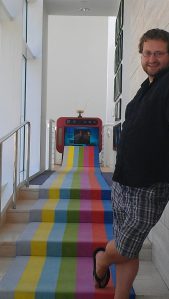
Out of the Box and all over the carpet!
Following an overnight stay in Hollywood where we saw J-Lo and Enrique Iglesias at the Staples Center and lodged in a pre-smoking ban nostalgia-themed hotel, G and I braved the dystopian traffic and anti-social contract of LA driving to make our snail-like way to the Paley Center exhibition ‘Warner Brothers’ TV Out of the Box’. This was billed in the relationship vaudeville program as a ‘me’ act, or as much as a trip that involves a bigger-than-life Lego Conan O’Brien (one of G’s no-questions-asked celebrity one-night-stands) can be. Though the plethora of sets, props and memorabilia from hit network shows and cult classic series and a karaoke theme-tune box have broad appeal for anyone in America with a sense memory and an aerial, for a TV historian this was Porky Pig’s heaven.

You had to have the biiiiiiiiiiiiiiiiiiiiiiiiiiiiiiiiiiiiiiiiiiiiiiiiiiiiiiiiiiiiiiiiiiiiiiiiiiiiiiiig salad!
To my archaeological delight, historical documents-including production memos and patents-were liberally scattered around the exhibition. Other TV treasure chests, such as network preview catalogues sent to local affiliate stations, were also available to view. To say these gave an insight into US TV history would be an understatement tantamount to ‘Clint Eastwood could do with a teleprompter, couldn’t he?’ or ‘That Romney fellow might have a bit of an image problem’. It felt more like a journey into the unknown of how the American TV industry worked, and to some extent still works, with exhibits testifying to the power affiliates, many in anti-progressive states, have to decide what gets made and what doesn’t. It illuminated the little-known and widely ignored facts of TV’s origins, with memos pointing to the attempts of movie studios to control TV from the beginning and beam transmissions into cinemas rather than homes.
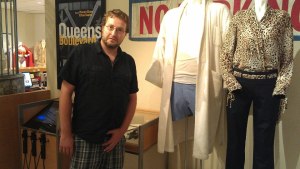
It’s funny how such an innocuous and populist-looking exhibition can be so revealing. I have to admit that I had my doubts. I was wary of Warner Brothers’ sponsorship of the exhibition and how it might skew history in favour of the studio. They made their case, though, with a timeline pointing out that they were pioneers of TV drama in the 1950s and led the line on the classic genre fare of the so (not) called (for) ‘vast wasteland’ with the inimitable Maverick. But I also appreciated that the exhibition was a TV playground. Not because it was ‘interactive’ (I hate that word!) but because it let you run around and sit down on your favourite shows.

You are now entering The Tweenlight Zone
Speaking of playgrounds, G and I went on a 16-hour ride-and-dine binge at Disneyland and its now-with-booze sister theme park Disney’s California Adventure. Disneyland was built on TV in many ways. Its construction in the 1950s was televised in interstitial promotional segments between instalments of an anthology drama series of the same name presented by America’s bigamous uncle, the mouse-loving anti-Communist Walt Disney. While Disney’s canon of seminal animated movies provide the blueprint for most of the rides, as well as the psychological experiments on human endurance which no doubt provided the inspiration for It’s a Small World, TV still gets a look-in.

Disneyland: built on TV!
Nowhere is this more evident than The Twilight Zone Tower of Terror, a dropper-downer ride (it neither rolls nor coasts) inspired by the classic fantasy horror anthology series produced and presented by Rod Serling, whose voice can be simulated by trying to impersonate Ronald Reagan while whistling. One of the most impressive-looking and exquisitely designed rides at either park, the mock elevator lies within a purpose-built high-rise fitted with a customised exterior made to look like a decrepit Hollywood hotel…though it smelt considerably better than the one G and I stayed at. It’s easily the most disturbing and traumatising (animatronic uncanniness aside) experience available at the parks, and it’s the skilful interweaving of the original TV series into the fabric of the ride that causes such anxiety and fear. For starters, the elevator-attendant attired steward (or ‘death ombudsmen’ as I call them) cranked up the tension by letting fly with a groan-inducing patter of darkly comic puns about ‘dropping off’ the passengers that captures perfectly the black irony and sick sense of humour The Twilight Zone used to deal in. This is the show, after all, that once put the fate of humanity in the hands of the double meaning of the phrase ‘To serve man’ (Spoiler alert; it’s a cookbook!).

‘We’ll be dropping you off soon’
But what really unnerves you is the use of a Rod Serling voiceover (seamlessly cut together from his many introductions) as a prelude to the ride. This narration compels you to sit comfortably as if you were still in your armchair at home and makes you believe you are settling down for the evening snoozily watching some late-night retro TV before the elevator drops the depth of the building without so much as a warning. As you yo-yo through the building, the walls open up, ripping you from the safety of your living room and out into the murderous world that network news warned you about.

Serling’s Gold.
And though I have no hard evidence for this, I’m convinced the designer who created the digitally hyperreal set of the Atlantic City promenade pier for Boardwalk Empire got the idea from Disney’s California Adventure ersatz 1920s-era American fairground, right down to the in-period advertising hoardings. If it was the HBO field trip I’m imagining, then they probably got the idea for a show about conspicuous drinking during Prohibition from mixed messages about consuming alcohol in public places in the Disney parks.


 Watching TV with Americans