Archive for nbc

Sitcommunication

Posted in American TV Shows, BiogTV with tags , , , , , , , , , , , , , , , , , , on June 13, 2011 by Tom Steward

Those looking for objectivity in this blog (if they’ve ever found it) will be sorely disappointed by this post. The attachment I have to the programme I’m writing about today cannot be quantified by my predilection for well-made, heartwarming American sitcoms. Everything I think about it has something to do with the way I feel about the person who is my life. So my account of watching it is also a story of how I found love in a strange land I’d known all my life. It’s not unknown for me to remember the past through American TV. Memories of my early life are intertwined with images of American family sitcoms. I now see my upbringing through the prism of Roseanne and The Cosby Show. In the future when I look back on this past year, and the love that has changed my life, I know there will be a little bit of Modern Family mixed in.

The Cast of Modern Family

A diverse and tradition-defying family

In the irksome tradition of G introducing me to and then lambasting me for not knowing American TV shows that she (and I secretly also) think should be a part of my mental archive (‘How can you call yourself a Doctor of American TV and have never seen Full House?’) and because of Rupert Murdoch’s caste system for imported TV that puts US shows in the unreachable noble classes, I was first shown Modern Family on US network TV during the virtual epoch that is Halloween in the States. The Halloween episode is usually a low point for the American sitcom, a season nadir where character and story get pushed aside by wardrobe people indulging in their own sweep stakes week. But even this seasonal pageantry couldn’t disguise its obvious quality. And it was pretty obvious from the outset that this sitcom was going to be for and about me and G. But more of that later; what is this show that Rupert Murdoch doesn’t want you to not to pay to have to see?

Modern Family is ABC’s answer to the NBC mockumentary sitcom, with the same vague sense of a documentary film crew presence, interludes of straight-to-camera interviews and frequent acknowledgements of the camera. It re-imagines the American family as diverse and tradition-defying; made up of interracial spouses and families, gay couples with adopted children, and multiple divorces and remarriages. While it gets a lot of comic mileage out the cultural and character clashes that inevitably result, it never rests on its concept or lets its formula become obvious. This is largely because of the sharp and clever writing with quality character gags fired out at screwball rhythms and preconceptions about stock characters upturned with them losing their pleasing familiarity. The show has a healthy sense of slapstick and appetite for absurd coincidences, a combination which echoes cutting-edge sitcoms like Arrested Development and Curb your Enthusiasm.

Despite its representational radicalism and fashionable form, the show’s strengths are quite traditional ones. It is frequently and unashamedly heartwarming, a quality all family sitcoms should have in some measure lest they leave a gaping hole of humanity at their centre in the manner of Family Guy. It is also a very conventional sitcom in many ways. The casting of Ed O’Neill, formerly America’s premier maritally dissatisfied slob husband and father Al Bundy in Married with Children, as family patriarch Jay signals that the producers want a contemporary sitcom that plays by the rules. Indeed, the pairing of white-American Jay and Columbian Gloria which sparks so brilliantly plays like a gender-reversed Lucy and Desi from I Love Lucy. But what really makes Modern Family truly special is how it became the medium of mine and G’s relationship.

Gloria and Jay

Gloria and Jay: the medium for our relationship

Leaving aside that I’m a none-too-stunning white man who’s somehow managed to attract a ridiculously hot Latina woman, so much about Gloria and Jay’s marriage defines our relationship. They’re both loves propelled by laughter from awkward cultural and linguistic miscommunications (and we’ve got American-English as well as Mexican-British!), to the point where I forget which is the TV one and which ours. G’s translation of a romantic sentiment from Mexican into English with the caveat that ‘it involves dead sheep’ could’ve come straight from Gloria. And G knows when I laugh at Sofia Vergara, I’m inadvertently making fun of her. We also know we will one day be Claire and Phil; the no-nonsense-with-children woman married to a goofy man-child playing at adulthood. G thinks of me like a grown-up Luke, the semi-autistic scruff, even though I know that as a kid I was more like Manny, the self-aware sophisticate allergic to physical exertion. Modern Family is not just an outstanding sitcom in a TV milieu that’s increasingly looking and sounding the same, it’s also mine and G’s secret language, one which we will always understand completely.


A Word from our Sponsors

Posted in American TV (General), American TV Shows with tags , , , , , , , , , , , , , , on April 22, 2011 by Tom Steward

‘Why are we sitting here watching commercials?’ asks C, G housemate, and it’s a fair old point. In the UK it’s pretty obvious when adverts are about to come up, and programmers gently ease viewers in to the transition. On UStelevision, commercials abruptly cut into programmes, taking out lines and ends of scenes like a poltergeist script editor. Commercials even interrupt themselves, making it impossible to concentrate on the most fleeting of promotional programming, and the commercials don’t stop when the programme proper begins either. Fictions feature promotional considerations where brand products are used somewhere in the narrative, often very wittily, as in 30 Rock which continually satirizes NBC’s prostitution by consumer goods conglomerates.

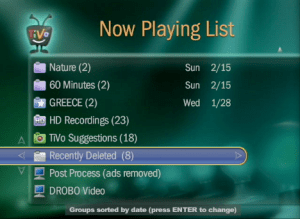
Non-fiction does a lot of straight-to-camera advertising, as shows suddenly stop mid-item and become an infomercial for weight-loss pills, again making it impossible to separate programme and commercial. US TV commercials are more like web pop-ups or computer viruses, something that intrudes on and pervades your media experience when you least want it to. Consequently, whole media industries and online communities have emerged to allow viewers to speed through commercials (video on demand, cheat sites for skipping commercials on TiVos).

TiVo Ad Skips

Websites teach you how to skip ads on TiVo

Though eminently frustrating, commercials have historically been a huge part of the development of American television and shouldn’t be lambasted outright. In the 1950s US TV producers and writers had to fit content around roughly three interludes per hour for sponsor messages and it was this that helped TV develop as a unique art form different from theatre or cinema. For instance, the dramatic arc of TV anthology plays had to accommodate breaks in the flow and therefore TV drama became characterized by sharp cliffhanger rises in suspense or action every 10 or so minutes. They are also an unignorable part of the ritual of watching TV. I remember an episode of teen girl comedy Blossom where  father Ted goes to pee saying ‘and now a word from our sponsors’. This excerpt shows us in the pithiest (or pissiest) way possible that commercials are ways of TV serving people’s biological needs for food, drink and bodily functions. And we love them as much as we do our own gluttonies, addictions and excretions. I have a couple of favourites at the moment. The first is a cycle of commercials for Chantix, a give-up smoking pharmaceutical.

It used to be the case that US drug commercials would deliver the small-print about side-effects and defects in an indecipherably fast voiceover in the last second or so of the commercial, which has been brilliantly parodied (like virtually all TV absurdities) by The Simpsons’ distressingly accurate mock-ups of network advertising. It felt like a corporate conspiracy to cover-up the serious health risks associated with particular products and this is probably why such information is now given in a more leisurely manner, taking up the majority of the commercial and repeated almost verbatim at the end. Unfortunately, this only makes the drugs sound more life-threatening as an exhaustive list of possible ailments like kidney failure, heart attacks, respiratory problems, skin blemishes (and my personal favourite ‘unusual dreams’) is rolled out over soft piano on-hold music, a sickeningly inappropriate and seemingly endless concoction of words and sounds which suggests the pain will never end after taking Chantix. Plus the commercials are usually predicated on an irresolvable tautology that sounds like a Zen saying designed to separate mind from body such as: ‘Do you want to give up smoking without giving up smoking?’. Yes, Chantix is apparently not just a wonder-drug but a porthole into an alternative universe of Marxist dialectic or, if that’s too posh a reference for you, the Bizarro World. The second is a set of commercials for Poise, a pad designed to counter bladder control problems in women featuring Whoopi Goldberg.

Commercials are so often about hiding embarrassing problems or anxieties with advertisers and companies preying on insecurities to sell products vaunted as paper-over-the-crack solutions (no pun intended). But this commercial tries to comfort people who suffer from these ailments, reassuring them that it’s completely normal (1 in 3 women have had it at some time) and, importantly, that it can be funny, with Whoopi’s pleasingly infantile ‘spritzer’ noises. There’s something cathartic about the ‘fart is funny’ silliness of this commercial that I imagine would be a tremendous release for those suffering from this ailment. Its bluntness also says something about the aggressive cajoling of US TV commercials and how it can be used in a more positive way.