Archive for the simpsons

Conan The Destroyed

Posted in American TV (General), American TV Shows, TV History, Unsung Heroes with tags , , , , , , , , , , , , , , , , , , , on April 5, 2013 by Tom Steward


After weeks of speculation, as much of it on-air as off, NBC finally announced this week that Jimmy Fallon would take over hosting duties on The Tonight Show from Jay Leno. The network press release clearly stated that Leno had presented The Tonight Show uninterrupted for 21 years. But when interviewed Leno said ‘this time it feels right’ as if he had been replaced before and somehow managed to take back the host seat. Of course, if you’re not party to the Stalinistic effort to re-write late-night television history, you’d know there was a spindly-legged ginger elephant in the room.

The George Lazenby of late-night talk shows.

In late 2009 Fallon’s predecessor on Late Night with… Conan O’Brien took over from Leno as host of The Tonight Show having been promised the position years earlier by NBC while The Jay Leno Show began airing in primetime. In early 2010, the network attempted to move O’Brien from the current timeslot of 11.35pm to after midnight so that Leno could return to the original The Tonight Show spot with his new talk show following low ratings for both programmes. O’Brien naturally refused and left the network, leaving Leno free to return to his old job for four more years.

So who presents The Tonight Show?

Fallon taking over The Tonight Show only a few years after Leno resumed hosting is the latest in a series of slaps in the face for O’Brien, who after an aborted late-night talk show on Fox ended up with a signature 11pm vehicle on basic cable network TBS in late 2010. Prone to making light of his unexpected obscurity-his house musicians on Conan are self-effacingly named ‘The Basic Cable Band’-the melancholy sometimes seeps through. While comically feigning ignorance during an interview with Kelsey Grammer following a discussion of not getting recognition for doing cable television, O’Brien starts seeming genuinely forlorn.

O’Brien may have been written out of the Tonight Show story but he remains legendary in the history of another great American TV institution, The Simpsons. As writer and producer for the series between 1991 and 1993, O’Brien scripted some of the most undisputedly superb episodes the show has seen in its 24 years on the air (and, let’s face it, will ever see). In particular, ‘Marge vs. the Monorail’ in which Springfield invests in an ill-advised public transport system was a satirical highpoint with probably the best-written celebrity cameo (a tediously anecdotal Leonard Nimoy) and unbeatable dialogue and song-writing.

Other canon-worthy Simpsons classics penned by O’Brien include ‘Homer Goes To College’ and ‘New Kid on the Block’ which pioneered a sophisticated, self-reflexive humour for the show without losing the emotional resonance synonymous with the series from the outset. In fact, Bart’s unrequited crush on teenage babysitter Laura (Sara Gilbert) is positively heart-breaking. He created several characters, such as Ruth Powers (Louise to Marge’s Thelma) and the college nerds, who would return in future episodes. He might even be able to sue the creators of The Big Bang Theory for plagiarism. Perhaps that’s why TBS wanted him at the network.

‘You’re a lot less funny in live-action’

Despite a criminal lack of exposure for a comedian of his calibre, TBS’ Conan is more excellent TV from O’Brien. His sketches remain thoroughly witty and laugh-out-loud funny, as recent spoof discussion segment ‘PopeTalk’, which evaluated the chances of various contenders for the papacy in the manner of a talk radio sports phone-in show, attested. Many recurring bits, such as ‘Celebrity Survey’ in which projected celebrity Q&A responses are collated, seem like they’ll be around for decades to come. After only a couple of years on the air, we’ve seen some memorable interviews, not least a weird-off with Harrison Ford.

Conan: You ever think with all your flying, what you would do if the plane starts to go down?/Ford: Shit and die.

I don’t want to disparage Fallon as much as I want to praise O’Brien. Fallon’s skits and impersonations are first class, as his performance of Neil Young singing the Fresh Prince of Bel-Air theme tune amply demonstrated. In The Roots, Fallon has at his disposal not only the coolest house band in late-night television but also one of the finest hip-hop/soul outfits of modern times. Fallon’s emphasis on music and sketch comedy undoubtedly gives the late-night talk show a new dimension. But while O’Brien is a skilled, engaging interviewer, Fallon seems more like a teenager who has won a competition.

Class act that he is, O’Brien broke his silence on Fallon’s appointment yesterday only to endorse him and wish him well. He’d have been within his rights to lambast Fallon for taking his job. And call Leno a massive dick…but then there’s never a bad time and place for that.

An Engagement with a Tiny Box

Posted in American TV (General), American TV Shows, BiogTV, Reviews, TV Culture with tags , , , , , , , , , , , , , , , , , , , on February 10, 2013 by Tom Steward

Those of you who follow my personal life, which for any amateur blogger is typically their core readership along with those who are sent to your site accidentally by their specialist porn fetish search terms, will already know that over the New Year I proposed to G and she is now my fiancée. I couldn’t be happier with how the proposal went, following lunch on a bench in Kew Gardens instead of dessert and within maiming distance of some geese (it must be love!). Like anything in life which I have no direct experience of, I looked to American TV for advice on how best to handle the situation. For the first time ever, I got nothing back. Going it alone without televisual aids is the reason I’m still alive and out of trouble and G is not in prison and burn-free. Consider an engagement scene in Season 1 of Damages, an anti-courtroom drama which could be subtitled The Devil’s Advocate Wears Prada. Prodigal lawyer (and former musical project leader) Ellen Parsons (Rose Byrne) is proposed to by Supermanesque junior doctor boyfriend David Connor (Noah Bean) in their New York apartment. Ellen is emptying department store bags from her Manhattan shopping spree when she finds a small carrier with a tiny box inside. Despairing at taking home someone else’s shopping, she opens the box, sees the engagement ring and David casually asks her to be his wife. On the surface, this is the kind of intimate, surprising, fun and spontaneous proposal I’d aspire to. However, soon after this David is killed and Ellen becomes the prime suspect in his murder (thanks to the show’s elaborate flashback structure neither of these are spoilers). The message couldn’t be clearer; go informal on the proposal and death and incarceration are sure to follow.


Maybe I’m in the wrong genre. Surely sitcoms-which are sentimental and romantic by nature-would give me a better idea of a proposal that tugs at the heart strings (not that you should ever do that to your arteries). Well, not the ones I watch, apparently. Take the proposal of middle-aged widow Marty Crane (John Mahoney) to girlfriend Ronee (Wendy Malick) in the final season of the touching but never mawkish psychiatrist sitcom Frasier. After arguing about Marty failing to tell Ronee about his heart attack, they competitively snipe and grumble to each other continually until Marty lets his proposal slip and Ronee accepts in retribution. They spitefully settle on it. It’s brilliant piece of writing sidestepping your expectations that proposals in sitcoms will always be warm and fuzzy moments. But what the hell use is that to me?! No self-respecting woman would let their boyfriend get away with proposing in the heat of an argument just to get one over on them. Even the most marriage-affirming couple on American TV, Homer and Marge Simpson, got engaged in a way that could never be repeated in real life with success. The poverty-stricken Homer, now a lowly trainee at a fast-food outlet, puts an onion ring on pregnant Marge’s finger before she asks him to take it off before the grease burns her. Homer, of course, eats the onion ring seconds after removing it. The poignancy of The Simpsons can make unglamorous moments like these seem like the ending of Casablanca, but in the five-fingered world you’d be opening a door to recrimination like never before. Not only would you have to answer for the lack of thought and effort in the gesture but also explain why a wide greasy hole of  high calorie fast-food seems to complement your loved one’s fingers.

In the back of my mind was Michael Scott (Steve Carell) proposing to girlfriend Holly (Amy Ryan) in The Office: An American Workplace, partly because it is such a beautiful scene and partly because they are the couple G and I are most like. Their secret language of annoying voices, unfunny private jokes and impressions of 1930s film gangsters is virtually identical to ours. Michael takes Holly around the office, pointing out all the memories of her that are superimposed on every inch of the floor plan. After all the male employees in the office propose and get rebuffed, Michael draws Holly into her candle-covered cubicle before popping the question and setting off the sprinkler system. This proposal has everything; intimacy, simplicity, stupidity and laughter. Unfortunately, it was still no help to me. Firstly, the idea that John Kransinski could propose to G and she’d still be a free woman by the time I got on my knees is preposterous. Secondly, it has an understated quality that can only come with an overshoot in ring pricing by 33 months (‘3 years’ salary, right?’/‘I think you can keep the proposal simple’). Like most of my generation, the image of Chandler (Matthew Perry) and Monica from Friends proposing on their knees to each other looms large over the imagination. I doubt, however, that you can ever count on instantaneous applause and weight loss seconds after becoming engaged. But what I’m trying to say in an endlessly roundabout way, as per usual, is that I’m glad American TV gave me nothing to live up or down to, that there was no foolproof formula or pie-in-the-sky ambition to distract me, or perfect moment that made everything else look ordinary. This way, G and I don’t have to share the memory with millions of viewers.

Hallow’s TV

Posted in American TV (General), American TV Shows, British Shows on American TV, Reviews, TV History with tags , , , , , , , , , , , , , , , , , , , on November 3, 2012 by Tom Steward

It occurred to me while watching the excellent Halloween special of one of the best new sitcoms on the block The Mindy Project how rarely I enjoy them. I think what bothers me is how wardrobe tends to take over and all other departments seem to take a week off. The Mindy Project kept its (hilarious) costume reveal to the last possible moment and didn’t buy into the holiday wholesale thanks to the eponymous lead character’s wariness and cynicism about Halloween rituals. There were storylines that could have been in any episode and the fancy dress aspects were invested with the show’s usual wit, imagination and absurdity. This is a far cry from the gagless and story-devoid episodes of (often great) US sitcoms like Roseanne or The Cosby Show which let the outfits do all the work. That said, it’s been a lot better since sitcoms lost their studio audiences. At one time a sitcom would move its live spectators to rapturous applause and accentuated laughter for being the on-the-spot witnesses of an inventive costume, albeit one which usually played off knowledge of the character, leaving the home viewer out of the joke rather than sweeping them along with the fun, as was more usually their function. Watching a Halloween-themed sitcom used to be like watching film footage of Hitler’s speeches; unimpressive and kind of shambolic and yet those in the crowd seem to be going wild for it. Fourth-wall sitcoms now recognise they have to do something more than catwalk a costume to get a laugh, hence The Office’s running gag about the surplus of Heath Ledger Joker costumes in the Halloween special the year The Dark Knight was released. This year Parks and Recreation even sneaked a huge story event into their Halloween special to counter the frivolity.


‘Tinkerbell, Tailor, Soldier, Spy’

British TV, like the country, came to Halloween late, and begrudgingly. Given British culture’s longstanding propensity for wanting to scare people in otherwise non-horrific periods of the year, like Christmas, it’s unsurprising that we narrow in on the ghostly and ghoulish connotations of Halloween in how we celebrate the occasion. And because we’ve never fully got the American way of celebrating a supernatural and spiritual event through soft porn dress sense and celebrity impersonations, we tend to stick to the reassuringly frightening arena of the macabre. Hence why our Halloween television is horror, plain and simple. Well, not quite. Over the last twenty years, Halloween has been a great excuse to make groundbreaking fantasy television in Britain. Through one-off Halloween specials, we’ve been attempting to make horror TV the equal of the movies that zombie-infect the schedules around October time but playing specifically to the effect of getting scared in our homes watching TV. This almost fell at the first hurdle with Ghostwatch, a 90-minute filmed drama shown on BBC 1 on Halloween in 1992 which posed as a live factual investigative programme about Britain’s most haunted house using real-life TV presenters playing themselves. Viewers claimed they had been duped, accused the BBC of betraying its values of trust and reliability, and a case of suicide was linked to the programme. It unsettled a nation of viewers who, unlike today, were unaccustomed to TV parodying its programming, and prickled cultural anxieties about paedophilia with its child-abusing poltergeist. The BBC never repeated or tried anything like this again, but in 2007 TV writer and critic Charlie Brooker made Dead Set, a mini-series shown over Halloween week on Channel 4 in which a zombie outbreak hits the Big Brother house, and suddenly horror had white-wormed its way back into our favourite TV shows.

Ghostwatch: please have nightmares

If I want good Halloween TV, though, I generally go to animated comedies. Crafting elaborate costumes and turning characters into ghoulish versions of themselves can be done so fluently in animation and with such minimal effort compared to live action that they’re free to explore Halloween in whatever way they wish. For The Simpsons this has meant annually becoming a contemporary equivalent of Rod Serling’s Night Gallery with their Halloween episodes portmanteaus of horror, fantasy and science-fiction stories which play into the well-worn conventions of spooky storytelling and with the naturalist style of the programme. These seasonal specials serve to enrich the programme conceptually by placing its characters and settings an alternative universe with infinite story and scenario possibilities. The producers of The Simpsons take this responsibility so seriously that over the years they’ve produced some of the most powerful, intricate and intelligent fantasy TV the US has ever seen. Mike Judge’s Chekhovian sitcom King of the Hill has also had some of its finest moments during Halloween. One particularly memorable special called appropriately ‘Hilloween’ concerns the cancellation of Halloween celebrations in the Texas small town of Arlen after pressure on local government from a conservative Christian fundamentalist. The episode was about the evangelistic brainwashing of locals and the resistance that takes back the holiday irregardless of its satanic imagery, because it makes being a kid fun. Fun is also had at the expense of the creationist movement, with a didactic anti-evolution spin on the haunted house. Addressing the religious boycotting of Halloween in devout parts of the American South, the series put an original spin on the concept, and made it relevant to the people and places the show is interested in. I guess what I’m saying is the Halloween special has to be special, not just themed.


Rod Serling would have been proud


Reviewing The Situations

Posted in American TV (General), American TV Shows, Americans watching British TV, BiogTV, British Shows on American TV with tags , , , , , , , , , , , , , , , , , , , on September 10, 2012 by Tom Steward

Sitcoms were the first American TV shows I watched and they’re still the pasta and cheese (the middle-class vegetarian equivalent of ‘meat and potatoes’) of my viewing when I’m here. On this visit, the sitcoms I’ve been watching are concentrated around a handful of TV networks, each of which serves vastly different demographics and ends of the schedule. They mix old and new, let the new take care of the old, and make the old look new. They run the gamut from classic to forgettable, from bad to radical, and from breaking ground to shovelling shit. Here’s a quick rundown:

FX:


Though lacking the cache of original series shown on subscription channels HBO and Showtime, cable network FX has been home to many highly sophisticated, niche-taste TV dramas over the past decade such as The Shield and Sons of Anarchy. Recently there’s been an attempt to put their comedy in the same league. Carrying the banner is Louie, comedian Louie C.K.’s auteur sitcom, a show so completely devoid of story it makes Seinfeld look like a murder mystery. Opening with the most remarkably unremarkable title sequence in the history of television, each episode is a Venn diagram interlocking a seemingly aimless pair of vignettes which unfold at a quotidian pace and usually defy closure or resolution. I hit it on a brilliantly gag-heavy episode (the one with ‘palp’ for those in the know) but I can imagine it being extremely tough to get into on one of those occasions that it decides not to have a joke in it or turns the table and makes the joke that there isn’t a joke. But what is truly revolutionary about Louie is the visual imagination it brings to sitcom-a way of putting forward observation and emotion in the form of images and letting direction carry the comedy. While Louie attracts a hipster crowd by virtue of it sometimes paralleling a Richard Linklater movie and its brushing against (though also routinely mocking) urban cool, Elijah Wood star vehicle Wilfred is a cynical pander for an indie movie audience. It’s one of those sitcoms that is all concept-a man lives with a dog played by a man in a dog costume-without regards to how it flows week-to-week. To me, the difference betweenthis and a show-that-writes-itself like ALF is purely cosmetic. Just because stylistically it seems like something that would be in a Wes Anderson or Michel Gondry film doesn’t mean it’s interesting, just that it knows its demographic.


Remember when I used to star in movies with CGI?

PBS:

Launched in the late 1960s as a publicly-funded alternative to the network system, PBS frequently looks to the public service broadcasting in Britain-represented by the flagship British Broadcasting Corporation– as a mentor but also as a reliable source of programming. A number of US sitcoms like The Simpsons and King of the Hill have derived humour from the gap between the classy image of British television and the lowbrow British sitcoms shown on PBS which seem to tell a different story. This seems borne out by the popularity of Keeping up Appearances in the US, a farce about a working-class woman who effaces her past by moving to the suburbs but then repeatedly gets dragged back to her former life. As a window on British culture for Americans, it says a great deal about how class-obsessed we (still) are as a nation. It also presents a more rounded image of British life than most Americans know, one that includes the working classes and the poor, and with characters that resemble trailer trash and welfare slob stereotypes in the US. Despite this it’s a monotonous, catchphrasey affair where the jokes usually involve a woman falling over showing her bloomers. And thus it doesn’t say much for the nation’s tastes. Another favourite of PBS Sundays is As Time Goes By, a gentle and solid middle-aged love story distinguished by the calibre of its stars; British character actor extraordinaire Geoffrey Palmer and international film star Judy Dench. In contrast to Keeping up Appearances, it actually suggests that we’re rather good at crafting sitcoms and that the quality of British acting (even in a middle-of-the-road sitcom) is as good as the Americans would myth it. But it’s detrimental to the image of our country in the way it reinforces the idea that we’re a land that time forgot composed entirely of the upper middle-classes and the gentry (with an underclass of poachers who live in the woods). G and I were watching an episode from about 1992 and it was difficult to convince her that it was twenty years old. With sitcoms like this to go on, I imagine many Americans think we’re Brigadoon.


Timeless comedy…literally!

TV Land:


Where sitcoms go to die

TV Land is where sitcoms and their stars go to die. It’s a place where elderly sitcoms live out their days in back-to-back re-runs and a retirement community for ex-sitcom stars who are given original shows (which I am still convinced only exist as fake trailers and video pop-ups) to ease them into obscurity. Given the number of commercials which advertise emergency whistles and come with free gifts of large-print playing cards, the audience is not too far behind them. I’m prepared to put up with this morbid graveyard feel for the sake of one sitcom: The Dick Van Dyke Show. The best writing and acting ever witnessed in a sitcom (most TV for that matter) and an absolute revelation for those who only know Van Dyke as the world’s worst Londoner, a roller-skating geriatric nosey parker or a seal-rescue fantasist. Rob Petrie is the greatest sitcom character of all time, worth 50 Frasiers and 100 George Costanzas, and the inspiration for both. This snatch of dialogue says it all about how sublime this show is, even in its off-hand moments:


Laura: You’re a good man who makes bad puns.


Rob: I do not make bad puns. Now pass me the nutcracker, sweet.


Not even the hauntingly videographic commercials about botched vaginal mesh surgery could tear me away from writing that good.

A Word from our Sponsors

Posted in American TV (General), American TV Shows with tags , , , , , , , , , , , , , , on April 22, 2011 by Tom Steward

‘Why are we sitting here watching commercials?’ asks C, G housemate, and it’s a fair old point. In the UK it’s pretty obvious when adverts are about to come up, and programmers gently ease viewers in to the transition. On UStelevision, commercials abruptly cut into programmes, taking out lines and ends of scenes like a poltergeist script editor. Commercials even interrupt themselves, making it impossible to concentrate on the most fleeting of promotional programming, and the commercials don’t stop when the programme proper begins either. Fictions feature promotional considerations where brand products are used somewhere in the narrative, often very wittily, as in 30 Rock which continually satirizes NBC’s prostitution by consumer goods conglomerates.

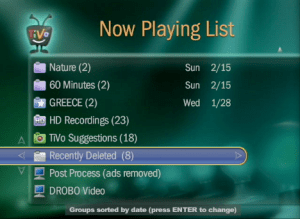
Non-fiction does a lot of straight-to-camera advertising, as shows suddenly stop mid-item and become an infomercial for weight-loss pills, again making it impossible to separate programme and commercial. US TV commercials are more like web pop-ups or computer viruses, something that intrudes on and pervades your media experience when you least want it to. Consequently, whole media industries and online communities have emerged to allow viewers to speed through commercials (video on demand, cheat sites for skipping commercials on TiVos).

TiVo Ad Skips

Websites teach you how to skip ads on TiVo

Though eminently frustrating, commercials have historically been a huge part of the development of American television and shouldn’t be lambasted outright. In the 1950s US TV producers and writers had to fit content around roughly three interludes per hour for sponsor messages and it was this that helped TV develop as a unique art form different from theatre or cinema. For instance, the dramatic arc of TV anthology plays had to accommodate breaks in the flow and therefore TV drama became characterized by sharp cliffhanger rises in suspense or action every 10 or so minutes. They are also an unignorable part of the ritual of watching TV. I remember an episode of teen girl comedy Blossom where  father Ted goes to pee saying ‘and now a word from our sponsors’. This excerpt shows us in the pithiest (or pissiest) way possible that commercials are ways of TV serving people’s biological needs for food, drink and bodily functions. And we love them as much as we do our own gluttonies, addictions and excretions. I have a couple of favourites at the moment. The first is a cycle of commercials for Chantix, a give-up smoking pharmaceutical.

It used to be the case that US drug commercials would deliver the small-print about side-effects and defects in an indecipherably fast voiceover in the last second or so of the commercial, which has been brilliantly parodied (like virtually all TV absurdities) by The Simpsons’ distressingly accurate mock-ups of network advertising. It felt like a corporate conspiracy to cover-up the serious health risks associated with particular products and this is probably why such information is now given in a more leisurely manner, taking up the majority of the commercial and repeated almost verbatim at the end. Unfortunately, this only makes the drugs sound more life-threatening as an exhaustive list of possible ailments like kidney failure, heart attacks, respiratory problems, skin blemishes (and my personal favourite ‘unusual dreams’) is rolled out over soft piano on-hold music, a sickeningly inappropriate and seemingly endless concoction of words and sounds which suggests the pain will never end after taking Chantix. Plus the commercials are usually predicated on an irresolvable tautology that sounds like a Zen saying designed to separate mind from body such as: ‘Do you want to give up smoking without giving up smoking?’. Yes, Chantix is apparently not just a wonder-drug but a porthole into an alternative universe of Marxist dialectic or, if that’s too posh a reference for you, the Bizarro World. The second is a set of commercials for Poise, a pad designed to counter bladder control problems in women featuring Whoopi Goldberg.

Commercials are so often about hiding embarrassing problems or anxieties with advertisers and companies preying on insecurities to sell products vaunted as paper-over-the-crack solutions (no pun intended). But this commercial tries to comfort people who suffer from these ailments, reassuring them that it’s completely normal (1 in 3 women have had it at some time) and, importantly, that it can be funny, with Whoopi’s pleasingly infantile ‘spritzer’ noises. There’s something cathartic about the ‘fart is funny’ silliness of this commercial that I imagine would be a tremendous release for those suffering from this ailment. Its bluntness also says something about the aggressive cajoling of US TV commercials and how it can be used in a more positive way.