Archive for the wire

The Place to TV

Posted in American TV (General), American TV Shows, Reviews, TV channels, TV Culture, TV History, TV News with tags , , , , , , , , , , , , , , , , , , , , , on July 17, 2013 by Tom Steward

In an interview with the BBC some years ago, Sopranos creator David Chase, speaking of his first writing gig on The Rockford Files, remarked that what set the private eye series apart from most TV at the time was that it was recognisably set in Southern California and not some ersatz non-place. This innate sense of place trickled down into Chase’s later TV work. One look at Jersey Shore and The Real Housewives of New Jersey and it’s obvious that the landscapes and body shapes that feature in The Sopranos could only be from the Garden State. It’s also something that distinguished Rockford creator Roy Huggins’ TV shows. His previous creation The Fugitive (one of the other only TV programmes Chase admits to enjoying) was always specific in its geography, be it small town or vast metropolis, no mean feat for a series which had to change location every week.

Jim Rockford, a resident of Malibu

Place is increasingly becoming the backbone of American TV. The unique appeal of shows like AMC’s Breaking Bad is inseparable from their choice of setting. The meth-drenched desert hazes and border town hinterlands of Albuquerque provide not just a backdrop to the action but the pathetic fallacy of the characters’ moral decay and corruption. Other programmes like Portlandia build their very concepts around a place rather than a set of characters or situations. It may be that the IFC sketch show starring Fred Armisen and Carrie Brownstein relates to something bigger than just the Oregon city-like the hipsterfication of everyday life-but such observations are always squarely aimed at Portland’s grunge-throwback ways. The Wire (and the lesser known but not lesser in any other way Homicide: Life on the Streets) may speak to people as a microcosm of American social problems but in the end it’s a programme about a place, Baltimore, Maryland, and impossible to truly appreciate without a working knowledge of that city’s local political scene. So is this a new development in American TV and, if so, what changed?

The dream of the 90s is alive in Portland!

It’s tempting to put the recent emphasis on place in American TV down to historical shifts in the way that programmes are produced. For much of its existence, TV was filmed predominantly in studios making it difficult to manufacture an authentic impression of place. When location shooting was added into the mix, the ability to suggest events were taking place in a distinct locale improved drastically, even when programmes were still studio-bound. Cop drama NYPD Blue seemed firmly planted in the many and varied neighbourhoods of the Big Apple despite being the majority of it being filmed on the Fox backlot in L.A. simply because of the documentary-styled location footage of the ongoing life on New York streets that pre-empted each scene. Now that the technology of production has advanced sufficiently to shed the studio, putting place at the centre of a TV show should be everywhere by now, right?

NYPD Blue or LAPD Blue?

Possibly not. Location shooting is used more readily to invite a sense of reality without necessarily specifying the geography. It was used in Hill Street Blues to project a (radical) urban grittiness but stopped short of saying what city events took place in (we can assume Chicago but are never told for sure), even going as far to create a fake district of this unknown metropolis. The ability to film on location doesn’t always mean you can film anywhere you like. Think about how many American TV shows are needlessly set in the vicinity of L.A. Often this isn’t an artistic choice but a local one. It’s plainly easier and more economical to find somewhere to shoot near the production base, in this case Hollywood, and use that to justify the setting. It’s the only way to understand why a show like 24 about federal counter-terrorism agents is set in the City of Angels and not Washington or some more suitable hub of government activity.

24 in L.A…for some reason

It’s clearly still a choice at the discretion of programme makers whether or not to push place and yet it’s happening more and more. I’m not sure what the explanation is. Perhaps it’s a product of multichannel television narrowcasting to niche audiences, allowing programmes about specific parts of the US to become popular regardless of broad national appeal. Maybe basing a show around a place is another way to create a programme’s distinctive brand in an ever-more competitive market. Most commentators agree with Chase that a sense of place is a sign of television quality. It’s certainly more important than it used to be.

Tarantino on TV

Posted in American TV (General), American TV Shows, Reviews, TV Culture, TV History, Unsung Heroes with tags , , , , , , , , , , , , , , , , , , , on December 9, 2012 by Tom Steward

Like a racist American businessman announcing self-deportation after Obama’s re-election or an old-school British entertainer forewarning a one-man emigration movement in wake of a 1990s Labour landslide, Quentin Tarantino has threatened to quit cinema. In a roundtable interview with The Hollywood Reporter, the director discussed his desire to retire because of the industry conversion to digital cameras and projection. But what debased metaphor could possibly capture the dire straits that the film industry now finds itself in? ‘I mean, it’s television in public’, said QT, as if there was nothing less dignified. To add insult to injury, Tarantino may have to lower himself to actually working in television. ‘If I’m gonna do television in public, I’d rather just write one of my big scripts as a miniseries for HBO’, he said, declaring his intention to slum it with such mediocre fare as The Wire, The Sopranos and Six Feet Under.

I quit says QT!

I’ll admit I expected more than bald TV-bashing from Tarantino, a director who has never been embarrassed to borrow influences from TV-see his adaptation of the Alfred Hitchcock Presents episode ‘Man from the South’ for the portmanteau film Four Rooms or his use of a refrain from the Ironside theme tune as a leitmotif in Kill Bill. Besides, he always seemed entirely comfortable with the prospect of directing for television. Let’s not forget that Tarantino directed a formative episode of lauded medical series ER called ‘Motherhood’ which not only saw his signature style and imagery seamlessly interweave with the fabric of 90s TV drama but also pioneered many of the show’s representational strategies, not least its handling of gore and casual violence. Tarantino also managed to direct an episode of CSI in which you actually cared about the characters and somehow managed to artfully deploy the series’ egregious audio-visual excesses.

A QT word in your ear!

Using TV to flagellate cinema runs contrary to what I think of as Tarantino’s egalitarian approach to popular culture. The usual snobbery you find from film directors about the aesthetically inferior nature and lack of artistic worth of television always seemed alien to QT, who appeared to recognise that it was at the heart of the popular, commercial Western imagery he was so fond of reappropriating, like a modern-day Lichtenstein. This makes his belligerent reluctance to making ‘a miniseries for HBO’ harder to swallow, especially as an announcement such as this deserves to be accompanied with enthusiasm and pride. Tarantino even admitted that this change of medium could solve a number of problems with producing his work as cinema. Speaking of the extended running and production time of HBO’s series, he said ‘I don’t have the time pressure I’m usually under, and I get to actually use all the script’.

Tarantino hangovers some nurses!

I’m sympathetic to Tarantino’s rage against the digital takeover of cinema and, as someone who finds that the signal beamed on to his television works far better than the digital projector at his local picturehouse, empathise with his feeling that television provides a better platform for a director than a medium that is now ‘film’ in name only. But he should take comfort in knowing that veteran film directors can use TV networks like HBO to reach artistic heights that their later-period movies continually fail to achieve. Mike Nichols hasn’t been able to make an above-average romantic comedy in decades and yet his HBO miniseries Angels in America was a transcendent delight. Scorsese hasn’t done a gangster movie in the last 20 years that could compete with Boardwalk Empire. Even an indie-hack like Gus van Sant looks like Ken Loach when surrounded by the hard-hitting political drama of Starz’s Boss.

CSI’s in Grave Danger of giving a damn!

Not to sound too much like a tele-fundamentalist but quite frankly Tarantino’s work has gotten too big for cinema. Since the two-part Kill Bill franchise, QT’s films have tended towards the epic and become distinguishable by their languor. This has protracted his cinematic vision and also compacted it at times, as in cases of cut-downs such as Death Proof. Like his beloved generational family martial arts TV sagas that spawned Kill Bill, television’s massive and never-ending texts and perma-fashion for serial storytelling can accommodate Tarantino’s expansive scale and indulgent timekeeping without a hint of bloat. A smaller screen it might be but it’s also a lot more elastic than the 3-hour radius of the silver one. At a purely PR level, Tarantino’s announcement might not have invoked the desired shock and dismay. For a director not exactly at his creative peak, the prospect of a TV afterlife looks positively heavenly.


The Residential Telection

Posted in American TV (General), American TV Shows, BiogTV with tags , , , , , , , , , , , , , , , , , , , on November 13, 2012 by Tom Steward

I cannot tell a lie. As a flightless fledgling that has only ever developed use of his left wing part of me could not help but rejoice last week as Fox News atrophically awoke from its coma-deep political sleep and blearily wiped its coping-mechanism fantasy of a conservative America from its self-gauged sightless eye sockets. The humanitarian in me wept with relief as the network finally released its statistician hostages from their underground prison-all victims of a one-strike-you’re-out policy on including empirical evidence in reports-thanks to the efforts of negotiator Megyn Kelly, a woman who has made a career on telling comforting lies to people who have made bad life choices. As Kelly abandoned the obfuscation-forcefielded studio and walked the emergency-broadcast-network-after-zombie-apocalypse corridors to the quarantined chamber of facts, the façade fell away like actors in a fourth-wall sitcom coming out to meet their studio audience…only no-one was there except employees.

Whatever joy I felt was tainted by the knowledge that my smug sense of self-satisfaction would be shared by another news network which also puts partisan politics before reporting news and skews the facts towards a prevailing ideology: MSNBC. Sure enough, the following day signature anchor Rachel Maddow was on TV instructing viewers-who she clearly thinks of as eternally living in an episode of Thirtysomething-to get popcorn before her rundown of the election results. But results were not the focus of the item. They were simply cues in a spoken-word liberal version of the national anthem, a diatribe that one day will be set to the theme music of The West Wing (‘O-bama-wiiiiiiiins’) and released by Baz Luhrmann to be bought by thick people. Though evidently meant to anger Fox News, I can imagine Bill O’Reilly gazing on in awe similar to Goebbels admiring the propaganda power of Eisenstein’s films.

When asked to account for the relish with which she recounted Obama’s election victory by fake conservative Stephen Colbert-who for once didn’t have to try too hard to look pissed off with a liberal-Maddow replied that ‘this week the facts have a liberal bias’. Tongue-in-cheek, maybe, but no less a shameless piece of media spin and political fabrication for it. By Maddow’s rationale, there are weeks where Fox News coverage is entirely accurate, as long a conservative has been successful at something in the previous few days. Whether she knows it or not, Maddow is on to something. Fox News and MSNBC have a symbiotic relationship. One political extreme needs an equally uncompromising polar opposite to counter the damage. They turn viewers into party extremists when all they want is political options in their news consumption. The only high ground MSNBC has is to say childishly: ‘Fox News started it’.

You don’t need to be a conservative to attack this liberal…

Don’t get me wrong, I’m gravitationally inclined towards many of the politicised views espoused on MSNBC. I think Maddow recognises the minutiae and complexity of political systems and endows every hour of TV with the societal-unravelling sophistication of a season of The Wire. There is no comparison between her multi-faceted understanding of the world and Bill O’Reilly’s PowerPoint flow diagram of a political consciousness. I admire the Reverend Al Sharpton as an activist, politician and orator greatly and I’d take his wisdom over the washed-up, day-in-the-sun extremists that Fox News recruitment drive after their inevitable ignominious failures any day. I credit MSNBC for steadfastly avoiding the showbusiness ethos that Fox News presenters adhere to, even if it costs them ratings. What I object to is the idea that it’s the job of TV news to present political perspectives, legitimise partisan affiliations and comfort viewers about the righteousness of their choices.

Totally balanced coverage

I didn’t always feel this way. I once found tiresome the myth of objectivity that British TV news divisions such as the BBC wrap themselves in. I thought it better than reporters relinquish the façade of balance and own their opinions rather than pretending their reports were unbiased. The illusion of giving equal weight to both sides of an argument seemed to me entirely artificial, not only because in many cases there was no ‘other side’ and only one right thing to do but also because there was usually a clear affinity with one side or the other. I thought it more productive to admit bias and make it work for the report, especially in humanitarian crises such as famines or disasters where there was a global consensus. After prolonged exposure to American TV news, however, I now long for a token alternative viewpoint and the masquerade of even-handed commentary.

‘Where were you tonight Barack?’

I could not help but mourn for neutral window-dressing after witnessing MSNBC’s veteran newsman Chris Matthews, most recently seen reacting to Obama’s lethargic campaign debate performance like a disappointed father at a school football game, interview prolific investigative journalist Bob Woodward about his new book on the financial crisis. Woodward is known for his evidence-based investigations which privilege factual rigor over politicised interpretation. Yet Matthews tried to brow-beat his guest into admitting that Republicans were more to blame for stalemated response to the crisis than Democrats even though Woodward’s extensive research concluded that there were comparable errors on both sides, a systematic failure of government not of party. Relief comes in the form of news satires such as The Daily Show that, though entitled to bias, attack the inadequacies of both conservatives and liberals. And yet it is this show that holds a reputation for political bias and partisan machinery!

Johnson & Johnson

Posted in American TV (General), American TV Shows, Unsung Heroes with tags , , , , , , , , , , , , , , , , , , , on June 17, 2011 by Tom Steward

This is the first in a series of posts I’ll be writing sporadically which try to raise the profile of some of American TV’s most unfairly neglected artistic talent. We begin this week with actor-director Clark Johnson.

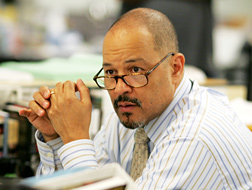
Clark Johnson as Gus in 'The Wire'

'People can't be evacuated...well they can. But that's not what you mean'

The unsung heroes of American television are the directors. While journalists, scholars and fans (not to mention the artists themselves) rhapsodise about US TV writers and producers like Steven Bochco and Joss Whedon, they are perfectly content to ignore, marginalise or deride the directors who carve out the visual and dramatic life of programmes. Direction seems only to be valued when it is either combined with writing and production to construct the myth of the omnipotent TV auteur or when it is attached to a big marquee name in the media, most likely from the cinema (e.g. Quentin Tarantino’s episodes of ER and CSI). Some in the academic community, like Tise Vahimagi and John Caldwell, have tried to bring the work of TV directors to light but even then directors of Pilots get all the credit while directors of random episodes are seen as artless journeymen anonymously re-hashing someone else’s vision.

ER, 'Motherhood'

'ER' directed by Quentin Tarantino

Another production ritual in American TV that slips by most commentators and audiences is actors going behind the camera. Look at the later episodes of virtually any of your favourite US shows and you’ll invariably see its stars and supporting actors taking up the directorial reins for a week or two. As US TV shows have a very limited shelf life thanks to the spectre of cancellation which hangs over even the most popular and acclaimed series, a direction job can give actors more options and opportunities for work in the industry, especially for the less well-known ensemble players.

The subject of this blog is an actor from a renowned ‘90s cop drama, who went behind the camera only to create the enduring stylistic template and dramatic conventions for two of the most significant, innovative and exceptional police programmes of the last twenty years, perhaps ever. And what’s more, he went back on screen at the end of both of them to claim his deserved dues. Clark Johnson rose to public prominence playing the cool yet intemperate, honourable yet eminently fallible Baltimore police detective Meldrick Lewis in Paul Attanasio’s Homicide: Life on the Street based on David Simon’s book. Johnson’s performance helped to forge a distinct identity for the programme as a cop show that didn’t feel the need to romanticise or kowtow to the powers of its protagonists, particularly when bringing out Lewis’ reckless and impetuous side when crashing a police car into an ambulance in an early episode.

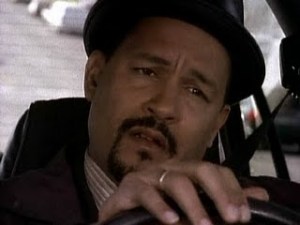
'Homicide: Life on the Street'

Clark Johnson as Detective Meldrick Lewis in 'Homicide: Life on the Street'

With a handful of behind-the-camera credits on Homicide, Johnson began to build up a portfolio of directing jobs on US TV in many of the most acclaimed dramas of the time e.g. NYPD Blue, The West Wing. Johnson seemed able to adjust to the distinct visual and dramatic styles of these shows effortlessly while successfully steering some conceptually tricky episodes and giving viewers some of these series’ most memorable moments, like Alison Janney’s hilarious and sexy mime to Ronny Jordan’s spoken word acid jazz piece ‘The Jackal’ in The West Wing.

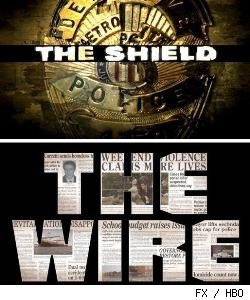
In 2002, Johnson pulled off a remarkable and practically unparalleled feat as he directed the Pilot and initial episodes of two crime dramas that would blow the lid off the American police procedural, but for very different reasons. In Shawn Ryan’s L.A. police corruption drama The Shield Johnson invented the kinetic and jolting camera style that made the programme so arresting and exhilarating and helped craft the visceral energy and sly humour that made Michael Chiklis’ Detective Vic Mackey America’s most feared and entertaining bent copper. Conversely, in Baltimore-set drugs investigation drama The Wire, Johnson set in motion a near-invisible and highly methodical visual approach that avoided aggrandising or distorting the show’s complex portrayal of American institutions while laying the foundations for some of the most compelling, attractive and finely-tuned character performances ever seen on TV. These directorial styles were poles apart and demonstrated Johnson’s brilliance at finding the aesthetic most suited to the concept and ambitions of a programme.

'The Shield' and 'The Wire'

Johnson's two triumphs

As these series drew to a close, Johnson not only presided over the direction of the finales but also returned to the screen in befitting tributes to his instrumental role in their success. In Season Five of The Wire, he plays Gus, the City Editor for The Baltimore Sun, a highly meta-textual role in which he is bestowed the honour of voicing the ethos of the series to represent society in all its collective complexity. In the finale of The Shield he plays the federal agent who takes Mackey’s wife and kids away from his Beelzebub-like hold, inadvertently becoming the hero of the piece. On the credits Johnson is listed as ‘Handsome Marshall’. He’s earned that adjective.