Archive for the American TV Shows Category

The Cast Members

Posted in American TV (General), American TV Shows, Behind-The-Scenes, Local TV, TV Acting, Unsung Heroes with tags , , , , , , , on April 7, 2016 by Tom Steward

It’s not often I ask you to do something – except look up words (or so G tells me). But at the end of this post, I’m going to ask you for money. It’s not going to me (not for a long time anyway) instead to a group of talented and ambitious individuals who want to shape the future of television sitcoms. But they need your help to do it!

The true test of a great sitcom idea is this. If you hear it and your first thought is ‘why haven’t they done that before?’, it’s a winner. If you ask that question and get the reply ‘it has’ it’s a loser. Aaron Roberts, Executive Producer of The Cast Members, needn’t worry because his sitcom about a rag tag group of movie theater employees is one of the most original yet obvious (in a good way) premises we’ve had in television comedy for years. In fact, Aaron is hoping to breathe fresh air into the comedy world:

‘Television is at its golden age with dramas, most people believe it is consistently better than the films that flood the box office week after week. But, television sitcoms? The last great ones to go off the air left what was NBC’s comedy block in shambles a few years ago. The bad outweigh good and most networks continue to rehash old premises with new faces or even worse – straight rebooting old IP’

The Cast Members is a grassroots project from independent production company Blue Vision Entertainment, who have already scripted 6 episodes and are ready to shoot an initial season with an insanely talented ensemble cast already assembled (ensembled?!) and an award-winning crew behind-the-scenes. The Cast Members is on Indiegogo to raise funds for a pilot from the 1600+ strong audience they’ve found on social media and actors and crew even got together to shoot some promo videos introducing the ensemble cast in separate scenes to really showcase all the talent attached to the project and obtain a picture of what audiences would expect to find in full length episodes.

What Aaron is doing is highly ambitious, but not unprecedented in television comedy:

‘This is the beginning of another Always Sunny or Broad City type of story; the small production that started on the web that will mark the precipice of some great comedy careers’

Nor is this a flash-in-the-pan. It’s a show that has been evolving in independent development for over 2 years and that – Aaron guarantees – will eventually air somewhere. As for content, Aaron is confident of the sitcom’s broad appeal:

‘With performers from all ethnicities and walks of life…the story has heart and speaks to anyone who has ever held a minimum wage, first employment that they sort of ‘had’ to work’

Aaron is, however, under no delusions as to what the main selling point of the sitcom is; the cast members…appropriately enough:

‘The best possible cast of the rise acting talent possible from California was assembled. Multiple NYT award nominees and recipients. Actors with credits list such as The Daily Show, Modern Family, Faking It, Tangerine and more are finally ready to break out from bit roles and showcase their true comedic chops. Two actors are currently starring in theater productions in New York and San Diego that are receiving rave reviews. Not to mention the couple working stand-up comedians portraying different characters on the show’

I’m glad Aaron said all that, so I didn’t have to. You see, I’m in the cast of this show, playing (movie) theater (concessions) veteran Peter Peterman, who thanks to Aaron’s keen sense of comedic resource exploitation developed an English accent and gained a wife between drafts. I’m even in one of the crowdfunding videos, which you can watch below. See if you can spot me. I do rather blend in:

So take a chance on this production. It’s got an interesting story to tell and 20 absolutely talented actors to do it. If you need more proof for your purchase, you can watch all ten superbly written and performed crowdfunding videos for free via the show’s Facebook page or on Indiegogo, where you can also send your donation. The amount doesn’t matter (but don’t hold back if you don’t have to!) just be sure to help us out and you can say you were a part of sitcom history before anyone else. And – if you need a closer – just remember how critical I’ve been of TV on this blog then re-read this post!


Time for TV

Posted in American TV (General), American TV Shows, Reality TV, TV channels, TV History with tags , , , , , , , on March 7, 2016 by Tom Steward

As Fuller House demonstrates, TV is always eager to flex its nostalgia muscles but recent programs have shown that it’s still the timeliness of the medium that puts it above others. While Donald Trump scapegoats Mexican immigration for America’s problems and builds his “policies” (and I use that word as broadly as it will stretch) around a wall dividing America and Mexico, Fox is airing an animated sitcom about a racist border agent living in a town called ‘Mexifornia’ who remains oblivious to the generous spirit of his Latino neighbor. Meanwhile in the post-Snowden age, a basic cable drama explores the anti-heroism of the hacker terrorist. But television can never shed anachronism completely and while these shows might be current they are far from new.

border

Deport thy neighbor!

Bordertown is a blatant callback to the ‘bad neighbor’ sitcom that has been one of the most common formats for the genre and usually the vehicle for discussing vast social, racial and political differences between characters. The British sitcom Love Thy Neighbour in which a working-class racist white man lives next door to a middle-class African-Briton is perhaps the best (if that word can ever be used in conjunction with the show) example of this, though Hitler-Jewish couple neighbour sitcom Heil! Honey I’m Home is certainly the most extreme. Previous animated Fox comedies have used this device, forging dynamics between church-hating slob Homer Simpson and God-loving puritan Ned Flanders in The Simpsons or button-downed Texan Hank and extravagant Laotian Kahn in King of the Hill.

The ethics of hacking may not have been addressed as cogently as they have in USA’s Mr. Robot but the act itself has traditionally been a means to an end in TV drama. State-sanctioned hackers like Chloe in 24 helped to move the plot along in real-time, even when the character was faced with the drudgery of coffee shop Wi-Fi. On CBS, there’s a CSI about hacking (the only one left, believe it or not) and something called Scorpion which puts hacking at the centre of story development, even though the show seems designed to make tech people seethe with rage at the inaccuracies. Plus whoever made this has a raging Fight Club fetish, with a delusional loner embroiled in terrorist activities as social protest.

To fight the hate-fuelled bile of Trump’s anti-immigration rhetoric, we need an alternative that doesn’t pull its punches when it comes to condemning the Caucasian culture that engendered his political triumphs. In that sense, the bigotry and ignorance (#bignorance) of white characters in Bordertown is more of an antidote than the polite questioning of Trump on news programming, which ensures their ratings cow remains sacred. While partisan liberal news networks like MSNBC can be counter-attacked for projecting ideology, Mark Hentemann and Seth MacFarlane’s politically incorrect comedy cannot, since it extends its satire to the left and Latino culture, rather than cowering from it. The lack of controversy may be because it is little-watched, but it also could be a sign the public accept its truth.

Like its pre-9/11 cinematic predecessor, Mr. Robot may not have a political perspective as much as simply throwing around politically charged words and ideas. That’s fine, as drama shouldn’t be propaganda, but there’s no doubt it captures our ambivalence as a culture about digital whistleblowers. I’m pushing through the first season slowly so excuse me if I’ve already been debunked but hacker Elliot has neither been confirmed as a hero or villain, nor has his direct action yet been given moral deniability for us as an audience. I’m not sure it’s because the writers can’t make their minds up, but rather that we can’t. They may not have predicted the Apple terrorist phone unlocking crisis but they can count on its like in the news.

roboto

Domo arigot!

Not that I want to draw a false equivalence between the two shows. Mr. Robot is a huge departure for USA, who have typically relied on a bunch of slick ricks to fill their original programming vacuum. Bordertown is familiar territory for Fox, who are the leaders in mainstream adult animation (though Adult Swim is snapping at their heels) and will only enhance a pre-existing reputation. But they are united in their contemporaneity, and the ability to deliver that in a style that seems like it’s always been with us. Because it nearly always has. Both programs test the limits of modern-day American culture, straddling its violent past and technological future. But crucially they also know how to appeal to our overriding sense of nostalgia.

No Olds Barred

Posted in American TV (General), American TV Shows, Americans watching British TV, British Shows on American TV, TV History, TV News, Uncategorized with tags , , , , , , , on February 6, 2016 by Tom Steward

In a week when voters decided they didn’t have a problem with a man in his late seventies running the country, I suppose we shouldn’t be surprised that there’s still a place in television for the old. While host of The Late Show Stephen Colbert managed a ten-minute skit based around The Twilight Zone – a show that first aired in 1959 – nineties science-fiction procedural The X-Files continued its revival on Fox. An anthology series about the murder trial of O.J. Simpson began and the miniseries Shades of Blue showcasing the anachronistic acting talents of Jennifer Lopez and Ray Liotta plodded along (and that is exactly the right word!). British television seems no less geriatric these days. Friends’ Matt Le Blanc was this week announced as the new co-host of motoring journal Top Gear, alongside – I might add – star of nineties light entertainment Chris Evans, who in turn has recently relaunched the pub-based variety talk show TFI Friday which had ceased broadcasting in 2000. How is it possible that so many programs and people from television’s past are now to be found dominating the airwaves? Well, there’s really not that much effort required to revive something that has never been away.

old

In Rod we trust.

Syndication and the proliferation of TV channels and services mean that TV of decades past is never far from our screens. It’s a short road from endlessly recycling a show to providing some extra material to pad it out. That might explain the programs but what about the people? Well, in each case, we’re talking about personalities who have managed to stick around long enough to become institutions, or have just come off their own revival. While the idea of J-Lo as an actor is now strange enough to make her performance in Shades of Blue seem jarring, her judging for American Idol and appearances on just about every music awards show on the air makes it a much smoother transition for regular viewers. Matt Le Blanc had endeared himself to the transatlantic public once again with Episodes and Top Gear is merely the crowning of that – although I suspect the BBC will be happy with anyone who falls short of creating an international incident! As to Chris Evans, Channel 4 had yet to replace TFI Friday with anything as exciting in that slot – and believe me it wasn’t very exciting – so broadcasters’ lack of ambition is also a factor.


What’s harder to explain is why we’re suddenly so interested in material from the past. No-one who talks about Ryan Murphy’s American Crime Story fails to mention that it has been twenty years since the events surrounding the arrest and trial of O.J. Simpson took place. TV may be a medium that prides itself on currency, but looking back over the decades has become another badge of honour. That’s what made Colbert’s Twilight Zone parody so bizarre. Weeknight talk shows are compelled to restrict their discussion to what’s been happening in that day’s news, and yet this trip down memory was motivated by nothing but fandom and ridicule-ripeness. I don’t know what to think about an X-Files revival (has anyone ever?!) but it’s an interesting case of throwing good money after bad in the wake of Fox’s breakout original programming like Empire. The youngest major network – if we’re still thinking in those terms – Fox has a particular problem letting go of the past. The Simpsons and Family Guy are now decades old, the network is home to a number of movie reboots, and this year primetime Fox vehicles provided a platform for the comebacks of Rob Lowe and John Stamos.

old 2

Surely it’s a Z-File by now!

The number of revivals, period television, and veteran stars on primetime television is staggering. For example, ABC airs two sitcoms set in the eighties and nineties respectively, a drama set in the forties, an anthology series set in the eighties, a revival of a seventies TV franchise, a movie about Bernie Madoff, while featuring among its big names Don Johnson, Ed O’Neill, Tim Allen and Geena Davis. With the increasing competition and likelihood of cancellation, it may seem that TV ruthlessly cuts away that which is ageing, but in fact it seems more accurate to say that a job on TV is a job for life. One thing is certain; there is absolutely no property out there in TV land that is exempt from returning to our screens. I did mean the landscape of television not the recurring nightmare-oriented nostalgia network back there but actually both work just as well!

Crimetime

Posted in American TV (General), American TV Shows, Behind-The-Scenes, Reality TV, Reviews, TV News, Uncategorized with tags , , , , , , , on January 29, 2016 by Tom Steward

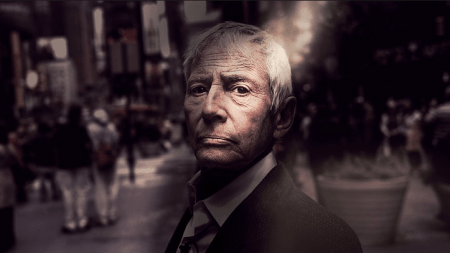
Ever since Homer Simpson purred the words ‘Wow, Infotainment’, true crime has been the beating heart – or lack thereof – of American television. In the last year or so, a high-end alternative to the video-looking, cheaply put together true crime documentaries echoing the trite, uncomplicated and sensational timbre of news has emerged. This sub-genre of true crime TV looks more like the production value-laden, multi-layered serial dramas we’ve seen with exponential regularity in the past two decades and plays without loss on boutique networks and video-on-demand services. The prime suspects are HBO’s The Jinx: The Life and Deaths of Robert Durst and Netflix’s Making a Murderer. Though both series seem to herald a new trend in televised crime, in many ways they are polar opposites. As G remarked, the former is about how privilege and money can get around the justice system no matter what a defendant may or may not have done while the latter is about how poverty and low status count against you legally regardless of your guilt. But their differences go further, speaking to a gulf in the quality and character of the dramatic television produced by these two non-traditional television services. While both appear to have changed the face of television documentary overnight, the nature of the filmmaking involved means that they have been in the works for several years and play off and into TV crime dramas perhaps more than other documentaries in the field.

crimetime

This guy is the Durst!

At ten hour-long episodes, Making a Murderer lasts about long as a typical high-quality TV drama season and offers the same compelling serial narrative we look for in them. Each episode is prefixed with a rich, stylish and lengthy credits sequence equal to and clearly modelled on those that have announced standalone masterpieces in series on such elite platforms as HBO and Showtime. As many of my partners in crime television – including Squeezegut Alley and Dolly Clackett have already observed – this documentary following the trial of exonerated rapist Steven Avery and his nephew for murder in Wisconsin, plays out like a real-life Murder One. Further to the interplay between drama and documentary in crime television, however, Murder One was in no small part indebted to the televised trial of O.J. Simpson, which had concluded a few months before airing and proved that a single trial could hold the attention of audiences for months on end. To complete the circuit, FX are soon to air the first season of their factually-based drama anthology series American Crime Story based around the trial of O.J. Simpson. Critics of Making a Murderer have pointed to the filmmakers’ omission of key pieces of trial evidence and one-sided view of Steven Avery as an innocent patsy. I’m all for directors declaring their biases rather than pretending they don’t exist but it would have been a far better documentary if the emphasis had been on the reasonable doubt about the Averys’ guilt and the distinct whiff of police misconduct surrounding the case rather than conspiracies and frame-ups.

crimetime 2

Avery complicated case!

Though The Jinx shares many visual and narrative similarities with Making a Murderer – not least their elaborate curtain-raisers – in almost all ways HBO’s documentary miniseries is superior to its Netflix counterpart. This six-part account of how business heir Robert Durst became a prime suspect in multiple murder investigations yet remained a free man had greater sophistication in its handling of the subject. The documentary factored in the impact that media coverage of Durst has had on the various cases, including his own attraction to the spotlight which allowed filmmakers direct access to him. They refuse to be drawn on the question of Durst’s guilt until a smoking gun presented itself, at which point the filmmakers are forced into the position of interrogators. The Jinx has also accomplished more for social justice than Making a Murderer, as Durst was arrested for murder following the broadcast of the series while the post-show discussion of the Steven Avery case has yielded an ill-advised petition to The White House which they are powerless to act upon and rancour against the filmmakers for cherry-picking evidence – which is bad documentary practice anyway but given the stakes is a criminal act all of its own. The Jinx might be the reason Durst is under arrest but it may also be the reason he beats jail. Any decent defence lawyer could argue that the documentary has already branded Durst a murder and therefore he cannot get a fair trial. The prosecution would need a jury without HBO subscriptions.


Sound and Television

Posted in American TV Shows, Americans watching British TV, Behind-The-Scenes, TV Acting, TV channels, TV History, TV News, Unsung Heroes with tags , , , , , on January 12, 2016 by Tom Steward

David Bowie was – among other divinities – a consummate self-promoter and it’s for this reason alone I feel justified in exploiting a niche in the market of Bowie obituaries; his appearances on television. Looking back at what Bowie has done on and for TV, it’s all too clear that his genius – like Elvis before and Madonna after him – was in breaking down barriers of genre and generation. His TV – see one thrive:


Top of the Pops (1972)

Though in retrospect Bowie only ever flirted with LGBT imagery and shed his public bisexuality as quickly as he did all his other personas – including the one at the root of his sexual ambiguity, Ziggy Stardust – his performance of ‘Starman’ on British chart countdown Top of the Pops in 1972 was a watershed in the visibility of gender and sexual fluidity in the mainstream culture of Britain. Bowie’s androgynous dress and appearance was one thing, his suggestive embrace of guitarist and collaborator Mick Ronson entirely another. Viewers may have been reading between the lines, since Bowie had recently come out as gay (or possibly bisexual) in rock magazine Melody Maker. That this risqué – and risky – display had such an impact is due as much to the three-channel limit of TV viewing in the UK in the early seventies which meant it was seen by most of the country’s television audience as it is to the content of the performance. But that doesn’t diminish the power it had on those who were awakened and liberated by Bowie’s gesture, including future British pop legends Boy George and Ian McCulloch, nor does it make this surreptitious statement of social change less significant.


David Bowie and Bing Crosby (1977)

http://www.youtube.com/watch?v=n9kfdEyV3RQ

Despite being constantly innovative and revolutionary in his music, Bowie was never one to shun tradition, as evidenced by his affection and appreciation for the cabaret singers and crooners who were the pop sensations of their eras. Bowie seemed to have a particular fondness for American pop music, and became a fully-fledged part of it in the seventies and eighties when – inexplicably – he stood shoulder-to-shoulder with the  most legitimate funk and soul artists in the USA. If you take all that into consideration, the awkward chemistry and textbook-illustration culture clash of David Bowie singing with Bing Crosby on his Christmas show in 1977 disappears into thin air. If the lacklustre banter about the irrelevance of a  generation gap in musical tastes doesn’t convince you of their parity – and it won’t – then the complimentary idiosyncrasies in their duet medley of ‘Little Drummer Boy’ and ‘Peace on Earth’ makes a compelling case for their historically inextricable legacies as pop stars.


The Snowman (1982)

As a recent orchestral performance of the British animated feature based on Raymond Briggs’ beloved children’s book I witnessed reminded me, the live-action introduction featuring David Bowie as an adult version of the main character remembering his childhood experiences is more often omitted from showings than it is included. It’s not really surprising as the appearance of a clean-cut, bleach-blond Bowie is the only aspect of this timeless film that dates it as a product of the early eighties. But this appearance unlocks a history of extraneous and bizarre movie cameos that is as much part of Bowie’s place in pop culture as his music. The Snowman is aired every Christmas Eve on British TV station Channel 4 and I suspect that in future years the melancholy of this beautiful film about loss and transience will have as much to do with Bowie as it does the Boy.


Extras (2006)

Speaking of extraneous and bizarre cameos…Though celebrity appearances like Bowie’s would eventually spell the end of Ricky Gervais’s credibility as comic actor and writer, his industry-set sitcom Extras created a self-contained world in which celebrity sightings were eminently plausible. The irony of Bowie’s appearance in the second episode of the sitcom’s final season is that a music star of his ilk is the last celebrity sitcom actor Andy Milman is likely to run into. It’s not much of a leap to suggest that this might be a sly reference to Bowie turning up in projects he didn’t need to be in. It’s one of the few occasions that Gervais had the humility to credit someone else with his success. Gervais’s self-effacing ode ‘Little Fat Man’ is styled so perfectly for Bowie, it acknowledges the extent to which Gervais’s physical and vocal mannerisms which have won him international adoration – especially as David Brent – are informed by the late performer.