Archive for the BiogTV Category

Going out with a Clanger

Posted in American TV (General), American TV Shows, BiogTV, Reviews, TV channels, TV Culture, TV History with tags , , , , , , , , , , , , , , , , , , , on May 3, 2013 by Tom Steward

It’s official! The Office is now unwatchable. But since you can have this opinion any way you want on the internet-like eggs in a diner-I’ve decided against blogging about this (for the record, I blame hiring Catherine Tate, firing Mindy Kaling and too much Jenna Fischer) so instead here’s a rundown of some other US TV shows that tanked in their final season:

Catherine Tate giving an offhand lecture on how to ruin TV shows!

Northern Exposure-Season 6

A series about a New York doctor forced to take up residency in an Alaskan small-town should have conceivably ended when said doctor returned to New York. But when actor Rob Morrow, playing Dr. Joel Fleischman, wanted to leave the show, the producers decided it wasn’t the character, the performance or his rapport with the rest of the cast (including the driving-force storyline of Fleischman’s on-again-off-again romance with Maggie O’Connell) that was essential but the idea of a fish-out-of-water New York doctor in Alaska. It didn’t help that to ease Morrow out of the show the writers did a 360 on Fleischman’s character transforming him from a neurotic urbanite into a Zen wild man of the woods and that Maggie was soon randomly paired up with another of the show’s leading men.

Rob Morrow celebrates being allowed to wear a tie again

Seinfeld-Season 9

Don’t get me wrong I’ll happy sit through any episode of this final season of the groundbreaking sitcom and it’s not short of classic moments (‘Serenity Now!’, Festivus etc.). But two years after the departure of creator Larry David, much of Season 9 feels like a cartoon parody of Seinfeld, continuing to hit all the misanthropic notes that its creators insisted the show couldn’t do without (if not more) but without the easy-going naturalism of previous seasons. The storytelling relies far too much on fantasy rather than contrived coincidences, diluting the carefully crafted multi-stranded writing with lazy shortcuts. Though I’m not as down on the finale as some, the decision to make its second half a thinly disguised clip show following an hour-long tribute the previous week was deeply ill-advised.

Oh come on guys, it wasn’t that bad!

 Roseanne-Season 9

There isn’t space here to list all the mistakes family sitcom Roseanne made in its final season but here are some of the major gaffes. There’s no John Goodman. Imagine Lucy without Desi or Samantha without Darrin (the first one at least!). What’s more, Dan is written out of the show by Roseanne leaving him, which completely goes against the unshakeable strength of their marriage established in the previous 8 seasons. It makes what went before seem like a dream. And while we’re on the topic of dreams, there’s way too many of them here. Every other episode is an extended dream sequence, something we would previously get only once or twice a season. The storyline of the season is that Roseanne wins the lottery which hits the jackpot of bad sitcom ideas, the episodes are basically strung-together celebrity cameos, and the finale rivals Lost in the incomprehensible endings stakes.

I wish it had been a dream…rather than making the rest seem like it was!

ER-Season 15

Legend has it that the long-running hospital drama managed to maintain its quality of cast and writing right through to the end but those who actually watched those final few seasons-as opposed to rounding up from the first 12 years-have a very different story to tell. ER always prided itself on effectively replacing beloved cast members time and again. After all, this was the series that survived the loss of George Clooney. But by Season 15, there are no more heroes, admirable adults or esteemed actors left in the show but just a thin residue of the leftover comic sidekicks and kids, running around quipping and accidentally killing people like Bugsy Malone in a hospital. And when a series is relying on a revolving door of guest stars to fill the lead roles, it’s time to pull the plug.

‘Where did all the good characters go?’ 

Murder One-Season Two

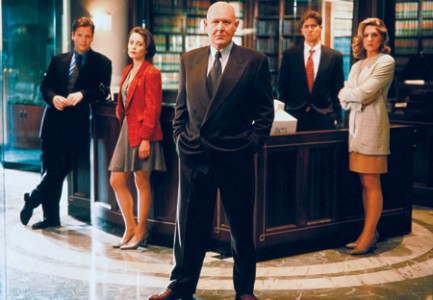
Steven Bochco’s TV series are usually synonymous with longevity and the first season of this innovative courtroom drama which covered a single trial over 23 episodes set in motion a formula that seemed destined for ongoing success. And it probably would have achieved it had it not been for the series producers changing everything that made it great. Star and heart of the show Daniel Benzali was axed and replaced by Anthony LaPaglia, an actor with far less gravitas playing a character without the compelling presence of Benzali’s Teddy Hoffman. The season was no longer one trial but three, thus the unique selling point of the series was gone, and so was a reason for the audience to care.

We’re back…minus everyone you like!

Day at the Movies

Posted in American TV (General), BiogTV, TV channels, TV Culture, TV History with tags , , , , , , , , , on April 26, 2013 by Tom Steward

I’m looking at the guide on the cable box. G is recording The Departed on FX. It is about noon.


G: I’ve never seen it.


T: You still won’t have.


Strict censorship of network and basic cable television in the US means that whenever movies are shown most or all of the obscenities are cut or overdubbed, extreme violence is pruned and ‘sexy scenes’ (for those of you who grew up in the 90s watching rented videos) are taken out. The networks make it worse for themselves by scheduling the most obscene movies in the morning and daytime.

This is as much as FX showed of ‘The Departed’

I mean, what exactly is gained showing Goodfellas at 2 in the afternoon? How does a movie that contains 300 fucks last longer than a few minutes after cuts? We’re not talking about movies where sex, violence and obscenity are gratuities and it plays just fine without them. These are movies where such excess is inextricable from the film’s style and embedded in the world they represent. It’s not even as though the filmmakers had a chance to work up creative solutions to tailor their work to the censorship regimes of network television, as the writers and producers of original programmes have.

Growing up in the UK in the 90s, I remember the BBC would stringently censor popular movies so that they could air in the primetime slot before the 9pm watershed, the time in Britain after which adult television becomes more acceptable to show. There are whole scenes of films I didn’t know existed, like Steve Martin’s hernia-inducingly funny ‘I want a fucking car’ routine from Planes, Trains and Automobiles. But I never felt these edited versions butchered the original in the same way that, say, AMC maimed Scarface, ironically by taking out the maimings. They just left me wanting more.

Like most things in television, it boils down to filling time. The network has purchased programming that’s been made suitable for a daytime timeslot by extensive editing and they’re going to use it to plug a gap in the schedules whenever they can. It’s just a terrible shame so many people will get such a glib first impression of all those wonderful movies. Or think they’ve seen a movie without knowing the half of it.


Who’s Watching TV with Americans

Posted in Americans watching British TV, BiogTV, British Shows on American TV with tags , , , , , , , , , on April 1, 2013 by Tom Steward

This year’s run of new Doctor Who episodes started last Saturday with ‘The Bells of Saint John’. G wanted to watch it with me not because she was particularly interested but because she wanted an early night and British voices make her sleepy. I expected questions to come thick and fast about the mystery identity of The Doctor’s new companion, Clara, and had prepared numerous explanations. But the first question G asked me would remain unanswered:


G: Why is he called Doctor Who?


T: Exactly. Nobody knows who he is.


G: That’s smart. You guys are smart like that.


‘I’ve just come from The Great British Menu Comic Relief banquet’


In fact, all G’s questions struck at the heart of the show. They also reminded me how much the idea of the programme has been perverted since the 2005 re-launch. After seeing The Doctor ride an anti-gravitational bike up a skyscraper, she quite reasonably asked:


G: So is Doctor Who like Superman? Do people on earth know who he is?


T: He’s supposed to be a stranger to everyone he meets. But in the last few years they’ve made him a legend so now everybody’s heard of him.


Once the flirting between The Doctor and Clara was in full swing, she asked me:


G: Isn’t The Doctor supposed to be asexual?


T: He used to be but when the show came back he was in love with his first companion and now there’s always a chance they’re more than friends.


The greatest show on the Gogglebox!


G was impressed with the TARDIS, or more accurately the fantasy of never having to wait for breakfast again. And it didn’t take her long to figure out the shortcomings of Steven Moffat as a writer:


G: So they just press ‘System Restore’ and it all goes back to normal? Why didn’t he hit them with an online virus? It took about 10 hours to get going and then in 5 seconds it’s all over.


Saving the world by turning it off and on again.


Once it was over:


G: That was…good.


T: I thought it was dull.


G: Good I agree. It should be more like the sea serpent one.


T: The what?


G: The one we watched with the sea serpents…in Venice.


So G already knows Steven Moffat is a hack and ‘Vampires of Venice’ is a great episode. Where did I go right?

Wedding Sets

Posted in American TV (General), American TV Shows, Americans watching British TV, BiogTV, British Shows on American TV, Reviews, TV Culture with tags , , , , , , , , , , , , , , , , , , , on March 20, 2013 by Tom Steward

G and I are getting married next year so she now has a reason-and not just a fetish-for watching bridal programmes and I can’t say no to the wedding show. Actually, I don’t much mind them. On the whole, they’re blissfully free of the snipe and snark that accompanies most reality TV formats and seem genuinely good-natured. Given that they’re about such a self-contained event, wedding reality shows are incredibly varied. At its most basic, you have behind-the-scenes bridal shop programmes like Say Yes to the Dress, I Found the Gown and My New Frock Rocks (ok, I made that last one up!). There are a couple of variations on the format. First, a CSI-style Atlanta-based spin-off of SYTTD which Stepford-clones the original, save for a few biscuit-and-gravy aphorisms. Secondly, Randy to the Rescue, a travelling version of the above which loses the cosy bridal lounge in favour of a swag truck and opens like a deleted scene from Duel.

Randy to the Rescue: Say Yes to the Dress meets Duel

Then there’s a host of reality shows which cover the planning stages of the wedding. These can take the form of exploitomentries like Bridezillas where control freak brides-to-be are made to seem sociopathic by having Bernard Herrman-style strings played under their every move. Or shows about the wedding planners themselves, such as My Fair Wedding with David Tutera in which couples try to turn around their faltering wedding plans by sending plea letters to the eponymous Santa Claus of nuptials. Tutera is like the anti-Simon Cowell. It’s clear from his wry facial expressions he’s thinking all kinds of bitchy things about his tasteless clients but he keeps it all in, even going to the lengths of surgically removing all features from his face so that he never betrays a discouraging emotion again.

David Tutera: The anti-Simon Cowell

The closer we get to the actual ceremony, the more game showy the genre gets. Four Weddings has brides competing against each other for a free honeymoon as they score each other’s wedding day. It’s an irresistible format, one familiar to British and Australian audiences from the disgustingly addictive dinner-party contest Come Dine with Me, and keeping the contrasting backgrounds and lifestyles of the contestants which makes for such entertaining conflict. In keeping with the congenial tone of the genre, though, the brides rarely resort to sideswiping, even in their private interviews. Nonetheless, they love to complain and scrutinise on a sub-atomic level (Note to engaged couples: get plenty of food to people in a timely fashion and you’ll be fine) and many brides are clearly rattled by anything outside their socio-economic comfort zone. Other ceremony-based formats include the devil-child aborted wedding prank show The Real Wedding Crashers, rightly taken off the air after three ruined wedding days.

Four Weddings and a New Orleans Funeral

Wedding shows are not simply an American TV phenomenon either. In the UK there’s a longstanding tradition of bridal reality programmes like Don’t Tell the Bride, where, incredibly, a bride-to-be hands power-of-matrimony over to the groom and their respective family and friends, abiding to live with the results while she abstains from involvement until the wedding day. What seems like the stuff of pre-nuptial nightmares actually turns out pretty well most of the time. The grooms’ eccentricities and fashion blind spots are easily forgiven by their fiancées given the amount of effort they’ve expended, and their natural male thriftiness leads to creativity as much as it does catastrophe. Family and friends form a nice counterbalance which seems to prevent some of the impending design disasters that waft through the idea stages like an unreasonable fart.

Wedding Day Banana Skins

Four Weddings is actually a UK format but I should keep quiet about its native origins as G doesn’t like it when I spoil her favourite shows with copyright trivia, especially when it exposes the uncomfortable truth about the new British colonisation of American pop culture. It probably does explain why the scoring system on the show is so complicated since we like our game shows impenetrable to non-maths majors. One British contribution to wedding TV I’m sure G is happy about, though, is the point-and-prod sub-culture circus that is My Big Fat Gypsy Wedding, in which the gaudy ritual excesses of wedding design in the British traveller community are pressed up against the zoo-bar like glass of TV screens in middle-class homes. Fortunately, it’s possible to ignore the judgemental treatment of minority groups and celebrate the elaborate visual spectacle of dresses that Grace Jones would call tame and the superficial goodness of the cartoon kitsch splashed across everything from morning make-up to late night send-off.

Life-size novelty toilet roll holders recalled to factory

But this blog post is not just a sign of impending nuptials but also the result of a field trip. Last Sunday G and I attended a bridal show at the Hotel Del Coronado (bear in mind when G first met me I was wearing a cookie-monster t-shirt) where we met bridal shop fashion director and star of SYTTD Atlanta Monte Durham. Though G didn’t take me up on my suggestion that we bring her DVR list for Monte to sign, she did manage to snag some pro-bono gown consultancy (my gal’s a scrimper at heart!) and we left bathed in the warm glow of his refinement and Southern gentlemanliness. The wedding trade is a swollen industry and bridal shows are undoubtedly inflating the bubble but they lack the mean-spirited edge of other televised business ventures and, thanks to the Montes of the genre, are mainly harbingers of happiness.

Murder 1 24:7 Damages

Posted in American TV (General), American TV Shows, BiogTV, Reviews, TV History with tags , , , , , , , , , , , , , , , , , , , on February 17, 2013 by Tom Steward

G: Is he dirty?


T: You’re not supposed to know either way yet.


G: Is she dirty?


T: You find out later.


G: Oh…Is he dirty?


T: They want you to think that now but he might not be.


G: So she’s dirty?


T: Yes!


G: I knew it.


And so it goes, the Abbott and Costello routine that accompanies G and I’s 24 marathon, a programme predicated on not knowing if the characters are traitors. Having seen these episodes many times over I know full well that without the promise of these mysteries being solved there’s absolutely no reason to stay through to the end of each season. G needs something to hang on to in order to get through the shark-jumping contest the series bi-annually stages. Without the mirage of end-of-season plot twists, there’s no way she’ll make it through Season 1’s amnesia storyline, by which I mean the storyline written by people who have forgotten the last 20 years of TV drama. There’s even less chance of her surviving Season 2’s surprise wild animal attack, or indeed any of the disproportionately perilous adventures a certain blonde teenager experiences in a post-nothing-actually-happening Los Angeles.

Happy Day!

These frustrations were the price we’d have to pay. We needed story stimulus and audio-visual distraction to prop up our day-long sessions of Uno which, thanks to my filibustering strategy of hoarding +4 wild cards, usually consist of 1 or 2 games. With our playing reserve  extended to two packs (misguidedly introduced to reduced game time!), our short-term recall seemingly non-existent, and our below Jenga-code surfaces, we had played enough Uno to whip through the first season of legal soap Murder One in less than two days. This is a series with a reputation for quick conversion, a mere 2 or 3 episodes into the run enough for discipledom. But I’ve never seen anyone so utterly brainwashed by a programme as G was by this show. The initial 45 minutes of endless exposition and prevarication which for most people is simply the salesman lowering your resistance until you let him into your home was for G the Jehovah’s Witness being invited to stay for dinner. I’m sure this had something to do with it being the perfect sideways-glance television. If anything important is about to happen, the French-door clattering and microphoned drone bee sound effects will let you know in advance. Plus, the screen will turn a different colour.

Luther and Associates

Like any TV hand-me-down, the joy is always the first-time viewer’s observations that have never crossed your mind. I’d never thought to ask what Teddy Hoffman, played by Lex Luther-in-waiting Daniel Benzali, was always looking at out of the blinds of his office windows (our consensus was squirrel) or why the county court had employed a harpsichordist rather than a stenographer. It’s also good to come at a show without your blinkers of pure reverence. Thanks to G’s unfazed eyes, I could see how our continuing fascination with the ambiguous motives and behaviour of businessman Richard Cross is not simply down to the fine character work of trans-generationally-underrated actor Stanley Tucci but also the script refusing to show us anything of his world beyond his mini-operetta performances in Hoffman’s office. I have an unflinching admiration for Benzali’s performance which may well be tinged with sadness at his subsequent lack of fame and being replaced as the series lead by Daphne’s brother from Frasier. This precluded me from seeing-as G did-the actor’s delusion that he was in a Mario Puzo mini-series and that in the scenes with his young daughter, his interpretation of paternal warmth is genuinely disturbing to watch. In fact, if you turned down the sound on the TV in those scenes and had to write one word on a post-it note to stick on his face, chances are it would be ‘paedo’.jko

Danson in the Dock

Just as soon as we’d cleared Murder One we were into the dregs of 24 Season 1. Do we dare plumb the depths of Murder Two, the hard-to-believe-it-exists second season based on the assumptions that what was holding the series back was its beloved lead actor and breakthrough storytelling and that everyone wanted more of the nervy Jewish guy who prepares writs? Was it too soon to plough through 48, the unnecessary-but-surprisingly-competent sequel which at least keeps the super-violent interrogations to an alternate-episode minimum, and thereby sacrifice the last morally justifiable season of this literally tortuous programme? Lest our faith in the foresight of TV writers is Lost we couldn’t let our lasting impression be these failures in planning for a sustainable future. Something had to fill the gap. G was adamant it had to be another one-season wonder with a continuing storyline that wrapped things up in a neat little package…give or take a couple of loose ribbons.


G: I’m gonna find out what happens this season, right?


T: Yeah, it all gets resolved. A couple of threads are left hanging, but nothing important.


G: Good, I don’t want to do all this work for nothing.


I petitioned for Damages. I’d always thought this off-courtroom legal drama should have been kept as a mini-series and this was confirmed in subsequent seasons where the writers can’t think of a good reason to bring Ted Danson back into the show. It seemed perfect for our casino cabaret purposes. Despite Glenn Close’s Cruella de Overkill performance which grates almost immediately, there’s enough intrigue in the sub-plots involving the TV movie Tom Cruise Peter Facinelli and quality TV’s J T Walsh Zeljko Ivanek to make a two-deck shuffle go a little faster. It was also a welcome reminder of the unique screen presence of the silver horse that is Ted Danson. His series-stealing turn as morally suspect millionaire Arthur Frobisher veers beautifully between the effortlessly comic and the unnervingly understated with a douse of inimitable idiosyncrasy. And so it went as quickly as it came. And so did G, with 24 Season 2 as inappropriate in-flight viewing. Everything else was just too damn consistent!