Archive for the Reality TV Category

Time for TV

Posted in American TV (General), American TV Shows, Reality TV, TV channels, TV History with tags , , , , , , , on March 7, 2016 by Tom Steward

As Fuller House demonstrates, TV is always eager to flex its nostalgia muscles but recent programs have shown that it’s still the timeliness of the medium that puts it above others. While Donald Trump scapegoats Mexican immigration for America’s problems and builds his “policies” (and I use that word as broadly as it will stretch) around a wall dividing America and Mexico, Fox is airing an animated sitcom about a racist border agent living in a town called ‘Mexifornia’ who remains oblivious to the generous spirit of his Latino neighbor. Meanwhile in the post-Snowden age, a basic cable drama explores the anti-heroism of the hacker terrorist. But television can never shed anachronism completely and while these shows might be current they are far from new.

border

Deport thy neighbor!

Bordertown is a blatant callback to the ‘bad neighbor’ sitcom that has been one of the most common formats for the genre and usually the vehicle for discussing vast social, racial and political differences between characters. The British sitcom Love Thy Neighbour in which a working-class racist white man lives next door to a middle-class African-Briton is perhaps the best (if that word can ever be used in conjunction with the show) example of this, though Hitler-Jewish couple neighbour sitcom Heil! Honey I’m Home is certainly the most extreme. Previous animated Fox comedies have used this device, forging dynamics between church-hating slob Homer Simpson and God-loving puritan Ned Flanders in The Simpsons or button-downed Texan Hank and extravagant Laotian Kahn in King of the Hill.

The ethics of hacking may not have been addressed as cogently as they have in USA’s Mr. Robot but the act itself has traditionally been a means to an end in TV drama. State-sanctioned hackers like Chloe in 24 helped to move the plot along in real-time, even when the character was faced with the drudgery of coffee shop Wi-Fi. On CBS, there’s a CSI about hacking (the only one left, believe it or not) and something called Scorpion which puts hacking at the centre of story development, even though the show seems designed to make tech people seethe with rage at the inaccuracies. Plus whoever made this has a raging Fight Club fetish, with a delusional loner embroiled in terrorist activities as social protest.

To fight the hate-fuelled bile of Trump’s anti-immigration rhetoric, we need an alternative that doesn’t pull its punches when it comes to condemning the Caucasian culture that engendered his political triumphs. In that sense, the bigotry and ignorance (#bignorance) of white characters in Bordertown is more of an antidote than the polite questioning of Trump on news programming, which ensures their ratings cow remains sacred. While partisan liberal news networks like MSNBC can be counter-attacked for projecting ideology, Mark Hentemann and Seth MacFarlane’s politically incorrect comedy cannot, since it extends its satire to the left and Latino culture, rather than cowering from it. The lack of controversy may be because it is little-watched, but it also could be a sign the public accept its truth.

Like its pre-9/11 cinematic predecessor, Mr. Robot may not have a political perspective as much as simply throwing around politically charged words and ideas. That’s fine, as drama shouldn’t be propaganda, but there’s no doubt it captures our ambivalence as a culture about digital whistleblowers. I’m pushing through the first season slowly so excuse me if I’ve already been debunked but hacker Elliot has neither been confirmed as a hero or villain, nor has his direct action yet been given moral deniability for us as an audience. I’m not sure it’s because the writers can’t make their minds up, but rather that we can’t. They may not have predicted the Apple terrorist phone unlocking crisis but they can count on its like in the news.

roboto

Domo arigot!

Not that I want to draw a false equivalence between the two shows. Mr. Robot is a huge departure for USA, who have typically relied on a bunch of slick ricks to fill their original programming vacuum. Bordertown is familiar territory for Fox, who are the leaders in mainstream adult animation (though Adult Swim is snapping at their heels) and will only enhance a pre-existing reputation. But they are united in their contemporaneity, and the ability to deliver that in a style that seems like it’s always been with us. Because it nearly always has. Both programs test the limits of modern-day American culture, straddling its violent past and technological future. But crucially they also know how to appeal to our overriding sense of nostalgia.
Crimetime

Posted in American TV (General), American TV Shows, Behind-The-Scenes, Reality TV, Reviews, TV News, Uncategorized with tags , , , , , , , on January 29, 2016 by Tom Steward

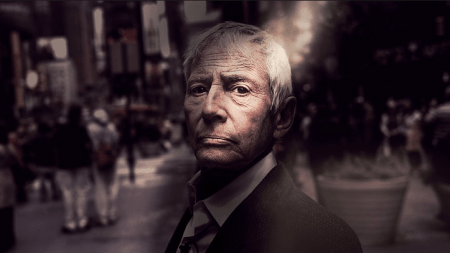
Ever since Homer Simpson purred the words ‘Wow, Infotainment’, true crime has been the beating heart – or lack thereof – of American television. In the last year or so, a high-end alternative to the video-looking, cheaply put together true crime documentaries echoing the trite, uncomplicated and sensational timbre of news has emerged. This sub-genre of true crime TV looks more like the production value-laden, multi-layered serial dramas we’ve seen with exponential regularity in the past two decades and plays without loss on boutique networks and video-on-demand services. The prime suspects are HBO’s The Jinx: The Life and Deaths of Robert Durst and Netflix’s Making a Murderer. Though both series seem to herald a new trend in televised crime, in many ways they are polar opposites. As G remarked, the former is about how privilege and money can get around the justice system no matter what a defendant may or may not have done while the latter is about how poverty and low status count against you legally regardless of your guilt. But their differences go further, speaking to a gulf in the quality and character of the dramatic television produced by these two non-traditional television services. While both appear to have changed the face of television documentary overnight, the nature of the filmmaking involved means that they have been in the works for several years and play off and into TV crime dramas perhaps more than other documentaries in the field.

crimetime

This guy is the Durst!

At ten hour-long episodes, Making a Murderer lasts about long as a typical high-quality TV drama season and offers the same compelling serial narrative we look for in them. Each episode is prefixed with a rich, stylish and lengthy credits sequence equal to and clearly modelled on those that have announced standalone masterpieces in series on such elite platforms as HBO and Showtime. As many of my partners in crime television – including Squeezegut Alley and Dolly Clackett have already observed – this documentary following the trial of exonerated rapist Steven Avery and his nephew for murder in Wisconsin, plays out like a real-life Murder One. Further to the interplay between drama and documentary in crime television, however, Murder One was in no small part indebted to the televised trial of O.J. Simpson, which had concluded a few months before airing and proved that a single trial could hold the attention of audiences for months on end. To complete the circuit, FX are soon to air the first season of their factually-based drama anthology series American Crime Story based around the trial of O.J. Simpson. Critics of Making a Murderer have pointed to the filmmakers’ omission of key pieces of trial evidence and one-sided view of Steven Avery as an innocent patsy. I’m all for directors declaring their biases rather than pretending they don’t exist but it would have been a far better documentary if the emphasis had been on the reasonable doubt about the Averys’ guilt and the distinct whiff of police misconduct surrounding the case rather than conspiracies and frame-ups.

crimetime 2

Avery complicated case!

Though The Jinx shares many visual and narrative similarities with Making a Murderer – not least their elaborate curtain-raisers – in almost all ways HBO’s documentary miniseries is superior to its Netflix counterpart. This six-part account of how business heir Robert Durst became a prime suspect in multiple murder investigations yet remained a free man had greater sophistication in its handling of the subject. The documentary factored in the impact that media coverage of Durst has had on the various cases, including his own attraction to the spotlight which allowed filmmakers direct access to him. They refuse to be drawn on the question of Durst’s guilt until a smoking gun presented itself, at which point the filmmakers are forced into the position of interrogators. The Jinx has also accomplished more for social justice than Making a Murderer, as Durst was arrested for murder following the broadcast of the series while the post-show discussion of the Steven Avery case has yielded an ill-advised petition to The White House which they are powerless to act upon and rancour against the filmmakers for cherry-picking evidence – which is bad documentary practice anyway but given the stakes is a criminal act all of its own. The Jinx might be the reason Durst is under arrest but it may also be the reason he beats jail. Any decent defence lawyer could argue that the documentary has already branded Durst a murder and therefore he cannot get a fair trial. The prosecution would need a jury without HBO subscriptions.


The Tommys 2015

Posted in American TV (General), American TV Shows, Behind-The-Scenes, British Shows on American TV, Reality TV, Reviews, TV Acting, TV Criticism, TV Culture with tags , , , , on September 27, 2015 by Tom Steward

It’s that time of year again when those we trust with the responsibility of deciding what makes good television publicly demonstrate they have no idea what makes good television. Yes, The Emmys. As with every year, the Academy of Television Arts and Sciences make two glaring errors. Firstly, they overlook the best TV of our time in favour of academy pets like Modern Family (Just a side note: Unlike most television critics, I rather like Modern Family. I just don’t happen to think it’s the only sitcom of the last six years worthy of celebration). Secondly, they create convoluted, counter-intuitive categories of awards that prevent the finest shows from being recognised because they don’t tick a bunch of weirdly shaped boxes. To rectify this, I’m starting my own annual television awards ceremony (yes, it’s going to be one of those articles!) called The Tommys with the sole purpose of demonstrating that you can still recognise the best TV around even when you have bullshit categories.

Best Shaving of Iconic Facial Hair in an FX Series, Zombie-Based Comic Book Adaptation, or Timely Political Commentary

Winner: Sam Elliott for Justified

tommys

Nominated: W. Earl Brown for American Crime/Andrew Lincoln for The Walking Dead/Kathy Bates for American Horror Story: Freakshow (disqualified for chin curtain)

Least Mentally Prepared Husband in a Housewives Franchise, Vanity Project or Marriage Experiment

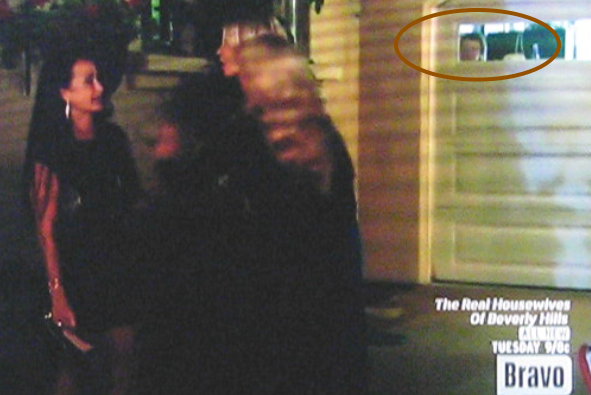
Winner: Vincent ‘Garage Face’ Van Patten for The Real Housewives of Beverly Hills

tommys 2

Nominated: Hank ‘The tranny’s hand walked into my penis’ Baskett for Kendra on Top/David ‘Golem’ Beador for The Real Housewives of Orange County/Mohammed ‘It’s against my religion to express genuine affection for my wife’ Jbali for 90-Day Fiance

Most Impatient Response to a Format Change in an Anthology Series, Prequel Spin-Off, or Homeland

Winner: True Detective (aka Noir is Supposed to be Urban, Idiots!)

Nominated: Fear The Walking Dead (aka Before They Were Zombies)/Homeland (aka Awayplace)/Better Call Saul (aka How The Lawyer got his Spotty Morality)

Most Overrated Drama, Sitcom or Tonally Confused Variation upon The Two Previous Sub-Categories featuring Martin Freeman, Kevin Spacey or Andy Samberg

Note: In this category, the award will be collected by an actor better at playing the role than the actor who actually did*

*Even if Kevin Spacey is in the audience doing his ‘I’m the first ever person to talk to a camera in a TV show’ schtick

Winner: Sherlock (award collected by Lucy Liu)

Nominated: House of Cards (award to be collected by the ghost of Ian Richardson)/Fargo (award to be collected by William H. Macy)/Brooklyn Nine Nine (award to be collected by whoever is near)

Biggest Load of Horseshit Onscreen Explanation of Something That is Clearly an Offscreen Issue in a Trumped-Up Soap Opera, Underrated Popular Literature Adaptation or Reality Show on a Bottom-Feeding Network

Winner: Scandal for the end-of-season held-at-gunpoint cliffhanger and season premiere cold open funeral of Harrison Wright during the domestic abuse court case of Columbus Short.

Nominated: Elementary for the complete absence of LGBT housekeeper Ms. Hudson in the third season while actress Candis Cayne became a visible activist for transgender rights/Marriage Boot Camp: Reality Stars for Hank Baskett’s ‘magic penis’ theory of how he could be caught red-handed in a transsexual three-way and yet not have participated

Worse Kept Secret in a Deathcount-Oriented Drama, Television Awards Show or Publicity-Loving Satire of Advertising

Winner: The Tommys 2015 for revealing multiple spoilers in TV shows not yet caught up on by most viewers by simply listing the nominees

http://www.youtube.com/watch?v=quJDKF9aURo

Nominated: The Walking Dead for posting news of Beth’s death on social media the day that the episode aired/The Emmys 2015 for spoiling the series finale deaths of Nucky Thompson in Boardwalk Empire, Zeek Braverman in Parenthood, Jax Teller in Sons of Anarchy, Bill Compton in True Blood and Raylan Givens’ hat in Justified/Mad Men for having a series ending that was tiresomely ambiguous

Most Unconvincing Justification of a Blatant Freakshow in a Bafflingly Popular Horror Anthology Series, Footage-Shy Reality Show or Modern-Day Version of Public Hanging Entertainment

Winner: Botched for claiming to be a fly-on-the-wall documentary about plastic surgeons

Nominated: American Horror Story: Freakshow because if it’s about an actual freakshow, we can’t get upset at the title/America’s Got Talent for exploiting the lack of a substantive mental health care system in the US

Reality Contestant who Looks Most Like a Popeye Character

Winner: Josh Altman (Wimpy) for Million Dollar Listing: Los Angeles

tommys 3

Nominated: The Situation (Popeye) for Marriage Boot Camp: Reality Stars/Josh Altman (Alice The Goon) for Million Dollar Listing: Los Angeles

Deadliest Watch

Posted in American TV Shows, Behind-The-Scenes, Reality TV, TV Acting, TV channels, TV History with tags , , , , on June 26, 2015 by Tom Steward

Next time you’re wondering why broadcast television still matters, consider A Deadly Adoption. This perfectly pitched pastiche of Lifetime original movies would entertain if accessed from any platform, but aired on Lifetime during the Saturday evening timeslot reserved for premieres of genuine original movies it pushes the limits of hoax or even cultural terrorism. As a Brit with an interest in the history of television, A Deadly Adoption reminded me of Ghostwatch, a pre-recorded BBC TV horror drama from the early 90s styled as a live factual special of the kind that were popular on the BBC around those years.

Nothing funny about this.

Nothing funny about this.

Ghostwatch and A Deadly Adoption exploited their network and timeslot to convince audiences of their veracity, the former as a piece of primetime public service television and the latter as a legitimate original movie ‘inspired by a true story’. Both programmes used, at cross-purposes, a mixture of familiar faces from the genre they were approximating and those that you wouldn’t expect to see. In both cases, the anomalies were supposed to tip off the audience as to the subterfuge. But while widely-known comic actors Will Ferrell and Kristen Wiig nudge the viewers in the direction of parody, the same couldn’t be said for the jobbing BBC character actors that Ghostwatch’s producers naively assumed would lead a Saturday evening audience to conclude it was a drama. Ghostwatch recruited actual BBC presenters of the moment to play themselves while A Deadly Adoption called upon veterans of the casts of Lifetime movies. Again, this had mixed results. The agency of presenters affiliated with a broadcaster reputable for its trustworthiness contributed to viewers becoming disturbed, confused and angry while watching. Having Erik Palladino play the cop he always plays asking the questions he always asks increased the plausibility but was also a satirical detail.

Perhaps the most striking similarity between the two programmes lies in the execution of the deception. Neither seems to let the mask drop, and yet they seem to be pointing you to the inauthenticity all the time. Crucially there is no over-acting, at least none outside the conventions of infotainment or TV movies. In Ghostwatch, direct address to the camera is a two-way street. It’s part of the fraud and also tells viewers to their faces that what they’re doing is tantamount to a hoax. It even has the audacity (and foresight) to pre-emptively chide parents for letting their children stay up to watch. Like any skilled comic actor (I’m put in mind of Jerry Lewis in The King of Comedy here too), Wiig and Ferrell’s faces can simultaneously pay lip service to the earnest drama around them while sporting an inner smirk that lets the audience know they’re in on the joke. While they (wonderfully) break character in the final scene, the leads in A Deadly Adoption are generally content to merely stand near the entrenched clichés and overwrought conventions of the Lifetime movie canon and gesture to them discreetly. The comic agenda, like Ghostwatch’s dramatic one, is effaced.

Another lesson that A Deadly Adoption learnt from Ghostwatch is that the most effective spoof is the one that runs like the real thing. Ghostwatch should have been by rights shot on film but the choice was to make it as if it were at every stage a piece of factual television broadcast live from a studio. That meant both the audience and the ‘actors’ were reacting as they would to the very thing it was not. I think this is also why Police Squad! is such an exquisite send-up of Dragnet, largely because it wasn’t much different in production values. Apparently, some BBC executives didn’t get what the Ghostwatch directors were trying to do and rejected some of the shots as cheap and amateur. A Deadly Adoption is going for the clunky symbolism and magazine-plate portraiture of the Lifetime in-house style, not trying to improve on it. To expect A Deadly Adoption to live up to the cinematic comedy of Ferrell, Wiig and director Adam McKay’s previous work is to miss the point. It’s a clever move, and one that demonstrates confidence in the art, that the movie was poised to allow audiences to occasionally forget it was parody.

He ain't 'fraid of no disgruntled viewers.

He ain’t ‘fraid of no disgruntled viewers.

Ferrell and Wiig’s IFC mock-miniseries The Spoils of Babylon played a similar game, invoking a phony industry backstory through trailers and faking-of documentaries, and playing on a network that revives obscure cult media. However, I stick with my Ghostwatch comparison. The aim is never truer when you become your target.

Sense of Schumer

Posted in American TV (General), American TV Shows, Reality TV, TV Acting, TV advertising, TV channels with tags , , , , , , , , , on May 27, 2015 by Tom Steward

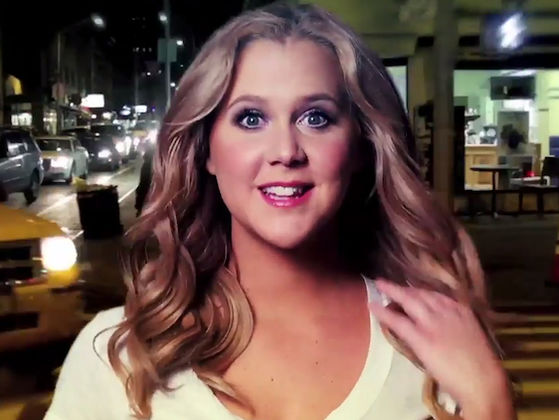
If you have to get sick of seeing someone’s face on TV, make it Amy Schumer’s. Why? Well, firstly because being sick of seeing Schumer’s face seems to be part of her schtick. Every sketch on her Comedy Central show Inside Amy Schumer is preceded and followed by a close-up of Schumer’s face quick-scanning the streets of New York before the camera CSI zooms into her eye. Her face is the lifeblood of every sketch, and even the (mandatory) Twelve Angry Men parody episode in which she did not feature begins with her face dominating the screen. It’s also because Amy Schumer’s face is interesting to watch. Eschewing the hyperreal expressionism of her peers (not that there’s anything wrong with that – Key & Peele are as cartoonish as they come), Schumer’s face is a flickering deadpan, oscillating between irony and approval of the characters she plays and those she interviews.

Facial Schumer!

Facial Schumer!

Which is good news because Amy Schumer is everywhere. In fact, it would be perfectly possible to watch nothing but Amy Schumer on TV these days. There’s her weekly Comedy Central show which seemingly plays throughout the night (uncensored) on the network, her guest appearances on every late-night talk show around, her work on The Bachelorette (which ABC executives want to expand into a regular thing), and trailer-length promos for her upcoming movie vehicle Trainwreck in the ad breaks. We’ve seen this kind of momentary ubiquity before, of course, but rarely with a performer of such substance. That may be because Schumer is able to do provocative and powerful material while making it sound like a bunch of harmless Seinfeldisms. She even makes light of the issue-based thrust of her comedy, passing off most sketches as a PSA-gone-wrong, while underlining just how culturally urgent her intervention into modern life is.

http://www.youtube.com/watch?v=1sq4gVZ4cBc

Last night, Schumer confronted the alleged crimes of Bill Cosby. The heavily corroborated sexual assault allegations against the veteran comic seem fair game for comedians now and indeed it may be easier for a white female comic to talk about this topic than, say, the black male one who broke the story. It was the level of discussion that was remarkable. Refusing to debate the existence of the crimes (for, as she points out, there is no debate to speak of, despite all legal disclaimers), the court-based sketch was instead a more sophisticated exploration of how nostalgia and cultural comfort food (both real and symbolic, since this was the man who advertised Jell-O pudding pops) interfere with our sense of justice and gender equality. This is really what we struggle to reconcile, not crime and perpetrator. But this isn’t the first time Schumer has put her finger on the problem.

She coolly and pleasantly took on perceptions of women ageing with Tina Fey and Patricia Arquette celebrating Julia Louis-Dreyfus’ ‘last fuckable day’ as decided by the media. She did an almost Sesame Street-esque scatological number on pop culture’s fetish for women’s sticky-out asses with a hip-hop music video set to the rhyme ‘milk, milk, lemonade, round the corner fudge is made’. Schumer was there to pinpoint the pathetic paradoxes of middle-class women pole dancing while condescending to women who work as strippers as well as female employees being obliged to be ‘cool with’ whatever their male counterparts want to do while being paid half the salary. Bravely she slayed a sacred cow of American comedy, the borderline-rapist late-night talk show host, and perversely she’s seemed to increase her appearances on these kinds of programmes as a result. She’s so popular that even her targets want to be seen with her.

Amy Schumer's parody of late-night...oh wait, that's just her on Letterman!

Amy Schumer’s parody of late-night…oh wait, that’s just her on Letterman!

It would be too easy to say that Amy Schumer’s success is down to the sugar-coating she puts on her social criticism, but it’s hard to deny that her self-aware baby-face mannerisms (see, the face again!) makes what she does much more palatable. But it’s not the cutesy-girl disguise that comedians like Sarah Silverman have used to deflect attention from their obscenity and controversy. It’s more direct than that, like having a conversation with someone who seems perfectly nice and you realise hours late they completely destroyed you. That’s what translates into mainstream entertainment so well. On The Bachelorette, she exposed the egregious insecurities of a male contestant without ever saying a cross word to him. She’s also not afraid of plumbing the lowest depths of entertainment, like dirty jokes and toilet humour, to get what she wants. The time of overkill will come, so enjoy her just killing it.