Archive for the TV Culture Category

The Endless Summer

Posted in American TV (General), American TV Shows, hiatus, Reviews, TV channels, TV Criticism, TV Culture, TV History with tags , , , , , on September 6, 2015 by Tom Steward

I’m back after being away for the summer…just like TV! Or so I thought. Summer used to be a dumping ground for cancellation fodder, but something has changed. Many of the year’s most important programmes now air over the summer and momentous TV events are just as likely to play in the spring and summer as fall and winter. No doubt some of this is down to cable channels disrupting the old network seasonality, but it’s becoming increasingly apparent that TV critics can’t take summer off any more if they want to stay current. So what’s been happening?

Colin Farrell after reading the reviews of True Detective Season 2

Colin Farrell after reading the reviews of True Detective Season 2

True Detective Season Two

Another reason why TV critics can’t go away for summer is because they’d all miss doing their favourite thing – bashing the follow-up to a universally praised piece of television with no particular motivation other than convention. Season Two of HBO’s anthological police procedural was torn to pieces by most critics, with so-called fans and lovers of quality television just as vociferously negative. It really has nothing to do with the season itself, just a tired old game that critics like to play, one that immunised us against the self-evident pleasures of Treme simply because it followed The Wire and even made us question the quality of The Wire when it entered its second season. Worryingly, it suggests critics and viewers of the serial age have serious trouble evaluating television when it deviates from formula, and really aren’t ready for the anthology revolution happening in TV.

Jon Stewart leaves The Daily Show

After fifteen years as host of The Daily Show on Comedy Central, Jon Stewart could simply be remembered as the person that brought the art of fake news – cultivated in Britain by Armando Iannucci and Chris Morris – to the US. But he leaves behind him an even greater legacy. When TV news polarised into partisan platforms with MSNBC on the left and Fox News on the right, Stewart’s Daily Show was just about the only source of news that had any semblance of objectivity (as rocky a term as that is) left to give. He was trumped by his own protégés. First Stephen Colbert, who transformed himself into a living doll of satire, viscerally exposing the ugliness of the media conservative while manifesting the winning naivety that makes them attractive. Then John Oliver who – with the help of HBO’s unsegmented formats – brought satirically slanted news reporting into the realms of investigative journalism and political activism.

Cilla Black/Rowdy Roddy Piper (delete as nationally appropriate) died

It’s only accident that these deaths occurred in summer, but taken together they are tantamount to transatlantic television tragedy. The British light entertainment host and Canadian WWF star died within a week of each other, which means nothing until you put together that their stretches as reigning TV personalities from the 1980s to the early 2000s is virtually identical and that they generate the same fuzzy nostalgia (in warmth and confusion alike) from the generations that grew up watching them. For me, it was a sharp reminder of how separate American and British cultures can be. Nobody mentioned Cilla – a contemporary of America’s beloved Beatles – stateside. Roddy Piper remains unfamiliar to me…and to all 90s British kids who didn’t have Sky.

Netflix Summer

The charms of hyper-inflective prison comedy-drama Orange is the New Black continues to elude me, but it’s Netflix’s most valuable commodity and the June release of its third season was not an anomaly. The star-studded prequel series to cult comedy movie Wet Hot American Summer was made available in July as was season two of the critically acclaimed cartoon BoJack Horseman. Orange is the New Black was even streamed a few days early, just to remind Netflix subscribers that they can do shit like that. It’s pretty cocky behaviour, and somewhat backfired when fans who had booked time off work to binge-watch the season found themselves in a socially impossible situation. I don’t think this surge of summer activity at Netflix (nor the summer-theming of its releases) is at all a coincidence, more an attempt to dominate TV distribution in these months of the year. For all their talk of liberating viewers from the tyranny of scheduling, Netflix keeps subscribers under the yoke of its idiosyncratic calendar.

Fear The Walking Dead is set in LA...it's going to be a short show!

Fear The Walking Dead is set in LA…it’s going to be a short show!

Fear the Walking Dead Series Premiere

The unwanted spin-off of AMC’s The Walking Dead debuted in the last days of summer. As True Detective also switched from a rural southern locale to the L.A. metropolitan sprawl, I wouldn’t expect any glowing reviews forthcoming…

Peak Viewing Time

Posted in American TV (General), American TV Shows, TV Criticism, TV Culture, TV Dreams, TV History, Unsung Heroes with tags , , , , , , , , , on May 13, 2015 by Tom Steward

There are TV shows we talk about too much. But Twin Peaks isn’t one of them. I’d say the endless chatter about David Lynch and Mark Frost’s early 90s ABC drama by those besotted of the show (whom I suspect have cherry-pie-picked episodes and not endured the interminably drawn-out final quarter) was better spent on less-discussed yet equally worthy TV from this era…if it weren’t for how crucial Twin Peaks is in the history of television. Unusually for a show that ran for only two years and thirty episodes, no-one has ever shut up about it. The supreme production values and self-conscious artistry have ensured that there is never a reason not to re-air and re-box set the programme. Even compared to other 90s TV shows, which generally stand up well visually (especially compared to the previous decade), the colour, focus and cinematography are configured in such a way that HD could not possibly improve upon it. There’s been more talk recently because it’s the 25th anniversary of the series (although there always seems to be an excuse for a retrospective!) and plans are afoot for a revival of Twin Peaks on Showtime. However, if the public statements of Lynch and most of the cast are anything to go by, the revival might have as much to do with Twin Peaks as 10 Things I hate about you does with The Taming of the Shrew.

A title colour only used in 90s television!

A title colour only used in 90s television!

Twin Peaks set in motion models of television storytelling that have been influential ever since it was on the air. Small-town quirk and paranormal procedural would dominate American TV throughout the 90s, through the ‘twin peaks’ of Northern Exposure and The X-Files. The legacy endures to this day with series like Parks and Recreation, Wayward Pines, Fringe and Grimm. The long-form murder mystery has been a staple of quality television internationally in recent years, with Denmark’s Forbrydelsen, Britain’s Broadchurch and America’s True Detective. Indeed, if HBO opened the floodgates of American quality television with The Sopranos, then Twin Peaks’ dream states and cine-literacy were an important precedent for the show. More broadly, Twin Peaks cemented many ideas that we now take for granted. It showed us that fantasy and realism can live alongside one another in TV without contradiction and that every character in an ensemble (no matter how ridiculous) deserved an inner life and a separate storyline to boot. Twin Peaks remains the benchmark for what constitutes good television. When Louis C.K. tried to generate an art movie feel for his sitcom Louie, he went to none other than David Lynch as guest star (and director in spirit) for a 3-part season finale. In 2010, mystery drama Psych aired an episode called ‘Dual Spires’ featuring cast members and storylines from Twin Peaks, acknowledging the longevity of the show’s mythology as TV to aspire to.

If we dwell too much on the originality of Twin Peaks (as a recent Radio 4 documentary did), we are in danger of forgetting how much the show took from television. References abound to classic American series from Dragnet to The Fugitive (complimenting the mid-century Hollywood intertextuality). As the meta-show Invitation to Love indicates, the characters and storylines in Twin Peaks could have easily come out of a daytime soap. But Twin Peaks was also acknowledging how soaps had graduated to primetime in the previous decade, with shows like Dallas and Knots Landing. In fact, the season one cliffhanger bears an uncanny resemblance to the ‘Who Shot J.R.?’ storyline in Dallas that captivated TV audiences exactly a decade before. For all that is made of David Lynch’s ‘cinematic’ influence on the show, Twin Peaks was co-created by Mark Frost, whose formative experience had been writing for television, notably on Steve Bochco and Michael Kozoll’s soap copera Hill Street Blues. Twin Peaks is as remarkable for its adept handling of serial narrative arcs and gradual character development as for its experimental audio-visual style, and there is a clear lineage from Frost’s work on the continuing ensemble drama Hill Street Blues to his teleplays for Twin Peaks. But Lynch and his signature composer Angelo Badalamenti clearly understood the importance of sound to television, creating a soundscape that both compliments perfectly and stands terrifyingly alone from the image.

...or sooner!

…or sooner!

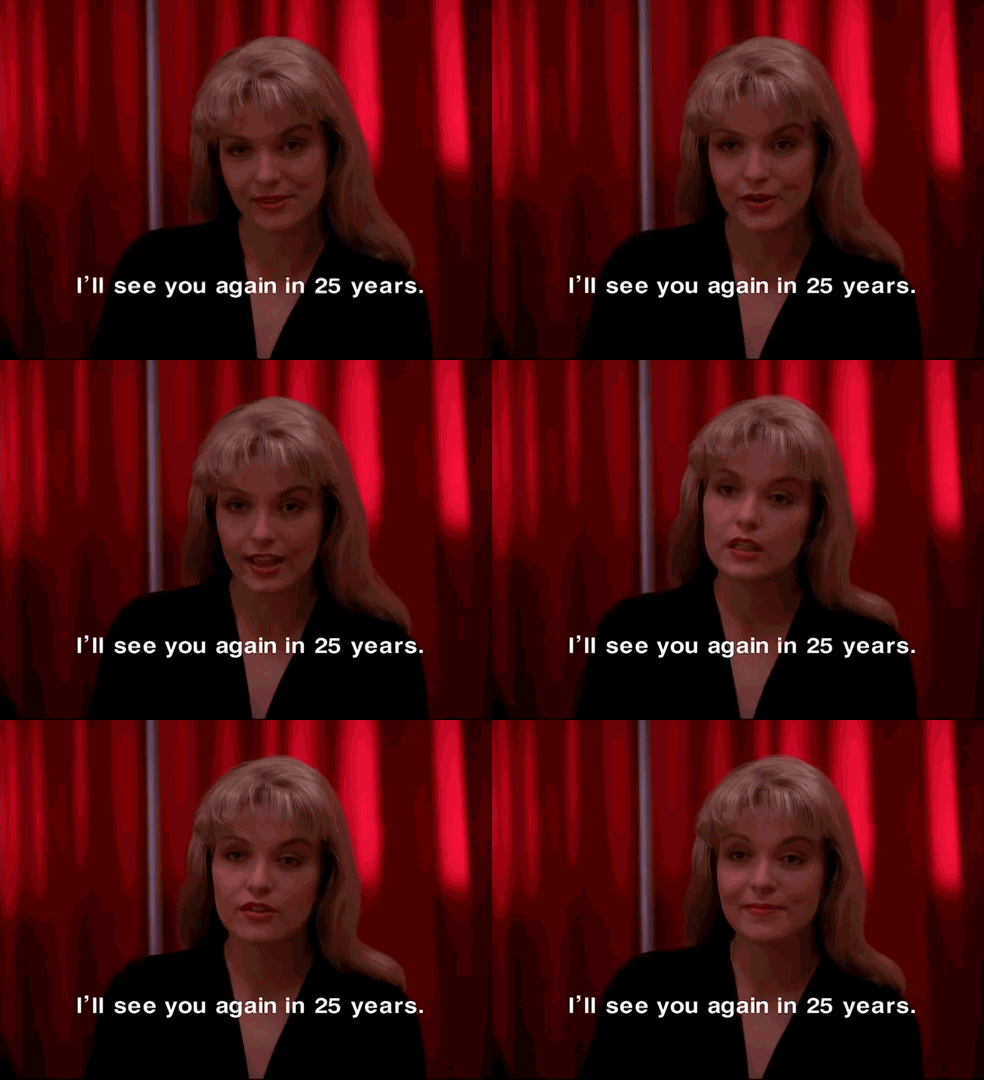
For better or worse, Twin Peaks stands for something bigger than it is. It is the nucleus of a fine art television and a prism through which to see the medium. Laura Palmer said she’d see us in 25 years. She was 25 years over.

Thai TV

Posted in BiogTV, Internet TV, Local TV, Reality TV, Touring TV, TV channels, TV Culture, Watching TV with tags , , , , , , , , , on February 4, 2015 by Tom Steward

I’m sure Thai people are as baffled that we spend our evenings watching millionaires shoot ducks (I’m talking about both Duck Dynasty and Downton Abbey here) as I was with some of the curious and absurd programmes I saw in the country while I was visiting last month, so please take what follows with a pinch of cultural relativism. As I’m pig-ignorant about much of Thai culture, I’m going to stick with what I know and talk about Thai TV’s engagement with English language and culture.

Ridiculing Southeast Asian television is a rite of passage for popular TV critics. In my childhood, there were at least two (probably more) shows like Clive James on Television and Tarrant on TV where westerners who should know better giggled and guffawed at clips of Japanese game shows (now British TV from that era is our source of the very same mockery). I’m not much interested in this glasshouse criticism – though it’s hard to let go of the Thai TV show where they did nothing but pick up pens for half-an-hour – but I still have that same voyeuristic fascination as those orientalist broadcasters did when I was watching Thai television on my recent trip to the country. Bizarrely (though maybe not to Edward Said), it’s those moments of overlap with the English language and culture that are the strangest.

A case in point is English Delivery, a primetime educational programme using the comic talents and general enthusiasm of its hosts to teach English to viewers, and teach it well. It not so much about learning English words (and my limited experience of Thai people suggests they already know a lot) but getting the drop on misunderstandings resulting from translating Thai into English. To wit, the hilarious consequences that might ensue from confusing ‘pig’s balls’ with ‘pork balls’. As you can see from the examples they use, it’s more about conveying aspects of Thai culture to English speakers so they can understand it than learning about the culture or customs of English-speaking nations. That’s more than likely because so much of the Thai economy depend on tourists who speak English, or those that speak it so they may be understood by Thais.

I’m not saying that Anglo-American culture (well English culture, well English sport, well English football, well Manchester United) isn’t a big deal in some parts of Thailand, like Bangkok where we visited, but more often it feels like a policy of ‘do what you want…but give it an English name’. I was alerted to Don’t Lose the Money because I could read the title (and even when I know the Thai word it often isn’t recognizable in writing) but the show itself was simply a succession of contestants running back and forth between piles of money and empty boxes trying to carry one to the other with the use of head magnets. Increasingly we have game shows like this but we ruin their uncomplicated fun with ironic snark or over-complicated rules, or Richard Hammond.

I wasn’t surprised that when we got to the touristy island of Ko Samui there was so much European and American TV in our hotel satellite services. What did take me by surprise was the exchange of movie channels like HBO and Cinemax for a feed of someone’s laptop playing jittery, low quality streams of recent American blockbusters simply called ‘Island’. This became increasingly evident when we would return to our room to find a Windows shutdown message on the screen, and we knew exactly how long each movie had run for because whichever tech-savvy teenager was running it left the arrow and all the player information on the screen. With the trade in pirate DVDS they do in Thailand, it makes business sense.

HBO Thailand!

HBO Thailand!

Not all my jarring experiences of watching Thai TV were in English. At certain, seemingly random, points of the day, whatever was on TV was suddenly interrupted by choirs of fidgety schoolchildren singing in tribute to ‘The National Council of Peace and Order’, which is the name by which the military junta that has run Thailand since mid-2014 goes. It’s a startling reminder that you’re in a country under military rule, something G and I didn’t get a sense of as tourists – until we went to places where military officers were being served and the waitresses reacted like they were all Justin Bieber – and that TV is still (overtly) a propaganda medium in many countries. Come to think of it, the titles were in English.

Home Movies

Posted in American TV (General), Reality TV, TV channels, TV Culture, TV History, TV News with tags , , , , , , , , , on January 7, 2015 by Tom Steward

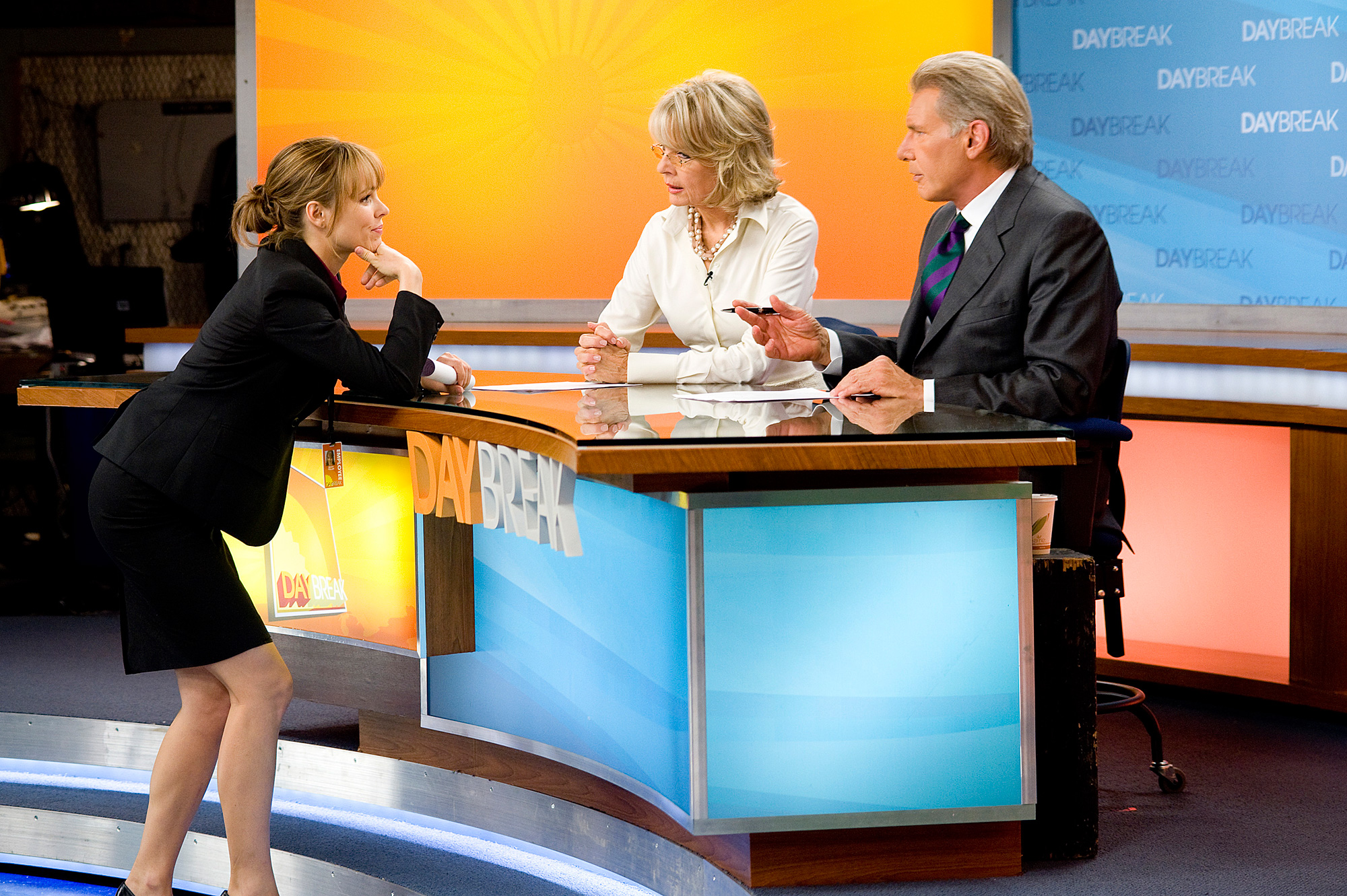
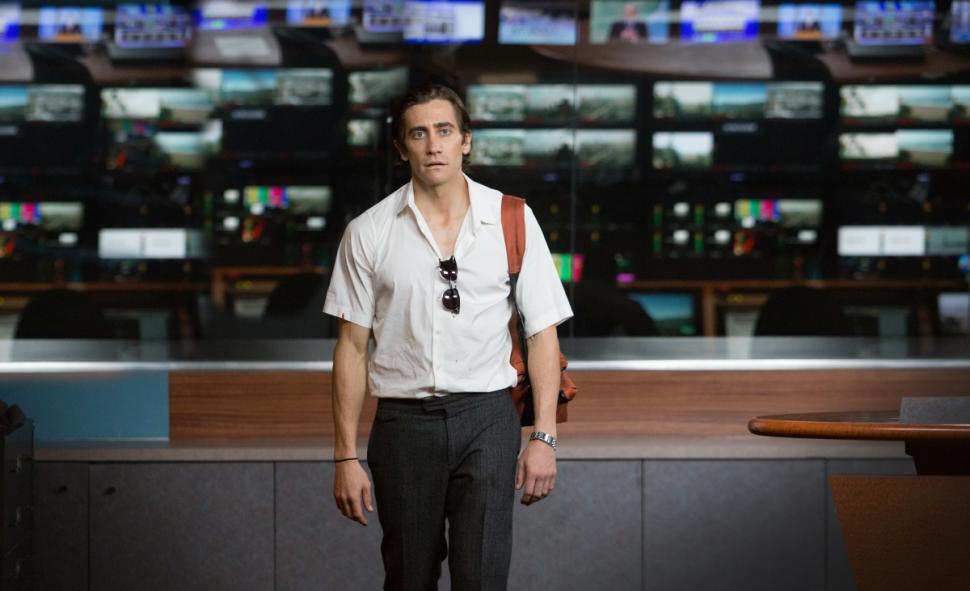
Though I’ve devoted the last decade of my life to television (in both work and play!), movies were my first love and they’re still at the heart of what I write and do. Consequently, I’m often asked what the best movies about television are. I’m always unsure what I’m supposed to evaluate; the quality of the movie or how well it deals with TV. The two very rarely go together. For instance, my first instinct is to say Morning Glory, a mature TV news satire that neither skirts around the rampant commercialism of American television nor uses it as a brush to tar the medium with. But the acting is regularly terrible, the (non-TV related) storyline lousy, and the ham-fisted direction really kills the comedy. But as a movie about television, I infinitely prefer it to the pious nostalgia of Good Night and Good Luck and TV writer Paddy Chayefsky’s glorified revenge pic Network, as superiorly artful as those two films are. So I was conflicted in my feelings about the TV news thriller Nightcrawler.

...not to be confused with the porn parody of the same name!

…not to be confused with the porn parody of the same name!

Both Jake Gyllenhaal and Rene Russo give remarkable (and remarkably unusual) performances. The script is utterly solid, something which cannot be underestimated in contemporary American cinema. The suspense elements are well-handled, and the photography mixes the best of cinematic vistas with the seedy beauty of urban photojournalism. I thoroughly enjoyed it, which is a rare experience for me in the cinema (seeing a new movie). I have no issue with the portrayal of American TV news, as it clearly is as base, gruesome and sociopathic as the movie suggests, and just as culturally defunct and laughably moribund. But it’s a narrow view of television that is loath to admit the frequency with which contemporary TV beats out cinema for complex drama and art and unfairly highlights its tabloid extremes. It also suggests that the capacity for TV to be live (not that it really ever is anymore!) is a crutch to its expression that makes TV necessarily artless and sensationalist. But as far as movies about TV go, these kinds of representations are old news.

Movies about TV almost always focus on the production of non-fiction (typically news), stress the live aspects of television broadcasting (regardless of how live TV is at any given historical moment), and never fails to mention any quality of the medium that might situate it as inferior to cinema, like its commercial interruptions or diminished screen size and image quality. Comment me if I’m wrong, but all movies about TV have at least ONE of these three typicalities. What’s also significant is how ahistorical this cinematic portrayal of TV is. You could understand it when TV was the new kid on the block and the film industry wanted to play up the disparity between fulfilment and experience in consumption of the two moving image media (although historians question whether we can ever see the two so separately). But it doesn’t really make sense when you consider that film and TV industries have for large swathes of their history been interrelated economically under dual or conglomerate ownership. What is the advantage of saying TV sucks then?

It’s not a riddle I’ve particularly solved, except that the mythmaking of movies depends so heavily on the distinction of the cinematic experience that it behoves the industry to promote the fairytale of exceptionalism in the face of overwhelming economic, technological and cultural evidence to the contrary. I’m pretty sure that hijacking the feeling of live TV in these movies derives from a kind of jealousy about the immediacy and presence that the medium can cultivate, as in Tootsie which go to extreme expository lengths to make a broadcast of the intra-diegetic soap opera live. With bigger, clearer home sets and smaller, digital ‘studio’ theatre screens as well as a parity of commercial content and product placement in both new movies and TV transmissions, cinema hasn’t a leg to stand on. It is, however, a strategy that boutique television networks also use to distinguish themselves from everyday TV flow, judging by the number of tiny, flickering sets we see on HBO and AMC shows in the service of dispensing an endless barrage of homogeneous crap.

Fishing for a story!

Fishing for a story!

It may be time for the movies to start acknowledging some of the realities of contemporary television. It wouldn’t be hard – just ask the many actors who now regularly moonlight between the two! TV is better than its news output and infinitely more interesting than its increasingly rare live transmissions.

Watching TV With Britons Part 1: Eee By Glum!

Posted in Americans watching British TV, British Shows on American TV, Local TV, TV channels, TV Culture, TV News, Watching TV with tags , , , , , , , , , on December 17, 2014 by Tom Steward

Goodbye! Like Seinfeld’s Elaine upon encountering a caring Jerry, selfless George and talented Kramer, I’m in the bizarro world. I started this blog as a Briton casting a foreigner’s eye over American television and the Americans who watch it. Now British television is foreign to me and the viewing habits of UK audiences are as curious to my mind as America’s once was. Those of you who read the blog regularly will know that I am now a resident of the United States (or have assumed I am the worst pirate in TV history!). While I’m still in the privileged position of returning to my homeland without the jarring feeling of alienation felt by most ex-pats, I cannot say the same about British television. It is not simply a question of being out of touch, but experiencing the TV I knew from the outside in. I see the problems more clearly, but I am less forgiving of them than a native now. Here’s Part 1 of my round-up of the TV I watched while I was back in the UK these past few weeks, which looks specifically at what I saw of and about the North while away:

BBC Northwest Tonight (BBC1)

If I had ever forgotten what a place of horror the North can be, I was scared straight by the top item on the local news about a priest who was arrested for murder. There was also a sub-plot about the various presenters switching roles that went clear over my head, and reminded me that local TV news is more parochial soap opera than neutral information source.

Remember Me (BBC 1)

Python Found In Sheffield!

Python Found In Sheffield!

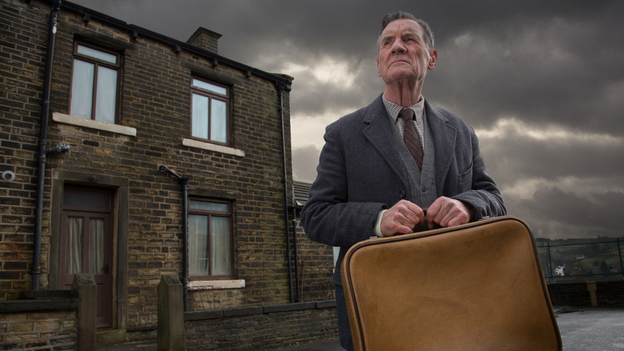
Seasonal ghost stories are an overlooked tradition in British television, as is the utilisation of former Python Michael Palin as a TV actor. This Sunday-night 3-parter was a welcome return for both, and brought the haunting beauty of the Yorkshire coast to half-light. I’m always complaining about the lack of Britain’s multiculturalism in our flagship drama and South Yorkshire’s substantial Asian population should be represented in any depiction of the area, as it is here. But I couldn’t help feeling there were underlying xenophobic anxieties about immigration in the way the story unfolded (incidentally rather in keeping with the current normalisation of anti-immigration discourses in British politics) which undermined the diversity. It’s one thing to show the social harmony between the elderly white and Asian communities in Sheffield, another to envelope that in imagery concerning the vengeful spirit of an Indian colonial wreaking havoc on British shores.

Inside No 9 (BBC 2)

There's No Escape To Narnia In Inside No 9!

There’s No Escape To Narnia In Inside No 9!

Horror comedy writing-acting duo Steve Pemberton and Reece Shearsmith may have left the North behind after the gloriously gothic sitcom The League of Gentleman, but their anthology-based follow-up to the macabre melodrama Psychoville is easily their best work yet. Classic British horror movies were as influential to the pair’s writing as the variously horrifying Northern towns they grew up in. But in this series of one-offs centred around buildings and rooms that bear the number 9, it’s easier to detect the legacy of great British dramatists like Harold Pinter and Mike Leigh than Hitchcock and Hammer.

Through The Keyhole (ITV)

This was once a beloved and genteel daytime panel show presented by British institution Sir David Frost in which middlebrow celebrities tried to guess which other middlebrow celebrity a house belonged to. It was easy-going, bland and offended no-one. To my horror, it’s been revived as a platform for crass Yorkshire-born comic Leigh Francis to showcase his abhorrent character Keith Lemon and brand of vulgar anarchy. Imagine if the cast of Jackass suddenly took over from the current hosts of 60 Minutes and you’ll have some idea of how inappropriate a mix of star and format this is. Tabloidization of classic British television standards has been and gone, but this is a new stage of perversion and travesty that befits a dystopian satire!

The Fall (BBC 2)

The Fall Of British Television

The Fall Of British Television

Belfast is a bleak yet glamorous backdrop for the most unremittingly downbeat police drama in TV history. Not even sexy elf Gillian Anderson can bring much more than the odd dry moment of wit to proceedings, as Christian Grey-in-waiting Jamie Dornan stalks the city’s streets and homes as a sexual serial killer and freelance social worker. Authentically Northern Irish, it also tops the genre for storytelling innovation. Dornan’s Paul Spector is as much the hero as the detective would be in any other cop show, making for deeply uncomfortable viewing. But, like the North, it remains gruesomely compelling.