Archive for the TV News Category

Late Risers

Posted in American TV (General), American TV Shows, TV Culture, TV History, TV News with tags , , , , , , , , , on October 11, 2015 by Tom Steward

Over the summer, two of the most important seats in late-night television were vacated. Unlike last year, when NBC’s The Tonight Show promoted Late Night host Jimmy Fallon and CBS’ The Late Late Show traded like for like – to maintain the quota of British late-night hosts at exactly one – each of the replacements was not the heir apparent. Host of CBS’ Late Show David Letterman was succeeded by Stephen Colbert, who came in from Comedy Central, having been host of The Colbert Report and contributor to The Daily Show, and not long-time Late Late Show host Craig Ferguson, Letterman’s protégé who had, like his mentor, smashed the orthodoxy of the genre. At least Colbert was recognized as a great innovator and radical presence on TV – as well as a nifty enough entertainer – when he was awarded the Late Show crown. Utterly unlike newcomer Trevor Noah, who was bumped several pay grades when he went from Daily Show contributor to taking Jon Stewart’s job as host. In fact, Colbert was the more likely of the two to take over The Daily Show. Former contributor and frequent guest host John Oliver was a shoo-in to take over until HBO made him an offer he couldn’t refuse. After that, the choice was anyone’s guess. But Noah was no-one’s.

That's Colbert baby!

That’s Colbert baby!

Noah and Colbert have wildly different briefs. To emulate Letterman, Colbert is obliged to be as challenging and groundbreaking as possible while Noah is the steward of a culturally necessary ritual, and cannot dismantle its beloved format. As such, Noah might seem to have the harder job. But Colbert’s fluent presentation masks his deft deconstruction of late-night talk formula. He has replaced the monologue with political analyses. Guests tend to be public figures with cultural significance rather than celebrities hawking their wares. It’s a forum for news and current affairs and a showcase for high culture. Fallon’s breakthroughs by contrast have been primarily vaudevillian and even Ferguson’s reinvention of the genre as burlesque slapstick went in the opposite direction to Colbert. It’s not just the fluency with which these changes have been implemented, but also how assured, joyous and endearing Colbert is while doing it. This he may have learnt from Fallon’s head-start, but Colbert pursues it the name of something far more significant. The sad irony is that Colbert is exactly the personality The Daily Show needed to preserve its legacy, while Noah is not. Two weeks in to Noah’s reign and the added value of Jon Stewart’s easy-going charm has finally been calculated in full. A solid comic mind is simply not enough.

Stewart covered a multitude of sins with his asides and interludes of self-mocking, and without them we can see just how little content there is in the average Daily Show news item. Noah has exposed this, but I don’t level the blame at him. It takes a particularly kind of host – a Letterman or Carson, for example – to engage the audience without losing them when holes appear in the format. Noah has his long, pregnant smile, but to the live studio audience and the viewers at home, it reads as a stumble or a stall, even in the strongest segments like his brilliant mash-up of the Trump mythos with that of African dictatorship. Moments like this reassure us that the quality of mock-journalism has not dropped off, but in this case a pair of safe hands will not suffice. We need someone who can convince us they’ve revolutionized The Daily Show when nothing has changed, not a competent caretaker. Conversely, Colbert’s Late Show coup seemed bloodless, yet was a conceptual genocide. Fallon has proved it’s possible to succeed in late-night television by being a vessel for the greatness of others, and indeed Stewart leaned on Oliver and Colbert in exactly that way when they were Daily Show contributors, so Noah cannot be written off yet.

Oh no, they forgot to change the titles!

Oh no, they forgot to change the titles!

The Daily Show and Late Show are probably the two late-night talk formats that matter most culturally – with the possible exception of Neil deGrasse Tyson’s StarTalk. The former is so because it is the closest America has to a reliable news source; the latter because Letterman made it a hotbed of comic artistry in the 90s. But because American TV is an inherently commercial animal, they require a certain kind of salesmanship to help audiences buy into them. Colbert’s hate-resistant persona is the perfect medium while Noah’s workmanlike anonymity may not be, at least not in the long-term. But can Colbert sustain these unimaginable highs?
The Pig Country

Posted in American TV (General), American TV Shows, Behind-The-Scenes, TV Culture, TV History, TV News with tags , , , , on October 4, 2015 by Tom Steward

British and American TV are so rarely united, making it doubly surprising that there have been two stories in as many weeks relating to genitalia in the television cultures of both countries. Honestly, pigs might fly and the Old West will rise again before we see another coincidence like this.

Footage from The Conservative Party Conference

Footage from The Conservative Party Conference

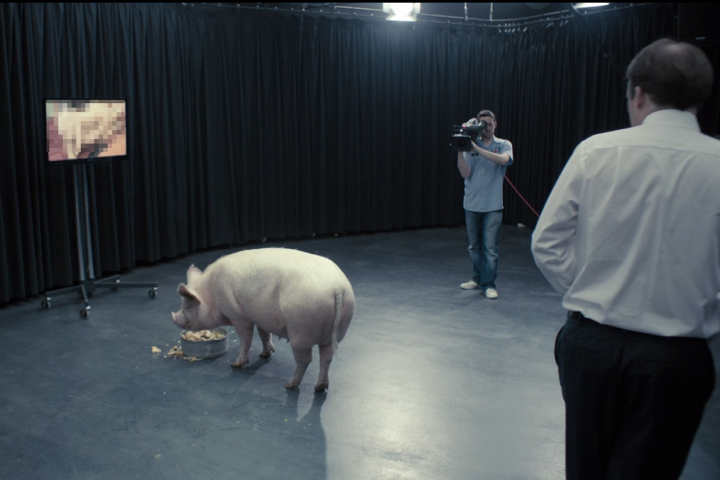
On September 20th 20(and)15, British national newspaper The Daily Mail published extracts from an unauthorised biography of current Prime Minister David Cameron co-authored by passed-over former Deputy Conservative Party Chairman Michael Ashcroft. In them contained a story that as a student at Oxford University, Cameron had put ‘a private part of his anatomy’ into a dead pig’s mouth as part of an initiation ceremony for The Piers Gaveston Society (some paraphrasing of Groucho Marx’s famous ‘club’ quote is surely necessary here!). Remarkable as this allegation was for a sitting head-of-state – outside of Italy – it was not the first time such an idea had been nationally circulated. In 2011, British TV Renaissance man Charlie Brooker launched his modern-day answer to The Twilight Zone, a technology-fearing anthology made of speculative fiction called Black Mirror, the first instalment of which concerned a modern-day British Prime Minister blackmailed into having sex with a pig live on television to meet the ransom demands of a royal kidnapper. Like David Bowie after liquid water was discovered on Mars, Brooker was hounded by the press and social media following this story, asking him whether his television play was inspired by real rumours of which he had foreknowledge.

Brooker says he didn’t, which I for one believe wholeheartedly, namely because you don’t have to know the actual circumstances of such an act to imagine that it would be exactly the kind of thing a person of that background would do. I’m not convinced that the story – hashtagged ‘Piggate’ thus throwing agricultural livestock message boards into a state of disarray – is anything more than a revenge blow from an embittered ex-colleague but we know what absurd extremes the hazing rituals of fratboys at elite universities – on both sides of the Atlantic – can go to, and Cameron’s posh pillaging of the social contract as a university student has been well-documented. Even the most rudimentary scandalmonger could put a scenario like that together from Cameron’s backstory. Brooker, too, was trading off the fact that we as a nation could easily believe our Prime Minister was and has been capable of such things. My mentor in all things televisual Helen Wheatley observed that the morning after the Black Mirror episode ‘The National Anthem’ was first broadcast, it genuinely felt as if Cameron had fucked a pig the day before. It’s that vague aura of authenticity that both Brooker and Lord Ashcroft mined.

In the last couple of days, it has been reported that extras on the set of HBO’s reboot of the 1970s cult sci-fi western Westworld have been compelled to sign a consent form specifying numerous and elaborate acts of sexual contact and nudity, including the touching of each other’s genitals. Some extras apparently complained to their union SAG-AFTRA, who are currently investigating the matter. Those who know HBO (in the Biblical as well as the binge sense) won’t be surprised that one of its shows should contain such graphic content, but the concerned parties have different views about how bound (this is not a metaphor) supporting artists are to such demands contractually. I as a TV blogger (and potential future SAG-AFTRA member) am obviously fascinated by this story, but a lot of viewers I’m sure simply don’t want to know how the organic sausage is made. Great art and human exploitation have always gone hand-in-hand, and, to many, I’m sure this revelation makes Westworld seem like a far more interesting prospect than previously. Also, this seems the thin end of the wedge, providing everyone knows their rights and has the ability to pull out of the project at willy. Penis.

'While you're down there...'

‘While you’re down there…’

If there’s a theme here, it’s indecent exposure. Private parts have been unlawfully displayed in public. Whether it’s bestiality libel or union disputes, these kinds of stories are not for public consumption unless in fictional form. HBO needs to push boundaries on sexual representation to be challenging, while the inhuman behaviour of the Cameron-led Conservative government needs to be challenged for what it is, not what it represents satirically in some bizarre Animal Farm-like parallel reality. Piggate didn’t lend any credence to Black Mirror, rather the reverse. And sex acts and nudity on HBO is simply not a news item!

Hidden Jenner

Posted in American TV (General), American TV Shows, TV channels, TV News with tags , , , , , , , , , on April 29, 2015 by Tom Steward

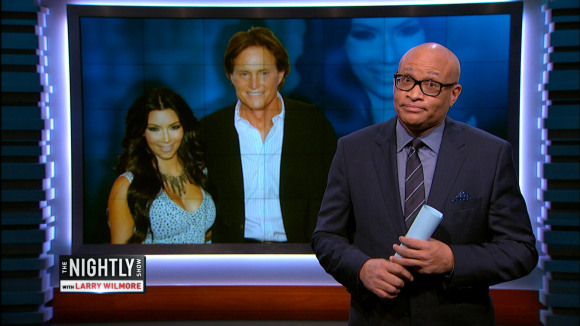
There was an unexpected role reversal in the world of TV news this past week. News satire – an institution that regularly attacks the bigotry and ignorance of network and cable news coverage – was itself accused of bigotry and ignorance in regards to transphobia, while a primetime network news special about transgender issues (albeit in the form of an interview with Bruce Jenner, hence why TV is interested in the first place) was widely praised for its sensitive handling of the topic. On Monday, The Nightly Show with Larry Wilmore – Comedy Central’s bland replacement for The Colbert Report – aired a segment ridiculing Jenner’s identification as a woman and chosen sexual orientation as abnormal, which were made to seem even more grotesque by comparing her to Pinnochio. This was responding to Friday evening’s 20/20 special on ABC, in which the former Olympian and Kardashian was interviewed by Diane Sawyer about being a man trapped in a woman’s body her entire life and her decision to transition to a woman, which she has been doing piecemeal for years.

Methinks Larry doth protest too much!

Methinks Larry doth protest too much!

At the heart of the controversy surrounding The Nightly Show was Wilmore’s apparent confusion about Jenner’s desire to become a woman yet having male genitalia and preferring women sexually. Now, if this seems to be representative of the billions of people around the globe who have spent their lives knowing they are a different gender than the one assigned to them and have, for reasons too numerous to mention, yet to make their (complete) transition, it’s because that’s exactly what it is. It’s hard to see where the confusion, or indeed the comedy, lies in pointing out these tragedies. If anything, this information helps us make sense of Jenner’s personal (mostly surgical) life choices in recent years, and there is, of course, the little known fact that what Bruce Jenner wants to be or do in her life is none of anyone’s fucking business. Even more appalling was Wilmore’s hetero-bullying tone, which seemed to suggest that this particular combination of gender and sexuality was above and beyond an average straight guy’s understanding of the world.

But 20/20 didn’t miss the opportunity to turn the tables on news satire either. Clips from Saturday Night Live and Conan making jokes at the expense of Jenner’s gender instability were featured in the programme. She was fair game when she was altering her appearance for reasons of vanity, but the punchlines were directed at gender. Conan O’Brien’s monologue jibe seemed to be urging Jenner to hurry up and pick a gender, as if that were somehow easy or necessary for us to recognise her as human. In defence of news satire – which I believe to be essential not only as a critical commentary on the news but also a superior alternative to it – these are atypical moments that in no way represent the genre’s treatment of such issues. It’s hard to imagine The Nightly Show’s tone of reporting on its forerunner The Daily Show which draws Arsenio-style primal screams at the mere mention of Elizabeth Warren. The Conan monologue gag seems unusually cruel, especially for a late-night talk show with a notably liberal following.

Hindsight is 20/20!

Hindsight is 20/20!

It is, however, possible to imagine Wilmore’s segment on The Colbert Report, with the thinly veiled prejudice cloaked in the self-negating irony of Colbert’s fake conservative newsman persona. But there’s no evidence here that we’re supposed to think of what Wilmore is saying as anything other than genuine (and if you ever suspected that Wilmore is capable of comedy that is less than obvious, remind yourself he is the creator of Black-ish!). If the problematic representation of transgender issues in news satire has been reported correctly, we should also note that the success of TV news coverage in dealing with the same issues has been greatly exaggerated. Perhaps the overwhelmingly positive reaction to the Bruce Jenner 20/20 special was motivated by relief that it wasn’t the most hideously offensive piece of journalism ever aired. But interviewer Diane Sawyer adopted the persona of a sceptical and disgusted parent, asking questions only the most hateful (and thus least important) person would. It’s insulting enough, even without the patronising implication that this is what the public would ask. We also have to take into account TV news’ much worse track record when it comes to reporting on the transgender community: Piers Morgan’s media war with Janet Mock, Katie Couric’s inappropriate intimacy interviewing Laverne Cox. Nobody’s getting it right but news satire is wrong less often than the news.

Party Like It’s 1990 Time

Posted in American TV (General), American TV Shows, Behind-The-Scenes, Reviews, TV channels, TV History, TV News with tags , , , , , , , , , on April 22, 2015 by Tom Steward

90s TV is back in vogue, appropriately enough. Twin Peaks is soon to be revived in such exacting detail that Showtime even sought to bring back David Lynch’s fights with the network. Cali has been fornicated enough by David Duchovny – and his series Californication has been cancelled – while Gillian Anderson appeared to be getting her life together but is going back to her abusive ex; thus The X-Files is returning to Fox, it now seems as a replacement for the network’s all-too-rare new-thing-that-people-like Empire. Even The CW’s version of The Flash recently featured Mark Hamill reprising his role as The Trickster from the original early 90s live-action TV adaptation, now father to the heir to his title, allowing the Star Wars actor to cathartically wail the words that every kid in a Darth Vader mask has been saying to him since 1980.

That the decade that time did not give us time to forget is coming back to TV doesn’t come as much of a surprise. The 90s was when the cup of quality American television first runneth over, never to be empty again. Contemporary Hollywood is increasingly dependent on rebooting classic pop iconography. In fact, Hamill was filming his scenes as The Trickster at virtually the same time he was reviving Luke Skywalker for Star Wars: The Force Awakens. But the choice of series has so far been disappointing. The 25-year gap in Twin Peaks was always part of the story, but in truth much of the second final season was completely unwatchable, with the Lynch-helmed finale the only saving grace (and he may not even be directing this time round). If the cast continue to protest Lynch’s absence, we may be looking at a spin-off about The Log Lady’s Log.

Everyone has signed back on for The X-Files but the series was to TV sci-fi what Judd Apatow is to movie comedy. The original series was a good few years too long, and that’s even before Billy Connolly came into the picture! Yes, TV needs more X-Files about as much as literature needs more books about killing heads of state written by Bill O’Reilly. Maybe it’s my comic apathy or that The CW’s demographic version of the flashing lifeclock from Logan’s Run has already gone off in the palm of my hand, but I found nothing to enjoy in The Flash to enjoy apart from Hamill’s scenery-chewing performance (forever to be known as ‘Hamillery’). So if there are any TV executives out there reading (either this blog or just in general) here are some 90s TV shows that are far more worthy candidates for revival:

Murder Three

'My blinds...LaPaglia!'

‘My blinds…LaPaglia!’

The first season of Steven Bochco’s Murder One was a compelling, narratively experimental, impeccably cast piece of TV drama. The second, which I will call Murder Two – not because the crimes prosecuted were lesser but because the quality was – proved altogether more formulaic, B-casted and conventional. Murder Three could right these wrongs. I foresee a pre-credits teaser in which respective season one and two leads Daniel Benzali and Anthony LaPaglia fight Sunshine Boys-like over the configuration of the furniture in the firm’s office, culminating in Benzali’s Teddy Hoffman throwing LaPaglia’s not-Teddy Hoffman out of the window, before lowering the blinds…and then peering through them ominously. We would revive the first season’s 23-episode serial arc, with a case that begins as Murder Three…and ends up as Murder One!

The Critic (Or It’s Not That Tough Being a Film Cricket)

Together at last!

Together at last!

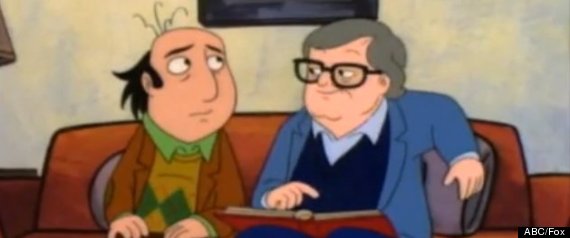
At the time we might have thought that the 90s were the summit of all that was ridiculous about Hollywood movies. But given how extra inflated and predictable blockbusters have become since, surely Al Jean and Mike Reiss’ animated comedy about a TV film critic would now have plenty of kindling for the movie parody fire. Cancelled after one season, there’s still plenty to do with the format and reviving the character of the Ebert-like Jay Sherman would be a greater tribute to the late film critic than any statue.

Murder She Wrote

History's greatest serial killer!

History’s greatest serial killer!

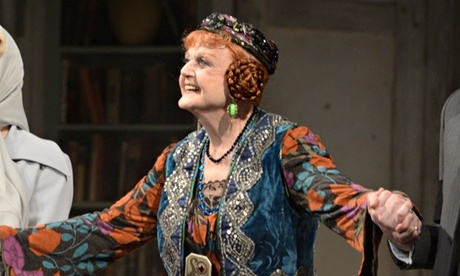
Still alive and acting…all I’m saying.

Cop Rock: Laboured Musical Premise Unit

A spin-off of the quickly-cancelled musical police drama about a special team of cops who investigate off-colour musical episodes in other TV series.

Paulie Loves Pussy

A buddy comedy featuring Paulie Walnuts and Pussy Bonpensero from The Sopranos based on this HBO commercial:

We’d figure out the timeline stuff later!

The Cosby Show

I drank from the wrong glass...

I drank from the wrong glass…

Worth pitching just to see the look on the executives’ faces. ‘Drink this, Mr. Greenblatt’.

It’s Not What You Know, It’s HBO

Posted in American TV (General), American TV Shows, TV channels, TV History, TV News with tags , , , , , , , , , on April 15, 2015 by Tom Steward

It’s one of the great cultural shames that people are denied access to works of art based on their income. For decades now, premium cable network HBO has been in the business of producing some of the finest television in the medium’s history and preventing large swathes of the American population from seeing them. Consumers (for that is what they are) need to be above a certain socio-economic line in order to pay HBO’s monthly subscription fee – historically between 6 and 15 dollars – along with the exorbitant cable company charges and, y’know, food and shelter, stuff like that. Of course, quality television in the US has always implicitly discriminated on socio-economic grounds by wielding cultural capital. Put very simply (and no doubt wrongly to some), cultural capital relates to the idea that what we judge as artistic or culturally worthy is determined by the social exposure that class, wealth and educational background permits, and so the elites have a collateral advantage when interpreting works of art and culture. When advertising executives in the 1980s discovered it was more profitable to target the high-spending TV viewer than the mass-audience, TV like Northern Exposure and Hill Street Blues went after educated professionals with a litany of fine art references and allusions. But whereas visiting libraries and museums would be enough to crack that code, there’s no getting around the bare economic fact that you either have the subscription money or you don’t, and if you don’t you have to actively steal culture.

The most educational show since 'Sesame Street'

The most educational show since ‘Sesame Street’

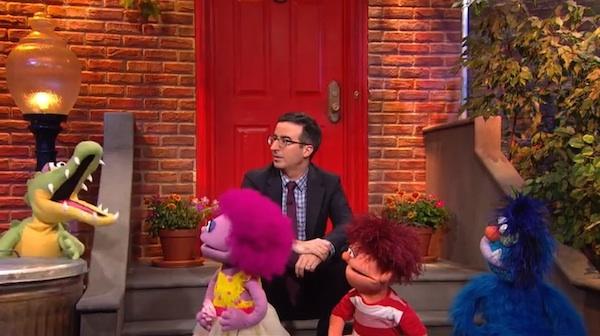
There’s no shame in that. As HBO’s own John Oliver commented, ‘A good way to know which side of the income equality gap you’re on is if you’re currently paying for HBO or stealing it’. But HBO was making great television long before fluid internet theft of television was the desirable option, and I know from experience that HBO (for obvious reasons) are more militant than most TV networks at shutting down piracy of their programmes. This is bad but it’s what HBO has been doing forever, and in the back of our minds we secretly know that the quality of the TV they produce is proportional to the number of Americans it excludes from watching. What concerns me more these days is that those without HBO are being left out of the cultural conversation. News-with-a-side-of-comedy series Last Week Tonight with John Oliver is informing and engaging Americans on political issues and debates that mainstream media and government have left too intangible for the average person to unravel, whether that’s taxes, government espionage, or the system of electing judges. As such, it’s more like Sesame Street than The Daily Show. Yes, you can find out what John Oliver discovered on your own (he did!) but he makes politics accessible without compromising their labyrinthine complexity, which is rather rarely telling you what you need to know without what to think. You can pirate Last Week Tonight and even legally watch key highlights piecemeal on YouTube, but this is only the beginning.

While the LAPD will tell you they’ve been looking into accusations of murder against Robert Durst for years, it’s hard to see how The Jinx, HBO’s documentary mini-series about the real estate heir and his alleged past crimes hasn’t at least catalysed his arrest in March while the series was still airing. The series had audio of Durst seeming to confess – somewhat sensationally reserved for the season finale – and provided evidence of a handwriting match that many think was the trigger for the LAPD to make an arrest. TV investigative reporting like CNN’s The Hunt with John Walsh has always had these aims of impacting on criminal justice – and often they do – but what’s special about The Jinx (despite its inherently lurid qualities of true crime entertainment) is that it’s a documentary about a subject that has yielded the capture of a suspected killer without that being the stated aim of the programme. Durst’s confession tape was stumbled upon during the rigorous process of compiling footage and wasn’t the result of a super-cloak of crime-fighting conservatism the show had shrouded itself in. This is because HBO has to appeal but it doesn’t have to pander. The network or basic cable equivalents of The Jinx and Last Week Tonight are significantly diluted by gestures to mainstream entertainment orthodoxy – sycophantic celebrity interviews, monster-of-the-week journalism – but the former spends a series on what would be an hour on any other channel and the latter expands a 5-minute news segment into a quarter-hour dissection.