Archive for the Watching TV Category

UK with Me: Part 1

Posted in Americans watching British TV, British Shows on American TV, Local TV, TV channels, TV History, Watching TV with tags , , , , , , , on January 15, 2016 by Tom Steward

I spent Christmas in England, which meant that for the majority of my trip I was under or adjacent to water. This – coupled with apples not falling far from family trees – left me watching a lot of television. After going cold turkey with British television in my first couple of years living in America – literally in the case of the daily cooking shows I opted out of when I left – returning this time I felt as if I had been missing out, not just because of what British TV makes but also what it shows. Here’s my travel watch list:


The Bridge –BBC Four
 

bron

Sex is Sex


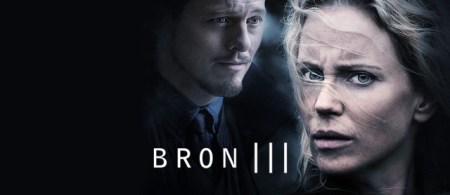
It might seem perverse that the first program I watched upon returning to the UK was Scandinavian but that’s testament to the BBC’s policy of screening the best in European television crime drama, which is currently the best in the world. The third season of the police detective show about crimes that cross the Danish and Swedish border remained as flawlessly acted, written and photographed as the first two, even following the departure of star Kim Bodnia in the run-up to filming. As in previous seasons, a repertory of outstanding Scandinavian character actors were there to play supporting roles but were given more screen time and development, particularly Nicolas Bro formerly of The Killing who guarantees at least one laugh-out-loud moment per episode. Sofia Helin’s new co-star Thure Lindhardt (or Saga’s new partner Henrik) is still the perfect counterpoint to TV’s twitchiest detective, but his sardonic cynicism is also much-needed relief from Martin’s increasingly grating emotional naivety. Creator Hans Rosenfeldt has talked about the rule of three in Scandinavian TV drama in relation to The Killing and Borgen but with both Saga and Henrik having story arcs in progress, he can afford to break with tradition.


Tim Peake – BBC News


tim

Ground Control to Major Tim


I woke on the first full day of my trip to catch TV news coverage of the launch of the rocket that took British astronaut Tim Peake to the International Space Station, the first Briton to do so. Never mind how visually unstimulating and uneventful the launch was as television or how difficult it was to extract a milestone from the seventh British person to enter space, but it says something about how little there is to be proud about in Britain in years that don’t have major international sporting events that Peake’s journey into space was such big news in the national media. A live transmission from the space station with the inevitable satellite delay was some of the most tedious television you’re ever likely to witness.


Peep Show – Channel 4


peep

No more kicking off


I didn’t even know the final season of Channel 4’s longest-running and possibly finest sitcom was on the air, and was even less aware that the episode I started watching mid-way through was the finale. It says something about my ignorance but even more about how good the writing on the series is. No need for self-aggrandising, Peep Show left us with as unassumingly brilliant an episode as it had ever produced, with a nod to the perpetuation of a gloomy cycle of immature repetition that dooms Mark and Jeremy to a life of wanking and watercolours. Nine seasons – especially in British terms – of a sitcom is impossible without a foolproof concept and filtering the action through Mark and Jeremy’s first-person perspective – some early camera tomfoolery aside – was innovation that lasted. Even so, the key to sustaining the show was gradually escalating the abhorrence of the character’s life choices from jilting spouses to attempting murder, and happily the finale continues to raise the stakes.


Gogglebox – Channel 4
 

goggle

Talking Heads


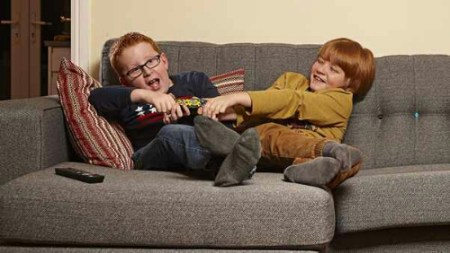
A reality show about people watching TV was always the sleeping lion of television pitches, but it needed exactly the right execution to succeed, and that’s exactly what Gogglebox did in 2013 when it blended fly-on-the-wall and sitcom formats to a perfect consistency. Since I last saw the show, however, it has bloomed into Channel 4’s flagship Friday night program and even spawned (quite literally) a spin-off in the shape of Gogglesprogs, which marries Gogglebox to another immaculate format; children obliviously saying funny things on TV. One particular sprog who looked like an Alan Bennett doll appeared to have already figured out how David Cameron rose to power through pre-existing privilege and public apathy and was the mouthpiece of abolitionists young and old throughout Britain when remarking on Queen Elizabeth’s record-breaking reign as British monarch: ‘Doing what? She just walks and waves.’ From the mouths of babes…



I Capture The Castle

Posted in American TV (General), American TV Shows, Internet TV, Reviews, TV Acting, TV History, Watching TV with tags , , , , , , , , , on December 7, 2015 by Tom Steward

Delivering seasons of TV programs through internet streaming has made writing a conventional review an even more fruitless enterprise than it already was. It’s impossible to determine – or even average – where those watching a season currently are in the run of episodes and it’s possible that they’re already done with it. A review makes no sense in either context. For want of a better solution to the futility of internet TV journalism, I’ve decided to formulate my response to Amazon Prime’s original series The Man in the High Castle as a list of what I’ve learned from the first season:


Who do you think you are kidding Mr. Churchill?

Who do you think you are kidding Mr. Churchill?


  1. The program doubles as an instructional video showing employers how to treat Amazon workers.


  1. There is no ‘Reich’ pun beyond the writers.


  1. I learnt what happened in the post-war world by the show telling me what didn’t happen in the post-war world.


  1. You will say the words: ‘I want Hitler to come back’.


  1. In a parallel universe where Philip K. Dick didn’t exist, people would have a lot less respect for Ridley Scott.


  1. I am still not convinced that the Trade Minister isn’t Hiro.


  1. South America is now a haven from Nazis.


  1. There is a moment where you will believe that Hitler’s apocryphal ‘one ball’ will become a plot point.


  1. The opening sequence is like Dad’s Army on rewind.


  1. There are British spies in The American Reich.


  1. All it took to teach Rufus Sewell restraint was playing a Nazi.


  1. It contains the best scene of an African-American man teaching a dwarf to fish outside of an epilogue of Walker, Texas Ranger.


  1. Berlin is still cool.


  1. We’d have had colour TV a lot sooner if the Nazis had won.


  1. Hitler must have been really affected by post-war European art cinema since he now prefers avant-garde documentaries to American B-movies.


  1. In Japan, morality is measured in spectacle rims.


  1. The Man in the High Castle is not Julian Fellowes, though they share a lot of the same political views.


  1. Hitler is way ahead of home theaters.


  1. The Smith & Jones sketch outlining the five Nazi General archetypes is still the standard for all screen portrayals.
  1. It’s basically Sliders.


Info a Treat

Posted in American TV (General), American TV Shows, TV channels, TV Criticism, Watching TV with tags , , , , on June 17, 2015 by Tom Steward

TBS’ late-night talk show Conan features a segment called ‘What am I Watching?’ in which titular host O’Brien flips through the cable channels with the aid of the info button on his remote. Pressing the button reveals skewed descriptions of each show encountered, such as ‘Entertainment Tonight: Two lifelike cyborgs are programmed to think everything Hollywood does is fantastic’ and ‘Diners, Drive-ins and Dives: Guy Fieri plays an out-of-work party clown who is addicted to lard’. There are two diametrically opposed laughs here. One is the absurd – yet entirely truthful – inversions of the straight-faced synopses that info buttons on cable remotes give us about TV shows. The other (which sadly nowadays may be as socio-economically discriminatory as those jokes in The Sopranos about Kierkegaard) is about people who have cable recognizing how close these summaries come to the real thing.

All you need to know...

All you need to know…

The descriptions contained on info buttons are not as openly critical as the fake ones on Conan but they do often make you wonder who the authors are and what their criteria is. Whatever possessed the person that wrote the digital synopsis for Jaws: The Revenge to question the scientific plausibility of the storyline when they wrote ‘Disregarding the behaviour typically exhibited by the rest of its species, a revenge-minded shark follows a woman from New England to the Bahamas’? What is to be gained from listing the events that take place in the 1920s surrealist avant-garde short Un Chien Andalou – including a woman’s eye being cut and ants spilling from a wound in someone’s hand – as if it were an episode of Columbo? And these are the ones that actually get the descriptions right.

The buttons struggle noticeably with anything resembling emotional complexity. They can’t seem to get around the fact that Jackie Peyton from Nurse Jackie isn’t a good person and doesn’t find redemption each week. TCM’s button writer needs an education in film noir – one incidentally that the network will provide in association with Ball University – if it thinks that anyone in The Glass Key is in any way moral or decent. As misleading as they can be, info buttons are impossible to do without. With shows on cable now mired in the mud of endless re-runs and encores (which are re-runs that run on from the first run, like a bad sequel), it’s essential to have something to distinguish individual episodes, and sometimes the description on the info button is the only way to be sure.

This new technology has created a completely different experience of watching television, one that we’re perhaps less willing to recognize because it doesn’t involve a computer screen. It’s just on our TV rather than our phones and devices but that in itself is significant. We have much less need for TV listings or paper guides, which means that journalistic commentaries on TV shows has been supplanted by anonymous synopses. While before, viewers would read a critics’ review to get a sense of whether they wanted to watch a programme or not, now they have to go off the plot, and be less informed about the success of the project than its aims. Maybe it’s clearer now why the description of Jaws: The Revenge was so unfavourable. Button writers don’t rate TV, but nor should they have blood on their hands.

Info buttons only skim the surface of how cable remotes alter our perception of television. Every time I try to erase an episode of Conan, the remote asks me ‘Are you sure you want to erase Conan?’ as if the host himself will be vanquished from history once I press ‘Ok’. Whenever I do, I genuinely believe that Conan O’Brien has disappeared into the ether. All right, that’s not true. But making me think twice about whether I want to keep a show or not has made me re-evaluate what in TV is worthy of a second or third viewing.

I’ve made lots of assumptions here about the people who write the descriptions on info buttons – as well as assuming that this is a dedicated profession and not an intern’s copy-and-paste job – so anyone who knows anything about how these show summaries get written, please get in touch with me and I’ll write another post about it, with whatever level of anonymity you wish. Poverty and convenience may one day render cable obsolete, so I want to learn what I can about this phase of TV history while I can. I also want to know who wrote that Jaws blurb!

The Apprentice’s Apprentice

Posted in American TV (General), American TV Shows, British Shows on American TV, Reality TV, TV channels, Watching TV with tags , , , , , , , , , on March 11, 2015 by Tom Steward

‘Don’t it always seem to go, that you don’t know what you’ve got ‘til it’s gone…’

I’m quoting Joni Mitchell not (only) because I’m reading Morrissey’s autobiography and have the urge to paste song lyrics into prose when I’ve run out of things to say but rather as a description of the way I feel about The Apprentice. It’s rare in our culture to prefer the re-make over the original but even rarer that we admit to preferring another country’s version of an idea to ours, regardless of which came first. It’s this paradoxical thinking that draws me to the BBC adaptation of The Apprentice and makes me resent the NBC original. Now that I live in America, the latter is my bread-and-butter and the former feels too distant from my daily existence to be relevant viewing anymore. As I sit writing this on a winter’s day with the sun beating my back, I don’t ask for sympathy. But I do rather feel like the person who bought the last painting before they discovered perspective.

From the arse's mouth!

From the arse’s mouth!

Like most shows sold overseas, the format remains largely unchanged. But there’s something about the translation of American corporate-speak and aspirational diatribe into the laughably misjudged self-esteem of Britain’s business classes that gives The Apprentice on the BBC an ironic quality which bends a celebration of capitalism into a critique of the ideology. Goebbels once said that no-one could watch an Eisenstein film without becoming a communist. Well, I severely doubt anyone could sit through an episode of UK version of The Apprentice and still think capitalism is going to last. It’s not hard to believe we have economies based on nothing because The Apprentice UK tells us the people who front it are never less than vacuous. While the American original has the product placement and commercial saturation of a major US network in its arsenal, the BBC version is broadcast on a British public service station which prohibits advertising. The former is mired in a web of cross-marketing, while the latter seems inhospitable to the idea of a TV programme as a commodity.

Go waste the President's time instead...

Go waste the President’s time instead…

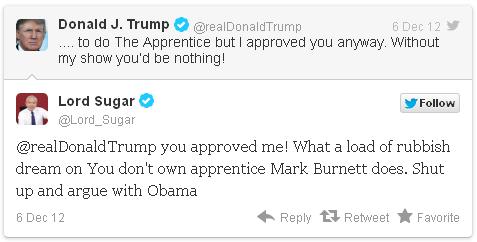
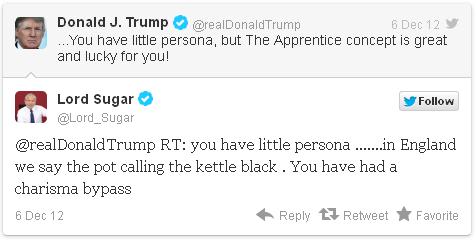
This is not to say that The Apprentice UK is some sort of subversive attempt by the imagined leftist conspiracy at the BBC to undermine British entrepreneurship. It’s more accurate to call it ‘private service television’, a mode of broadcasting addressed to a society dominated by privatised industry and designed to make the best of it (even that is being a touch generous!). But neither does it use its airtime to consolidate a corporate empire through media exposure, like its forbearer. The Donald Trump Apprentice never misses a chance to tell you how powerful and glorious the various business enterprises of the Trump family are, whereas the Alan Sugar counterpart (which sounds like the greatest 80s garage band that never was!) makes his company look like a loosely connected network of 1940s-style spivs and barrow-boys. The tasks assigned by Trump are publicity-centric busywork (especially in the current Celebrity variant) but Sugar’s are about the hard graft of street selling and face-to-faces with customers. You’re the apprentice of a swindler learning how to avoid being swindled.

Sugar doing my job for me!

Sugar doing my job for me!

Perhaps this is because ivory-towerism doesn’t sit so well with the British public, while it taps into the ultimate aspirations of many Americans. The British version is certainly not intended as satire (though the directors do like to puncture with visual gags anyone who takes self-assessment as business elites too literally) but it is playing to a crowd who like sarcasm, wit and darkly awkward comedy. Sugar and his associates are fans of linguistically inventive cruelty, the directors eek every ounce of uncomfortable voyeurism out of the documentary filming (in a style borrowed from pioneering UK sitcom The Office), and the show itself is framed as a sadistic prank played on those who applied to appear. It’s marginally better now the prize is a sizeable investment in a business venture a la Dragon’s Den/Shark Tank (delete monster and monster holding cell as appropriate) but I remember when winners were rewarded by an internship at a digital signage company amid the electro-magnetic subjugation of Tottenham Court Road. Somnambulist losers of Touch the Truck have it better. No-one expects Donald Trump to say anything intelligent, funny or creative (even his racist metaphors lack flair) and the verbal garbage emerging from the Ridley Scott-alien mouths of his children is a generation stupider. Mavericks are praised not parodied and the mere act of aspiring is deemed worth the risk.

Sunday Day Recorded

Posted in American TV (General), American TV Shows, Behind-The-Scenes, Reviews, TV channels, TV History, Unsung Heroes, Watching TV with tags , , , , , , , , , on February 25, 2015 by Tom Steward

‘For a lot of people, their favourite part of the show is the short films, which makes you wonder why don’t they just do the whole show that way. They’ve been doing the show wrong for 40 years. The sketches, they’re nice but they’re long.’

Louis C.K. has made a career out of hitting the nail on the head – and inducing involuntary laughter from the brain – but in as many words as there’s been years of Saturday Night Live, the comedian summed up the fatal (surely tragic by now) flaw of NBC’s late-night sketch show, which celebrated 4 decades on the air this month. C.K. was introducing a compilation of shorts on the SNL anniversary special, scheduled on a Sunday and in primetime (who says American don’t get irony?) and may well have been feeding in to the inverted back-slapping that was pungent throughout the evening. But as soon as the clips rolled, and names like Jim Jarmusch, Mike Judge, Albert Brooks and Paul Thomas Anderson filled the screen, C.K.’s roast zinger becomes an unarguable truism. I myself once had a similar thought before when watching the late-90s British daily sketch programme The 11 O’Clock Show which was written on the day of broadcast and wondering why they didn’t just spend more time on the jokes and make them funny.

Crapping on SNL!

Crapping on SNL!

The more you think about it, the more damning C.K.’s accusations become. Who honestly prefers to watch an SNL sketch featuring The Blues Brothers instead of just watching The Blues Brothers? Where’s the pervert that would endure SNL’s fake public access show ‘Wayne’s World’ as anything other than the intro to Wayne’s World (or Wayne’s World 2)? SNL cast members try to make out that movies based on their sketches are duds (presumably for fear someone might decide to cut out the middleman) but its filmed elements are the only great comic art the show has ever contributed the world. And a sketch worth of Coneheads feels like an hour-and-a-half movie anyway, so you might as well watch the feature spin-off. C.K. might be biased since his sitcom has the finesse of art cinema, but we’re not talking about a group of comedy Oliviers with rave live notices that seem hopeless on film. Every SNL legend has proven themselves masters of screen comedy and the mythical thrill of live TV shouldn’t distract us from that.

Unless I’m severely underestimating Lorne Michaels’ command of irony, I don’t think the inflated length of the anniversary special – coming in at four-and-a-half hours – was meant as a poke at SNL’s reputation for overlong sketches. Again, C.K. was on point (why don’t I just marry him?) and the underwhelming reaction he received was not simply audience fatigue, but a nervous titter of cold, hard realization. The amount of sketches (if you can call them that) and appearances on the night looks impressive on paper, and yet SNL has that amazing ability to appear stretched even when pushed for time. It doesn’t help that so many of the most famous sketches which were revived for the afternoon/evening are based on repetition; Celebrity Jeopardy, The Californians, Weekend Update, The Bass-O-Matic Infomercial. What start out as parodies of overly-formatted TV programming end up using that format as padding. It’s a mistake for SNL to assume that everyone finds their overlength endearing. Like their very own Drunk Uncle, the nostalgic surface hides a multitude of outmoded beliefs and behaviours.

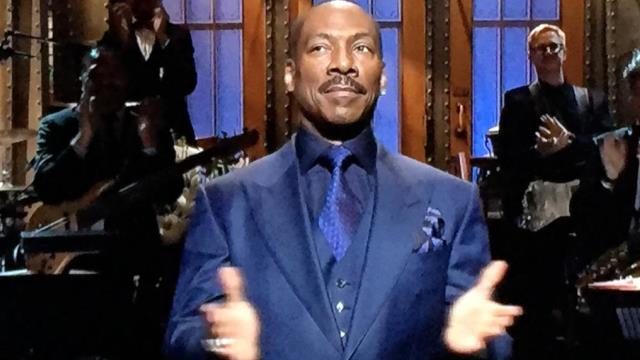
Eddie Murphy doing for real what he does in his mind.

Eddie Murphy doing for real what he does in his mind.

For a sketch show that invests such capital in the idea of shedding its history as soon as it qualifies, the current SNL cast were rather conspicuous by their absence on the anniversary special. Perhaps it’s not so much about them as the greatest generation that fought for their freedom to pretend to be Justin Bieber, but what this sketch comedy version of Apocalypse Now (minus Brando mumbling about snails – that was cut so Eddie Murphy could applaud himself) somehow failed to acknowledge was continuity. It’s a slap in the face that a cast who may be in the process of getting SNL’s shit together for the first time in quite a while should be passed over in a four-hour show and made to look like the weakest links in the chain. Given that Eddie Murphy has only just forgiven SNL after former cast member David Spade ridiculed his career on-air, despite Murphy single-handedly keeping the show on the air (like 1986 World Cup Maradona), they’re clearly not the ones who should have been asked to clean boots that night/day.