I’m just over half way through my stay in the US so here are my Top 5 TV moments from the last two weeks:
Kris Kardashian on morning food show Rachael Ray getting a round of applause for adding parmesan cheese to Pasta Primavera. I still don’t know why.
Ladies and Gentlemen...parmesan cheese!
John Travolta’s cameo as ‘The Dance Doctor’ during Kirstie Alley’s filmed rehearsals for Dancing with the Stars in a classy skit apparently written by the man himself. Travolta playfully pastiched his own performance as Chili Palmer and Elmore Leonard’s cutting dialogue in Get Shortyin his finest and most controlled piece of acting in some years. Almost as good was Kirstie Alley’s disbelief at host Brooke Burke not realizing that this was a pre-written sketch. ‘Really?’, Alley growled, detaching her head from her neck in disapproval, as Burke asked humorlessly what advice Travolta gave to her.
In Anthony’s Bourdain’s No Reservationsthe self-proclaimed tough guy of fu-cusine and Leonard Cohen lookalike tours the grassroots local food places of Boston with his apparently ker-azy yet to all appearances entirely cogniscent rock star buddy deliberately avoiding the gourmet end of the market ‘and if you don’t like it, fuck you!’. One suspects this mission is not exactly foodie-free once the two mock-fucks start to rhapsodize over the ‘essence of mayonnaise’ in the lobster roll at a Boston seafood joint. Their alcoholic machismo is also somewhat parlayed by the revelation that all hard-boiled toughies can be identified by their fondness for cream soda.
After Grey’s Anatomystar and recording artist Sara Ramirez sings an impromptu rendition of ‘Happy Birthday’ to host Sherri Shepherd on The View, scary schoolmistress Barbara Walters bluntly informs her that ‘we have to pay any time anybody sings that’.
'We have to pay for that'
On daytime View-clone The TalkSharon Osbourne begins the show by attempting to explain her way out of a tabloid-reported tax snafu about an undisclosed property lease on filing day. Characteristically candid, self-deprecating and silly, Sharon is unimpeachable no matter what her financial wranglings. What hope does she have with real estate and taxes anyway when she can’t even control a house full of small, shitting dogs. However, by order of the IRS the show has been re-named The Tax.
‘Why are we sitting here watching commercials?’ asks C, G housemate, and it’s a fair old point. In the UK it’s pretty obvious when adverts are about to come up, and programmers gently ease viewers in to the transition. On UStelevision, commercials abruptly cut into programmes, taking out lines and ends of scenes like a poltergeist script editor. Commercials even interrupt themselves, making it impossible to concentrate on the most fleeting of promotional programming, and the commercials don’t stop when the programme proper begins either. Fictions feature promotional considerations where brand products are used somewhere in the narrative, often very wittily, as in 30 Rock which continually satirizes NBC’s prostitution by consumer goods conglomerates.
Non-fiction does a lot of straight-to-camera advertising, as shows suddenly stop mid-item and become an infomercial for weight-loss pills, again making it impossible to separate programme and commercial. US TV commercials are more like web pop-ups or computer viruses, something that intrudes on and pervades your media experience when you least want it to. Consequently, whole media industries and online communities have emerged to allow viewers to speed through commercials (video on demand, cheat sites for skipping commercials on TiVos).
Websites teach you how to skip ads on TiVo
Though eminently frustrating, commercials have historically been a huge part of the development of American television and shouldn’t be lambasted outright. In the 1950s US TV producers and writers had to fit content around roughly three interludes per hour for sponsor messages and it was this that helped TV develop as a unique art form different from theatre or cinema. For instance, the dramatic arc of TV anthology plays had to accommodate breaks in the flow and therefore TV drama became characterized by sharp cliffhanger rises in suspense or action every 10 or so minutes. They are also an unignorable part of the ritual of watching TV. I remember an episode of teen girl comedy Blossom where father Ted goes to pee saying ‘and now a word from our sponsors’. This excerpt shows us in the pithiest (or pissiest) way possible that commercials are ways of TV serving people’s biological needs for food, drink and bodily functions. And we love them as much as we do our own gluttonies, addictions and excretions. I have a couple of favourites at the moment. The first is a cycle of commercials for Chantix, a give-up smoking pharmaceutical.
It used to be the case that US drug commercials would deliver the small-print about side-effects and defects in an indecipherably fast voiceover in the last second or so of the commercial, which has been brilliantly parodied (like virtually all TV absurdities) by The Simpsons’ distressingly accurate mock-ups of network advertising. It felt like a corporate conspiracy to cover-up the serious health risks associated with particular products and this is probably why such information is now given in a more leisurely manner, taking up the majority of the commercial and repeated almost verbatim at the end. Unfortunately, this only makes the drugs sound more life-threatening as an exhaustive list of possible ailments like kidney failure, heart attacks, respiratory problems, skin blemishes (and my personal favourite ‘unusual dreams’) is rolled out over soft piano on-hold music, a sickeningly inappropriate and seemingly endless concoction of words and sounds which suggests the pain will never end after taking Chantix. Plus the commercials are usually predicated on an irresolvable tautology that sounds like a Zen saying designed to separate mind from body such as: ‘Do you want to give up smoking without giving up smoking?’. Yes, Chantix is apparently not just a wonder-drug but a porthole into an alternative universe of Marxist dialectic or, if that’s too posh a reference for you, the Bizarro World. The second is a set of commercials for Poise, a pad designed to counter bladder control problems in women featuring Whoopi Goldberg.
Commercials are so often about hiding embarrassing problems or anxieties with advertisers and companies preying on insecurities to sell products vaunted as paper-over-the-crack solutions (no pun intended). But this commercial tries to comfort people who suffer from these ailments, reassuring them that it’s completely normal (1 in 3 women have had it at some time) and, importantly, that it can be funny, with Whoopi’s pleasingly infantile ‘spritzer’ noises. There’s something cathartic about the ‘fart is funny’ silliness of this commercial that I imagine would be a tremendous release for those suffering from this ailment. Its bluntness also says something about the aggressive cajoling of US TV commercials and how it can be used in a more positive way.
Waking up is hard to do. I always thought this was because of my sedentary lifestyle but apparently it’s because the TV in my country was never worth getting up for. Whereas in the UK, I’d be swilling cereal with bothered-looking hospital patients and those in the auction trade, here in the USA I’m champagne breakfasting with living legends and soap stars with heads so big they eclipse the painted moon backdrops they are so frequently mounted against. TV crumbles into the ashes of interest about 9am in the UK once the breakfast magazine and sitcom cycles are over but in the US (California time) this is when it starts to come alive. The stalwart of late morning TV is ABC’s Live! With Regis and Kelly, a talk and magazine showhosted by Bob Hope impersonator and male version of Blanche from The Golden GirlsRegis Filbin and his co-presenter cum carer Kelly Ripa. A fairly mundane roll call of deathly dull competitions and perfunctory celebrity interviews are made immensely likeable by Regis’ endearing ineptitude and Kelly’s brusque-but-funny ushering that makes you want to purr ‘oh, she’s so good with him’. The top and tail of the show where the banter between the two hosts is allowed to flow freely is genuinely hilarious and frequently smart and witty, especially when Regis is irked by Kelly’s sarcasm and his latent insult comic lets rip. What’s more the show does skits and spoofs incredibly well, much more so that the cringingly appalling attempts at tomfoolery by other breakfast programmes like the Today show. This is mostly thanks to the arresting comic talents of the pair. Regis has that air of a hobbyist about him that distinguishes so many of the great TV presenters (Richard Whiteley and Terry Wogan would be the British TV equivalents) and is a walking argument against slickness and competence in TV hosting.
I have to admit I’m rather fond of The View, a flagship all-female fronted talk and magazine show that comes on after Regis and Kelly, which sports some pretty big cheeses in the world of news and entertainment like veteran comedienne Whoopi Goldberg and heavily medicated queen interviewess Barbara Walters. The format was plagiarized by ITV’s Loose Women and occasionally it’s just as banal and clichéd in its attitudes towards gender and reductive, applause-driven mwah-mwahs about politics. But The View is tons classier than its British mutant and sometimes it’s pretty challenging. In October of last year, Whoopi and co-host Joy Behar walked off in protest to Fox News’ Bill O’ Reilly’s badger-baiting bollock-mongering claim that ‘the Muslims got us on 9/11’ and the show is consistent in offering viewers a balance of liberal and conservative opinion, from the punchably swan-necked WASP Republican Elizabeth Hasselbeck to Behar’s fart-smell-faced social liberal skepticism. The interviews often take the form of grueling interrogations to the point that guests often bring gifts with them to try and pacify their inquisitors. Ricky Gervais had a remarkably tough time the other day with the interviewers scrutinizing every word of his Golden Globe jokes, a much rougher ride than he could ever expect from chortle-faced Graham Norton or celebrity chum Jonathan Ross.
The next couple of hours are dominated by soaps. Whereas British soaps tend to attempt social realism and end up peddling melodrama, American soaps seem much more in control of their ludicrous and overblown plots and characters, almost to the point of complete self-awareness. Nothing is too much, be it ghost, alien, dream or coincidencis-in-extremis. And they seem happy, nay even proud, to recycle the same old stories. In the episode of The Bold and the Beautiful I saw, a man was heard to say ‘You’re not the first women to come in here in a trench coat trying to steal me away’. I, for one, believe him. Thought of as drearily sentimental, what struck me was how completely nasty and Machievellian these soaps are; an impure celebration of conniving and conspiracy. What really stands out is how the soaps are (all identically) shot. Extreme close-ups on faces are the base line which, depending on your level of cynicism, could either signify budget-cutting in background set design or an almost schizophrenic immersion in the emotions of the characters being watched. It’s probably a combination of both and like all good TV is equal parts thrift and intimacy. The morning to lunchtime schedule on US TV is almost pathologically entertaining, and doesn’t make me feel bad for not appraising my attic space.
Posted in Uncategorized on April 6, 2011 by Tom Steward
For the next four weeks I’ll be blogging live from the USA. This week there will be a brief hiatus while I travel but from next Monday I’ll be blogging twice weekly about what I’ve seen, where I’ve seen it and what the hell is going on in the hectic world of American TV. What will you get? In a word…more! Expect reviews ripped from the day’s headlines of the latest home-made and imported shows to hit US screens, plenty of excitable guff about watching the US-set two-part Easter special of Doctor Who on BBC America and highlights of the schedule, including, no doubt, some of the most extraordinary commercials you’ll ever encounter as a human on the earth! While we’re on a break, don’t sleep with a waif-like girl in a club that looks alarming like a TV studio with flashing lights a la David Schwimmer, catch up on some of our classic re-runs instead.
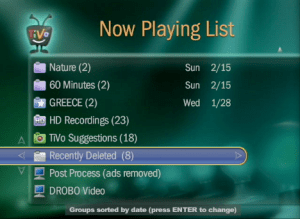
There’s an uncorrected myth in virtually everything I read, hear or see about television to the effect that no-one is watching programmes when they’re on. To many observers, the ability of those with access to and knowhow of new technology to watch TV online, as downloads and DVDs, on demand and recorded on to digital storage boxes equates to the abandonment of viewing shows when they appear in the schedule. I’ve always had my suspicions about this, and so do many of my academic colleagues. Just because people can make it happen doesn’t mean they’d necessarily want to, especially when you get vastly inferior images or deeply uncomfortable viewing conditions as a result, as I’ve always found with my ipod when craning my neck to look at a screen where everyone looks like Gary Coleman. The USA was a huge adopter of many of these new platforms for watching TV, to the point where digital recorders and video-on-demand services became commonplace. Devices such as the TiVo were marketed to Americans as a stirring liberation from the chains imposed on viewers (and other TV artists) by network executives and schedulers, as this commercial from the early 2000s demonstrates:
But the fact is digital recording almost didn’t make it in the USA. It took a good few years for sales and uptake to get off the ground, by which time the market was rapidly losing confidence in the technology and considering wiping the slate and starting again. So it’s never just been a case of the ‘the technology’s there-people will automatically leave scheduled TV behind’, even in the countries where digital platforms for TV have been the most successful. From the beginnings of TV in America to at least the 1990s, networks targeted viewers through event television and programmes that would gather communal audiences, hence terms like ‘watercooler programme’ so called because co-workers would supposedly congregate around tubes of clear liquid in the office the following day to excitedly debate the latest plot developments of certain riveting shows. Although many Americans now regularly use digital recording to watch television freely, we also shouldn’t assume that they’re necessarily using it against the traditional model of watching TV in scheduled slots or in ways that are unsociable.
Seinfeld helped coin the term 'watercooler show'
And so I found when I first went to G’s ‘Glee Night’, where friends and housemates gathered together in her living room to watch TV with snacks and drinks and Gleeas the main event. Now what was fascinating about this was that we were coming together on the night the show was broadcast to watch it even though it was entirely possible to do this any night, as the show was being recorded digitally on the set-top box. This gave a certain flexibility as to when in the night the show could actually be watched, allowing for latecomers, ongoing conversations, food being cooked etc. But the point is that watching it in a group on the scheduled evening was still important. There was a commitment to preserving the shared experience and first-run viewing that came with the ‘watercooler’ programme. Rather than using digital recording for timeshifting or creating a customised schedule, as many commentators have claimed we use it for (presumably applying only to those deluded enough to think they actually are high-ranking network executives), here it was being used to bring programmes from different nights the same sense of a communal event, as if it were the ‘watercooler’ show of the evening.
It was just like this...minus the wallpaper
So ‘Glee Night’ was also ‘Dancing with the StarsNight’, ‘Millionaire MatchmakerNight’, ‘Modern FamilyNight’. At least here, digital recording didn’t eradicate the excitement of watching TV as it happens in a large group; it made every show like that. The technology was making TV more thrilling, but not because we were enacting fantasies of the cold-blooded murders of network executives, but because we could do more with the old ways of watching TV. This made it even more sociable as you could stop and replay it if we were all talking and it gave more programmes exclusive treatment, as if trying to recreate the moment it was first broadcast. It struck me that watching TV with Americans wasn’t really that different than it ever was. After all, a televisual quirk of the US time zones means that programmes air at different times of day depending where you are in the country. So shifting viewing an hour or two to make way for a pizza is not exactly the end of television.





 Watching TV with Americans