No Olds Barred

Posted in American TV (General), American TV Shows, Americans watching British TV, British Shows on American TV, TV History, TV News, Uncategorized with tags , , , , , , , on February 6, 2016 by Tom Steward

In a week when voters decided they didn’t have a problem with a man in his late seventies running the country, I suppose we shouldn’t be surprised that there’s still a place in television for the old. While host of The Late Show Stephen Colbert managed a ten-minute skit based around The Twilight Zone – a show that first aired in 1959 – nineties science-fiction procedural The X-Files continued its revival on Fox. An anthology series about the murder trial of O.J. Simpson began and the miniseries Shades of Blue showcasing the anachronistic acting talents of Jennifer Lopez and Ray Liotta plodded along (and that is exactly the right word!). British television seems no less geriatric these days. Friends’ Matt Le Blanc was this week announced as the new co-host of motoring journal Top Gear, alongside – I might add – star of nineties light entertainment Chris Evans, who in turn has recently relaunched the pub-based variety talk show TFI Friday which had ceased broadcasting in 2000. How is it possible that so many programs and people from television’s past are now to be found dominating the airwaves? Well, there’s really not that much effort required to revive something that has never been away.

old

In Rod we trust.

Syndication and the proliferation of TV channels and services mean that TV of decades past is never far from our screens. It’s a short road from endlessly recycling a show to providing some extra material to pad it out. That might explain the programs but what about the people? Well, in each case, we’re talking about personalities who have managed to stick around long enough to become institutions, or have just come off their own revival. While the idea of J-Lo as an actor is now strange enough to make her performance in Shades of Blue seem jarring, her judging for American Idol and appearances on just about every music awards show on the air makes it a much smoother transition for regular viewers. Matt Le Blanc had endeared himself to the transatlantic public once again with Episodes and Top Gear is merely the crowning of that – although I suspect the BBC will be happy with anyone who falls short of creating an international incident! As to Chris Evans, Channel 4 had yet to replace TFI Friday with anything as exciting in that slot – and believe me it wasn’t very exciting – so broadcasters’ lack of ambition is also a factor.


What’s harder to explain is why we’re suddenly so interested in material from the past. No-one who talks about Ryan Murphy’s American Crime Story fails to mention that it has been twenty years since the events surrounding the arrest and trial of O.J. Simpson took place. TV may be a medium that prides itself on currency, but looking back over the decades has become another badge of honour. That’s what made Colbert’s Twilight Zone parody so bizarre. Weeknight talk shows are compelled to restrict their discussion to what’s been happening in that day’s news, and yet this trip down memory was motivated by nothing but fandom and ridicule-ripeness. I don’t know what to think about an X-Files revival (has anyone ever?!) but it’s an interesting case of throwing good money after bad in the wake of Fox’s breakout original programming like Empire. The youngest major network – if we’re still thinking in those terms – Fox has a particular problem letting go of the past. The Simpsons and Family Guy are now decades old, the network is home to a number of movie reboots, and this year primetime Fox vehicles provided a platform for the comebacks of Rob Lowe and John Stamos.

old 2

Surely it’s a Z-File by now!

The number of revivals, period television, and veteran stars on primetime television is staggering. For example, ABC airs two sitcoms set in the eighties and nineties respectively, a drama set in the forties, an anthology series set in the eighties, a revival of a seventies TV franchise, a movie about Bernie Madoff, while featuring among its big names Don Johnson, Ed O’Neill, Tim Allen and Geena Davis. With the increasing competition and likelihood of cancellation, it may seem that TV ruthlessly cuts away that which is ageing, but in fact it seems more accurate to say that a job on TV is a job for life. One thing is certain; there is absolutely no property out there in TV land that is exempt from returning to our screens. I did mean the landscape of television not the recurring nightmare-oriented nostalgia network back there but actually both work just as well!
Crimetime

Posted in American TV (General), American TV Shows, Behind-The-Scenes, Reality TV, Reviews, TV News, Uncategorized with tags , , , , , , , on January 29, 2016 by Tom Steward

Ever since Homer Simpson purred the words ‘Wow, Infotainment’, true crime has been the beating heart – or lack thereof – of American television. In the last year or so, a high-end alternative to the video-looking, cheaply put together true crime documentaries echoing the trite, uncomplicated and sensational timbre of news has emerged. This sub-genre of true crime TV looks more like the production value-laden, multi-layered serial dramas we’ve seen with exponential regularity in the past two decades and plays without loss on boutique networks and video-on-demand services. The prime suspects are HBO’s The Jinx: The Life and Deaths of Robert Durst and Netflix’s Making a Murderer. Though both series seem to herald a new trend in televised crime, in many ways they are polar opposites. As G remarked, the former is about how privilege and money can get around the justice system no matter what a defendant may or may not have done while the latter is about how poverty and low status count against you legally regardless of your guilt. But their differences go further, speaking to a gulf in the quality and character of the dramatic television produced by these two non-traditional television services. While both appear to have changed the face of television documentary overnight, the nature of the filmmaking involved means that they have been in the works for several years and play off and into TV crime dramas perhaps more than other documentaries in the field.

crimetime

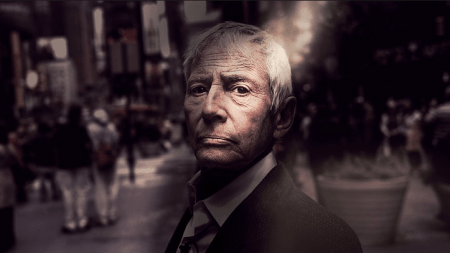
This guy is the Durst!

At ten hour-long episodes, Making a Murderer lasts about long as a typical high-quality TV drama season and offers the same compelling serial narrative we look for in them. Each episode is prefixed with a rich, stylish and lengthy credits sequence equal to and clearly modelled on those that have announced standalone masterpieces in series on such elite platforms as HBO and Showtime. As many of my partners in crime television – including Squeezegut Alley and Dolly Clackett have already observed – this documentary following the trial of exonerated rapist Steven Avery and his nephew for murder in Wisconsin, plays out like a real-life Murder One. Further to the interplay between drama and documentary in crime television, however, Murder One was in no small part indebted to the televised trial of O.J. Simpson, which had concluded a few months before airing and proved that a single trial could hold the attention of audiences for months on end. To complete the circuit, FX are soon to air the first season of their factually-based drama anthology series American Crime Story based around the trial of O.J. Simpson. Critics of Making a Murderer have pointed to the filmmakers’ omission of key pieces of trial evidence and one-sided view of Steven Avery as an innocent patsy. I’m all for directors declaring their biases rather than pretending they don’t exist but it would have been a far better documentary if the emphasis had been on the reasonable doubt about the Averys’ guilt and the distinct whiff of police misconduct surrounding the case rather than conspiracies and frame-ups.

crimetime 2

Avery complicated case!

Though The Jinx shares many visual and narrative similarities with Making a Murderer – not least their elaborate curtain-raisers – in almost all ways HBO’s documentary miniseries is superior to its Netflix counterpart. This six-part account of how business heir Robert Durst became a prime suspect in multiple murder investigations yet remained a free man had greater sophistication in its handling of the subject. The documentary factored in the impact that media coverage of Durst has had on the various cases, including his own attraction to the spotlight which allowed filmmakers direct access to him. They refuse to be drawn on the question of Durst’s guilt until a smoking gun presented itself, at which point the filmmakers are forced into the position of interrogators. The Jinx has also accomplished more for social justice than Making a Murderer, as Durst was arrested for murder following the broadcast of the series while the post-show discussion of the Steven Avery case has yielded an ill-advised petition to The White House which they are powerless to act upon and rancour against the filmmakers for cherry-picking evidence – which is bad documentary practice anyway but given the stakes is a criminal act all of its own. The Jinx might be the reason Durst is under arrest but it may also be the reason he beats jail. Any decent defence lawyer could argue that the documentary has already branded Durst a murder and therefore he cannot get a fair trial. The prosecution would need a jury without HBO subscriptions.


UK with Me: Part 2

Posted in Americans watching British TV, British Shows on American TV, Local TV, TV channels, TV History, Uncategorized, Watching TV with tags , , , , , , , on January 18, 2016 by Tom Steward

Where I continue my rundown of the TV I watched during my time in the UK, as a result of visiting at a time of year conducive to indoor sports that require no physical prowess or ability. Since we didn’t have a darts board, the television would have to do. Much of the British television I had written off as dated and defunct had returned and, though many were old wine in old bottles, there were several programs being broadcast made by familiar names that added something new and interesting to a pre-existing legacy. There were also genuinely innovative moments:


Car Share – BBC One


uk

Hands up who likes Peter Kay again


After emerging in the late nineties as a successor to the observationally rich character comedy pioneered in the North of England by writer-performers such as Alan Bennett, Victoria Wood and Steve Coogan with That Peter Kay Thing, Peter Kay stagnated creatively in the naughties and the teens, content with cosying up to light entertainment until it swallowed his authenticity. The two-hander sitcom Car Share which follows two colleagues carpooling on their commute to and from work was exactly the stripped-down concept that Kay needed to reboot his realism. Punctuated by conversational silences drowned out in the perfectly pastiched audio garbage of satellite radio commercials, the wiretapped feel of the dialogue and understated sincerity of the couple’s interaction reminds us why Kay was once such a treasured comic voice in British culture. Even the more indulgent sequences, such as the fantasy music videos, have an almost Dennis Potter-like quality in the context of the storyline.


Toast of London – Channel 4


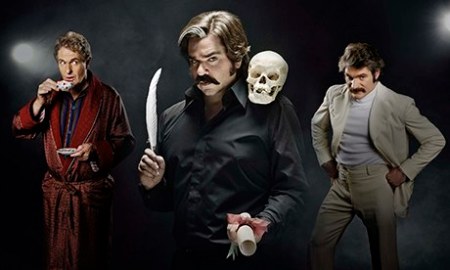
Toast of London

His career is toast


Arthur Mathews once co-wrote and created Father Ted, the sitcom of its day and one which – like much British comedy of the time – refuses to date and instead grows in stature the more we find out about the world (or in this case the Catholic Church). Nothing that Mathews has done since has been able to surpass Father Ted, although surreal juxtaposition sketch show Big Train came tantalisingly close. But seeing Toast of London, which Mathews devised with Matt Berry, a comedian, actor and writer who is a darling of cult comedy and possesses a sleazy retro quality that consumes everything he does, you feel as if he might come close. As with Father Ted, the sitcom is set in another sphere of absurd mediocrity; that of the jobbing actor. As heavily stylised as its ecumenical predecessor – which often resembled a live-action version of The Simpsons – it nonetheless discovers inherent truths about the profession that a documentary treatment couldn’t, though you suspect many of the situations encountered are anecdotally motivated.


All Aboard! The Sleigh Ride – BBC Four

uk 3

No really…this is it


If the successes of Gogglebox and Car Share have demonstrated anything, it’s that extremely basic formats still hold tremendous appeal for British TV audiences. But All Aboard! The Sleigh Ride has taken this to avant-garde extremes. A camera is rigged to a traditional reindeer sleigh and taken on a two-hour journey across the Artic wilderness of Norway. There’s no music or editing or semblance of a narrative, simply the spectacular footage the camera collects as it moves. Of course, TV audiences adore gazing lingeringly at landscapes given the ratings-winning genre of nature programming, but the development here is about time, and how much of it we’ll give without the reward of storytelling and entertainment. Perhaps the structureless viral video has immunised us to the boredom of simple watching, or maybe this is gentle and familiar enough a subject to bring experimental video art into our homes by the back door.


Downton Abbey – ITV


uk 4

Downton finale criticized for anachronisms


I’ll remain as anachronistic as Downton itself by pretending that anyone in America who wants to see the finale hasn’t already used their internet connection to steal it, and not offer any spoilers. Not that there’s a lot to spoil, the finale ramming home how little storylines or character development have to do with the appeal of this piece of virtual tourism versus the other quality television drama of our time. Creator and writer of all episodes Julian Fellowes certainly knows what his audience wants, and is not shy about giving it to them in as tidiest boxes as he can pack. I preferred the series in high melodrama mode and so it was somewhat of a disappointment to me that the electric hair-dryer that everyone kept pointing out was merely historical window-dressing and not foreshadowing some Emmerdale-like fiery disaster to wipe out the cast. Indeed, any hint of tragedy seems to have been smoked red herring.

UK with Me: Part 1

Posted in Americans watching British TV, British Shows on American TV, Local TV, TV channels, TV History, Watching TV with tags , , , , , , , on January 15, 2016 by Tom Steward

I spent Christmas in England, which meant that for the majority of my trip I was under or adjacent to water. This – coupled with apples not falling far from family trees – left me watching a lot of television. After going cold turkey with British television in my first couple of years living in America – literally in the case of the daily cooking shows I opted out of when I left – returning this time I felt as if I had been missing out, not just because of what British TV makes but also what it shows. Here’s my travel watch list:


The Bridge –BBC Four


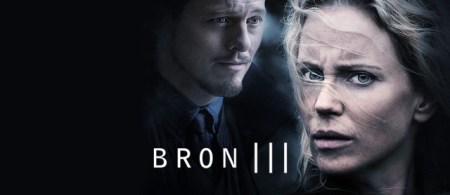
bron

Sex is Sex


It might seem perverse that the first program I watched upon returning to the UK was Scandinavian but that’s testament to the BBC’s policy of screening the best in European television crime drama, which is currently the best in the world. The third season of the police detective show about crimes that cross the Danish and Swedish border remained as flawlessly acted, written and photographed as the first two, even following the departure of star Kim Bodnia in the run-up to filming. As in previous seasons, a repertory of outstanding Scandinavian character actors were there to play supporting roles but were given more screen time and development, particularly Nicolas Bro formerly of The Killing who guarantees at least one laugh-out-loud moment per episode. Sofia Helin’s new co-star Thure Lindhardt (or Saga’s new partner Henrik) is still the perfect counterpoint to TV’s twitchiest detective, but his sardonic cynicism is also much-needed relief from Martin’s increasingly grating emotional naivety. Creator Hans Rosenfeldt has talked about the rule of three in Scandinavian TV drama in relation to The Killing and Borgen but with both Saga and Henrik having story arcs in progress, he can afford to break with tradition.


Tim Peake – BBC News


tim

Ground Control to Major Tim


I woke on the first full day of my trip to catch TV news coverage of the launch of the rocket that took British astronaut Tim Peake to the International Space Station, the first Briton to do so. Never mind how visually unstimulating and uneventful the launch was as television or how difficult it was to extract a milestone from the seventh British person to enter space, but it says something about how little there is to be proud about in Britain in years that don’t have major international sporting events that Peake’s journey into space was such big news in the national media. A live transmission from the space station with the inevitable satellite delay was some of the most tedious television you’re ever likely to witness.


Peep Show – Channel 4


peep

No more kicking off


I didn’t even know the final season of Channel 4’s longest-running and possibly finest sitcom was on the air, and was even less aware that the episode I started watching mid-way through was the finale. It says something about my ignorance but even more about how good the writing on the series is. No need for self-aggrandising, Peep Show left us with as unassumingly brilliant an episode as it had ever produced, with a nod to the perpetuation of a gloomy cycle of immature repetition that dooms Mark and Jeremy to a life of wanking and watercolours. Nine seasons – especially in British terms – of a sitcom is impossible without a foolproof concept and filtering the action through Mark and Jeremy’s first-person perspective – some early camera tomfoolery aside – was innovation that lasted. Even so, the key to sustaining the show was gradually escalating the abhorrence of the character’s life choices from jilting spouses to attempting murder, and happily the finale continues to raise the stakes.


Gogglebox – Channel 4


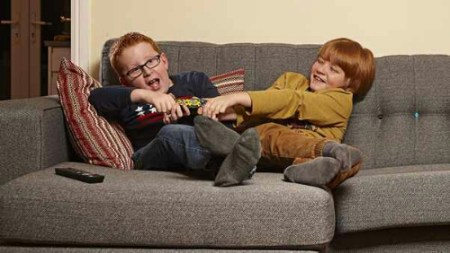
goggle

Talking Heads


A reality show about people watching TV was always the sleeping lion of television pitches, but it needed exactly the right execution to succeed, and that’s exactly what Gogglebox did in 2013 when it blended fly-on-the-wall and sitcom formats to a perfect consistency. Since I last saw the show, however, it has bloomed into Channel 4’s flagship Friday night program and even spawned (quite literally) a spin-off in the shape of Gogglesprogs, which marries Gogglebox to another immaculate format; children obliviously saying funny things on TV. One particular sprog who looked like an Alan Bennett doll appeared to have already figured out how David Cameron rose to power through pre-existing privilege and public apathy and was the mouthpiece of abolitionists young and old throughout Britain when remarking on Queen Elizabeth’s record-breaking reign as British monarch: ‘Doing what? She just walks and waves.’ From the mouths of babes…


Sound and Television

Posted in American TV Shows, Americans watching British TV, Behind-The-Scenes, TV Acting, TV channels, TV History, TV News, Unsung Heroes with tags , , , , , on January 12, 2016 by Tom Steward

David Bowie was – among other divinities – a consummate self-promoter and it’s for this reason alone I feel justified in exploiting a niche in the market of Bowie obituaries; his appearances on television. Looking back at what Bowie has done on and for TV, it’s all too clear that his genius – like Elvis before and Madonna after him – was in breaking down barriers of genre and generation. His TV – see one thrive:


Top of the Pops (1972)

Though in retrospect Bowie only ever flirted with LGBT imagery and shed his public bisexuality as quickly as he did all his other personas – including the one at the root of his sexual ambiguity, Ziggy Stardust – his performance of ‘Starman’ on British chart countdown Top of the Pops in 1972 was a watershed in the visibility of gender and sexual fluidity in the mainstream culture of Britain. Bowie’s androgynous dress and appearance was one thing, his suggestive embrace of guitarist and collaborator Mick Ronson entirely another. Viewers may have been reading between the lines, since Bowie had recently come out as gay (or possibly bisexual) in rock magazine Melody Maker. That this risqué – and risky – display had such an impact is due as much to the three-channel limit of TV viewing in the UK in the early seventies which meant it was seen by most of the country’s television audience as it is to the content of the performance. But that doesn’t diminish the power it had on those who were awakened and liberated by Bowie’s gesture, including future British pop legends Boy George and Ian McCulloch, nor does it make this surreptitious statement of social change less significant.


David Bowie and Bing Crosby (1977)

http://www.youtube.com/watch?v=n9kfdEyV3RQ

Despite being constantly innovative and revolutionary in his music, Bowie was never one to shun tradition, as evidenced by his affection and appreciation for the cabaret singers and crooners who were the pop sensations of their eras. Bowie seemed to have a particular fondness for American pop music, and became a fully-fledged part of it in the seventies and eighties when – inexplicably – he stood shoulder-to-shoulder with the  most legitimate funk and soul artists in the USA. If you take all that into consideration, the awkward chemistry and textbook-illustration culture clash of David Bowie singing with Bing Crosby on his Christmas show in 1977 disappears into thin air. If the lacklustre banter about the irrelevance of a  generation gap in musical tastes doesn’t convince you of their parity – and it won’t – then the complimentary idiosyncrasies in their duet medley of ‘Little Drummer Boy’ and ‘Peace on Earth’ makes a compelling case for their historically inextricable legacies as pop stars.


The Snowman (1982)

As a recent orchestral performance of the British animated feature based on Raymond Briggs’ beloved children’s book I witnessed reminded me, the live-action introduction featuring David Bowie as an adult version of the main character remembering his childhood experiences is more often omitted from showings than it is included. It’s not really surprising as the appearance of a clean-cut, bleach-blond Bowie is the only aspect of this timeless film that dates it as a product of the early eighties. But this appearance unlocks a history of extraneous and bizarre movie cameos that is as much part of Bowie’s place in pop culture as his music. The Snowman is aired every Christmas Eve on British TV station Channel 4 and I suspect that in future years the melancholy of this beautiful film about loss and transience will have as much to do with Bowie as it does the Boy.


Extras (2006)

Speaking of extraneous and bizarre cameos…Though celebrity appearances like Bowie’s would eventually spell the end of Ricky Gervais’s credibility as comic actor and writer, his industry-set sitcom Extras created a self-contained world in which celebrity sightings were eminently plausible. The irony of Bowie’s appearance in the second episode of the sitcom’s final season is that a music star of his ilk is the last celebrity sitcom actor Andy Milman is likely to run into. It’s not much of a leap to suggest that this might be a sly reference to Bowie turning up in projects he didn’t need to be in. It’s one of the few occasions that Gervais had the humility to credit someone else with his success. Gervais’s self-effacing ode ‘Little Fat Man’ is styled so perfectly for Bowie, it acknowledges the extent to which Gervais’s physical and vocal mannerisms which have won him international adoration – especially as David Brent – are informed by the late performer.