Archive for csi

Tarantino on TV

Posted in American TV (General), American TV Shows, Reviews, TV Culture, TV History, Unsung Heroes with tags , , , , , , , , , , , , , , , , , , , on December 9, 2012 by Tom Steward

Like a racist American businessman announcing self-deportation after Obama’s re-election or an old-school British entertainer forewarning a one-man emigration movement in wake of a 1990s Labour landslide, Quentin Tarantino has threatened to quit cinema. In a roundtable interview with The Hollywood Reporter, the director discussed his desire to retire because of the industry conversion to digital cameras and projection. But what debased metaphor could possibly capture the dire straits that the film industry now finds itself in? ‘I mean, it’s television in public’, said QT, as if there was nothing less dignified. To add insult to injury, Tarantino may have to lower himself to actually working in television. ‘If I’m gonna do television in public, I’d rather just write one of my big scripts as a miniseries for HBO’, he said, declaring his intention to slum it with such mediocre fare as The Wire, The Sopranos and Six Feet Under.

I quit says QT!

I’ll admit I expected more than bald TV-bashing from Tarantino, a director who has never been embarrassed to borrow influences from TV-see his adaptation of the Alfred Hitchcock Presents episode ‘Man from the South’ for the portmanteau film Four Rooms or his use of a refrain from the Ironside theme tune as a leitmotif in Kill Bill. Besides, he always seemed entirely comfortable with the prospect of directing for television. Let’s not forget that Tarantino directed a formative episode of lauded medical series ER called ‘Motherhood’ which not only saw his signature style and imagery seamlessly interweave with the fabric of 90s TV drama but also pioneered many of the show’s representational strategies, not least its handling of gore and casual violence. Tarantino also managed to direct an episode of CSI in which you actually cared about the characters and somehow managed to artfully deploy the series’ egregious audio-visual excesses.

A QT word in your ear!

Using TV to flagellate cinema runs contrary to what I think of as Tarantino’s egalitarian approach to popular culture. The usual snobbery you find from film directors about the aesthetically inferior nature and lack of artistic worth of television always seemed alien to QT, who appeared to recognise that it was at the heart of the popular, commercial Western imagery he was so fond of reappropriating, like a modern-day Lichtenstein. This makes his belligerent reluctance to making ‘a miniseries for HBO’ harder to swallow, especially as an announcement such as this deserves to be accompanied with enthusiasm and pride. Tarantino even admitted that this change of medium could solve a number of problems with producing his work as cinema. Speaking of the extended running and production time of HBO’s series, he said ‘I don’t have the time pressure I’m usually under, and I get to actually use all the script’.

Tarantino hangovers some nurses!

I’m sympathetic to Tarantino’s rage against the digital takeover of cinema and, as someone who finds that the signal beamed on to his television works far better than the digital projector at his local picturehouse, empathise with his feeling that television provides a better platform for a director than a medium that is now ‘film’ in name only. But he should take comfort in knowing that veteran film directors can use TV networks like HBO to reach artistic heights that their later-period movies continually fail to achieve. Mike Nichols hasn’t been able to make an above-average romantic comedy in decades and yet his HBO miniseries Angels in America was a transcendent delight. Scorsese hasn’t done a gangster movie in the last 20 years that could compete with Boardwalk Empire. Even an indie-hack like Gus van Sant looks like Ken Loach when surrounded by the hard-hitting political drama of Starz’s Boss.

CSI’s in Grave Danger of giving a damn!

Not to sound too much like a tele-fundamentalist but quite frankly Tarantino’s work has gotten too big for cinema. Since the two-part Kill Bill franchise, QT’s films have tended towards the epic and become distinguishable by their languor. This has protracted his cinematic vision and also compacted it at times, as in cases of cut-downs such as Death Proof. Like his beloved generational family martial arts TV sagas that spawned Kill Bill, television’s massive and never-ending texts and perma-fashion for serial storytelling can accommodate Tarantino’s expansive scale and indulgent timekeeping without a hint of bloat. A smaller screen it might be but it’s also a lot more elastic than the 3-hour radius of the silver one. At a purely PR level, Tarantino’s announcement might not have invoked the desired shock and dismay. For a director not exactly at his creative peak, the prospect of a TV afterlife looks positively heavenly.


Downton Empire or Boardwalk Abbey?

Posted in American TV (General), American TV Shows, Americans watching British TV, British Shows on American TV with tags , , , , , , , , , , , , , , , , , , , on November 24, 2012 by Tom Steward


Downton or Boardwalk?


Mr. Bojangles (formerly ‘Managing Director Boris Manjangles’)

SYNERGIES (formerly ‘SYNERGY INDUSTRIES’)

No. 2

Blind Alley

Londonshire (formerly ‘Great Britain’)

LOL BFF


Dear HBITVO,


I am addressing you using your synergy name-an amalgamation of HBO and ITV-which despite sounding like a new strain of a sexually transmitted virus will undoubtedly become your company acronym once I have informed you of the synergistic possibilities between two of your flagship programmes. A scan by our patented synergy-finding computer application-or SY-FI CRAP for short-has detected a 110% probability (the machine was the creation of retired football managers) of synergy between HBO’s Boardwalk Empire and ITV’s Downton Abbey. SYNERGIES believes that although the former is an obscene and offbeat historical crime drama and the latter a gentle and safe period soap opera, their worlds are colliding in ways that can only be described as ‘pointless’, a synergy word meaning both ‘poised’ and ‘relentless’.


Both programmes have featured scenes in Ireland in the 1920s during the ‘troubles’ (Idea for Programme: ‘Aving a Bit of The Troubles/Frank Spencer travels back in time on magic roller-skates to Bloody Sunday). But rather than having such scenes to make it look like these programmes give a damn about the country and its history, the results of our scan show that they are prime opportunities for synergy. SY-FI CRAP has projected a scenario in which Downton’s chauffeur-turned-in-law-turned-resident Uncle Seamus Tom Branson discovers his long-lost brother-from-another-overrated-show, the IRA soldier-turned-slutty bodyguard Owen Slater, has been killed by gangsters in New York and delivered in a crate to his employers (further offence was caused by listing him as ‘UK Cargo’) and leaves for the U.S.A. to exact his revenge.


At SYNERGIES we understand that the process of synergisation should attempt as much as possible to preserve the unique identity of the synergees. Hence SY-FI CRAP recommends that Tom recruit the help of several doughy white middle-aged character actors in exacting his revenge and that they should be introduced as they are sweatily entering much younger women. It is further suggested that when the perpetrator Joe Massereti is found by Tom he is taking tea with an elderly British film star who camply disparages him for his race and class and makes facial movements that looks like she is being buffered on iplayer.


SYNERGIES applaud previous efforts by ITV to synergise Downton Abbey with other HBO series. It has not gone unnoticed by our researchers that the producers had been planning a crossover with prison drama Oz. Why else would the valet Bates have been kept in jail for so long unless it was for him to eventually volunteer for a cryogenic freezing experiment offered to prisoners by an American scientist (Triangular Synergy Prospect: The scientist is Norm from Cheers reprising his role as an unconvincing 1940s inventor in Forever Young) and be defrosted in a 1990s Baltimore high-security prison? SYNERGIES appreciates that it was only Ofcom’s enforced removal of a scene in which Bates was raped with a potato-masher by Noel Coward that prevented this merger.


The SYNERGIES family (the cloned specimens that power SY-FI CRAP’s artificial intelligence are technically relatives) know that Downton Abbey depends on the American market and that, thanks to the efforts of the Prime Minister of Synergy (‘Synister’) conglomerate media mogul Rupert Murdoch, Boardwalk Empire is a hit on British TV…at least for those who have sold their souls for Mad Men. These audiences must be synergised as soon as possible. Our survey says that this could be achieved by Boardwalk Empire having dancing chimney-sweeps become bootleggers rather than WWI veterans as well as posh Englishmen who don’t understand things not understanding flapjacks. Downton Abbey would need to re-cast Lady Grantham’s mother with Kathy Bates shouting raucously in a Southern drawl while her boobs hang loose in a t-shirt.


Those who resist the synergy movement, which at time of writing our statisticians rounded up to ‘the population of the earth’, may consider such a crossover detrimental to the integrity of each individual programme. To those who defy progress, I say remember those pioneers of TV synergy (or ‘TV-Gy’ not to be confused with the rating or the budget-conscious gay channel) who boldly cross-fertilised Inspector Morse and Masterchef to produce the policious hit series Pie in the Sky and economised by re-using cooking show credits sequences. Who could forget the genius producer who decided that CBS should try to sell CSI to the audience demographic for The Golden Girls and call it NCIS, a title which innovatively uses ‘anagriarism’ (a cross between ‘anagram’ and ‘plagiarism’) with the N standing for ‘nodding off’.


SYNERGIES awaits your response in all possible forms of media (including pigeon) simultaneously. We offer consultancy on a pro bono basis, which is a synergy word combining ‘prostitution’ and ‘bonus’.


Yours disingenuously,


Mr. Bojangles


(Synergy Date/Time Conversion: 2for1/1score/dozen)


Boardwalk or Downton?


Johnson & Johnson

Posted in American TV (General), American TV Shows, Unsung Heroes with tags , , , , , , , , , , , , , , , , , , , on June 17, 2011 by Tom Steward

This is the first in a series of posts I’ll be writing sporadically which try to raise the profile of some of American TV’s most unfairly neglected artistic talent. We begin this week with actor-director Clark Johnson.

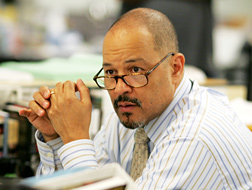
Clark Johnson as Gus in 'The Wire'

'People can't be evacuated...well they can. But that's not what you mean'

The unsung heroes of American television are the directors. While journalists, scholars and fans (not to mention the artists themselves) rhapsodise about US TV writers and producers like Steven Bochco and Joss Whedon, they are perfectly content to ignore, marginalise or deride the directors who carve out the visual and dramatic life of programmes. Direction seems only to be valued when it is either combined with writing and production to construct the myth of the omnipotent TV auteur or when it is attached to a big marquee name in the media, most likely from the cinema (e.g. Quentin Tarantino’s episodes of ER and CSI). Some in the academic community, like Tise Vahimagi and John Caldwell, have tried to bring the work of TV directors to light but even then directors of Pilots get all the credit while directors of random episodes are seen as artless journeymen anonymously re-hashing someone else’s vision.

ER, 'Motherhood'

'ER' directed by Quentin Tarantino

Another production ritual in American TV that slips by most commentators and audiences is actors going behind the camera. Look at the later episodes of virtually any of your favourite US shows and you’ll invariably see its stars and supporting actors taking up the directorial reins for a week or two. As US TV shows have a very limited shelf life thanks to the spectre of cancellation which hangs over even the most popular and acclaimed series, a direction job can give actors more options and opportunities for work in the industry, especially for the less well-known ensemble players.

The subject of this blog is an actor from a renowned ‘90s cop drama, who went behind the camera only to create the enduring stylistic template and dramatic conventions for two of the most significant, innovative and exceptional police programmes of the last twenty years, perhaps ever. And what’s more, he went back on screen at the end of both of them to claim his deserved dues. Clark Johnson rose to public prominence playing the cool yet intemperate, honourable yet eminently fallible Baltimore police detective Meldrick Lewis in Paul Attanasio’s Homicide: Life on the Street based on David Simon’s book. Johnson’s performance helped to forge a distinct identity for the programme as a cop show that didn’t feel the need to romanticise or kowtow to the powers of its protagonists, particularly when bringing out Lewis’ reckless and impetuous side when crashing a police car into an ambulance in an early episode.

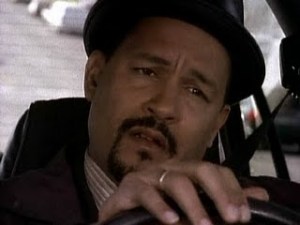
'Homicide: Life on the Street'

Clark Johnson as Detective Meldrick Lewis in 'Homicide: Life on the Street'

With a handful of behind-the-camera credits on Homicide, Johnson began to build up a portfolio of directing jobs on US TV in many of the most acclaimed dramas of the time e.g. NYPD Blue, The West Wing. Johnson seemed able to adjust to the distinct visual and dramatic styles of these shows effortlessly while successfully steering some conceptually tricky episodes and giving viewers some of these series’ most memorable moments, like Alison Janney’s hilarious and sexy mime to Ronny Jordan’s spoken word acid jazz piece ‘The Jackal’ in The West Wing.

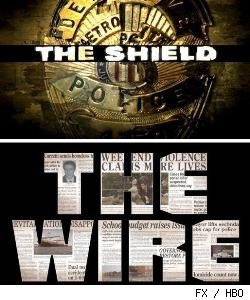
In 2002, Johnson pulled off a remarkable and practically unparalleled feat as he directed the Pilot and initial episodes of two crime dramas that would blow the lid off the American police procedural, but for very different reasons. In Shawn Ryan’s L.A. police corruption drama The Shield Johnson invented the kinetic and jolting camera style that made the programme so arresting and exhilarating and helped craft the visceral energy and sly humour that made Michael Chiklis’ Detective Vic Mackey America’s most feared and entertaining bent copper. Conversely, in Baltimore-set drugs investigation drama The Wire, Johnson set in motion a near-invisible and highly methodical visual approach that avoided aggrandising or distorting the show’s complex portrayal of American institutions while laying the foundations for some of the most compelling, attractive and finely-tuned character performances ever seen on TV. These directorial styles were poles apart and demonstrated Johnson’s brilliance at finding the aesthetic most suited to the concept and ambitions of a programme.

'The Shield' and 'The Wire'

Johnson's two triumphs

As these series drew to a close, Johnson not only presided over the direction of the finales but also returned to the screen in befitting tributes to his instrumental role in their success. In Season Five of The Wire, he plays Gus, the City Editor for The Baltimore Sun, a highly meta-textual role in which he is bestowed the honour of voicing the ethos of the series to represent society in all its collective complexity. In the finale of The Shield he plays the federal agent who takes Mackey’s wife and kids away from his Beelzebub-like hold, inadvertently becoming the hero of the piece. On the credits Johnson is listed as ‘Handsome Marshall’. He’s earned that adjective.