Archive for the American TV (General) Category

TV Highlights

Posted in American TV (General), American TV Shows with tags , , , , , , , , , , , , , , , , , , , on August 13, 2012 by Tom Steward

I’ve been in the US since June so here’s a round-up of my TV highlights thus far on this visit:

  1. James Holmes in Court (ABC News)

Courtroom footage of real-life Batman villain and ComiConvict James Holmes at his arraignment was broadcast on news programmes just days after shootings in a Colorado cinema. With his Day-Glo-red hair and look-at-me-I’m-crazy mannerisms, it was the most absurd court TV since O.J. Simpson tried to avoid prison by pretending to be Michael Jackson. The Joel Schumacher-worthy performance of mental illness also recalled the trial of New York Mafia boss Vinny ‘The Chin’ Gigante, whose insanity defence was founded on pyjamas. With the orange afro and mad-cap expressions, those who had just woken from a coma they’d been in since the mid-90s may have thought that Carrot Top finally lost it after the prop comedy business went south.

  1. Hoarding: Buried Alive (TLC)

Unlike Bravo who’s every series is a staged-reality variation on Dallas, rival reality network TLC likes to get its hands dirty from time to time. Case in point is Hoarding: Buried Alive which documents the lives of those who by choice-and various undiagnosed mental illnesses-clutter their homes until they resemble post-apocalyptic shantytowns. It’s an archaeology programme of sorts, a search for the lost civilisation of deposit-return. One gruesomely compelling episode saw a mutually-traumatised couple discover a Jurassic Park-quality fossil of their beloved pet Ratcat preserved in faeces betwixt cabinet and wall. In their world of elaborate denial, it becomes disrespectful to put the cat in a bin bag but loving to let him rot for two years in a sewage Breville.

  1. KUSI News Weather Report (KUSI)

In times of extreme weather it’s invaluable to have a meteorological perspective on conditions. That’s why I was so pleased that the weather report on San Diego’s TV station KUSI consisted of the words: ‘Oh wow! It’s really hot out there today’ blazoned across the screen in volcano-red letters with a melting dissolve graphic. Add in a weatherman who squeals like an extra from Deliverance as his signature intro, and you’ve got the kind of local news reporting that would make Ron Burgundy proud!

  1. KFC Online Commercial (ABC.com)

No I’m not turning into Nana Royle! It’s simply that the words ‘Mash potatoes and gravy’ are now etched in my sense memory, following an attempt by G and I to watch an episode of The Bachelorette on ABC.com. As a way of retaining control over viewers’ exposure to advertising in the digital age, networks keep the ratio of content to commercial from broadcast airings in their online streaming. What makes it exponentially more annoying is that it’s the same couple of spots recycled ad nausea. Every few minutes, a KFC commercial which begins with a grandfather asserting his right to choose ‘Mash potatoes and gravy’ as his chosen side, would automatically pop up like a clock cuckoo with bad time management. Has anyone looked into whether James Holmes was a regular viewer of online TV?

  1. Tommy Lee Jones and Meryl Streep on The View (ABC)

Two famously reticent and short-winded Hollywood actors being interviewed by four separate talk show hosts asking questions from all sides? What could possibly go wrong? Presumably as a publicity ritual, stars of relationship comedy Hope Springs Tommy Lee Jones and Meryl Streep were packaged-at what looked like gunpoint at the very least-on to ABC’s late morning magazine show. Streep buried every routine answer beneath deep swallows of nervous laughter and Jones employed the evasive language of a guilty politician to provide the most oblique responses possible. Jones resembled a mute husband on a property programme and Barbara Walters resorted to coaxing elaborations out of him like it was a speech therapy session for a stroke victim. It was can’t-look, how-bad-can-this-get television of the highest order.

  1. Sam the Cooking Guy (Various Stations)

Billed as the ‘everyman’ cook, San Diego-based food writer and presenter Sam Zien’s TV vehicle proposes to ‘make cooking casually understandable’ but could equally be an elaborate ploy to give Anthony Bourdain a coronary. Sam’s cooking philosophy could be described as ‘can-to-plate’ and his method ‘food-arranging’. The production is brazenly shoddy and so is the eat-by-numbers approach to the art of cuisine. In a segment I caught recently, Sam innovated with hot-dog condiments and cursed himself for not buying a turkey frank for his Thanksgiving-themed dog. It’s one thing to lower the culinary bar on TV cooking shows but another entirely to forget the pre-made ingredients.


All the Single Maybes

Posted in American TV (General), American TV Shows with tags , , , , , , , , , , , , , , , , , , , on August 3, 2012 by Tom Steward

Most American TV is so chaste it makes me feels like I hail from a nation of sexual deviants. If Jersey Shore recalls the buffoonish innocence of an end-of-run episode of Saved by the Bell, the UK version Geordie Shore is more like the grim disillusion of Screech’s sex tape. A lot of this is down to repressive censorship practices in US network television, not to mention the deeply conservative corporate owners of some stations. But TV tends not to reflect the openness towards sex in American popular culture. Comparatively there is far more sexual repression in British attitudes, and this comes out in my vehemently prudish reaction to ABC’s The Bachelorette. Like most of the over-50 relatives that feature in the later stages of the programme, I’m uneasy with the way the show’s design promotes promiscuity whilst pushing the dogma of monogamy-as if one leads naturally to the other.

Does he have brown hair?

As The Bachelor/ette is one of the few hit US reality series that doesn’t have a British doppelganger, some introduction is required. Basically, it’s a dating version of Guess Who? Each year, one man or woman (increasingly a contestant from previous years) goes through a seemingly endless 10-week process in which they have multiple dates in various spots across the country and globe with several members of the opposite sex who run the gamut from bland to unhinged. As the series goes on, the eponymous singleton eliminates one or a couple of contestants per week by denying them a rose like some demented flower Nazi. After weeks of simultaneous and group dating-in which the show begins to eerily resemble the scene list from a porn movie-the pool is whittled down to two, until a winner emerges and becomes a fiancé. It’s a perfectly normal road to marriage…if you’re James Bond.

No Rose For You!!!

It’s now a cliché of the white noise surrounding the programme that romantic relationships between the contestants are doomed to failure. The marriages are reality TV versions of shotgun weddings, with a digital video camera with high colour contrast aimed at the grooms’ heads instead of a firearm. No-one involved with the show ever seems to attribute this to the fact that the participant is compelled to split their affections equally across partners or that the series gives the contestant a chance to try out each of the four finalists sexually in turn in the sleazily-named ‘fantasy suite’-another nod to the conventions of the sex industry. The situation flatters the producers immensely, with post-publicity in the tabloid scrutiny of the couple’s troubles and splits keeping the brand visible out-of-season. It also makes a hoard of familiar show faces single again, putting them back in the rotation for future series.

Back for a second time!

The bravado and the carefree playfulness of the contestants in the first few weeks are all well and good. But it’s when the contestants start to declare their love for each other and meet their respective families that the façade of true romance starts to look as false as the Vegas-Roman pillars that replace load-bearing walls in reality shows. As if anyone with an ounce of self-respect would continue to go through the motions of a game show with someone they cared for that deeply. It’s hard to accept that the contestants’ families would be comfortable consenting to their loved one being exposed to so much hurt. The show gets a lot of dramatic mileage out of suggesting in the editing that the parents will object to their child’s pluralistic attitude towards love. With some judicious, Bravo-style shot displacement, however, this all seems to come up dung-smelling roses in the end.

Daughter Ricki-the most talked-about child on TV

This past season of The Bachelorette threw a human-shaped spanner in the works. Competitor Emily, a former show winner whose relationship had ended, was now in the driving seat with her pick of suitors. Those in contention for the fantasy suite decided it was too tawdry, not least because Emily has a young daughter at home. Once Emily recognised compatibility and fatherly qualities in Jeff-albeit not before the final show-she ended the competition and sent other potential fiancé, Ari, home. So has the programme finally gained self-awareness about its detrimental effect on long-term relationships? Not exactly. The finale was roundly ridiculed-even by other network shows such as Jimmy Kimmel Live!-for killing the tension of a closing rose ceremony and effectively ending a half-hour early. ABC’s salvage operation centred on promoting Bachelor Pad, a spin-off set seemingly entirely in the fantasy suite with partners for everyone! It’s the Bachelor/ette without piety.

Watching Telly with Americans

Posted in American TV (General), American TV Shows, Americans watching British TV with tags , , , , , , , , , , , , , , , , , on August 11, 2011 by Tom Steward

Over the past few weeks I’ve had a taste of my own media medicine. I’ve been watching British TV with an American and absorbing rather than catapulting those oh-so-clever anthropological field notes about the bizarre idiosyncracies of a national TV culture. And what’s even more humbling is that I’ve been doing it with someone far, far better at it and more succinctly expressive than me (see-that sentence only needed one ‘far’). G stayed with me in July and from time to time we embarked on the daunting prospect of sitting down to watch British TV. I say ‘daunting’ because I want G to move here next year, and it felt like the onscreen lack of Real Housewives after their most recent divorces and Kardashians sporting the previous week’s surgical alterations might set back the emigration propaganda campaign several ages. G found a lot of British culture in catch-up mode, especially when it came to fashion, so finding programmes on TV we had watched together in the states months before weren’t too much of a surprise for her, though it was pleasantly for me. I thought we were at least three or four years behind. Turns out we are on the meat (great drama, comedy and reality) but not on the gristle (celeb fucking and shitcoms)-thanks ITV2!


Keeping up with the Kardashians...barely.


But we had a bigger problem than an out-of-date hat. British TV was ‘weird’, ‘so weird’ and ‘weird’. For G, it was as if Britons had collectively decided to substitute a working TV set in the corner of the room for a 19th Century ventriloquist dummy with its mouth sprung to repeatedly gawp the word ‘Mummy’. I vigorously protested this as a case of cultural alienation but didn’t exactly have the backing of the TV stations themselves, who throughout the month defected to G’s side by broadcasting footage of old men arguing with Simon Cowell about the existence of a Worzel Gummidge musical before Pertwee-lisping through pop hits or swapping their tried-and-tested flagship mobile spectacle reality shows for season finales where half, quarter and minus wits get berated in four rooms by several regional accents. Round One to G.

The Apprentice Indoors

 And Round Two to her as well. It was through G that I realised something that had never before occurred to me; that American TV, even the rough stuff, is by and large far more innocent and sanitary (I mean this more than sanitized-you’ll see why when I tell you what show made me realise) than British TV. What was the breakthrough programme? Why-eye, Geordie Shore, the Return-to-Oz style dark sequel to Byker Grove. An identically-designed British re-make of MTV reality hit Jersey Shore, it eschews the likeably harmless original premise of laughing at mutantly muscled, beboobed and tanned buffoons for an exponentially grotty and lewd indoor dogging video and creepily crass cock-size discussion show. All the lovably hare-brained schemes and dopey catchphrases of the original sunk  sewage-like into ruthless dirty-dicks campaigns of professional fornication and fuck-punctuated verbal cesspools. I initially thought this was just censorship differences but it’s also about our predilections as a nation for sleazy Sodom-and-Gomorrah docs set in seventh circles like Ibiza and late-night town centres. Why we want these on TV baffles me just as much as why we want them in reality. G said all that in one word: ‘nasty’.

Byker Grove was never like this...

Some of G’s confusion derived from how British TV was scheduled and broken down. She found the advert breaks interminably long, which at first I refused to accept from an American, until I realised that US TV commercial interludes are short but frequent, and just because UK TV is covertly irritating in its spread of adverts doesn’t mean it’s any better, worse in its sneakiness possibly. US TV timings are rigorously routinised-all programmes begin on an hour or half-hour. We’re far more casual with our timings, at least on terrestrial TV-a 10-minute documentary on bees here, a 10 no 12 minute news spot there, oh look, there’s an independently-made short film that’s exactly 3 minutes long for some reason. I can see how it would irritate someone brought up on regimented TV time, but I was left feeling rather proud of our irregular randomness.

There were some notable successes. G was an instant addict of Come Dine with Me, proving that it is a faultless universal formula (something like ‘Idiot + House + Cooking x4=Compulsive Sneering’) and that the world is brought together by its response to the show’s contestants with the global chant ‘Where do they get these people?’.

Johnson & Johnson

Posted in American TV (General), American TV Shows, Unsung Heroes with tags , , , , , , , , , , , , , , , , , , , on June 17, 2011 by Tom Steward

This is the first in a series of posts I’ll be writing sporadically which try to raise the profile of some of American TV’s most unfairly neglected artistic talent. We begin this week with actor-director Clark Johnson.

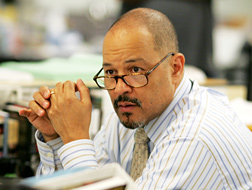
Clark Johnson as Gus in 'The Wire'

'People can't be evacuated...well they can. But that's not what you mean'

The unsung heroes of American television are the directors. While journalists, scholars and fans (not to mention the artists themselves) rhapsodise about US TV writers and producers like Steven Bochco and Joss Whedon, they are perfectly content to ignore, marginalise or deride the directors who carve out the visual and dramatic life of programmes. Direction seems only to be valued when it is either combined with writing and production to construct the myth of the omnipotent TV auteur or when it is attached to a big marquee name in the media, most likely from the cinema (e.g. Quentin Tarantino’s episodes of ER and CSI). Some in the academic community, like Tise Vahimagi and John Caldwell, have tried to bring the work of TV directors to light but even then directors of Pilots get all the credit while directors of random episodes are seen as artless journeymen anonymously re-hashing someone else’s vision.

ER, 'Motherhood'

'ER' directed by Quentin Tarantino

Another production ritual in American TV that slips by most commentators and audiences is actors going behind the camera. Look at the later episodes of virtually any of your favourite US shows and you’ll invariably see its stars and supporting actors taking up the directorial reins for a week or two. As US TV shows have a very limited shelf life thanks to the spectre of cancellation which hangs over even the most popular and acclaimed series, a direction job can give actors more options and opportunities for work in the industry, especially for the less well-known ensemble players.

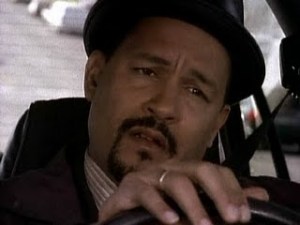
The subject of this blog is an actor from a renowned ‘90s cop drama, who went behind the camera only to create the enduring stylistic template and dramatic conventions for two of the most significant, innovative and exceptional police programmes of the last twenty years, perhaps ever. And what’s more, he went back on screen at the end of both of them to claim his deserved dues. Clark Johnson rose to public prominence playing the cool yet intemperate, honourable yet eminently fallible Baltimore police detective Meldrick Lewis in Paul Attanasio’s Homicide: Life on the Street based on David Simon’s book. Johnson’s performance helped to forge a distinct identity for the programme as a cop show that didn’t feel the need to romanticise or kowtow to the powers of its protagonists, particularly when bringing out Lewis’ reckless and impetuous side when crashing a police car into an ambulance in an early episode.

'Homicide: Life on the Street'

Clark Johnson as Detective Meldrick Lewis in 'Homicide: Life on the Street'

With a handful of behind-the-camera credits on Homicide, Johnson began to build up a portfolio of directing jobs on US TV in many of the most acclaimed dramas of the time e.g. NYPD Blue, The West Wing. Johnson seemed able to adjust to the distinct visual and dramatic styles of these shows effortlessly while successfully steering some conceptually tricky episodes and giving viewers some of these series’ most memorable moments, like Alison Janney’s hilarious and sexy mime to Ronny Jordan’s spoken word acid jazz piece ‘The Jackal’ in The West Wing.

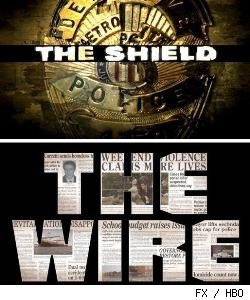
In 2002, Johnson pulled off a remarkable and practically unparalleled feat as he directed the Pilot and initial episodes of two crime dramas that would blow the lid off the American police procedural, but for very different reasons. In Shawn Ryan’s L.A. police corruption drama The Shield Johnson invented the kinetic and jolting camera style that made the programme so arresting and exhilarating and helped craft the visceral energy and sly humour that made Michael Chiklis’ Detective Vic Mackey America’s most feared and entertaining bent copper. Conversely, in Baltimore-set drugs investigation drama The Wire, Johnson set in motion a near-invisible and highly methodical visual approach that avoided aggrandising or distorting the show’s complex portrayal of American institutions while laying the foundations for some of the most compelling, attractive and finely-tuned character performances ever seen on TV. These directorial styles were poles apart and demonstrated Johnson’s brilliance at finding the aesthetic most suited to the concept and ambitions of a programme.

'The Shield' and 'The Wire'

Johnson's two triumphs

As these series drew to a close, Johnson not only presided over the direction of the finales but also returned to the screen in befitting tributes to his instrumental role in their success. In Season Five of The Wire, he plays Gus, the City Editor for The Baltimore Sun, a highly meta-textual role in which he is bestowed the honour of voicing the ethos of the series to represent society in all its collective complexity. In the finale of The Shield he plays the federal agent who takes Mackey’s wife and kids away from his Beelzebub-like hold, inadvertently becoming the hero of the piece. On the credits Johnson is listed as ‘Handsome Marshall’. He’s earned that adjective.

Top TV Picks

Posted in American TV (General), American TV Shows, BiogTV with tags , , , , , , , , , , , , , , on May 13, 2011 by Tom Steward

WARNING: CONTAINS SPOILERS (THAT’S WHAT SHE SAID!)

I’m now at the end of my stay in America so I thought I’d round the trip off with the Top 5 TV moments from my final two weeks:

1. Donald Trump agreeing to be interviewed on Good Morning America and then refusing to answer any questions. Who says Americans don’t get irony?

2. After weeks of sounding like a malfunctioning motivational speaker robot, Celebrity Apprentice contestant and consecutive mental-of-the-week Gary Busey was appointed project manager on a task to create a steak franchise but couldn’t get past the question of cow slaughter methods or comprehend that a man called Meatloaf didn’t know how to cook meat.

3. Steve Carell’s final episode playing Dunder Mifflin office manager Michael Scott in The Office: An American Workplace as he fittingly screws up his own leaving party, blows his own deadline for saying a personal goodbye to every person in his office, and takes off his microphone before his epitaph.

4. Gretchen Rossi from The Real Housewives of Orange County denies taunting her partner Slade Smiley (not a Marvel comic journalist character) about gaining weight as a montage of clips is played in which she habitually slanders him with ‘Tubba Wubba’  in a variety of unconnected everyday situations. Examples: ‘Get on the scales….Tubba Wubba!’/‘I love you no matter how fat you are….Tubba Wubba!’. Let’s hope she never has to take the stand in a major court case.

5. Retro Night on station KOFY during a marathon of Robert Stack Prohibition-set detective series The Untouchables as the rather doddery presenter reads to camera inaccurately from printed Wikipedia notes (‘So this show was made in the ‘20s’) before interviewing special guest Matt from accounts:

Presenter: So how long have you worked at the station?

Matt: Oh, only a few months.

Presenter: And what did you do before?

Matt: A few accounts-related jobs at other places.

Presenter: Thanks Matt. And now back to our programme…