Archive for the American TV Shows Category

Johnson & Johnson

Posted in American TV (General), American TV Shows, Unsung Heroes with tags , , , , , , , , , , , , , , , , , , , on June 17, 2011 by Tom Steward

This is the first in a series of posts I’ll be writing sporadically which try to raise the profile of some of American TV’s most unfairly neglected artistic talent. We begin this week with actor-director Clark Johnson.
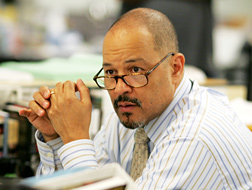
Clark Johnson as Gus in 'The Wire'

'People can't be evacuated...well they can. But that's not what you mean'

The unsung heroes of American television are the directors. While journalists, scholars and fans (not to mention the artists themselves) rhapsodise about US TV writers and producers like Steven Bochco and Joss Whedon, they are perfectly content to ignore, marginalise or deride the directors who carve out the visual and dramatic life of programmes. Direction seems only to be valued when it is either combined with writing and production to construct the myth of the omnipotent TV auteur or when it is attached to a big marquee name in the media, most likely from the cinema (e.g. Quentin Tarantino’s episodes of ER and CSI). Some in the academic community, like Tise Vahimagi and John Caldwell, have tried to bring the work of TV directors to light but even then directors of Pilots get all the credit while directors of random episodes are seen as artless journeymen anonymously re-hashing someone else’s vision.

ER, 'Motherhood'

'ER' directed by Quentin Tarantino

Another production ritual in American TV that slips by most commentators and audiences is actors going behind the camera. Look at the later episodes of virtually any of your favourite US shows and you’ll invariably see its stars and supporting actors taking up the directorial reins for a week or two. As US TV shows have a very limited shelf life thanks to the spectre of cancellation which hangs over even the most popular and acclaimed series, a direction job can give actors more options and opportunities for work in the industry, especially for the less well-known ensemble players.

The subject of this blog is an actor from a renowned ‘90s cop drama, who went behind the camera only to create the enduring stylistic template and dramatic conventions for two of the most significant, innovative and exceptional police programmes of the last twenty years, perhaps ever. And what’s more, he went back on screen at the end of both of them to claim his deserved dues. Clark Johnson rose to public prominence playing the cool yet intemperate, honourable yet eminently fallible Baltimore police detective Meldrick Lewis in Paul Attanasio’s Homicide: Life on the Street based on David Simon’s book. Johnson’s performance helped to forge a distinct identity for the programme as a cop show that didn’t feel the need to romanticise or kowtow to the powers of its protagonists, particularly when bringing out Lewis’ reckless and impetuous side when crashing a police car into an ambulance in an early episode.
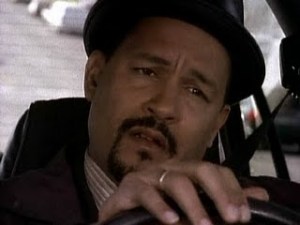
'Homicide: Life on the Street'

Clark Johnson as Detective Meldrick Lewis in 'Homicide: Life on the Street'

With a handful of behind-the-camera credits on Homicide, Johnson began to build up a portfolio of directing jobs on US TV in many of the most acclaimed dramas of the time e.g. NYPD Blue, The West Wing. Johnson seemed able to adjust to the distinct visual and dramatic styles of these shows effortlessly while successfully steering some conceptually tricky episodes and giving viewers some of these series’ most memorable moments, like Alison Janney’s hilarious and sexy mime to Ronny Jordan’s spoken word acid jazz piece ‘The Jackal’ in The West Wing.

In 2002, Johnson pulled off a remarkable and practically unparalleled feat as he directed the Pilot and initial episodes of two crime dramas that would blow the lid off the American police procedural, but for very different reasons. In Shawn Ryan’s L.A. police corruption drama The Shield Johnson invented the kinetic and jolting camera style that made the programme so arresting and exhilarating and helped craft the visceral energy and sly humour that made Michael Chiklis’ Detective Vic Mackey America’s most feared and entertaining bent copper. Conversely, in Baltimore-set drugs investigation drama The Wire, Johnson set in motion a near-invisible and highly methodical visual approach that avoided aggrandising or distorting the show’s complex portrayal of American institutions while laying the foundations for some of the most compelling, attractive and finely-tuned character performances ever seen on TV. These directorial styles were poles apart and demonstrated Johnson’s brilliance at finding the aesthetic most suited to the concept and ambitions of a programme.
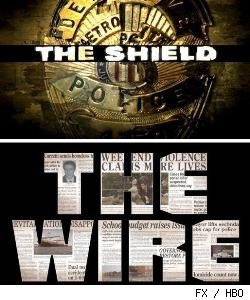
'The Shield' and 'The Wire'

Johnson's two triumphs

As these series drew to a close, Johnson not only presided over the direction of the finales but also returned to the screen in befitting tributes to his instrumental role in their success. In Season Five of The Wire, he plays Gus, the City Editor for The Baltimore Sun, a highly meta-textual role in which he is bestowed the honour of voicing the ethos of the series to represent society in all its collective complexity. In the finale of The Shield he plays the federal agent who takes Mackey’s wife and kids away from his Beelzebub-like hold, inadvertently becoming the hero of the piece. On the credits Johnson is listed as ‘Handsome Marshall’. He’s earned that adjective.

Sitcommunication

Posted in American TV Shows, BiogTV with tags , , , , , , , , , , , , , , , , , , on June 13, 2011 by Tom Steward

Those looking for objectivity in this blog (if they’ve ever found it) will be sorely disappointed by this post. The attachment I have to the programme I’m writing about today cannot be quantified by my predilection for well-made, heartwarming American sitcoms. Everything I think about it has something to do with the way I feel about the person who is my life. So my account of watching it is also a story of how I found love in a strange land I’d known all my life. It’s not unknown for me to remember the past through American TV. Memories of my early life are intertwined with images of American family sitcoms. I now see my upbringing through the prism of Roseanne and The Cosby Show. In the future when I look back on this past year, and the love that has changed my life, I know there will be a little bit of Modern Family mixed in.

The Cast of Modern Family

A diverse and tradition-defying family

In the irksome tradition of G introducing me to and then lambasting me for not knowing American TV shows that she (and I secretly also) think should be a part of my mental archive (‘How can you call yourself a Doctor of American TV and have never seen Full House?’) and because of Rupert Murdoch’s caste system for imported TV that puts US shows in the unreachable noble classes, I was first shown Modern Family on US network TV during the virtual epoch that is Halloween in the States. The Halloween episode is usually a low point for the American sitcom, a season nadir where character and story get pushed aside by wardrobe people indulging in their own sweep stakes week. But even this seasonal pageantry couldn’t disguise its obvious quality. And it was pretty obvious from the outset that this sitcom was going to be for and about me and G. But more of that later; what is this show that Rupert Murdoch doesn’t want you to not to pay to have to see?

Modern Family is ABC’s answer to the NBC mockumentary sitcom, with the same vague sense of a documentary film crew presence, interludes of straight-to-camera interviews and frequent acknowledgements of the camera. It re-imagines the American family as diverse and tradition-defying; made up of interracial spouses and families, gay couples with adopted children, and multiple divorces and remarriages. While it gets a lot of comic mileage out the cultural and character clashes that inevitably result, it never rests on its concept or lets its formula become obvious. This is largely because of the sharp and clever writing with quality character gags fired out at screwball rhythms and preconceptions about stock characters upturned with them losing their pleasing familiarity. The show has a healthy sense of slapstick and appetite for absurd coincidences, a combination which echoes cutting-edge sitcoms like Arrested Development and Curb your Enthusiasm.

Despite its representational radicalism and fashionable form, the show’s strengths are quite traditional ones. It is frequently and unashamedly heartwarming, a quality all family sitcoms should have in some measure lest they leave a gaping hole of humanity at their centre in the manner of Family Guy. It is also a very conventional sitcom in many ways. The casting of Ed O’Neill, formerly America’s premier maritally dissatisfied slob husband and father Al Bundy in Married with Children, as family patriarch Jay signals that the producers want a contemporary sitcom that plays by the rules. Indeed, the pairing of white-American Jay and Columbian Gloria which sparks so brilliantly plays like a gender-reversed Lucy and Desi from I Love Lucy. But what really makes Modern Family truly special is how it became the medium of mine and G’s relationship.

Gloria and Jay

Gloria and Jay: the medium for our relationship

Leaving aside that I’m a none-too-stunning white man who’s somehow managed to attract a ridiculously hot Latina woman, so much about Gloria and Jay’s marriage defines our relationship. They’re both loves propelled by laughter from awkward cultural and linguistic miscommunications (and we’ve got American-English as well as Mexican-British!), to the point where I forget which is the TV one and which ours. G’s translation of a romantic sentiment from Mexican into English with the caveat that ‘it involves dead sheep’ could’ve come straight from Gloria. And G knows when I laugh at Sofia Vergara, I’m inadvertently making fun of her. We also know we will one day be Claire and Phil; the no-nonsense-with-children woman married to a goofy man-child playing at adulthood. G thinks of me like a grown-up Luke, the semi-autistic scruff, even though I know that as a kid I was more like Manny, the self-aware sophisticate allergic to physical exertion. Modern Family is not just an outstanding sitcom in a TV milieu that’s increasingly looking and sounding the same, it’s also mine and G’s secret language, one which we will always understand completely.


Dreaming of View

Posted in American TV Shows, BiogTV, TV Dreams with tags , , , , , , , , , on May 13, 2011 by Tom Steward

What follows is a deposition of last’s night dream. Any resemblance to any persons living or dead is entirely mental.

The ladies from The View

My employers

Hosts of The View Whoopi Goldberg, Joy Behar, Barbara Walters and Elizabeth Hasselbeck want to leave the live broadcast of their morning talk show ten minutes early and ask me, who evidently works at the show and is somehow familiar to viewers, to fill in for the last segment. I have decided for some reason to go on air with a blue Ikea holdall full of broken, antiquated agricultural work tools taken from underneath my grandparents’ front garden and then lecture millions of American viewers on their archaeological significances. The audience and hosts abandon the studio leaving only myself and a floor manager. The manager signals that we have gone to commercial and to set up my bag of tools. At this point, the bag goes missing and I scramble to find it before we come out of the break. The tools have somehow re-submerged themselves into the soil in my grandparents’ garden, which is now adjacent to the studio, and I enlist their help to retrieve them as we dig into the earth with our hands and pull out hoes, rakes and steel-wood gardening appliances. I re-fill the bag and heave it over to the set, hoping to catch my cue. I miss it by mere seconds by which time an emergency broadcast of a late 1990s version of the show has automatically clicked in and is now playing on all the monitors. I feel dejected, especially because I am unable to show my girlfriend G that I have been on television in her country. The following day, The View resumes with its normal hosts and Whoopi and Barbara spend the opening ‘Hot Topics’ section of the programme castigating me for blowing this opportunity in front of a national TV audience and cursing themselves for giving me such a break.

Tony and Dr. Melfi

Paging Dr. Melfis...

Anyone who thinks they may be able to shed some light on what this dream may mean or reveal about my psychological or emotional condition, please leave a comment.

Top TV Picks

Posted in American TV (General), American TV Shows, BiogTV with tags , , , , , , , , , , , , , , on May 13, 2011 by Tom Steward

WARNING: CONTAINS SPOILERS (THAT’S WHAT SHE SAID!)

I’m now at the end of my stay in America so I thought I’d round the trip off with the Top 5 TV moments from my final two weeks:

1. Donald Trump agreeing to be interviewed on Good Morning America and then refusing to answer any questions. Who says Americans don’t get irony?

2. After weeks of sounding like a malfunctioning motivational speaker robot, Celebrity Apprentice contestant and consecutive mental-of-the-week Gary Busey was appointed project manager on a task to create a steak franchise but couldn’t get past the question of cow slaughter methods or comprehend that a man called Meatloaf didn’t know how to cook meat.

3. Steve Carell’s final episode playing Dunder Mifflin office manager Michael Scott in The Office: An American Workplace as he fittingly screws up his own leaving party, blows his own deadline for saying a personal goodbye to every person in his office, and takes off his microphone before his epitaph.

4. Gretchen Rossi from The Real Housewives of Orange County denies taunting her partner Slade Smiley (not a Marvel comic journalist character) about gaining weight as a montage of clips is played in which she habitually slanders him with ‘Tubba Wubba’  in a variety of unconnected everyday situations. Examples: ‘Get on the scales….Tubba Wubba!’/‘I love you no matter how fat you are….Tubba Wubba!’. Let’s hope she never has to take the stand in a major court case.

5. Retro Night on station KOFY during a marathon of Robert Stack Prohibition-set detective series The Untouchables as the rather doddery presenter reads to camera inaccurately from printed Wikipedia notes (‘So this show was made in the ‘20s’) before interviewing special guest Matt from accounts:

Presenter: So how long have you worked at the station?

Matt: Oh, only a few months.

Presenter: And what did you do before?

Matt: A few accounts-related jobs at other places.

Presenter: Thanks Matt. And now back to our programme…

US News You Lose!

Posted in American TV (General), American TV Shows with tags , , , , , , , , , , , , , , , , , , , on May 12, 2011 by Tom Steward


Two superficially dissimilar international new stories dominated American television during my stay: the recession-distraction English wedding of Prince William to Kate Middleton and the American-inflicted death of pesky terrorist leader Osama Bin Laden. I tried to avoid both of them as much as possible for different reasons. It embarrasses and depresses me that Britain’s international image is so dominated by such a ludicrous, dull and anachronistic institution such as the Royal family. The triumphalism and party atmosphere surrounding the coverage of Bin Laden’s demise on US news channels was alarming and bloodlusty, and I wanted no part in it, even as a spectator. So when I did come into contact with these stories it was primarily by accident and outside the domain of news. I’m not going to slam American TV news outright as so many foreign interlopers do. The cliché of US news channels failing to mention or appropriately cover key international events has a ring of truth to it, and that was increasingly evident while I was there with the lack of information circulated about Gaddafi and the Libya rebellion when in retrospect it seems, in the words of Superhans, it was ‘all kicking off’. But this also means a lot more time for local news reporting, meaning civic or regional matters are extensively covered and debated on TV (however banally), and from a country where regional TV news is in jeopardy, this makes it even more treasurable.

News Coverage of the Royal Wedding

The Royal Wedding is US TV News

But these stories were difficult to escape. All my morning shows on the day of the Royal Wedding were attended or discussed by the hosts with a bizarre royalty-envy that ill fits a country founded on telling the King of England to fuck off. Hard to take was Barbara Walters’ live reporting from London, which spat on her American colleagues’ intentionally comic captions as ill-informed nonsense. She then laboriously took us through the correct Royal conventions and traditions in an extreme case of racial Stockholm Syndrome not seen since Madonna starting drinking Timothy Taylor. Regis and Kelly press-ganged their audience into Royal Wedding approval, nationally humiliating those who dared to question the ceremony’s success. At least there was an appreciation of the camp value of the ceremony in some quarters, with the ladies on The View and the panel on Kathy Griffin’s Insightful and Hilarious Take on the Royal Wedding mock-recoiling at the Queen’s garish outfit, head-shaking at the cartoonish behaviour of the Duke of Edinburgh, and hand-rubbing about the potential upstaging of the bride by Middleton’s bridesmaid sister Pippa. Some of this TV detritus actually came upon some accidental insight when The View’s Sherri Shepherd pointed out the blatant racial segregation of the wedding guests, which felt more like the latent anti-monarchism I had hoped would rears its head.

Other commentators had similar problems. The barrage of Royal biography programmes preceding the Wedding on celebrity magazine channels like E! featured voiceovers done in a strange Anglo-American Esperanto, a vocal non-space between peppy MTV VJ and female Tory junior minister. The highlight of the Royal Wedding tie-in programmes was undoubtedly the Lifetime TV movie ‘William and Kate’. Not only were the two lead actors as physically unlike their real-life personages as a pint glass is to a donkey, but the actors cast as their relatives looked completely unlike them also. According to the film, William and Kate studied at The Department of Narnia Studies at The University of Hogwarts, regularly time-travelled to 19th Century rural Ireland for nights out, and William’s fraternity played a daily game where they may only speak in dialogue written by P.G. Wodehouse.  

Princes William and Charles


During Dancing with the Stars on the Monday following the killing, host Tom Bergeron somehow managed to crowbar in a reference in response to guest judge Donnie Burns’ remark ‘Nobody but nobody does showbusiness like you Americans’. Bergeron’s face said ‘fuck, yeah’ as he tangentially retorted ‘We Americans have shown ourselves to be good at a few things these past couple of days’. This was followed by an uncomfortable driftwood of applause smelling faintly of public ambivalence, or at least massive unease with Bergeron bringing such a brutal thought into a light entertainment package. Though evidently not the place or time, the pukewarm reception on Dancing with the Stars was far more representative of the melancholy most intelligent adult Americans feel about this than the news footage of masses of young party people using the death of Bin Laden to squeeze another Spring Break out of the calendar.

Dancing with the Stars' Tom Bergeron

'Mission Accomplished' says Tom Bergeron