Archive for the TV channels Category

Watching TV With Britons Part 1: Eee By Glum!

Posted in Americans watching British TV, British Shows on American TV, Local TV, TV channels, TV Culture, TV News, Watching TV with tags , , , , , , , , , on December 17, 2014 by Tom Steward

Goodbye! Like Seinfeld’s Elaine upon encountering a caring Jerry, selfless George and talented Kramer, I’m in the bizarro world. I started this blog as a Briton casting a foreigner’s eye over American television and the Americans who watch it. Now British television is foreign to me and the viewing habits of UK audiences are as curious to my mind as America’s once was. Those of you who read the blog regularly will know that I am now a resident of the United States (or have assumed I am the worst pirate in TV history!). While I’m still in the privileged position of returning to my homeland without the jarring feeling of alienation felt by most ex-pats, I cannot say the same about British television. It is not simply a question of being out of touch, but experiencing the TV I knew from the outside in. I see the problems more clearly, but I am less forgiving of them than a native now. Here’s Part 1 of my round-up of the TV I watched while I was back in the UK these past few weeks, which looks specifically at what I saw of and about the North while away:

BBC Northwest Tonight (BBC1)

If I had ever forgotten what a place of horror the North can be, I was scared straight by the top item on the local news about a priest who was arrested for murder. There was also a sub-plot about the various presenters switching roles that went clear over my head, and reminded me that local TV news is more parochial soap opera than neutral information source.

Remember Me (BBC 1)
Python Found In Sheffield!

Python Found In Sheffield!

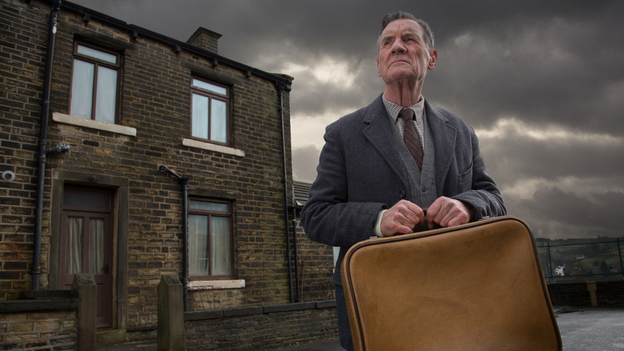
Seasonal ghost stories are an overlooked tradition in British television, as is the utilisation of former Python Michael Palin as a TV actor. This Sunday-night 3-parter was a welcome return for both, and brought the haunting beauty of the Yorkshire coast to half-light. I’m always complaining about the lack of Britain’s multiculturalism in our flagship drama and South Yorkshire’s substantial Asian population should be represented in any depiction of the area, as it is here. But I couldn’t help feeling there were underlying xenophobic anxieties about immigration in the way the story unfolded (incidentally rather in keeping with the current normalisation of anti-immigration discourses in British politics) which undermined the diversity. It’s one thing to show the social harmony between the elderly white and Asian communities in Sheffield, another to envelope that in imagery concerning the vengeful spirit of an Indian colonial wreaking havoc on British shores.

Inside No 9 (BBC 2)

There's No Escape To Narnia In Inside No 9!

There’s No Escape To Narnia In Inside No 9!

Horror comedy writing-acting duo Steve Pemberton and Reece Shearsmith may have left the North behind after the gloriously gothic sitcom The League of Gentleman, but their anthology-based follow-up to the macabre melodrama Psychoville is easily their best work yet. Classic British horror movies were as influential to the pair’s writing as the variously horrifying Northern towns they grew up in. But in this series of one-offs centred around buildings and rooms that bear the number 9, it’s easier to detect the legacy of great British dramatists like Harold Pinter and Mike Leigh than Hitchcock and Hammer.

Through The Keyhole (ITV)

This was once a beloved and genteel daytime panel show presented by British institution Sir David Frost in which middlebrow celebrities tried to guess which other middlebrow celebrity a house belonged to. It was easy-going, bland and offended no-one. To my horror, it’s been revived as a platform for crass Yorkshire-born comic Leigh Francis to showcase his abhorrent character Keith Lemon and brand of vulgar anarchy. Imagine if the cast of Jackass suddenly took over from the current hosts of 60 Minutes and you’ll have some idea of how inappropriate a mix of star and format this is. Tabloidization of classic British television standards has been and gone, but this is a new stage of perversion and travesty that befits a dystopian satire!

The Fall (BBC 2)

The Fall Of British Television

The Fall Of British Television

Belfast is a bleak yet glamorous backdrop for the most unremittingly downbeat police drama in TV history. Not even sexy elf Gillian Anderson can bring much more than the odd dry moment of wit to proceedings, as Christian Grey-in-waiting Jamie Dornan stalks the city’s streets and homes as a sexual serial killer and freelance social worker. Authentically Northern Irish, it also tops the genre for storytelling innovation. Dornan’s Paul Spector is as much the hero as the detective would be in any other cop show, making for deeply uncomfortable viewing. But, like the North, it remains gruesomely compelling.

Crimewatch

Posted in American TV (General), American TV Shows, Behind-The-Scenes, Reality TV, TV channels, TV History, TV News with tags , , , , , , , , , on November 26, 2014 by Tom Steward

2014 will be remembered as the year American TV went on trial. I mean that quite literally. Three of the stars of Bravo reality franchise The Real Housewives have been given prison sentences for fraud in recent months, and earlier in the year another was arrested for an altercation on the show. In the last few weeks, American TV icon Bill Cosby has been accused of multiple historic instances of sexual assault by women, and his past and future TV shows have been pulled by Netflix, NBC and TV Land. TLC also made the decision to cancel their reality series Here Comes Honey Boo-Boo after star ‘Mama’ June Shannon reportedly started dating a registered sex offender. The reactions from the networks concerned have been variable.

Sopranos Remake Goes Ahead with Cast of Unknowns!

Sopranos Remake Goes Ahead with Cast of Unknowns!

Bravo appointed themselves unofficial court stenographers for the trials of Teresa and Joe Giudice on multiple bank, mortgage and bankruptcy fraud charges and Apollo Nida for bank, mail and wire fraud, following their court appearances on The Real Housewives of New Jersey and The Real Housewives of Atlanta and putting them on every conceivable sister show on the network before and after sentencing. It’s not exaggerating to say that the court cases have been the key interest for each of the series this year, or that Bravo has been unapologetically wallowing in their losses of freedom. The network has skirted around the issue of their guilt and culpability, wasting no opportunity to portray Nida and the Giudices as victims of circumstances, rather than knowing criminals

This is hardly surprising given how Bravo behaved when a criminal act took place on one of their shows. Porscha Williams was charged with assault after attacking Kenya Moore (or rather a tenuously linked appendage of hers) on the ‘Reunion’ episode of this season’s The Real Housewives of Atlanta. The end-of-season special brings the invariably estranged co-stars on to a studio stage and uses footage from the series (and typically social media baiting) to provoke conflict between the guests. The formula is such that violence of one kind or another is inevitable, and that the assault was less of a by-product of the show than a slightly cruder version of its desired effect. Bravo didn’t express the contrition appropriate to goading a person into criminality.

The different between the responses of Bravo and Cosby’s networks may be attributed to the gulf in the seriousness of the alleged crimes, but there could be more at stake. In 2012, it emerged that deceased TV personality Jimmy Savile, an entertainer equivalent in status to Cosby in British popular culture, had been one of the country’s worst ever paedophiles, a fact widely known during his lifetime but downplayed through his connections to the UK establishment. The revelations about Savile laid bare a culture of sexual abuse and assault in British showbusiness in the past few decades. Of course, I’m not suggesting that what Cosby is accused of doing is on the same scale as Savile’s serial child abuse, although both have a moral point-of-no-return.

I make the comparison because in their knee-jerk reaction to media-led allegations, Netflix’s decision to postpone Cosby’s special, NBC’s termination of a new Bill Cosby sitcom, and TV Land removing reruns of The Cosby Show from their schedules might be a tactic to draw a line under the controversy before it takes out any more of the entertainment legends their business depends on. There’s no reason to disbelieve the women who are coming forward to accuse Cosby, since they have all to lose and nothing to gain by smearing the comedian’s good name, but the networks have based their verdicts calls on unsubstantiated claims in lieu of a police investigation. If CNN’s reproach of Joan Tarshis is representative, it’s not about solidarity with Cosby’s alleged victims.

There Goes Honey Boo-Boo!

There Goes Honey Boo-Boo!

TLC cancelled Here Comes Honey Boo-Boo as June Shannon apparently resumed her relationship with Mark McDaniel, who was convicted of molesting June’s daughter Anna Cardwell. The network should be commended for sacrificing one of their most valuable properties in making a moral stance, but TLC’s rhetoric about their duty of care towards the Shannon children is disingenuous. A network statement said TLC was committed to ‘health and welfare of these remarkable children’ but they’ve never been conflicted about exploiting their socio-economic disadvantages for entertainment and, as E!’s TV review The Soup illustrated, the network haven’t made any interventions to prevent the children’s health problems. While Bravo is clearly the most exploitative network here, at least it doesn’t pretend to have anything but self-interest at heart.

The Signal of Foreign

Posted in American TV Shows, Americans watching British TV, British Shows on American TV, TV channels with tags , , , , , , , , , on November 12, 2014 by Tom Steward

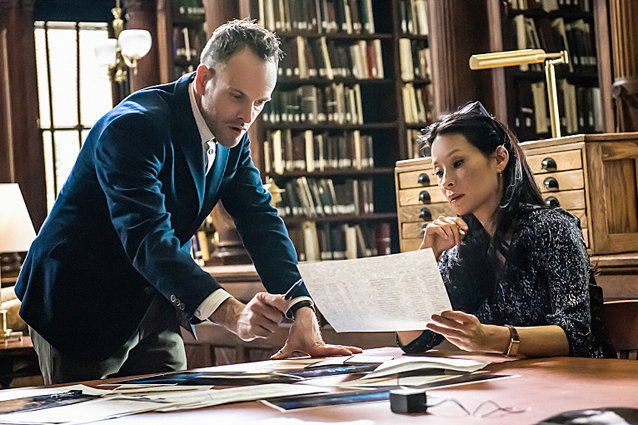
With so little British television watched in America, at least knowingly, it often seems more important to be an ambassador than a critic. However, some British programmes make that act of intercultural liaison a difficult proposition and it doesn’t help that in particular cases the American equivalents are far better. Now in its third season on CBS, Elementary is an updatation of Arthur Conan Doyle’s Sherlock Holmes stories transferred from London to New York and in keeping with the conventions of the police procedural. Given the timing of its arrival and modern-day take on the Holmes mythos, Elementary could be thought of as an American remake of the BBC’s Sherlock. To my mind, though, the latter has simply served to make the former completely irrelevant.

Now that's progressive!

Now that’s progressive!

Really, you don’t expect the American version of a British TV series to be more progressive and edgier and yet Elementary is the series in which Watson is an ethnic woman and Holmes is a recovering drug addict. While Sherlock is groping around in the annals of fan fiction desperately searching for storylines, Elementary offers concrete mysteries week-after-week. Elementary stands confidently in the generic traditions and weekly nature of television but Sherlock seems to be constantly pushing against the logic of TV flow. The supporting characters in Sherlock are severely underdeveloped and generally passed off as morons that reaffirm Holmes’ superior intelligence. Elementary’s ensemble cast is full of fleshed out, complex and relevant characters providing a different perspective on Holmes’ investigations that frequently proves crucial.

Sherlock is surrounded by an incredible fandom than feeds off itself as the series incorporates and invites cult audience activities in its name. As such, the writing is often problematic or inept from a story viewpoint, since it must always gesture to this extra layer of self-gratification. Conversely, Elementary makes the mechanics of plot its priority rather than the relationship between Holmes and Watson, which seems to pique the interest of Sherlock fans. Characters and their dynamics emerge as the storylines advance, and the series never takes the re-gendering of Watson as a cue to slash fiction romance. In doing so, the scripts achieve the rare balance of Conan Doyle’s storytelling where character and plot are equally stimulating, yet neither yields power over the other.

In light of Elementary, I no longer have anything good to say about Sherlock. I can certainly see the attraction to American viewers, as the former homogeneously blends into network primetime programming while the latter seems to defy those very conventions. I daresay this is probably why Top Gear is so popular here, because the American equivalent would be so bland and corporate in comparison. Yet a more informed and less ignorant version of Top Gear is no bad thing, and does more justice to the matter in hand than a faux-sitcom peppered with cultural insensitivity. I suspect the curiosity of Sherlock is what blinds viewers here (British viewers you have no excuse!) to the fact that there’s a more interesting adaptation in their backyard.

It’s also a matter of salesmanship. Sherlock showrunner Steven Moffat like to write in a way that aims to convince you of the quality of what you’re witnessing in the hope you will ignore the lack of basic competence in the craft. Success is measured in the same way it would be for an ad campaign rather than an individual artwork. It’s hard not to be impressed or enticed by television that is so convinced of its own transcendence. Elementary is rather more discreet in self-estimation and should be judged over time. Regardless of calibre, most imported British dramas make it on to American screens through the PBS Masterpiece strand, which automatically bestows worthiness upon them in ways that Thursday night on CBS does not.

I'm a fan!

I’m a fan!

There’s so much British television that beats America hands-down, especially the regular kind, but the case of Sherlock and Elementary suggests we cannot make broad assumptions about the inherent superiority of British television. Whatever promise of distinction Sherlock offers to American viewers does not conceal its dysfunction as drama and Elementary is not to be confused with the swathes of mediocre procedural television that surrounds it. I want American audiences to buy into the alternative appeal of British TV, but as someone who cares about quality I’m wary of advocating programmes that offer nothing but a sideways look, especially when there’s stronger material in even their most elemental of programming. I can’t help think that only British TV will suffer if America fetishizes our worst.

Attack The Box

Posted in American TV (General), American TV Shows, TV advertising, TV channels, TV News with tags , , , , , , , , , on November 5, 2014 by Tom Steward

This week is the midterm elections, which means that currently TV is awash with attack ads where political candidates exploit their opponent’s capacity to look sinister as a slow-moving black-and-white still. But attack ads aren’t restricted to the world of politics. AMC is running a campaign targeted at DirecTV in which subscribers are encouraged to petition their satellite provider to renew their partnership with the cable network. DirecTV have countered with a Walking Dead-themed rebuttal aimed at AMC’s ‘scare tactics’. On AMC’s post-show discussion programme Talking Dead, Walking Dead showrunner Scott M. Gimple and host Chris Hardwicke couldn’t help but think of Carol’s bid for leadership of the group in the zombie drama without reference to the libellous voiceovers and gravelly sneer of election advertising. As it seems entirely appropriate to think about TV shows in terms of attack ads (and perhaps better since, you know, no-one real’s being unduly slandered!) I’ve come up with some voiceovers for campaign spots attacking characters from TV shows:

Breaking Bad

Skyler White: Bad for Albuquerque

Skyler White: Bad for Albuquerque

‘Skyler White says she had nothing to do with her husband’s crimes, so where’s the money for her son’s education coming from? And if she’s so sympathetic, why do men with fake names on the internet hate her so much? @Misogynist63 on Twitter said ‘I hate Skyler White so much’ and Guy Withwomenissues on Facebook called her ‘unthankful scum’…because Skyler White made him too angry to use the correct antonym for ‘grateful’. The IRS refused to prosecute Skyler White because as an accountant she was too clueless to understand she was breaking the law. Her performance review said that she waited until the firm nearly went under before she put on a low-cut top to save her boss from jail. Skyler White: Bad for Albuquerque.’

Downton Abbey

Branson's Fickle!

Branson’s Fickle!

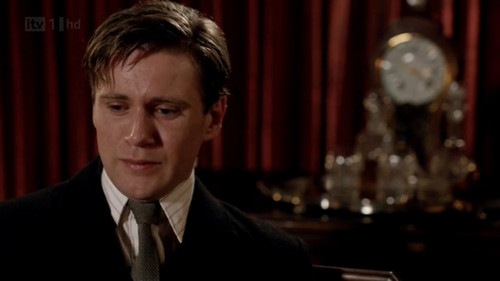
‘Tom Branson wants you to think he’s part of an aristocratic family, but not only was he once a socialist and a terrorist, he was really really bad at being both. Tom Branson claims he’s changed but all it took was a schoolteacher with too much lipstick to bring his pro-Russian outbursts back to the Downton dinner table. At a Town Hall debate, Tom Branson said ‘I don’t know what I am anymore’…and hasn’t stopped saying it for over two years now. Tom Branson voted against Lord Grantham’s terrible financial decisions 90% of the time. And what’s keeping Tom Branson from emigrating to America, the land of freedom? We think we know. Branson’s fickle. Paid for by The Committee for The Preservation of Cora’s Entail.’

Homeland

Carrie Matheson: Cries at the drop of a hat

Carrie Matheson: Cries at the drop of a hat

‘Carrie Matheson denies all knowledge of putting a pro-American regime in Iran. Why would a secret agent do that? What is she trying to hide? Carrie Matheson sometimes sleeps with terrorists for fun…and not just work. And why does her baby look exactly like a shrunken doll of America’s enemy #1 (and honoured marine and US senator) Nicholas Brody? According to her family, Carrie Matheson prefers living in Islamabad to being in America. Just like someone who might not like America that much would. And why was she seen desecrating a heroes’ memorial with a magic marker? Doctors expressed concern that Carrie Matheson couldn’t do her job because of her mental illness…a love of atonal jazz. Carrie Matheson: Cries at the drop of a hat.’

Mad Men

Don Draper: You don't have to be mad to vote for him...but it helps!

Don Draper: You don’t have to be mad to vote for him…but it helps!

‘Don Draper won’t make his war record public. That’s because it reveals things he doesn’t want you to know. Like his compassionate support of war widows and embodiment of the American dream. He’s just pretending to be privileged and uncaring to get your vote. Don Draper has worked at three different(ly named) firms in the last five years, and is so incompetent he now works under his former secretary. Don Draper would rather drink and take drugs at home than in a workplace where it is company policy. He’s flip-flopped on the issue of smoking and airline preference, and campaigned for Nixon who he’s yet to find out is a criminal. Don Draper: You don’t have to be mad to vote for him…but it helps!’

The O’Reilly Factor

Bill O'Reilly: Bullshit O Really

Bill O’Reilly: Bullshit O Really

Bill O’Reilly talks about things as if they really happened. But did you know that everything he says is bullshit? The first thing he said on his show today was bullshit. The second thing was described as ‘bullshit’. Even the third thing he said was bullshit, according to a poll. He’s voted with people who are wrong about everything 100% of the time. Bill O’Reilly: Bullshit O Really.

There’s no law against smearing a smearer…

King Of The Chill

Posted in American TV (General), American TV Shows, Reviews, TV channels, TV History, Unsung Heroes with tags , , , , , , , , , on October 29, 2014 by Tom Steward

‘Horror has not fared particularly well on TV, if you except something like the 6 o’clock news, where footage of black GIs with their legs blown of, villages and kids on fire, bodies in trenches, and whole swathes of jungle being coated with good old Agent Orange.’

That was writer Stephen King in 1981, talking about putting horror on television (thanks to my mentor and go-to for gothic television Helen Wheatley for the quote!). Despite King’s reservations, his horror stories have found a natural home in TV as series, miniseries, and made-for-TV movies in the last four decades. Ironically, it is precisely because television is so ‘full of real horrors’ that King’s work fits so well there. Perhaps it’s not vivid images of war on the news anymore, but there are still certainly plenty of reports of murderous violence, human cruelty and sexual abuse on an array of primetime infotainment programmes. King is particularly valid in this context since he is perhaps the writer most famous for bringing horror into touch with the contemporary world.

Anyone lose their childhood down here?

Anyone lose their childhood down here?

King has been adapted for the cinema significantly, but none of those movies quite captures the lingering terror of his writing as the miniseries versions. Something about having to stop and resume watching episodes of It and Salem’s Lot offers a prolonged, almost masochistic quality of fear unavailable in all but the books themselves, which, as Joey Tribiani has shown, are best stored in the freezer when not being read. Television has such affective qualities as a medium – many of which are connected to horror – that merely the act of televising can induce dread. What Pennywise the Clown can do to you in the cinema is no match for the monkeyshines he gets up to in and around your living rooms each and every night.

Genre aside, TV adaptations of King’s books give us pause to consider which visual medium is best suited to accommodate the novel. For best-selling authors like King, the natural route is feature films, not necessary because they are the best platform for his work but due to their popularity and potential (at one time!) for box-office success. But the bulkier novels suffer inside the constraints of a two to three-hour movie, and the best film adaptations of King’s writing have generally been those extrapolated from his short stories. TV series that want to appear classy and cultured often compare themselves to novels with episodes the equivalent of chapters. But when applied to King’s shlockier fare, we can see it’s about what fits not what elevates.

The symbiotic relationship between Stephen King and television was on my mind as I watched the Lifetime movie Big Driver based on his novella. The network that once bore the slogan ‘television for women’ doesn’t necessarily seem like the place for Stephen King adaptations but the subject matter complimented Lifetime’s penchant for celebrities, scandals and sex crimes in its programming perfectly. The target audience, which still more or less holds today, ensured that none of the rape scenes ever approached the voyeurism or perverse pleasure they achieve in many horror movies. Though fiction, it was fluent with the showbusiness biography strand of original movies on Lifetime. In fact, it’s quite striking how King’s work seems malleable to a wide range of TV genres and formats.

The Biggest driver of a Lifetime!

The Biggest driver of a Lifetime!

King’s novel Under the Dome has been adapted and expanded into a primetime CBS TV series, which blended into the current fashion for fantasy and science-fiction television in the network schedules. A decade ago, King developed a re-make of Lars Von Trier’s surreal medical drama Riget called Kingdom Hospital which heralded a trend for American versions of European (mainly Scandinavian) TV series that has yet to see an end. King’s short stories were regularly fodder for half-hour dramas in the revived series of The Twilight Zone and The Outer Limits during the fantasy anthology renaissance in the ‘80s and ‘90s. His contribution to the modern gothic even came full circle as King penned an original screenplay for Fox’s paranormal detective series The X-Files in 1998. The tribute is fitting as we can see the influence of Stephen King miniseries in contemporary TV horror such as the self-contained first season of The Walking Dead or the season-long anthology dramas that comprise American Horror Story. It might not be an affinity King is particularly proud to boast – although now would be the time to jump on the pioneer bandwagon – but it’s one that, like the repressed, will always return to haunt him.