Archive for the Americans watching British TV Category

Queen Me

Posted in American TV (General), American TV Shows, Americans watching British TV, Reviews, TV channels, TV Criticism, TV News with tags , , , , , , , , , on December 21, 2015 by Tom Steward

It’s Christmas so TV is all about messages. Though if you know your McLuhan, then you’ll already be aware that TV itself is the message. Far be it from me to buck seasonal television trends, so as this is the final blog post of the year I’ve prepared a Christmas message. As I hail from the land of tea and war (where do you think we got the tea?), the message will be delivered as if it were Queen Elizabeth II’s televised Christmas address to the nation, which all British subjects watch devoutly each year without ever ignoring it completely.

What are all you people doing in our house?

What are all you people doing in our house?

In the House of Commons this November, MPs debated whether to change the symbol of Britain from a lion to a hedgehog or, to put it another way, whether to write off the country by tying its fate to a species with a rapidly declining population. We are reminded of our long-lost children in the colonies who this year lost iconic hosts of late-night on their moving billboards. Like changing a lion for a hedgehog, the replacement may not seem as strong as its predecessor – and more difficult to pick up – but the more they stick out their noses and appear at our doors each night, the more the infants of the new world will grow to love them. We are also reminded of this because a couple of the new hosts look like hedgehogs.

Nocturnal hedgehogs

Nocturnal hedgehogs

If Britain does decide that it’s only economic salvation – following the debacle of a government I could’ve stopped if I had wanted to – is Beatrix Potter brand synergy, then we are reassured by the success of spin-offs in the living room magic lantern shows of the Europe’s emancipated teenager. As hedgehogs to lions, such derivations seemed paltry and incidental creatures yet they possess a unique quality all of their own that has been resting in the shade of bigger animals for so long it comes to light as soon as they shift their lumbering rears from view. Except CSI: Cyber.

There is always the possibility of reinvention – look at us, we’re much more cheery than we used to be – as the recent trend in the wall-mounted viewfinders of Columbus’s Indies for season-long anthology series reminds us. It is difficult to adjust to change – especially if one writes for HitFix – but we should remember that, like that bloody hedgehog we wish we’d never used as a metaphor in the first place, transformation has the potential to preserve a species that would otherwise have died out a lot sooner, or ended up on Hulu. It takes a true detective to see the worth in exchanging a tried-and-tested point of pride for something offbeat and challenging, but we must fargo our trepidations in order to save what we love while it still has a slim chance of survival.

The year of my lord – well he is technically my employer – 2015 was the end of an era, although not for me as we became the longest-reigning British monarch, of which we would like to say on record: ‘suck it, time’! But those less fortunate than us, such as everyone, have had to endure the loss of the many sinful delights that sit within the devil’s hatbox, especially those that hail from the land of not-having-one-of-me-in-charge. We are justified to feel sadness though we would be mad men if we didn’t notice that Parks & Recreation was just shit now.

Lions – for my speechwriter says that you’re simply all too stupid to handle more than one metaphor per message – are lazy and parasitic as well as strong and proud, so it is not with complete regret that we see two and a half of these individually wrapped entertainments make way for an animal that isn’t quite so boring and doesn’t steal from others…like a mentalist! There are those who say it is a scandal that those animals with such a grey anatomy should get away with murder, but here’s the catch. The ecosystem needs every animal – no matter how much it feeds off a rotting carcass – so, however much they induce dread, the lions of this world are just as important to the hedgehogs and, yes, my butler does mix drinks that badly as well.

To play us out, we have the Christmas TV movie carol ‘Edelweiss’ which this year reminds us of a world which my uncle would have been proud of. A very happy Christmas to you all… except those of you who want me to pay taxes.

http://www.youtube.com/watch?v=UIDKPydxAFM

Baking The Waves

Posted in American TV (General), American TV Shows, Americans watching British TV, Behind-The-Scenes, British Shows on American TV, Touring TV, TV History with tags , , , , , , , on December 14, 2015 by Tom Steward

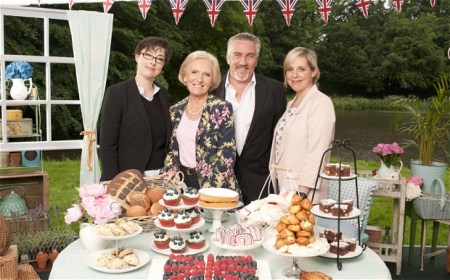
It’s not an unreasonable assumption that Americans prefer to know about Britain’s heritage than the way it is today. So it will come as no surprise to anyone on either side of the Atlantic that a Great British Bake-Off spin-off (which can be contracted to The Great British Bake-Off) called The Great Holiday Baking Show is airing on ABC primetime over the Christmas season. The Great British Bake-Off is a cooking competition celebrating British culinary traditions against a landscape idealizing Britain as the green and pleasant land of yore replete with signifiers of our imperial past, like the bunting-lined parties we used to host for wartime victories and royal events. Though if you’re labouring under the misapprehension that cultural fascination has triumphed over commercial interest, it’s worth remembering that in the UK this year the finale of The Great British Bake-Off was the most-watched program of the year, that past seasons of the show currently occupy peak Sunday airtime on PBS, and that a US version of the format called The American Baking Competition debuted in 2013 but was cancelled within a year following poor ratings. It’s both too lucrative and too particular to attempt anything other than a spin-off.

Bake Britain

Bake Britain

Americanizing the brand has proved difficult. PBS had to re-name the US airings The Great British Baking Show not because of cultural misunderstandings – as surely ‘Bake-Off’ is a term friendlier to the American spirit of competition than ours of miserable make-do – but America’s corporate hegemony. Girth-romanticising pastry company Pilsbury hold the trademark to the name ‘Bake-Off’ since it is the name of their patented annual cooking contest. The American Baking Competition continued the tradition of American reboots of British reality shows exporting celebrity judges, but it backed the wrong horse. Perhaps they were expecting some latent movie star glamour to suddenly burst forth from baker Paul Hollywood when he was brought into geographical proximity with his namesake – or more likely they wanted another British villain – but there was less gel than the sour scouse keeps in his hair when they brought him into the show. Though far sweeter and lacking the negativity that reality TV bottom-feeds off, The Great Holiday Baking Show has made a far better choice in calling upon veteran food writer and TV presenter Mary Berry to handle the judging, especially since any successful translation of the format requires as much exploitation of British icons as possible.

As is usually the case in television, the biggest factor affecting the success of The Great Holiday Baking Show is time. The Great British Bake-Off is shown over ten weeks and, while it is clear from the preponderance of sunlight and the frequently-used excuse of it being a ‘hot day’ that it is filmed in Summer, the baking is not linked to any particular season of the year. As the title states, The Great Holiday Baking Show is very clearly themed around the American Thanksgiving and Christmas holidays to reflect the period of the calendar year in which most baking is done and/or consumed in the US. The producers have evidently latched on to the seasonality of baking as justification for a short-run December-long series which also conveniently prevents them from having to commit to a full season in programming terms. Conversely, the configuration of cake-eating with sunny countryside settings in the British original has almost made it seem like an exclusively Summer activity in the UK, not a happy by-product of taking refuge from the cold of Autumn and Winter as it is in the US. Finding what is culturally equivalent about an imported show is often the key.

Baking in the Free World!

Baking in the Free World!

The subject matter and presentation of The Great British Bake-Off is twee and backwards but it gestures to the diversity of post-colonial Britain. Though by no means proportional, there is a range of ethnic, racial, sexual and regional representation in the contestant base. To wit, the 2015 winner was Nadiya Jamir Hussein, a British-Bengali women identifying as a Muslim. I’m glad to see that The Great Holiday Baking Show has followed in these footsteps, though in both cases it’s difficult to tell whether this is selection strategy or merely that it’s an inclusive enough application process for minorities to make it through. What makes the difference is the ability to use the original format and continue to have Mary Berry on board, although why they would make her a judge for an American spin-off only to patronise her like a cigar store Indian in a parallel universe is beyond me.


Doctor No

Posted in Americans watching British TV, British Shows on American TV, TV Criticism, TV History with tags , , , , , on September 20, 2015 by Tom Steward

Last night, new episodes of Doctor Who began airing in Britain and America. This is not a review of the season opener because I didn’t watch it. I didn’t watch it, because for the first time since the series re-launched in 2005, I won’t be watching Doctor Who. I don’t – like some fans – have an aversion to Peter Capaldi as The Doctor. In fact, I’ve said here before I think he’s probably the best actor to have played the role. This also isn’t the first time I’ve had serious issues with the direction that the showrunners have taken the series in, or some of the casting. And I’m not so naïve as to think that the ‘classic’ series – which I greatly prefer – wasn’t at times just as unwatchable as the new series is today. So why am I boycotting it now? Well, it’s for the same reasons that I don’t eat at McDonalds or (knowingly) use Nestle products. There are just too many reasons not to.

'What do you mean you're not watching?'

‘What do you mean you’re not watching?’

The main reason, of course, is Steven Moffat. Still showrunner and head writer after six years – with his creative control increasing annually – Moffat’s scripts and season arcs are incoherent, ramshackle rubbish and his dialogue is formed of soundbyte-friendly non-sentences. You can count the good ideas he’s had during his time on Doctor Who on one hand, and yet they do the job of keeping him afloat while he peddles plagiarism of everything from Source Code to That Mitchell and Webb Sound inbetween lightbulb moments. That’s before we get on to his politics. Moffat is incapable of writing strong women without sexualising them, sabotaging the progress made by breakthrough characters like transgender Timelady Missy with nymphomaniacal nonsense. His treatment of the material is invariably tasteless and perverted, encompassing romanticized suicides, desecration of dead Who actors like Nicholas Courtney, and treating time travel as some sort of incestuous gangbang! It was bad enough when this was in the name of change, now it’s billed as a return to the classic formula.

Much as I would like to, I can’t blame Moffat for all that’s wrong politically with Doctor Who. The series has had two women writers since 2005, a record easily beaten during the classic era which is often held up for being unfair to women and stretching back to the tenure of showrunner Russell T Davies, who supposedly opened the show up for a female audience. That said, Moffat did do a Lorne Michaels when it came to the issue of hiring women as writers, claiming that the entire gender did not have the appetite (nor presumably the talent) to take on the job much as the Saturday Night Live did when confronted with the absence of women of colour on the late-night comedy institution. Missy is not enough of a concessionary flip-flop, and certainly not when she’s this badly written. The Bechdel Test and various academic studies have singled out the sexism of Moffat’s era, though Davies set the idea of women talking adoringly about The Doctor in motion.

If I’m being honest, it’s actually the way that Moffat has tried to rectify the female companion’s Adam’s Rib relationship to The Doctor that has made Doctor Who so difficult for me to enjoy. Jenna-Louise Coleman’s Clara has a domestic and work sphere independent from The Doctor and his TARDIS, albeit one that still centres around her romantic interest in another man. The upshot of this is that one of the most shoddily conceived – and irritatingly portrayed – lead characters in the series’ history is at the heart of the concept in virtually every episode. There’s nothing innovative about The Doctor being The Companion’s sidekick, for that’s the status William Hartnell had when Doctor Who began, and it is a good bit of Bechdel-proofing, but for Clara to get that privilege – and, crucially, not Amy, the previous companion – is a kick in the teeth. For the past couple of seasons, Moffat has been working back from Clara’s original introduction as a mere plot device, and still can’t make her sufficiently human.

A Missied opportunity!

A Missied opportunity!

It’s no surprise that the creator of Sherlock and writer of The Adventures of Tintin re-boot can’t organize a piss-up in a brewery when it comes to Doctor Who. Steven Moffat has inherited perfect pop fiction formula time after time, and always drops the ball. So when he finally goes – and providing Jenna makes good on her recent promise – I’ll come back to the best concept on TV. Because we Whovians live to be disappointed.

Watching TV With Britons Part 2: Same Same Same

Posted in Americans watching British TV, TV Acting, TV channels, TV Criticism, TV History, Watching TV with tags , , , , , , , , , on December 27, 2014 by Tom Steward

The second part of my exile’s guide to British television looks at the unwelcome familiarity of the programmes I watched during my recent visit to the UK, as any vain hope of something changing for the better while I was away is quickly crushed under my muddy, slushy Wellington boot:

The Royal Variety Performance (ITV):

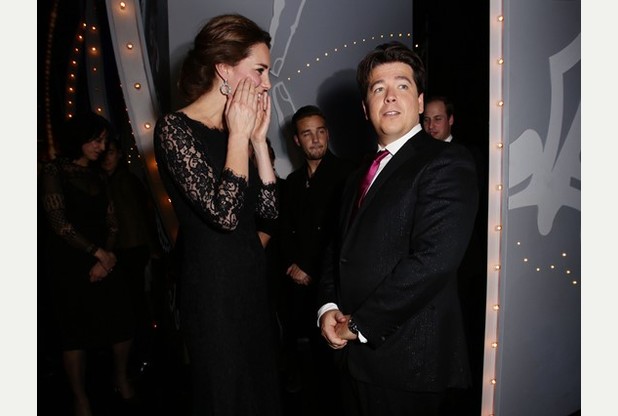
Who is the least talented person in this picture?

Who is the least talented person in this picture?

As both variety (our version of vaudeville) and royalty are anachronisms in British popular culture, this annual broadcast of theatrical entertainment staged in front of members of the monarchy seems to exist for nostalgia alone. Tellingly, there’s no variety on offer but merely alternating stand-ups and singers. The addition of William and Kate – presumably as a reward for breeding – meant that the event was no longer attended by a couple famous for their dislike of showbusiness but they still couldn’t help appearing like a benign Statler & Waldorf. It’s hard to believe that host – and redefinition of the term ‘comedian’ – Michael Mcintyre remains popular in Britain but given the programme’s commitment to the regression of our culture, artist and medium have never been better matched.

The Railway: First Great Western (Channel 5):

Public transport documentaries have been the saving grace of British reality television in the past few years, but the UK’s TV network-in-the-attic Channel 5 has, by focusing on this year’s closure of the Dawlish rail line due to storms and flooding, turned it into weather porn – one of the less commendable reality genres to emerge on British TV after the advent of climate change! Still, it was interesting to see that Home Secretary Theresa May is as inept at forming sentences as she is at politics.

Black Mirror: White Christmas (Channel 4)

A Christmas Hamm!

A Christmas Hamm!

British TV critic and screenwriter Charlie Brooker exists in a categorical limbo between Clive James and Rod Serling, alternating parodic weekly TV review shows with anthology sci-fi horror. This festive (in genre alone!) edition of techno-fear playhouse Black Mirror was, in keeping with the British Christmas special, more conventional than we expect from the series. The formulaic storytelling was partly a satisfying return to the Christmas TV horror plays of old but also revived some rather retrograde attitudes to gender and race that I’m sure we’d all have rather left in the TV of the 70s. A surprise Christmas gift came in the form of an outstanding star turn by Jon Hamm, leading the effort to turn British migrant labour in American TV into a hostage exchange (P.S. You keep James Nesbitt, we’ll have Steve Buscemi!), which, as Mad Men comes to a close, more than proved – at least to doubting Thomases like me – that he could credibly be something other than Don Draper.

It Was Alright in the 70s (Channel 4)

Several people told me I should watch this programme, which runs clips of contemporaneously controversial British TV from the 1970s alongside commentary from the people involved as well as aghast modern-day viewers. The clips themselves have the requisite shock and entertainment value, but I was uneasy with the tone and project of this documentary. It seemed to suggest that the bigotry and exploitation that appeared in 1970s television was somehow a thing of the past and that all the problems of representation had subsequently been resolved, whereas I saw plenty of examples, if perhaps more latent than pointed, of prejudice and cruelty in the TV I watched while in the UK. It’s also a very selective history of 1970s television in the UK which continually declines to mention how experimental, challenging and innovative a great deal of TV was in that era, perhaps more than now, and certainly with more frequency. When this is acknowledged, it’s usually passed off as the inconsequential ramblings of a cultural historian in the editing, and only ever associated with content that would be hard to defend on a representational level, such as The Goodies’ (literally!) savage attack on apartheid involving racial slurs and minstrelry. But perhaps the most disappointing aspect of the programme is its lack of originality. It’s a cursory spin on a clip-based nostalgia format that’s been around since the turn of the millennium, and almost matches the exploitative tendencies of the TV it lambasts by offering recent revelations about the sex crimes of 70s British celebrities as a unique selling point.

Autopsy: The Last Days of Elvis Presley (Channel 5)

briton 6

Dr Richard Shepherd, Graduate of The University of Stating The Bleeding Obvious!

Like asking which bullet killed a person shot 24 times. Worth seeing for the Elvis curl on the lips of the actor portraying Presley whilst dying on the toilet.

Watching TV With Britons Part 1: Eee By Glum!

Posted in Americans watching British TV, British Shows on American TV, Local TV, TV channels, TV Culture, TV News, Watching TV with tags , , , , , , , , , on December 17, 2014 by Tom Steward

Goodbye! Like Seinfeld’s Elaine upon encountering a caring Jerry, selfless George and talented Kramer, I’m in the bizarro world. I started this blog as a Briton casting a foreigner’s eye over American television and the Americans who watch it. Now British television is foreign to me and the viewing habits of UK audiences are as curious to my mind as America’s once was. Those of you who read the blog regularly will know that I am now a resident of the United States (or have assumed I am the worst pirate in TV history!). While I’m still in the privileged position of returning to my homeland without the jarring feeling of alienation felt by most ex-pats, I cannot say the same about British television. It is not simply a question of being out of touch, but experiencing the TV I knew from the outside in. I see the problems more clearly, but I am less forgiving of them than a native now. Here’s Part 1 of my round-up of the TV I watched while I was back in the UK these past few weeks, which looks specifically at what I saw of and about the North while away:

BBC Northwest Tonight (BBC1)

If I had ever forgotten what a place of horror the North can be, I was scared straight by the top item on the local news about a priest who was arrested for murder. There was also a sub-plot about the various presenters switching roles that went clear over my head, and reminded me that local TV news is more parochial soap opera than neutral information source.

Remember Me (BBC 1)

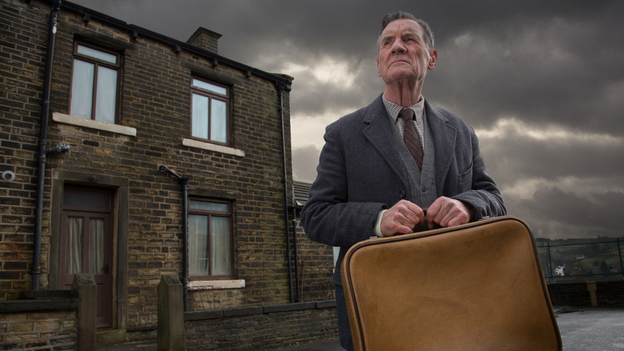
Python Found In Sheffield!

Python Found In Sheffield!

Seasonal ghost stories are an overlooked tradition in British television, as is the utilisation of former Python Michael Palin as a TV actor. This Sunday-night 3-parter was a welcome return for both, and brought the haunting beauty of the Yorkshire coast to half-light. I’m always complaining about the lack of Britain’s multiculturalism in our flagship drama and South Yorkshire’s substantial Asian population should be represented in any depiction of the area, as it is here. But I couldn’t help feeling there were underlying xenophobic anxieties about immigration in the way the story unfolded (incidentally rather in keeping with the current normalisation of anti-immigration discourses in British politics) which undermined the diversity. It’s one thing to show the social harmony between the elderly white and Asian communities in Sheffield, another to envelope that in imagery concerning the vengeful spirit of an Indian colonial wreaking havoc on British shores.

Inside No 9 (BBC 2)

There's No Escape To Narnia In Inside No 9!

There’s No Escape To Narnia In Inside No 9!

Horror comedy writing-acting duo Steve Pemberton and Reece Shearsmith may have left the North behind after the gloriously gothic sitcom The League of Gentleman, but their anthology-based follow-up to the macabre melodrama Psychoville is easily their best work yet. Classic British horror movies were as influential to the pair’s writing as the variously horrifying Northern towns they grew up in. But in this series of one-offs centred around buildings and rooms that bear the number 9, it’s easier to detect the legacy of great British dramatists like Harold Pinter and Mike Leigh than Hitchcock and Hammer.

Through The Keyhole (ITV)

This was once a beloved and genteel daytime panel show presented by British institution Sir David Frost in which middlebrow celebrities tried to guess which other middlebrow celebrity a house belonged to. It was easy-going, bland and offended no-one. To my horror, it’s been revived as a platform for crass Yorkshire-born comic Leigh Francis to showcase his abhorrent character Keith Lemon and brand of vulgar anarchy. Imagine if the cast of Jackass suddenly took over from the current hosts of 60 Minutes and you’ll have some idea of how inappropriate a mix of star and format this is. Tabloidization of classic British television standards has been and gone, but this is a new stage of perversion and travesty that befits a dystopian satire!

The Fall (BBC 2)

The Fall Of British Television

The Fall Of British Television

Belfast is a bleak yet glamorous backdrop for the most unremittingly downbeat police drama in TV history. Not even sexy elf Gillian Anderson can bring much more than the odd dry moment of wit to proceedings, as Christian Grey-in-waiting Jamie Dornan stalks the city’s streets and homes as a sexual serial killer and freelance social worker. Authentically Northern Irish, it also tops the genre for storytelling innovation. Dornan’s Paul Spector is as much the hero as the detective would be in any other cop show, making for deeply uncomfortable viewing. But, like the North, it remains gruesomely compelling.